Hard Decision regarding the Hive

Our honeybee hive is as strong as we've ever seen it. In a severe drought year, with all the beekeepers we know having to feed their bees, ours are bringing in nectar and pollen daily. Our forethought and planning with the pollinator gardens have really paid off in a big way. Looking through the hive today, we noticed many bars completely full of capped honey, with more bars full of ripening nectar. There's not much brood, which is expected this time of year, but the hive seems well-set for the winter months.

All this was very pleasing, and we would have been entirely happy with our inspection, had we not noticed this.


It's hard to see, but the arrow is pointing to a varroa mite on the back of this bee. It's a red shiny dot. My hive tool is pointing to it from the other side.

We noticed 3-4 mites on as many bees - they're not overrun, by any means, but will be soon if left untreated.

And in a not-unexpected twist, we noticed four wax moth larvae crawling on the floor of the hive. I promptly severed them in two with my trusty hive tool, but I left the hive inspection feeling very depressed and unsettled.

We lost our hive last year to varroa - it was in late November and we didn't notice until the entire hive was dead.

We've never had wax moths before, we only noticed them for the first time about a month ago, but the really special thing about them is that they destroy the honey and the wax, so even if our hive dies from varroa, if the moth larvae get to it before we do, we won't even be able to harvest the ample honey crop.

I called my beekeeping mentor immediately (that's my dad :) ) and we talked about the fact that he had just bought some formic acid strips from the beekeeping store for just this purpose. He invited me over to look in his hives and see if I saw mites there.

So I did. But first I researched formic acid. As you know, I've been struggling with the question of whether or not to chemically treat my bees. Most beekeepers do, regularly. I feel strongly that the bees (not just my bees, but bees in general) need to evolve past this, and in order to do that, we just need to leave them alone. And until I saw mites on my bees today, I was sure that I would never treat  them.

Then I thought about the fact that my bees did not come from a wild swarm, but from a breeder, who definitely treats his bees. My queen has been treated before. She grew up being treated and having that help. Her genetic line is used to being treated. She has never developed the ability to resist mites. She isn't likely going to start now. My bees will die, if left untreated.

This pisses me off, because having to get a new colony is not only heartbreaking, it's a pain. It's expensive, and they always come in mid-April when the first nectar flow is already finished here in Northern California - they miss the native wildflower bloom. And then I have to feed them for weeks while they build their comb (since I have a top bar hive, they build their entire comb). And just when they get to a strong and healthy place, varroa descends. And it will descend every year, this is just a fact of life now.

Then I thought about the wax moths. Formic acid has been shown to kill wax moth eggs and larvae as well as varroa mites. My mind started to change.

So when I inspected Dad's hives with him, and we found varroa in one of them, and he didn't hesitate to put a strip of formic acid on top of the bars of his hive, I found myself taking the other strip home. And then I opened up my hive and placed it inside.


It doesn't smell great. I'm sure the bees won't like it. Some will probably die. The queen might even die. But if I don't do this, the colony will surely die. So I'm going with the better odds.

I'll keep you updated, friends. Formic acid is considered an 'organic' treatment, but it's certainly not the kind of organic I'm used to here at Poppy Corners. I'm not entirely happy, but I feel confident that I'm giving my bees a shot at survival.


October in the Garden

Things have been a little busy here at Poppy Corners, and not in the garden way, which is unfortunate because, as all you gardeners know, fall is an important time in the vegetable beds! Both Tom and I have been working more, the kids have a ton of activities, and we spent last weekend at Camp Okizu, celebrating, as we do annually, Adam's recovery from cancer. So not much has gotten done in the yard. But that's life, you know? Part of being an urban gardener or farmer or do-it-yourselfer is that regular life just happens. So we plug on, making lists during the week (sometimes lists that bleed in to other lists) and getting done what we can get done in the extra time we find.

What that means in practical terms is that big projects, like the chicken tractor, are stalled halfway through construction.

this thing takes up half the patio

We hope to finish this soon so that we can put the chickens to work ripping out the bit of (dead) lawn we have left.

Small projects can get done whenever we have an entire weekend day, or even a weekday afternoon, free. Today, our first free weekend day in quite a while, a LOT is getting done. As I write, Tom is taking the hot peppers he harvested this morning and creating hot sauce and pickled peppers. I've harvested tomatoes, sweet peppers, the last of the green beans, cantaloupe, and a lone fig, with plans for making canned crushed tomatoes, roasted peppers for the freezer, and canned dilly beans later this afternoon or tomorrow. I've frozen a dozen eggs for the winter, removed the green bean crop from it's bed, and deadheaded the pollinator gardens. Later today or tomorrow I need to hoe the beds that are clear and add a cover crop of buckwheat, plus cut down flowering buckwheat in another part of the garden and add soiled chicken straw to those beds. We've fences to mend, weeds to pull, the bee hive to open and check (varroa season is upon us, though my bees look happy enough in the garden at the moment), paths to sweep, compost to turn and dig out... you get the picture.


The garden just keeps pumping out produce, even though much is going awry. Everything looks incredibly dry and dusty in the sunny areas, and in the shady areas we have a doozy of a case of powdery mildew. Chalk it up to wacky weather and a lack of regular temperatures or water. All I can say is, I'm tired of hot weather, and I'm ready for a real autumn. I know it's coming, because nighttime temperatures are low and the mornings are cool. That's heaven. Soon we can plant winter crops.

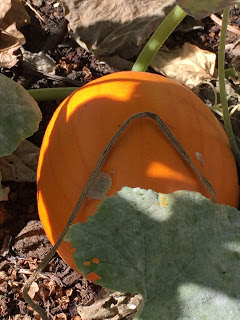
powdery mildew in the pumpkin patch...

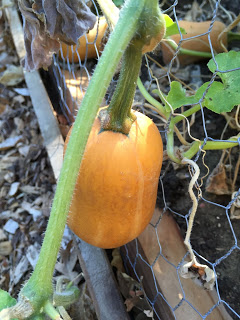
... but pumpkins keep on growing...

... and gourds, too.
Butternut squashes are incredibly prolific....

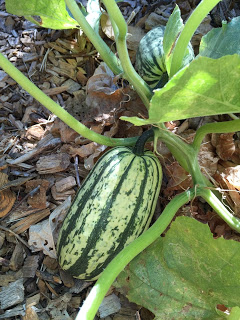
... and we're still getting plenty of delicata squash as well.
We're still getting the stray cantaloupe if I can get to them
before the squirrels do. (that's buckwheat growing
behind, where the watermelons used to be.)
I harvested the last of the beans and took the vines out
and to the compost bin. 
The sweet potato vines are loving the heat. No
flowers yet. I'm wondering if they'll get a chance to
flower and set fruit before frost. Hope so.

basil has been one of my most successful
crops this year. I've made enough freezer pesto
to last us the whole year. Neighbors come harvest
basil whenever they want to, and we use it freely in
recipes and in the chicken coop as bedding. 

Hot peppers just keep on coming...

... as do the sweet peppers...

... and we're still getting plenty of tomatoes, of all kinds.
The north pollinator garden keeps producing flowers,
mostly tithonia and cosmos...

... and so does the south pollinator garden, with a variety
of California fuchsias, sages, and daisies along with
sunflowers and tithonia
Here in zone 9, and in our city of Walnut Creek, our first average frost date is December 15. October is usually a pretty warm (even hot) month, so I can wait until the beginning of November to plant winter crops. I've got seeds and tubers and cloves lined up, and supplies for more floating row cover tunnels, so we're all ready to go. If October changes course and things get cooler more quickly than usual, I'll get the crops in sooner. Meanwhile I figure I'll let the tomatoes, peppers, squashes, and melons continue to produce until then.

So, back in to the garden, and back to chores. Hope you're having a wonderful Saturday with lots of outside time, too!

Signs of Fall

It's hard to tell that it's Fall in Northern California, as it's been between 90-105 every day the last few weeks, but if you look closely, there are signs that the seasons have begun to change.

Leaves covering the trail
Acorns forming and falling by the bucketful
Seedpods forming on the bare limbs of Buckeye trees
We're tired of hot weather. We're tired of dry conditions and huge conflagrations burning down acres and acres of land, and houses. We desperately need cool weather and rain. Everything looks wilted and dirty and dangerously dry.

The garden is changing, too - still harvesting tomatoes, peppers, cantaloupe, pumpkins, butternut and delicata squash, green beans. Sweet potatoes are coming soon. But it all looks a bit played out. I'll post pictures this weekend sometime.

Meanwhile, we have another month of hot weather ahead of us, and often October is our hottest month of the year. You'll forgive me for feeling a bit defeated.

Butterfly mix-up

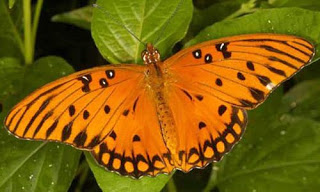
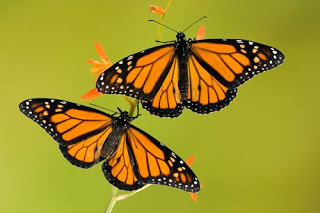
I guess it's not a big deal in the scheme of things, but you know how much I like to identify what I'm seeing in the garden. And my good friend Barbara pointed out that I might be seeing Gulf Fritillary butterflies rather than Monarchs on my Tithonia. On further reflection and research, I think I've seen both - but many of the pictures I've put up are mislabeled. You can see why I was confused:

Gulf Fritillary

Monarch
"What kind of butterfly is that?"
"Oh, an orange one."

Anyway, please forgive me, and I'll go back and change up my old posts. Meanwhile I found this cool  blog post about butterflies on Tithonia at the UC Master Gardeners website. I'm not the only one noticing lots of activity (rightly-or-wrongly-named) in these flowers. Put these on your to-buy list for next summer!

We've had some cooler weather and yesterday we even had a light mist - unheard of in September! - and we saw this, which I took as a sign that El Nino is on its way here. We'll see if that's true.


The Weird Bugs Continue

Ok, Entomologists: Tell me what this thing is.


I found him on a window screen. He's been hanging out all day. Beetle? Cricket?
*edit 9/14/15 It is NOT a beetle, it is a true bug, by the name of Leptoglossus zonatus, or Leaf-Footed Bug. This guy has probably been eating all my fruiting vegetables. Next time I see one, it's toast.

The Western Spotted Cucumber Beetles are all over my garden, I find them in every crop, on every flower. So far they haven't done enough damage to any one thing that we can't harvest some of it. But honestly, they are everywhere, and I've never had them before. Hopefully my deep mulch plan (with chicken coop litter) will help to deter them next year. They apparently overwinter in the soil. Argh.


But I continue to see good bugs on everything too -native bees, most notably the huge Carpenter Bees on all the flowers each morning. We checked our honeybee hive today and they look great - a little bit of brood, a lot of honey - plenty for winter, I think. This is really good news. Now if they can just fight off (or avoid entirely) varroa mites, we may have a strong overwintering hive. I've decided not to use chemicals to treat any varroa seen or unseen. I'm convinced now that I have to let the strong survive without help, and evolutionarily, the weak ones shouldn't survive. The bees just have to figure it out themselves. It's heartbreaking but that's the way I think it should go down. I know plenty of people would disagree with this assessment. However I'm confident in my decision, and I'll let you know how it plays out here in the next few months.

I continue to see lots of spiders, and lots of monarch butterflies. Today I found a scrap of monarch Gulf Fritillary wing on the garden paths. It's really beautiful, and nice to have a chance to study it close up.

front

back - hard to see in this light, but those white
patches are silvery and glittery

The first section of buckwheat cover crop has flowered and it sure is pretty - in a couple of days I'll need to chop it down so it doesn't set seed. I'll let it compost in place. I've been reading an awful lot about cover crops and growing all your own compost materials rather than importing outside materials. For instance, I don't know exactly the history of any compost I order in bulk, nor do I know the exact history of even the horse manure I pick up each year. Who's to say the horses didn't eat herbicide-treated hay? In that case, you'd have herbicide-treated manure, which can do a bad number on your crops. I've had a lot of trouble with crops this year, most notably tomatoes and pumpkins, both of whom are planted in (forgive me) a shitload of horse manure-amended soil. In fact the cucumbers haven't done that well, and I've had problems with other crops too. So who knows? If I grow all my own carbon materials here in the garden, I'll have everything I need to make plenty of compost. I already have quite a bit, the compost just takes so long to break down. I guess I need to be better about turning and watering it. Or build a compost pile directly on a raised bed that is fallow, then start a new one when that is high enough... Gosh it just takes so much planning. Even getting a cover crop in takes a lot of planning, because I can grow veg in the beds year-round. If we had a cold winter here, I could plant a cover crop in the fall and let it winterkill, then the beds would be all ready come spring. Oh well. There's drawbacks and benefits to gardening any place, I guess. But the benefits to using cover crops are very clear in numerous ways - they definitely provide stacking functions (a permaculture premise) as they do more than one job. Feed pollinators, improve soil tilth, provide compost material, prevent soil erosion, feed microorganisms in the soil - lots of good stuff.


I do have to say, my honeybees pretty much leave the buckwheat alone, just as they did last year. I'm not sure if I'm planting the wrong kind to attract honeybees or what. There are lots of native pollinators on it, which is great - I was just hoping to provide some forage for my bees, as well. I may try something different next summer. The only thing is, buckwheat is good for hot dry weather and fast growing, and there aren't too many other cover crops that fit that bill.

I did see some honeybees up in the open space last week, which is only a mile from our house, so it's very likely that they are our bees (although I do know one other beekeeper in my area). The tarweed (Hemizonia congesta) is prolific right now, up in the hills.


As you can see, that's about the only living thing up there at the moment, other than native trees.

Here's another interesting thing I found this week walking with Joe:


Sorry the light is wrong on this picture, but the turkeys are everywhere, as usual. I wish I could try to catch one for Thanksgiving dinner. I wonder if we'd be allowed to? And then of course how would you do that without a weapon? I haven't the foggiest. Joe the dog just looks at them and yawns, so he's no help.

I harvested beans, tomatoes, peppers (both hot and sweet), cantaloupe, cucumbers, and herbs today from the garden. Three beds are full of ripening pumpkins (mostly the mini variety at this point, though I planted three different sizes), one bed is holding basil and buckwheat, one has cucumbers and buckwheat, one has cantaloupe, another one has just buckwheat, three have tomatoes, one has all the peppers, one has winter squashes, one has beans, and one has the sweet potatoes, which are going nuts. I'm looking forward to winter crops, even though we're nowhere near ready to plant them yet. We've got at least a month of hot weather in front of us. Early November will be our time to get the floating row covers ready and plant overwintering crops.