• About
  • Blog
  • Contact
  • Favorites
  • Archive
Menu

Poppy Corners Farm

Street Address
Walnut Creek, California
Phone Number
Walnut Creek, California

Your Custom Text Here

Poppy Corners Farm

  • About
  • Blog
  • Contact
  • Favorites
  • Archive

Blooming Shallots

March 24, 2019 Elizabeth Boegel
Ingredients for a Boeuf Daube (a la Dorie Greenspan). I had to buy carrots and potatoes, darn it. :)

Ingredients for a Boeuf Daube (a la Dorie Greenspan). I had to buy carrots and potatoes, darn it. :)

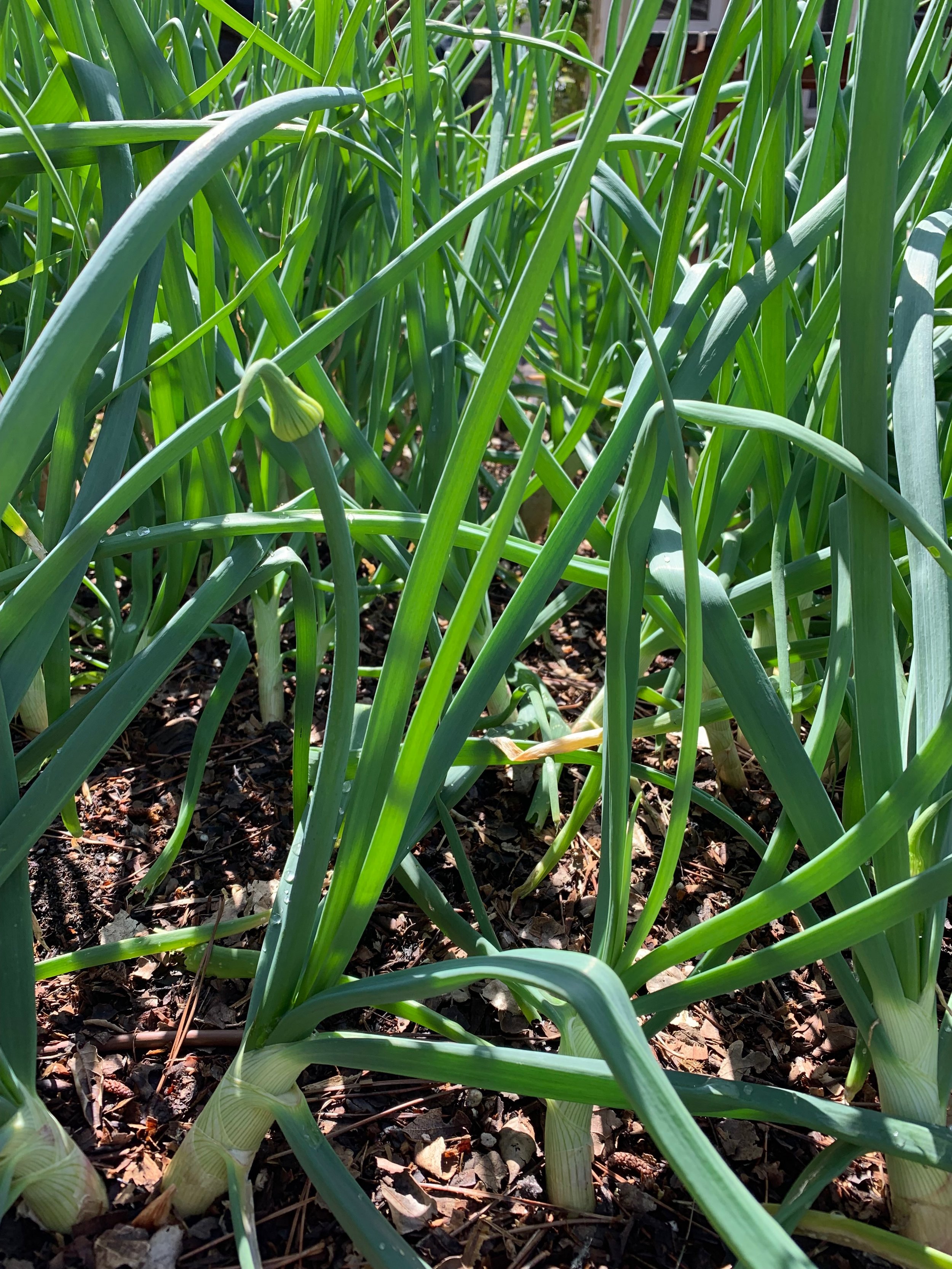
You see those onions in the picture there? Those are shallots, freshly picked from the garden. It’s not time to pick shallots; but earlier this week I noticed some of them blooming. Sigh.
IMG_1816.jpg

There’s a lot of differing information about flowering shallots - whether or not they can stay in the ground or need to be harvested immediately, whether they store well or not after developing a flower, and whether shallots should even flower at all, given that we never plant them from true seed, only from clones.

Shallots come in two types, French Red or French Grey. We’ve only grown French Grey once, as they are hard to source. However they were the best shallots we have ever had, hands down. French Red are more common and more easy to find, and that’s what we planted this year. I have two 4x8 beds of them. I over-planted, wanting a lot for storage, since last year our crop failed and we had to buy them all year (maddening). They’ve been doing great. But we have had a VERY wet and chilly March, and apparently that can make shallots flower. I dunno, my local land-grant college, UC Davis, has zero information about that. But other sources online say that wet and cold springs can trick shallots into flowering. And we have had an incredibly wet and cold spring. I shouldn’t be harvesting these shallots until May or even June; they don’t even form bulbs until late spring.

UC says if they flower, just cut off those stalks and let the shallot stay in ground longer. Other sources say you must pull those shallots and eat them immediately. So, I’ll do a little experiment. The ones that have flowered already, I pulled and have curing above the chicken coop (except for the ones we’ll eat tonight). If more flower in the next couple of weeks, I’ll just cut the flower stalk off and leave them in the ground. And we’ll see how they do. I mean, it makes sense to me. With hardneck garlic, you just cut the flower stalks off (and eat them, they are ‘scapes’ and considered a delicacy) and leave the bulbs in the ground for another month or so to grow big.

With more rain in the forecast (unbelievable, really) I expect more flowering shallots.

Tags vegetable garden
2 Comments

First Day of Spring

March 21, 2019 Elizabeth Boegel

Five minutes of new spring in my garden.

Tags video
2 Comments

Tweaking the Tomatoes

March 18, 2019 Elizabeth Boegel
IMG_1767.jpg

I’m doing several different experiments with the tomato crop this year. I just can’t help myself. Each year I try something new and each year I learn something. Meanwhile we always get a ton of tomatoes, so it doesn’t hurt my bottom line. And I want to get ever more efficient at growing this crop.

I’ve got about 60 tomatoes and 20 hot peppers out in the ‘greenhouse’ at the moment, and another tray of about 20 more tomatoes and 20 more peppers under lights in my bedroom. The ones in the greenhouse are doing fine. We have nice sunny days, and I open the door of the greenhouse in the middle part of the day (if I’m home) and allow the plants to get beautiful solar radiation, then close it up about 3 pm and let the greenhouse heat up inside before chilly night comes (between 45-49 degrees outside generally, but much, much warmer in the greenhouse). So that is one experiment - I wanted to see if I could minimize the time and space that seedlings take up in the house (our house is so tiny, even one table full of seedlings is in the way), and I think this is working. Since I don’t intend on putting tomatoes in the ground until the nights are solidly above 50 degrees, we’ve got a while. Also the soil is still fairly cool. I’m hoping not to pot them up further, just plop them into the ground when conditions are right.

The tomatoes will go on the south side of the garden this year, in six raised beds. Two of the beds are 4x4 and four are 4x8. This limits me to 40 tomatoes. Eight cherry tomato plants (4 in each) will go in the 4x4s. 16 each of paste and slicers will go in the remaining 4x8s (8 in each). And this planting is where some other experiments are going to come in.

I was not pleased with the health and production of my cherry tomatoes last year. I pruned them to a single stem, the same way I did all the others, and it severely limited our crop. We love to have the cherries for fresh eating and quick salads, and we really missed having a lot of them. They are also generally the first to ripen in June, which bridges the gap for us until July when the bigger guys are ready to eat. I’ve done some research, and there is some evidence that pruning cherry tomatoes really limits production. So I’m not going to prune them this year. Tom will make a sort of wooden cage to hold them all upright and contained, and we’ll let them go wild.

I’ll still prune the bigger tomatoes to a single stem. However that leaves the soil quite bare, and I don’t have homemade straw this year (I didn’t grow wheat or oats this winter), so at first I was just thinking about how I could creatively mulch the ground around them. And then I was like, wait, why am I not just planting other plants to fill in that space? I mean, I intercrop everything else (grow various types of crops together, or a crop with a cover crop, etc). Why not tomatoes? So I did a little research on that topic, too. There’s not a lot of real science about growing other crops with tomatoes. I think farmers don’t do it much because tomatoes need a lot of air and light to avoid disease; that’s why we prune them in the first place, to remove vegetation to provide more air and light. And that’s super important in a humid location. But - not so much here in summer-dry California where all irrigation is applied at the drip line. I remove those extra branches for a different reason - because I want fruit, not leaves! And bigger fruit at that! So why not replace those bottom branches with a different plant, one that shades the soil, crowds out weeds, retains moisture, and feeds soil life? As long as the plants have a different kind of root system, they shouldn’t compete too much. And I’m not talking about, like, companion plants or something. Companion planting is a nice idea but not exactly science. I’m talking intercropping. Getting two crops out of the same space. Or, even cover cropping, which simply improves the soil.

So I’m going to try it. Basil is a natural to put with tomatoes - it has a shallow root system, it likes the same amount of water and heat and light; it stays smaller than tomatoes; it has a beautiful flower that attracts beneficial insects; and it’s something we eat a lot of. I could do basil alone and that would work great. But diversity is good, so how about adding some cilantro to that? It’ll bolt and re-seed; it adds a new kind of flower for those beneficials; it can be eaten (and we do eat a lot of it); and it looks beautiful. So I could mix those two herbs. I could even mix in a third thing, like cosmos? Purely ornamental, but beautiful and beneficial too. Or I could intercrop buckwheat? That improves the soil and provides a flower for good insects. Or I could mix them all up?

I haven’t figured out the particulars just yet, but I’m definitely going to try this method. Have any of you intercropped or cover cropped your tomatoes? If so, please let me know how it went for you!

Tags tomatoes, vegetable garden, cover crops, beneficials
Comment

The Effect of Rain

March 11, 2019 Elizabeth Boegel
IMG_1749.jpg

Well, rain yes, but also warming temperatures. This is how the golden hills of California look after a good water year. Like a green velvet carpet. Isn’t it just gorgeous? This is a fleeting event here, as usually by May, everything is brown again. But boy it’s spectacular when we’ve got it.

This picture and the next were taken at a State Park called Black Diamond Mines. This area is east of Mt. Diablo and by the delta, where the Sacramento and San Joaquin rivers meet in the furthest reaches of the San Francisco Bay. We used to live out here, by the water, but it added 45 minutes to Tom’s commute and the schools weren’t fabulous, which is why we moved closer to the Bay Area proper. However this park is really wonderful and celebrates the miners who lived here in the 1800’s. They mined both coal and sand here. This picture was taken at the graveyard, full of history, which is up high on one hill surrounding this valley, looking across towards the mines (which were on the right under those trees). I was here for a Geology field trip. A couple of times of year you can go into the mines, where down at the bottom, you can stand inside an active fault!

IMG_1748.jpg

This was the hill above the cemetery, where a local farmer was grazing sheep (a win-win situation - good food for the sheep, fire control for the rest of us). Aren’t those colors glorious? No filters on that picture. It was a perfect day for a walk, albeit a muddy one.

Some sun sure feels good after all the gloomy skies and precipitation. And in the garden, I’ve noticed lots of things waking up. So I thought I”d post some pictures of what’s blooming these very late days of winter.

Santa Rosa plum

Santa Rosa plum

Cistus

Cistus

Borage

Borage

a pretty weed - Veronica

a pretty weed - Veronica

shelling tendril peas

shelling tendril peas

buttercup

buttercup

Flowering Currant

Flowering Currant

more flowering currant!

more flowering currant!

true geranium - get a load of the pollen on those stamens!

true geranium - get a load of the pollen on those stamens!

Our roof is being redone today, and it’s crazy and loud and chaotic, but we’re happy it’s getting done, as we had lots of rot. The funny thing is that I signed up for this job back at Christmas. It’s taken this long to get to it, with nearly every day being rainy! So it’s a testimony to some clearer weather. I spent some time outdoors transplanting some precocious tomatoes into bigger soil blocks - once they germinate, they don’t need as much heat or water, so they can move out to the greenhouse which is quite warm at night after absorbing a lot of insolation during the day. The bees are extremely busy bringing in pollen, which means babies are being rapidly born in the hive, increasing the work force for the spring flowers to come. We’ve added room in the hive and will add more this weekend, plus maybe take a bar of honey.

What’s blooming in your garden?

Tags flower garden, hiking, bees
Comment

March cooking: Roots and Buds

March 6, 2019 Elizabeth Boegel
IMG_1722.jpg

We’ve been eating leaves all winter - spinach, kale, chard, and lettuce - and now our appetites turn to the parts of the plants that take longer to form. Leeks, potatoes, parsnips, carrots - we love all those roots under the earth. And broccoli, cauliflower, cabbage - we love the flower buds (and in cabbage’s case, the rosette of leaves that forms right before the flower stalk). I truly believe that there is no better way to cook these roots and buds than roasting them.

So that is precisely what I’m doing today, and this tray of veg will become a base for many meals.

IMG_1715.jpg

Just having the opportunity to go out on a rainy day and prise these roots from the earth, watching the earthworms wriggle away, and smelling that good organic matter smell - well, it’s a privilege to break up the monotony of writing reports and studying for exams with a mosey in the garden. I love watching the flower buds, like broccoli and cauliflower, emerge from the center of the leaves. The garden is beautiful this time of year.

It’s also a joy to wash the veg outside and watch the dark earth run away with the water, not having to worry about wasting resources (we’ve had so much rain this year!). Taking the green tops from the roots and giving them to the chickens, taking the chopped-off ends of the veg to the worm bin. Nothing goes to waste.

Cutting the roots into fat coins and mixing everything together on an oiled tray. Showering them with salt, sliding them into a hot oven (400-425 ish depending on your oven), and smelling them roasting for the next half hour. Taking them out to toss them a bit, roasting them a few minutes longer (5-15 minutes depending on your oven). There is no better way to taste early spring. Your farmers’ markets will have all of these vegetables in abundance, even in colder areas, as all of these overwinter very well and take some frost, or live in greenhouses or under hoop houses in the snow. Go buy a bunch today if you don’t grow them yourself. Roast them, and use them as a base for your meals: As a side dish with roasted meat, as a bed for fried eggs with runny yolks, as a cold condiment on a sandwich, with greens and a simple yogurt-lemon sauce as a salad, mixed with hot rice or quinoa and a vinaigrette. Endless choices.

Soon, the garden will yield garlic scapes, and new peas, and spring onions. Until then, let’s eat our fill of the hearty roots and buds.

Tags cooking, seasonal recipes, vegetable garden
Comment
← Newer Posts Older Posts →

Subscribe

Sign up to get email when new blog entries are made.

We respect your privacy. We're only going to use this for blog updates.

Thank you! Please check your email for a confirmation notice to complete the subscription process.

Powered by Squarespace