• About
  • Blog
  • Contact
  • Favorites
  • Archive
Menu

Poppy Corners Farm

Street Address
Walnut Creek, California
Phone Number
Walnut Creek, California

Your Custom Text Here

Poppy Corners Farm

  • About
  • Blog
  • Contact
  • Favorites
  • Archive

Pepper Preferences

August 14, 2017 Elizabeth Boegel

Our pepper harvest is going very well; we're picking both sweet and hot peppers on a daily basis. This is exciting, as last year we didn't have nearly enough. My goal this year was to provide enough sweet peppers that we could freeze several batches of roasted slices, as well as eating many fresh, and giving some away. The goal with hot peppers was to have enough to make fermented hot sauce for our family Christmas gifts, as well as have plenty on hand for making salsa, freezing for winter, and eating fresh. So far I am well on track for meeting all these goals. So I thought I'd share what I did differently this year, and what I might change for next year, as well as our favorite varieties (so far!).

Bullnose Bell

Bullnose Bell

The clear winner for bell peppers is the variety Bullnose Bell. I bought these from Baker Creek seed, because I liked the history of them - they were grown by Thomas Jefferson at Monticello and in fact still are grown there. In previous years, this variety was a good producer but the actual peppers were on the small side. This year, they are massive and beautifully colored. You can eat them green or wait until they are red. As you can see, I get anxious and can never wait until they are fully red. Since this variety is an heirloom, I can save the seeds for next year.

One thing that's great about bell peppers is that they are so easy to cut up, whereas the long thin peppers are a bit harder to prep, as you cannot avoid the seeds.

Carmen organic

Carmen organic

I really like the taste of the long, thin, bull's horn shaped sweet peppers (corno di toro), and in years past, we mostly grew Jimmy Nardellos to satisfy this craving. Those are great, and heirloom, but very small and thin. I wanted the same shape but bigger. I decided to try these hybrid peppers from Johnny's Selected Seed called Carmen. They are about 6" long, and quite a bit wider than the Jimmys. We've very much liked the taste and production of these peppers and will grow them again. Unfortunately, since they are hybrids, I cannot plant from saved seed, but will have to buy them again each year. The organic variety of Carmen is even more expensive, at over $5 for 25 seeds, but I think they are worth it. And actually, 25 seeds lasts me at least two years, if not more.

Lipstick organic

Lipstick organic

I also really like these Lipstick hybrid peppers from Johnny's. They are about 4" long, ripen beautifully, and are delicious roasted. Again, the only downside is that they are hybrid and I can't save the seed.

I tried many other hybrids from Johnny's such as Glow and Escamillo. They haven't done as well as the two listed above. Many of them have severe cases of blossom end rot. I will not plant those again.

As for hot peppers, I stuck with some tried-and-true varieties this year: Jalapeno, a classic, which we use for everything - salsa, fresh eating, freezing, and hot sauce; Maule's Red Hot, a prolific twisty pepper with nice heat which we mostly use for hot sauce; and Calabrese drying peppers, which I dry on cookie sheets outside in the sun and then keep for dried chili flakes. This year we also tried a mild Habenero, which hasn't come ripe yet, and Thai chilis, which are long and thin and which we have used green but not in their ripe yellow or red forms yet. All have done very well. I got all of these seeds from Renee's Garden except for the Calabrese, which I ordered from Seeds from Italy, and have saved every year since. These hot peppers are all heirlooms so can be grown from saved seed. 

Piccante Calabrese hot peppers

Piccante Calabrese hot peppers

When I say that I 'freeze' Jalapenos, what I do is slice them into rounds, seeds and all, and freeze them in a mason jar. I do this mostly for Adam - he likes them on grilled cheese sandwiches or quesadillas. One small jar-full usually suffices, so we don't need a huge supply for this purpose. However, we use Jalapenos for so many different dishes that I grew two plants this year, and it's great to have an abundance.
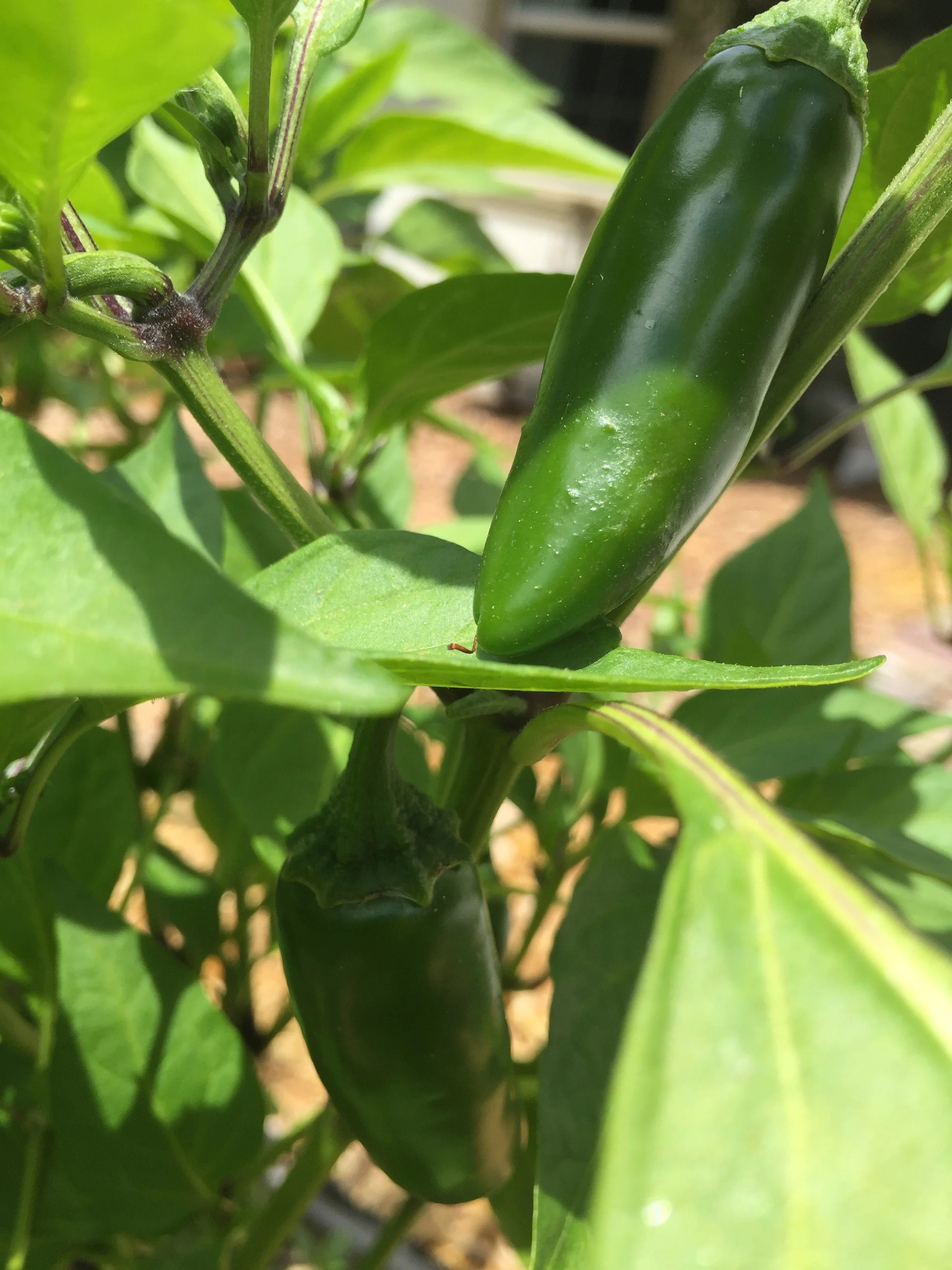
Jalapeno

Jalapeno

We tend to eat sweet peppers only one way. I know, that's awfully boring of us, but it's the way we like them and so that's the way we always eat them, and that's as fajitas. I marinate a skirt or flank steak in lime juice, soy sauce, and olive oil (throw in a smashed garlic clove or two) and then we grill it. The peppers are roasted in olive oil and sea salt, usually in the oven. Sometimes we add caramelized shallots. The sliced steak and peppers are served in flour or corn tortillas with a generous helping of guacamole, and for some, homemade salsa. This is not a classic fajita, but it's the way we like it and we have it frequently. We do not eat this meal in winter, as peppers are not in season at that time. Not even in June; I know because we had a hankering and our peppers weren't near ready yet, so I checked both Whole Foods and Safeway. Both had organic red peppers, but they were both shipped in from the Netherlands, of all places. Not even Mexico. When we were in Washington state, I checked the local store for organic red peppers, and they were from Canada. Closer, but still! And conventional peppers were from even further away. Peppers are regularly on the 'dirty dozen' list for high-use pesticides, so organic in this case is best anyway. And local is even better! So, we don't eat peppers unless they are in season. Therefore, I always want extra to roast and freeze, enough to eat this meal once a month over the winter and spring. I have four pints frozen now, so that's enough for four meals. I hope to get twice that before our warm season is through. And I think I will! The sweet peppers listed above are still producing wonderfully.

What peppers are you growing and enjoying this year?


Tags peppers, preserving, vegetable garden, cooking
Comment

Working on the Fall Garden

August 9, 2017 Elizabeth Boegel

The kids and I are splitting our days between lazy time and purposeful before-school-starts-again time. Half the day is given over to books, movies, and computer games, while the other half is used to fulfill some chore that needs doing before the 21st, when our days will once again be filled with schoolwork and homework. This encompasses anything from eye appointments to haircuts to shopping for school supplies. Some days we take off and do something we haven't done before, like tour the Asian Art Museum in San Francisco. It's been fun, but for a restless person like me, it can be hard. I crave, and thrive on, schedule and routine. I actually enjoy being busy. I don't like large swathes of free time with nothing to fill it. And yet I know it's a luxury and I should embrace this short period of freedom. I'm trying.

One of the things I notice when I'm bored is that I want to spend money. Fix things. Make things pretty. Re-do entire flower beds. This would require funds we do not have. As any parent knows, August requires a robust bank account. Even public schools require many hundreds of dollars at registration time - student body cards, new PE clothes, donations to the PTA - all worthy things, just not exactly cheap. And the after-school activities start up again and therefore the fees start up again. So going to the nursery and buying a bunch of perennials? Um, no. Not a priority.

The other thing I want to do when I'm bored is eat. Mainly sweets. I find myself looking up recipes for chocolate mousse and Victoria sponge. Kate and I ducked into a See's the other day and came home with a box of soft-centered truffles. Oy.

One thing that keeps me busy is trolling the summer garden every day, weeding where necessary (though in summer, with only drip irrigation, there really aren't that many weeds), pulling out dead plants and flowers, tying up stray tomato vines, or harvesting whatever is ripe. We're eating tomatoes and peppers nearly every day, and any excess is either canned or frozen. Cucumbers are coming more slowly now, and the beans are in a lull after my last exhaustive picking, though basil can be harvested every other day and made into freezer pesto (just a huge bowl of basil thrown into the food processor with a cup of CA organic walnuts, a few cloves of our garlic, salt, a cup of grated parmesan, and olive oil to bring together into a paste).

But honestly, my mind is already turned to the fall and winter garden, what and how to plant, and when.

I started brassica seeds in July: Broccoli, cauliflower, Brussels sprouts, kohlrabi, and cabbage. I transplanted most of them the first of August into compostable plastic cups, and they are growing well in a protected space that gets morning sun and afternoon shade. I've given a couple of plants away, but most I will transplant into containers in the next month or so. I've decided to do everything but garlic and shallots in containers (reason below). I have all those one gallon pots that I grow tomatoes in, I can fill each one with fresh potting soil and one plant. I'll have a ton of containers on the back patio this fall and winter, but that's ok. 

Some of these brassica starts have a leafminer problem. 

See that white trail there in the leaf? That's a very small maggot making its way through the tissue. Most leafminers are the maggots of moths or flies. I could have covered these with a light cloth to prevent the flying critters from laying eggs on the leaves, but I didn't realize I'd need to, having never had leafminers before. So I decided to spray them with Neem oil, which is organic, and smothers the maggots. Hopefully that will do the trick. 

I've also planted romaine, carrots, and beets directly into 10-gallon containers for a fall or early winter harvest. I plan to do some butter lettuce, kale, chard, and spinach once it gets cooler - those can go all winter. I have a fall crop of peas in the potato bed and should be able to harvest both peas and potatoes in a couple of months.  

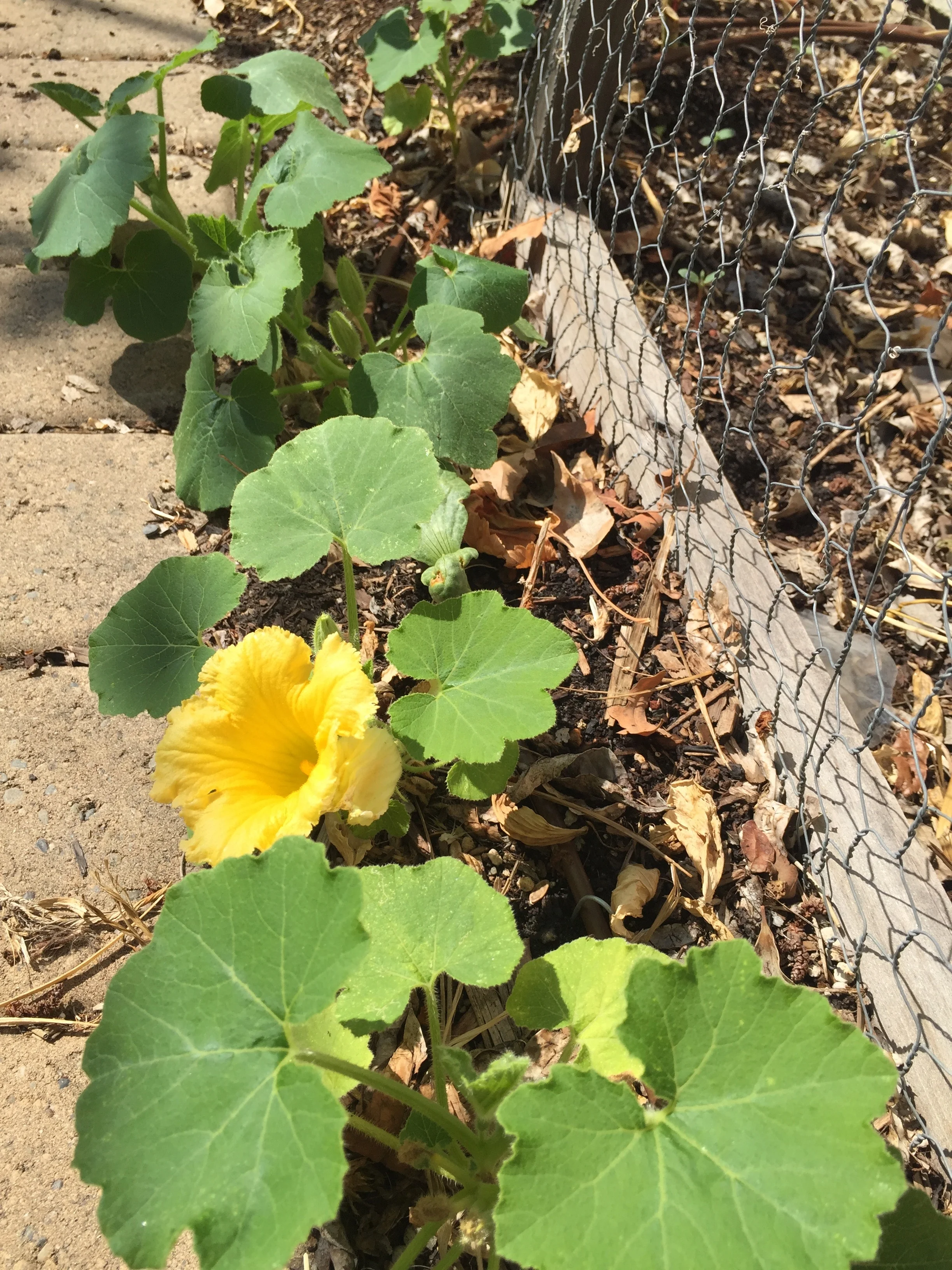
There is a volunteer pumpkin coming up in one of the olive tree containers...

... and I've got kabocha squash and other pumpkins finally coming up next to the garage, where the sweet peas and lupines have been.

I have pre-ordered both my garlic and shallots from Peaceful Valley Farm Supply, and will use two of my 4x8 beds for those, probably planting them in October. Last year, I left my tomatoes in through the beginning of November, but we really didn't get much of a harvest from them in October or November. Just not enough light and heat. So I'll cut my losses this year and take them out in October sometime and start my winter planting.

All the other raised beds will be given over a cover crop of winter wheat and crimson clover. Both should survive our mild winter. If they don't, they'll provide mulch when they winter-kill, having first improved the soil as they were growing. If they live, I'll crop some wheat in the spring, which should be a fun and educational experience, as well as providing food for us and straw for the garden; the clover will provide nutrients for the soil and flowers for the pollinators, as well as covering the soil to prevent erosion from winter rains. I'm excited to try something different over the winter. No row covers will be needed, which will save us some expense (it's time to get new row covers, and I'm happy to put that off for a year - the plants in containers should be protected enough not to need cover, but if they do, I'll use a sheet) and also some labor.

Meanwhile, we have not-quite two weeks left to enjoy our freedom. I'll continue to try and embrace it, without eating too much chocolate or purchasing any big-ticket items. We'll see how well I do. How are YOUR fall garden plans coming?

Tags winter garden, fall garden, planning, vegetable garden
Comment

August Planting List (for Zone 9b)

August 1, 2017 Elizabeth Boegel

The last few days have been a flurry of activity. Tom and I spent the weekend processing all the produce our garden had churned out while we were gone. I had told all our neighbors to feel free to come in and pick what they liked, but there was still plenty to put up. We made six quarts of crushed tomatoes, five pints of salsa using our tomatoes and jalepenos and garlic, five pints of bread 'n butter pickles, four pints of tomato sauce for the freezer, and two pints of roasted red bell peppers for the freezer. Oh, and started the annual supply of dried pepper flakes by drying the hot peppers that were ripe. We re-tied all the 49 tomato plants up, cleaned up the bottoms by trimming off old and spent foliage, and fertilized them with Maxsea. (I'm not going to do the Florida weave method next year, more on that later. We've had issues with some of these huge heirlooms we're growing - they collapse under the weight.) Today I managed to pot up all the seeds I started in early July: Broccoli, cauliflower, cabbage, Brussels sprouts, kohlrabi, salvia, and sunflowers. It's been a busy time. 

Here is your August printable. I would add that it might be time to order your garlic your shallots or onions for your fall planting, now. I don't generally plant until November, but sometimes seed houses run out, so it's good to check your favorite places and get the scoop. I plan to do Inchelium Red garlic again, from Baker Creek, and French Grey shallots, from Renee's Garden. Neither one is ready to ship yet, but I'll keep checking back. We want to make sure we get that order in before they run out. 

I sowed more pumpkin seeds today, as the Kobocha squash I planted is growing very slowly. So I added these seeds in the hope that we'd get SOME sort of winter squash. I am also still continually sowing basil, cilantro, and dill seed. My flowers are not germinating as well as they have in other years - I am going to need to fill in with bought starts sometime this month, if I want to have bloom through the fall. I'd like to find a place to start a fall crop of peas, too. More to do!

So, the garden work continues and the summer harvest continues to roll in. Happy planting!

Tags planting list, tomatoes, peppers, preserving
Comment

Road Trip to the Pacific Northwest

July 29, 2017 Elizabeth Boegel
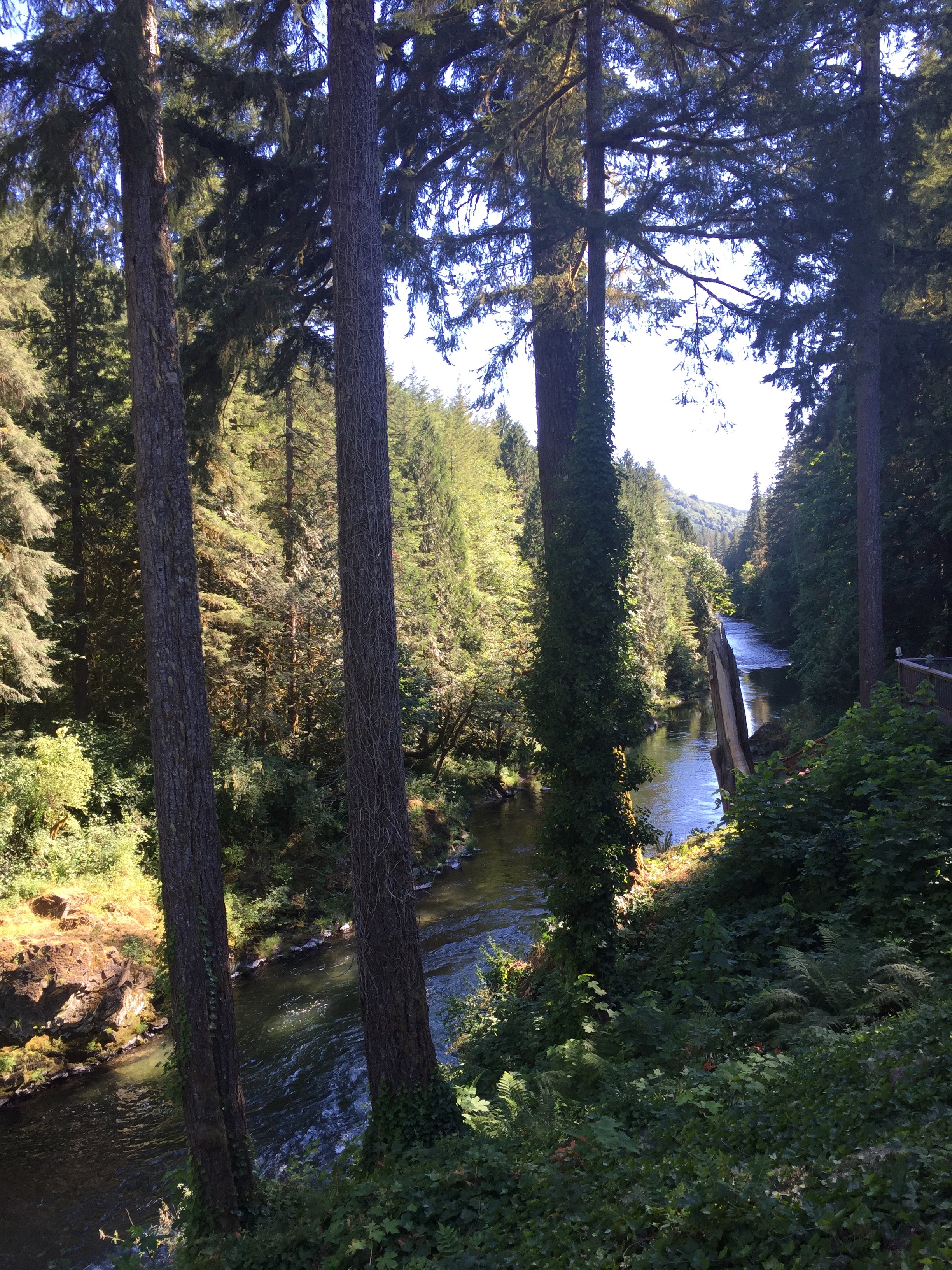
the Kalama River, perhaps our favorite river of all

the Kalama River, perhaps our favorite river of all

We arrived home last night after almost two weeks on the road, on a wonderful journey defined mostly by rivers and mountains. Both Tom and I had been to Oregon and Washington before, but it's been 20-30 years, so it was as if it was new to us. Plus, we saw new areas we hadn't seen before. And, it was fun to have our two teenagers in tow, both of whom had never been to either state.

As with so many California journeys, our trip started with us heading out on I-5. It was fun to drive by a very snowy Mt. Shasta and a very full Shasta reservoir. We stopped briefly in McCloud, a town Tom and I fell in love with 15 years ago, when I was pregnant with Adam and we traveled there for a short vacation. The town looks rather downtrodden at the moment, but the scenery really makes up for it. We also stopped to hike in Castle Crags State Park, where we looked way, way up at spires where the Pacific Crest Trail goes by, and we were all secretly thankful we weren't hiking on THAT trail. We continued up I-5 and ended our first day's travels in the Klamath National Forest, camped by the Klamath River in a campground called 'Tree of Heaven.' The campground was small and private, and we enjoyed a swim in the river before dinner.

Mt Shasta

Mt Shasta

Campsite under the oaks

Campsite under the oaks

Swimming in the Klamath, not too cold (65 degrees maybe? the warmest water we swam in the entire trip)

Swimming in the Klamath, not too cold (65 degrees maybe? the warmest water we swam in the entire trip)

The next morning, Day 2, we packed up and drove over the mountains and into Oregon, shortly coming into Ashland, where the Shakespeare Festival was in full swing. We spent the day exploring Lithia Park and the town of Ashland (I had visited 25 years ago and found it much the same, though clearly weathier), drove down the road a bit to visit both the Rogue River and Emigrant Lake, plus the Dagoba chocolate factory (which is now owned by Hershey, darn it). We checked in to a hotel (Adam was annoyed by the fact that every hotel and store had a Shakespeare-themed name, giving the town a slightly Disneyland feel) and got ready for our theater experience. We saw "The Odyssey" at the Allen Elizabethan theater, and it was 3-1/2 hours of pure brilliance. The kids were riveted and we all loved it. 

Outside the theater, during the day

Outside the theater, during the day

Inside of the theater. Later, we learned we weren't supposed to take pictures. However, the doors were wide open so we went in and took a look!

Inside of the theater. Later, we learned we weren't supposed to take pictures. However, the doors were wide open so we went in and took a look!

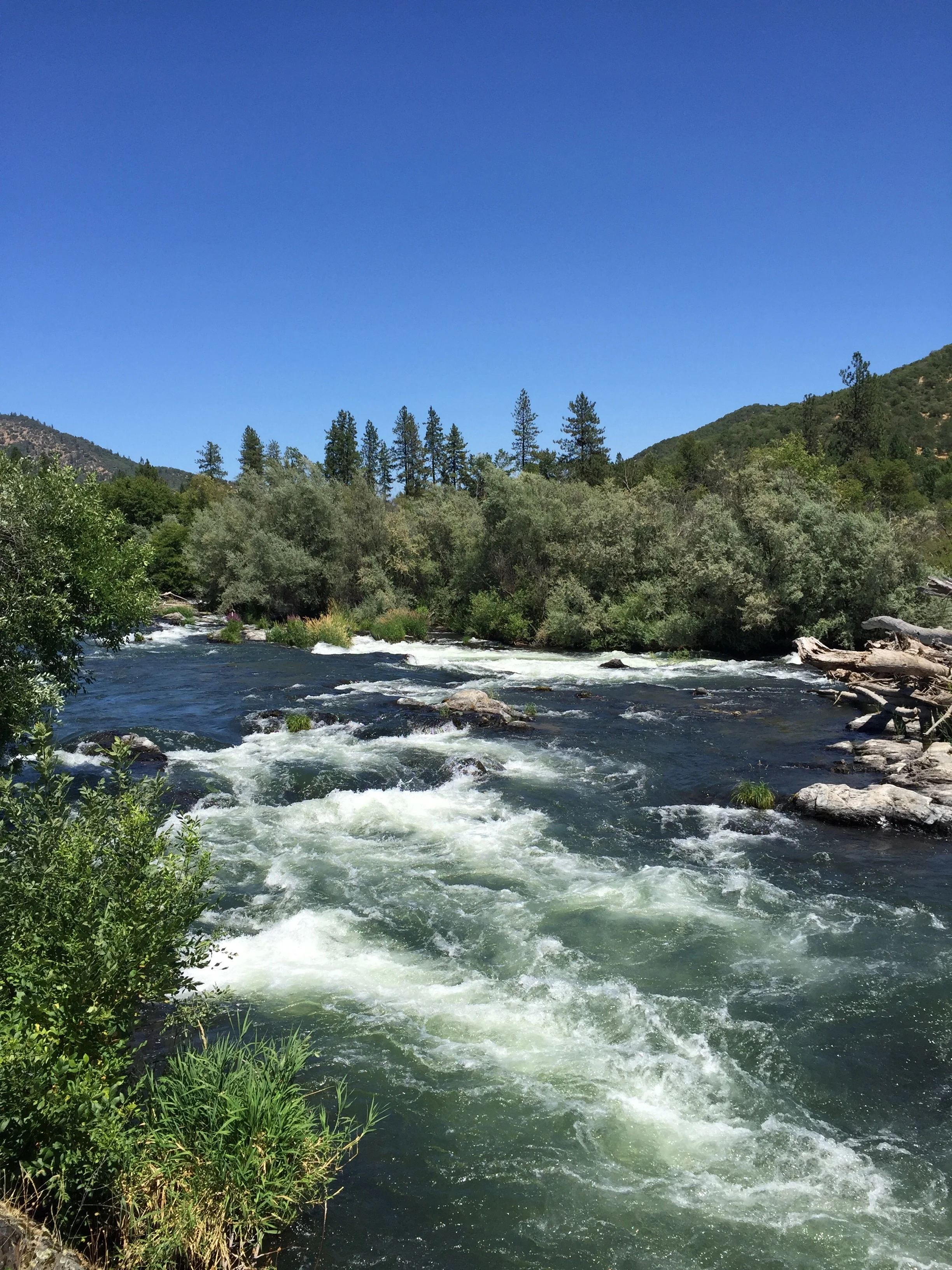
the Rogue River

the Rogue River

Emigrant's Lake, a man-made reservoir

Emigrant's Lake, a man-made reservoir

On day 3, we packed up early and headed up to Crater Lake National Park. Tom had been here as a 14 year old; the rest of us had never seen it, and I was really looking forward to exploring it. We stopped in the visitor's center, picked up a sandwich, and ate our lunch looking out at the lake. Then we joined a Ranger Walk up to the rim and along it, trekking through snow piles all the way. All through Oregon, and especially at this location, we were amazed by all the wildflowers that ringed every roadside. Wildflower season in our part of CA is late winter to early spring, so it was fun to see so much vegetation in bloom in late July. Of course the flowers and vegetation at Crater Lake are subalpine, as snow stays around here through the year. We enjoyed hearing the ranger talk about the history and ecology of the lake, and we enjoyed throwing snowballs, and we enjoyed the walk and the beauty of the place. Afterward, we traveled down the north side of the park to Diamond Lake, where our reserved campsite was waiting, right on the edge of the water, with snow-capped peaks all around us. 

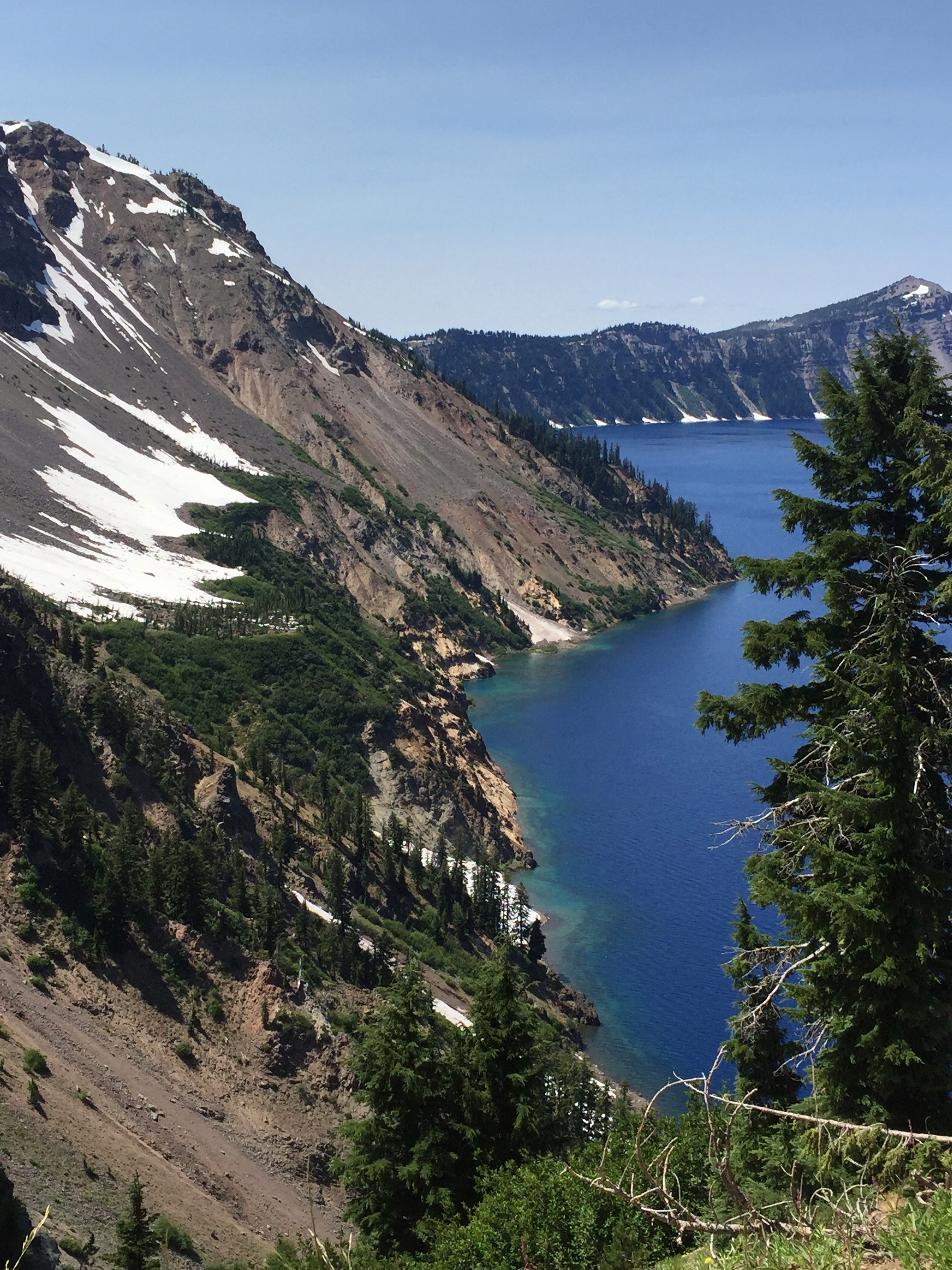
Crater Lake

Crater Lake

Hiking a bit of the rim

Hiking a bit of the rim

Campsite at Diamond Lake

Campsite at Diamond Lake

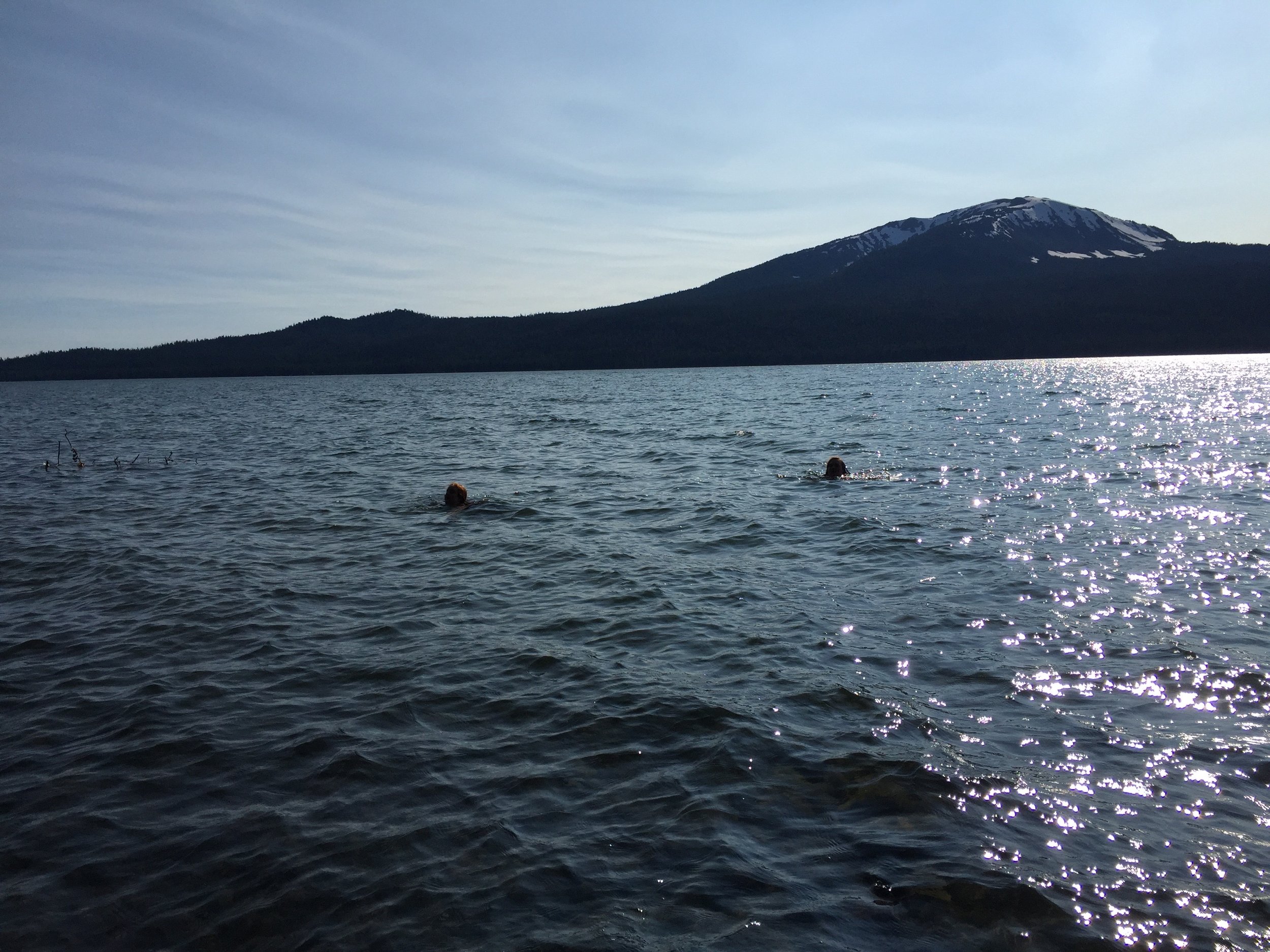
Swimming in the lake ringed by snowy peaks

Swimming in the lake ringed by snowy peaks

Fireweed was often in forest clearings

Fireweed was often in forest clearings

On Day 4, we headed up to the capital city of Oregon, Salem. We have friends who live in Monmouth and teach at Western Oregon University; we were planning to have dinner with them and see their alpaca ranch and home. First we explored a little of Salem, which we didn't find all that pretty; we did enjoy a walk on the Willamette river and some hand-churned ice cream downtown. We much rather preferred the little towns to the west of Salem  - like Monmouth, and Independence, both cute mid-1800's towns surrounded by farmland. We saw blueberry farm after blueberry farm, the bushes so laden with fruit that it put our bushes to shame. We had a great dinner with our friends, Charles and Maren Anderson and their two delightful daughters. Charles and Tom were in grad school together at Cal; Maren and Charles got married about the same time we did, and moved to Oregon around the time we had Adam. Their kids are younger then ours, and fun to follow around as they showed us around their farm, chasing chickens and the donkeys and the alpacas, which in their newly-shorn summer coats looked for all the world like Ewoks.

There were logging trucks and trains everywhere in the PNW

There were logging trucks and trains everywhere in the PNW

The lovely Willamette river

The lovely Willamette river

Colleen and friend

Colleen and friend

Aplacas!

Aplacas!

The next morning, we opened the curtains to our hotel and looked down at the parking lot and discovered a crime scene. Hoards of police cars, trucks, police tape everywhere, news crews, and a dead body loosely covered by a sheet, all two floors underneath our window. Later we found out a 25-year-old man was shot and killed at 3:30 in the morning. We heard nothing, thankfully, but it was shocking to wake up to this. We packed up as soon as we could and got moving, very subdued and sad about this turn of events. Luckily we were planning to meet the Andersons at a local farmers' market, so we had something to look forward to and to put our minds on. We enjoyed not one but two markets a block away from each other, and bought all the berries our car could hold. We also found one young farmer selling tomatoes and peppers that he grows in a greenhouse (it's not hot enough for long enough, otherwise) and we bought all he had, for our dinners the next two nights. Tom and I couldn't get enough berries, we ate a pint every chance we could. We found all kinds of new (to us) berries - Josta, red huckleberry, red currants. Marionberries might have been our favorite, though the farmers in Oregon seemed to find them too common to care much about. We loved them. After saying goodbye to our friends, we drove up to Portland (marveling at Mt Hood in the distance the entire way), and had lunch and walked by the Willamette. You know how sometimes you feel a little out-of-place in a new city? Well, it was the opposite for us in Portland. Everywhere you look, there's a beard like Tom's, or hair like Adam's. We felt right at home and enjoyed a fabulous farm-to-table lunch with local coffee and beer. Then we drove out to the Columbia Gorge, hoping to hike waterfalls, but the traffic was so bad that we ditched that idea and went on up into Washington and to Kalama, where our friends the Hoffmans have both a home in town and on the Kalama river. They generously offered us their river house for two nights, and words cannot express how much we loved this place. Right on the Kalama river, which sung us to sleep each night, in a perfectly appointed and lovingly decorated home, where we could do five loads of laundry and cook some meals on a real stove instead of a camp stove. It was just the respite we needed.

a lap full of berries

a lap full of berries

Hops growing by the side of the road

Hops growing by the side of the road

the River House

the River House

Kalama River

Kalama River

the view from one of the two decks

the view from one of the two decks

The next day, the Hoffmans arrived to entertain us, Kalama style. April and I first met when we were both singing in the choir at First Presbyterian Church in Berkeley back in the mid-1990's. She and her husband Greg were like kindred spirits and we enjoyed spending time with them so much. April and I were part of a book club and enjoyed cooking for each other and hanging out with a group of friends we knew from church. The Hoffmans lived for a time in Seattle, and then back near us in the Bay Area for a short time, and now they are back in Kalama for good. April is in the process of renovating a historic building in downtown Kalama, which will be a showcase for the furniture that she rescues and reupholsters, as well as her artwork and those of other local artists. April has the most innate sense of style of anyone I've ever met, and everything she touches becomes gorgeous and creative, hand crafted in the most high-end way possible. Her storefront, which is called Ella Gray, will be open by the autumn, and if you're ever in Kalama, I highly recommend a visit. Anyway, April and Greg and their two sons, as well as some neighbors and family friends, came up to the river house to take us tubing down the river. What a fabulous day we had! I was personally terrible at tubing, as my arms are too short to reach the water and direct my tube the way I wanted it to go, but I managed to make it over some rapids without bailing and meandered the rest of the way down the 52 degree river, while Tom and the men drank cold beer as they floated and the kids practically raced down. Adam jumped off a 40-foot bridge into the water (after watching the Hoffman boys do it). We had a wonderful evening meal, made from the farmers market produce we bought the day before, and then spent the evening by an outdoor fireplace, catching up. It was a perfect day.

I took this right after we came back, all of us and all these tubes, in one truck. It was the clown car of river rats.

I took this right after we came back, all of us and all these tubes, in one truck. It was the clown car of river rats.

The river in the morning

The river in the morning

From the deck of April's house in town. The light is wrong, but the Columbia River is in the background.

From the deck of April's house in town. The light is wrong, but the Columbia River is in the background.

We reluctantly left Kalama and our friends to travel up into the heart of Washington, knowing that the area we really wanted to explore was up north, in the Skagit Valley. We drove up trusty I-5, openmouthed past views of Mt St Helens and Mt Rainier (completely covered in snow), past Seattle, up into farm country until we reached our campsite, in Larrabee State Park, on the Samish Bay, just south of Bellingham. This campground was large, and FULL, but our reserved site was actually a walk in, and we were perhaps the length of a football field up a hill, to a perfect private nook. It was an ideal spot, despite the walk to the bathrooms, and we were thrilled until we saw the train tracks, not 200 yards below our campsite. We could only hope that the trains did not run at night. We drove into Bellingham and saw the Spiderman movie with popcorn for dinner, before returning to the park and watching the sun set over the San Juan Islands. It was gorgeous. We got ready for bed, perfectly happy. And then the trains started. Every half hour, long long freight trains, until about 2 am. It was not a very nice night.

That's actually Lummi Island in the distance

That's actually Lummi Island in the distance

We had planned to camp here two nights, but we just couldn't face the trains again. So quickly I found another campsite on a sheep farm and creamery on Whidbey Island. We wanted to explore that area anyway, so it worked out perfectly. I found this campsite on Hipcamp, which I joined back when I was planning this trip. Hipcamp shows you all kinds of alternative camping areas all over the US, as well as state parks. It's a neat service and fun to see what kinds of places you can find near you. Anyway, as soon as we knew we'd be camping elsewhere, we packed up and headed south through the little towns of Edison and Bow, which completely charmed us. This area is in a flat valley, ringed to the east with the North Cascade range (long and snowy), and the west with the bay and islands, and further on, by views of the Olympic Peninsula range (craggy and snowy). The cropland is rich and fertile, and we saw the most idyllic farms surrounded by fields of diverse crops. Edison boasts a wonderful breakfast spot called The Breadfarm, which was a yeasty heaven on earth. We fell in love with these tiny, sleepy farm towns with the majestic views. We realize we were visiting their perfect summer window (which is SHORT), and we should probably go back in February to see how it really feels to live there. But on this visit, the weather was sunny and cool and everything was green and there was water everywhere and the people were friendly and we just loved it. We drove onto Whidbey Island via the Deception Pass bridge, and we stopped and ranged around the state park there, exploring the waterways underneath the impressive structure. We continued south down the island, stopping at farm stands to get eggs, raw milk and cream, fresh peas, and grass-fed beef for our camp meals. We stopped in Coupeville, a tiny fishing village, to have lunch, and explored a military fort and lighthouse at the south end of the island. We reached the sheep farm by late afternoon. We set up camp next to another couple who are traveling the US with their Airstream trailer and dog; they have been on the road since 2015! The sheep camp had an outdoor shower and kitchen, and a very adventurous walk down to the bay and the beach; we watched bunnies in the lawns and enjoyed the adolescent turkeys cooped up with the chickens, learning how to gobble. We smiled at the sound of ewes going in for milking and wished for a chance to taste the cheese, but the shop was closed. We got the best tent-sleep of our lives on that farm, that night.

The Breadfarm storefront in Edison

The Breadfarm storefront in Edison

a slough outside of town

a slough outside of town

Potato fields

Potato fields

Deception Pass

Deception Pass

Coupeville

Coupeville

the sheep farm

the sheep farm

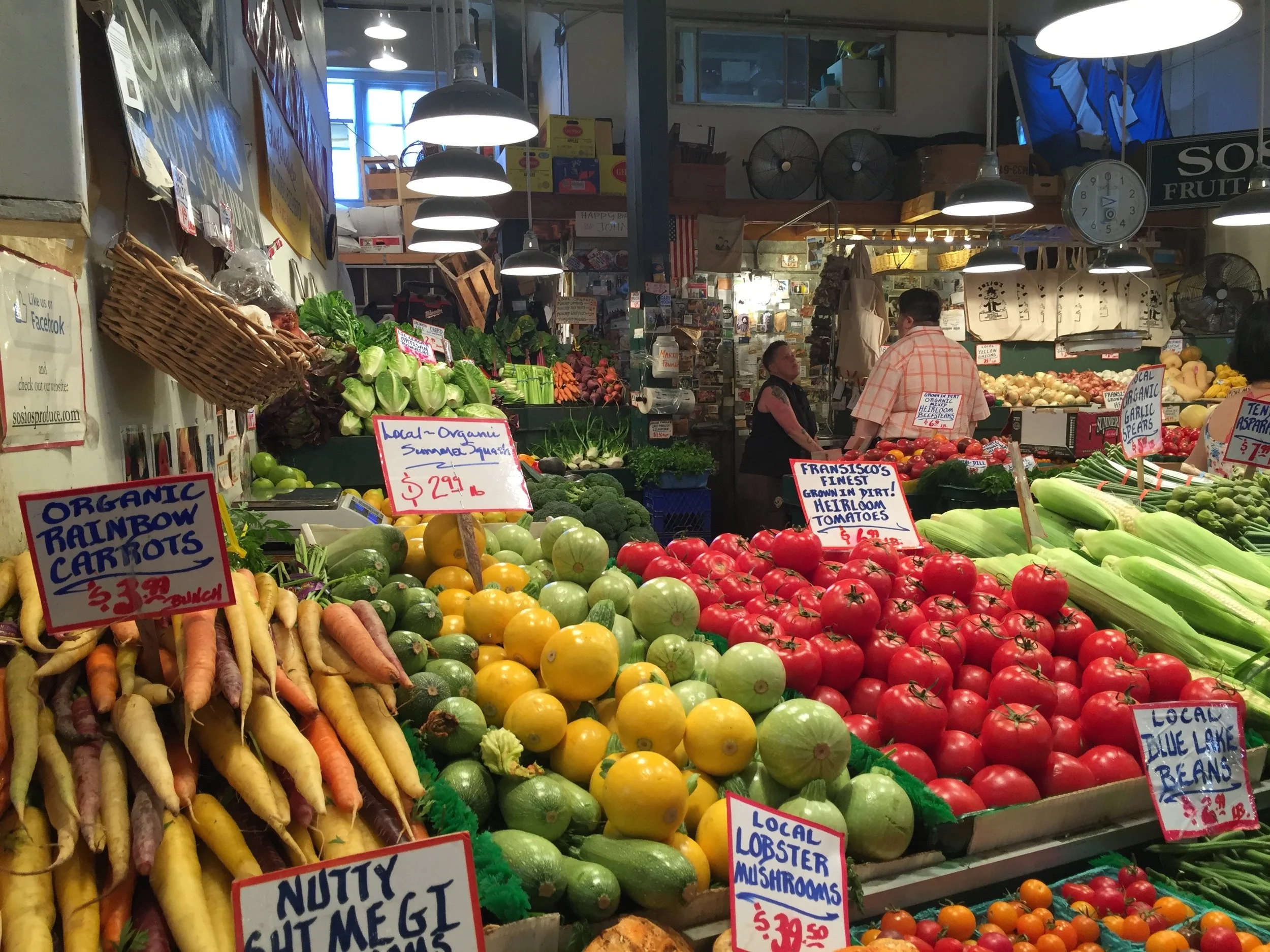
Day 9, we packed up and set off for the ferry that would take us from the south end of Whidbey Island to the mainland. We had to wait a bit, but what an exciting thing, to drive our car onto a huge boat, and then get out and watch our trip across the bay. Then we drove into Seattle to spend the day. Seattle was Kate's favorite place of the whole trip, and I can see why - it's a charming big city set on the side of a hill that slopes down to a bay, and it has interesting people and good food and plenty to look at. Sound familiar? We decided Seattle was a lot like San Francisco, and kept expecting to see a trolley laboring up a nearby hill. We decided to play tourists and spend the bulk of our time in Pike's Place Market and the surrounding wharf. The market is huge, nine acres or something, and was crammed full of people. We enjoyed looking at all the fish available for purchase, and all the local produce, and we bought some handmade pasta and some veg. We talked to some locals who recommended that we eat lunch at the original Ivar's, down by the water, so we walked down there and had fish n' chips. Then we rode the huge ferris wheel that would give us better views, we were told, than the Space Needle. That was fun. We wanted to see the Chihuly installation but decided that we'd had enough of crowds and cities and headed back out of town. It's funny how much we didn't want to be in cities on this trip (Kate excluded, she would have loved more time in Seattle and Portland). After camping in so many wonderful wild places, it just seemed weird to be in crowds. We anticipated staying in the city longer so I had booked a hotel there. We cancelled that reservation and decided to head out to the Washington coast (just beautiful) and then back down to Oregon. We managed to get a hotel room in Astoria so we stayed the night there. Adam and I went out and explored the town a bit, and I had last been there when I was about 24, and I have to say it looked shabbier than I remembered it. But the bridge across the Columbia from Washington to Astoria was spectacular and was the longest bridge we crossed on our trip.

On top of the ferry looking down at the cars

On top of the ferry looking down at the cars

Adam looking out toward the Northern Cascades

Adam looking out toward the Northern Cascades

The famous sign

The famous sign

We bought tomatoes, basil, and garlic here

We bought tomatoes, basil, and garlic here

near the Willapa Bay, south of Aberdeen WA, a place I must go back to and spend some time, it was gorgeous

near the Willapa Bay, south of Aberdeen WA, a place I must go back to and spend some time, it was gorgeous

the Astoria-Megler bridge

the Astoria-Megler bridge

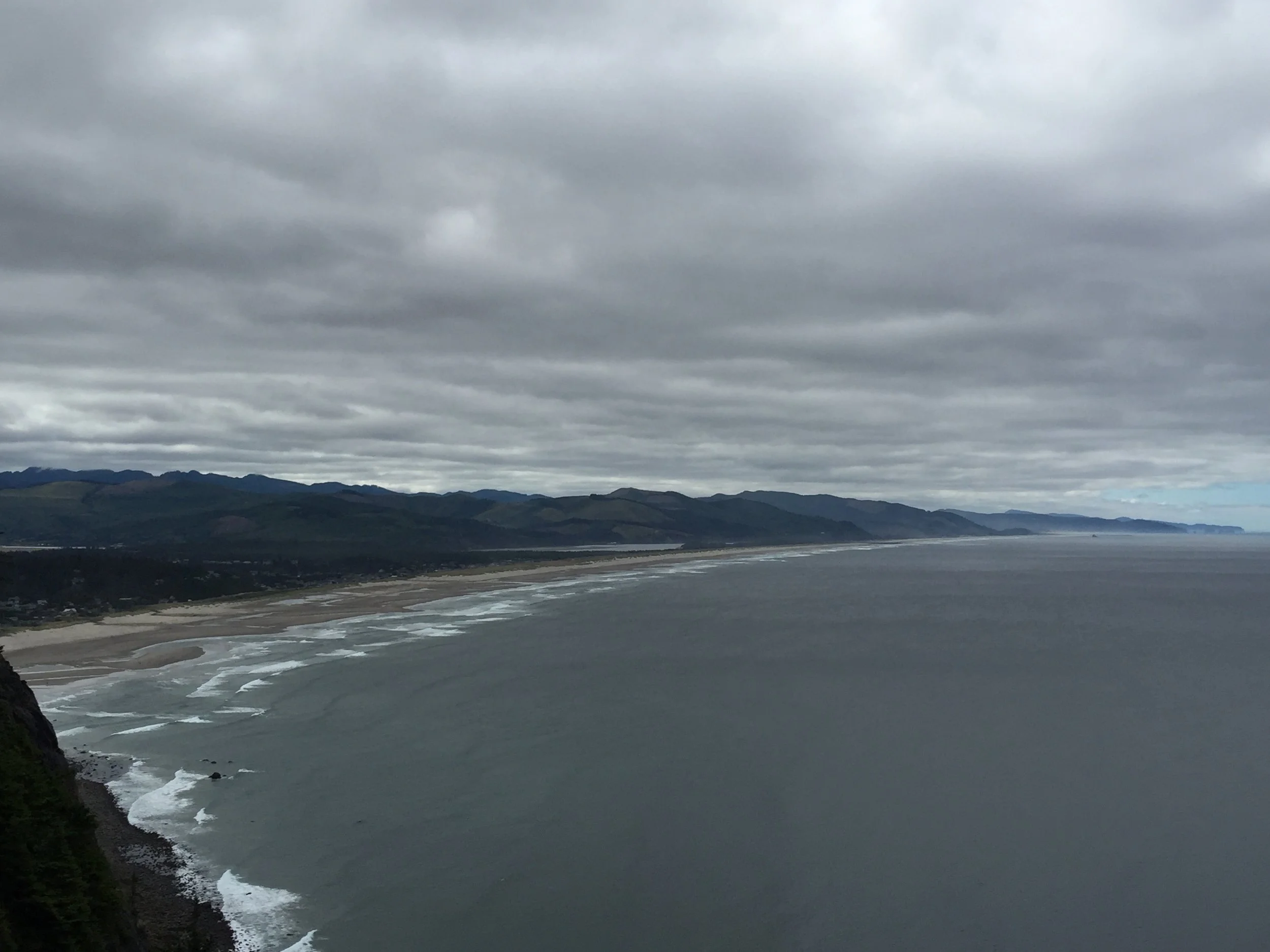
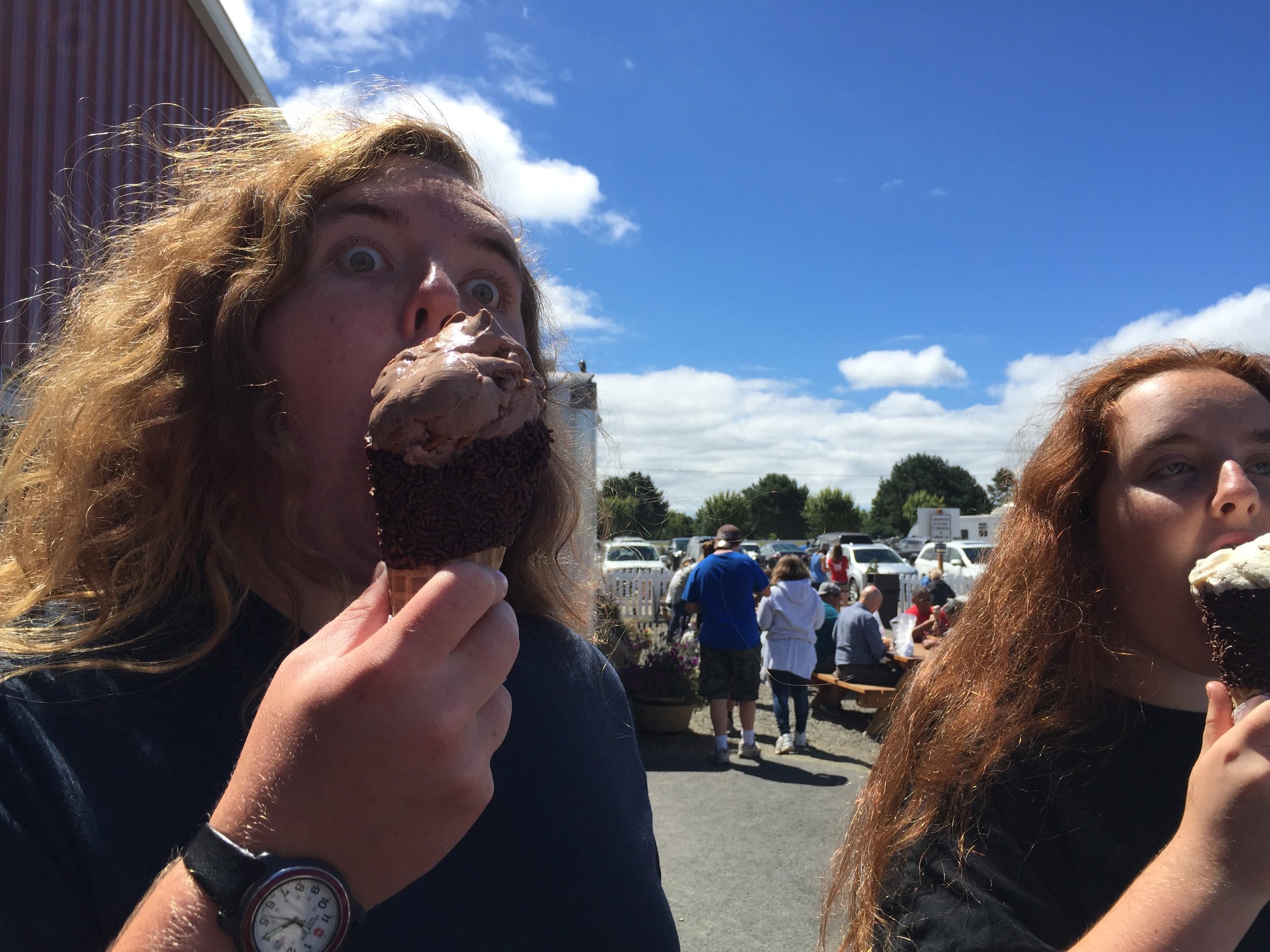
We packed up the next morning early and headed for the Lewis and Clark National Park. This is where the explorers spent the winter before heading back across the country again. The park is a gorgeous place with interesting buildings and with well-labeled plants (which I appreciated very much) on our walk down to the Netul River, eating some wild salal and red huckleberry fruits on the way. We then drove to Tillamook and had a grilled cheese and ice cream cone at the factory there, an intensely crowded spot - interesting in this day and age, where artisan cheesemakers are everywhere, but oh well, we liked our mainstream ice cream anyway. Our reserved camping spot was at Bullard's Beach state park, but we decided to drive further than that and hope to find camping closer to the CA state border. Highway 101 on the Oregon coast is a spectacular drive, one that both Tom and I have done before, but was new to the kids. There are all sorts of little towns and villages along the way, and all the while this amazing coastline to look at. It takes a while but it sure is scenic. We started to get a little nervous about finding another camping spot however, as everything seemed full, and we had little cell phone service to research our options. (I was continually marveling that our mothers used to plan trips like these without the internet. HOW???) It got later and later, and all of us were tired of driving, when we finally spotted a small sign that led to a campground about 10 miles off 101 up the Rogue River (here we were seeing this river again, but now on the ocean side!) and we were able to set up camp, cook the Pike's Place Market produce and pasta that we'd been holding onto, and even get in some stone-skipping on the river before bed.

the Netul river

the Netul river

the forest nearby

the forest nearby

a foggy, windy coast morning

a foggy, windy coast morning

Tillamook

Tillamook

maybe a little windy? but a nice lighthouse behind us

maybe a little windy? but a nice lighthouse behind us

back by the Rogue, at the other end

back by the Rogue, at the other end

Our last day consisted of driving back into California and the long 10 hour slog home. When you first cross the border from OR into CA on 101, it doesn't look that different - winding roads through woods and fog. Then the magnificent redwoods start to dominate the landscape and you think, ahhhh. THIS is California. Then you travel through weird and wonderful little towns like Arcata (I'll be back to visit you again one day Arcata, I loved you!) and then finally you reach valley, where the temps start to rise and the hills are crispy and brown and dominated by grapevines. Before long you're back into wall-to-wall traffic and big cities and rush hour. It does get a little depressing. After the clear skies, tall trees, and moderate temperatures of the PNW, not to mention the sight of water everywhere, it's hard to rest your eyes on hazy brown hills and freeways. But we were of course glad to get home, glad to get laundry started, glad to have our own bathroom and beds. We found our water heater broken (bummer) and a bumper crop of tomatoes needing to be harvested (exciting) so today has been busy. The repair guy has come, I've harvested and roasted peppers for the freezer, plus canned five pints of salsa using our tomatoes and peppers. Tom harvested cucumbers and is in the process of making bread 'n butter pickles. The air conditioning is on, blech, but the cat is happy and sleeping on our bed - apparently she was disconsolate the entire time we were gone. We've aired out the tents and sleeping bags and transferred all the rocks we collected from all the rivers and lakes we visited into a special place in the garden. Kate's back on her computer, and Adam's back hanging out with friends. The washing machine is going non-stop. Back to reality.


We traveled a distance of just under 2500 miles.

We visited eight national and state parks: Castle Crags State Park (CA), Klamath National Forest (CA), Umpqua National Forest (OR), Crater Lake National Park (OR), Columbia River Gorge National Scenic Area (OR & WA), Larrabee State Park (WA), Deception Pass State Park (WA), Fort Clatsop Lewis and Clark National Park (OR). We drove through many, many more, and wished we had the time to explore them, especially Mt Rainier and Mt Baker.

The highest altitude we reached was over 7100 feet on the rim of Crater Lake (OR).

We crossed 39 named bridges and hundreds of unnamed ones. The longest bridge we crossed was the Astoria Megler Bridge between Washington and Oregon, over the Columbia River, at four miles long.

We spotted a license plate for every state EXCEPT these ten: Hawaii, Rhode Island, Delaware, new Jersey, Vermont, West Virginia, New Hampshire, Connecticut, Alabama, and North Dakota.

We wished we had tracked how many cannabis storefronts we saw. There was at least one in every town in Oregon, often two, and similar amounts in Washington, very much like the old liquor store on every corner. Marijuana is legal recreationally in both states. We saw what California is going to look like now that it is legal here, too. I have to say, not terribly attractive, honestly.

Crops we saw actually growing: sunflowers, olives, grapes, hay, corn, hazelnuts, almonds, raspberries, blueberries, silage corn, rice, peaches, grass seed, walnuts, onions, Christmas trees, marionberries, blackberries, ornamental trees, turf, lilies, dahlias, timber, broccoli, potatoes, alfalfa, and strawberries.

We also saw beef cattle, milk cows, goats, sheep, alpacas, and chickens, on farms throughout our trip.

We all agreed that the River House in Kalama was the most beautiful spot; I think because not only was it physically beautiful, but it was also full of love and there was respite for us there in the middle of our trip and we were cared for so graciously by the Hoffmans. 

The other places that we listed as most beautiful: Mt. Shasta, Crater Lake, the Umpqua River, Chuckanut Bay with a view of the San Juan Islands (south of Bellingham), the agricultural plains of the Skagit Valley ringed by snowy mountains, the Willapa Bay south of Aberdeen, the Oregon coastline (the southern portion in particular), and Seattle. 

Next possible road trip adventure: the Baja peninsula in Mexico?


Tags vacation
4 Comments

How to Sidestep Blossom End Rot: My Plan for the Future

July 13, 2017 Elizabeth Boegel
Italian Heirloom and Hungarian Heart tomatoes, in various stages of ripening

Italian Heirloom and Hungarian Heart tomatoes, in various stages of ripening

Blossom End Rot is the bane of my summer tomato garden. I am picking and composting at least a dozen tomatoes a day, all suffering from a brown, rotted bottom. It's incredibly discouraging.

So, so many people believe that BER is caused by calcium deficiency in the soil. As you will soon see, the problem is not that simple. However, I went ahead and tested my soil. It has plenty of calcium, probably because I add our own crushed eggshells from the compost bin into my beds every year; and though it takes a long time to break down, it does eventually become available to the plants. Just to be sure, this year, I also buried two Tums tablets at the base of each plant, under the drip line holes, so they'd dissolve and add extra calcium to the soil. This was recommended procedure in one of my college courses, so I proceeded, even though I was doubtful.

I've also read time and time again that BER is also a water problem, with the way calcium moves through the plant, and that water stress can cause BER. We are watering every day, since it's been hot - the beds get 20 minutes of drip each morning.

SO: The beds have even, consistent moisture. The calcium is there in the soil. I even tried some hybrid tomatoes this year in the hope that they would be resistant. To no avail, it turns out - they have just as many affected fruits as the heirlooms.

BUT all is not lost. I've noticed something interesting this year.

I only get BER on the long, thin paste tomato varieties. Not on the ones like those pictured here, that are chunky and full.

Almost a pound of delicious tomato goodness

Almost a pound of delicious tomato goodness

So, noticing that, I started typing different sorts of queries in to Google, with altered words and phrases. And I found the most excellent article from our very own UC division of agriculture and natural resources (UCANR). This article spells it OUT, my friends. Here's some of what I learned, though I recommend reading the entire article if BER is a problem in your garden, too:

It turns out that BER is more common in fast growing varieties with extensive leaf systems. It does affect the more narrow fruits like Roma, and it also tends to affect determinate tomatoes more, as there is pressure in the plant to ripen all the fruit at once. 

While BER is a calcium issue, it's not as simple as just adding calcium to the soil. And while at heart BER management is a water issue, it's not a simple as keeping an even amount of moisture in the soil. Here's how it works. Calcium is dissolved in the soil (by all those little critters in the microbiome - fungi, especially) and is taken up by the plant root and is transported in the xylem in the plant stem (the 'tubes' that transport water; remember your 9th grade biology? Phloem transports the nutrients. But calcium is mobile in water and goes through the xylem only). And then: "Under conditions of high evaporative demand, i.e. low relative humidity and high temperature, water moves rapidly to the leaves, where most transpiration occurs. The calcium is carried along with the water, so most calcium absorbed by the plant ends up in the leaves. Fruit do not transpire as much as leaves; therefore less calcium reaches the fruit, which can cause a localized calcium deficiency." Um, low relative humidity and high temperature? This sentence may as well have a map with a pin in it in Walnut Creek, CA.

And not only that, once the fruit develops its waxy cuticle (when the fruit is between 1/2 - 3/4" in diameter), the transpiration rate in the fruit is FURTHER reduced. And get this, transpiration can also be restricted in cool or cloudy weather because the atmospheric demand for moisture is low. So that's why we shouldn't be planting our tomatoes too early, especially when the soil is too cold!

Meaty, juicy without being watery, fleshy. Yeah, baby.

Meaty, juicy without being watery, fleshy. Yeah, baby.

Now, we had an extraordinarily chilly May. Which actually often happens, especially the first half of the month. And it happens after a heat wave in April, which gets us all anxious to get tomatoes in the ground. And then it turns cold again. Then we had several blasts of very hot weather, which makes everything transpire even more. So the leaves are transpiring like crazy, but the fruit is of a certain size now and can't transpire. So no calcium to the fruit. WHICH EXPLAINS why the fruit on the side of the garden that is getting mid-day shade isn't having nearly as much BER. It's not transpiring as heavily on those very hot days as the ones on the mid-day full-sun part of the garden!

The article ends with a checklist of things you can do to prevent/manage blossom end rot, like adding organic matter to the soil, mulching heavily, watering on a schedule, etc, all things I already do. What's that definition of crazy again? Doing the same thing over and over and hoping you'll get a different result? Seems to me I need to change things up next year. Like for instance, plant tomatoes in the ground LATER, like mid-May, and maybe even more importantly, avoid planting narrow-fruited varieties! I mean, look at the pictures of those fabulous thick tomatoes all through this post! Both of these varieties (Italian Heirloom and Hungarian Heart) can be used as dual-purpose tomatoes, for both eating fresh and for cooking or canning. So from now on, I'm sticking to the fattest tomatoes I can find. 


Tags tomatoes, learning, diseases
4 Comments
← Newer Posts Older Posts →

Subscribe

Sign up to get email when new blog entries are made.

We respect your privacy. We're only going to use this for blog updates.

Thank you! Please check your email for a confirmation notice to complete the subscription process.

Powered by Squarespace