Ok, Entomologists: Tell me what this thing is.

I found him on a window screen. He's been hanging out all day. Beetle? Cricket?
*edit 9/14/15 It is NOT a beetle, it is a true bug, by the name of Leptoglossus zonatus, or Leaf-Footed Bug. This guy has probably been eating all my fruiting vegetables. Next time I see one, it's toast.
The Western Spotted Cucumber Beetles are all over my garden, I find them in every crop, on every flower. So far they haven't done enough damage to any one thing that we can't harvest some of it. But honestly, they are everywhere, and I've never had them before. Hopefully my deep mulch plan (with chicken coop litter) will help to deter them next year. They apparently overwinter in the soil. Argh.

But I continue to see good bugs on everything too -native bees, most notably the huge Carpenter Bees on all the flowers each morning. We checked our honeybee hive today and they look great - a little bit of brood, a lot of honey - plenty for winter, I think. This is really good news. Now if they can just fight off (or avoid entirely) varroa mites, we may have a strong overwintering hive. I've decided not to use chemicals to treat any varroa seen or unseen. I'm convinced now that I have to let the strong survive without help, and evolutionarily, the weak ones shouldn't survive. The bees just have to figure it out themselves. It's heartbreaking but that's the way I think it should go down. I know plenty of people would disagree with this assessment. However I'm confident in my decision, and I'll let you know how it plays out here in the next few months.
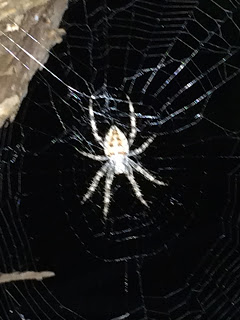
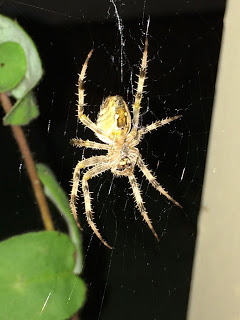
I continue to see lots of spiders, and lots of monarch butterflies. Today I found a scrap ofmonarch Gulf Fritillary wing on the garden paths. It's really beautiful, and nice to have a chance to study it close up.
The first section of buckwheat cover crop has flowered and it sure is pretty - in a couple of days I'll need to chop it down so it doesn't set seed. I'll let it compost in place. I've been reading an awful lot about cover crops and growing all your own compost materials rather than importing outside materials. For instance, I don't know exactly the history of any compost I order in bulk, nor do I know the exact history of even the horse manure I pick up each year. Who's to say the horses didn't eat herbicide-treated hay? In that case, you'd have herbicide-treated manure, which can do a bad number on your crops. I've had a lot of trouble with crops this year, most notably tomatoes and pumpkins, both of whom are planted in (forgive me) a shitload of horse manure-amended soil. In fact the cucumbers haven't done that well, and I've had problems with other crops too. So who knows? If I grow all my own carbon materials here in the garden, I'll have everything I need to make plenty of compost. I already have quite a bit, the compost just takes so long to break down. I guess I need to be better about turning and watering it. Or build a compost pile directly on a raised bed that is fallow, then start a new one when that is high enough... Gosh it just takes so much planning. Even getting a cover crop in takes a lot of planning, because I can grow veg in the beds year-round. If we had a cold winter here, I could plant a cover crop in the fall and let it winterkill, then the beds would be all ready come spring. Oh well. There's drawbacks and benefits to gardening any place, I guess. But the benefits to using cover crops are very clear in numerous ways - they definitely provide stacking functions (a permaculture premise) as they do more than one job. Feed pollinators, improve soil tilth, provide compost material, prevent soil erosion, feed microorganisms in the soil - lots of good stuff.


I do have to say, my honeybees pretty much leave the buckwheat alone, just as they did last year. I'm not sure if I'm planting the wrong kind to attract honeybees or what. There are lots of native pollinators on it, which is great - I was just hoping to provide some forage for my bees, as well. I may try something different next summer. The only thing is, buckwheat is good for hot dry weather and fast growing, and there aren't too many other cover crops that fit that bill.
I did see some honeybees up in the open space last week, which is only a mile from our house, so it's very likely that they are our bees (although I do know one other beekeeper in my area). The tarweed (Hemizonia congesta) is prolific right now, up in the hills.

As you can see, that's about the only living thing up there at the moment, other than native trees.
Here's another interesting thing I found this week walking with Joe:

Sorry the light is wrong on this picture, but the turkeys are everywhere, as usual. I wish I could try to catch one for Thanksgiving dinner. I wonder if we'd be allowed to? And then of course how would you do that without a weapon? I haven't the foggiest. Joe the dog just looks at them and yawns, so he's no help.
I harvested beans, tomatoes, peppers (both hot and sweet), cantaloupe, cucumbers, and herbs today from the garden. Three beds are full of ripening pumpkins (mostly the mini variety at this point, though I planted three different sizes), one bed is holding basil and buckwheat, one has cucumbers and buckwheat, one has cantaloupe, another one has just buckwheat, three have tomatoes, one has all the peppers, one has winter squashes, one has beans, and one has the sweet potatoes, which are going nuts. I'm looking forward to winter crops, even though we're nowhere near ready to plant them yet. We've got at least a month of hot weather in front of us. Early November will be our time to get the floating row covers ready and plant overwintering crops.
I found him on a window screen. He's been hanging out all day. Beetle? Cricket?
*edit 9/14/15 It is NOT a beetle, it is a true bug, by the name of Leptoglossus zonatus, or Leaf-Footed Bug. This guy has probably been eating all my fruiting vegetables. Next time I see one, it's toast.
The Western Spotted Cucumber Beetles are all over my garden, I find them in every crop, on every flower. So far they haven't done enough damage to any one thing that we can't harvest some of it. But honestly, they are everywhere, and I've never had them before. Hopefully my deep mulch plan (with chicken coop litter) will help to deter them next year. They apparently overwinter in the soil. Argh.
But I continue to see good bugs on everything too -native bees, most notably the huge Carpenter Bees on all the flowers each morning. We checked our honeybee hive today and they look great - a little bit of brood, a lot of honey - plenty for winter, I think. This is really good news. Now if they can just fight off (or avoid entirely) varroa mites, we may have a strong overwintering hive. I've decided not to use chemicals to treat any varroa seen or unseen. I'm convinced now that I have to let the strong survive without help, and evolutionarily, the weak ones shouldn't survive. The bees just have to figure it out themselves. It's heartbreaking but that's the way I think it should go down. I know plenty of people would disagree with this assessment. However I'm confident in my decision, and I'll let you know how it plays out here in the next few months.
I continue to see lots of spiders, and lots of monarch butterflies. Today I found a scrap of
 |
| front |
 |
| back - hard to see in this light, but those white patches are silvery and glittery |
The first section of buckwheat cover crop has flowered and it sure is pretty - in a couple of days I'll need to chop it down so it doesn't set seed. I'll let it compost in place. I've been reading an awful lot about cover crops and growing all your own compost materials rather than importing outside materials. For instance, I don't know exactly the history of any compost I order in bulk, nor do I know the exact history of even the horse manure I pick up each year. Who's to say the horses didn't eat herbicide-treated hay? In that case, you'd have herbicide-treated manure, which can do a bad number on your crops. I've had a lot of trouble with crops this year, most notably tomatoes and pumpkins, both of whom are planted in (forgive me) a shitload of horse manure-amended soil. In fact the cucumbers haven't done that well, and I've had problems with other crops too. So who knows? If I grow all my own carbon materials here in the garden, I'll have everything I need to make plenty of compost. I already have quite a bit, the compost just takes so long to break down. I guess I need to be better about turning and watering it. Or build a compost pile directly on a raised bed that is fallow, then start a new one when that is high enough... Gosh it just takes so much planning. Even getting a cover crop in takes a lot of planning, because I can grow veg in the beds year-round. If we had a cold winter here, I could plant a cover crop in the fall and let it winterkill, then the beds would be all ready come spring. Oh well. There's drawbacks and benefits to gardening any place, I guess. But the benefits to using cover crops are very clear in numerous ways - they definitely provide stacking functions (a permaculture premise) as they do more than one job. Feed pollinators, improve soil tilth, provide compost material, prevent soil erosion, feed microorganisms in the soil - lots of good stuff.
I do have to say, my honeybees pretty much leave the buckwheat alone, just as they did last year. I'm not sure if I'm planting the wrong kind to attract honeybees or what. There are lots of native pollinators on it, which is great - I was just hoping to provide some forage for my bees, as well. I may try something different next summer. The only thing is, buckwheat is good for hot dry weather and fast growing, and there aren't too many other cover crops that fit that bill.
I did see some honeybees up in the open space last week, which is only a mile from our house, so it's very likely that they are our bees (although I do know one other beekeeper in my area). The tarweed (Hemizonia congesta) is prolific right now, up in the hills.
As you can see, that's about the only living thing up there at the moment, other than native trees.
Here's another interesting thing I found this week walking with Joe:
Sorry the light is wrong on this picture, but the turkeys are everywhere, as usual. I wish I could try to catch one for Thanksgiving dinner. I wonder if we'd be allowed to? And then of course how would you do that without a weapon? I haven't the foggiest. Joe the dog just looks at them and yawns, so he's no help.
I harvested beans, tomatoes, peppers (both hot and sweet), cantaloupe, cucumbers, and herbs today from the garden. Three beds are full of ripening pumpkins (mostly the mini variety at this point, though I planted three different sizes), one bed is holding basil and buckwheat, one has cucumbers and buckwheat, one has cantaloupe, another one has just buckwheat, three have tomatoes, one has all the peppers, one has winter squashes, one has beans, and one has the sweet potatoes, which are going nuts. I'm looking forward to winter crops, even though we're nowhere near ready to plant them yet. We've got at least a month of hot weather in front of us. Early November will be our time to get the floating row covers ready and plant overwintering crops.