My Favorite Pollinator Flowers for Late Summer/Early Autumn

These are the plants in my garden that are simply covered with pollinators right now. Most of these flowers have been blooming for a month, or even longer, and will continue to bloom well in to the Fall. My bees are going crazy in these flowers, but many of these also attract butterflies. In Northern California, very little blooms at this time of year - often this is our driest period, even in a non-drought year. So not only do these flowers make our yard look beautiful at a time when not much else is blooming, they also feed the insects, which is a powerful argument on its own for planting these. I've put them in no particular order. Some are part-shade, but most are in full sun. They do get supplemental water from us, but very little. Our temperatures range from mid-50's at night to over 100 during the day, so they also do well in extreme temperature swings. Again, it is quite dry.

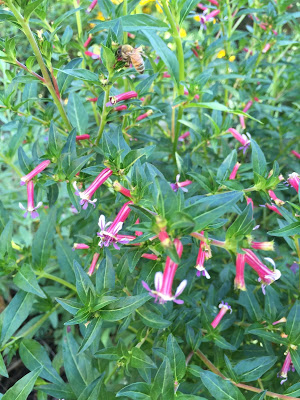
This is the one flower I can't identify for you. I didn't keep the tag,
and I can't figure out if it's a fuchsia, salvia, or agastache. It's covered
with bees each day, and if I ever find it again, I'm buying out the supply.

California Aster (Symphotrichum chilense). Drought-tolerant.

California Sunflower (Helianthus californicus). Drought-tolerant.

Herbs of all kinds. At the moment, I have thyme, sage,
marjoram, oregano, and these chives blooming.

Coneflower of all kinds (Echinacea). I have found these
hard to grow from seed and have had to buy starts

Cosmos of all kinds - this is 'sonata' - easy to grow from seed

Saltmarsh Fleabane (Pluchea odorata) - more for butterflies than bees.
Drought-tolerant.

California fuschia (Epilobium canum) - I grow this from starts,
but it spreads freely. Drought-tolerant.

Galliardia of any kind - I've had trouble with seed and use starts
(also called Blanketflower)

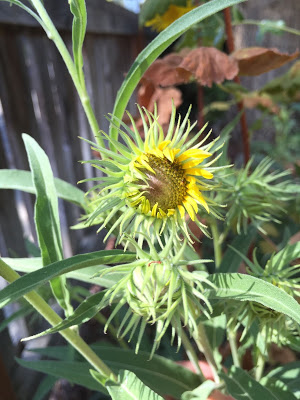
Hairy Gumplant (Grindelia hirsutula) - this has taken over
our woodland garden and the bees are nuts for it. I got starts
at the Watershed Nursery in Richmond along with many of
the plants on this list. Drought-tolerant.

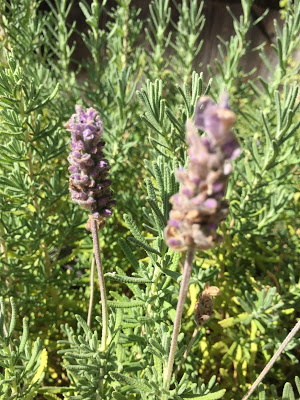
Lavender of all kinds - this is French lavender (Lavandula dentate).
Drought-tolerant.

Salvia 'purple majesty' - this one is also a magnet for Carpenter bees.
Drought-tolerant. Dies back completely at frost but returns in Spring.

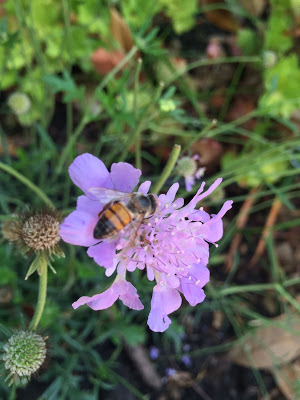
Scabiosa of any kind (or Pincushion flower)

Bluebeard Spirea (Caryopteris x clandonesnsis) - this
is not a true spirea, apparently, but this blooms for months
and really attracts the honeybees. Drought-tolerant.

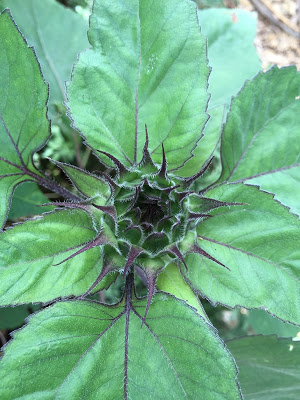
Sunflowers of any kind. I think this one, just about to open,
is particularly beautiful!

Tithonia 'Torch'  - I've already sung the praises of this
flower many times - attracts every pollinator, from
native bees to honey bees to butterflies to hummingbirds.
Easy to grow from seed.

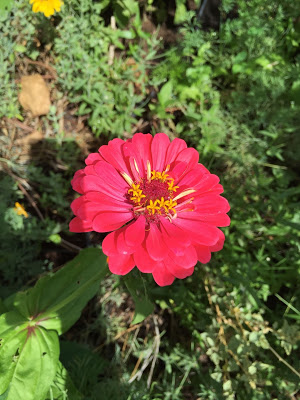
Zinnias of any kind - all are attractive to pollinators and
easy to grow from seed.

Gaura - this one is 'whirling butterflies' - it's in a neighbor's
yard and is simply covered with our honeybees every morning.
Drought-tolerant. Will die back in Winter but re-appear in Spring.
EDIT: Just a note that 'drought-tolerant' doesn't mean NO water. Some things will do ok with no water at all in the summer, such as Manzanita, Toyon, or Ceonothus. But those are Spring-blooming, after the winter rains. Most DT plants need water to get established, then less water than conventional flowers. We tend to plant most of our native, DT plants in Autumn, before the winter rains come. That gives them plenty of water to start.

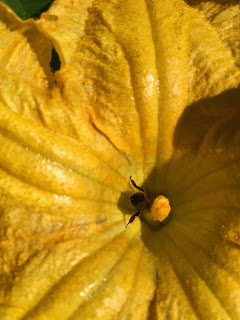
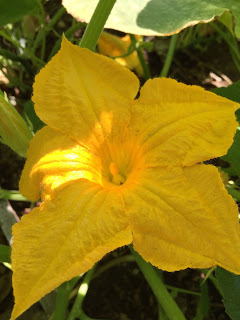
Don't forget that honeybees (and native bees too) love the Autumn vegetables in the garden, particularly squash and melon blossoms, so feel free to plant those, too!

Digging Potatoes

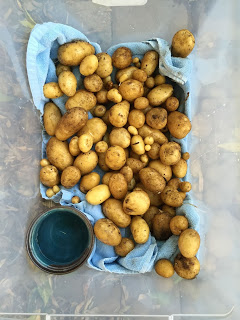
Today I dug up the potato harvest. I've been 'stealing' new potatoes from deep underground for about a month now, so we've already eaten several pounds. I still expected to get quite a few today, and I was not disappointed.

The potato vines had all died and withered, which meant the potatoes were ready to be dug out.


I grew the potatoes in towers. Last April, I put the potato seed chunks on top of the raised bed, surrounded them with a wide basket made of hardware mesh, lined the basket with newspaper, then covered the chunks with more compost. As the potatoes grew, I added more dirt and more newspaper, until finally the entire basket was full, with the potato vines growing lustily out of the top.

I made two of these towers. One was quite wide, with potato seed from Seed Savers Exchange. The other basket was more narrow, with seed from Renee's. Both were Yukon Gold. And the wide basket did MUCH better than the narrow. So I'm not sure if it was the quality of the seed or the width of the basket.

This winter I intend to grow fingerlings and red potatoes in regular mounds rather than a tower, with hay as my 'hilling' material rather than pure soil. So we'll see how those do.

Meanwhile, it was fun to remove the wire basket and the newspaper, and find all the potatoes down below. The dirt is gorgeous and smells wonderful, so this was a pleasant (though sweaty and dirty) task.


I had a pretty good yield, maybe a bushel? Considering how many we've already harvested, I'm pleased.

Now the question is how to cure them. I rinsed them and put them in a box with a dish of water, one towel nestling them at the bottom, and one towel over the top to keep the humidity in. I'll leave them like this for a week or so. (That is, if we don't get greedy and eat them first.) I took out a few for dinner and gave a few to my dad, but I still have quite a few left to cure.


This is the first year we've been able to have a harvest of potatoes, as the deer always ate the foliage before, and killed them.

One last thing: As I was removing the spent potato vines and shoving them into a container to take to the compost bin, I found this little lady.


The picture quality is bad, but I was in a hurry to get her red belly markings before she flipped over. Yikes! Glad I was wearing gloves. I know we have Black Widows in the yard, but I've never seen them in the produce before.

A Quick, Easy Dinner

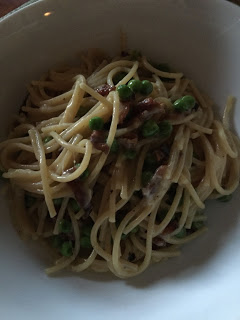
One of our favorite meals to have when we don't have a lot of time is Pasta Carbonara (or pasta with bacon and eggs). You can get this on the table in 30 minutes; it's filling and nutritious, and everyone loves it.

We get three pounds of pastured pork bacon from Tara Firma Farms each month, as part of our pastured/grass-fed meat CSA, so we always have plenty of bacon. We also always have frozen peas in the freezer, whether from the garden or the store, and we naturally we always have extra eggs from the chickens. So this meal uses up things we already have, which is also very handy.

whoops - too dark - we're eating around 8 pm these days.
Trust me, it's beautiful and extremely tasty.


Pasta Carbonara ala Poppy Corners

1 lb. pasta (we prefer thick long noodles for this, like linguine)
1 lb. bacon (preferably pastured), chopped
2 cups peas (fresh or frozen)
3 cloves garlic, minced
2-3 eggs (as fresh as possible)
1 C parmesan (plus more for serving), shredded
salt and pepper

Get some water heating for pasta.

In a very large skillet, cook the bacon until crisp and all the fat has rendered.  Do not drain. Add the garlic and fry for 30 seconds until fragrant. Add the peas, and turn the burner down to simmer. Let that go for a bit.

In a large bowl, whisk the eggs with the parmesan. If you have very large eggs, two will be enough. For smaller eggs, use three. Add salt and pepper. Set aside.

Cook the pasta according to package directions. When cooked al dente, drain, then add to skillet with pea mixture and toss pasta so that every strand is coated with bacon drippings, garlic, peas, and bacon.

Add a scoop of the hot pasta mixture to the egg mixture, stirring vigorously (you want the eggs to warm up without cooking. This is not pasta with scrambled eggs!). Add a little bit more of the pasta, stirring all the while, until all the pasta is in and mixed.

Serve in large bowls with extra parmesan.

Powdery Mildew

We've had no significant rainfall since Spring, and we're irrigating our crops using a drip system rather than an overhead sprayer, so explain this:


We've got powdery mildew on the pumpkins.

Now, just to be fair, the pumpkins are in full sun only about 6 hours per day, they get direct light in the morning and late afternoon. The middle of the day tends to be a dappled light. So they get more shade than almost any other part of the garden. And it has been unusually humid here, and of course we get plenty of morning dew. But come ON. The rest of our crops are withering for lack of moisture, and the pumpkins get MILDEW?

It just doesn't seem right.

Tom urges me to point out that it's not all the pumpkins, only one type. I planted four different varieties of pumpkins this year, including gourds, so I'm not sure which one this is. (Perhaps I should start keeping better records.)

So I did a little research about how to combat this fungus, and you can use anything from milk to baking soda, but all of them help best before the mildew even shows up (in which case how are you supposed to know you'll need it???) so any treatment now is probably moot; nevertheless, I diluted some 5% apple cider vinegar with a little water and sprayed it on the leaves. We'll see if that helps.

Meanwhile the bees are going crazy in the blossoms and the plants are doing fine otherwise.


I'm excited to have pumpkins to both carve and eat!

Late August means Orb Weaver Season, Back to Routine, and Plans for the Winter Garden

Forgive my lack of writing this week; the kids and I are moving back in to a school year routine, and it takes some getting used to. It's great to have the summer off, but it makes the end of August difficult. Adam's in 8th grade now, Kate in 7th, and I'm working more and different hours at the school for differently-abled kids. It makes mornings hurried; I'm up before the chickens, trying to get chores done and lunches packed and breakfasts eaten and dog walked before we all have to leave shortly before 8. I know millions of people do this every day, but in the past I've been lucky to have jobs that allowed me to take the kids to school, then get my chores done, before I rolled in at work around 9:30-10. So this is new for me, and it just means that more needs to get done after work rather than before.

And, as always, just as school begins, the weather heats up again. It's been over 100 here at Poppy Corners for several days now. I think you can safely say that we are trying our hand at dry gardening whether we meant to or not. Everything looks spent and wilted, but the plants just keep producing, and everything they produce has extra flavor. Tomatoes are smaller than usual, as are peppers, but the improved taste makes up for it. Every extra ounce of water from the house goes out somewhere in the garden. The drips are running twice a day at the moment, but it's still not nearly enough water. I had a neighbor/horticulture expert come look at my sad-leaved tomatoes - his diagnosis was they were just plain old too dry. But I suppose those roots are 10 feet down, sucking out every drop of moisture they can, because the tomatoes just keep coming.

Next year I'll have plenty of soiled chicken bedding to use as a thick mulch, and that should help things mightily. Meanwhile maybe we'll actually get the El Nino event we're all hoping for and winter will be very wet.

The rise and hold in higher temperatures means it's Orb Weaver season, and I've started to see their webs everywhere. Once in a while I'll catch the actual spider, if I'm out late deadheading or picking produce.


The webs are truly beautiful, and I hear that they consume them every night, then rest for an hour, and make an entirely new one before morning. Completely different from the other spider webs I see most often in our yard, that of the Black Widow. Their webs are messy and dirty and thoroughly un-enchanting.

Some flowers are finally giving up the ghost and going to seed, such as this variety of Nicotiana  Four O'Clocks - I've collected quite a few to save for spring, meanwhile leaving some to re-seed where they stand.

the black things are the seeds

Other flowers are just pumping out blossom after blossom, and the bees and butterflies continue to feed and collect, which is a joy to watch.

I harvested the last of the watermelon.

yummy, but seedy

We've had an abundant crop, and the plant is putting out more blossoms, but I think I want to pull up the vines this weekend and get a cover crop in. This variety, Moon and Stars, was not our favorite, so I didn't save any of the abundant seed from our harvest. I'll try a different variety next year.

Peppers have been ripening fast, and we tried a new recipe which we all just loved. I had to use frozen corn because our corn harvest is over, but if you still have corn and peppers in the garden, you must try it.

Broil about 1/2 pound of peppers. I used both green and red Jimmy Nardello (sweet), plus a couple of Sweet Sunrise, plus some Red Marconi that were still green. Take off the stems and seed them, and arrange them on an oiled baking sheet. Broil them about 2 inches from the heating element until softened. Cut into strips and add kernels of corn (I used about a cup and a half), uncooked. Toss. Add 3T balsamic vinegar, 3T olive oil, 2T chopped fresh basil, and salt and pepper to taste. Let the salad stand at room temp for at least an hour. This was unbelievably delicious. (Thank you, Full Belly Farm, for the recipe idea!) The leftovers were even better the next day.

peppers ready for roasting
We've discovered that our favorite potato recipe, using our homegrown Yukon Golds, is hash browns. (Kate had never even heard of hash browns before this, but now she is a total convert.) I grate the potatoes using a box grater into a colander. Then I rinse the potatoes off and press out the excess water. I then drain them on to several thicknesses of paper towels (if you get plain white paper towels, these can go in to the compost after, and you don't have to feel quite so wasteful) and press out any extra water. Then I fry them like one big potato pancake with plenty of butter, olive oil, salt, and pepper, until crispy. Flip in sections (or whole if you're a better flipper than I) so both sides get well done.

We have all decided that the flavor of our potatoes is superior, thank you very much, to anything we could buy in the store. It's just a whole different taste. Usually potatoes are just a vehicle for the fat or seasonings, but these have a distinct flavor that is totally delicious. I'm definitely going to plant potatoes over the winter, too.

hello, lovelies

ready to fry

world's smallest potato
I've been working on my winter garden plan, and I think I've got it all figured out. Here's my design:


No room for hard red winter wheat this year.

Tom and I have talked a lot about the last, lone patch of dead grass near the South Garden. I think we've decided to make it a combination orchard and herb garden. First, instead of sheet mulching, we'll build a small chicken 'playpen' - something to keep them in just during the day. We'll have the chickens work for us at ripping up the last of that grass and turning the soil and eating the bugs. And adding manure! And then we'll move them to another section and let them keep going, all through the  autumn. Then, come winter rains, we'll plant some citrus - a couple kinds of small lemons, a lime or two, and maybe a mandarin or clementine - and make them fruit tree guilds, somewhat like a permaculture idea, with all kinds of herbs surrounding the trees, and lots of mulch because there must be mulch. Paths will wend gently through, oh yes, birds will sing - in my imagination it's a wonderful little copse of trees. We'll see how that actually goes and share all the details with you.

It always seems strange to plan winter veg while still harvesting summer veg, but that's the way it rolls if you want fresh produce all winter long. I must say I'm starting to have a hankering again for fresh spinach, and along about May I thought I'd never say that again. :)