The hills (and the gardens) are alive!

I just can't believe how much things have changed in the past week. We had a short but delicious rain late Sunday night/Monday morning, and since then temperatures have been heating up (supposed to be in the mid-80's this weekend) and life is bursting everywhere! Every time I go in to the garden, Western Fence Lizards scurry, native bees buzz all around, and butterflies and Crane flies whirl in the air, mating. New flowers appear every day. In the hills, the fiddlenecks have given way to vetch and native clovers.


In the garden, I can't keep up. New flowers are open every time I go outside.

cow parsnip
our apple tree
clematis
Douglas iris
forget-me-not
coral bells (or alum root, or Huechera)
ixia
mallow, about to unfurl
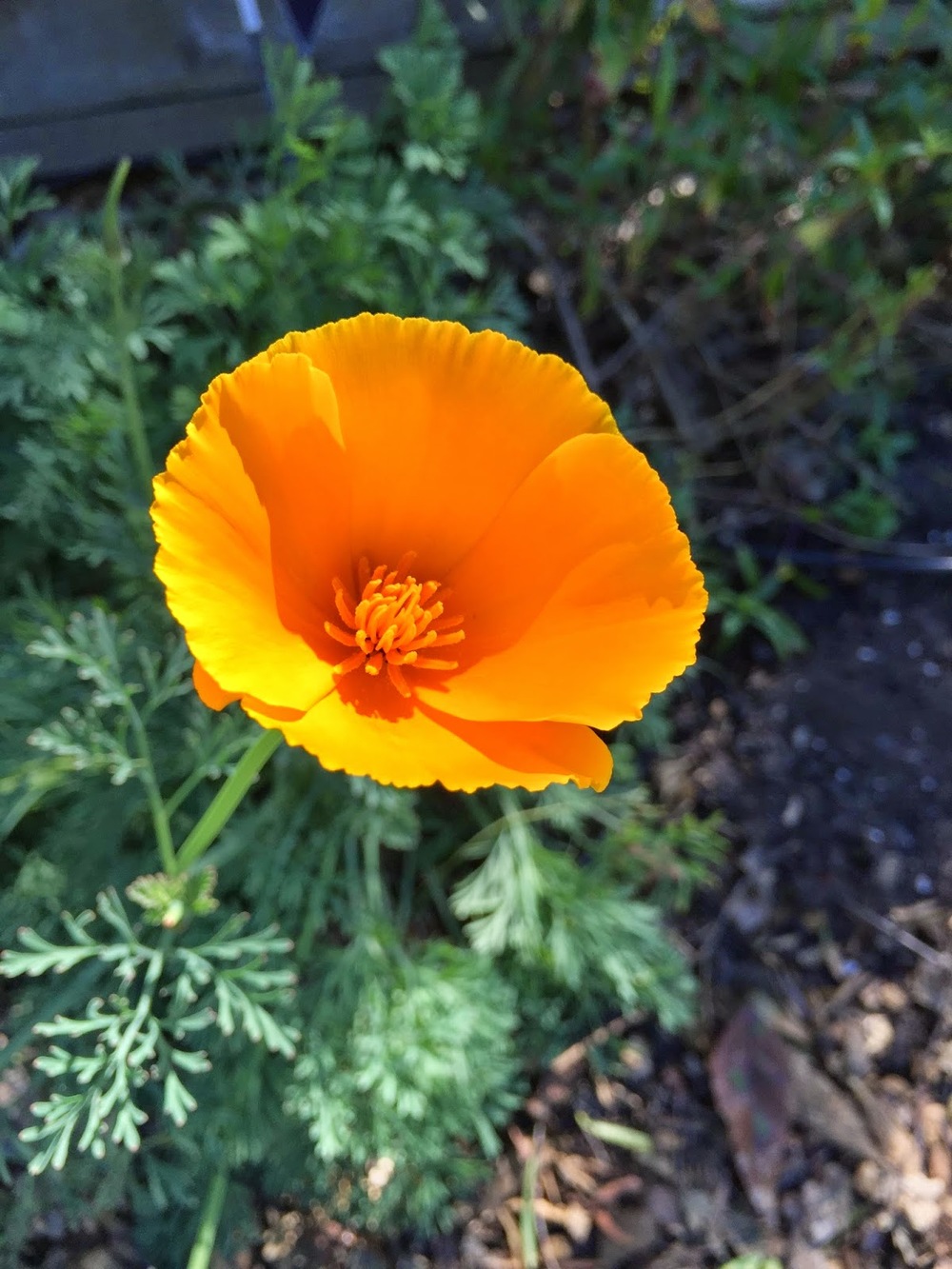
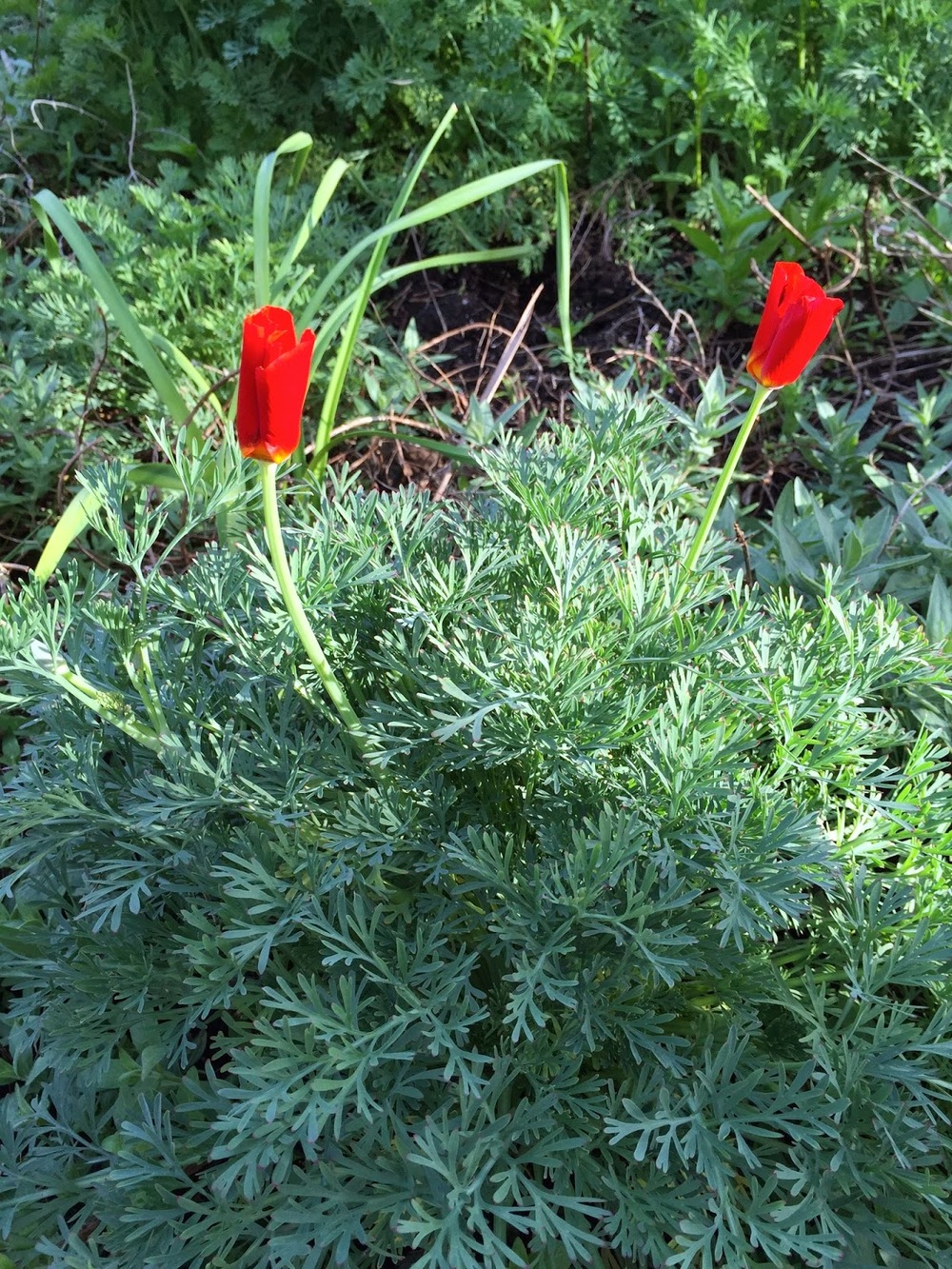
our namesake and the State flower, a California poppy
golden currant (Ribes aureum gracillimum)
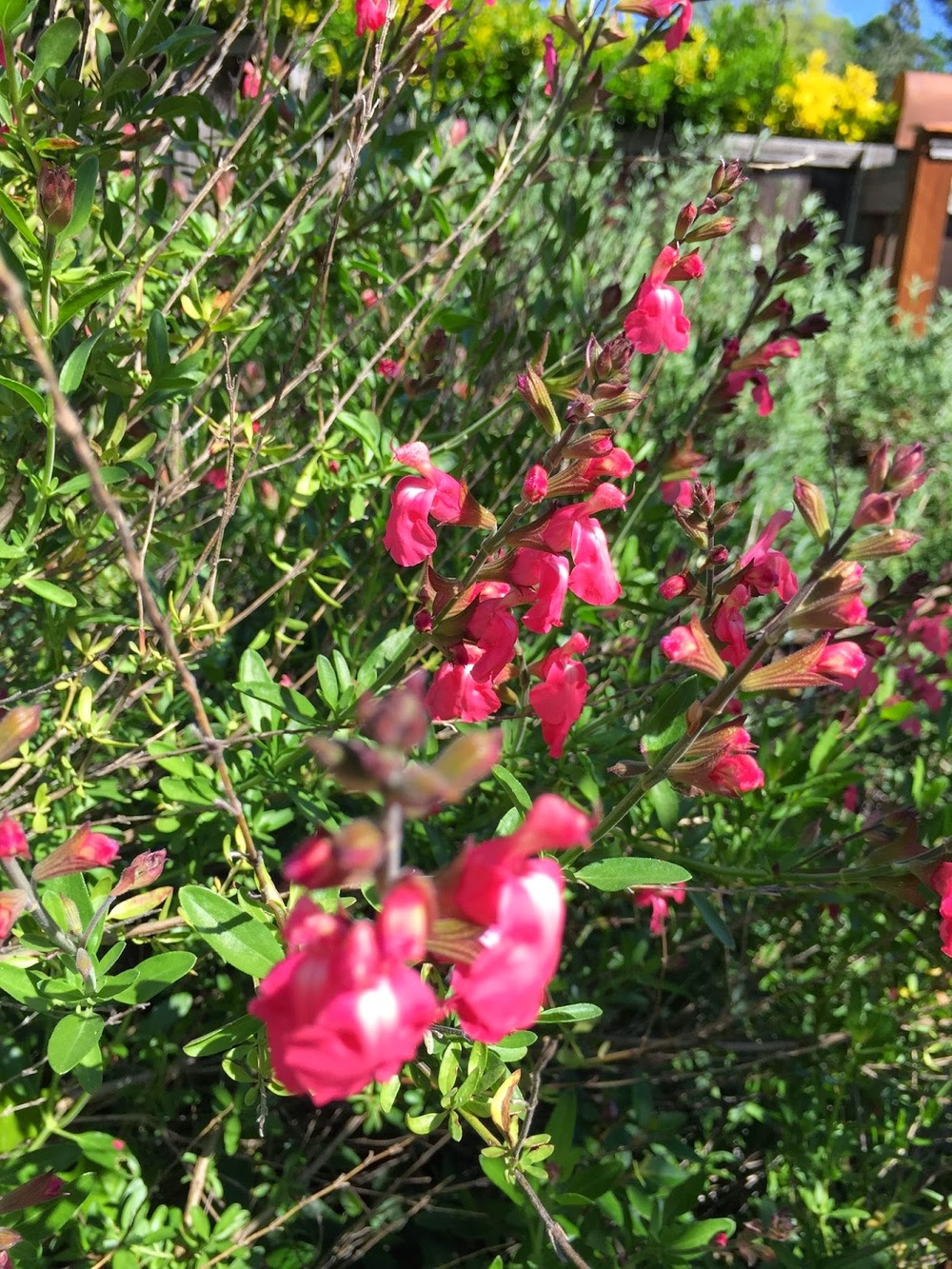
salvia
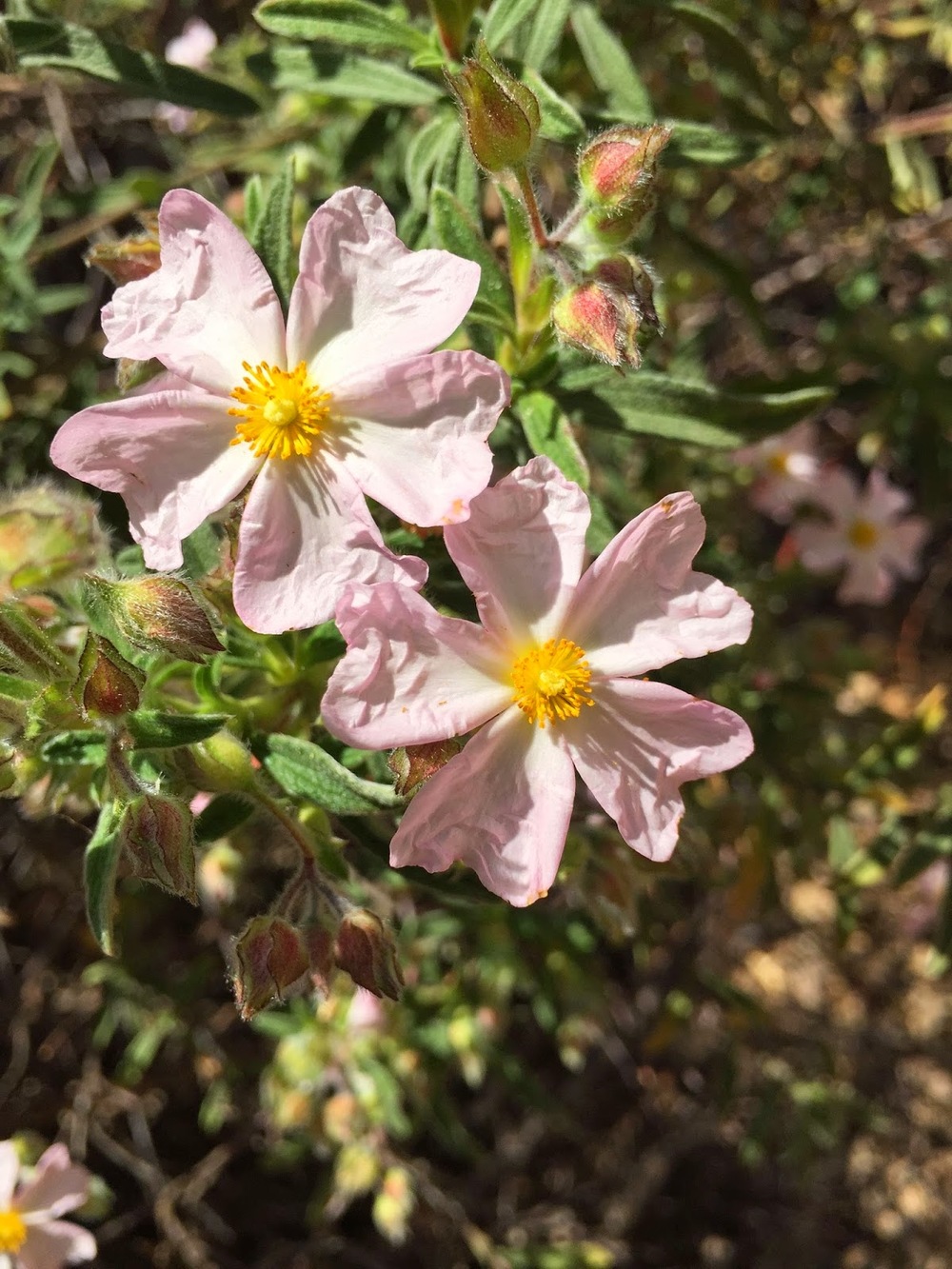
sunrose


All this life makes me happy, but I do very much miss my honeybees. I'm so sorry they didn't make it through the winter to see these riches appear in spring. I wish they had lived! The garden just seems very quiet without honeybees. I do see one once in a while; I know a beekeeper about a half mile away, so I'm surprised I don't see more. Honeybees add life to the garden. My new colony will get some of the goods, but a lot of this will be gone in two weeks when they arrive. Oh well, different stuff will be blooming then.

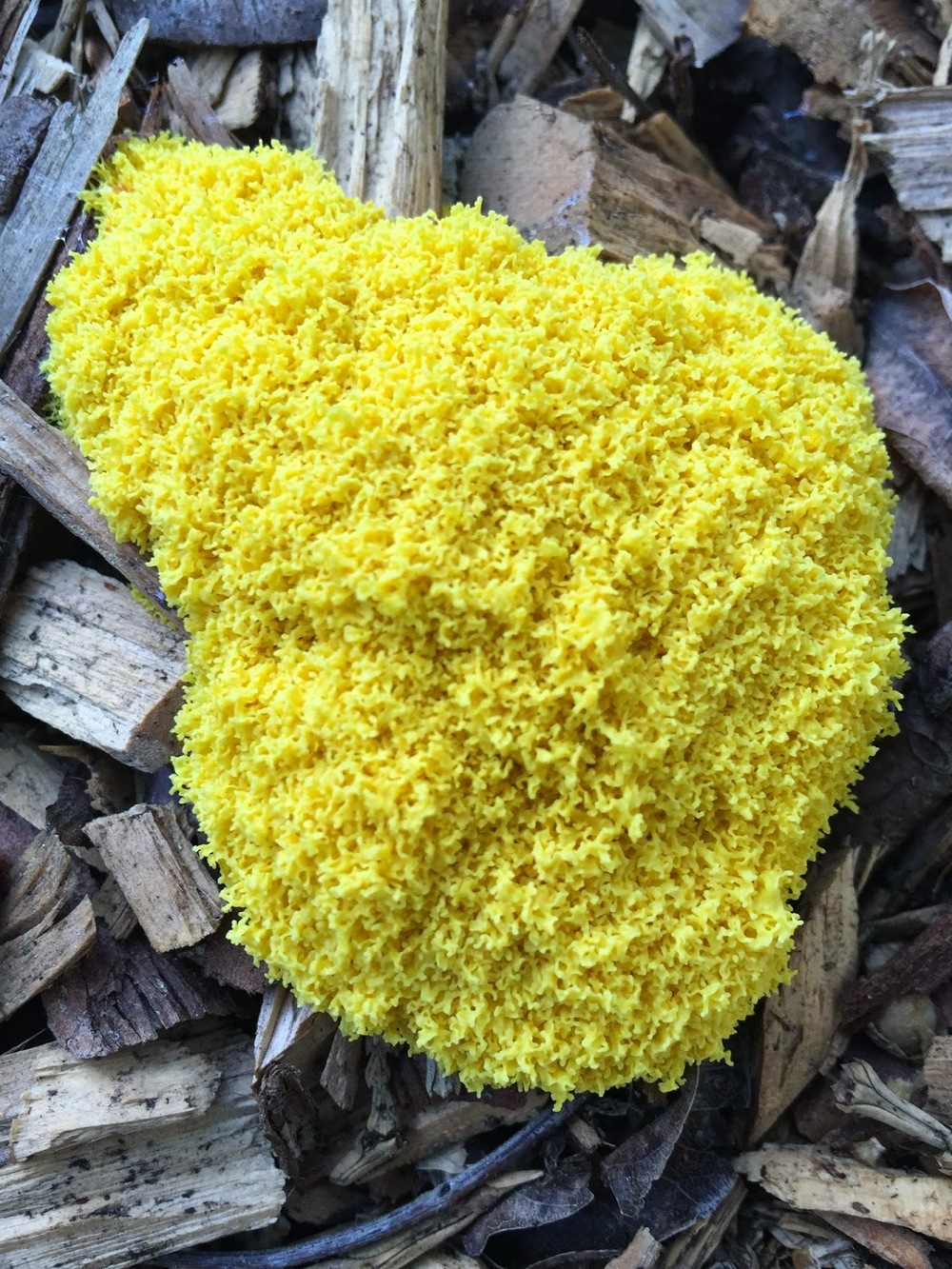
I also found a new Fuligo septica (or 'dog vomit fungus') in the yard today. Turns out these aren't really fungi at all, see link for more info. I'm fascinated by them. They do almost always appear on wood chips, although I found my first one hanging off the side of the compost bin.


My seed potatoes arrived today. Or at least the first batch did, from Renee's. I think I double ordered and will also be getting some from Seed Savers. Whoops. And darn it, I think I ordered the same kind from both places.


They need a cool place to stay until I plant them next week, so they'll live in a corner of the bedroom for a while (honestly the coolest place in our house that's not our fridge).

Next week, new raised beds get built, and all the spring planting begins! Good times.

Living Wall, part 2

Back when we made our Vertical Strawberry Wall, Tom also prepared a second pallet for me. It's been sitting out on the front porch for weeks now. I'm sure my neighbors were wondering....  This weekend I finally made another living wall out of the pallet.

Our front porch is tricky; it's in shade most of the day, but around 3:30 the sun starts creeping up and by 4 the porch is in full direct sun. It gets about two hours before the sun starts dropping behind trees. So, not a lot of sun, but very hot when the sun is there. Plus the porch traps heat and in the summer can be quite warm. I've only ever been able to grow coleus in this location. so my original idea was a wall of coleus - which would be pretty, right? All those different leaves. But when I visited The Moraga Garden Center, I changed my mind. I hadn't been there in years and had forgotten how many interesting plants they carry there (thank you Jo for the suggestion!). The staff is knowledgeable and I had lots of help.

I got sidetracked picking out Lewisia for a different part of the garden - I've always wanted this plant and it's always sold out everywhere that carries it, which believe me isn't very many places. I scored three - one white, one peach, one pinky yellow.


But eventually I got busy picking out stuff for the living wall. I chose several colors of sedum and some campanula for the base plants, then added some different kinds of low-growing geraniums and fuchsias for accent. Kate helped me plant everything, and I think it turned out beautifully.


The thing I've experienced from the strawberry wall is that for a few days, dirt comes out. Gravity happens! It's a bit messy for a while, and then the roots start holding on to the dirt and everything starts to look cleaner. You could plant practically anything in a pallet - lettuce? If you've got a small balcony or porch, this is the way to go, I think. Regular containers are expensive!

In the vegetable beds, I pulled out the Asian Braising Greens as they were bolting. I fed what I could to the chickens and composted the rest. Then I seeded some carrots in that bed. The whole bed will eventually be carrots, but I plan to succession plant them so we get a harvest over several months.

Tom finished the drip system; it ended up costing about twice what we thought it would, and I'll let Tom tell you in a separate post all about the process. We both certainly have learned a lot. I'm looking forward to hand-watering only my containers.

I cleaned the chicken coop as I do every weekend. It takes about an hour. I don't clean the whole run: I am using the Deep Litter Method there and will only clean that out once or twice a year. But I do clean the hen house once a week. I pull out the soiled straw and add it to my compost bin, and then replace with fresh straw. I change the water and add food to the feeder. I rake the run and add another layer of pine shavings. There is absolutely no smell at all in the coop except for pine. The chickens are getting big, and every so often, amid the 'peeps,' we hear a 'BWAK!' They're growing up.

I spent a good amount of time today painting some new garden markers. I enjoy this task, and it was a pleasure to sit on the back porch in the sun and make another ten markers or so. Here's a few:


I can't tell you how many times I hear, whilst folding laundry in the bedroom, folks walking by the garden and saying, "What's that? Oh, I see, it's broccoli!" or whatever. Especially parents with kids seem to enjoy pointing out the signs and holding the kids up to look. I told Tom today, I used to hope people would stop and look at my flower garden and noticeably enjoy it. But that happened rarely. Since we put in a vegetable garden, not a day goes by that someone new doesn't stop and take a long look. It is my goal to make our vegetable gardens look as beautiful as our flower gardens, and show others that a yard planned this way can look wonderful. Hopefully it will inspire other folks to do the same.

Speaking of the flower garden, I planted about 50 sunflower seeds today, of five different varieties. Sometimes I have luck, sometimes not. The salvias are starting to bloom; I have them in every color, and I've never met a salvia I didn't like. Soon they will vying with the poppies for attention. Bumblebees and carpenter bees are all over the Western Redbud. I can't wait to pick up my new honeybee colony on April 11 (still hoping to find a swarm, though). Butterflies have started visiting.

And speaking of butterflies, here's a photo my co-worker took of a Pipevine Swallowtail, which are hatching in great quantities all over the property near our school. They are really gorgeous.


Isn't that a great shot?

Happy Spring! Hope you're able to garden, whatever your weather!


Outstanding in the Field 2015 tour goes on sale tomorrow!

In case you're interested (and feeling flush) - TICKETS for Outstanding in the Field go on sale tomorrow. There are many Northern CA dates and all of them look amazing - great venues and wonderful chefs - and if you've got some pocket change (tix are over $200 per), this would be an amazing thing in which to participate. And if you do, please tell me all about it, so I can live vicariously through you! Tom already got us tickets for a farm dinner for Mother's Day, at Full Belly Farm, so I can't justify another one (though I'm willing to try, if you've got an excuse for me).

And speaking of farm-to-table, a little bit of it is going on right here at Poppy Corners tonight, with our first broccoli of the season.


I've never had any luck growing broccoli before, this is the first that has ever come to fruition on our property. I can't wait to eat it.

We're not the only ones eating well. I found this lady camped out above the porch light.


She is literally half the size of my palm. This orb weaver is an indication of how warm it's been here - they usually don't show up until summer. (And yes, if it's this warm already, I'm worried about July, God help us.)

Walking in a local public garden today, I found this interesting mushroom:


And yes, it really is a mushroom, not a piece of trash. I checked. Crazy, right?

The chickens have finally found the super-high roost in their run. It's fun to watch them get up there (verrrrry awkward) and then once they are finally perched, they act quite entitled and royal. When I get close to take a picture, they get freaked and start to fly down, so this picture is not the greatest.


Adam and I had an interesting day. As part of his special project to try to change the school lunch program, we visited Mt. Diablo High School, where they have a garden and a cooking program. It was neat, and the leader of the program was incredibly knowledgable, but just like Edible Schoolyard, it is a program separate from lunch. We are having trouble finding any public school that actually cooks a real lunch. Cindy (the program director at MDHS and also chef and owner of Sunrise Bistro) was quite clear that it is not a school problem, but a government problem. Suddenly Adam's project became much bigger than we intended. We are trying to figure out the next step: Talk to our local representative?

The kitchen classroom at MDHS

Part of the one-acre garden at MDHS

The latest cooking project at MDHS

The new hydroponics system at MDHS

We are a bit stumped about where to go from here. Why is it so hard to cook a simple, nutritious lunch for students? Why just heat up pre-made crap? I'm guessing it all leads to money, somehow. Though Adam made and sent out a survey, and 100% of the parents who answered it said they'd be willing to spend more for a better lunch. I guess that's not enough...

Ok, time to get that broccoli cooking. Can't wait to taste it. Hope you're enjoying your own farm-to-table experience tonight!

Salumi with Angelo Garro

Today, another guest post from Tom:

The best presents are the things that you wouldn't buy for yourself, but that you'd love. That's exactly what Elizabeth got me in the form of a salumi class with Angelo Garro, which I had this past weekend.

First, a word about Angelo -- if you've read The Omnivore's Dilemma, then you'll recognize him as the person who took Michael Pollan on his foraging and boar hunting expeditions in the last third of the book. A blacksmith by trade, and a Sicilian by birth, Angelo has started selling products based on his cooking (after having run a pretty successful Kickstarter campaign - nice to have Werner Herzog do your Kickstarter video).

Angelo recently started having classes -- our salumi class was the second one. We were instructed to show up at his place of work, the Renaissance Forge, at 10AM. No end time for the class was given, but it was billed as including a lunch, so I figured I'd be there for a few hours.
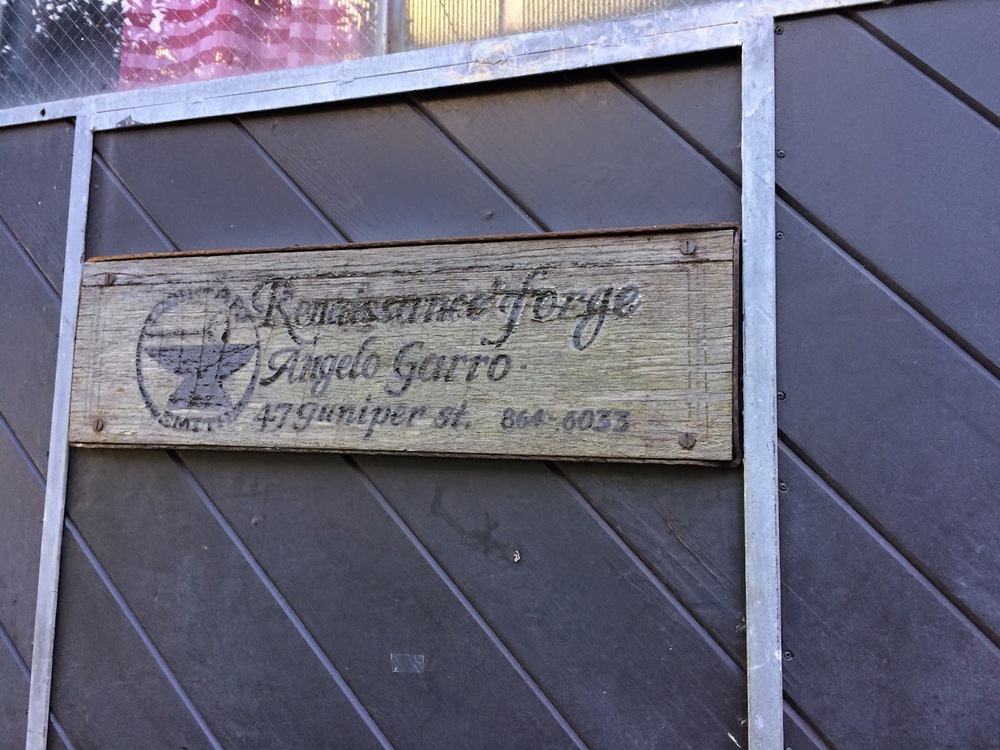
Door to the Renaissance Forge
A quick terminology note -- salumi is the generic term for Italian cold cuts; salami (or salame) is a kind of salumi, so is proscuitto, mortadella, coppa, pancetta, lardo, etc. Cured meats, usually pork, definitely yummy.
The class was a small affair -- I was one of just a handful of students. Two had flown up from Southern California for the class, there was a couple who run the Camp 4 Wine Bar in Modesto, and a young guy that chefs for a tech startup (cooking breakfast and lunch for 75 employees five days a week). Angelo had two assistants, Victoria and Beth. We started with some chit-chat, a walk around the forge, a peek into the walk-in cooler where he's got several types of salumi hanging, near where his four barrels of homemade wine are fermenting.

Forge tools
Soon, we started our salumi process -- many many pork shoulders needed to get trimmed, so we all stood around a long table, knifes in hand, trimming away fat, separating muscles, cutting into small chunks for grinding. We wound up with about 37 pounds of trimmed pork.
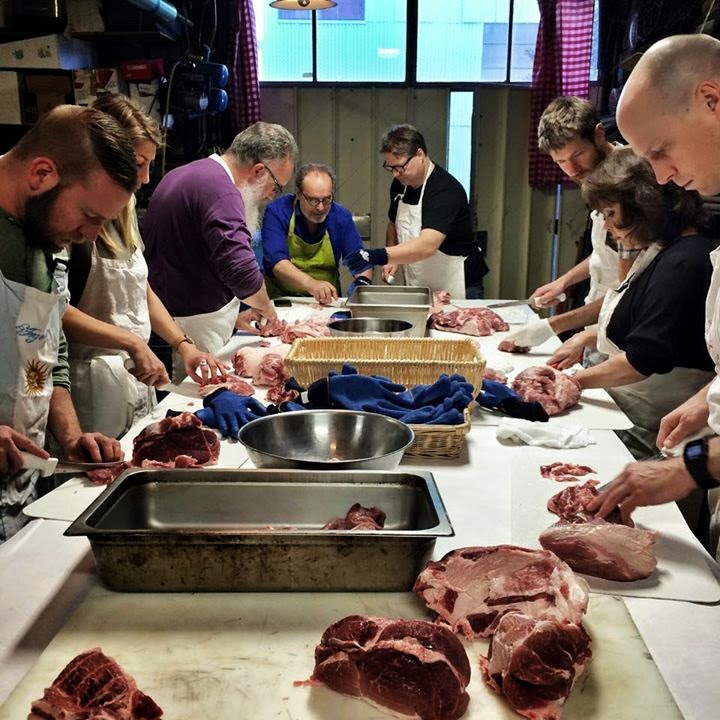
Many hands make light work
As we're cutting, we also start eating. Beth fried up some foraged greens that had been chopped, mixed with Parmesan, and fried into little bites. We had sliced lardo and other salumi on bread. We tasted some of Angelo's Omnivore Sauce. Beth made some fried battered broccoli and anchovy. Angelo brought out two versions of a new hot sauce he was trying, asking us which we liked better.

Just a few little bites
While the pork rested in the refrigerator (the better for grinding), we cut some back fat to add to the mix, and also uncorked a few bottles of Angelo's 2013 Syrah. Our work done, we then set to grinding.

This industrial grinder made quick work of our pork.
The ground pork was mixed by hand (for a loooong time) with the spice mixture, then he brought out his sausage-stuffing contraption -- a long cylinder with a hand-cranked plunger. We'd previously rinsed out some natural casings, and we each got a turn at both the crank and the extruder end, filling casings, tying them off, pricking the casings to eliminate air pockets, and giving them a bath in a starter culture.


The salumi would sit in a warm, humid spot for about two days to give the starter culture (i.e., mold) a head start, then it's off to the cooler to age for 2-3 months.


Our work complete, it was time for lunch - a fresh pasta with several kinds of seafood, some salad, more syrah, then for dessert some homemade biscotti, figs, some homemade nocino (walnut liqueur), and espresso.  We talked about food, we talked about places to go in Italy, we talked about gardening. At one point Angelo left to take a phone call -- it was Paul Bertolli, of Chez Panisse and Oliveto fame. (Can you tell I was completely star-struck?)

We finally said our goodbyes, goody bags of previously-cured meats, leftover pork bits, and Omnivore Salt in hand, around 6:30 PM.

Best. Class. Ever.

As Elizabeth and I have embarked on our homesteading efforts, we've become attuned to craftsmanship, and of the appeal of home crafted items. Yes, it's harder to make things from scratch, but how great to know what you're eating. How good it is to know the work involved in making things - it makes you appreciate them that much more.

Is the weekend really over?

Man, this weekend went by quickly. 89 degrees on Saturday, then 79 today, and everything is bursting with life. Deciduous trees are leafing out, fruit trees are blooming, the ceonothus looks amazing, seedlings are popping out of the ground. It's spring, yo.

Tom spent Saturday taking a salami-making class with an old master. I'll let him tell you all about it in another blog post; suffice it to say he had a great time, and we had a delicious dinner last night when he came home with his bounty! Today Tom worked again on the drip system. It's still not finished - this is proving to be a very tricky project. But we know it's worth it in the long run.

I spent my weekend in various ways, cleaning the chicken coop, shopping for and planting new perennials, and hauling some extra wood chips from a neighbor's driveway into our yard (because you know when I see a mulch pile, my muscles just take over and start shoveling into the wheelbarrow).

Here's some pictures of interesting things that happened this weekend:

I planted one artichoke. I had trouble finding them at all in my local nurseries; this is the only one I found.
Also, I'm not sure they'll do well in our hot climate. This is my test subject.

Ceonothus exploded everywhere. This white variety is very pretty, and the bees love it.

After speaking with an expert at Orchard Nursery, I decided not to plant a lemon tree near our back door.
We just don't get enough sun in that location. So I choose a native CA huckleberry instead.
Bees love the blooms, and we'll get fruit (similar to blueberries) in the late summer/fall.

The poppies started opening!

Redbuds are blooming everywhere. Bumblebees go crazy for this native tree.
I moved the rain barrel slightly, and found several of these guys living under it.
Some sort of salamander. skink. No, I think it's a Salamander. Isn't he cute?
***Update! I got an email back from California Herps, here's what the expert says:

"Hi Elizabeth,
It's a California Slender Salamander. 
They're common in yards all over the area. They like to live under rain barrels and flower pots and other stuff on wet ground until it dries up.
Gary"

At work, we see Dutchman's Pipevine everywhere on our walks with the kids. One had this seedpod hanging
and I snatched it. It's the size of a tennis ball. I threw it in my pollinator garden, and we'll see what comes of it.
Dutchman's Pipevine is the larval food source for Pipevine Swallowtail Butterflies.

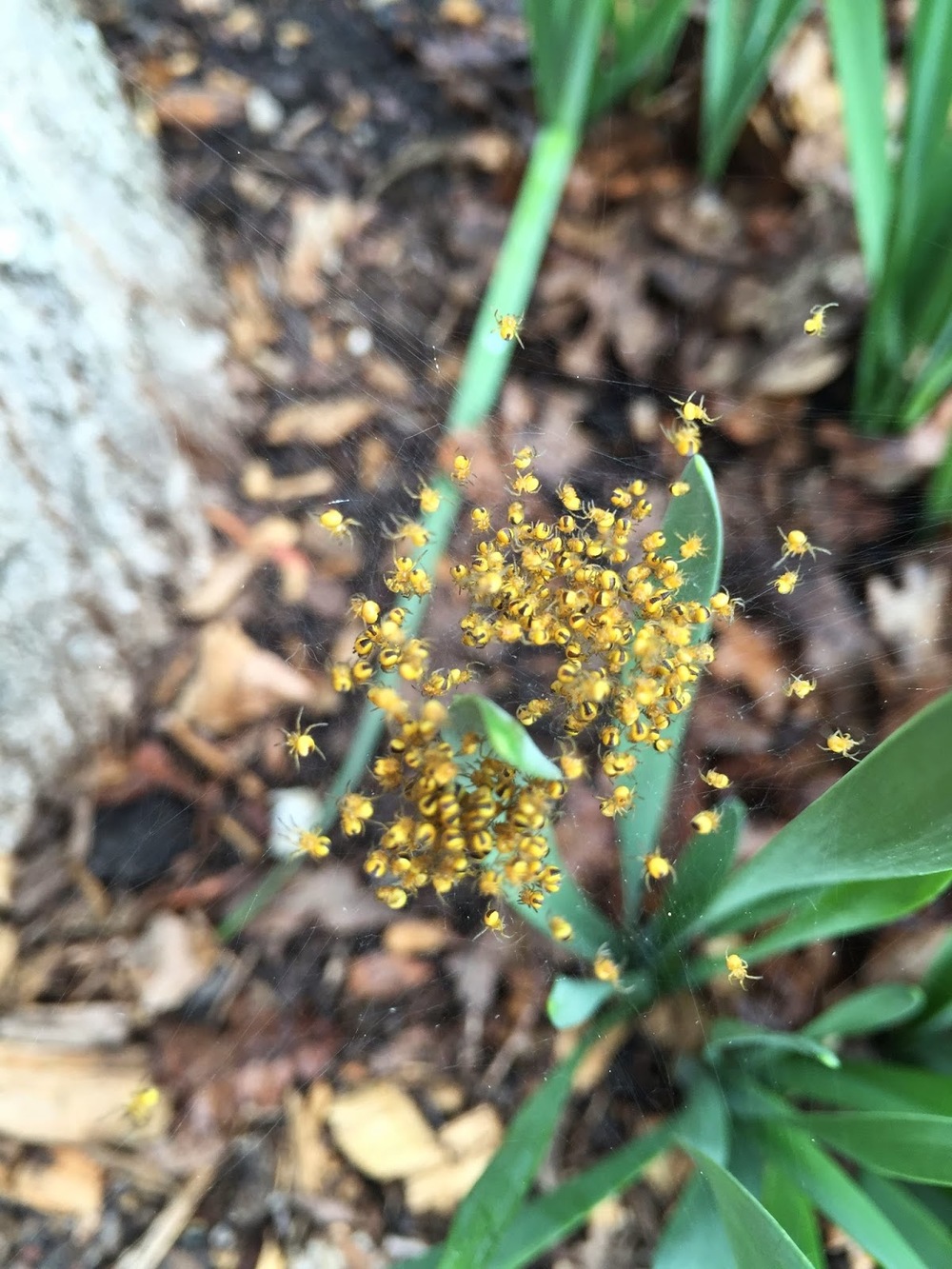
I released the spiders on some daffodils under our oak tree.
They promptly made a web and are still hanging out together.

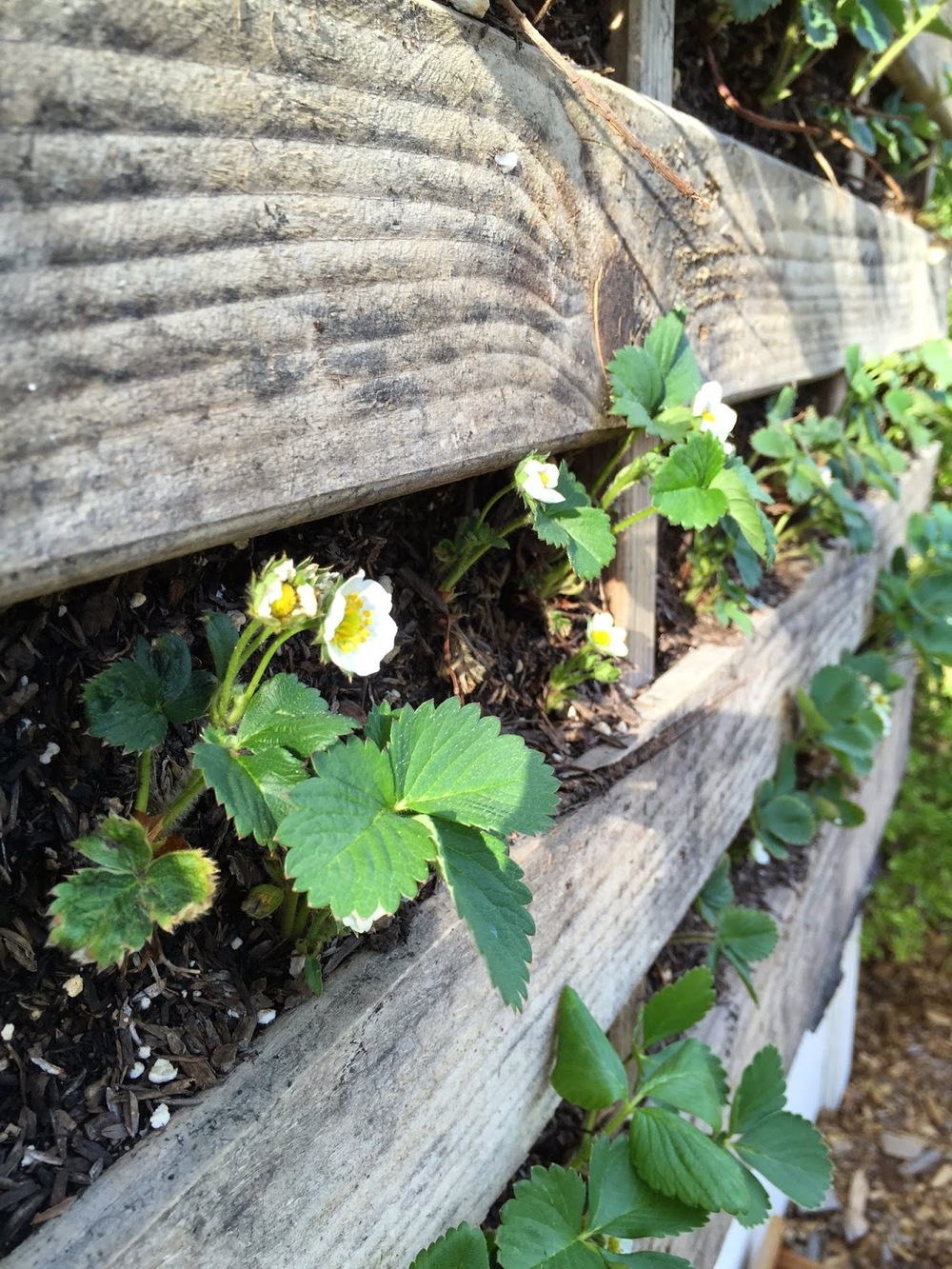
So far, the strawberry wall (made out of a recycled pallet) is doing very well.
I gave it some fish emulsion this weekend, and the plants started blooming.


It's been a fun and busy weekend, with very little time for any rest or relaxation. Next weekend promises to be the same. Spring is always our busiest time.