February arrives!

I'm so thrilled with the way the vegetable garden is thriving this winter. Part of it is due to the weather; we haven't had nearly as many heavy frosts as we did last year, and it's been sunny and warm for most of January. But part of it is the success of the hoop houses. They've kept the temperature steady in the beds, and also have kept the deer out! I know the deer have been sniffing around, because the peas regularly get a haircut, but nothing else has been eaten.


Speaking of peas, they've finally got some flowers on them. I guess I've decided that peas are not a true winter vegetable for us; they prefer things slightly warmer. They are loving these sunny days.

I opened up the hoop houses this weekend, to let the veg benefit from these gorgeous days. I will definitely be harvesting. I have more greens than we can eat. I'm putting them in everything; I even tried a recipe for meatloaf that included pureed kale. I loved it. Not so sure everyone else did. We are eating greens for breakfast, lunch, and dinner. Greens are the new zucchini. If you live near me and you'd like to take some off our hands, come on by and we'll harvest some for you.

The garlic and shallots are looking great.


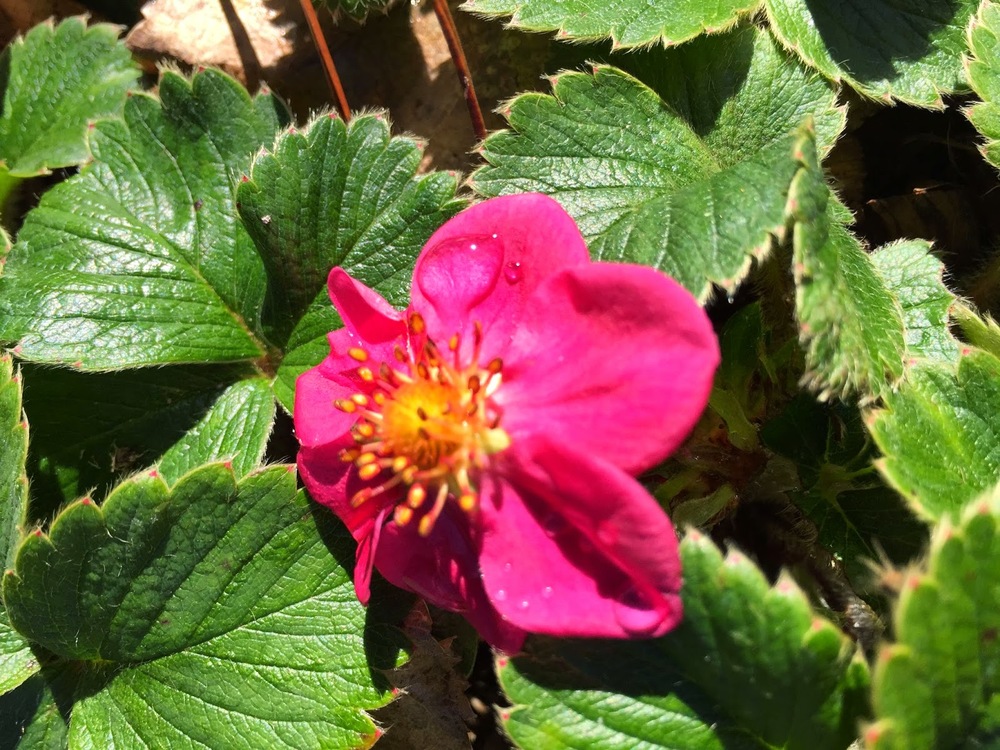
The blueberries are blooming, and I just saw my first strawberry blossom, as well.


Many of the fruit trees in the neighborhood have started flowering. Yes, it's very early, and I'm glad my apple and peach don't show any signs of that, yet.

Seedlings of native plants are already coming up.


And the narcissus is finished blooming, while daffodils are beginning.


I've seen many interesting things on my hikes, lately.

Who says turkeys can't fly?

Shelf fungus

wild iris, planted by someone long ago
Wild mustard, soon to be ubiquitous, but pretty when new

fallen log with woodpecker holes

a beautiful vista in the Mt Diablo foothills

My dad finished our bed, and we love it. Not only is it gorgeous, our whole bedroom smells woody and wonderful. Here's a picture of one of the pencil posts:

I like the color of the wood, sugar pine

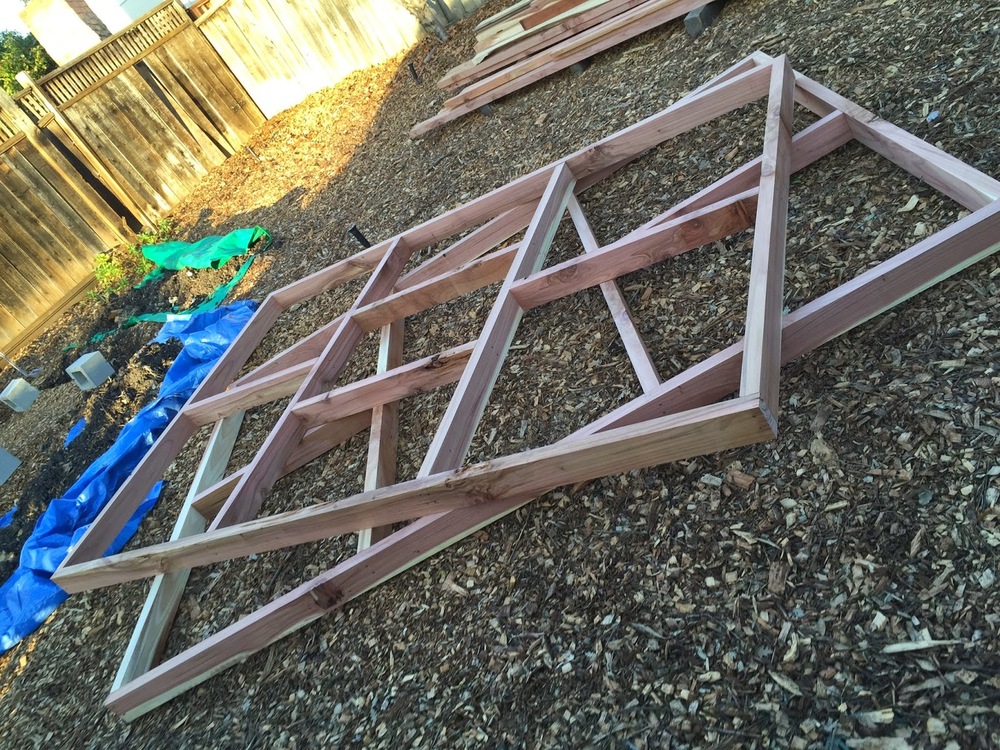
And, coop construction is coming along. Tom finished the roof and the framing for the hen house (inside the run), and together we got the hardware cloth installed and the trench backfilled. Dad came over and helped us with some supplemental bracing, and built the door.

building the door

hardware cloth, bracing, and door installed, trench filled
Next week, we'll start working on the hen house, which will be on the left upper quadrant.

I'm working on my online order for more blueberry bushes, plus some raspberry canes and elderberry bushes. I'm considering a small Meyer lemon. I also need to work on getting artichoke starts in the ground (Kate wants to be in charge of those), and I'm hoping to make a vertical planting wall out of a pallet, for more strawberries. We need to build the new raised beds, plus convert all the sprinklers to drip. Plus, get more ceonothus and manzanita bushes in, and I need to order my veg seeds! Lots of stuff to do, and spring isn't even here yet. I'd like to find some things to grow around the coop, too - some sort of deciduous vines or maybe olive trees. They'll need shade in the summer. Ideas, anyone?

I wanted to let you know about a new online magazine that I find amazing, and I can't wait to see what the next issue is like, as I've already devoured the first one. It's called Craftmanship, and the first issue is all about agriculture. I love their mission and view of the world. I'm excited to see more.

Edible Education

Adam is starting a new, extra-curricular project for school: He wants to change the district lunch program. Just a tiny goal. So I was helping him with some research and we thought of the Edible Schoolyard, the program that Alice Waters (of Chez Panisse fame) set up in Berkeley. While perusing the site, we saw that there is a Monday evening class that runs for several months, which you can watch online. The first class is with Michael Pollan, and there will be several other famous-in-the-food-world speakers, such as Eric Schlosser, Marion Nestle, Mark Bittman, and yes, even Alice. The great part is, you don't have to watch it just at 6:30 when it streams live from the class. You can watch it afterward! I myself am about halfway through the first class, and hope to watch them all in fits and starts through the year. You can find the class here. If you scroll down, you can also find past classes and lectures, plus a reading list.

Another great resource I've found lately is the PBS show Growing a Greener World. Each episode is about gardens, growing food, and sustainability. You can watch GGW here.

I've got a kid with stomach flu home today, so along with fumigating and cleaning everything to a fare-thee-well, I'll take some time to watch some of these. I also plan to get out in the garden and harvest some greens, which we'll have in homemade broth tonight. That should go a long way toward keeping everyone healthy!

Baking Bread

Guest post from Tom today - all about his recent adventures with sourdough! Enjoy!

I've been making bread off and on for a few years. There are a variety of things I enjoy about bread-making. Yes, it's a long process, but it's not like making risotto where you've got to stand at the stove for a long time. With bread, you work for 15 minutes, then you wait two hours, then you work for another 15 minutes, then another wait... it's a cooking project that fits in well to doing other things around the house (for example, chicken coop construction).

I'd decided recently to get a little more methodical about bread-making -- making a couple of loaves a week seems to work well for our family bread needs, and it's a good weekend project for me. Making bread weekly also meant that it would be plausible to try my hand at sourdough. All of the fuss of making and tending a starter makes no sense when you're making bread once every few months, but if you're going to once a week, that's a different story.

To get a starter going, I turned to this article from The Kitchn. It's a pretty straightforward process -- equal parts of flour and water, mixed together, and let set in a warm spot. It's really probably the wrong time of year to get starter going. The article calls for a 70-75ºF place, and our house isn't getting much about 65ºF. For that reason, it took a few more days for things to start bubbling. I'd tried setting it on top of the refrigerator (the heat from the coils making it warmer), and setting it in the oven with the light on, then I finally resorted to putting the starter on a heating pad set on low with a dishtowel separating it. Per the directions, I added equal amounts of flour and water daily, and eventually I got some good yeast action going.
Let me take a quick side trip to let you know one thing I found in my research about sourdough. You'll read a lot about how this starter process is all about "capturing wild yeasts from the air", which all sounds very exotic and fraught with danger. As it turns out, it's not actually how this works. The microbes involved are actually present on the flour that you get from the store in quantities far greater than what's in the air. What makes sourdough sour is the presence of both yeast and lactobacillus cultures -- those same handy lactic-acid-making bacteria used in making cheese, sauerkraut, and pickles. Sure, there's probably a few local beasties in there, but it's not like I had to air out the house to make sure I had enough wild yeasts to get started.
Armed with some starter, I made the companion basic bread from the Kitchn, and it turned out pretty good. It doesn't rely solely on the starter for leavening -- there's some commercial yeast as well -- and it makes a nice loaf that's just slightly sour:


As I mentioned, I'm in the habit of making bread weekly, so refreshing the starter daily doesn't really make a lot of sense. For now, I've gotten into the habit of pulling out some starter to make the week's bread, refreshing the starter with some flour and water, putting the starter in the fridge for the week, then pulling it out the night before I bake and refreshing it again.

Here's what it the starter looked like this morning after an overnight refreshment and standing out on the counter:

So many bubbles!

Here's this week's bread dough after its first rise:


And here's the final product this week. I tried using half whole wheat flour and half bread flour, and it turned out pretty good. Elizabeth said it's her favorite so far.


I'll be anxious to see how this goes once the weather starts warming up. It'd be nice to get a little more sour in the sourdough, and I'm not quite getting the volume of the second rise (in the loaf pan) that I'd like -- our loaves are a little squat.

Finally, Elizabeth has made a number of book recommendations. If you're geeky like me, you'll dig Ratio. The premise of the book is that you can start with some basic ingredients, and by varying the ratios of those ingredients, you get different results. Mix flour to water in a 5:3 ratio -- you get bread. Mix flour, milk, egg, and butter in a 4:4:2:1 ratio, you get pancakes. (Well, for bread you'll want yeast, and for pancakes some sugar and baking soda, and for both, some salt, but you get the picture).

One of the things that Ratio did for me (besides arming me with an infinitely-flexible homemade pancake recipe) is convince me in the use of a digital kitchen scale for baking. It's so much more precise than measuring by volume, and it's helped me tremendously in getting consistent results. One of the ratios is pie crust (3:2:1 flour:fat:liquid), and I'm no longer fiddling around with ice water and adding it a tablespoon at a time and still getting pie crust that doesn't roll out well. Using a scale, I just mix it all up and it's perfect every time.


Framing

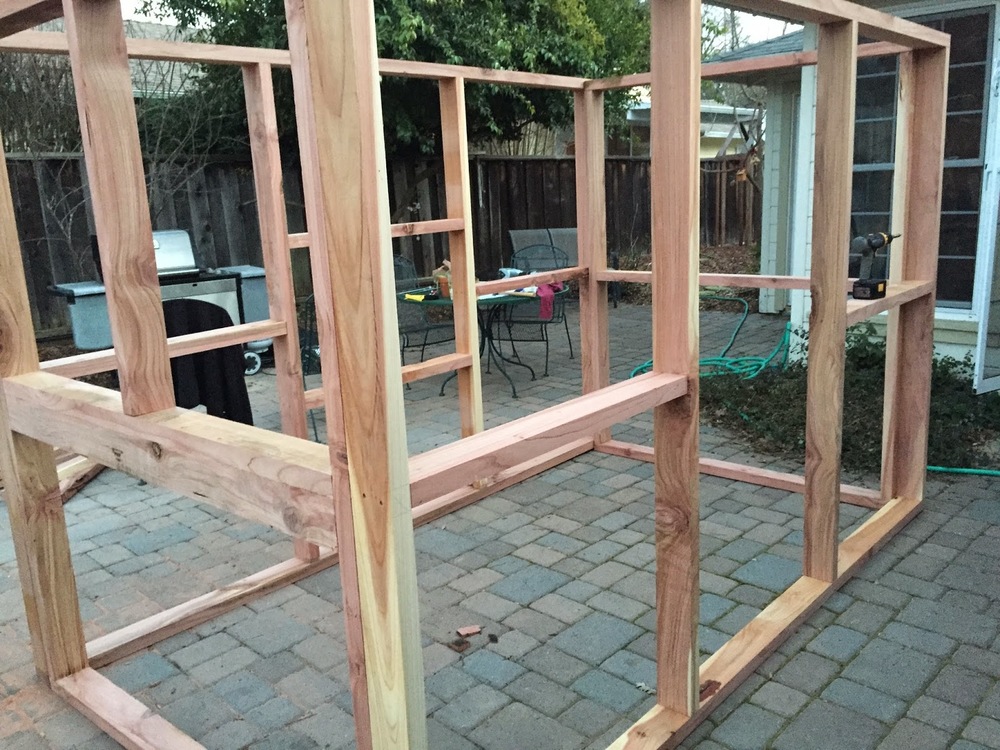
Tom and I spent most of the weekend framing the chicken run. This is the outside structure that will house the flock, the coop, the food and water.

As you may remember, we bought our plans from The Garden Coop, and last weekend we dug the trench, since we thought that would be the most tedious part. Dad obtained our redwood from the mill (what a gift, thanks Dad!) and Tom bought some supplies at the hardware store that he'd never really needed before, like sawhorses. Cutting the wood to size was no big deal, that took Tom one morning of math and measuring.


While he was doing the hardware runs and cutting, I was doing a big garden clean up around the rest of the yard. I figure we're done with frost for this winter, at least the heavy stuff, and so I cut out a bunch of dead branches and pulled up old dead flowers. Then I felt free to spread native annual wildflower seeds, so I did that. The vegetable garden is going gangbusters; I just have to remember to water regularly since we've had absolutely no rain in January.

Then we were both done with our respective jobs and it was time to frame. We got a little stuck on the 'nail' issue. Should we use a nail gun, or hammer by hand? I went to Ace Hardware and talked with an awesome old guy named Tony who really knew his stuff. He showed me the correct kind of hammer for framing, a much larger and heavier hammer with a bumpy head. Both Tom and I were worried about driving a nail perfectly, as funny as that sounds. Tony also told me it would take twice as long with a hammer.

Then we talked nail guns. I didn't know that most nail guns are powered by an air compressor. You can get battery-powered ones too, but it sounded like Tony thought the air guns were better. To buy something like that would run about $300. So he suggested renting, which we had thought of, but our local Cresco wasn't open on weekends. Tony suggested Home Depot. The closest HD that rents equipment is in Oakland, nearly to Alameda, so I called and talked to them first and they had what we needed.

But meanwhile I started thinking about everyone we knew that built something or was handy. My dad, woodworker extraordinaire, would never dream of using a nail gun. He'd probably dovetail the coop together. :) My friend Bob built his coop with a hammer, because he's excellent, so no gun there. We have a neighbor who built an extension on to his house, but he borrowed a gun from yet another neighbor that we don't know, and  I didn't think I should just show up at his door, introduce myself, and ask to borrow expensive equipment. Then I called a neighbor who built a coop last year and yahoo! he had a nail gun and compressor we could borrow. Plus, we got to take a good look at his coop and chicken system. I gave him a jar of honey to thank him for the equipment loan, and we started setting stuff up.

But there was a wrinkle: Matt's nail gun is a 'finish' nail gun, which means we can use it for the siding on the coop, but not for the framing. So we ended up renting a framing nail gun from Home Depot after all, which cost $29 for the day without the compressor. Not bad. Throw in a box of framing nails, and it was a cheap day at the hardware store. Just two long trips to the far side of Oakland.

This thing scared us, at first.
The frames were not hard, but we still made plenty of mistakes. There was a distinct learning curve. Here's a question for you: How on earth do you remove a nail that has been placed with a nail gun? Let's just say our hack saw got a lot of use during this stage of construction. But an afternoon later, we had our four wall frames, and then we set them all up and bolted them together with deck screws.


Next, we needed to dig holes for the cinder block 'piers,' on which the frame rests. This required leveling, then filling, then leveling, then digging some more, all of which was fun, believe it or not. It took three days for Tom and I to get into a good working rhythm, and by today, we were finally enjoying ourselves. It always takes us a while to give up our own power struggles. We both very much like to be right, and unfortunately we can't BOTH be right all the time.


Once the piers were in and leveled, we could move the framed structure over, which we did with the help of two teenage boys. I thought this would be the easiest part of the weekend, but in fact it was quite difficult. This structure is heavy, and at the moment, we have an obstacle course of sprinkler heads, dirt piles, and tarps to maneuver around.


Tom and I are so proud of ourselves. We've never done anything like this, and are not likely to again, but it's a skill that we both wish we could practice more now. Well, we have plenty more to do, the roof will go on next weekend, hopefully with the help of my dad, as there is some precise sawing that needs to be done.

I've been recommended a place to purchase the chickens. The farm is called Dare 2 Dream Farms, and they sell chicks, coop-ready older chicks, and pullets. They have many breeds. I've written to them asking about birds that would be good for both our summer heat and winter frosts, who are friendly and good layers. I like Buff OrpingtonsWyandottesRhode Island RedsBarred Rocks, and maybe Australorps or Easter Eggers. I'm hoping the farm will suggest what would be best for me. I think we'll get six coop-ready birds, and hopefully they'll be laying by summer.

A Special Day

January 15 is a special day in our house. On this day in 2004, our son Adam (two years old at the time) was sent to the hospital with a possible diagnosis (later confirmed) of Acute Lymphblastic Leukemia (ALL). It was a nightmare day which blurred into a truly horrifying night.
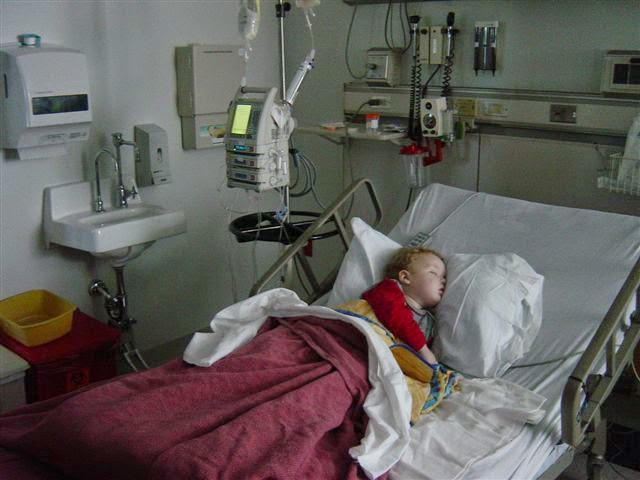
Adam in his hospital bed that first weekend.


By January 16, a plan was in place, and we had a strange sense of relief at having some sort of protocol to follow, some way to work our way back to 'normal.' Adam would undergo a year of very intense chemotherapy, with two years additional moderate chemo after that. He had a subcutaneous port put under the skin of his chest, with a line directly to his heart. He had chemo orally, in IV form, intramuscularly, and in his spinal fluid. He had weekly spinal taps, two bone marrow draws, three transfusions, four hospital stays, untold amounts of vomit, constipation, and diarrhea. He had numerous side effects from the medications. He had constant skin rashes and infections. He had low immunity through a lot of it, and had to be isolated frequently.

It was hard.

Almost immediately, we joined a support group for parents of children with cancer, and hooked up with Camp Okizu, which provided us with family weekends at camp, and as the kids grew older, summer camps by themselves. We had great doctors and nurses and met all kinds of folks at the hospital and clinic.

And one thing became very clear: Although what we were going through was as hard as anything we could imagine, there were families going through even harder circumstances. Our focus began to shift from 'nothing could be worse' to 'we have a good chance of getting through this.'

You put blinders on, when you go through an experience like this. You make yourself see only this moment, only today. You can't plan for the future. You don't dare look three years ahead to the end of treatment, because three years seems like a slog from hell. You just appreciate what is now. You make yourself extremely present.

This was a great gift to me, personally, from cancer. I had always been the kind of person who wanted to know what was next - rushing to the next project - finding something new to clutch on to - running from my problems. I'm still like this in many ways, you may see that from the amount of projects I give myself even now! But cancer really made me focus on what was happening, right then. I'm so fortunate to have learned that lesson, and it has stayed with me ever since.

In honor of that, I took a little hike with Joe this morning in one of my favorite places in Shell Ridge Open Space, the Fossil Trail and the quarry. I wanted to be present in my memories of cancer, and of this day eleven years ago. It was particularly magical this morning, with mist hanging about, the fog clinging to the hills.


The quarry is full of fossils, from a time when this range was underwater.


There's new growth everywhere, and soon there will be wild blooms of California Poppy, California Penstemon, and Tidy Tips. Right now, the dried, dead stalks of fennel, buckwheat, and tarweed litter the meadow.


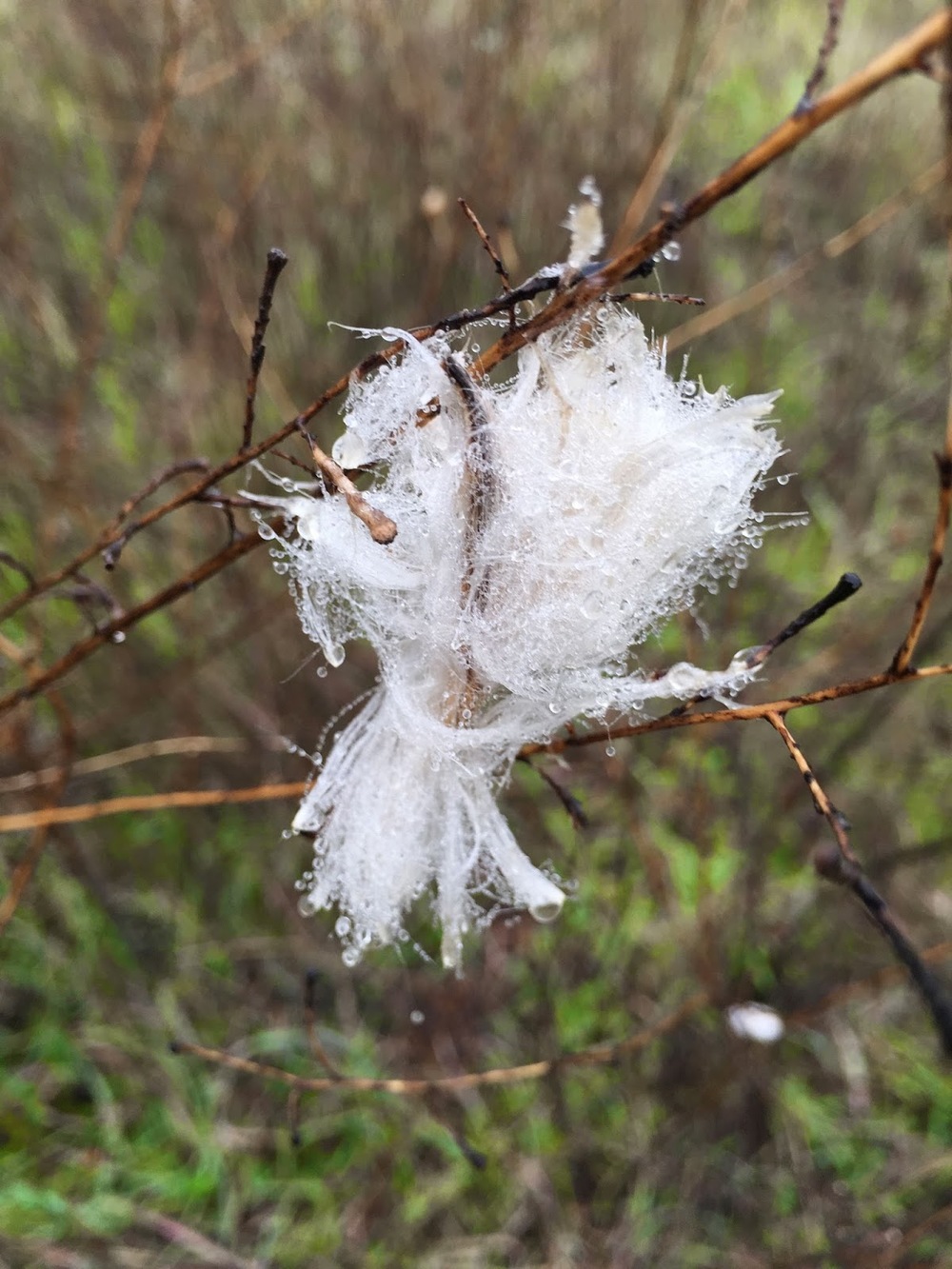
I found some Coyote Bush blooming, as well as some Milkweed seed pods. And lots and lots of moss and lichen.


The mist and fog worked on my memory and my heart, and I took courage at the thought that this area will be bright with flowers in a month or two.

We've come a long way from the days of sickness and despair, and what a pleasure to look at Adam today - a healthy, smart, kind, tall, handsome boy with long thick hair that he refuses to cut.


We are thankful.