Prepping the Thanksgiving Bird

Today, Kate and I drove up to Petaluma to pick up our pastured turkey. Petaluma is a small farming community about as far north of San Francisco as we are east. It's a pretty drive to get there, along Highway 37 between the Napa Valley and the San Francisco Bay. We saw a flock of American White Pelicans flying in 'v' formation above the marshes, which was glorious.

I ordered our turkey from Tara Firma Farms last week. It's a really neat place. They pasture all their meat animals on a gorgeous hilly vista. I first heard about them when I was searching for a local source of grass-fed beef. This farm actually has a CSA for meat - you can get a monthly delivery. We visited them last Mother's Day and spent a wonderful day walking around the farm, getting to know how the place works. It takes a tremendous amount of dedication, commitment, and LAND to run a farm like this. We were struck by the fact that this beautiful farm had very little odor. The animals all live in their natural element, roaming around, and even the pigs don't have much of a smell.

By California law, they are able to kill their chickens and turkeys on site, in an outdoor abattoir, open to the elements. The pigs and cows go to a local abattoir close by, which reduces the amount they need to travel, therefore stressing the animal less. This local abattoir reserves one day a week for pastured meat. It's a great system.


We so enjoyed watching the piglets. But there was one tiny guy, you can see him on the bottom right of this photo, was clearly the runt. It made me think of Wilbur in 'Charlotte's Web.' I left hoping that there was some little girl named Fern to take care of it.

Our turkey, all 18 pounds of it, was killed yesterday on the farm. I talked to the lady at the counter, and she said she had watched this process for the first time. She said it was very, very quiet; the birds don't fuss at all once they are head-down in the funnel. I think I should probably watch this in person at some point. If I'm going to be a responsible meat-eater, it seems like an important thing to do.

Anyway! We brought home the bird, and then I had to follow through with my plan of spatchcocking and dry brining it. Oh my, that thing looked awfully big on my cutting board. I confess to feeling very dubious.


First I pulled out the innards and put 'em in a pot with water, salt and pepper, and a bay leaf. I'll let that simmer all day, and that will be the broth we use for making the gravy. Then, I had to spend some time removing a few stray feathers. They were really stuck in there! This is about as close to a freshly killed animal as I've ever been, and it was a learning experience. I just kept thinking about Ma Ingalls and how many chickens she had to pluck in her lifetime. Usually, when I'm afraid of doing something homestead-y, I think of the pioneer women, who were totally badass in every way. They give me courage!

God Bless The Kitchn, my favorite go-to site for stuff like this: They had step-by-step instructions for a South American spatchcock, which separates the white meat from the dark meat. (Regular spatchcocking is just butterflying the bird. I wanted to cook the meats separately.) I sharpened my knife, got out my brand-new poultry shears, and got to work.


It turned out to be pretty simple, actually!

Then I mixed up my dry brine. Sea salt, pepper, and fresh herbs from the garden, chopped up.


I rubbed this under the loosened skin of the whole bird, and of course all along the outside, after patting it dry. I piled the two parts up on a platter and stuck it in the fridge. It'll stay in there, uncovered (air circulation!), until Thursday. The turkey looks like some sort of cut up alligator head or parts of a prehistoric beast. It's a pretty impressive pile of meat, that's for sure.




Let the sheet mulching begin.... again!

Here we are with a glorious week ahead of us. No school, no work, only a few rehearsals and performances, one important birthday (my mom's), one important holiday that involves a lot of cooking, but mostly.... blissfully empty. For us, this means only one thing: playing the new Kingdom Rush game! Well, okay, that.... and yard improvements!

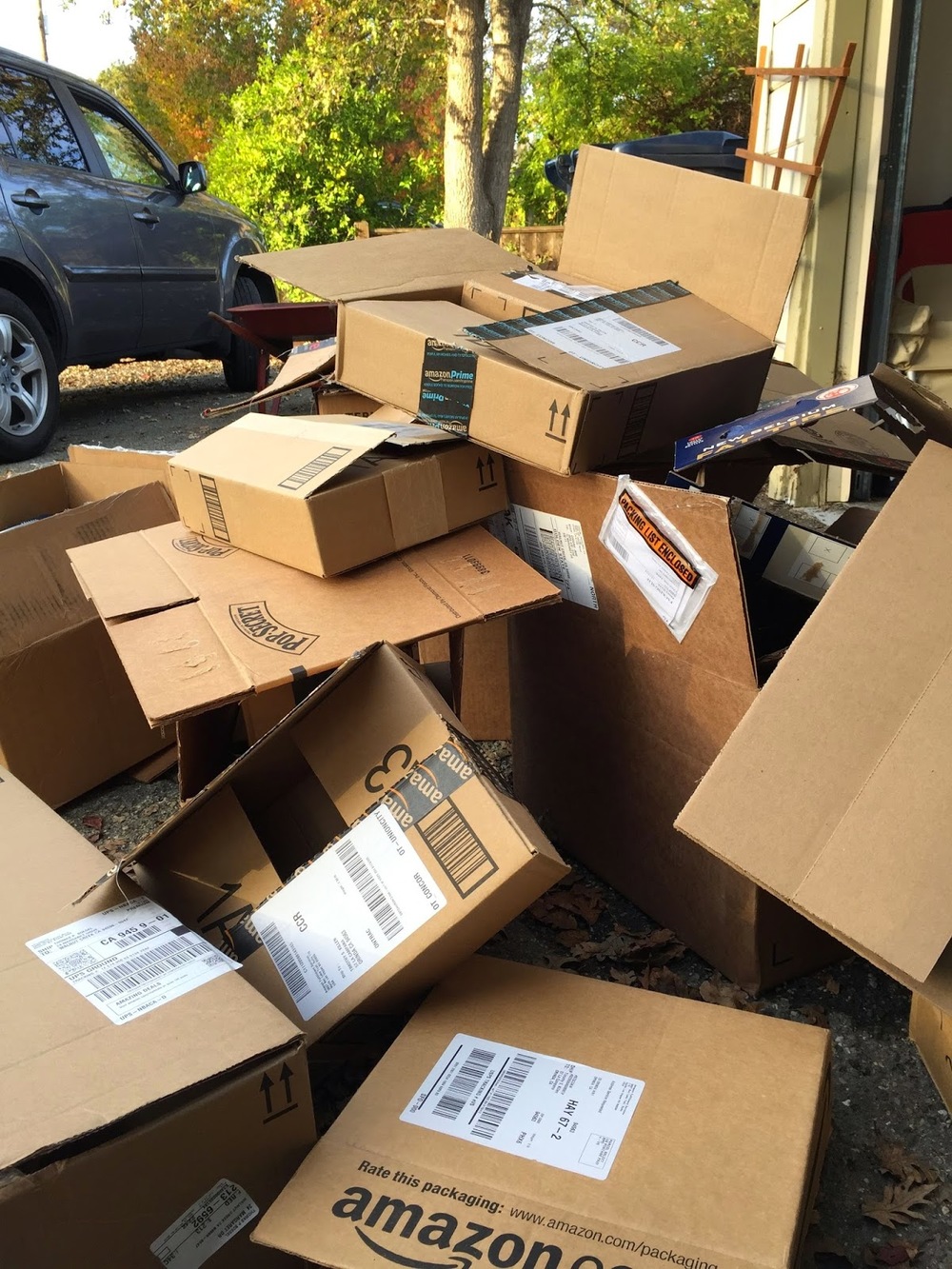
This past week, a tree company delivered me a load (maybe eight cubic yards) of pine mulch, free. Then I ordered three cubic yards of organic compost from Sloat's Garden in Danville, which is the most expensive part of the process - that runs about $160 including delivery. I've been collecting cardboard boxes for several weeks now (thank you friends and family!), and we are ready for some sheet mulching!

Here's the section of yard we plan to SM (sheet mulch). A play structure used to live here, and the trampoline is very happy here now, and still gets a lot of use - but one of the legs is broken. It has very little time left on this earth. (This tramp has a nice story, actually. It belonged to the kids across the street, who then sold it to the kids around the corner, who then sold it to us. It's had quite a life and a ton of use, so it has really served its purpose quite well. Oh, and our old play structure? Given to us as a gift by Tom's family when Adam was diagnosed with leukemia and had compromised immunity, it lived happily in this space for many years and was a magnet for the neighborhood kids. A nice young man with a two year old came and dismantled it and transported it to his yard, for his son to play on. This is the best kind of recycling!)


We stopped watering the grass in this area when drought hit, so it's looking pretty grim, though with our recent rains, it's greening up. There's little actual grass, lots of a very tenacious crabby sort of thing, another kind of weed that spreads by sending out tendrils and putting down new roots (vicious stuff), bindweed (or jimson weed) which is just terrible; in other words a smorgasbord of awful weeds. But the SM, if we do it right, should smother all of it. That is the beautiful thing about this process. Several times this past summer, if I saw an area of weeds I wanted to control, in any part of my garden, I'd put down a piece of cardboard or burlap, and cover it with organic matter. I have a pile of horse manure six inches deep over old burlap bags under the peach tree, because the weeds had gotten so bad there. So far, so good - no regrowth.

The only place I have trouble removing weeds is when they are in concrete - such as in the cracks of our patio, or the cracks in our driveway. You can't SM there! Most of the weeds die in the heat and dry of our summer, but in winter they are prolific, and I don't want them to set seed. I constantly weed by hand, but if that doesn't work, I will boil water and pour it on. Other times I will go out in the dark of night and spot treat with herbicide. In that case I use as little as possible, and only after dark when the bees are in the hive for the night. But I haven't had to do that in a long time. Boiling water really helps, especially if you add liquid soap to the mix.

Back to SM! This back area is also where our fruit trees are. I had the quince removed, but we still have an apple tree, as well as the peach.


We also have a tiny fig tree, which is hidden by the trampoline in the photos. I'd like to put in a sweet cherry where the quince was. The trampoline will stay here on the SM until spring, or until it gives up the ghost, whichever comes first, and then we'll build more raised beds. Probably six of them. I think this will be where the tomatoes, peppers, and melons will be planted, as this area gets more sun than any other part of the yard.

Truck dumping compost, next to the mulch mound

The most finicky part of the SM process is removing all tape and labels from the boxes, as those won't decompose like the cardboard will. I spent several hours today removing tape. The stuff Amazon uses is the devil itself - it has threads in it, so it comes apart when you try to remove it. ARGH! The plastic stuff at least comes off in one long strip! Amazon, if you're reading this, you need to change your tape for the .0001% of your customer base who sheet mulches!!!!


The boxes also need to be cut so that they lay flat. Once that's done, it's just a matter of moving materials. That's a job, and a blog, for later this week.

Tomorrow, I head out to the farm for our pastured turkey. I'll report on that experience, as well as my turkey prep, as I'm trying something new.

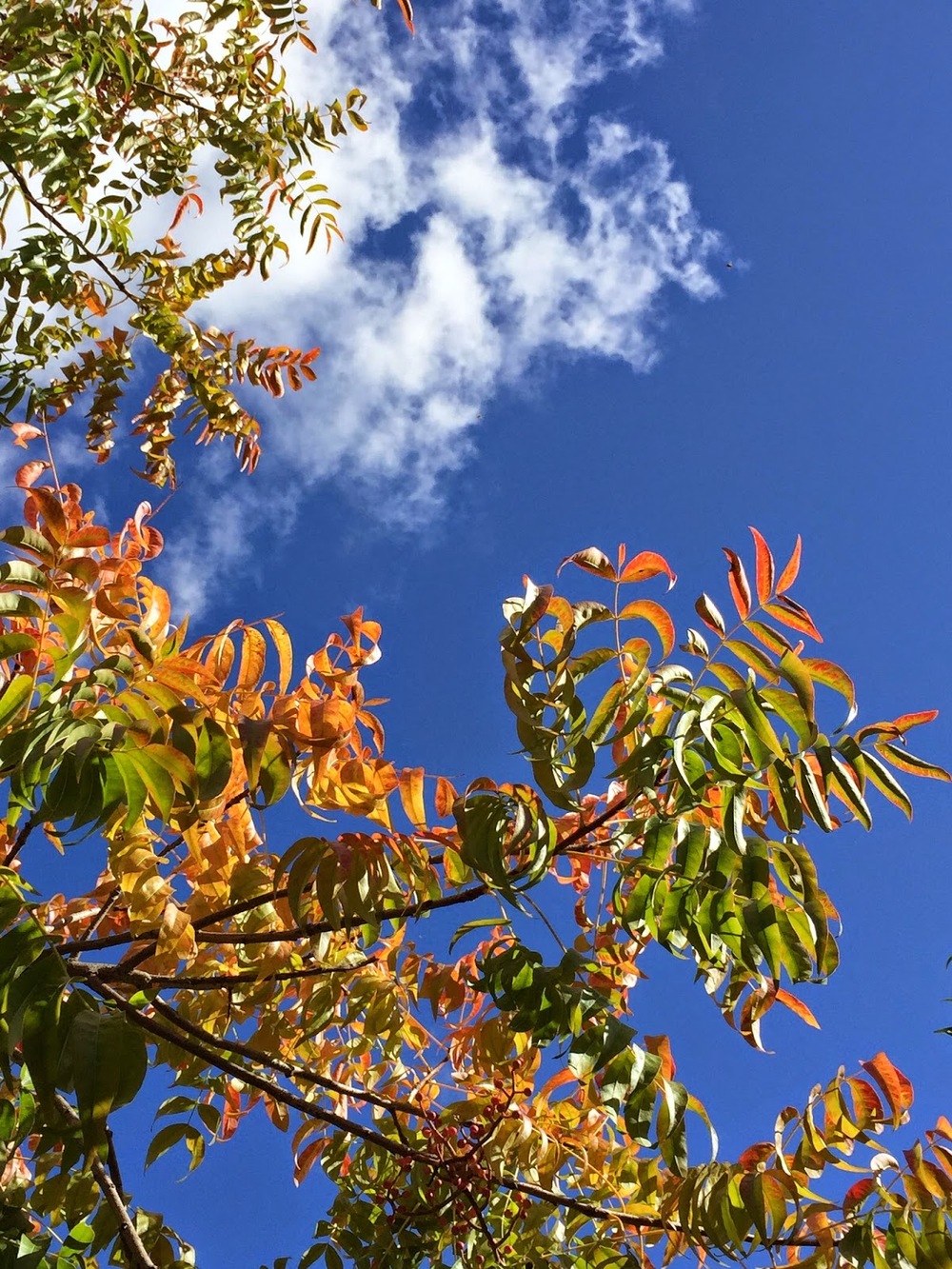
I'm enjoying the leaves on my walks.


 Mushrooms are enjoying our recently wet earth, and popping up all over the place. These tiny yellow beauties are in our yard:


I spread red clover seeds all over the one remaining area of grass in our yard, and they are going gangbusters.


I'm hoping they bloom over our mild winter, and provide forage for the bees.

Speaking of the bees, both Tom and I have noticed a strange thing on the landing board of the hive. Every so often, maybe 5 times in the last month, there's a white dead thing there. Here's a picture of it.


I think it's dead larvae. But why is there dead larvae on the landing board? I did some searching around, and there are several explanations. One, there's mites or disease in the hive. The last time we opened it, though, everything looked great, no sign of anything amiss. Another reason could be the sudden change in temperature. It might be that this particular patch of brood got chilled and therefore isn't viable, or for some reason just stopped developing. The bees might also be culling larvae for some reason. Whatever it is, I'll need to keep an eye on the hive for the next few weeks. The bees are flying in and out as normal, whenever it gets over 50 degrees outside. They seem to be bringing in pollen and nectar. I'm anxious about this new development, but not overly so.

Yum, Tom's making a Jamie Oliver recipe of Thai spiced rice noodles with chicken, butternut squash, and broccoli, and it smells amazing. I'm off to dinner!

True Autumn

Well, it really is true autumn around here now, even with mild, sunny days. The nights are chilly and we've had some rain, here's hoping for more! The leaves are falling in earnest and Thanksgiving plans are in the works. I think I've finally found our pastured, heritage turkey, which will be killed on the farm the weekend before we need it. Pastured turkey is not cheap - $7/lb., but worth it in so many ways. I am anxious to try a dry brine on the bird.

Let's see, what's been happening at Poppy Corners? Last weekend we had some family friends over. The kids and I went around the neighborhood and collected fall leaves and seedpods, anything interesting we could find. Then we sat outside in the sunshine and each painted a watercolor of what we found. One of these is mine, two are from my kids, and two are from the other kids, all 6th and 7th graders. This was a fun experiment! We all look at the same things differently.


Adam has been in Opera mode all week, which will continue until December 7. Last night was opening night. It's been really fun for me to hang out backstage and geek out on the action. Here's a synopsis of Act II, which is when Adam is involved.

A great crowd, including children, has gathered with street sellers announcing their wares (chorus: Aranci, datteri! Caldi i marroni! – "Oranges, dates! Hot chestnuts!"). The friends arrive; Rodolfo buys Mimì a bonnet from a vendor, while Colline buys a coat and Schaunard a horn. Parisians gossip with friends and bargain with the vendors; the children of the streets clamor to see the wares of Parpignol, the toy seller.

After the kids follow Parpignol off stage, a marching band assembles backstage (!) and starts playing, then they march on stage and the kids follow them, party party party, and that's the end of Act II. The kids rush to shed costumes and makeup during the interval, becoming 21st century boys once again.

Yesterday, in between performances, Adam, chorister and friend Alex, and I went to a local artisan chocolate shop in the Mission called Dandelion. We've been there before for a private tour, and they are just incredible, sourcing chocolate from all different parts of the world and making it into 70% bars the old fashioned way, roasting and mixing and adding only sugar. We bought several bars with beans sourced from Liberia, where they are teaching former child soldiers how to farm cacao. Delicious, and for a good cause. I thought you'd get a kick out of the bathroom trash cans. This is San Francisco in a nutshell.


If you get a chance to look at Dandelion's website (just click on the link I provided above), there's an interesting blog post on the history of chocolate. Check it out!

We also spent a little time at Ocean Beach, right at sunset. There were plenty of kite boarders and people building bonfires on the beach. This is also San Francisco in a nutshell, foggy and beautiful.


After some games of tag, it was time to head back to the theater for another performance.

I've loved the whole experience: Listening to the leads warm up in their dressing rooms, chatting with the dressers as they work with the kids, sharing winks with the adult chorus backstage, learning the lingo of the Opera (the singers say 'toi toi toi' to each other, for luck), watching the leads come and go off stage, and of course listening to the great score by Puccini.

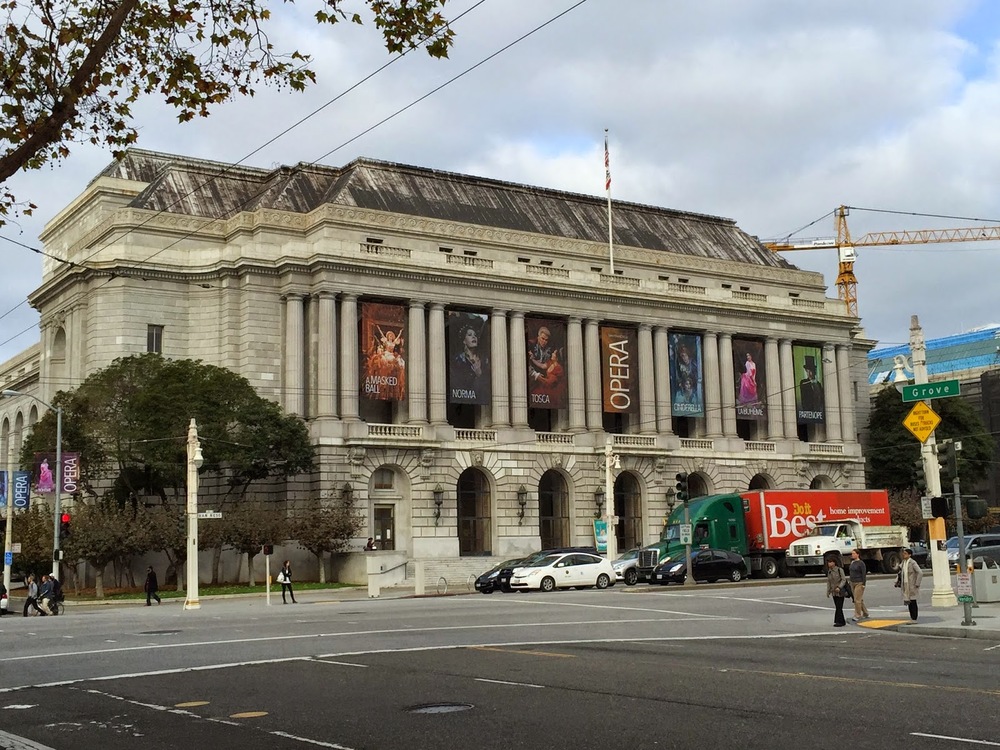
War Memorial Opera House, home of the San Francisco Opera

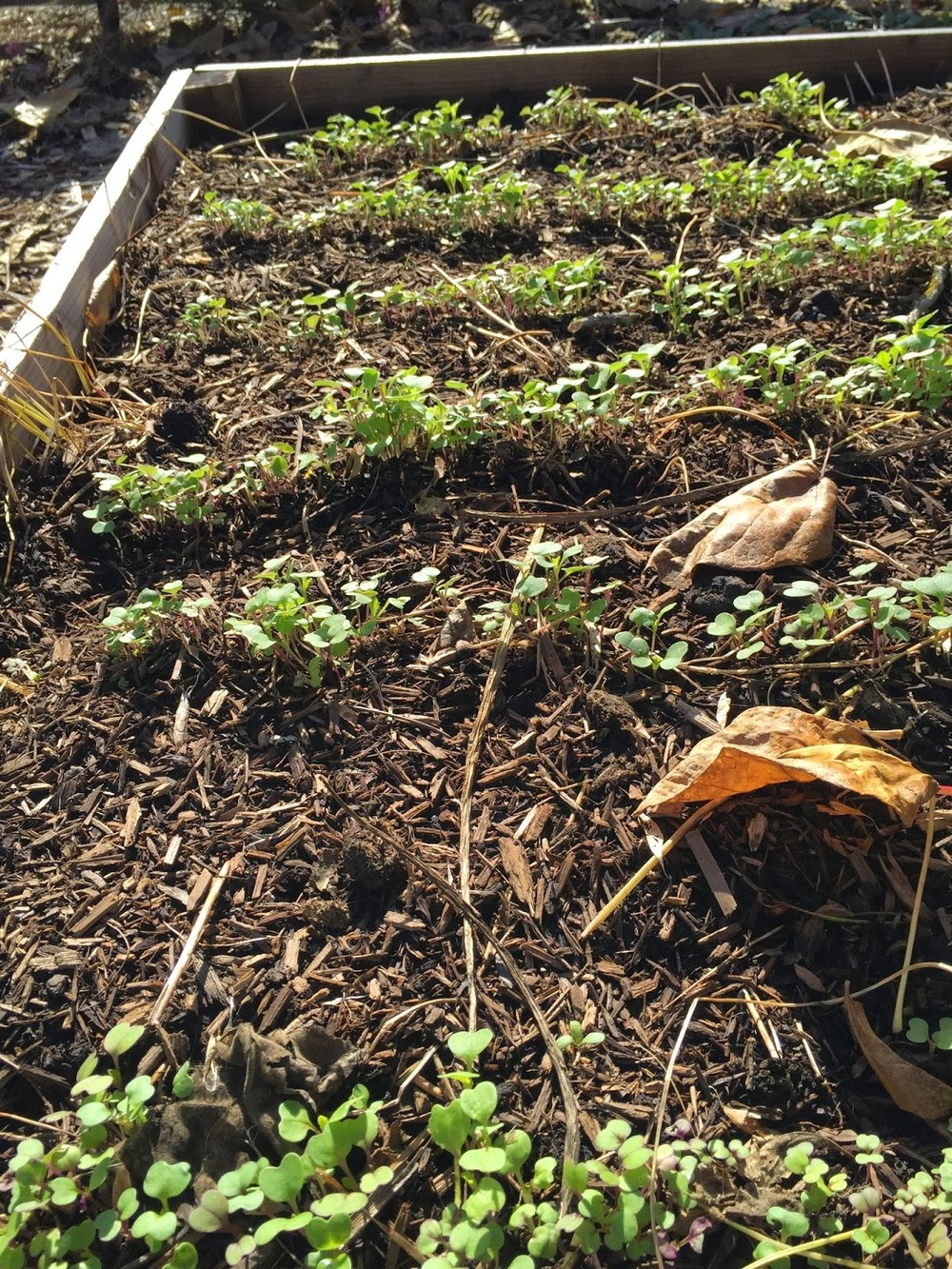
It's also a lot of time and energy, though, and that means that I'm too tired to do much work in the garden.  While I was looking the other way, the vegetable seeds germinated. Every time I plant a seed, I think to myself, "There's no way this is going to grow." But then they always do! It's like magic, isn't it? It's amazing that something so small has all that potential. Nature is always miraculous.


I refreshed the herb spiral/hugelkultur with new herb starts. I use fresh herbs in everything, so it's very worth it to keep the spiral producing. I added more chives, oregano, thyme, tarragon, parsley, marjoram, and sage, along with some chicken manure and compost. The mint, lavender, and sorrel are all going gangbusters (no surprise there) so they did not need refreshing. My rosemary is in a separate pot and is doing fine. Most herbs are perennial, so if I can protect them from frost, they'll last. The thing that I find a bit confounding about this arrangement is that it is decomposing in place - the hill keeps getting smaller - and I have to keep adding dirt. Meanwhile, a quick check on the wood that is forming the base of this hugelkultur shows that it hasn't decomposed at all, neither has the sawdust I put under there. Maybe I layered everything the wrong way. Anyhow, the herbs do fine here, as long as I give them extra dirt when needed.


Our list of projects for Thanksgiving week is growing. We're planning to build hoops over each bed, then place a row cover over those, to deter deer. We are also going to sheet mulch the other side of our property, where we've had various kid things for years - play structure, then trampoline. We'll mulch it to get rid of the 'grass' (mostly dead, as we didn't water over the summer), and then build more raised beds. I'd like to plant several manzanitas and a cherry tree in various parts of the yard. I also have a lot of trimming to do.

Hiking with the dog has been fun, sometimes muddy. November brings dramatic skies, with contrasts in bleak and glorious. The hills are not yet green, but there is potential for that, and soon.

A valley oak, perfectly situated in its surroundings


Birds, Art, Dessert

The hummingbirds arrive to the water feature first. Around six in the morning, they start to bathe. They're mostly Anna's Hummingbirds, beautiful small bundles who 'chirp!chirp!' fairly constantly. The males have a gorgeous pink neck. Some perch lightly on the side, dipping their heads and beaks in; some hover and drink from the side where the water cascades; and still others like to motorboat across the water, giving a good shake at the end.

After the hummingbirds, the finches arrive. Lesser GoldfinchesAmerican Goldfinches, and House Finches all come for a bath. They like to face outwards, and put their backsides in the water. Then they fluff up and shake. It's super cute.

Later, with no apparent schedule, the chickadees arrive, along with the occasional larger bird, such as a scrub jay or robin. Often we'll see mourning doves in the late afternoon hours. We have lots of other birds in the garden, like titmice and woodpeckers, but I rarely see them at the fountain. I don't know if they get their water elsewhere, or if they are just too shy.

This past week, nearly every morning, we've had a new visitor - a small black bird with a white belly. I finally looked him up - it's a Black Phoebe. I find this so exciting! It's fun to see someone new!

Putting that water feature right outside the kitchen window was a stroke of genius, if I do say so myself. Watching the birds as I cook or clean just makes me happy.

The view from my kitchen window
I went through a bird painting stage a couple of years ago. I know nothing about technique, but every so often I get a hankering to hold a brush, and why not indulge that and enjoy myself? I look for sales on canvas at the local craft stores, and I've collected good brushes and paints over the years, so it's not an expensive endeavor if it fails.

Western Bluebird

Western Meadowlark

Anna's Hummingbird

I used to get very down on myself because I cannot paint from imagination. I must have a model or a photo. 

From an informal art class many years ago


I somehow thought this was wrong. Just two weeks ago I watched "Tim's Vermeer" (available on Netflix) and realized that many of the great painters used models or still life groupings to create their masterpieces. So I don't feel bad any more. However, I have no illusions that my artwork is anything other than amateur!

I also like to make carvings on lino, but they are often created by tracing other artwork, so it's not original at all. It can be quite difficult, though.

From the original 'Candide' illustrations

These darker afternoons and evenings lend themselves to craft and art. The dusk comes earlier, the weather grows colder, and I suddenly find myself rummaging in my drawers for the paint. I've been working on the yearly Christmas card project. I make our cards every year (with the exception of last year; I had gone back to working every day and the faster pace of home life was a steep learning curve); sometimes I make a carving and print each card by hand, sometimes I do a painting or drawing and have the cards made using that artwork. This year, I've decided to do a painting based on our garden adventures this past year. I'll post a photo as we get closer to the holiday.

The turn of the seasons also makes me want to bake. I've been experimenting with different recipes for a Thanksgiving alternative to pumpkin pie (as if there CAN be any alternative to pumpkin pie) and we've had some good eats lately. Danielle Walker's Apple Cake was a hit, moist and delicious with a little cream instead of icing. I also took a chocolate cake recipe from Food52 and substituted almond flour for the regular flour, and coconut palm sugar for the regular sugar. I also didn't frost it, but made whipped cream with a little stevia for the topping. It was delicious. Next up, Calabrian Walnut Cake, also from Food52.

This past week, we had a tree service come and trim up all the big trees in the yard - a Valley Oak, a Brazilian Pepper, a Catalpa, and a horrible Magnolia which I can't bring myself to remove as it provides good shade. I had them remove the Quince, which I will replace with a sweet Cherry. I also had them remove our Flannel Bush - it had the most excellent large yellow blossoms in the spring that attracted every kind of bee you could imagine - but it was the size of a tree and it's called 'flannel' for a reason - the leaves were covered with fine hairs that itched like crazy if you came in contact. Trimming it was a nightmare. I'll miss the blooms, but I'll replace it with some kind of Manzanita and the bees will enjoy that, too.

In the vegetable garden, the braising greens have already germinated! I can't wait to have fresh greens again.

Chilly, wet weekend

We had some much-needed rain this past Friday, and with it came a cold front. The heat in the house kicked on, and it's truly starting to feel like autumn. Leaves are just starting to change.


On my daily early morning stroll with Joe, it's still dark, the air is crisp and clear, and the neighborhood Great Horned Owl is back. This morning he was in the huge redwood tree on the far corner, but his calls followed me all around the block. Hoo hoo.... hoo..... hoooo.... Apparently this is just a territorial hoot, but I find it a bit melancholy. "I need..... a.... friend...." No? Too fanciful? Probably it's more like, "I'll take... you... down...." as these guys are pretty badass, eating prey even larger than they are. I'm hoping they're eating the moles and gophers digging in my garden. Too bad they can't eat deer.

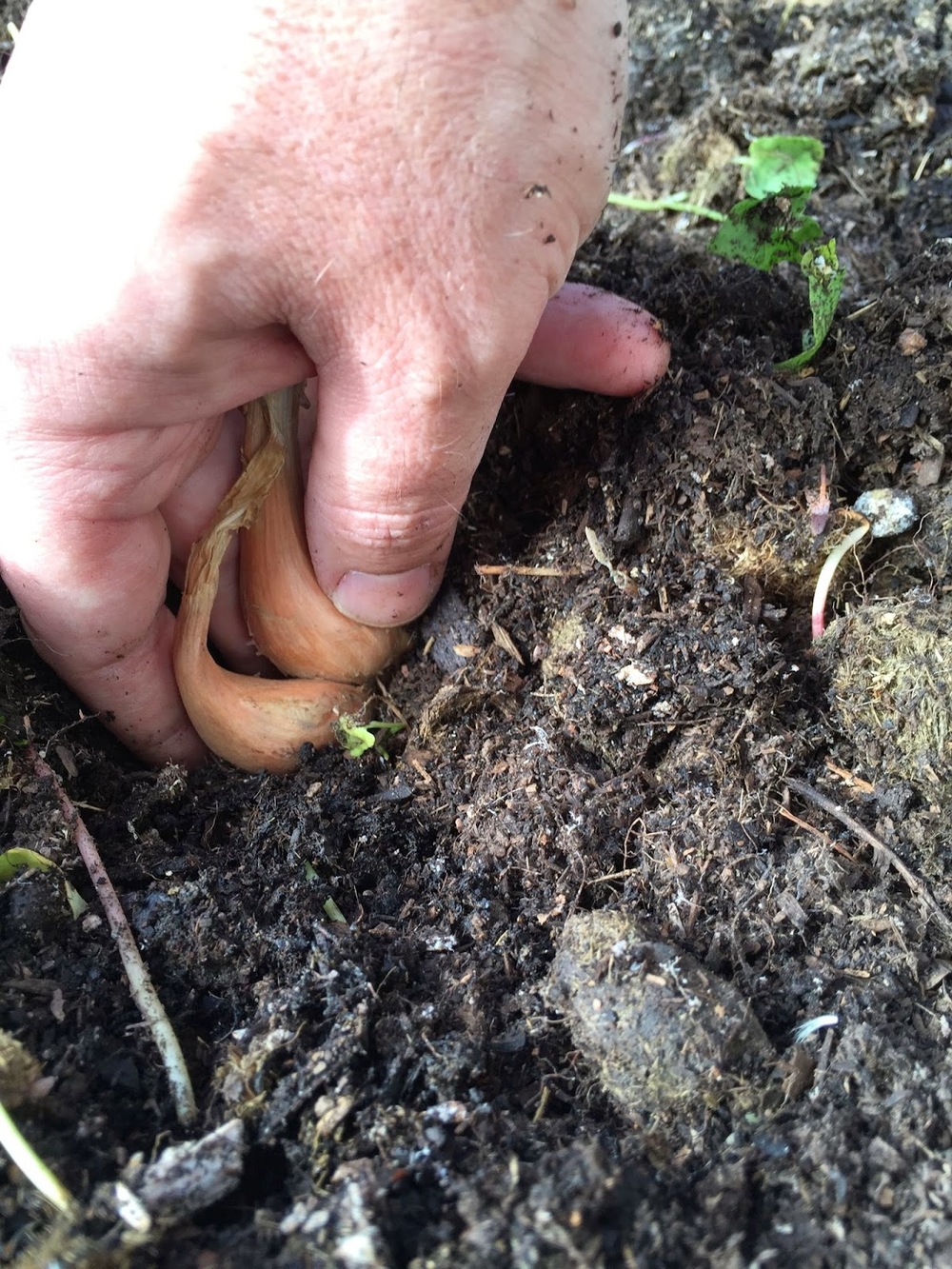
Speaking of the garden, weekends are for getting stuff done, right? I bought some extra dirt to fill up the beds, which were looking low, and Tom added it and raked it. Then I planted my winter crops. Bulbs of garlic and shallots (a first for me) were fun to shove into the warm, good-smelling dirt. Tom enjoyed it, too.


They will grow all winter, and be ready to harvest in June.

I planted seeds of broccoli, kohlrabi, beets, braising greens, kale, chard, spinach, romaine (this one may not grow in the cold, we'll see), shelling peas, and snap peas. I planted organic varieties of each of these. I am committed, now, to growing only from organic seeds and starts. I will NOT be tempted again by the beautiful big mums displayed in the front of Trader Joe's. They are likely grown with neonicotinoids.  I will only buy plants of which I know the origin. My winter seeds came from Renee's Garden and High Mowing. I think in the summer I will likely buy some seeds from the Seed Savers Exchange. I've been reading their blog, and getting their catalog, and I like what they are doing. I don't necessarily need all heirloom varieties, though, so I imagine I'll get tomatoes and peppers again from the local Master Gardeners (they save their own seeds).

I painted 6 or 7 bricks for plant identification. You wouldn't believe how many neighbors and passers-by have commented on these - saying how glad they are to know what's growing. I think they look pretty, too.


We're still trying out different trellis ideas for vining crops. The bamboo trellis' are easy, and cheap, but they are a bit rickety, and our bean trellis totally collapsed this past summer. I noticed a type of trellis on the Seed Savers website that I wanted to try it with the peas this winter. I showed the picture to Tom, we talked measurements, he went off to the hardware store, and by the end of the day I had my two trellis' (trelli?).


It's quite nice to have a husband who is not only able to do these projects, but willing; and even more than that, enthusiastic. He doesn't sigh and mope, he just gets to it with a hearty spirit. I sure appreciate that about him.

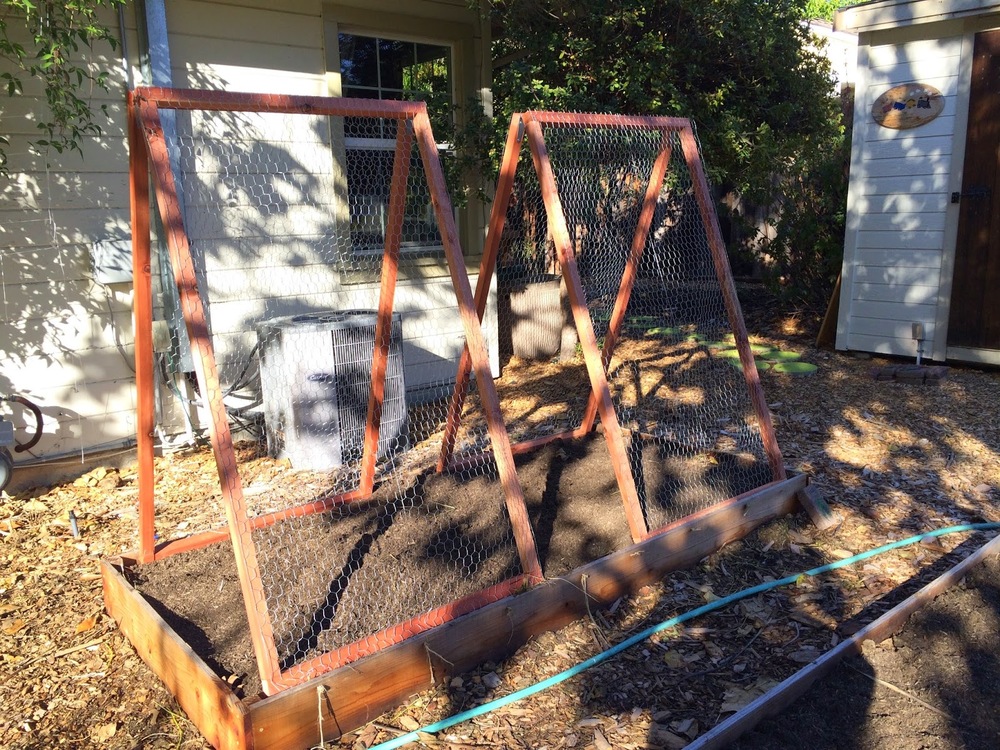
Anyway, they are 3 feet across and 5 feet tall. The frame is made of redwood and that's chicken wire stapled to the frame. At the top are two hinges, so it can lie flat for storage in the garage. I am so pleased with this trellis, I might have Tom made them for everything - cucumbers, beans, they would even work for tomatoes. They are sturdy and definitely won't collapse!

Here are Tom's instructions for building this trellis:

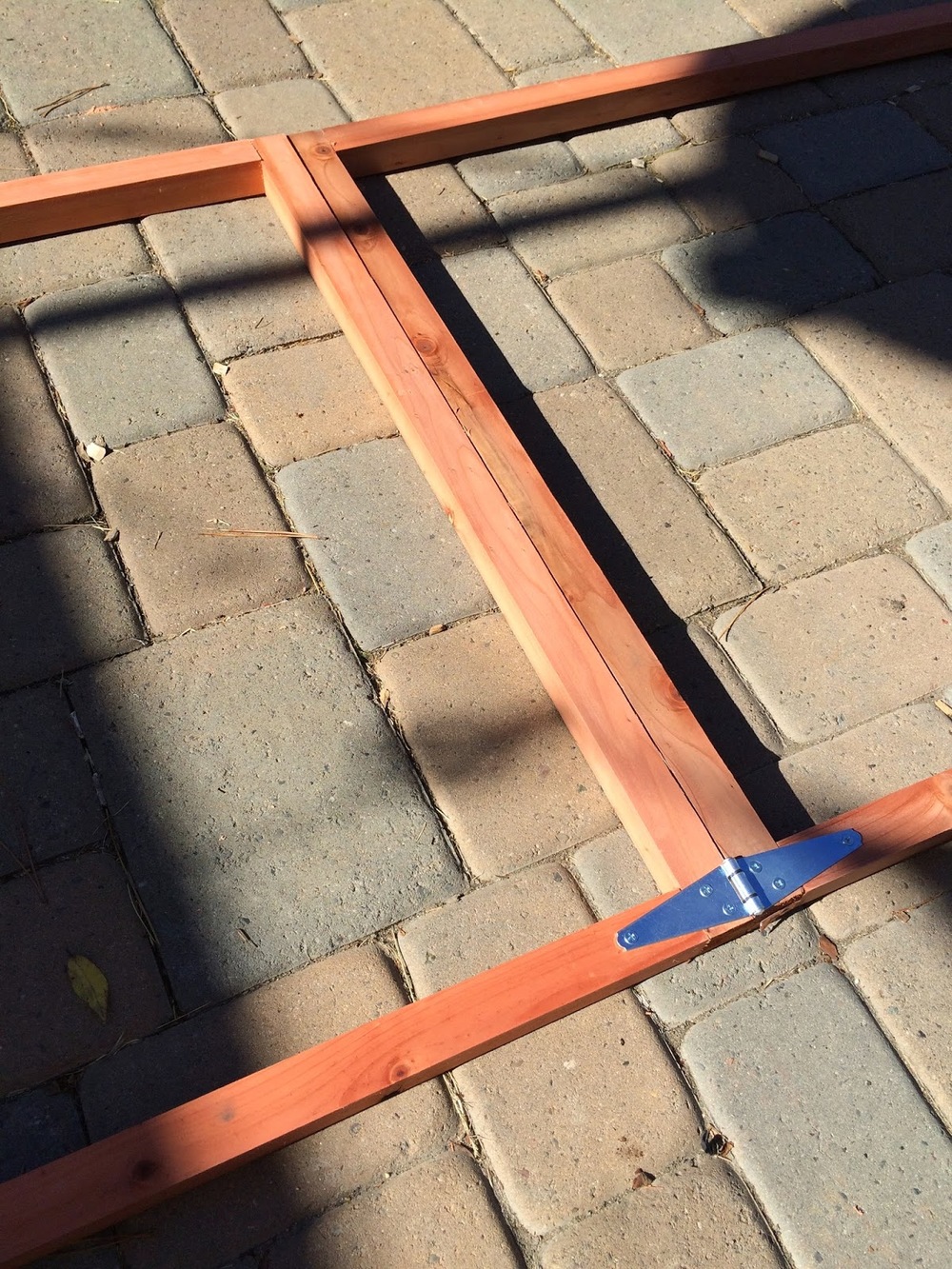
Each trellis took four 2x2x8' pieces of redwood, two strap hinges, some long deck screws, and some chicken wire. I started by sawing each redwood piece into a 3' and a 5' section, then assembling a frame:


Repeat the process to make a second frame, then lay them end-to-end to attach the strap hinges. Pay attention to how the strap hinges work so that the trellis will fold correctly:


Roll out the chicken wire and use a heavy-duty stapler to staple it to each side of the frame:


That's it! Here's how the trellises look in our raised beds:


Aren't they fabulous?

Kate and I worked on separating the flower seeds I had saved last spring. We opened up the bags of poppies, tidy tips, clarkia, and milkweed seeds that were stored in the garage; some of the seed pods had opened and released their seeds down to the bottom of the bag, but some needed to be manually opened and released. This took quite a long time, but it netted thousands of tiny seeds for my flower garden.


This is probably 2 cups worth of seeds, and a little chaff. I added all of these to a wheelbarrow of compost, along with all the milkweed seeds I've collected from the hills. Stir it up, throw it on the garden in any empty spots, and Bob's your uncle. (I used this English idiom on the kids recently, and Kate's been using it all over the place, completely out of context. It's hilarious. Maybe next, I'll teach her, 'Et Voila!'  Though she would probably go around saying "Et VIOla!" Oh, dear.)

I also, happily, found some tansy-leaved phacelia seeds (native to the West) buried in the garage, so added those to the mix. This flower/herb is very important for both native and European bees!

Speaking of bees, we opened the hive, since it was a warm, sunny afternoon. The bees have four full bars of capped honey and uncapped nectar:


You can see the shiny nectar at the bottom. The bees fan the nectar to reduce the water content, then cap it. They can't cap it too early, or it will ferment. Isn't that amazing, that they know how to do this? I've read that a hive needs 30 pounds of honey for winter. I'm guessing mine'll have about 10. So sometime in December, when the weather is warm, we'll open up the hive and see how they are doing. Clearly they are still collecting nectar right now, and they have one comb started with new wax, which can hold whatever they collect in the next few weeks. In December I will determine if the bees need feeding with simple syrup, or if they have enough food.

Since we've had some rain, and are hoping for much, much more this winter, I made sure my downspout was connected to my rain barrel. One good rain fills this barrel up. I really need more, on every downspout. So much rain comes off the roof, I really need to be collecting it. It sure seems like serious drought is going to be a permanent part of California's future.


Oh well, a cistern is on the five-year plan. No more rain in the forecast this week, anyway - apparently we'll get some 80 degree days. And that's November in Northern CA for you!