Halloween

Happy Halloween, everyone! I gotta admit, this isn't my favorite holiday - but our neighborhood makes it a REALLY big deal. We live in a very old neighborhood without street lights, so it's very  dark, and the area is completely flat, which means everyone from the hills comes down to trick or treat. Ten years ago, on our first Halloween here, we were completely gobsmacked when we saw a horse go by, ridden by, you guessed it, a headless horseman. Every year since, it's gotten bigger and crazier. We're talking hundreds and hundreds of kids.

I tend to focus on 'autumn' and 'harvest' rather than Halloween. However, there are a few things that must be done, or it just isn't Halloween. Pumpkin seeds? Yes, please. Carving? Wouldn't think of skipping it. A stray Kit Kat stolen from my children's baskets? Affirmative.

I harvested eight pumpkins from our crop this year, and they kept wonderfully in the corner of our bedroom. I put them out on the front porch around the middle of October. The squirrels ate one completely, and took nibbles out of two others. Luckily, I had several left that had a nice shape and were destined for carving. I hacked in and pulled out the guts (all the while thinking of Linus saying: "YOU KILLED IT!") and picked out the seeds. I've never had homegrown pepitas before.


Roasted with a little olive oil and sea salt, they are really delicious. 


I have a set of carving tools that I use every year. I originally got them, and used them, for lino carving, but they work great on pumpkins, and they allow a lot of detail. You can get these at any craft store. The pumpkin cleaning tools I got years ago in some random stencil kit.


I freehand a design on the pumpkin, and then carve out any 'negative' space.


Kate decided she wanted to do a simple butterfly. She only cut herself once.
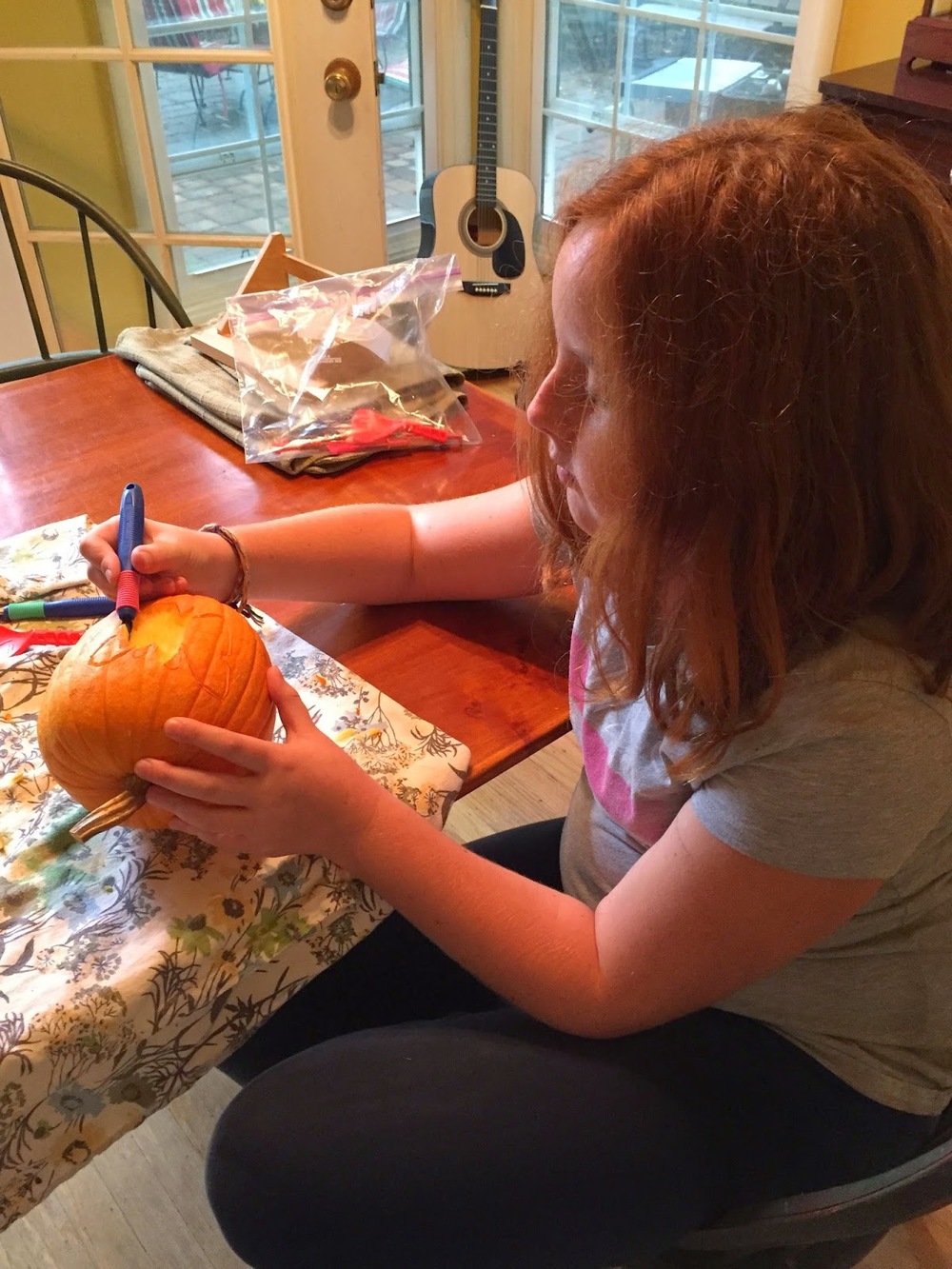

I did three of my own, and all four look nice grouped outside together, with a bit of a nature theme. (What else?)


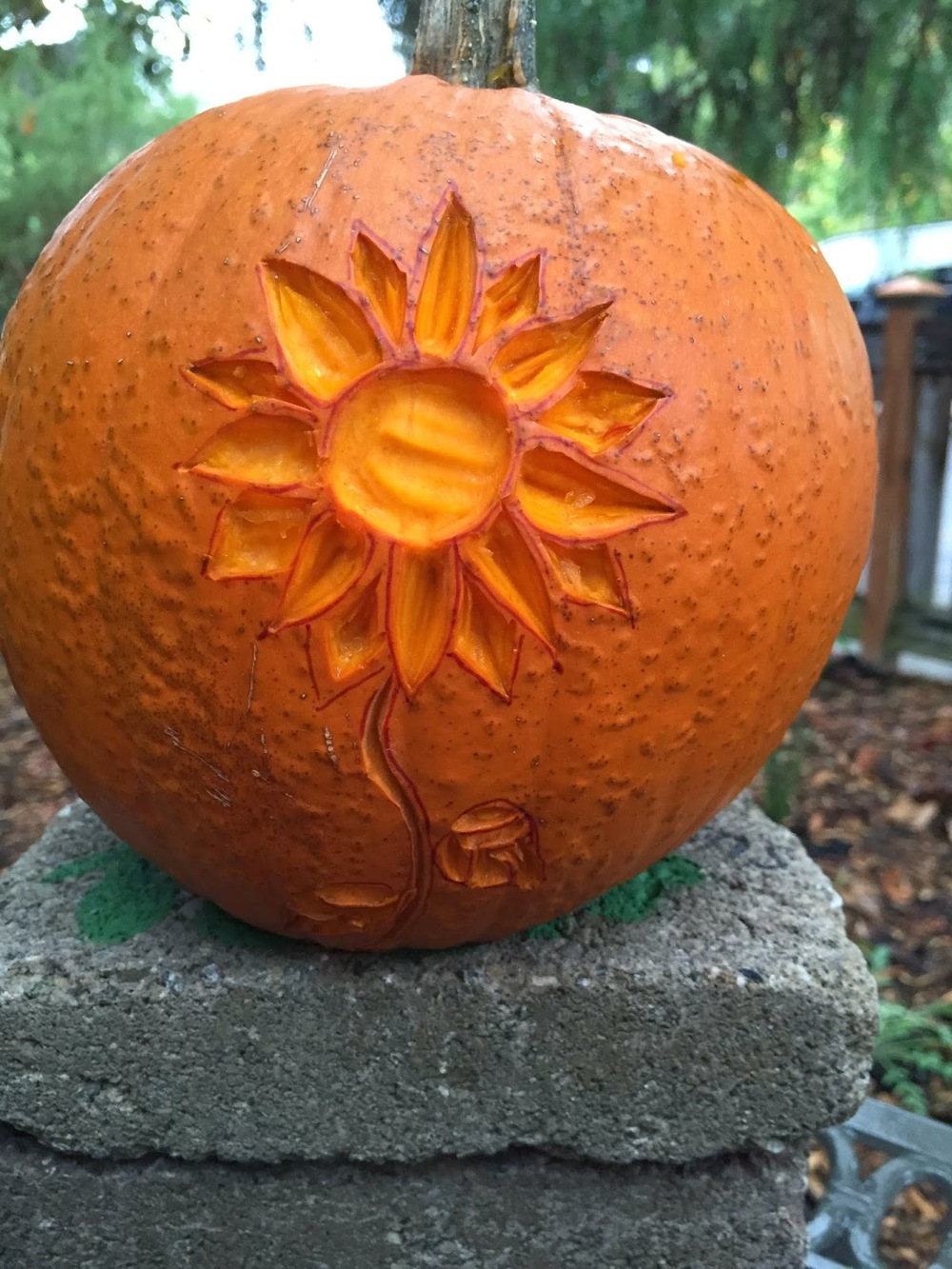
You've seen the leaf, but here's a close-up of the sunflower:

And the skep bee hive:


And here's how they look lighted:


I felt pretty good about my tiny pumpkins, until I walked over to my neighbors house - 100 pumpkins, all home grown, most huge, all carved the normal way of course, but looking spectacular grouped together. Wow. I need to up my game.
Pollinating

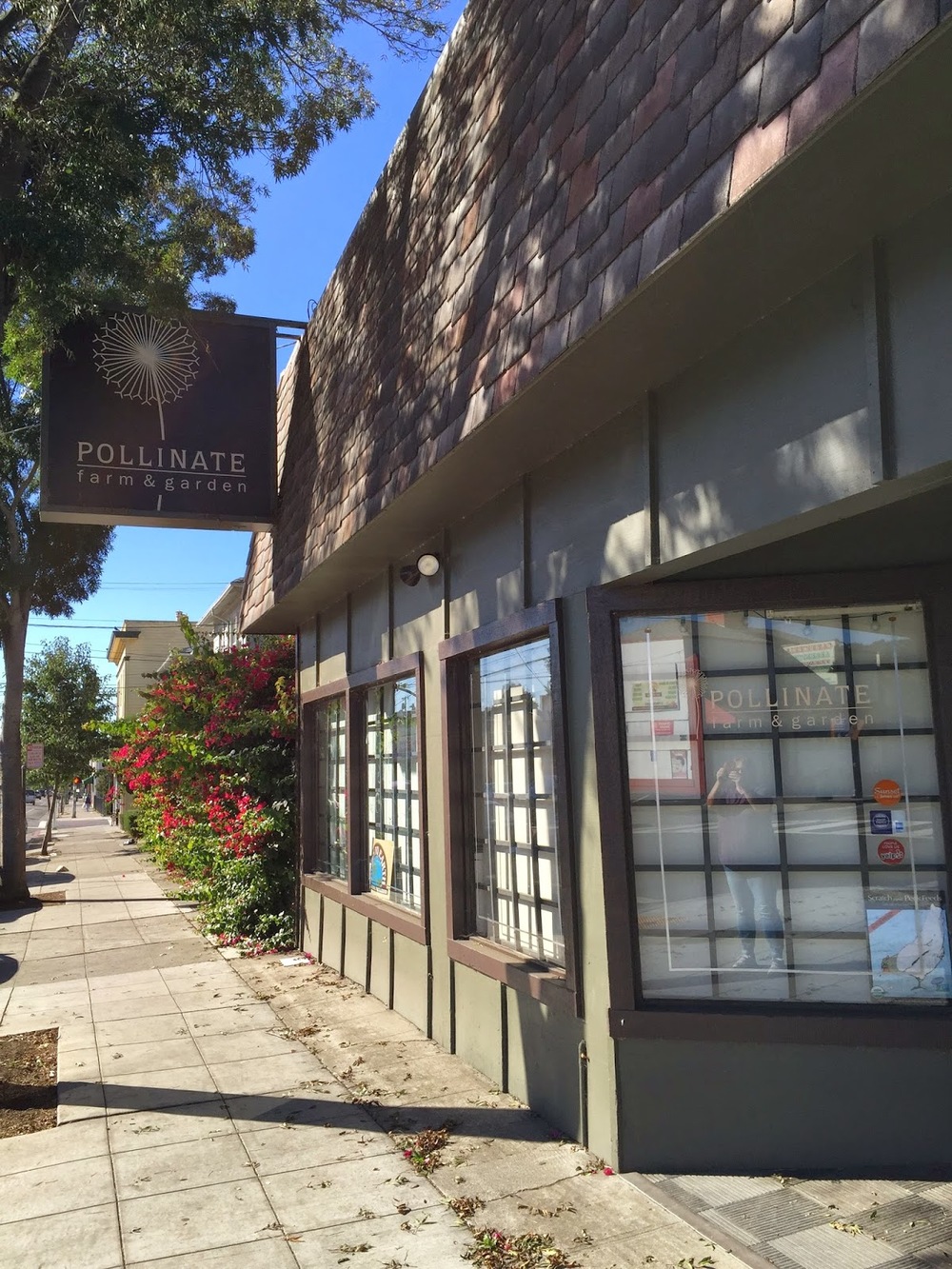
My garden-partner-in-crime and good friend Barbara introduced me to a really neat place today, Pollinate Farm and Garden, in Oakland (in the Fruitvale neighborhood).


I went to hear a talk on native bees, but whoa - this place was amazing! They had everything you could possibly want for beekeeping, chicken keeping, canning, preserving, and fermenting food, garden starts, compost, books, crockery - and even a fertilizer bar! Yes, you could buy different fertilizers by the pound, all organic. I was geeking out. Jewelry stores? Nah. Show me a store with a fertilizer bar and this girl is happy!

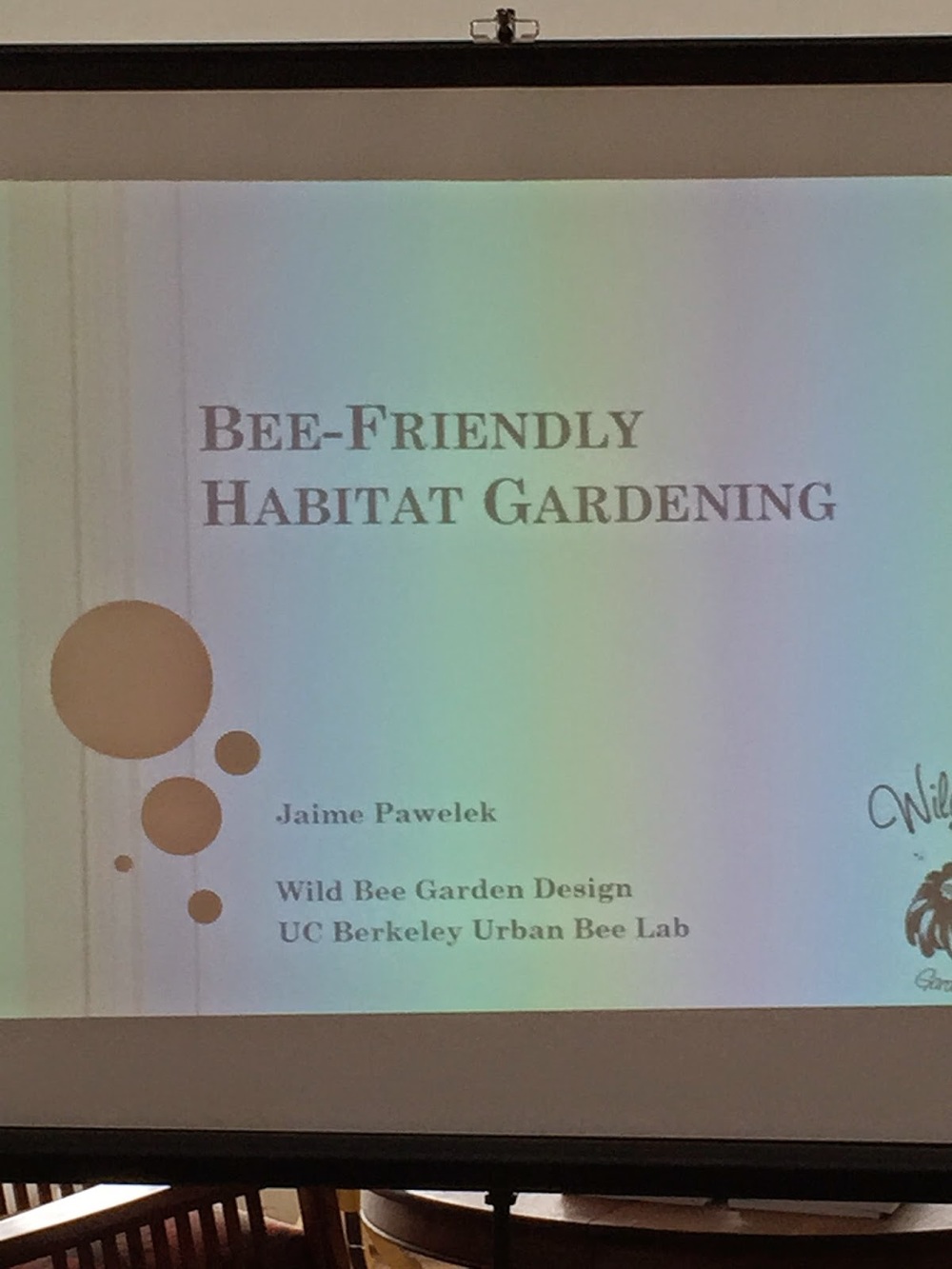
The talk was by Jamie Pawelek, from the UC Berkeley Urban Bee Lab. She was amazing, and I learned so much! But a couple of things stuck out in my head:


1) We have 4,000 native bee species in North America, and 1,600 of those reside in California! While we tend to think honeybees (which are European, of course) do most of our pollinating, quite a bit of it is done by these native bees.

2) Native bees make nests in undisturbed dirt (bumble bees), hollow logs (carpenter bees), and hollow tubes (mason bees). They line their nests with leaves (leaf cutter bees) and soft plant material (wool carder bees). Some are social and some are solitary. Some are incredibly beautiful (green metallic bees).

3) All female bees sting, because they also lay eggs. So the stinger is primarily an ovipositor, but can be used for venom as well. No male bees sting, because of course they don't lay eggs.

4) All collect both pollen and nectar. Nectar is the main source of sugar and carbohydrate; pollen is the main source of protein and vitamins. Most bees only eat pollen at the beginning of their lives.

5) Native bee mothers make a sort of 'loaf' of pollen and nectar, and lay one egg upon it. Once the egg hatches, the immature bee eats the loaf, then pupates. The adult can stay dormant until spring, when some instinct tells them that the flowers are blooming, and it's time to come out. They then eat themselves out of either the mud or leaves blocking the nest, and start to forage.

6) These pollinators are incredibly important to our existence.

7) Neonicotinoids, the pesticide getting all the press now, is truly evil stuff. Companies produce GMO seeds impregnated with the neonics, and these pesticides within the plant are water soluble. So as the plant grows, the neonics become part of the foliage, part of the flower, part of the soil around the plant. Bees eat the pollen and nectar from these plants, and are poisoned. They feed their babies this poison. They get confused and disappear. This is considered one of the main reasons for colony collapse disorder, which is happening not just with honeybees, but with native bees. Please, please, please don't use pesticides in your gardens. Buy organic seeds and starts, and plant lots of native plants in your gardens!

The speaker recommended a few websites. One is Help A Bee, which has plant lists for California, by season. SO helpful! Another is Pollinator Partnership, which has lots of good info. I found this great chart there to help identify native bees: Native Bee Identification.

After the talk, we moved out back and planted some raised beds for the store, filled with pollinator plants. Then we made mason bee habitats out of old bamboo. Just clip the bamboo into sections, different sizes are best, and band them together. Hang them somewhere protected from rain, that gets morning sun and afternoon shade. Here's mine:


After that we made seed bombs. Just mix together a little compost, a little clay, some seeds, press them into balls, and let dry. Then throw them in your garden to germinate. (Or, if you're feeling subversive, throw them in empty urban lots.) We made some with California bluebell seeds and I brought home six of them to throw in my garden.

I bought a bee feeder (for winter), some fire starters for my bee smoker, books on gardening for native bees (signed by the authors, whom I met there!), a couple pounds of fish meal for the raised vegetable beds, and some acid fertilizer for the blueberry bushes. What a great place, I will definitely go back soon, and there were some things in there that I'll put on my Christmas wish list, for sure!

This weekend we pulled all the rest of the vegetables from the beds (reserving a few last cucumbers for Tom to make pickles), and hoed everything well. Next week I will plant winter seeds and bulbs. We are starting to get a little rain, which is exciting, and I'm hoping that will start growing some plants in the hills, so the deer will leave my little lot alone. It's definitely starting to look more like autumn, here. The berries on the Toyon and the Chinese Pistache are starting to change color.


November will soon be here.

Weekend Chores

Any time a job involves a shovel, I know it's gonna be hot and sweaty work. Saturday was 'turn in the cover crops' day, and it turned out to be harder than I thought.

I'd spent a good amount of time researching how to turn the buckwheat in, and it all sounded fairly straightforward - just spade it up, and turn it over. In reality, it wasn't quite that easy. My buckwheat was tall - three feet - and when I turned it over, several feet of green stuck out sideways. So then I decided to first 'scythe' (read: large clippers) the plant and collect the clippings; then I would turn it over. This proved more fruitful. I put some clippings in the compost, and some in the flower garden as mulch.


Turning over the soil wasn't nearly as hard as my digging project a couple of weeks ago. The dirt, first fully composed of purchased compost, then amended with horse manure, then planted with the cover crop, was simply gorgeous. Dark, loamy, and smelling good, it was a pleasure to spade up and turn over.


Again, I was happy to see lots of fat earthworms. Also plenty of white mycelium, and pill bugs, who always like to be a part of the decomposition process. I did a fair amount of chopping the roots of the buckwheat, and mixed everything around.

As I was digging, many bees and butterflies hovered around, as if to say, "Hey, buddy, why are you messing with our food?" I've never seen so much insect life as I did when the buckwheat was flowering.

I also pulled out the tomatillos. They were a great experiment for me, I just couldn't possibly eat as many as were produced. They also apparently self-seed readily, so I was worried that they might already be doing that. I harvested the rest of the acorn squash and watermelon, then pulled up those plants.


The watermelons look right on the outside, but when I cut in to them, they weren't quite ripe. This melon experiment was also interesting. I think they need just a touch more sun. This week, we're having a tree guy come and trim up our trees quite a bit, so the sun problem will be fixed, and I might try melons again next year. It's Adam's favorite fruit, so I'd like to be able to provide it!

I've left the tomatoes and cucumbers in for now, also the butternut squash. I'll probably pull those next week.

I was pleased to open the compost bin and find a good six inches of black gold at the bottom.


I dug out four huge bins worth and added them to the beds.  It's beautiful stuff.

Kate likes to have her own garden. She planted some pretty stuff in the spring, but now the lantana has taken over.


I like it, and it provides nectar for insects, but Kate is unhappy that her flower garden has turned into a lantana garden. So I told her I would provide her with large containers, and she could move her garden around wherever she wanted. However in order to provide her with those containers, I needed to transplant the strawberries that had been growing in them.

We love strawberries, and I'd like to have a lot of them, and the plants spread and root themselves, so we could possibly have a lot if I plant them in the ground. They are perennial, so they last year after year. Those plusses causes a bit of a problem, though - who has the space for long-lived plant that continues to spread? I finally decided on a place back by the water feature, between a California Buckeye and a Chinese Pistache. It gets dappled sun, and high heat in the summer, and if the berries spread, it's mostly okay.


This is a spot where I used to grow corn, before the trees got so big. I also used to grow sunflowers here, so I expected the dirt to be fine. It wasn't. Here are some the clay clods I pulled out to throw in the green bin.


I hate our dirt. I need a special budget just for soil amendments.

Anyway, Kate was ready to plant her garden.


We went to a special sale at a nursery near here. The sale was part of the fall event schedule of Bringing Back the Natives, a great foundation that sponsors spring tours and all kinds of educational events. The sale we went to was at Markham Arboretum, a neat little place in the heart of Concord. Kate chose a few natives, like buckwheat and milkweed, and a few other pretty things that are drought tolerant:


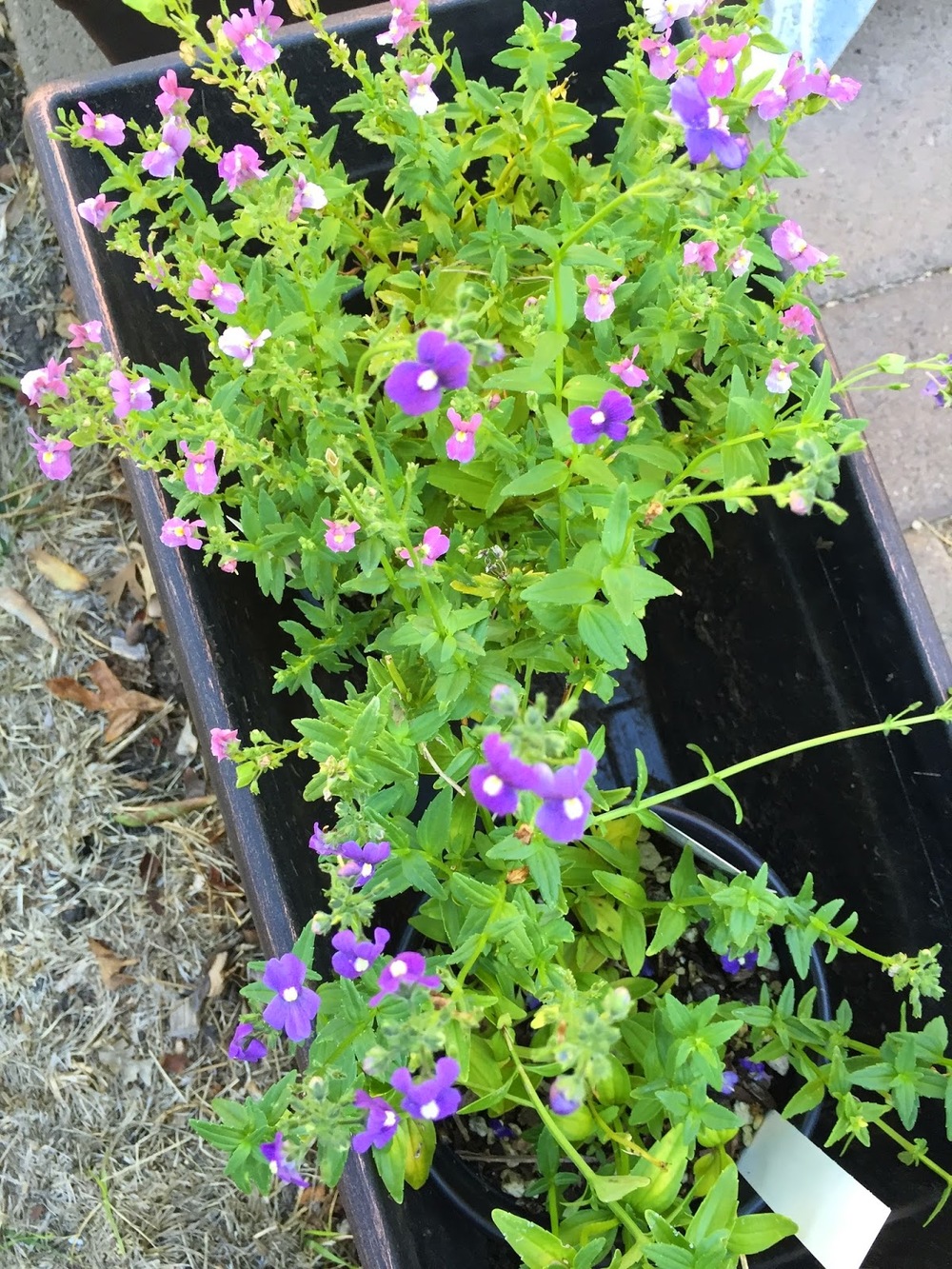
I bought some interesting new plants, for sunny areas:


After planting all of that, I decided to saw down a small Ash tree, which was in the middle of my main flower bed. I planted it years ago, when we wanted more shade. Well, it hasn't grown at all, and now we don't want more shade, so out it went. I sawed it into pieces and will use the slender trunk in the garden. As I was sawing, I was sat amongst the flowers, just an idyllic spot, with bees and butterflies visiting, and birds swooping through. If I squint, I can picture I'm in a meadow somewhere in the country, instead of in crowded suburbia.


In other news, Adam had his first San Francisco Opera rehearsal in the War Memorial Opera House yesterday, and I was there as a parent monitor. We were up on the 5th floor, while a performance of Handel's Partenope was in progress down below. It was so fun to hear the announcements: "Places, five minutes, ladies and gentlemen," and watch the action on monitors all over the building. Our accompanist for rehearsals is also a native Italian singer, so he was helping with pronunciation and singing the main parts, while the Studio School teacher took notes nearby, and the boys sung their hearts out.


Things can only get more exciting, as this week Adam has a costume fitting, his first day of Studio School (required by law for child performers), and his first staging rehearsal on that massive stage. I'm not sure the boys realize how cool this all is, but I'm in geek heaven, wishing I had gotten this experience when I was in 7th grade.

Tom made vanilla extract this week, I'll let him explain his process here:

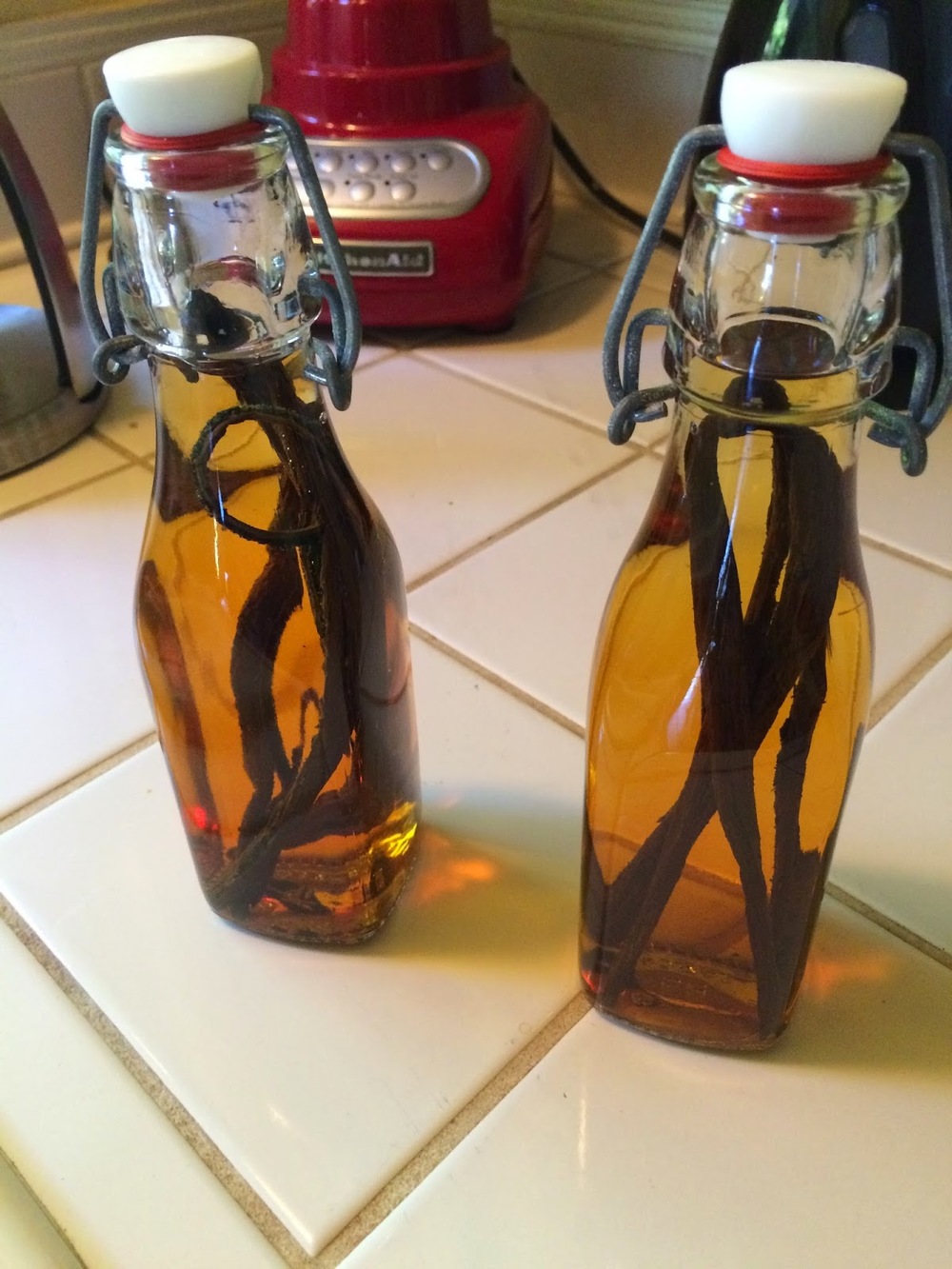
Making vanilla extract is about the simplest thing in the world. There's just three ingredients - vanilla, some kind of alcohol, and time. I read about making extracts online, and most agreed you could use any kind of alcohol (vodka being the most neutral, whisky or bourbon imparting some of its own flavor). While I'm personally partial to bourbon, it seemed risky to experiment with some Knob Creek or Maker's Mark, so I went with Absolut Vodka. Rather than pay exorbitant amounts for supermarket vanilla beans, I ordered in bulk from Amazon.


I used three split vanilla beans to about a cup of vodka, and put them in bottles in the cabinet:


It's been about five days now, and the extract is taking on a brown tinge and smells more like vanilla than vodka now:


Most places said I should wait a month or two before using. I'll be curious to see what kind of final color I get.

And a final note from our weekend: If you haven't seen Food Forward on PBS, follow the link and you can watch online. We've really been enjoying it.

Buckwheat

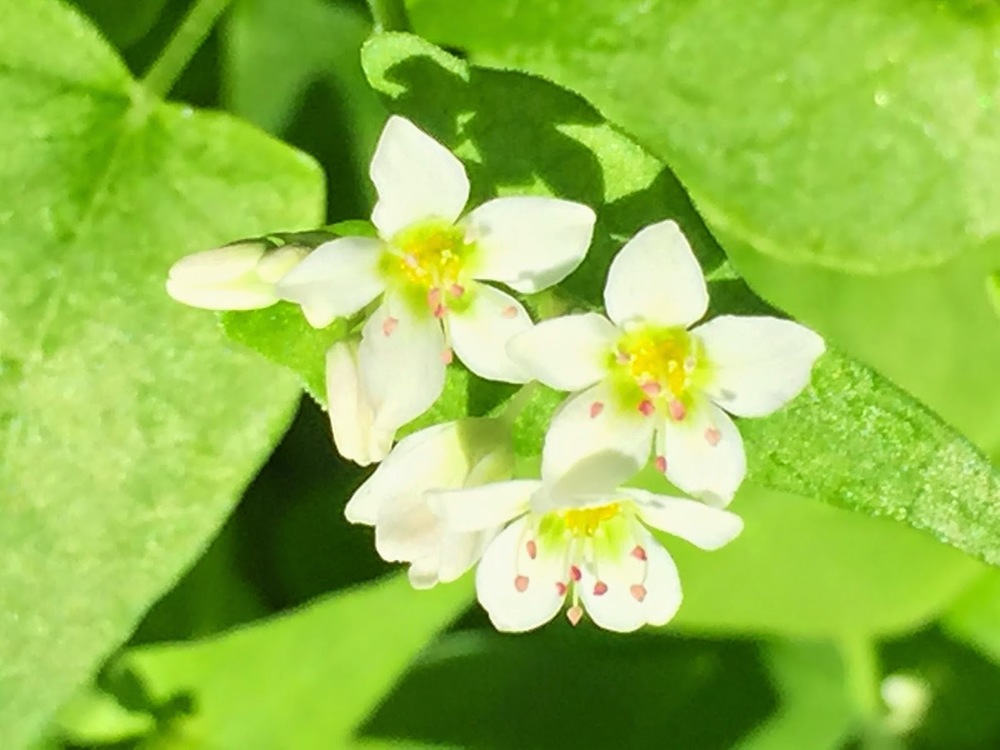
The buckwheat bloomed a month after planting. I was hopeful that I could get a crop in before my  winter planting, and I did! The plant is quite lovely, with heart-shaped leaves and delicate white flowers.


I'm seeing lots of interesting pollinators on the flowers, some I've never seen before, like tiny flies and native bees.


The timing now is tricky; I need to turn the entire crop under in 7-10 days after it blooms, in order to prevent it going to seed. I will spade it up, turn it upside down, and let the forage rot under a layer of dirt. Then, about a week after that, I can plant all my winter crops.

Unfortunately, I have seen my honeybees show only a cursory interest in the plant. I'm hoping that when more flowers open up, the bees will go AHA! and they will swarm it. Buckwheat honey is supposed to taste quite unique, and I'm hoping I will get to try a bit of buckwheat nectar.

Speaking of bees, I watched an interesting movie called "Queen of the Sun" - available on Netflix - which might be the best bee movie I've seen yet. Though there are some interesting characters and some dubious statements about the more, shall we say, 'metaphysical' aspects some feel from keeping bees, most of it was grounded in science and good information. I learned from this film that I am a biodynamic beekeeper - which basically means I let them live as they want to. I let them build their own comb, I let them swarm when they want to (rather than trying to prevent it), and I let them keep a significant portion of their honey to eat, rather than taking the honey and feeding them high fructose corn syrup. I also plan to treat any diseases or pests in a natural way, without chemicals. This all means biodynamic, I guess. I dunno, I just want the hive to express their bee-ness as much as possible, which sounds frighteningly close to those metaphysical aspects I was talking about earlier. (There's one guy in the film that does yoga in his pajamas next to the hive and meditates with the bees. I'm not there yet.)

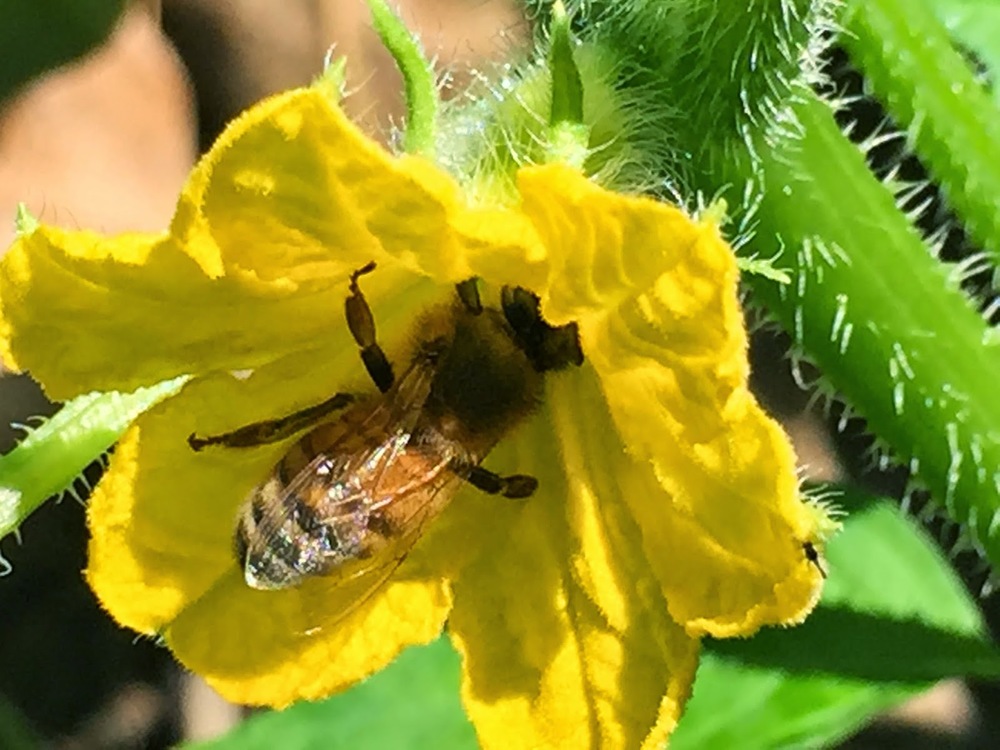
I watched the bees in my cucumber flowers this morning - and remembered that 4 out of every 10 bites we eat is due to pollinators.


Dad made me a sort of 'cleat' to close off part of the hive entrance. This will serve two purposes - one, to help them defend the entrance more easily by making it smaller (the amount of yellow jackets skulking around, even with my traps, is staggering) - and two, to help keep the inside of the hive warmer. It's quite handy to have a father who can provide me with these items when I need them! And not only are they functional, they are beautiful. I had two ladies stop by my yard the other day and comment about the beautiful beehive in my backyard.

In other news, we are having a mast year for acorns, at least in California. (Researching this phenomenon caused me to read an article from the UK, where they are having a 'drought' year for acorns, and it's causing some distress.) There is actually something called "The California Acorn Report," but there are no results for 2014 as of yet. However, in my experience, this is definitely a mast year. I've read various things about it, and I'm not sure I can be backed up by science. But there are places in the open space where I walk continuously on acorns, rather than earth. Well, whatever the reason, the squirrels and the turkeys are happy.

Yesterday we celebrated Adam's 13th birthday, a bit early, with a pool party. I think this picture sums up the fun that was had.


A Lovely Surprise!

I got home from work today, and there was a package waiting on the porch.

Guess what was in it???

This!


A glass pumpkin of my very own! I cannot believe it, it is so incredibly beautiful, and it's exactly the color I would have chosen had I been able to choose one for myself.

Inside the box was this very cryptic card:


So I have no idea who sent this wonderful gift to me. So let me say a huge THANK YOU to my secret Great Pumpkin! I LOVE IT and will cherish it forever.

Oh, and by the way - there's no way this piece of art is going to be living in my garden. It's too precious, and is in my house on a table by the front window, so the light can shine through it. It's gorgeous, no matter where I put it. Yay!