• About
  • Blog
  • Contact
  • Favorites
  • Archive
Menu

Poppy Corners Farm

Street Address
Walnut Creek, California
Phone Number
Walnut Creek, California

Your Custom Text Here

Poppy Corners Farm

  • About
  • Blog
  • Contact
  • Favorites
  • Archive

Food Miles: A Thought Exercise

October 10, 2023 Elizabeth Boegel

On Sunday, Tom baked apple pie to take to a family dinner. The apples came from one of our trees as well as a friend’s tree, so we had two different apple varieties. The pie was a hit, of course, and the best thing was that Tom baked TWO, so we have pie for dessert this whole week, hooray!

Last night, before pie (B.P.), we ate a dinner of pasta with yet another batch of homemade pomodoro sauce (the tomatoes just keep coming from the school garden). We were patting ourselves on the back because it felt like a real ‘farm to table’ dinner; the tomatoes, basil, garlic, and apples were all from our garden or nearby gardens. We felt sustainable and smug.

But then we dug deeper, and it became clear that we really had no business being smug. Let’s go through all of the ingredients, one by one, and see how our food miles stack up for this meal of pasta pomodoro and apple pie with vanilla ice cream. You may think I’ve been overly generous with the ‘grades,’ or overly harsh. Comments will be read with interest.

  • All produce (tomatoes, basil, garlic, apples): From our property or from within 10 miles, all from gardens we know and love well, and that are organic and regenerative. Grade: A

  • Olive oil: We get olive oil from a local CSA called Fat Gold. If we need extra before our next shipment, we buy 100% Californian olive oil. Grade: A-

  • Pasta: DeCecco, imported from Italy through a New York company. Grade: F

  • Parmesan Cheese: made by an organic CA dairy using raw milk. Grade: A-

  • Salt: We buy Redmond salt in bulk from Utah. Grade: C

  • All-Purpose Flour: King Arthur, processed in either Vermont or Washington with wheat from the middle of the country. Good company with all the right ideas on their website (committed to Environmental Stewardship, Food Justice, Community, Small Farmers) but still, nowhere near CA, and probably conventionally grown. Grade: D

  • Butter: made by an organic CA dairy. Grade: A-

  • Crisco: I mean, do we even have to deliberate? Who cares about the miles? It’s basically motor oil. Grade: F

  • Pie Spices: Cinnamon, nutmeg, clove, allspice. Imported by Morton and Bassett of CA from all points around the globe. At least they are committed to Non-GMO. Grade: F

  • Sugar: C&H, which stands for California and Hawaiian. The sugar is processed right down the road from us in Crockett, CA. It’s made from cane rather than beets, which is a point of pride for the company, but the cane no longer comes from Hawaii; it comes from Mexico, Vietnam, Brazil, or Australia. Grade: D

  • Vanilla Ice Cream: made by an organic CA dairy with local cream, but with imported vanilla. Grade: C

So the food miles for our prideful local farm to table dinner are actually quite astronomical. This is unfortunate. We could do better; for instance, we could get our flour from a local farm which grows and grinds it themselves. We could make our own pasta from that flour. We could also support a local company called Community Grains that is committed to making flour and flour products from local, whole grain wheat. (We’ve done this in the past, I’m not sure why we stopped.) Tom likes to use half butter and half Crisco in his pie crust, and we could go to 100% butter. Instead of sugar, we could use our own honey. The only two things that I don’t think we can improve are the pie spices and the vanilla. But still, taking these steps would reduce our food miles significantly.

What if we add health in to the equation? It’s a little trickier, because different people have different ideas about what’s healthy. For us, this is a rather indulgent meal. And let’s be clear: I’m not talking about the pie. There’s no question that pie is indulgent, but for us, dessert is a non-negotiable. We feel happier when we include dessert in our lives. We believe in homemade dessert if at all possible, and luckily, our family has no shortage of excellent bakers. Many of our desserts involve fruit or nuts. We sacrifice in other ways so that we can have dessert without worry; for instance, 90% of the time, Tom and I eat only once per day, so we don’t have to concern ourselves overmuch about sweets, as long as they’re not the only thing we’re eating.

No, when I say indulgent, I mean the dinner itself. I think we can all agree that the fruits and veg are good for us, but we would normally eat a good deal more protein, from either lean meats, eggs, fish, or beans, and good deal less of the processed carbs. We tend to center our meals around protein and veg, with maybe some whole-grain thrown in. This meal was a bit of an outlier for us.

However, it did feel very summery and as we are now well into fall, it’s nice to enjoy summer meals while we can, and we ate the hell out of it.

This was an interesting thought exercise for us, and I think we learned a lot about how lax we’ve gotten on the local eating front. I could make excuses for it (we’re very busy, the kids are out of the house so we’re eating differently, we’ve started to cut corners in other ways since so much of our produce comes from either our own garden or my school garden), but all of those are just that - excuses. I am newly recommitted to spending our food dollars locally as much as possible. After all, this is one of the best ways to ‘vote’ for the kind of food systems we want - by putting our dollars into the food systems we aspire to have - which are rich in local farms, local grocers, local providers, and local businesses. We need to do better.

Tags cooking, local
2 Comments

Making Grape Juice

October 4, 2023 Elizabeth Boegel

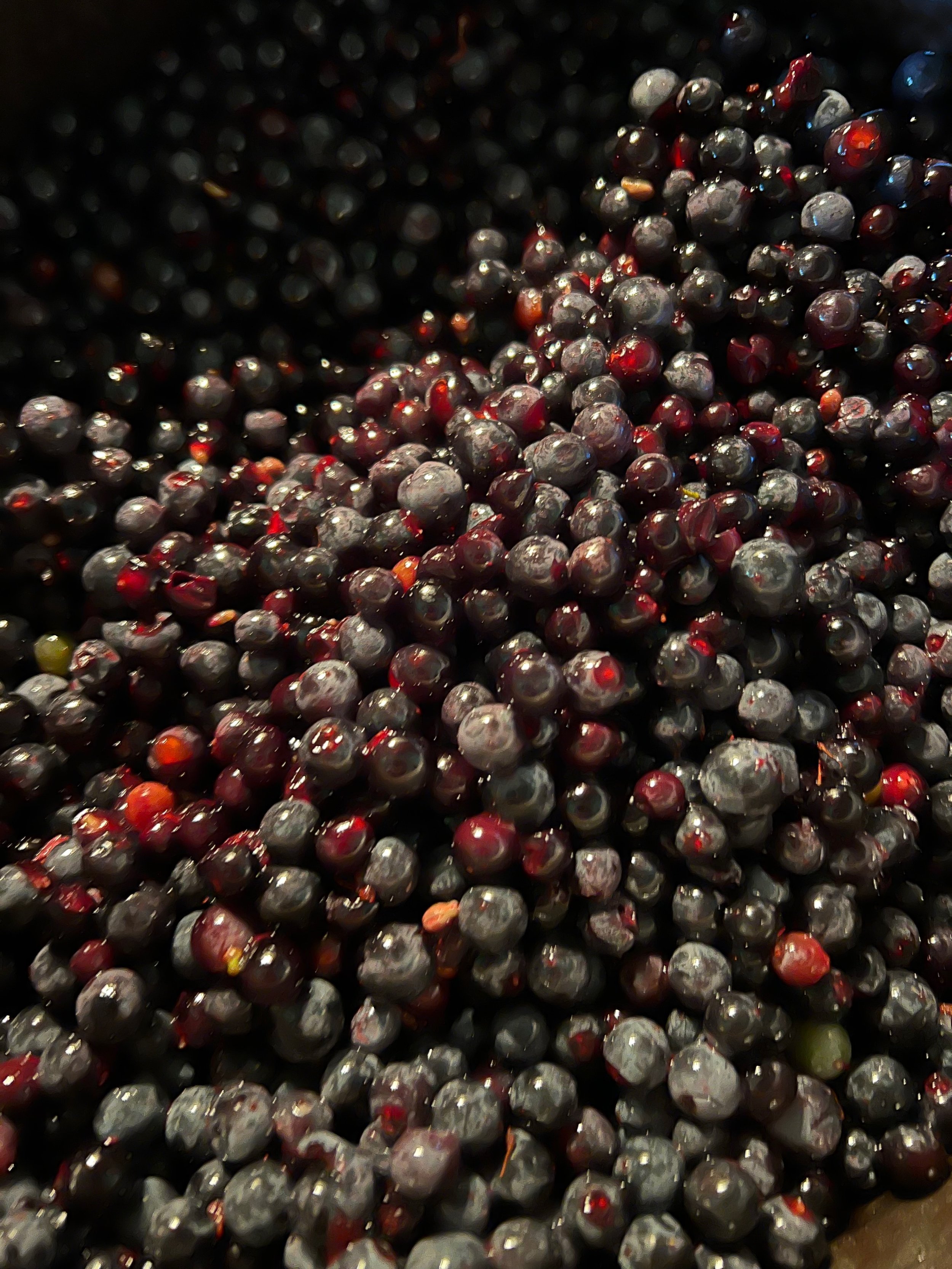
In my school garden, we have an extremely vigorous grape vine. It is practically covering the fence from one side of the property to the other; it’s beautiful in three seasons, producing nice flowers in spring, prolific fruit and green leaves in summer, and flaming red leaves in fall. My guess is that this variety is ‘Roger’s Red,’ which is a hybrid of our native California grape. The fruit is tasty, although quite seedy.

This year, the grape grew to gigantic proportions, produced an incredible amount of fruit, and has made the wildlife around the Environmental Center very happy (we have a turkey family nibbling the fruit each day, and the human wildlife is also happy taking home bunches of fruit after class). My co-worker decided that we needed to harvest as much fruit as possible and give the vine a good pruning, which it likely hasn’t had in 30 years. So, our student gardener has taken on that project, and the other day harvested two enormous buckets of grapes.

I decided to bring the grapes home and see if I could make some decent juice from them. I didn’t have high hopes for this project because the grapes are really small, the size of blueberries (small ones, not those giant inflated ones you find in big supermarkets), and they are nearly all seed. I was sure they wouldn’t yield much juice.

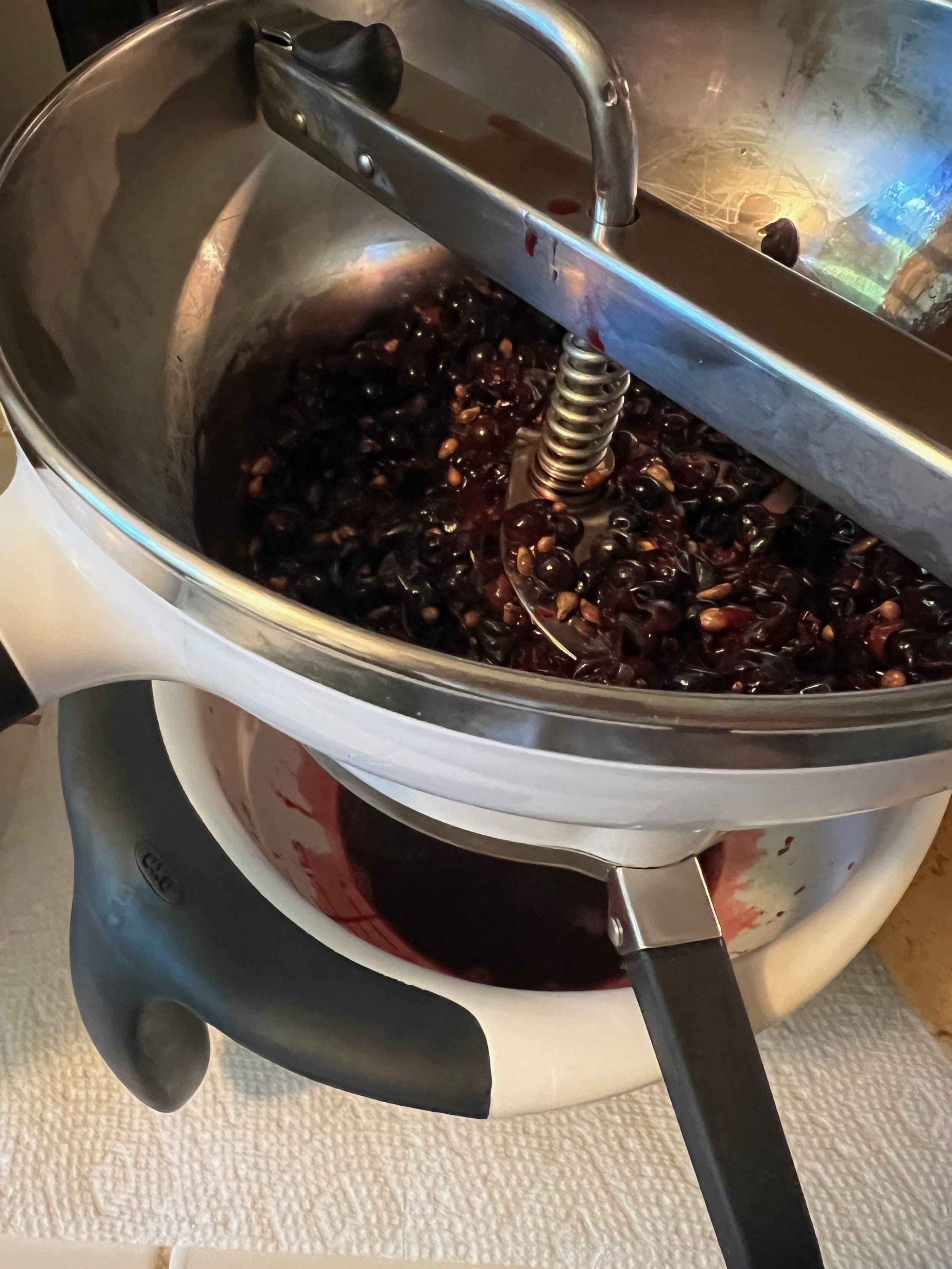
I looked up how to make grape juice in my trusty Ball Blue Book, and that advised washing the grapes, then crushing them, then heating the juice on the stove. This seemed backward to me. (Not the washing part; of course that should come first.) I thought about how to crush them; I had no interest in stomping them with my feet. I decided I would take the grapes off the stems, then heat them gently in my big Dutch oven on the stovetop, adding a little bit of sugar (no need to measure because I’m not water-bath or pressure canning this juice) and waiting until it dissolved and the grapes were nice and warm. Then I would put them through my food mill to remove the skins and seeds.

Well, taking the grapes off the stems took an hour in itself, and I only did a about a quarter of the grapes in the buckets before I decided I’d had enough of that. Heating them was interesting because they immediately started to release juice. Putting them through the mill was straightforward, though it took a bit of muscle because of those large seeds. The primary problem was the MESS. Purple juice everywhere! (I was glad I thought ahead and put on some old clothes.) Purple pulp everywhere!

But the smell, oh my heavens, the smell. I haven’t had grape juice since I was a child, and I found myself wondering why. Probably because the stuff in the store is too sweet and barely juice at all. But this! This smelled like the best fruit orchard in the world, rich and deep and sweet, and the color of the juice! It’s the most gorgeous deep dark red, like a jewel.

Tom and I had a little at dinnertime, and whoa - it is really amazing. Intense, aromatic, delicious, pungent, sweet - you can taste the antioxidants and vitamins! You don’t need more than a a quarter cup - it’s super concentrated!

This quart of juice came from probably only 1-2 pounds of grapes, yielding far more juice than I expected from these small fruits. I have a lot left to process, and am trying to convince myself to make jelly. When’s the last time you had grape jelly? When’s the last time you had HOMEMADE grape jelly??? (I don’t think I ever have.) I mean, it’s got to be delicious, right?

But the clean up…. I’m not sure I can bring myself to go through this process again. The pulp and seeds were easily disposed of (I took it to the chickens, who were very interested), but I had to be very careful not to accidentally put any of those seeds down the garbage disposal (they are the size of popcorn kernels!). I ended up rinsing all my equipment outside with the garden hose before bringing it back inside to wash properly. My counters were a mess, my sink looked like something had died, and my hands were completely stained.

But this stuff is so darn tasty, I might have to just go for it. The time, effort, and mess are the trade-off for an unexpected homemade treat from a successful garden crop.

Tags fruit garden, preserving, cooking
4 Comments

Freezer Salsa

October 1, 2023 Elizabeth Boegel

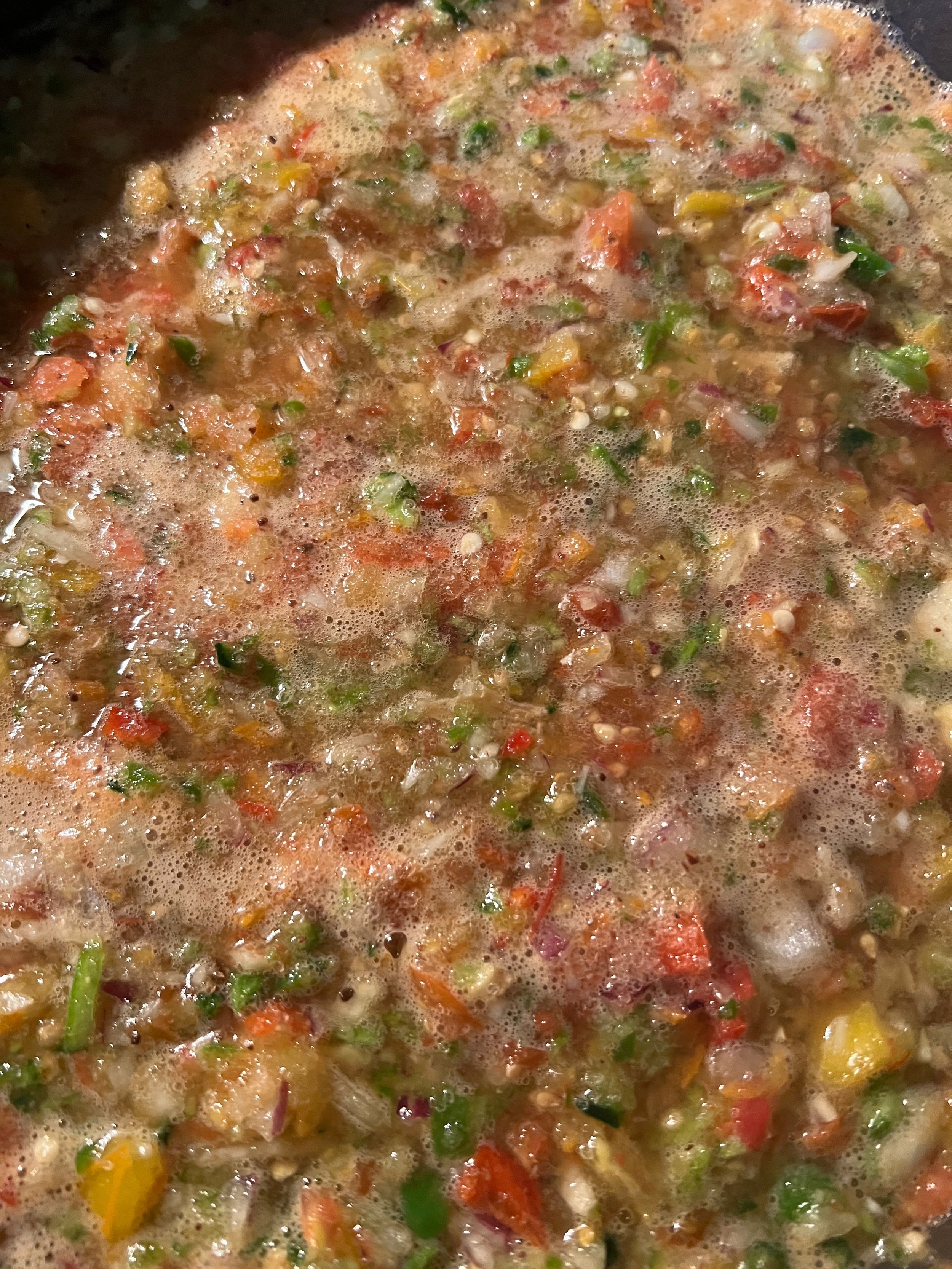
I decided to make salsa with the rest of my school-garden-tomato-haul. I recently replanted our raised beds at home with winter crops, so the last of our summer pepper harvest was also used for this purpose along with our own garlic, and onions from a neighbor’s CSA share (she had so many onions that she begged me to take some!). I very roughly followed this recipe, omitting the cumin and using only hot peppers rather than a combination of hot and sweet.

Smell-o-vision would be good right about now

Since there are only two of us in the house at the moment, I don’t need to worry about having enough freezer space - there’s plenty of room. So instead of canning this salsa, I’ll just freeze it. The recipe reflects that, having less acid than usual, and I used jarred lime juice rather than fresh, and our own homemade apple cider vinegar, since I didn’t need to worry about food-safety-acidity-%. This made for a very casual salsa-making endeavor, especially with no water-bath canning to be done. I enjoyed the process a lot more, I must say!

I didn’t remove any of the pepper seeds or ribs, so this salsa has turned out a bit spicy! That’s ok - I’m the only wimp in the family, everyone else likes it that way. I used mostly 1/2 pint jars for this, so that we don’t have a huge jar of salsa sitting in the fridge for too long (and letting it go bad, therefore wasting it). They’re also the perfect size to share. Hooray for tomato season!

Tags seasonal recipes, tomatoes, peppers
Comment

My Favorite Tomato Recipe

September 28, 2023 Elizabeth Boegel

Last year, one of my students gave us a new genius idea to ripen tomatoes. It was time to cut down the vines to make room for the winter garden, and she instructed us to hang the vines, fruits and all, on the fence that rings the school garden. There, they ripened slowly in the sun, and (extremely surprisingly) did not seem to attract any wildlife; in fact, we had tomatoes available through October. So, this year’s class did the same thing.

The last two days, the tomatoes have been ripening like crazy with a burst of late-season heat. So I picked two buckets-full to bring home and process. I decided to make a batch of roasted tomato sauce, and a batch of salsa (we have a lot of peppers in the home garden right now). This afternoon, I worked on the sauce. I know I’ve written about this sauce here before, but I have a lot of new subscribers and it’s worth sharing again. It’s extremely simple and delicious, and can be used on pasta, on fish or meat, as a base for shakshuka (just add some spicy peppers), or as a topping for grilled bread. I also like it on homemade pizza.

No exact amounts needed, just use what you have on hand. I make this with plenty of olive oil and sea salt, using tomatoes, garlic, and basil from the garden. Preheat your oven to 350-375 degrees (you want these to slow-roast for a longer time). Slick your sheet pan with olive oil. Roughly chop the tomatoes and put on the sheet pan. Chiffonade your basil (or just chop it, whatever) and sprinkle it on top of the tomatoes. Mince plenty of garlic and add that. Drizzle more olive oil on top of everything and salt generously. I tend to roast for about an hour, but you’ll want to check frequently - you don’t want the garlic to burn or the tomatoes to scorch - your mileage may vary. It’s a good idea to stir the mixture a couple of times during the baking process. You want your sauce to be well-roasted but still saucy and jammy. We tend to like it just like this, but you can blend it using an immersion blender if you want a smooth sauce. I always make enough to eat the night that I make it, but with plenty of extra to freeze in quart jars for deep winter.

Tags tomatoes, seasonal recipes
Comment

Out the Window

September 14, 2023 Elizabeth Boegel

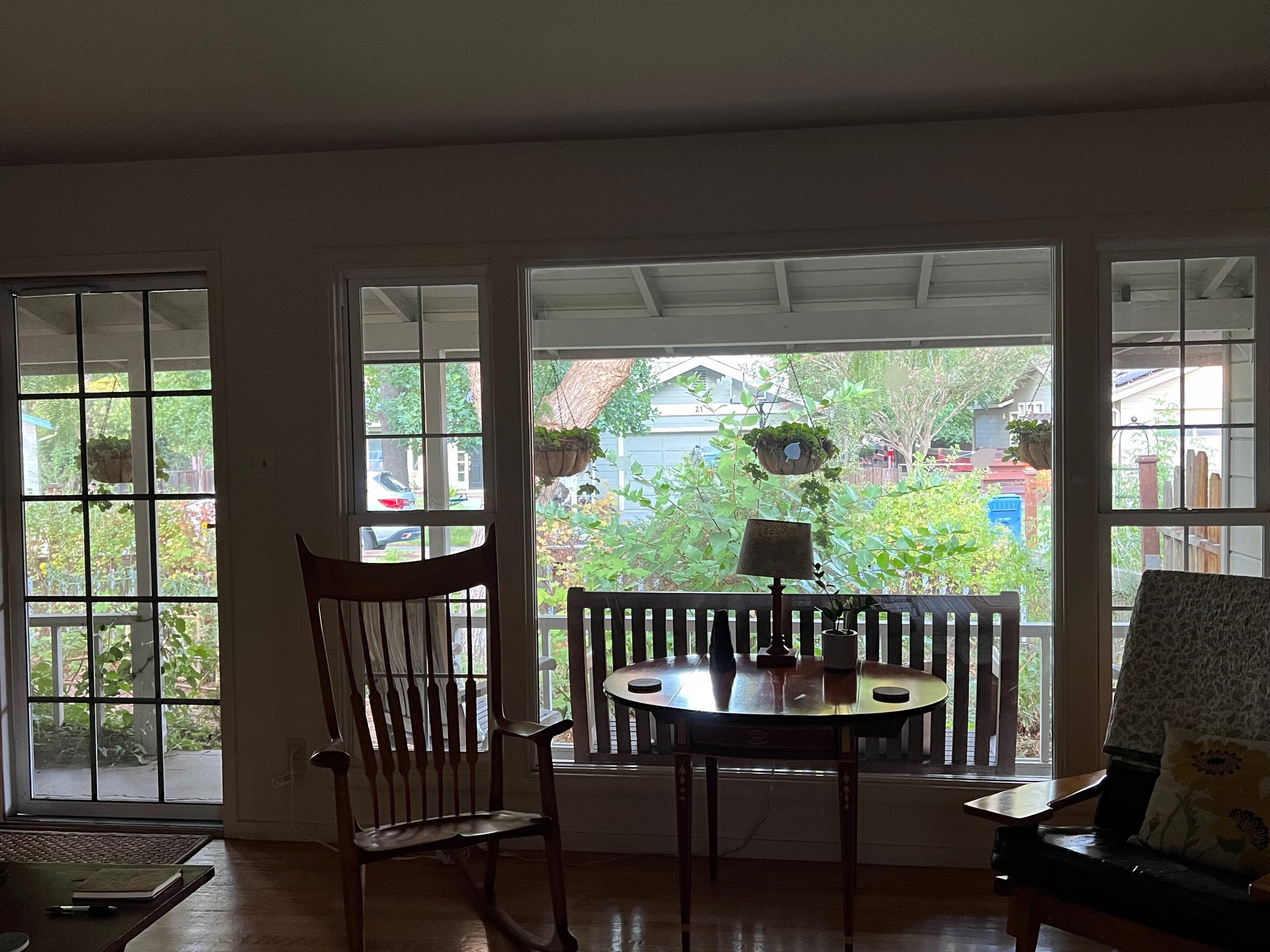
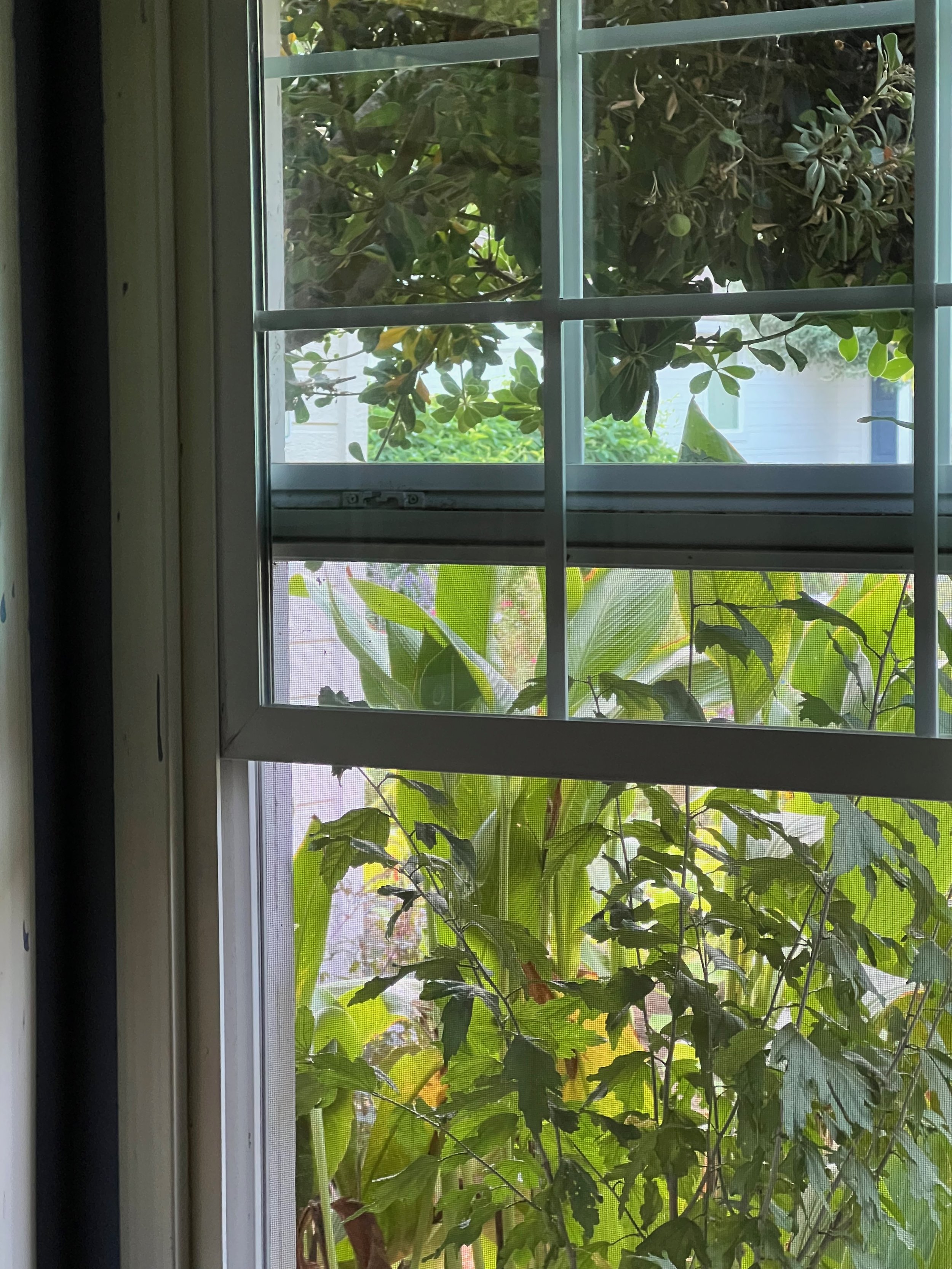
Each morning, I am lucky to have a half hour where I can sit and have my coffee and start my day, often with journaling or the newspaper. In warm months, I throw the doors wide open, letting the cool morning air inside. Even when it starts to get a little chilly at night (like now - autumn is on the way, no matter how warm the days feel!), I still like to open the doors and snuggle under one of the quilts Tom’s mom made for us, so many years ago. The cat often sits in my lap and keeps me warm.

I noticed this morning how often I gaze out the windows as I’m drinking my coffee, and what’s so great (and we are so privileged to have) is that outside every window, there is a view of the garden. We can see green from every part of the house, whether I’m sitting on the couch, washing dishes in the kitchen, getting in to bed at night, or hopping into the shower. What a blessing.

I remember reading an article years ago from A Way to Garden, in which the author, Margaret Roach, calls this Garden Design 101. “Look out the window if you want to make a garden,” she writes. After all, when we’re out in the garden, we’re often digging or hauling or planting and don’t really notice how lovely it is. Oh sure, we may have family dinner out there, or tea with friends, but those events are not daily and only in clement weather. Whereas sitting happens more often inside the house. That’s when we really notice the garden.

As I was sitting there this morning, I thought surely there must some research about the positive effects of these window views. And indeed, there is. The Center for the Built Environment at UC Berkeley has published a study titled ‘The impact of a view from a window on thermal comfort, emotion, and cognitive performance.’ In it, the authors state, “visual connection to nature has been demonstrated to have a positive impact on attention restoration, stress reduction, and overall health and well-being. Inside buildings, windows are the primary means of providing a connection to the outdoors, and nature views even through a window may have similar effects on the occupants.” The study concludes that people had an increase in positive emotions in rooms with a window view, which was no surprise. But working memory and concentration were also higher, and folks actually felt cooler, even though the study controlled for temperature.

Another study from the Royal College of Physicians in the UK titled, ‘Gardening for health,’ details all the ways that being in green spaces increases health outcomes for patients. We gardeners and hikers already know that being outdoors in nature is beneficial, but this article states that “several trials have revealed the beneficial effects on mood and mental health of simply observing nature.” They study concludes with “health professionals should try to influence the design of new buildings by insisting that there are views of outside nature from every patient and staff room, and by placing internal plants in atria, communal areas, surgeries, clinics, and staff rooms.”

It’s also been well-documented that plants can reduce both air and noise pollution from the surrounding areas, which is especially helpful in urban areas.

Green spaces in cities is an equity issue; studies show that as income rises, the amount of green space also rises. This just isn’t right. Everyone needs access to green space, and everyone deserves the health benefits that come from having it, and we need to do all we can to provide it.

I know that I’m lucky to have these views from my home, but I’m also among the fortunate few whose workplace also benefits from green views. My desk sits right next to our office back door, and as I work at my computer, I get a slice of the beauty. Now I can also bask in the knowledge that the view is improving my cognitive skills, too!

Tags urban agroecology
2 Comments
← Newer Posts Older Posts →

Subscribe

Sign up to get email when new blog entries are made.

We respect your privacy. We're only going to use this for blog updates.

Thank you! Please check your email for a confirmation notice to complete the subscription process.

Summary Block
This block is invalid. Please check the block settings and try again.
Featured
Aenean eu leo Quam

Powered by Squarespace