• About
  • Blog
  • Contact
  • Favorites
  • Archive
Menu

Poppy Corners Farm

Street Address
Walnut Creek, California
Phone Number
Walnut Creek, California

Your Custom Text Here

Poppy Corners Farm

  • About
  • Blog
  • Contact
  • Favorites
  • Archive

Bio Blitz

April 27, 2022 Elizabeth Boegel

Yesterday, I participated in a Bio Blitz.

Have you ever done this? My first was years ago, with my insect class at Merritt, and we looked primarily for insects in a particular garden; I think my teacher hosted that one. The Bio Blitz I joined yesterday was through the Save Mount Diablo foundation, in tandem with the California Native Plant Society, and it was specific to a certain area within the Diablo Range. Two years ago, in August of 2020, a lightning strike started an enormous fire called the SCU complex. It burned through nearly 400,000 acres during the 44 days the fire was active, and spanned five counties.

This blitz was held to determine if certain species were recovering, as well as to discover evidence of new species appearing - those that only bloom after a fire. We were given a span of two weeks in which to hike in the affected area and record our observations. Since the area is not easy to get to, I decided to give myself one full morning to ramble about in a specific corner. I went to Round Valley Regional Preserve (on the East side of Mount Diablo; the mountain is at the far north end of the Diablo range), and hiked out into Round Valley itself between Morgan Territory and the Los Vaqueros Reservoir.

I walked about 8 miles through mostly Oak savannah and grassland plant communities; this area is ranched and highly grazed, which means that invasive, non-native plants are dominant. However, I did see some interesting things…

… like Digger bees building their nests. I found a sort of ‘seep’ - amazing in itself, as we’ve been in drought now for months - and this seep was within two embankments about 2-3 feet tall. I sat and watched dozens of these bees get water from the muddy seep, then go back to the embankment and wet it with the water they had collected, in a focused spot. Then they started to dig a tunnel into the softened dirt. There were holes all over the embankment and bees flying in and out. I just sat there and experienced it. The bees were busy and didn’t pay me the least mind.

I also saw…

… a lovely long Pacific gopher snake. These snakes can grow up to 7 feet long, although this one was closer to 4, and it was likely a male out looking for a mate. It was in a sort of shady spot and so it surprised me and I nearly stepped on it. Isn’t he a beauty?

Later, I allowed myself to sit for a while by a large patch of mustard (invasive and non-native, yes, but also a great source of nectar and pollen for insects) and saw all kinds of interesting creatures, but was particularly enamored with …

… this California Hairstreak butterfly. These creatures breed and lay eggs in trees, mating in the tops of them, and gluing clusters of eggs in the bark. They like species of oak and willow, both of which were near this patch of mustard which was near a dry creek bed. This whole area was filled with both blue oak (my favorite) and valley oak trees. I’ve since learned that the population of CA Central Valley hairstreaks is endangered, since the valley oaks themselves are endangered (loss of habitat due to continuing water issues and the constant expansion of farming). It made me happy that I had gotten to see one here, a little farther north.

Near the end of my ramble, I came upon a slope leading up to the higher peaks above the valley. These slopes were nearly devoid of vegetation, and quite rocky. I started turning over rocks to search for scorpions. I found dozens of Sawfinger scorpions; shy creatures who stay out of the sun during the day and hunt at night. These are quite small, not even the size of my thumb, and so skittish that it was hard to get pictures of anything but their tails. They reminded me of children who believe, during games of hide and seek, that if they can’t see you, you can’t see them. But the scorpions’ tails showed me where they were hiding.

A little later, I flipped over a log to search for beetles, and I found…
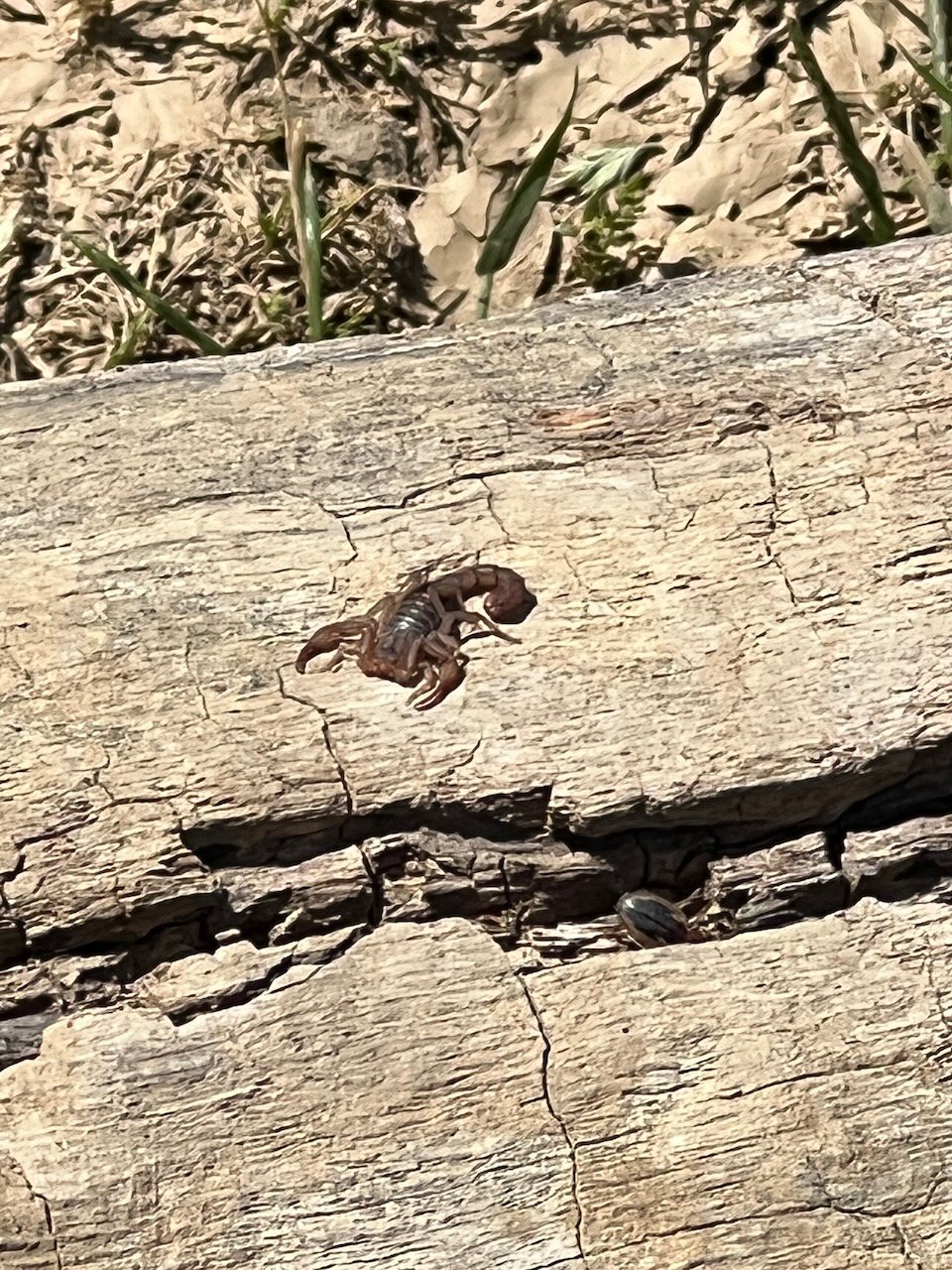
… this little Sawfinger scorpion, who gave me a great photo op before scurrying away.

I had a truly wonderful hike and a great time documenting everything I saw (by uploading it into iNaturalist). I realized that it isn’t often that I allow myself a good chunk of time just to experience nature. I mean, I hike and walk every day, often a similar distance, but I tend to do it at a much faster pace. I do stop and take occasional pictures (Tom would say it’s more than occasional!) but I’m also out to get it done, and done fast - a good workout with a good heart rate elevation in a short period of time, and then I’m able to get on to the next thing. It’s been a long while since I gave myself permission to saunter and stop and really look at things, or even truly wait for something interesting to happen. I was passed by the occasional trail runner and instantly felt a sense of guilt, or maybe more accurately shame, that I was being passed - I pride myself on walking so fast that no one can pass me unless they’re on a bike. But this time I realized how misplaced that feeling was. There’s absolutely zero shame in taking some time to simply ‘be’ in nature.

And this reminded me of my favorite Mary Oliver poem, which I’ve shared here before, but it bears reprinting because it is simply so great:

“Who made the world?
Who made the swan, and the black bear?
Who made the grasshopper?
This grasshopper, I mean—
the one who has flung herself out of the grass,
the one who is eating sugar out of my hand,
who is moving her jaws back and forth instead of up and down—
who is gazing around with her enormous and complicated eyes.
Now she lifts her pale forearms and thoroughly washes her face.
Now she snaps her wings open, and floats away.
I don’t know exactly what a prayer is.
I do know how to pay attention, how to fall down
into the grass, how to kneel down in the grass,
how to be idle and blessed, how to stroll through the fields,
which is what I have been doing all day.
Tell me, what else should I have done?
Doesn’t everything die at last, and too soon?
Tell me, what is it you plan to do
with your one wild and precious life?”
— 'The Summer Day' by Mary Oliver

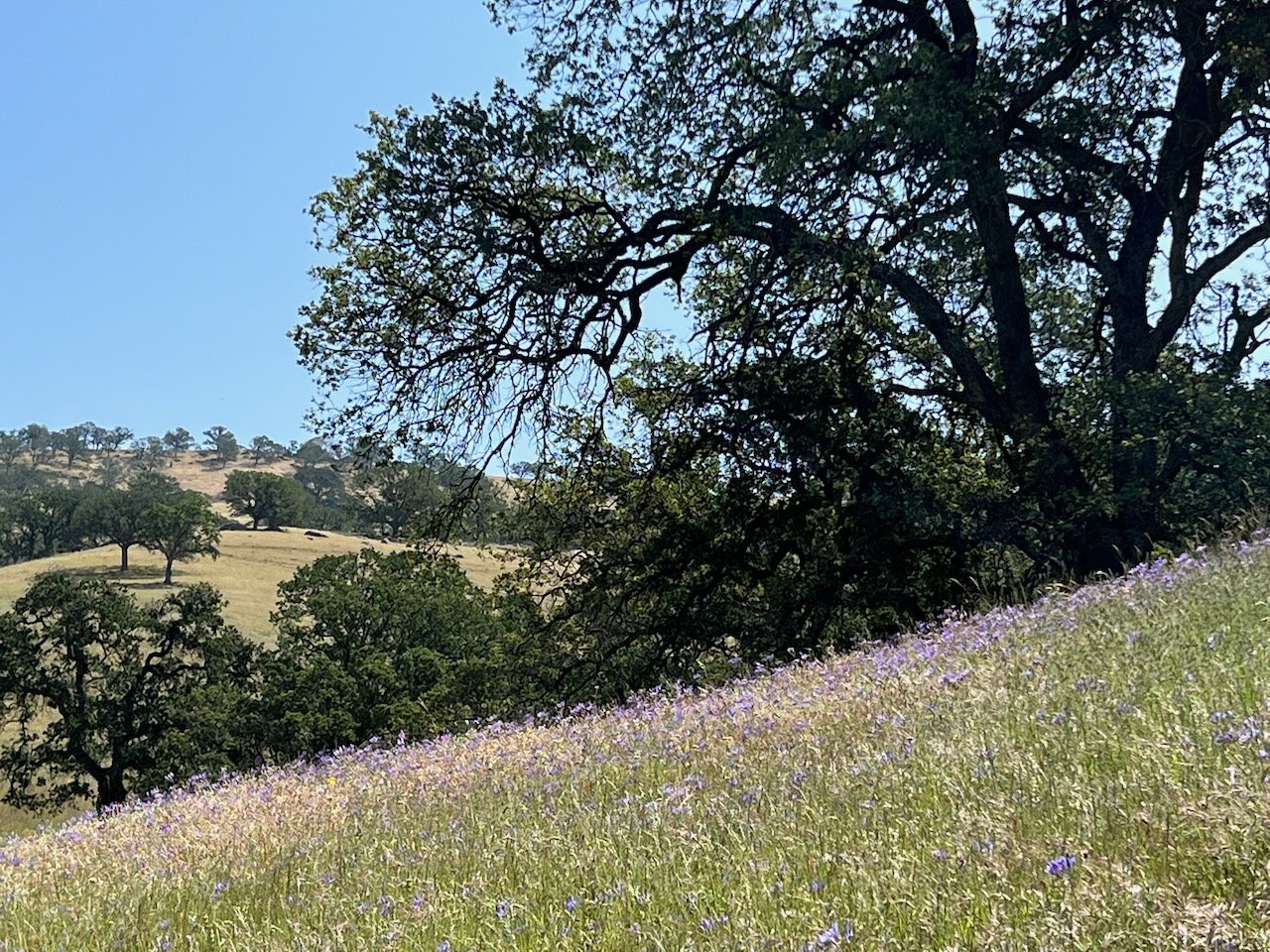
This last photo just doesn’t translate well - there’s no way it can replicate the sheer beauty of this spot upon which I happened near the end of my hike - consisting of a valley oak tree, the slope beneath it literally carpeted by hundreds of blooming Ithuriel’s Spear bulbs, each one a varied shade of blue or purple, singly majestic but even more breathtaking en masse. Beauty like this deserves our full attention. And so I stopped, once again, and just breathed it in.

Tags hiking, nature, wildlife
2 Comments

That Time of Year

April 19, 2022 Elizabeth Boegel

April is distracting, isn’t it? The house finches are plucking coconut coir from my hanging baskets to make their nests, the yellow-faced bumblebees are in the borage, and the clematis ‘Montana’ is a froth of pink. Nature is in the midst of transition.

And so is the garden! This is the time of year when the tomatoes and pepper seedlings have to be taken out of the ‘greenhouse’ every morning, and returned back every night. It’s still too chilly for them to be put into the raised beds, so they need to be babied a bit. Oh, it’s hard to wait.

But they’re still too little, and the soil too cold. However, other things can be planted! I’ve removed the lingering cauliflower, cabbage, chard, broccoli, and beets; in their places I’ve planted potatoes (Yukon Gold, Huckleberry Gold, and German Butterball), pole beans (Rattlesnake, my favorite) and the dry beans from Rancho Gordo. I’ll wait until May to plant cucumbers, basil, and winter squash.

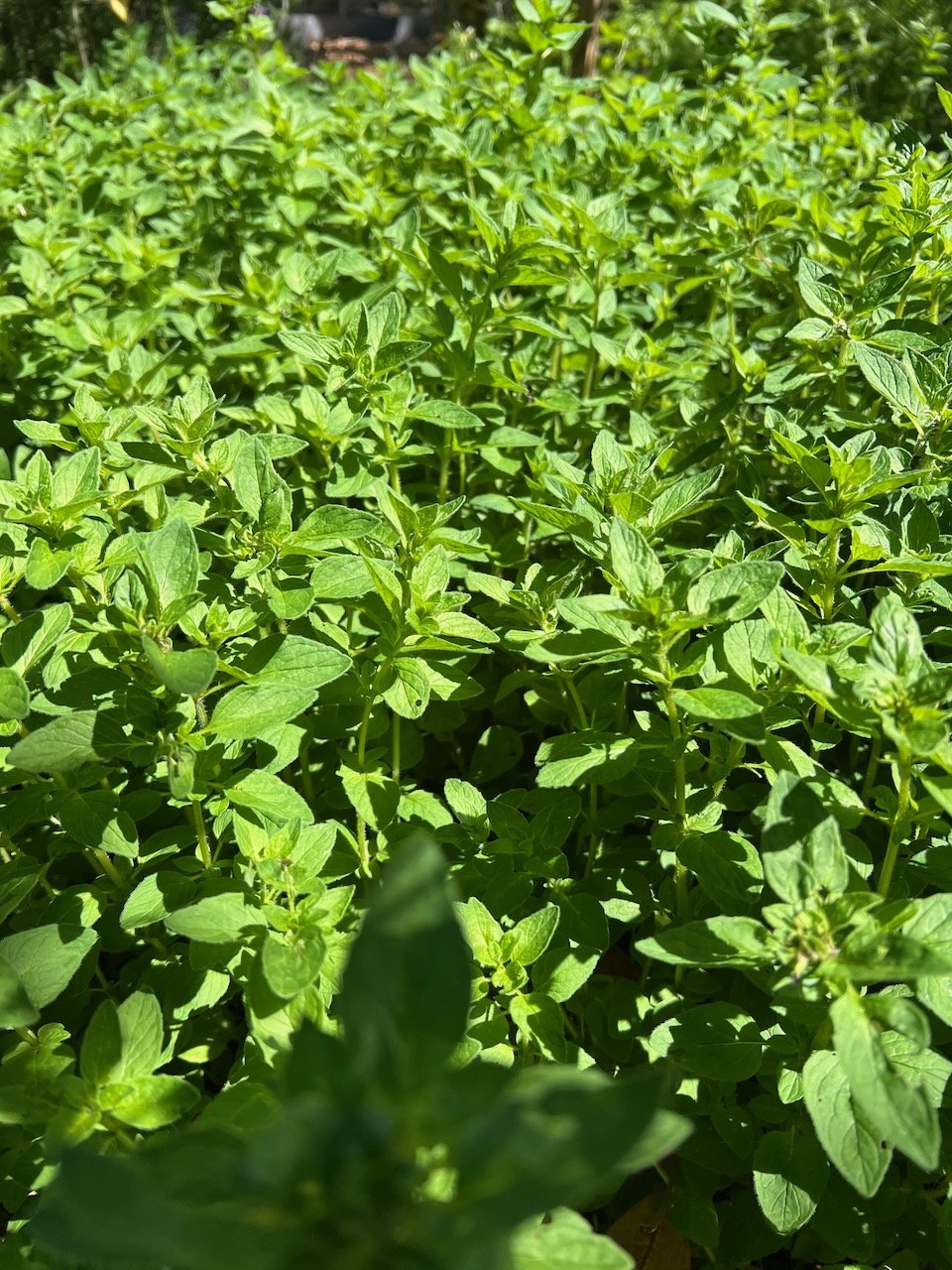
We’re still eating peas, both shelling and snap, nearly every day, along with asparagus (six years after planting the most recent batch of crowns, and we’re finally getting all we can eat). Artichokes are coming on, and the herbs are going crazy - the oregano and marjoram and sorrel just overtaking their beds, and the chives and culinary sages blooming beautifully purple!

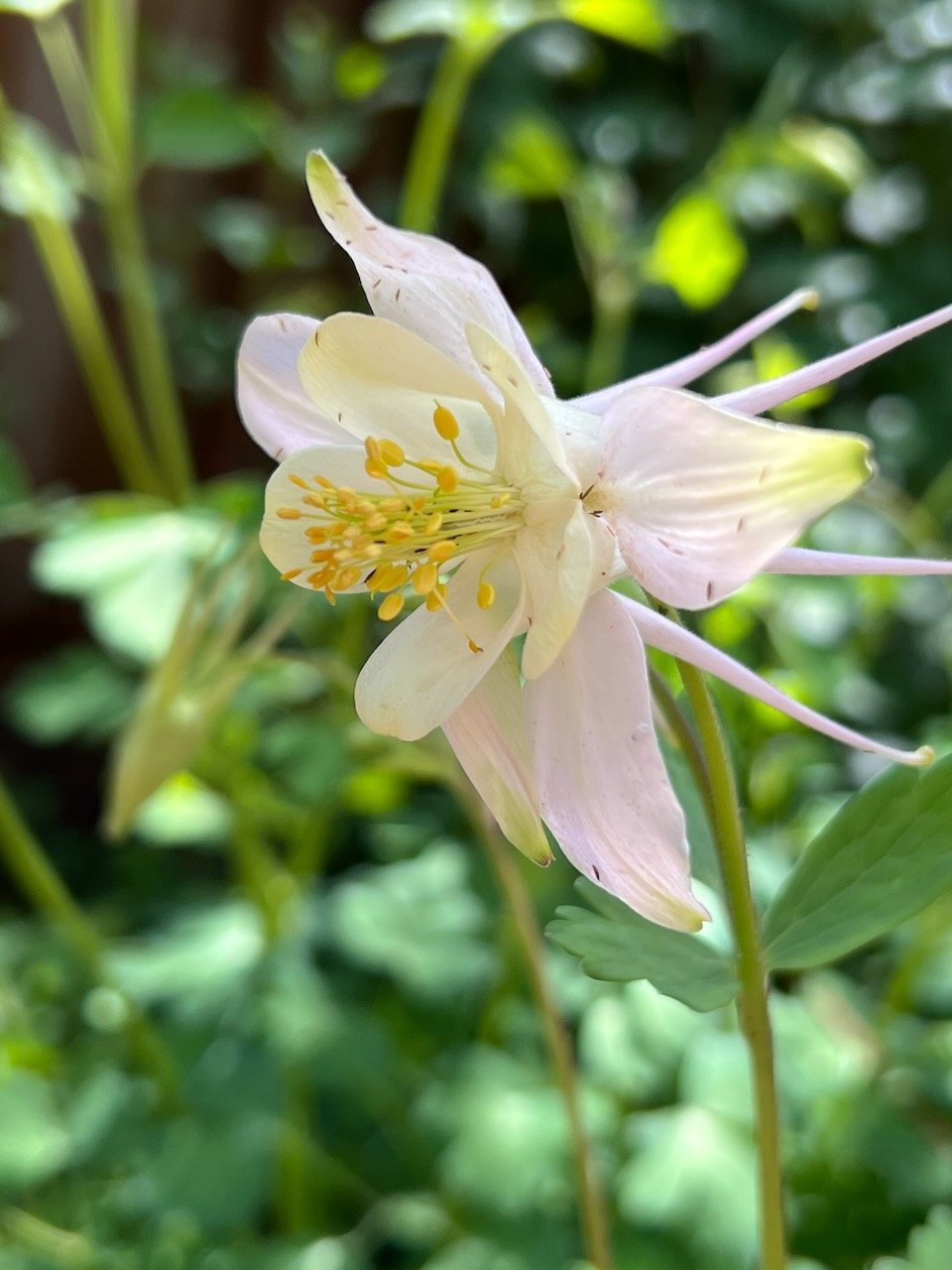
And the flowers… well, the flowers are abundant. Borage, and poppies, and phacelia, and heuchera, and columbine, and salvias, and echium…. the list goes on and on, and I haven’t even told you about the fruit trees and bushes yet. Summer is coming!

What’s happening in your garden?

Tags vegetable garden, flower garden, herb garden, tomatoes, peppers, greenhouse
Comment

Bean Buddies

April 14, 2022 Elizabeth Boegel

Do you know about Rancho Gordo beans? I wrote about them years ago, but they exploded in popularity during the pandemic, and they now sell out regularly. You can get on the waiting list for their ‘bean club’ which guarantees you a monthly supply, but there are people on that list that have been waiting for years! They are that popular. They do have the most diverse variety of dried beans, all of which are grown by reputable farmers (some large, and some small, some in the Western US, and some in Mexico), and the supply is quite fresh, unlike grocery store beans, which may have been sitting on the shelf for years.

Imagine my delight when one of my students (thanks, C!) mentioned that Rancho Gordo was starting a Bean Buddies program, in which the company would supply a small amount of heirloom beans to try growing at home. I immediately signed up, both for my home farm and for Merritt’s farm (which is basically where I teach all my labs). I’ve just received four different kinds of beans to trial, and I couldn’t be more excited to get growing.

image credit: Rancho Gordo Beans (Good Mother Stallard)

Good Mother Stallard beans are well known to a lot of cooks. They are known for making the best pot liquor (broth, basically) and have excellent flavor.

But I don’t know anything about any of these other beans. Flor de Mayo beans are from Mexico, and are a bush variety. Apparently they are used frequently in Mexican dishes such as refried beans and soups. I can’t wait to trial them, as they have pink pods and pink beans!

Jacob’s Cattle Bean is another bush bean that is rarely grown in the United States. Slow Food USA says that it’s a speckled kidney bean, named for its resemblance to Hereford cattle. Apparently they get more flavorful, and smell even better, the longer they cook, and they hold up well under that long cooking time, which makes them ideal for soup.

image credit: Rancho Gordo Beans (Lila)

Lila Beans are another unusual bean, and according to Rancho Gordo, they come from the south side of the Popocatépetl Volcano. They are a pretty purple bean which pairs well with pork.

In my class, we are working our way through our last module of the semester, and it’s about partnerships and community building around agriculture and food. Naturally this leads to a discussion of food sovereignty, which has at the heart of its movement the idea that cultural, traditional foods, grown under the control of indigenous peoples, and consumed for the health of all peoples, makes eating these kinds of food a celebration of heritage and history. Beans, being a staple crop for so many indigenous people, and which are adaptable to a variety of climates and growing styles, are an easy and delicious way to find a way in to this wonderful and important tradition.


Tags vegetable garden, cooking, food justice
2 Comments

IPCC Mitigation Report

April 5, 2022 Elizabeth Boegel

A wildflower ‘meadow’ in Skyline Wilderness Park, Napa, filled with native Goldfields and Purple Owl’s Clover.

My news feeds are full of commentary on the IPCC’s release of their mitigation report. Of course, since I have long been a student (formally and informally) of environmental issues, this is the kind of news I look for - maybe you haven’t been reading as much about it as I have. Plus, I do find these reports confusing for the average layperson. So imagine my delight when I came across a great eight-minute video, summing up the report.

This video was recommended by Katharine Hayhoe, climate scientist, University professor, and recently-named Chief Scientist for The Nature Conservancy. I have read several of her books, and she has a unique take on environmental issues, being both a Christian and a scientist, and someone who believes in active faith and hope. She is a good resource for scientific facts, but also for a positive outlook in the face of very frightening information. So, I knew this video would be helpful and I feel confident recommending it. I hope you enjoy it too, and are able to learn something from it - I sure did.

Tags climate, learning
2 Comments

Spring Salad

March 26, 2022 Elizabeth Boegel

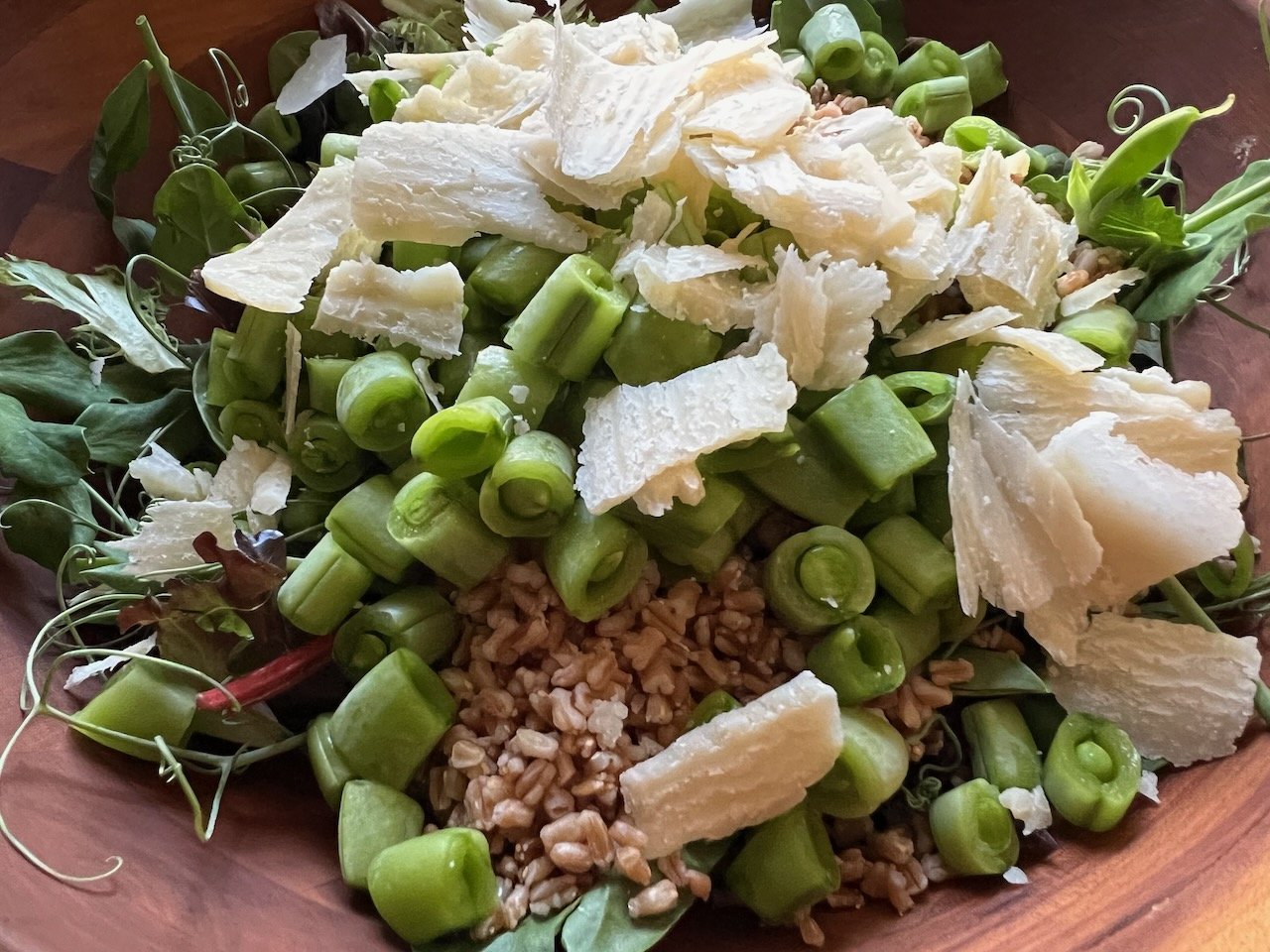
Oh yes, it’s salad season. Tender, fresh lettuce leaves, mixed with all kinds of spring veg like snap peas, shelling peas, pea shoots, asparagus, and scallions. Add some salty aged cheese, a chewy whole grain like farro or bulgur, a dressing of lemony garlicky olive oil, and maybe even some grilled salmon or chicken, and you’ve got a great meal. How about a side of focaccia? I mean, what could be better?

Recipe for a spring salad, adapted loosely from Bon Appetit:

1 cup semi-pearled farro, boiled in salted water for 30-ish minutes, drained and cooled

8 cups of lettuce leaves, whatever you’ve got in the garden

2 cups of pea shoots (the tender new leaves and tendrils)

1 cup of sliced snap peas, or shelled peas, or sliced asparagus, or scallions, whatever is fresh from the garden, or a little of everything

Shaved aged parmesan

Dump all of this in a huge bowl.

Make a dressing: Grate a garlic clove or two into a mason jar, then add 1/4 cup-ish each of olive oil and lemon juice, plus some salt and pepper. Put the lid on the jar and shake shake shake.

Toss everything together. Add a protein if you like.

Easy Focaccia: For this, I use the recipe from Alexandra Stafford on her site Alexandra Cooks. I use the yeasted version, and I follow it to the letter. Trust me, it’s foolproof. It also works as a fabulous pizza base and we often use it for this purpose.

You can watch her make the bread on YouTube, below:

Enjoy!

Tags seasonal recipes, cooking, vegetable garden, bread
Comment
← Newer Posts Older Posts →

Subscribe

Sign up to get email when new blog entries are made.

We respect your privacy. We're only going to use this for blog updates.

Thank you! Please check your email for a confirmation notice to complete the subscription process.

Powered by Squarespace