• About
  • Blog
  • Contact
  • Favorites
  • Archive
Menu

Poppy Corners Farm

Street Address
Walnut Creek, California
Phone Number
Walnut Creek, California

Your Custom Text Here

Poppy Corners Farm

  • About
  • Blog
  • Contact
  • Favorites
  • Archive

Restless

February 17, 2019 Elizabeth Boegel
IMG_1645.jpg

It’s that time of year. I’m itching to start summer vegetable seeds, to rip off the row cover, to spend whole days out in the sunshine, to see masses of spring flowers appear in the pollinator gardens. It’s a desperate feeling, and one that cannot be soothed with nice family dinners in the still-early-dark, or browsing seed catalogs, or even walking around the garden. I imagine all creatures in the Northern Hemisphere feel a similar restlessness, whether still dealing with snow and ice, or dreary wet, or just grey skies.

IMG_1629.jpg

Our property has been inundated with water. The west coast hosted an atmospheric river that flowed through our sky and simply dumped rain at the lower elevations, snow at the higher. This is good. This is necessary. This is exactly what California needs. All of that is true, but it does make for dampened spirits. I am thanking our December selves for obtaining and spreading all those wood chips, as they do a really good job of soaking up a lot of moisture and keeping us mud-free. But our hard landscape surfaces were standing lakes for a good week, and the chickens were miserable inside their coop, looking forlornly out at the rain.

February 15 is our last average frost date, but ‘average’ is the key word there, because we’ll have frosty nights this coming week. So I can’t take the row covers off just yet, even though I’m dying to. I bought a cheaper brand that is barely hanging on, having been ripped to shreds by our high winds and rain. Agribon holds together much better, but it comes in inconvenient sizes and is so much more expensive. Still, once we’ve used up our roll of the cheap stuff, I’ll go back to Agribon. Even though it’s low-quality stuff, the row covers have done their job, protecting all the winter veg from the elements, while still letting in light and moisture. Everything is looking good and tasting good, and that’s really the most important thing about having a winter garden - providing lots of food in the colder months.

However the canning shelf is looking light in everything but pickles, and I yearning for a fresh strawberry. It’ll be a while yet.

IMG_1637.jpg

I’ll start my veg seeds the first weekend of March, as I always do, in hopes that I can plant them out the first weekend of May. I already know where everything is going to go, planning the summer garden is long since a completed task, and now I just wait. The internet is full of gardeners starting seeds, so it’s hard to resist that urge. From experience I know that it’s best to put it off a while yet.

IMG_1646.jpg

Meanwhile in the open spaces the wild almond trees have begun to flower, and I’ve seen the first of the poppies, and wild mustard is starting to make its robust presence known. I notice an increase in bird activity, and the bees are loving the cold sunshine. Soon we will need to add some room to their hive, and swarm season will be upon us. Vector control says it’s time to start putting out yellow jacket traps in hopes of catching the early queens, but I don’t usually start to see them until March. Once in a while I see a native bumblebee, but mostly they are still hibernating. I’m hoping that things will really start to wake up in March, and thats the time this restless feeling will go away.

Tags vegetable garden, winter garden, wildlife
Comment

February Cooking: The Chickens Begin to Lay Again

February 6, 2019 Elizabeth Boegel
IMG_1599.jpg

Look at those bright orange yolks. That’s a direct influence of the daily greens I give our chickens to eat. All that good nutrition ends up in the eggs and makes them even more desirable. I love when the days begin to lengthen and we can eat eggs again!

Having too many eggs is rarely a problem. Lately I’ve been having a couple for breakfast scrambled with fresh grapefruit on the side. Adam likes ‘em with crispy whites and runny yolks over some sautéed greens and some of my sourdough toast. Poached eggs in a roasted tomato/garlic/basil sauce (which I freeze in jars every summer) is a quick shakshuka, dried chilies added for those who like it spicy. Sopped up with stale bread or a pita, or simply eaten with a soup spoon, it’s hard to beat.

Dinner frittatas are a good way to use up excess eggs, because you’ll need 8-12 eggs depending on how hungry everyone is. You can throw in any vegetable you have on hand, fresh or already cooked; bacon or pancetta or crumbled sausage; leftover beans or rice or cheese. We especially love them with greens from the garden, but soon we’ll switch to asparagus or spring peas (that’s not until March, usually). We always finish the frittata with some freshly grated parmesan or a bit of crumbled goat cheese, to give it a spicy salty kick.

If I have a lot of eggs and we’re craving a dessert, I like to make chocolate pudding. This recipe from The Kitchn is perfect, because it’s low sugar and high protein and uses plenty of dark chocolate. I make it at least once a month when we have extra eggs. Later this week I’m going to try this recipe from Food + Wine for avgolemono, because not only do we have a lot of eggs, we also have a lot of lemons.

Cauliflower starting to head up in our garden - this is the Romenesco kind.

Cauliflower starting to head up in our garden - this is the Romenesco kind.

February is when all the brassicas start showing up at the Farmers’ markets - broccoli, cabbage, and cauliflower are abundant here because they grow well over the winter and taste even better if touched by a little frost. My go-to way to cook any vegetable is to toss it with oil and salt and roast it in a 425 degree oven for 20-30 minutes, but once in a while it’s nice to have it some other way. Lately we’ve been sautéing them in butter and garlic, which is divine. Recently, the Washington Post posted this recipe for a green curry cauliflower, which is on my short list for weekend cooking. It looks delicious. Cabbage will soon be available and we’ll eat it fresh, as crunchy salad, and make some into sauerkraut. I’ve yet to find a cooked cabbage recipe I like; if you have one, please share it!

IMG_1602.jpg
IMG_1603.jpg


Overwintered carrots, parsnips, and beets are a frequent sight in February. Carrots and parsnips roasted together are a classic, and even better roasted underneath a salty, buttermilk-brined chicken. You could add some beets to that too, or roast them separately - wash, wrap in foil, then after roasting, slip off the skins. Don’t forget to wash and saute the beet greens, as they are delicious. Swiss Chard is in the same family as beets (Chenopodiacea, actually now Amaranthaceae, these things are moving targets), and is a beautiful sturdy green to add to your salads or sautes.

‘rainbow lights’ chard

‘rainbow lights’ chard

Actually, you can make a chard gratin just as you can with any spinach or kale. Or mixed! Delicious, for those who like their vegetables a little richer and cheesier.

I grow fava beans (or broad beans) every year as a cover crop in many areas of the garden. Beans and peas form an association with a bacteria that allows nitrogen to be collected from the air in the soil and fixed on the plant roots. If you cut down those plants before they set fruit, the roots (and the nodules of nitrogen) will decompose in the soil and become available to the next set of plants. So I do that a lot in the winter because fava beans are reliable winter growers in California. However this year I’m keen to try some of the fruit, so I’m letting a few plants produce pods.

IMG_1605.jpg

When you talk to folks about eating fava beans, they say two things: They’re delicious, and they’re hard to prepare. That’s because the beans take some extra steps in cooking. Actually, if you eat the pods young, like the one in the photo above, you can eat it whole like you would a string bean. And the leaves are edible too, just like pea shoots! But if you wait until the pod is big and knobbly, you shell the beans out of the pod. Then you have to blanch them in boiling water for a minute, and then slip the inner bean out of its outer coating. It’s like the beans have two coats. Once blanched and shelled that second time, you can saute the beans with butter or oil and they are delicious.

I’d love to hear what you’re eating out of your respective gardens! March will bring a plethora of delicious spring foods, and I can hardly wait.


Believe it or not, some Geum plants are blooming!

Believe it or not, some Geum plants are blooming!


IMG_1600.jpg
Tags seasonal recipes, cooking, vegetable garden, eggs, chickens
Comment

Surprise Harvest

January 30, 2019 Elizabeth Boegel
IMG_1590.jpg

I bought some organic Yukon Gold potatoes from the store to make sorrel soup today. As is usual, there were a couple of sprouting potatoes in the bag, so after I made my soup, I took those rejects out to the garden. I figured I’d plant them in the round fire ring where I had planted potatoes (both Yukon and Red) back in August and again in October. December and January frosts had killed those plants, so I figured there would be no crop. But when I dug down to plant these sprouting potatoes, look what I found! I was so surprised. I then went over to the Romaine and Cabbage bed, where I had noticed potatoes growing (volunteers) in October. The frost had killed them too, even under cover - or so I thought. There I found a bunch of fingerling potatoes! What a wonderful unexpected harvest! I didn’t need to buy potatoes for my sorrel soup but I didn’t know that. I will cut and roast them all tonight to have with our Boeuf Bourguignon.

This is the sorrel soup I made, one of my favorites. I’ve already written about it here, with a recipe, if you’re interested. I think it’s entirely worth growing sorrel just for this recipe.

A couple of interesting things to share:

One is my garlic crop.

I planted hardneck garlic for this year (you can read all about my weird garlic 2018 here), two different kinds. The one on the left is Spanish Roja. The one on the right is German Red. See how differently they grow? The Spanish one is tall and thin and light green, and the German one is short and sprawly and dark green. I can hardly wait until May to pull these guys up and see how they look underneath. I have sort of an idea, because I had extra seed garlic after planting, and since seed garlic is just a head of garlic like you buy at the store (except organic in my case and from a farm), I’ve been using the extra for cooking. The problem is I don’t know which is which. Both are extremely easy to peel which is fabulous, and apparently a feature of hardneck types. Both have reddish outer skins. Both taste great. But one has giant cloves and one has smaller cloves. Whichever one has giant cloves wins. That’s the one I will plant again.

The hardneck thing is going ot be hard for storage though, since I guess you can’t braid hardnecks. We’ll cross that bridge when we come to it.

Second interesting thing:

I’m taking Geology this term, and my professor showed us how to figure out what kind of rock is underneath our houses.

First, go to the USGS website.

Then, click on the national geologic map database.

Then, when you’re on the US, look at the right side and scroll down to ‘location’ and type in your address. You’ll need to have Adobe Flash on your computer to use this. Click the magnifying glass to zoom in or out.

The map will pinpoint your location at the bottom of a red diamond. You will see lots of codes, like at my house, it says the soil beneath us is ‘Qa.’ You’ll need a key to determine what the codes mean. Scroll down the left side of your screen and you’ll see a hand with the letter ‘i’ in a circle. Double click on that, then click on the area around your house. A little black box will appear with some choices. Choose ‘browse.’ A separate window will open up with a key to your little part of earth!

My property is made up of alluvial soil, that is, soil that was under water. This explains our hardpan clay.

If you look at my map, you’ll see lots of little broken black lines to the right (east) of our house all along the hills. Those are all faults. In California, hills pretty much mean faults. Can you see the orange section to the right of our house? That’s called Shell Ridge, and it’s called that because there are all kinds of fossils of seashells on those hills. It used to be an ocean. Then somehow the earth was lifted up (earthquake?) and it emerged from the water. However, if you look at the type of rock in that area, you’ll find it’s basalt - which comes from cooling lava. So at one point there was a volcanic eruption under that ocean. It also tells you the age of the rock - this particular rock comes from the Orinda Formation, which is from the Pliocene age. That’s somewhere between 2-5 million years ago!

I’m not sure if this is your kind of thing or not, but I find it fascinating.

I’d love to know how you’re all faring, winter-wise. I imagine some of you are in the deep freeze of the midwest about now. I’m sorry to tease you with shots of garlic and potatoes when you’re probably breaking ice in your livestock waterers every hour. Please let us know how things are going on the other side of the country!


Tags vegetable garden, cooking, garlic, learning
Comment

Promise

January 25, 2019 Elizabeth Boegel
loving the trimmings from the cereal rye cover crop

loving the trimmings from the cereal rye cover crop

It’s a typical January, in Walnut Creek - chilly at night, but around 60 and sunny during the day, which allows for some hope that spring will soon be here. Actually, it may as well be spring, despite the frosty nights: All the California native plants have had lovely soaking rains, which is their trigger to start growing. If we’re lucky, the hills will soon be full of color, with blooming poppies, tidy tips, clarkia, lupine, mule’s ear, and Chinese houses, making a sort of natural mosaic painting out of our landscapes.

And in my own garden, promise is definitely lurking.

It lurks in the chicken egg (or two!) that we are now getting every afternoon, signaling longer days.

It lurks in the pollinator gardens, in which thousands of seeds have germinated and are starting the push to grow and flower.

It lurks in the buds on the perennials.

IMG_1547.jpg

It lurks in the native bulbs, like this elegant brodiaea, about to bloom.

It lurks in the vegetable beds, where whorls are tightening to make flower heads, which we will eat, soon.

an Italian variety of cabbage

an Italian variety of cabbage

IMG_1488.jpg

It lurks in the greenhouse, where early summer flower seeds are germinating.

IMG_1553.jpg

It lurks in the beehive, where pollen is steadily being collected, to feed the babies.

IMG_1554.jpg

And promise also lurks in the fruit bushes, with budding flowers and fruit.

Huckleberry

Huckleberry

Strawberry

Strawberry

It’s heartwarming to walk around the garden and see these promises of spring. Have you seen any signs of it in your garden, yet?


Tags flower garden, vegetable garden, fruit garden, chickens, bees
Comment

"Announcing your place in the family of things"

January 19, 2019 Elizabeth Boegel
Manzanita blossoms falling to the wood chips below

Manzanita blossoms falling to the wood chips below

I’m sure you’ve all heard that Mary Oliver, the acclaimed poet, died this past week. Upon her passing, I was surprised to see such passionate and vehement opinions (all favorable) about her work, expressed by various nature writers whom I admire. I came across her poems once or twice and enjoyed them, but had never dug deep. So, encouraged by all these wonderful comments, I attempted to do so now.

Shelling pea blossoms

Shelling pea blossoms

And, WOW. Her work is really inspiring. I wish I had discovered her earlier. All of it is deeply spiritual, deeply nature-loving, and wonderfully understandable (not the case with many poets). I have ordered her latest book, ‘Devotions,’ which is a sort of best-of. It’s a book I think we should have around, and should be read by anyone who appreciates nature.

A honeybee foraging in the fava bean blossoms

A honeybee foraging in the fava bean blossoms

I read an essay about her in the Washington Post, by Maggie Smith, that really hit home for me; here’s the paragraph that made me truly tune in: “I learned from Mary Oliver how attention is a kind of love, how shining your mind’s light on a thing - a grasshopper, a bird, a tree - is a way of showing gratitude. I learned that poems do not need to be ‘difficult’ to be intelligent, that poems can be both inspirational and investigative, that poems can be tender without being soft. I learned from her to own my wonder and to stay open to uncertainty.”

Late-season narcissus

Late-season narcissus

Does that sound familiar? Isn’t it sort of a theme of ours, those of us who appreciate nature, and who want to mark its processes in some way? Haven’t we talked about, over and over, the need to pay attention, to tell the story? Mary Oliver was one of us.

the first starflower

the first starflower

Her most famous poems are famous for a reason - they resonate. Here is one I love:

“You do not have to be good.
You do not have to walk on your knees
for a hundred miles through the desert repenting.
You only have to let the soft animal of your body
love what it loves.
Tell me about despair, yours, and I will tell you mine.
Meanwhile the world goes on.
Meanwhile the sun and the clear pebbles of the rain
are moving across the landscapes,
over the prairies and the deep trees,
the mountains and the rivers.
Meanwhile the wild geese, high in the clean blue air,
are heading home again.
Whoever you are, no matter how lonely,
the world offers itself to your imagination,
calls to you like the wild geese, harsh and exciting -
over and over announcing your place
in the family of things.”
— Wild Geese, by Mary Oliver
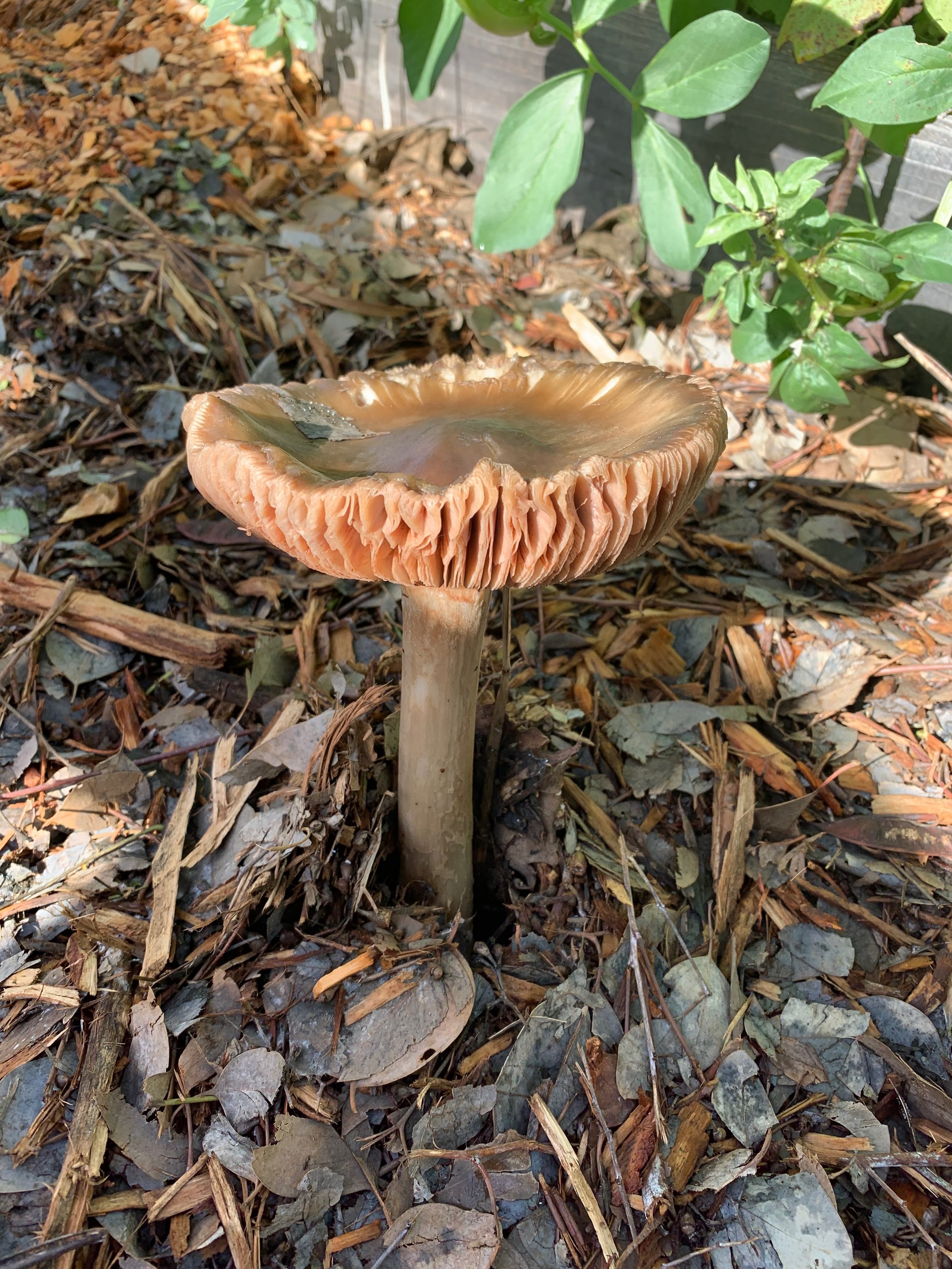
growing in fresh wood chips

growing in fresh wood chips

I think there is probably no greater epitaph - no greater appreciation of this poet and her life - than to go outside this weekend, no matter the weather, and pay attention.


Tags learning, art, flower garden
Comment
← Newer Posts Older Posts →

Subscribe

Sign up to get email when new blog entries are made.

We respect your privacy. We're only going to use this for blog updates.

Thank you! Please check your email for a confirmation notice to complete the subscription process.

Powered by Squarespace