• About
  • Blog
  • Contact
  • Favorites
  • Archive
Menu

Poppy Corners Farm

Street Address
Walnut Creek, California
Phone Number
Walnut Creek, California

Your Custom Text Here

Poppy Corners Farm

  • About
  • Blog
  • Contact
  • Favorites
  • Archive

Say Hello to my Leetle Friend

October 25, 2018 Elizabeth Boegel
IMG_1017.jpg

I forgot to mention that we spent some time messing about in the honeybee hive last weekend, cleaning up some comb and making sure everything was ok. We took out two full bars of honey for ourselves, still leaving plenty for the bees this winter. We also installed a mite-away strip, a sort of pad that looks like a large feminine hygiene product, filled with formic acid (found in ants). This was to kill off any varroa mite that might be hanging about in the hive. It’s an organic product that we use occasionally for this purpose. For more information about this product and my opinion on treating mites, you can find my 2016 blog post about that here.

Anyway, I went back in the hive yesterday to remove the strip, and came across the spider above, making a very good living in the back of the hive (the unused portion), catching bees that were sneaking out of our not-very-tight seal with the follow board. I removed her, and another spider also enjoying the bee feast, and put them in the leaf litter nearby. Then I made sure our follow board was good and tight against the bars, to keep those bees safe and warm. Hopefully the spiders will now stay out of there.

IMG_1015.jpg

I like spiders, I’m a fan of what they do for the ecosystem, but I CERTAINLY DO NOT LIKE coming across them by surprise!

The spider at the top of this blog is, I think, a false black widow (Steatoda grossa). They are very common here in California and are extremely non-aggressive (I poked at her a bit in order to take her photo and she was as calm as can be). I wanted to show it to you because it is often falsely identified as a black widow. Of course black widows have a very poisonous bite, but the false ones do not, so there is no need to be afraid of them. Though as you would expect, I don’t think you should be afraid of the poisonous black widows, either, but I realize that most people are. I am not afraid of them, but I’ve definitely been known to squeak a bit when I see them. No, I do not scream. Yelp, maybe. Ok, maybe they scare me a little…

The other spider is a common wolf spider, I believe - harmless to humans unless continually provoked, and even then the bite is mild. They do not spin webs but hunt on the move.

IMG_1018.jpg

We have had so many mantids in our garden this year, and it’s been a lot of fun to watch them. They are also helpful predators, albeit non-selective ones; they feed on all the prey we have flying around regardless of whether ‘good’ or ‘bad.’ They don’t discriminate. They have amazing eyes and an amazing sense of sight. Above is a mantid egg case, tucked in on the passion vine trellis. Clearly its mother decided that this was a good location to have babies. I’ll keep a close eye on it, and hopefully catch them hatching and share that with you.

IMG_1019.jpg


Meanwhile, the Gulf Fritillary caterpillars are starting to pupate, and I’m finding them hanging all over - on passion vine tendrils, on the trellis holding them, and as above, on an irrigation pipe which is tied to the trellis. I can’t wait to watch this process unfold. Hopefully they won’t hatch until spring, but I guess if the weather stays warm during the day, they might hatch earlier.

IMG_1001.jpg

Finally, I found this enormous black fly looking and acting like a carpenter bee on the zinnias. After spending some time researching, I’ve decided it is a Mexican Cactus Fly (Copestylum mexicanum), a type of Syrphid fly. These lay their eggs in rotting cacti, and we do have some cactus around here in various home gardens. However the adults eat nectar, which clearly this one was. Isn’t it cool looking? At times, it had a metallic blue sheen and I thought it quite beautiful. (My bug prof, imminently patient with me even though I am no longer his student, just emailed me that I was correct in my ID.)

I must say it’s hard to get my homework done when I can just zip out to the garden and look at bugs. A constant and very interesting distraction! Soon it’ll be so cold that all of these insects will stay tucked away, so it’s good to appreciate them while we can.

Tags insects, pollinators, flower garden, wildlife
2 Comments

Ramble On

October 23, 2018 Elizabeth Boegel
Grindelia sneaking out under the fence

Grindelia sneaking out under the fence

This time of year puts me in mind of songs about autumn - this morning, for some reason, the old Led Zeppelin tune ‘Ramble On.’ Lyrics like ‘Now it’s time for me to go, the autumn moon lights my way’ just seem to fit the mood of the garden.

the cold nights are taking their toll on the basil

the cold nights are taking their toll on the basil

Wandering around the yard, I see such interesting things, signs of change. The gall wasp population exploded this year on our Valley Oak (Quercus lobata), and now that the galls have served their purpose, they are falling from the leaves like rain. When you stand under it, you are in a shower of galls. Our driveway is red with them.

IMG_0961.jpg

The chickens have mostly stopped laying for the winter - between the annual molt and the shortening days, we are lucky to get an egg every once in awhile.

IMG_0967.jpg

The garlic is sprouting, the kale and cauliflower and lettuce are growing beautifully, but something has eaten all of the kohlrabi and beets, and my spinach won’t germinate. I’ll just keep seeding and planting on through, until frost.

IMG_0955.jpg
IMG_0984.jpg

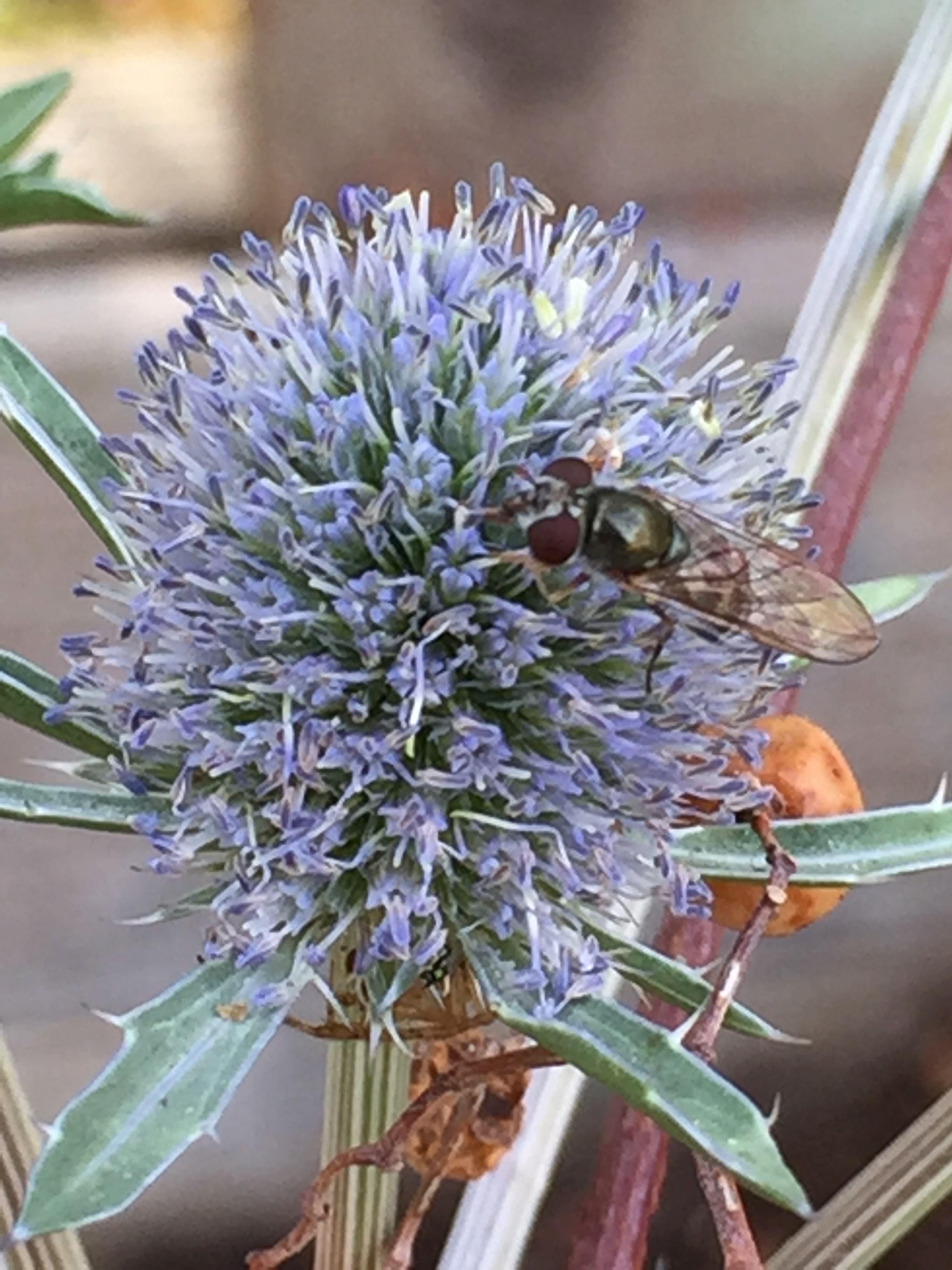
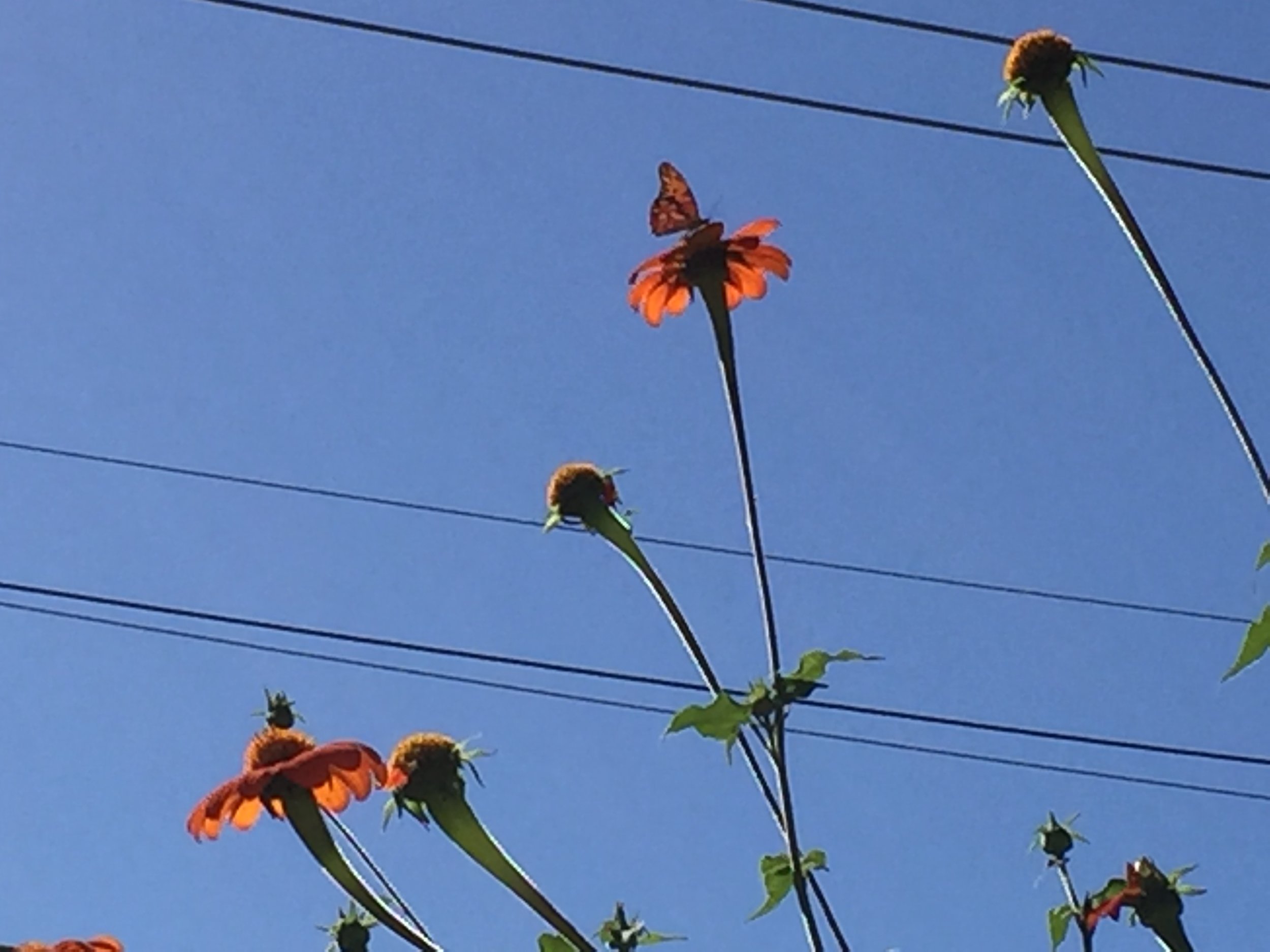
Fall flowers are still blooming like crazy and the pollinators are frantically bringing in all they can - you can feel the urgency. I noticed the honeybees bringing in bright orange pollen and wondered where it was coming from, and then I saw one collecting pollen from a Tithonia blossom and realized that was the source.

this is a hoverfly, though

this is a hoverfly, though

my little friend

my little friend

another hoverfly, this time on the Eryngium

another hoverfly, this time on the Eryngium

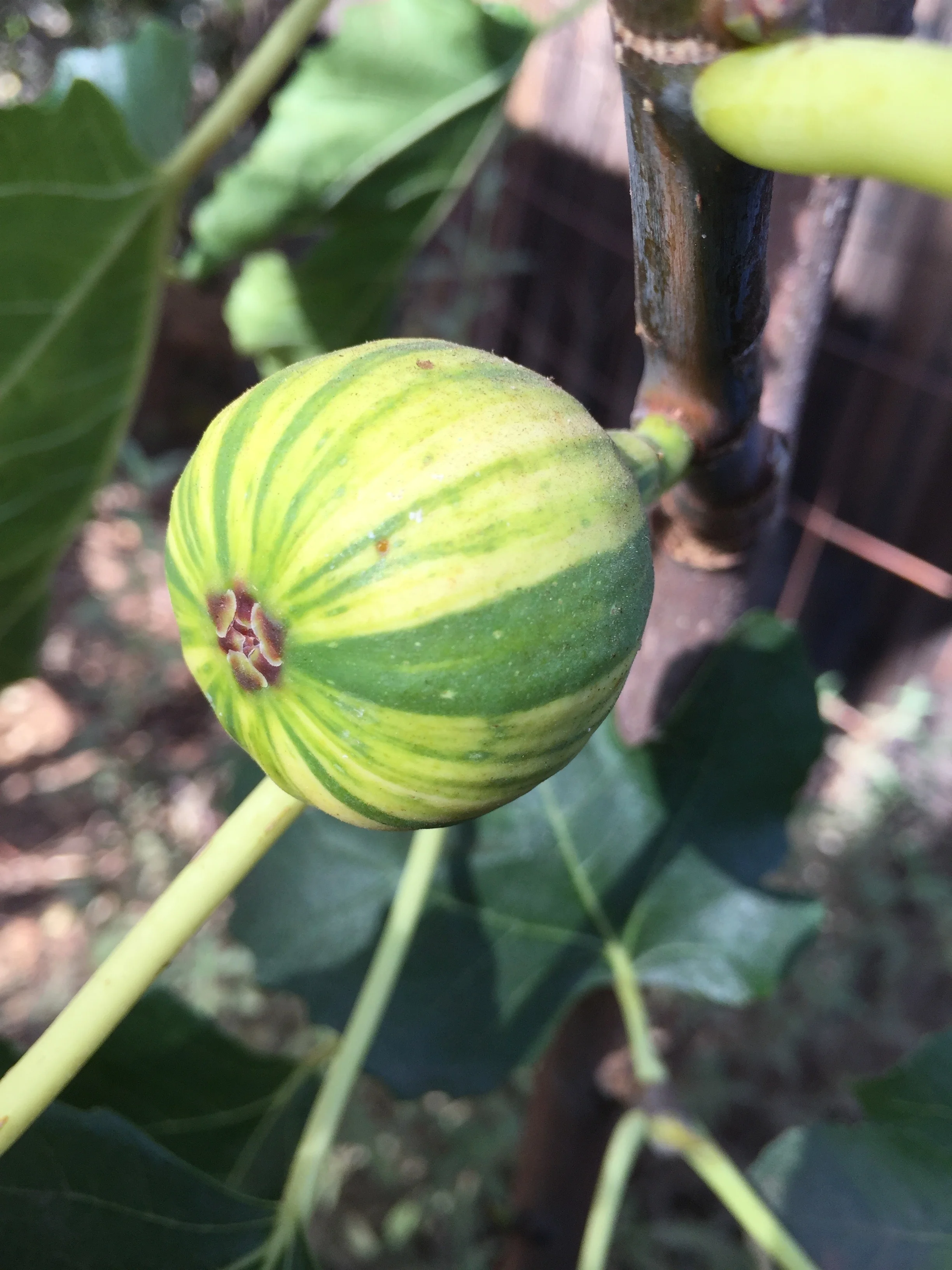
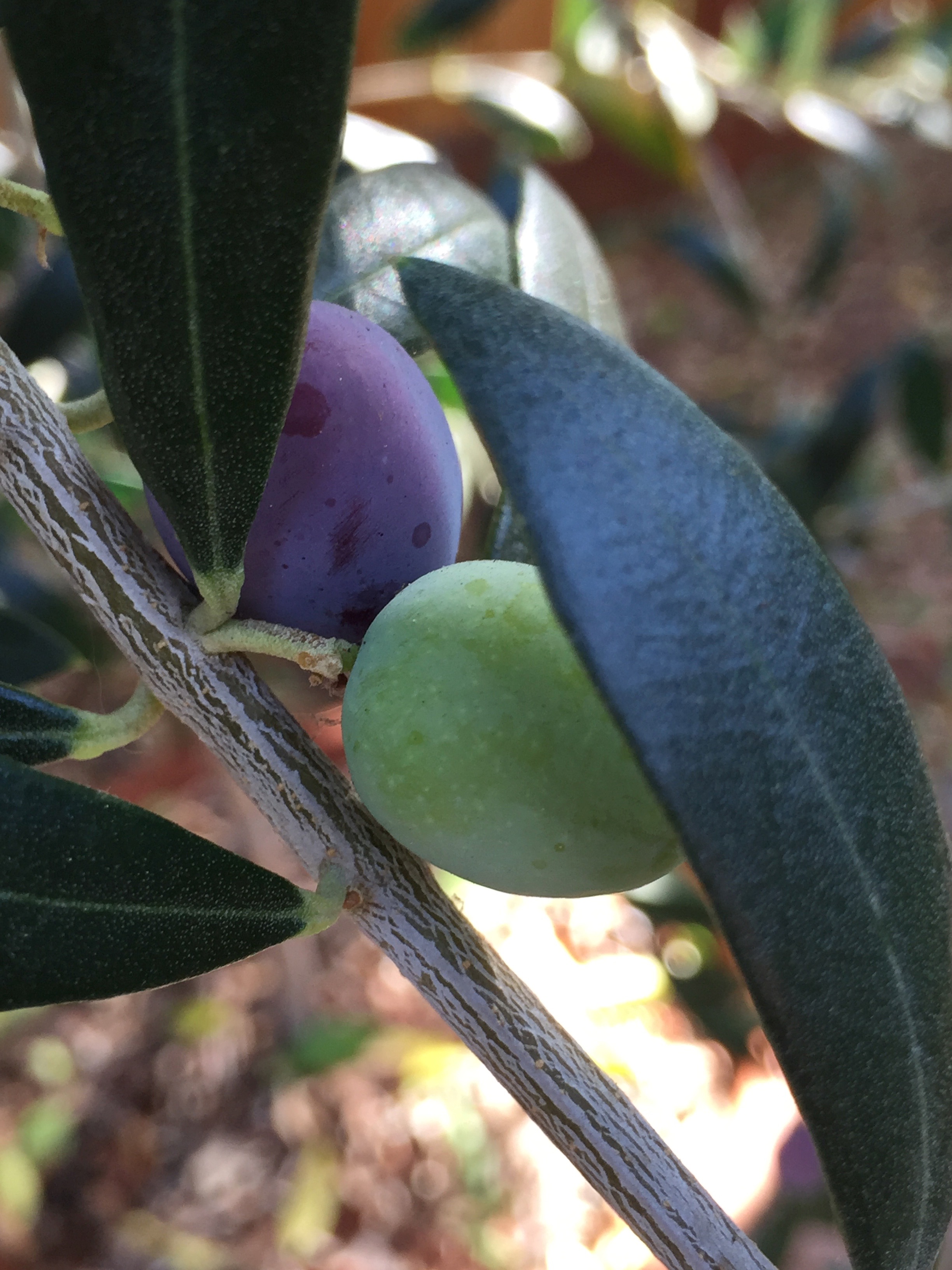
We’ve been eating a good fig crop, and the olives are starting to change color. We won’t harvest them till December or January.

‘Panache’ fig

‘Panache’ fig

‘Arbequina’ olive

‘Arbequina’ olive

We have a month or two yet before the flowers succumb to cold weather (our days are still in the 80’s, and we’ve only reached nighttime lows in the 40’s a couple of times; our first average frost date is December 15).

Hollyhocks giving some gorgeous last blooms

Hollyhocks giving some gorgeous last blooms

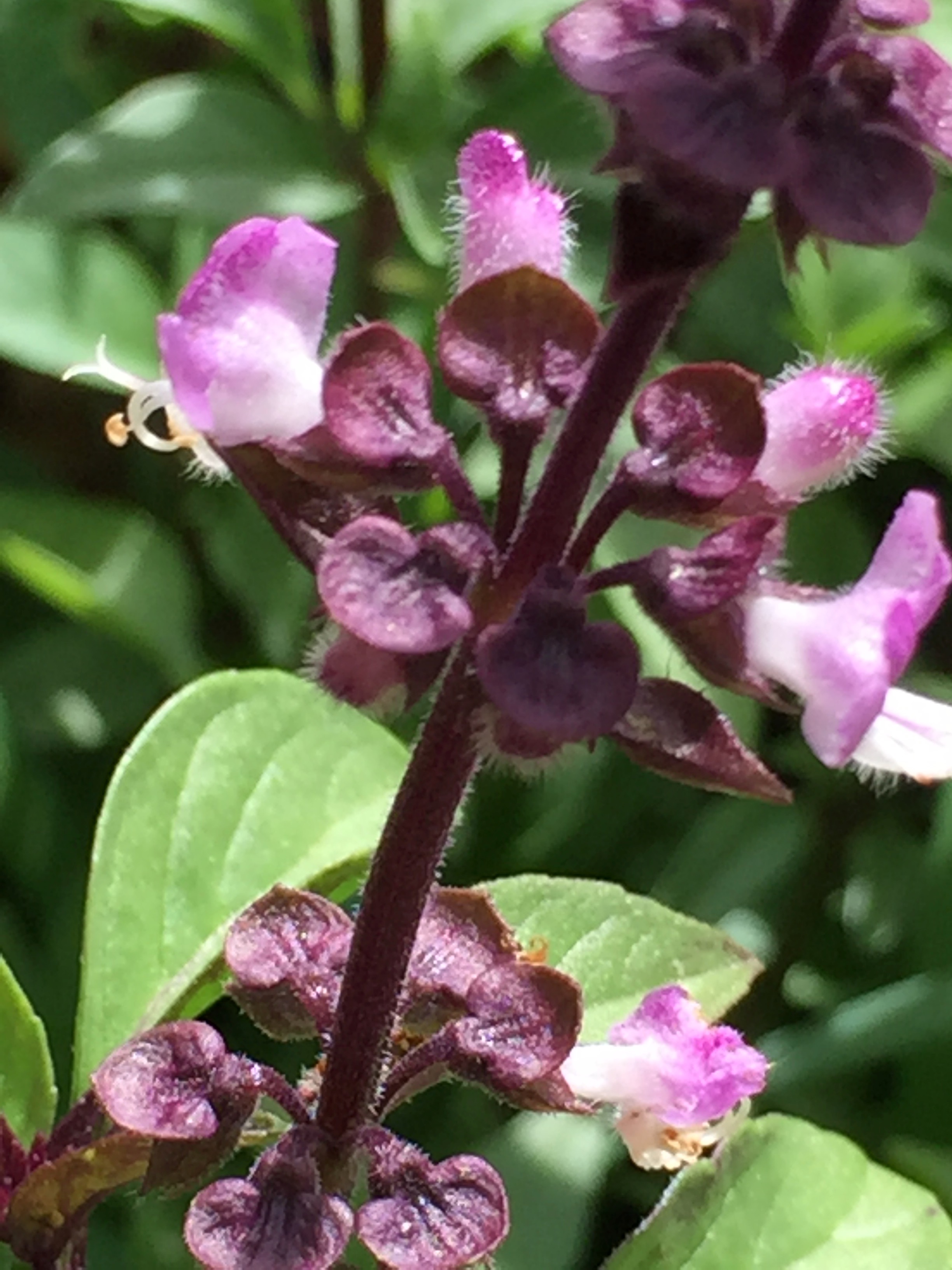
Thai basil

Thai basil

Leonotis getting ready to bloom

Leonotis getting ready to bloom

I spend a good amount of time grooming the brassica leaves, picking off cabbage butterfly worms and eggs. It’s not fun, but it’s satisfying, and the chickens love to eat the worms. They do quite a bit of damage to the leaves of all my cruciferous crops, but the cabbage is looking the worst right now, and I’m hoping it pulls through. The row covers help, but do not entirely deter critters (see earlier note about ravaged kohlrabi and beets). Soon I will begin the daily task of raking leaves and adding them to the chicken run. We are desperate for rain, but none is forthcoming.

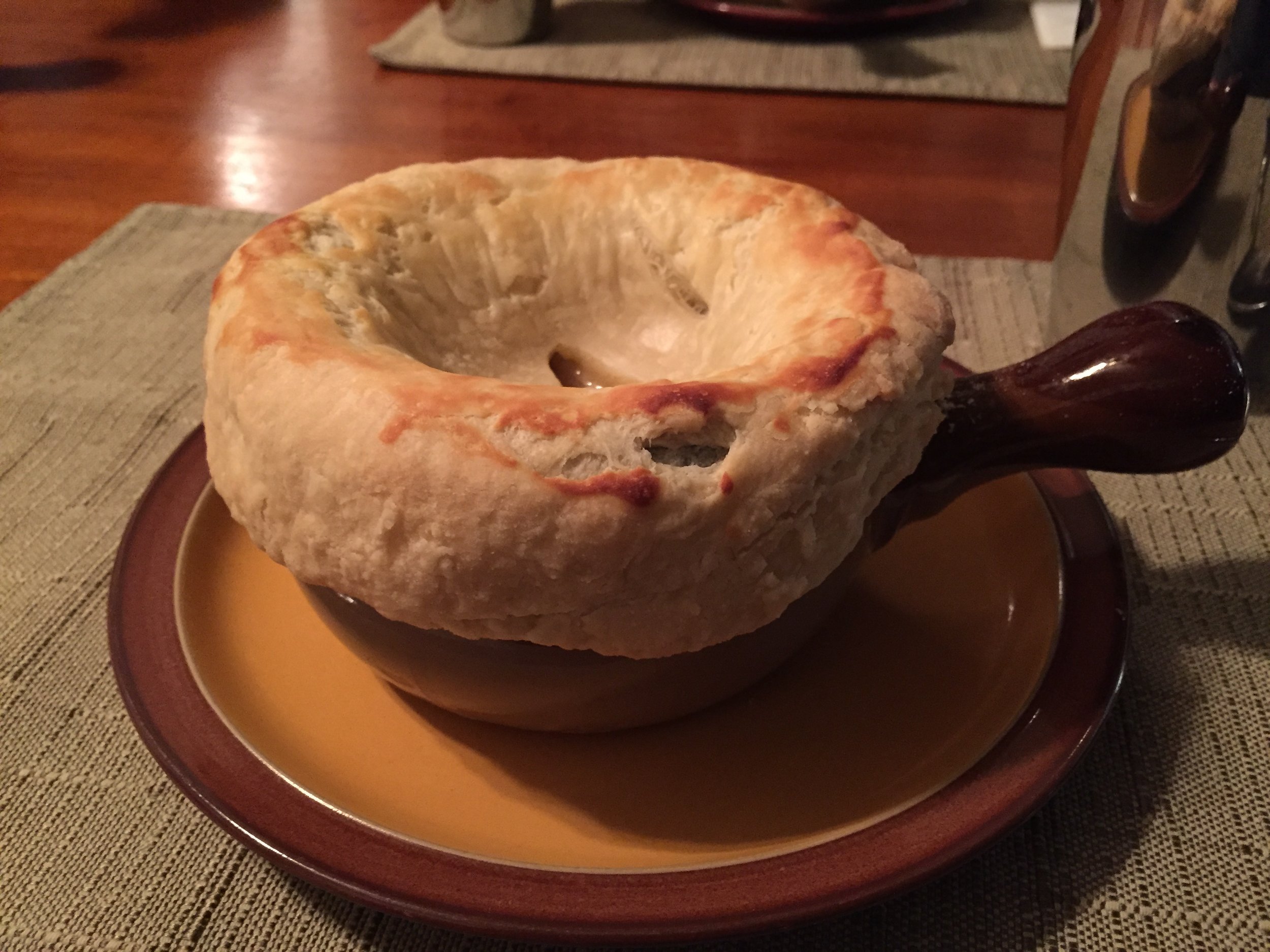
White bean, pancetta, and chard pot pie, a sure sign of fall. You can find the recipe at Smitten Kitchen.

White bean, pancetta, and chard pot pie, a sure sign of fall. You can find the recipe at Smitten Kitchen.

A reminder: It pays to be a messy gardener this time of year; many pollinators and other insects overwinter in leaf litter and mulch. So rake up some leaves for your compost (or chickens), but leave a good amount where they fall, to help keep a healthy habitat for those little guys.

What does your garden look? Have you had snow where you live?

Tags vegetable garden, flower garden, fruit garden, insects, pollinators, trees
2 Comments

Salt Fat Acid Heat

October 18, 2018 Elizabeth Boegel
salt_fat_acid_heat_cropped.jpg

This author (and chef) is a local celebrity, as she lives near here in Berkeley. I first heard of her when she got involved with Michael Pollan’s books and movies, but she recently published a book of her own. I held off on getting it, I’m not sure why, but now it’s on order and coming soon. I’m anxious to read it.

Meanwhile, this book was made in to a Netflix series which we have begun watching. It’s FABULOUS. Start with the ‘Fat’ episode, and see if you don’t fall in love with this sort of cooking. My mouth waters just thinking about it. HERE is the website where you can get recipes, buy the book, and learn more about the series. Enjoy!


Tags cooking
Comment

Passionflower Vine/October Wreath

October 14, 2018 Elizabeth Boegel
IMG_0932.jpg

Oh my goodness, I could not be happier about the South Pollinator Garden right now. I know I’ve written about this garden, and the pollinators, and specifically the Gulf Frittilaries before. But I have to write about it again, because I’m having such a good time visiting the Passion Vine! And I’m not the only one…. day after day I go out there to see what’s happening, and since it’s right next to the sidewalk, there is always someone else there checking it out too. It’s so fun to stand there and watch and chat with someone else about the ecosystem in the Passion Vine! They’ll see something I didn’t see, and I’ll see something they didn’t see, and it’s like this big treasure hunt. Sometimes I wish I still had little kids, because wouldn’t this be a great opportunity for them to learn about a particular life cycle?

From our side

From our side

Ok, so back in late spring, my neighbor rebuilt this fence and cut down all the bushes on his side that were growing tall and keeping the deer out of our garden. I knew I needed to put something here that would add that height, so the deer wouldn’t take advantage of the gap in security. I bought a rather cheapo folding trellis from Gardener’s Supply (I can’t afford anything fancy, and building something would take too long), stuck it along the fence line, went to Annie’s Annuals and bought eight passionflower vines, which I then planted at the base of the trellis, and made sure the drip line was all along that base line. I think 4-5 of the plants survived and started climbing. They weren’t even a foot high before I noticed Gulf Frittilary butterflies had found them, which made me very happy.

From the neighbor’s side

From the neighbor’s side

Through the summer, the vine grew up and along the top of the trellis, fulfilling perfectly the job of deer deterrent. The pollinator garden grew up around it, the zinnias and the tithonia reaching for the sky, some higher than our redbud tree. And the butterflies just kept coming, flitting about in a mating dance, sipping nectar from the flowers, and laying eggs on the passionflower leaves.

IMG_0929.jpg
IMG_0920.jpg
IMG_0928.jpg
IMG_0895.jpg

The vine has deeply divided simple leaves, which are lovely to look at, along with the tendrils that cling to the trellis. And of course the flowers are beautiful. The butterflies lay a single egg at a time (or at least I’ve never seen them in clusters) and the eggs are gorgeous and shimmery when you get a lens that lets you actually see them clearly. The egg is there 3-5 days before it hatches. They are usually found on the topside of a leaf. They start out yellow, and then turn brownish before they hatch.

IMG_0914.jpg
IMG_0910.jpg
IMG_0912.jpg

The female butterfly tests the chemical compounds in the leaf with her antennae, and knows that the plant is the correct host for her babies. The caterpillars eat the leaves, ingesting those chemical compounds, which hopefully makes them less attractive to birds. The larvae has five instars, or stages of growth, before they finally pupate on the passion vine (I can’t wait to see chrysalises!!!! Chrysali? oh who knows). The caterpillars are kinda cute in their own right, brownish reddish, and get this sort of blue-ish stripe as they get bigger.

IMG_0901.jpg

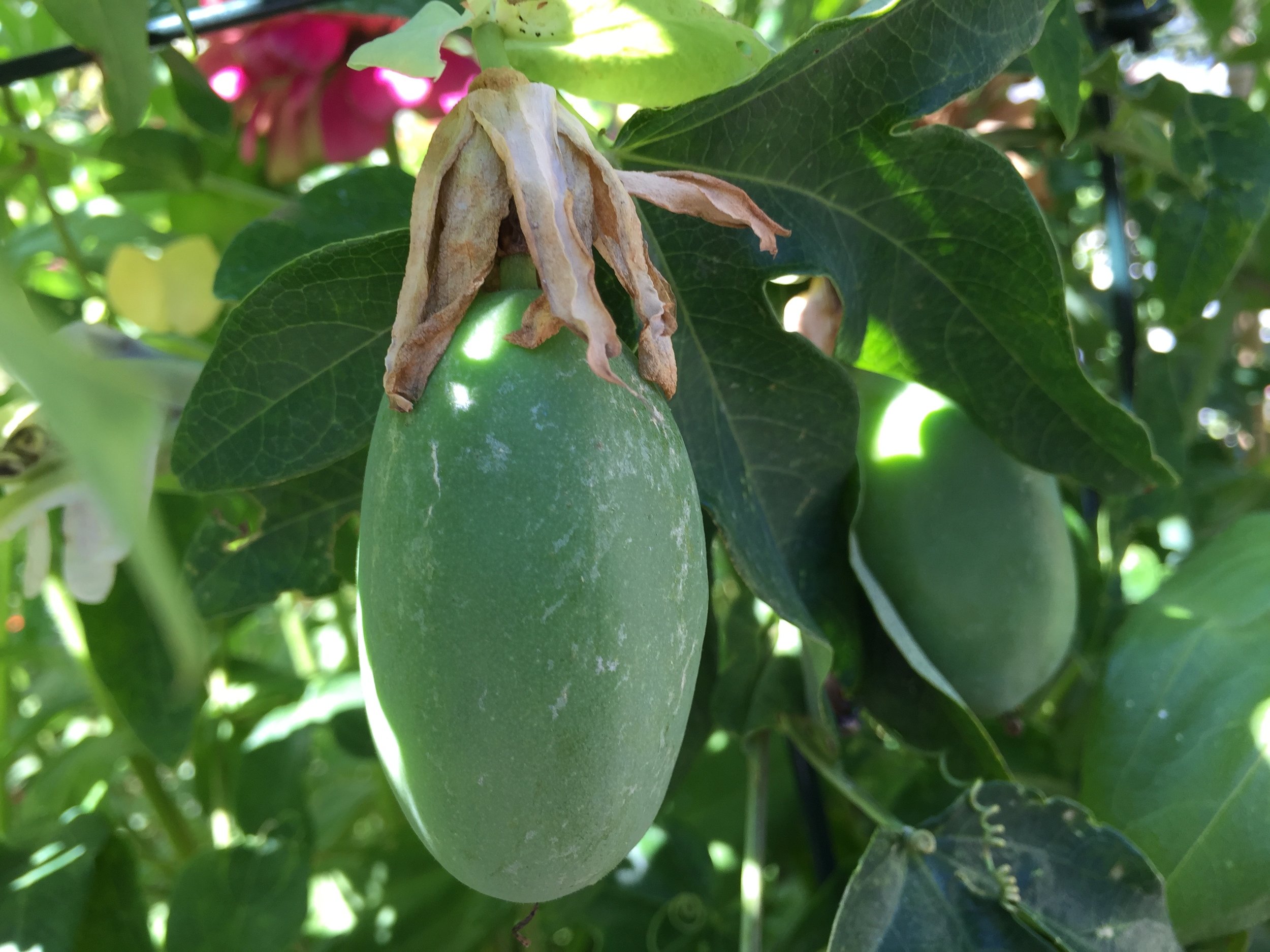
The passionflower vine is now starting to fruit (see top picture), which is an added bonus that I didn’t really expect. I mean I know they fruit but I wasn’t sure if this was a fruiting variety. What a welcome time of year for fruit! I think they are supposed to get sort of hard and purplish brown, and then they are ripe. More on that as it happens. Passionflower jelly, here we come!

I’m not sure I’ve ever seen such a complete life cycle of any insect before, other than my honeybees. I plant specific flowers for insects all the time, such as fennel for anise swallowtails (had the caterpillars and adults, but never seen eggs or chrysalises), and dutchman’s pipevine for pipevine swallowtails (never seen any activity on it or around it, but hatched a chrysalis I brought in from a nearby creek), but this is the first time I’ve seen the whole thing from start to finish. It’s thrilling to watch.

And oh yeah, here’s the October wreath, finally:

IMG_0884.jpg

This one is made out of California Bay Laurel. My mom gave me the idea. She grows several of these trees in her yard, and about once a year I ask her for some branches to dry as I use the leaves for cooking. She brought me a whole sheaf and said they could be used as a wreath AND a food. It was such a great idea that I promptly followed through. This plant smells nice fresh or dry, and will turn a handsome dusty sage color as it starts to lose moisture, so it should look good until November.

Tags seasonal wreath, insects, wildlife, pollinators, ecosystem, fruit garden
Comment

It Might Be Time to Plant Some Trees

October 11, 2018 Elizabeth Boegel
IMG_2159.jpg

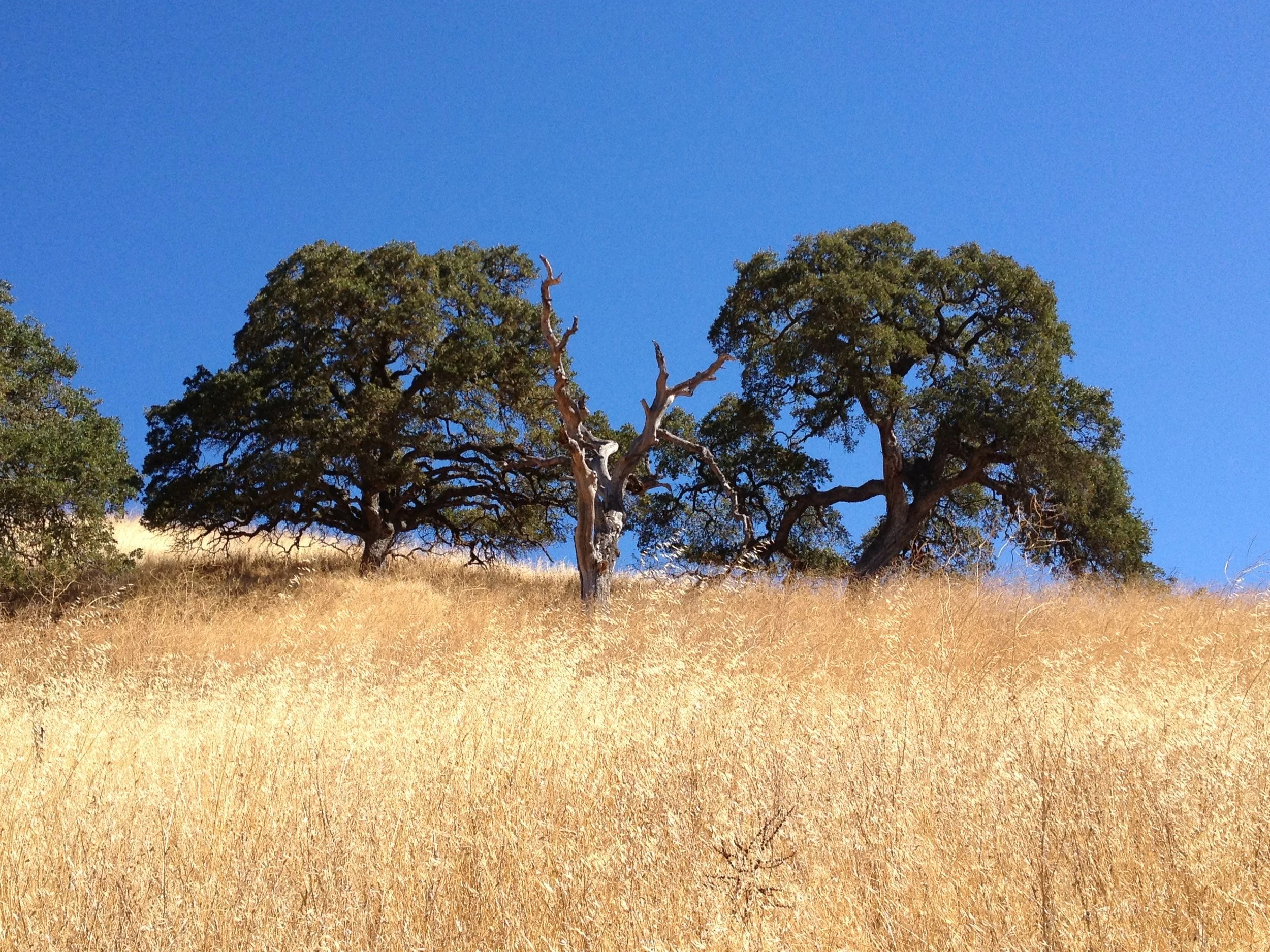
Preparing for today’s blog, I went deep in to our photo history and, Lord, we have some beautiful pictures of trees. Tom and I have never been shy about taking pictures when hiking and it was really great, actually pretty comforting, to look through them. I’ll scatter some throughout this post. Most were taken in the last six years, and all in California.

I’ve been struggling with how to write about the climate issue. I suppose most of you have read the recent paper, put out by the U.N. Intergovernmental Panel on Climate Change. The headline in the Washington Post on October 7th spells it out in stark terms: “The World has just over a decade to get climate change under control, U.N. scientists say.”

I must say this headline, article, and the study it’s based on, has had me more than a little depressed of late. I don’t like to dwell on it, because thinking about what life might be like in ten years if we don’t make the necessary changes makes me feel quite hopeless.

IMG_2220.jpg

But we must think about it, no matter how much we don’t want to. And I want to write about some things we can do - little things, to be sure - because taking action, no matter how small the action is, always makes me feel better no matter the situation, and maybe it does for you, too.

But on the other hand, I’m also very aware that some folks might feel defensive. I don’t want to shame anyone, ever. We all have our limitations. For some of us, they are economical. For others, it’s time. For still others, maybe there is a lack of urgency. But I don’t think we can afford, any longer, to remain apathetic about the issue.

I also don’t want to sound like I have all the answers, either, because I don’t. I’m paralyzed thinking about what my children’s lives will be like in ten years. I’ve been perseverating, really, about the problems; going over and over in my head about possible solutions, and what we can do to help the situation.

I feel our family already does pretty well with regards to conservation, but there are definitely things we can still work on. And I want to share our plan with you here, in the hopes that you are inspired to make your own plan, and maybe share it so we can learn from you, too.

IMG_2718.jpg

The most important thing any of us can do is vote. Tom and I are looking for candidates and policies that continue to push environmental conservation forward, not backward. Adam, who isn’t even quite 17, has already pre-registered to vote when he turns 18. We discuss these issues during our family dinners and aren’t afraid to hash out differing opinions and wrestle with options. Our kids often have a perspective that we find valuable. I personally need to do better research about the issues on our local ballots. I’m good with national or state level issues, but not so ‘woke’ about the local stuff. This is my own personal goal for the next election. We wouldn’t dream of missing the opportunity to make our voices heard and voting is considered a mandatory event in our household. I hope it is in yours, too.

IMG_2986.jpg

I believe we also need to take a hard look at ourselves and our lifestyle and figure out what we can do to make small changes. For instance, our family can eat less meat (conventional beef production is a major producer of greenhouse gases in the form of methane). What meat we do consume should come only from pastured animals (we’re pretty good at this already, but I’ve vowed to be even more of a stickler). Animals out on grass actually improve soil and do not contribute to global warming. It costs more, yes, and it’s not as readily available, both of which will help us to eat less of it.

Conventional dairy farms are also major contributors of greenhouse gases. We’ve made a pledge, in our family, to purchase milk, cream, and butter from Straus Family Creamery, a local company that is committed to reducing methane in the atmosphere. One way they do that is by reusing the methane as fuel for their delivery vehicles. All their milk and cream comes in reusable glass bottles (remember those?) and are returned to the store for a refund of $2. This makes their products more affordable. Also, all their dairy is organic. Their cows aren’t 100% grass-fed, but I do believe they are working towards that goal.

IMG_6694.jpg

I really think it is worth considering big purchases too. One of our cars is electric, and I don’t think we will ever go back to owning a gas car in the future. Electric technology is imperfect to be sure, but California is making it easier and easier to own an electric car with charging stations everywhere, and even though they still use energy (some that comes from coal), there are zero emissions, so that helps in the long run.

IMG_2102.jpg

Another thing we are planning to do this winter is put solar panels on our roof. We cannot afford to purchase them. But we can allow a company to put them on our roof, which feeds power into the grid, and we’ll get 30% off our bill. This is something I am researching now and will give you more details about it as I learn more.

Finally, we might all consider planting a tree or two. Trees are a major plus, sequestering quite a bit of carbon in their root systems and the soil around them. I once did a calculation to figure out the amount of carbon our Valley Oak (Quercus lobata) sequesters each year; 640 pounds. That’s incredible. There are a few guidelines however; not just any tree will do. You want to plant something native to your area, something slow-growing and long-lived. Check with your local extension office to determine which tree is best for your area (and if you live in CA, I can help you with that). A native tree will also benefit your local wildlife. Wildlife in general is going to have a hard time of it as our climate changes in the next few years.

If you can’t squeeze any more trees in the yard (Honestly, I am FULL UP), surely there is a local organization in your city that is planting trees in parks or open spaces. If not, there are organizations dedicated to restoring forests. Those organizations could probably use your donation to continue doing their good work.

IMG_2054.jpg

I’m sure there are many more ideas that YOU have; please share them with us in the comments. Let’s learn together. Let’s have an open forum of ideas and suggestions. No shaming, just moving forward with solutions. Let’s take some action, together.

Tags learning, environment, climate, carbon
2 Comments
← Newer Posts Older Posts →

Subscribe

Sign up to get email when new blog entries are made.

We respect your privacy. We're only going to use this for blog updates.

Thank you! Please check your email for a confirmation notice to complete the subscription process.

Powered by Squarespace