• About
  • Blog
  • Contact
  • Favorites
  • Archive
Menu

Poppy Corners Farm

Street Address
Walnut Creek, California
Phone Number
Walnut Creek, California

Your Custom Text Here

Poppy Corners Farm

  • About
  • Blog
  • Contact
  • Favorites
  • Archive

Weary

October 9, 2018 Elizabeth Boegel

Early October is just a frantic time of year, because every free minute is taken up with the total changeover of the garden. I’m nearly done, now. I’ve only got two beds left to plant - more garlic and more shallots. Then Tom and I will cover them with floating row cover, and we’ll call the winter garden complete.

IMG_0864.jpg


The top of the piano is full of fruit waiting to ripen and/or eat and/or preserve. It actually felt good to chop out the tomato vines, haul bags of compost, and put fresh seeds and starts into the ground.

IMG_0865.jpg

The greenhouse is empty once again, and the green bin full of compostable cups and popsicle stick labels. The last of the peppers have been sliced up and frozen. More sriracha has been made and is fermenting on my kitchen desk. Next to it are some seed potatoes on which I’m waiting for more sprouts. Next to that are seeds drying on paper towels - Delicata squash and Shishito peppers, bought at a roadside farmstand this past weekend (they were delicious and I want to grow them next year in my own garden). Next to that is the jar of beans I’m slowly adding to as the bean vines dry. My desk is full of non-desky things.

Some flowers are in their element - zinnias, tithonia, rudbeckias, cuphea. Others are starting to dry up and produce seeds, such as the native sunflowers I grow in my woodland garden.

IMG_0872.jpg

I started a new herb bed near the blueberries and bought (and planted) some Eryngium planum, common name Sea Holly, which I recently found on a school field trip. I’ve been looking for this plant for ages. It looks like a blue thistle, but it isn’t quite as ouchy as thistle, and the bees adore it.

IMG_0875.jpg

I’m pooped, but the winter garden is in, for the most part. Now the weather can change and we’ll be ready for it. Meanwhile the warm days and cool nights are perfect for all the greens and brassicas and root veg, which will get a good start now and then overwinter beautifully. As soon as the fall rains come, I’ll sow the spring wildflower seeds in the pollinator beds. I’ve already started planting sweet peas.

I haven’t even had time to make the October wreath - I’ll get to that as soon as I’m able - I think I’ll use trimmings from lemon verbena and culinary sage.


Tags vegetable garden, flower garden, preserving, seed saving
Comment

Merritt College Fall Plant Sale THIS WEEKEND

October 3, 2018 Elizabeth Boegel
F18-caRD-FRONT-FINAL.jpg

Maybe you’ve been panicking because you didn’t start enough seeds to see you through the fall produce season? Maybe you’re in the mood to plant a succulent display? Or maybe you want to get some California natives in the ground before the fall rains start (the best time to do so)?

If the answer to any of these questions is yes, you’re in luck! Our Horticulture department sale is this weekend! Our classes have been busy doing all the seeding and planting for you, and we have tons of glorious-looking starts for your edible gardens.

IMG_0808.jpg
IMG_0808.jpg

We have just begun to move everything out to the sale area, and by Saturday these tables will be positively groaning with a huge variety of edibles, for sale at very reasonable prices. You could have a salad every day at dinner until spring. You could have enough greens to scramble with your eggs every morning. You could start that herb garden you’ve been meaning to plant, and have it well-established by spring. I personally seeded at least ten of these flats, and many more were seeded by my classmates. Our nursery manager Nia watched over them and made sure they were watered and fed with organic fertilizer. They’ve been moved several times to get the very best kind of conditions for growing. And they’ve hardened off in our lath house, so you can put them directly in to the ground and then reap the delicious harvests!

Bring cash or your checkbook (sometimes we have a card reader, sometimes not). Be prepared to spend some time at the other booths, such as the one manned by Hida Tools (the best pruners ever). I think there might be live music. There might even be food. It will be festive!

While you’re there, make sure to check out our cool permaculture hill, full of perennial edibles. Get inspired by the planting beds, all of them changed out each semester by a new class. This is a teaching and learning garden, so it’s different than going to a botanical garden or a nursery that sells thousands of plants - it’s interesting to check it out and see what’s happening here, and often more realistic than what you’ll see at a fancy garden. Head down to the meadow area and get a load of the beautiful bay view (this is where I often have my lunch). And all your purchases go to a great cause - our landscape horticulture program. Thanks for supporting us!


Tags vegetable garden, herb garden, flower garden
2 Comments

Harvest/Preserve/Compost/Plant

October 1, 2018 Elizabeth Boegel
IMG_0752.jpg

Twice a year, we find ourselves chanting these words like a mantra. Harvesting happens all season, of course, and so does preserving. But there’s something about both May and October: You’ve simply got to get the next round of plants in, and yet there’s still a bunch of the previous seasons’ produce that needs processing before that can happen. So you harvest what you can, preserve as much as possible, pile up the biomass in your compost, add finished compost to each bed, and get what you need to plant out of the greenhouse. Another circle, another cycle.

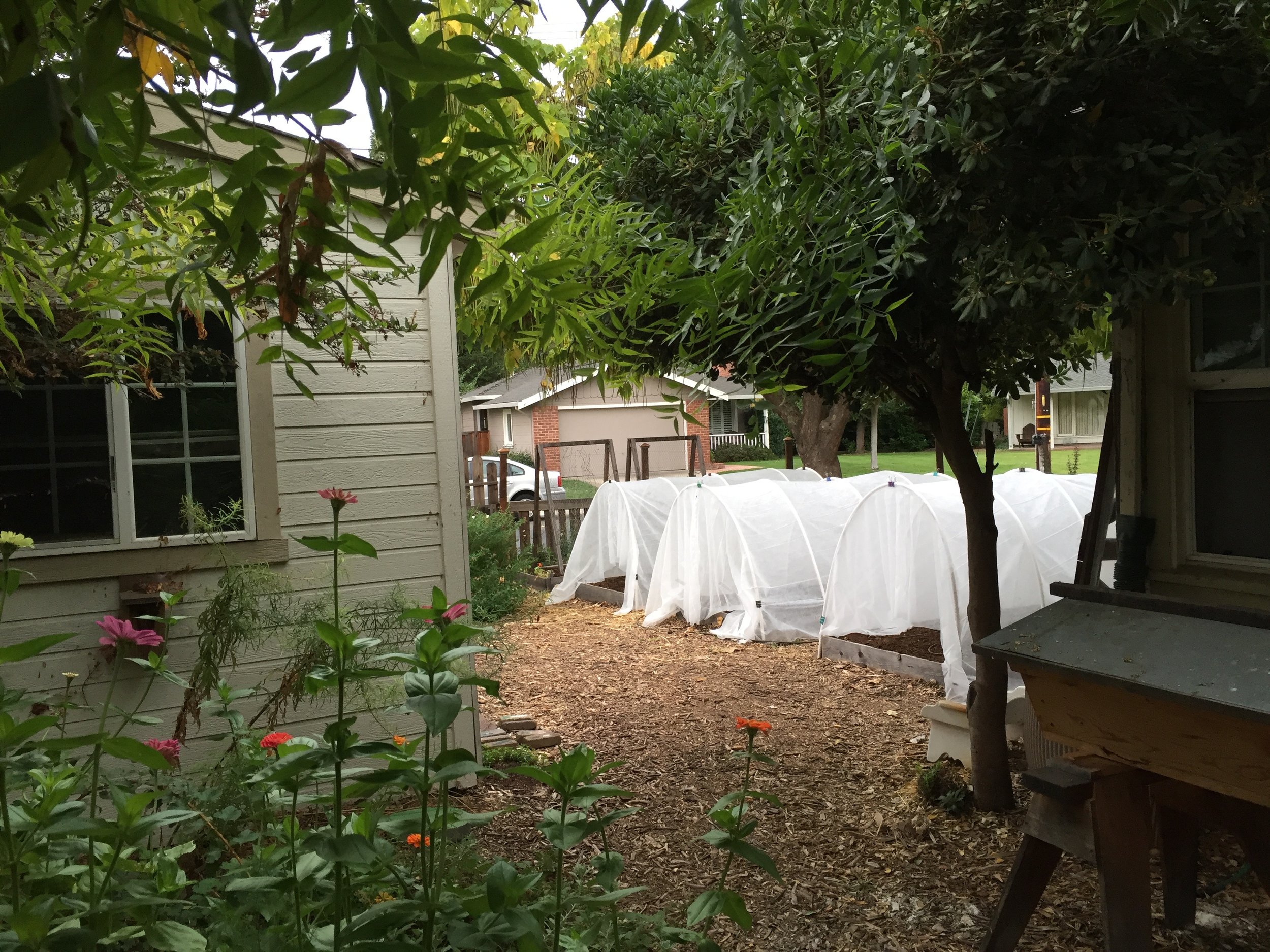
This past weekend, we cleared out watermelons, cantaloupe, cucumbers, pumpkins, and beans, before adding some compost to the beds and planting out kale, cabbage, cauliflower, broccoli, kohlrabi, beets, romaine, and braising greens. PVC hoop houses went on, floating row cover went on. It’s starting to look like autumn for real around here.

Our front porch is covered in pumpkins and looks very festive. The bean plants are on the clothesline drying; I’ve been taking off pods as they get crispy and harvesting the dried beans for soup this winter. I think they are so pretty! The cucumbers were bitter, so the chickens got the lion’s share. And the melons mostly did not have time to ripen, so the chickens got those too.

IMG_0765.jpg

With an eye to the final changeover next weekend, I did the last of my canning, and picked hot peppers for hanging and drying. This week, I’ll continue to pick sweet peppers for freezing, and tomatoes for chunky freezer sauce. Next weekend, those plants must come out to make room for garlic and shallots.

IMG_0766.jpg
IMG_0768.jpg

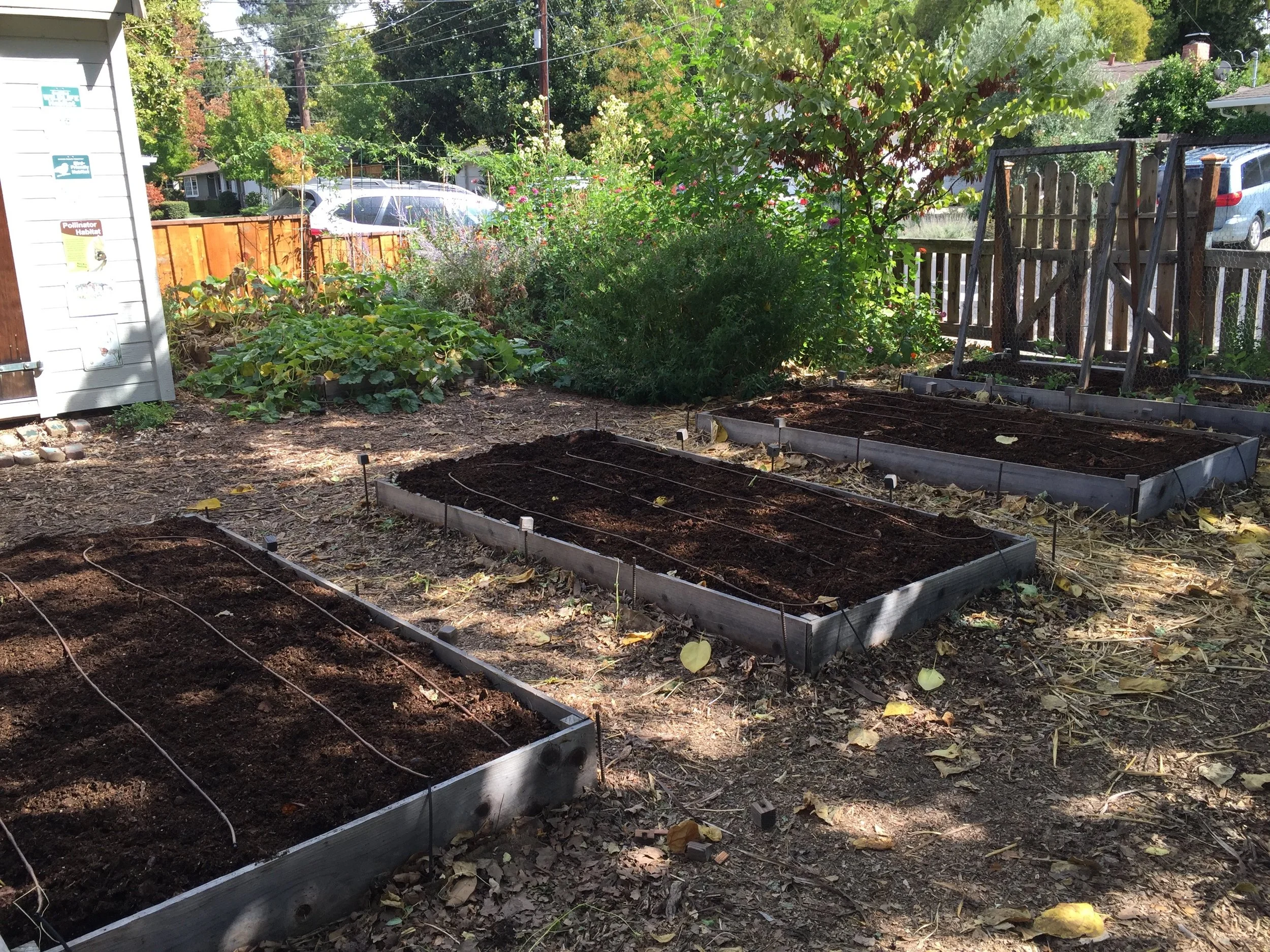
As for compost, I have found it’s very difficult to make any finished compost in the summer here. Without rain, the compost piles don’t stay sufficiently wet enough for decomposition, and using municipal water has its drawbacks; namely, the chloramines used to keep the water safe for drinking, do not off-gas and therefore kill soil life. (This is an issue with our drip system as well, and it’s a frustrating problem that has no cheap or easy solution.) And of course the composting process relies on plentiful microbiology, so killing it with our municipal water defeats the purpose. All this to say, in the fall I have to buy the compost I need to top off all the planting beds.

IMG_0748.jpg

Usually I buy it from American Soil in Richmond or Sloat in Danville. But I have always had reservations about these products. First of all, I have to have them trucked in from long distances (expensive), or do it myself (borrow a truck, make several trips, etc). Secondly, the product isn’t consistent; sometimes it’s very sandy, sometimes very woody. Thirdly, I can’t obtain the provenance of the materials used to make that compost. This is also the biggest problem, as I want to know what I’m putting in my soil, and therefore my food.

Over the years, I have bought a bag or two of compost from a neighbor named Eldon. He’s a landscape maintenance guy, and he makes compost and sells it by the 2.5 cubic foot bag. (He also chops oak and sells firewood.) His compost is made mostly from oak leaves, redwood duff, and horse manure that he gets from a friend in Briones. The finished product is a gorgeous dark color that smells amazing and is full of moisture. So this year, I gave him a call and asked if he could supply me with all I needed for the garden (about 30 bags or the equivalent). And he has happily complied! He brought over half of it this past weekend and will bring half of it next. I’m so satisfied and glad about having this resource. The compost is truly local and Eldon is willing to share his ingredients and processes, so I know what I am getting. Plus, he turned out to be a kindred spirit and we shared seed and plant knowledge and talked gardening for a while, which always makes me feel like what I’m doing is worthwhile.

If you’d like Eldon’s contact info, please write to me, because I know he’d be glad to supply your garden too. That’s his gorgeous product, spread over my beds waiting for planting, in the picture above.

Before you write to me to ask if that compost isn’t too acidic to put on planting beds (there’s a lot of false information out there about the acidity of tree products), the answer is no. Or rather, yes, but it’s definitely not a problem. Compost should be and usually is slightly acidic. Slightly acidic soils harbor much more organic matter and therefore much more soil biology and LIFE. Most annual veg plants actually prefer a slightly acidic soil. Plus, our native soil here in Northern CA is naturally higher on the pH scale, so adding something with a little acid in it is good to balance that. All this to say that using wood products in your compost or planting beds is FINE.

The only exception is spinach - spinach likes a little higher pH to grow optimally. I’ll treat that bed a little differently. Usually I spread the compost on top and plant directly into it - I do not till the compost in to the soil (I do not disturb the soil at all if I don’t have to). But in the spinach bed, I will mix it in, so that I’m not seeding directly into the compost.

How’s your fall/winter garden coming? Are you chanting the same mantra we are? I’d love to know what you’re planting and how you’re prepping.

Tags vegetable garden, compost, soil
Comment

Freezing tomatoes for later canning

September 29, 2018 Elizabeth Boegel
IMG_0744.jpg

We grow mostly indeterminate tomatoes, which means that we get ripe fruit in dribs and drabs, not all at once like we would if we planted mostly determinate plants. This has its benefits, namely, we are not inundated all at once with a big harvest. But the drawback to that is that I rarely have enough tomatoes to do a big batch of canning. I’m always straddling the line between not-ripe-enough and too ripe.

So it was exciting when I learned that you could core tomatoes and freeze them whole, gradually adding to the pile, until you have enough to fulfill whatever canning project you have in mind. I started doing this a month ago. Whenever we had too many ripe tomatoes to eat fresh, I would core them and stick them in a ziploc in the freezer. Today I looked in the freezer and realized we had four huge bags of them, so I knew it was time to process them.

IMG_0747.jpg

First I thawed the tomatoes slightly in the bags, then stuck ‘em in a pot. I had to use Tom’s big jam pot because they wouldn’t fit in anything else. Even then it was a struggle. I kept them on low heat for a while until they started to break down. In the future, I think I will cut them into quarters before freezing them, because I think this stage would go faster in that case. Once they were mushy I turned up the heat and let them simmer for a bit. And that brings me to my second discovery - I’m not sure I would use these frozen tomatoes for anything but sauce or paste. They tend to lose quite a bit of structure in the process of freezing and thawing, so even making crushed tomatoes might be a stretch.

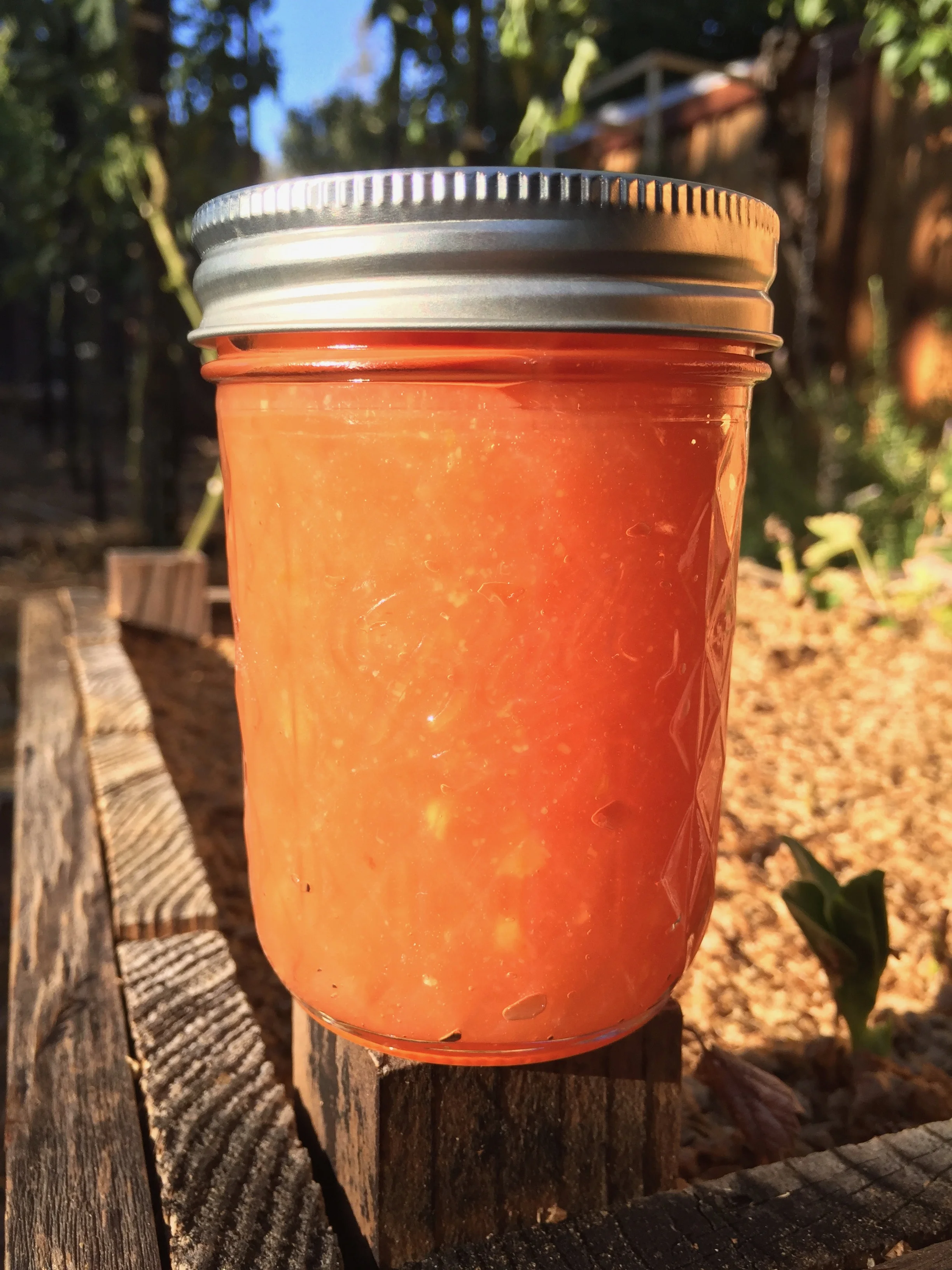
Anyway, when they were the right consistency, I put ‘em through the food mill and went ahead and followed Ball canning book’s instruction for making sauce. It worked perfectly.

Some folks say you can just leave the tomatoes whole in the freezer over the course of the winter and take them out when you want to add them to soup or whatever. I think that would be an interesting experiment. But I can say with certainty that the resulting tomato sauce I’m making today looks and smells exactly the same way it would if I had made it from fresh tomatoes. So this is a nice option if, like me, you have trouble gathering enough tomatoes at once to make a large batch of sauce or paste for canning.

Have any of you ever tried this trick? What did you think of it?

Tags tomatoes, preserving
4 Comments

We Discover Quince

September 24, 2018 Elizabeth Boegel
IMG_0687.jpg

Since we moved to this property fourteen years ago, we’ve wondered what to do with the quince tree that was stubbornly holding up a corner of the landscape, not to mention the rock-hard fruit that ripens on it each fall. The tree itself is more of a bush; multi-trunked and messy, and the spiders seem to love it. The only recipe we ever found for the fruit was jelly - and it required so much sugar to make it palatable - and we so infrequently ate jelly - that we never experimented with it.

image credit: tumblr_lzyuuuaF2C

image credit: tumblr_lzyuuuaF2C

Over the years, I’ve come to appreciate our quince tree for things that have nothing to do with its fruit. For one thing, it requires no irrigation. I suspect that the roots are spread out far enough that it gets the water it needs from nearby flower beds. It’s super nice to have drought-tolerant trees that produce food in the landscape. The chickens use this bushy tree as a shady place on hot summer days, and it offers them protection from hawks flying overhead. Its looks are nothing to speak of, but once a year the tree blooms, and it has the most beautiful blossoms. And no matter how often I hack it back, it regrows, flowers, and fruits the next year.

So the tree has earned its place in our landscape.

But every year, we see this fruit hanging there, and wonder what we could do with it besides throw it in the compost pile. It never gets soft. Quince requires cooking to make it palatable. And I guess we just always preferred fruit that we could pop into our mouths right after picking. But we’ve also become big fans of jam. Tom makes between 5-10 batches of jam every year from our own fruit trees and vines and farmers’ market fruit. We use it on toast and sandwiches of course, but we also stir it into homemade yogurt, or mix it with granola. So this year, we began to look at the quince a little differently.

IMG_0685.jpg

Quince used to be very much in favor as a fruit used for cooking. The tree requires few chill hours (between 200-300), handy for our mild California winters, is self-fertile (meaning you only need one tree), and bees love the blossoms. The fruit has had a bit of a resurgence in popularity due to the permaculture movement and it’s flexibility in both sweet and savory applications. But it takes a different mindset to work with quince.

First of all, it’s very hard to prep. The fruit remains extremely hard, even when ripe, and Tom cut up about 3 pounds of the stuff yesterday and had a very sore hand afterward. So use care when preparing! Then, the fruit needs to be cooked down for hours, with equal parts sugar, which leads to a golden wafting haze of deliciousness coming from the kitchen. At one point I asked Tom, ‘Are you making cookies?’ Quince, while cooking, smells divine, like maybe the edge of clouds. The flesh also turns color from a pale yellow/white, to a golden orange, to a pink orange, and apparently eventually to red. This is because the tannins and pectins (both extremely high in quince) are breaking down and becoming palatable.

IMG_0693.jpg

About halfway through the process, Tom ladled off a jar to use as ‘quince butter,’ and we put that in the fridge. It tastes amazing. I can’t compare it to anything I’ve ever had before. The texture is a little different, a little gritty, but not off-putting. And the flavor more than makes up for it. And isn’t it gorgeous to look at?

Tom continued cooking the rest of the pulp down to make membrillo, a sort of jellied paste. After cooking it for hours, you put it in your dehydrator for another hour, and it comes out like this.

It has the texture of a gummy bear. It’s used in Spanish tapas, sliced thinly and eaten with charcuterie and manchego cheese.

IMG_0698.jpg

Wouldn’t it be funny if the fruit we have been ignoring for all these years turns out to be our favorite? I’m now interested in researching how to use quince in more savory applications.

For more interesting information on quince, please check out this article in Heirloom Gardener magazine, and this one in the online magazine Render. And, if you’ve been enjoying quince and have recipes, please share.

P/S I forgot to mention that you need to puree the pulp sometime in the middle of your cooking process.

P/P/S I just cleaned the kitchen. Cleaning up dried splattered quince pulp is a drawback to this project. I recommend cleaning oven surface and cabinets above DIRECTLY AFTER cooking.

Tags cooking, preserving, fruit garden
Comment
← Newer Posts Older Posts →

Subscribe

Sign up to get email when new blog entries are made.

We respect your privacy. We're only going to use this for blog updates.

Thank you! Please check your email for a confirmation notice to complete the subscription process.

Powered by Squarespace