• About
  • Blog
  • Contact
  • Favorites
  • Archive
Menu

Poppy Corners Farm

Street Address
Walnut Creek, California
Phone Number
Walnut Creek, California

Your Custom Text Here

Poppy Corners Farm

  • About
  • Blog
  • Contact
  • Favorites
  • Archive

Autumn Greenhouse

September 22, 2018 Elizabeth Boegel
IMG_0669.jpg

Here it is Autumn again, and the greenhouse is full to bursting with all kinds of winter veg. Today, I spent the entire day potting up my seedlings: Broccoli, Romanesco, Chiogga beets, Savoy Cabbage, Kale (both frilly and dinosaur), Carrots, Leeks, Parsnips, and Romaine. I also potted up Sorrel, Oregano, and Thyme for the herb garden. I re-seeded everything for a second batch, and also seeded braising greens. I’ll direct sow spinach and also more greens, at the beginning of October. Probably also more carrots and beets.

It’s been in the mid-90’s here, not unusual for September, but the nights are in the 50’s and it feels chilly in the mornings. I don’t know about you, but I definitely feel the change coming. The tomatoes and peppers are still producing but showing signs of late blight. The cucumbers I harvested yesterday tasted slightly bitter. The beans are drying and almost ready to pick for winter storage. The winter squashes are coloring up. The ripe melons fall off the vine and scent the air with their musky smell. Shelling peas and fava beans are starting to sprout and grow taller. It’s time to pick the last of the basil and make a bunch of pesto for the freezer.

How is your summer-to-fall garden transition coming? What have you planted already, and what is yet to go in? What have you decided to forgo this year? I thought we’d take a year off of Swiss Chard. I’m slightly regretting that decision. Oh well, there’s still time.

Tags vegetable garden, herb garden, seed starting
Comment

Goodbye, old friend

September 19, 2018 Elizabeth Boegel
IMG_0648.jpg

Our beloved cat Tasha died yesterday. She was older, and had a lot of health problems that were getting worse, and she was losing weight rapidly. Then, she started sneezing blood, and the vet and I decided it was time.

Tasha was a great pet, though not overly affectionate. Love had to be on her terms, which sounds very feline, I suppose. When she was younger, she used to climb up on the fence rail and howl. The neighbors called her “the Foreigner,” as she seemed to be keening for the old country. But as she grew older, she spent less and less time outdoors, preferring to snore away the day on our bed. Every so often, she’d make her way out to the fountain and lick the water from its sides, along with the birds and the honeybees.

She had a good, long life. We are very glad she was a part of ours for a while.

I use the garden as my sounding board, it seems, whether I’m sad or happy, so here’s some pictures I took this morning. We’re enjoying the last of the summer produce; soon it will be time to transfer over to the winter garden.

IMG_0655.jpg
IMG_0657.jpg
IMG_0664.jpg
IMG_0662.jpg
IMG_0650.jpg


Tags vegetable garden, fruit garden, herb garden
2 Comments

Pollinator Paradise

September 16, 2018 Elizabeth Boegel
Zinnia (all kinds), aster, hollyhock, cosmos, tithonia, fennel, gailliardia, passionflower, native sunflower, nicotiana, cuphea, dahlia, Bishop’s Lace, four o’clocks, and salvia

Zinnia (all kinds), aster, hollyhock, cosmos, tithonia, fennel, gailliardia, passionflower, native sunflower, nicotiana, cuphea, dahlia, Bishop’s Lace, four o’clocks, and salvia

Let me take you into the garden and show you an area of which I am quite proud: A pollinator garden in a south-facing location. I have pollinator beds all over my garden, and each seems to have a ‘moment.’ Well, right now, this one is having that moment.

Let me be absolutely clear: I do not have any particular ‘magic’ that makes a space turn out like this. Anyone can make this happen. There are a few perennials here (both natives and exotics), and a lot of annuals (both natives and exotics). I add perennials whenever I notice a place with a large hole, and the annuals are added four times a year by seed. Mixed with compost, they are scattered in any open spots. Each season gets different seeds. For instance, in November, I plan to scatter all the California native seeds like poppies and clarkias and phacelia and tidy tips. Then those will bloom in early spring. Doing it this way, I have almost continual bloom. The perennials fill in where the annuals cannot. This whole area gets regular irrigation, but that’s about the only input other than the compost that is added with seeds or plants. A couple of times a year, I go in and cut down a bunch of dried up plants, and it looks a little bare for a few weeks. Then the new flowers have a chance to take over.

Why do I go to this trouble? If you can even call it ‘trouble,’ it’s hardly anything planned (I just know that everything needs to handle full sun), and I’m never sure what’s it’s going to look like. Well, for one, it’s beautiful, and that gives me joy. I can cut bouquets as gifts or for my own house any time of year. There’s a living root in the ground at all times, which improves the soil. But the biggest reason is this: It’s a great diversity of plants, therefore a great diversity of forage, for the pollinators.

IMG_0568.jpg

Beekeepers in California are inundated this time of year with warnings about ‘summer and fall dearth,’ or, a scarcity of pollen and nectar. Due to the fact we don’t have rain for many months (usually May-November), we can expect most native landscapes to look dry and bare right about now (summer is our dormant period, not winter); and most landscaped yards have very little that insects can use (grass, oleanders, mulberry trees, crepe myrtles - they do nothing for pollinators). And sure enough, in the September issue of my beekeeping association’s newsletter, there was a mention that we should begin feeding our bees pollen patties. Likewise, in the UCANR publication “Beekeeping in California,” there is this paragraph: “If they are going to build up quickly the next spring, colonies should go into winter with large, well-fed populations of young fat bees. In many locations in California there is not enough pollen to sustain adequate brood rearing through August and September and colonies should be fed pollen, pollen supplement, or a substitute.”

I have to say this bothers me.

IMG_0562.jpg

When I started out with my first hive, I vowed that I would do as much as I could to provide for my bees. Would you adopt a new puppy, only to let him find what he could? Would you buy some chickens without also buying some feed? Why should it be any different with a colony of honeybees? Shouldn’t we plan to have as much forage as possible for them, as well as an adequate, year-round drinking source? It’s one thing for a colony of bees to establish themselves in an area with plenty of food, but it’s another to bring them into a bare yard and expect them to manage with whatever they can find. Most beekeepers feed their bees sugar water and/or strore-bought pollen patties during times of dearth to keep them alive and happy, and this works fine. It’s certainly better than letting them starve. But what nutrients are missing in those man-made foods? Wouldn’t it be better to have a large diversity of different flowers available for them, for as much of the year as possible?

IMG_0579.jpg

Tom and I just stood out here in this pollinator patch today, watching and listening. This garden is alive. I think of the spiders who feed here, and the other predatory insects like mantids. Lizards! Birds! This is a healthy ecosystem and it’s not just about my honeybees.

My fellow beekeepers who start hives with no plan to feed them (other than making sugar water or buying pollen patties) are really missing an opportunity. I want to encourage them, and any landowner, or anyone who even rents property, to invest in feeding the ecosystems naturally. Many of us feel helpless in the face of habitat loss for things like the monarch butterfly. Well, here’s something we can do! Here’s how we can combat just a tiny bit of climate change. Here’s how we can help. Plant flowers. It is that simple.

P/S If you’d like a list of perennial plants and herbs I have planted at Poppy Corners, I can send you my plant inventory. This has common names, Latin names, and bloom times. I very much relay on perennials to get me from January through December, annuals are just icing. For annuals, I tend to plant California natives for early spring bloom; sunflowers for early summer bloom; cosmos, nasturtium, and zinnia for late summer blooms; and tithonia for fall bloom. I also rely on my annual vegetable plants to really help feed pollinators. Anything in the cucurbit family (cucumber, squash, melon) is a hit, as well as pepper flowers. Fruit trees can help with those early spring months. Ornamental trees native to your area will also help with different times of year. For winter, I rely on native perennials in our area, though winter bloom is nearly impossible in places with lots of snow.


Tags pollinators, bees, flower garden, climate, insects, wildlife, beekeeping
2 Comments

Emerisa Gardens/ Heirloom Expo

September 14, 2018 Elizabeth Boegel
IMG_0506.jpg

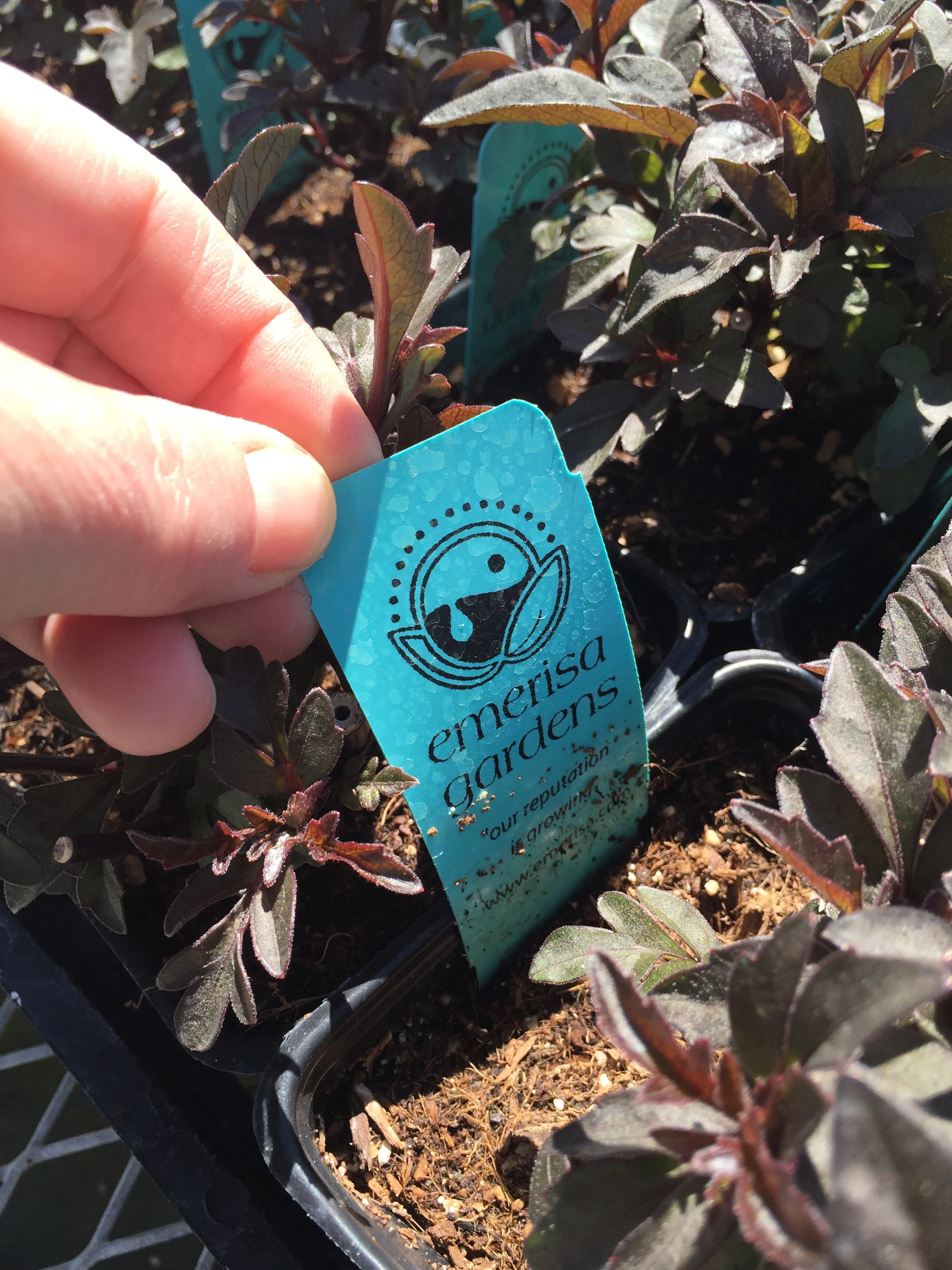
Yesterday I went on a field trip with my Nursery Management class. We drove up to Santa Rosa in Sonoma county. First, we went to visit a large production nursery called Emerisa Gardens. I have bought their plants at my local nurseries hundreds of times: perhaps you’ve seen this logo?

IMG_0511.jpg

Emerisa has 15 acres of land in a beautiful spot in the county. It is family owned, having been started by the patriarch many years ago and now run by his children, who gave us a wonderful tour. They employ about 30 folks, both full and part time, and pride themselves on the family feel of the group.


In the first greenhouse. My teacher, Lawrence Lee, is on the right in the hat and glasses. He’s worked at many botanical gardens and large nurseries across the world, but is now a full-time teacher. Many of my classes have been with him and I love to learn from him. He knows so much about classic and production horticulture, and about plants from other countries. He seems to know everyone in the business and managed to get this tour for us with the owners.

IMG_0512.jpg

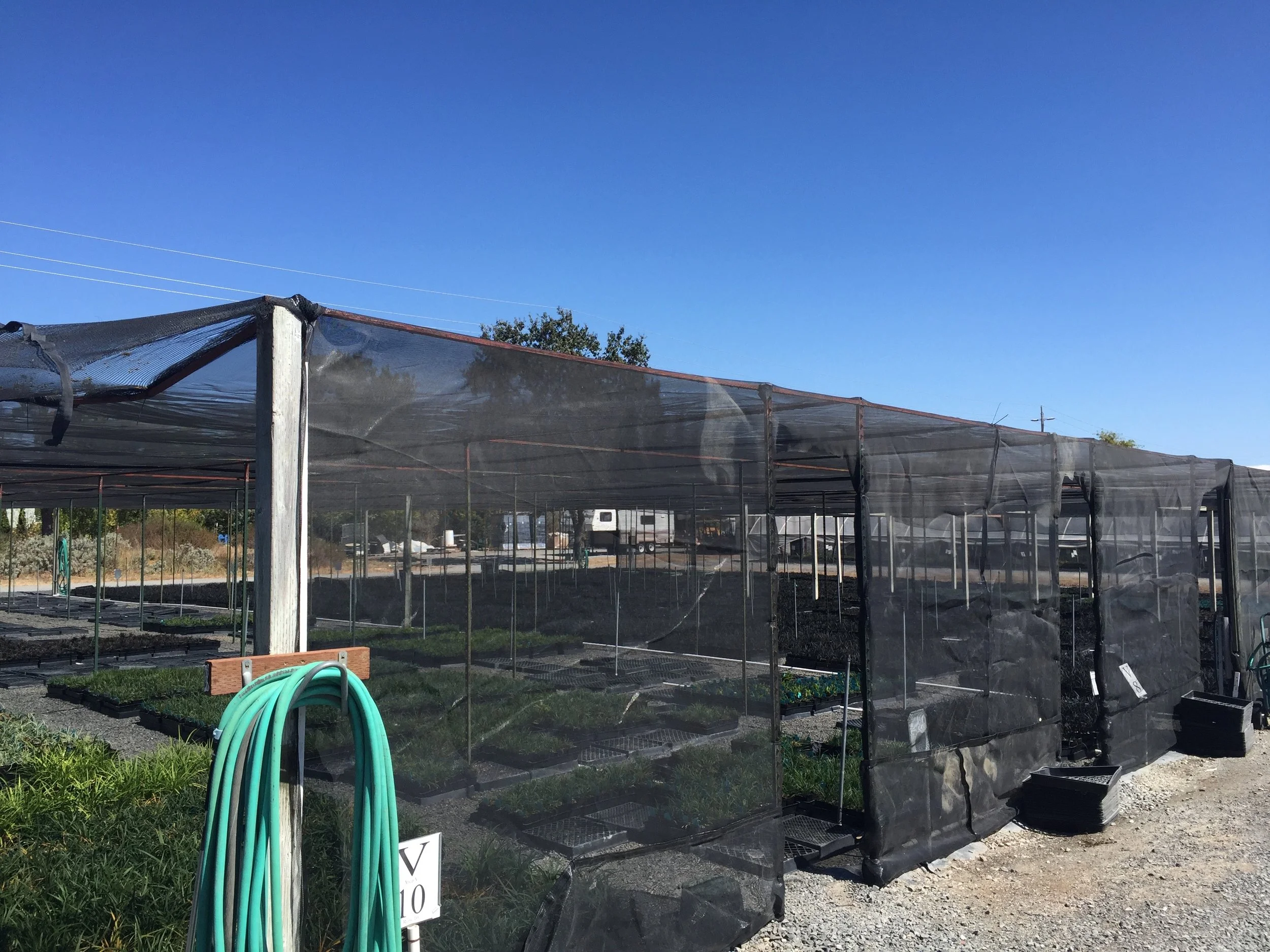
Emerisa has most of their property laid out to greenhouses (only one heated), hoop houses, shade houses, and propagation greenhouses. We talked a lot about microclimates within a property, and how best to keep certain plants in the right zone. Emerisa does a lot of hand watering instead of sprinkling things on a schedule, to make sure the right irrigation is getting to the right plants. All in all, it seemed like a very hands-on kind of operation for such a large nursery.

IMG_0513.jpg

The owners explained to us about how hard they are working to add hedgerows to the edges of the buildings. They very much want to reduce any kind of pesticide use, organic or otherwise, by increasing the amount of beneficials in these hedgerows. They also act as a demonstration garden of sorts, and unfortunately I didn’t get a picture of the most beautiful gardens (guess I was too busy listening!) - they were incredible, and full of life.

It really struck me how much work it takes to keep thousands of plants looking good, for sale at any moment. If a smaller nursery calls up and says, “I need 100 lavender plants, stat,” Emerisa needs to be able to provide that the next day. So much is up to the whims of the customers, or what’s trendy, or what the latest gardening magazine has written about. Finding new varieties is crucial, and staying on top of the marketing side of things is very important.

In the propagation area, we learned that the owners are trying hard to move towards a model where they propagate all their own plants. At the moment, about 50% of their cuttings come from other places (one thing you learn quite quickly from any of these places is that there is always another level of growing - someone has to propagate from seed, someone propagates from cuttings, some sell directly to customers, some sell to larger nurseries like this one). It was fun to see all the experiments they had going on in this building. The amount of variety this nursery has is remarkable.

I was quite taken with all the different dahlias they had growing and ended up buying four of them. This is the ‘Mystic’ series that has become popular lately. I have one of them already and I love the dark foliage contrasted with the striking blooms. The bees also love them, because they are single blossoms.

The nursery allowed us all to buy plants on Lawrence’s account, and so I brought home 12 (natch) - the aforementioned dahlias, some Bidens, some Agastache, and some oddities that were growing in the demonstration beds that were covered with pollinators. It was such a wonderful visit and I learned so much about what it takes to own a nursery!

Next, we traveled across town to the fairgrounds and spent a few hours at the National Heirloom Expo, which is organized and run by Baker Creek Seed Company. The expo goes on for three days, and there are three stages with speakers from all over the world, speaking on things like food justice, no-till farming, livestock, and soils. There are vendors, too, with all kinds of goods ranging from fermenting supplies (our local FarmCurious was in the house) to sheep’s wool for knitting to chickens for sale to seed suppliers to tool makers. It was smaller than I expected, but I also really enjoyed it.

Contemplative paths, made of gourds

Contemplative paths, made of gourds

Interesting apps

Interesting apps

plant vendors

plant vendors

lots of seed vendors. This one, Hudson Valley Seed Co, has artists create the art for their seed packs. They were incredibly beautiful.

lots of seed vendors. This one, Hudson Valley Seed Co, has artists create the art for their seed packs. They were incredibly beautiful.

Live music, mostly fiddling. Lots of food. I bought fresh limeade sweetened with agave, some organic fruity iced tea, and a coconut ice cream that was heavenly.

Live music, mostly fiddling. Lots of food. I bought fresh limeade sweetened with agave, some organic fruity iced tea, and a coconut ice cream that was heavenly.

more dahlias

more dahlias

Lectures. I only got to see this one. I admire Singing Frogs Farm and wanted to hear more about it; they did not disappoint.

Lectures. I only got to see this one. I admire Singing Frogs Farm and wanted to hear more about it; they did not disappoint.

Poultry breeds, sheep breeds

Poultry breeds, sheep breeds

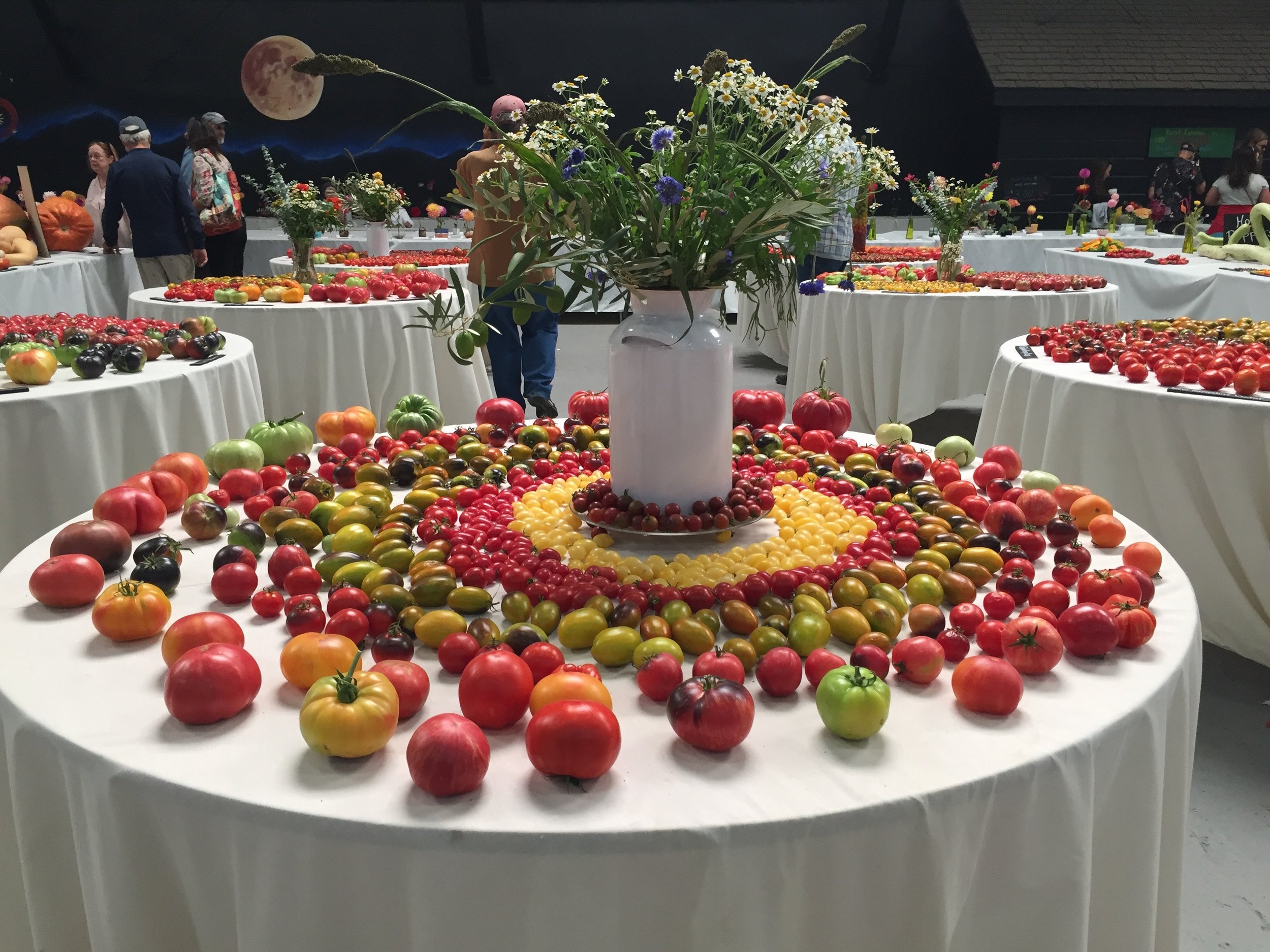
The highlight, in my opinion: The Hall of Heirlooms, where every kind of fruit and vegetable heirloom was laid out and labeled, and could be properly admired

The highlight, in my opinion: The Hall of Heirlooms, where every kind of fruit and vegetable heirloom was laid out and labeled, and could be properly admired

tomato art

tomato art

the famous squash tower

the famous squash tower

IMG_0542.jpg
IMG_0540.jpg
This is Brad Gates of Wild Boar Farms. He is one of the best tomato breeders we have right now. He makes amazing varieties. I’ve grown only one of his - the Pink Berkeley Tie Dye - and I ended up buying four more kinds to try next year.

This is Brad Gates of Wild Boar Farms. He is one of the best tomato breeders we have right now. He makes amazing varieties. I’ve grown only one of his - the Pink Berkeley Tie Dye - and I ended up buying four more kinds to try next year.

IMG_0543.jpg

And the best thing I saw all day. I asked this kind person if I could take a picture of her shirt. I absolutely adored it.


And that says everything about Sonoma that you need to know!

However, if you can make it to next year’s expo, I’d highly recommend it. I don’t think you need to come all three days - just pick the day with the most speakers you want to hear, and come on out.

Tags learning, homesteading, flower garden, tomatoes, vegetable garden
Comment

Four O'Clocks

September 11, 2018 Elizabeth Boegel
IMG_0368.jpg

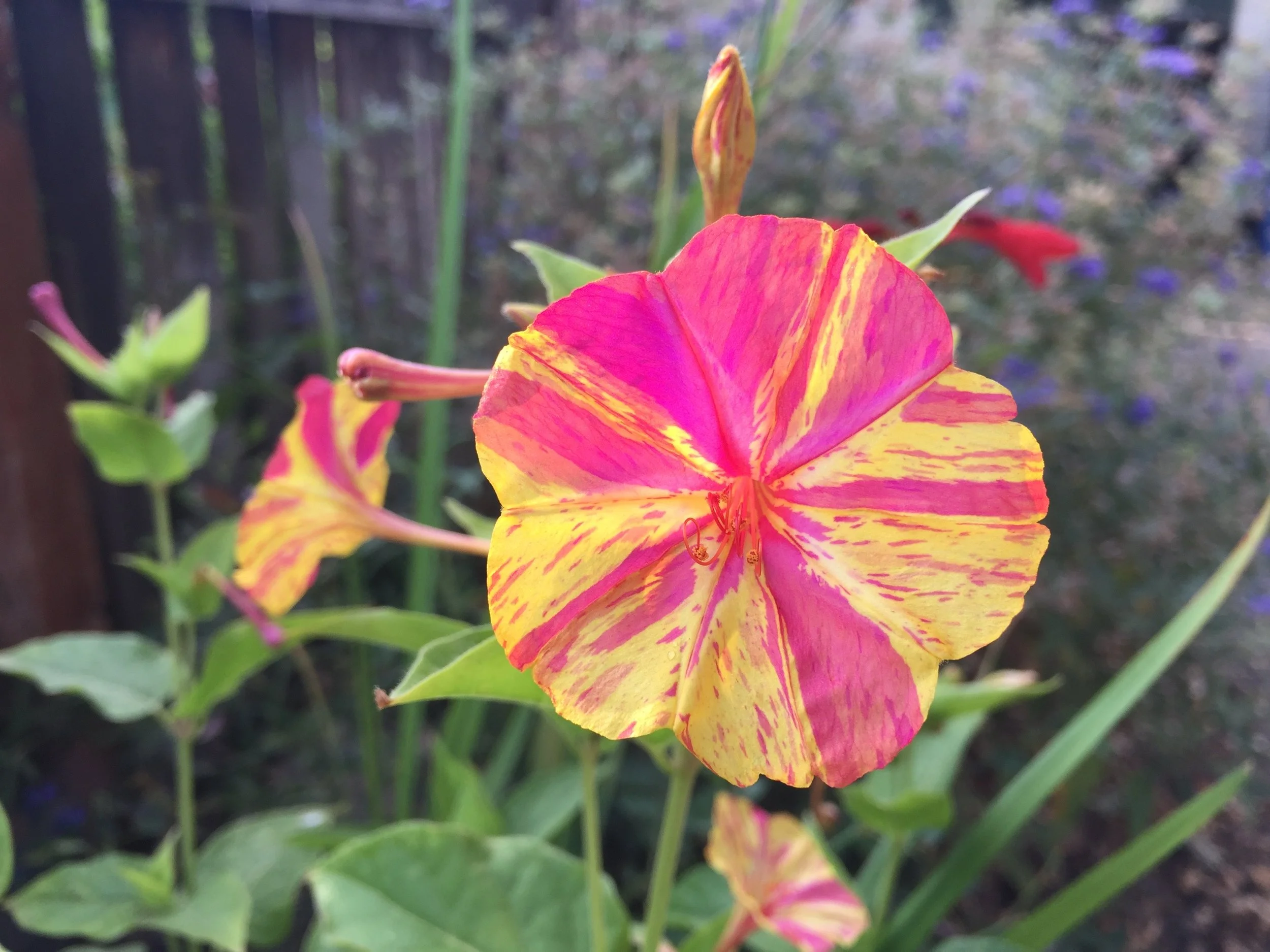
I’ve got a star in the garden right now, and it’s Mirabilis jalapa, otherwise known as Four O’Clocks (or ‘Marvel of Peru’). These cheerful flowers hailing from tropical South America start to open every day at - you guessed it - 4 pm, just when a lot of other flowers are looking a little peaked in the heat of the day. They stay open all night and close before the sun reaches its zenith.

IMG_0258.jpg

A lot has been written on the way these flowers smell - and I must say, I haven’t noticed it. But then I’m usually asleep by 10, so I’m not out taking nighttime strolls in the garden. The scent of these flowers, and the fact that they are mostly nocturnal, should tell you something about the insects who like to visit them.

Four O’Clocks are pollinated mainly by hawk and sphinx moths (family Sphingidae). These are mainly found in the tropics, but also can be found in more temperate regions, especially somewhere like warm Walnut Creek. I’ve only ever seen one of these moths and it was years ago, so it might be a good idea to set up a night camera and see if I can capture them at work. In the daytime, I often see hummingbirds on these flowers, but almost never bees.

Four O’Clocks are easy to start from seed. I just ordered them from Renee’s Garden and scattered them in the pollinator beds. It takes them a year or two to get ‘stuck in,’ and from then on, you’ll have a lovely display that will grow each year, as these produce a ton of seed. They also grow via tuberous roots that can be invasive, so you’ll want to watch them. The roots can survive very cold temperatures, as well, and reliably bloom again in the summer.

IMG_0366.jpg
IMG_0367.jpg


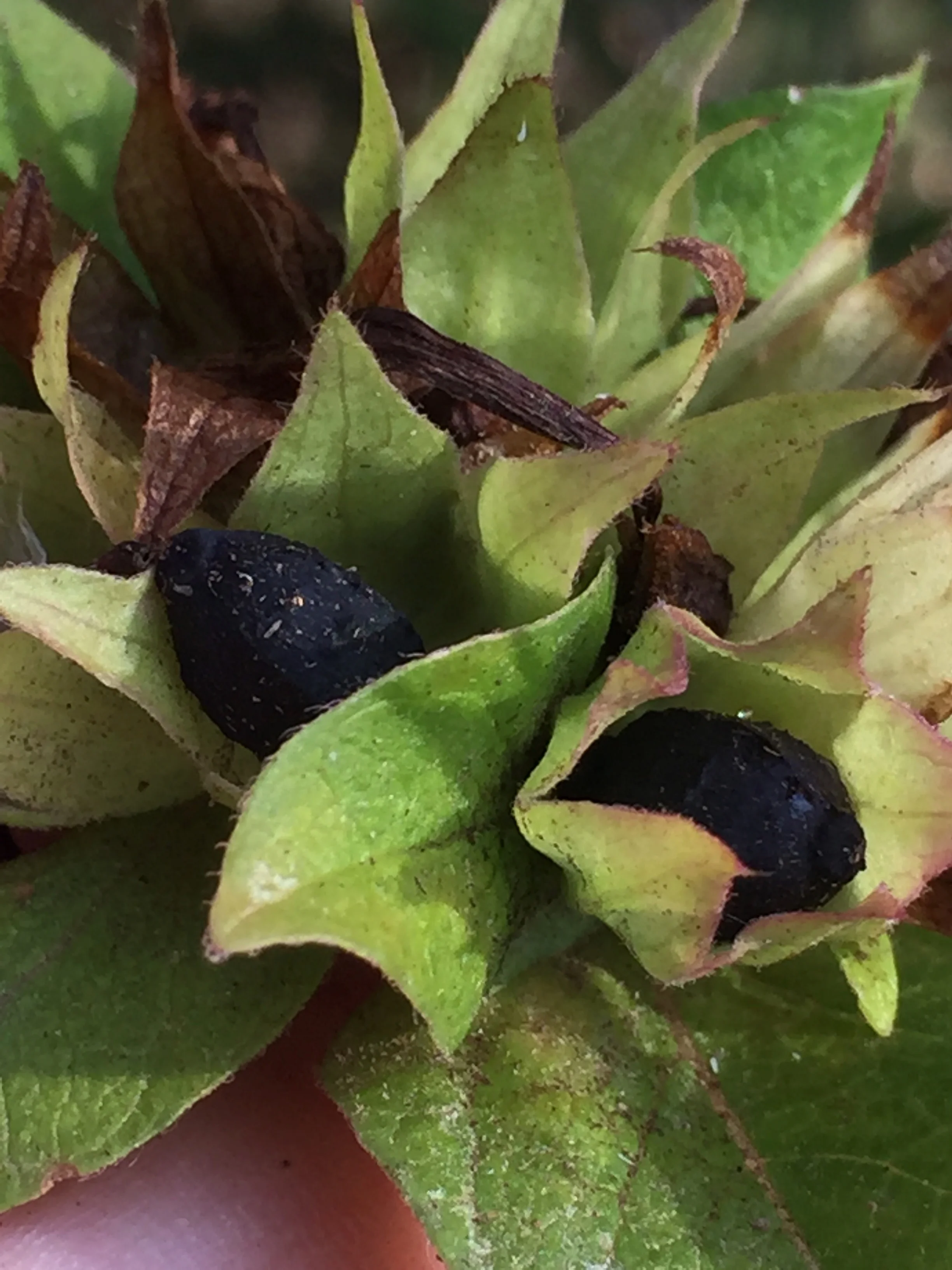
The seeds are big and look like mini grenades.

This plant is apparently toxic, so don’t eat it. It survives long stretches without any irrigation, and does prefer a lot of sun, but I have them in places that are getting regular irrigation and half-day sun, and they look great. So it seems to me that they are easily adaptable.

IMG_0363.jpg


At this point, all my different patches are sort of cross-pollinating and I’m getting some interesting mixes of colors, which is a hallmark of this flower. It’s fun to see what will come up next!

Tags flower garden
1 Comment
← Newer Posts Older Posts →

Subscribe

Sign up to get email when new blog entries are made.

We respect your privacy. We're only going to use this for blog updates.

Thank you! Please check your email for a confirmation notice to complete the subscription process.

Powered by Squarespace