• About
  • Blog
  • Contact
  • Favorites
  • Archive
Menu

Poppy Corners Farm

Street Address
Walnut Creek, California
Phone Number
Walnut Creek, California

Your Custom Text Here

Poppy Corners Farm

  • About
  • Blog
  • Contact
  • Favorites
  • Archive

Is the Honey You're Buying Actually Honey?

January 10, 2018 Elizabeth Boegel
IMG_3059.jpg

I noticed yesterday that Netflix added a new documentary series to their stable; it's called "Rotten" and is all about fraud in our food supply chain. There are episodes about chickens, milk, and peanuts, but I have only watched the first one so far, which is about honey.

The problem of adulterated honey came to my attention a few years ago, when I saw a news piece about it. The demand for honey has increased substantially in the last few years, as many folks feel it is a healthier alternative to sugar. I'm not sure I can speak to that claim, but it is true that raw, unfiltered, unheated honey has lots of great nutrients and pollen included. This same honey can also be used on wounds, as it is a natural antibiotic and antifungal. (Many folks feel that eating pure raw honey can help with allergies. My feeling on that is that most of the pollen folks are allergic to are from trees, most of which are wind-pollinated, so don't end up in honey. But it certainly can't hurt.)

IMG_9926.jpg

So, the demand has increased tremendously, but the supply has decreased steadily in that time, due to all of the problems honeybees are having. Some of these problems come straight from us and our decimation of the environment, and some of these problems are related to new pests and diseases. Regardless of the cause, honeybee colonies are failing (still) at a rate of 50% per year. 

Which begs the question: Just where is all our honey coming from?

Well, the greatest exporter of honey is China, with Germany coming in second. It became clear to our country early on that China was adulterating their honey, cutting it with corn syrup to increase bulk (classic drug-dealer move). Once we realized that, tests were developed to determine if a product was tainted with fillers, and then China found a way around that, by using rice syrup, which can't be detected. At that point we banned honey coming in from China, but they found a way around that, by sending it through other countries. At the present time a huge amount of honey is coming in from Asia and Europe, a lot of it originally from China. 

13335749.jpeg

Some of the honey is diluted with other plant syrups, but it's also often contaminated with hormones and antibiotics that are not allowed here in the United States, some of them toxic in large doses. Scientists are getting smarter and smarter with their detection of these substances, but a good amount of it still gets through, and it ends up on our grocery store shelves.

Maybe this doesn't concern you, and if that's the case, you can stop reading right now and continue to enjoy your fake honey. However it does concern me. For one thing, I want to know that the food I'm eating is labeled correctly (seems a little thing, but more and more I'm realizing that it's not). But an even greater problem is that the small, local honey bee farmers are being priced out, because people think honey is honey is honey. So they buy the cheap stuff.

IMG_9937.jpg

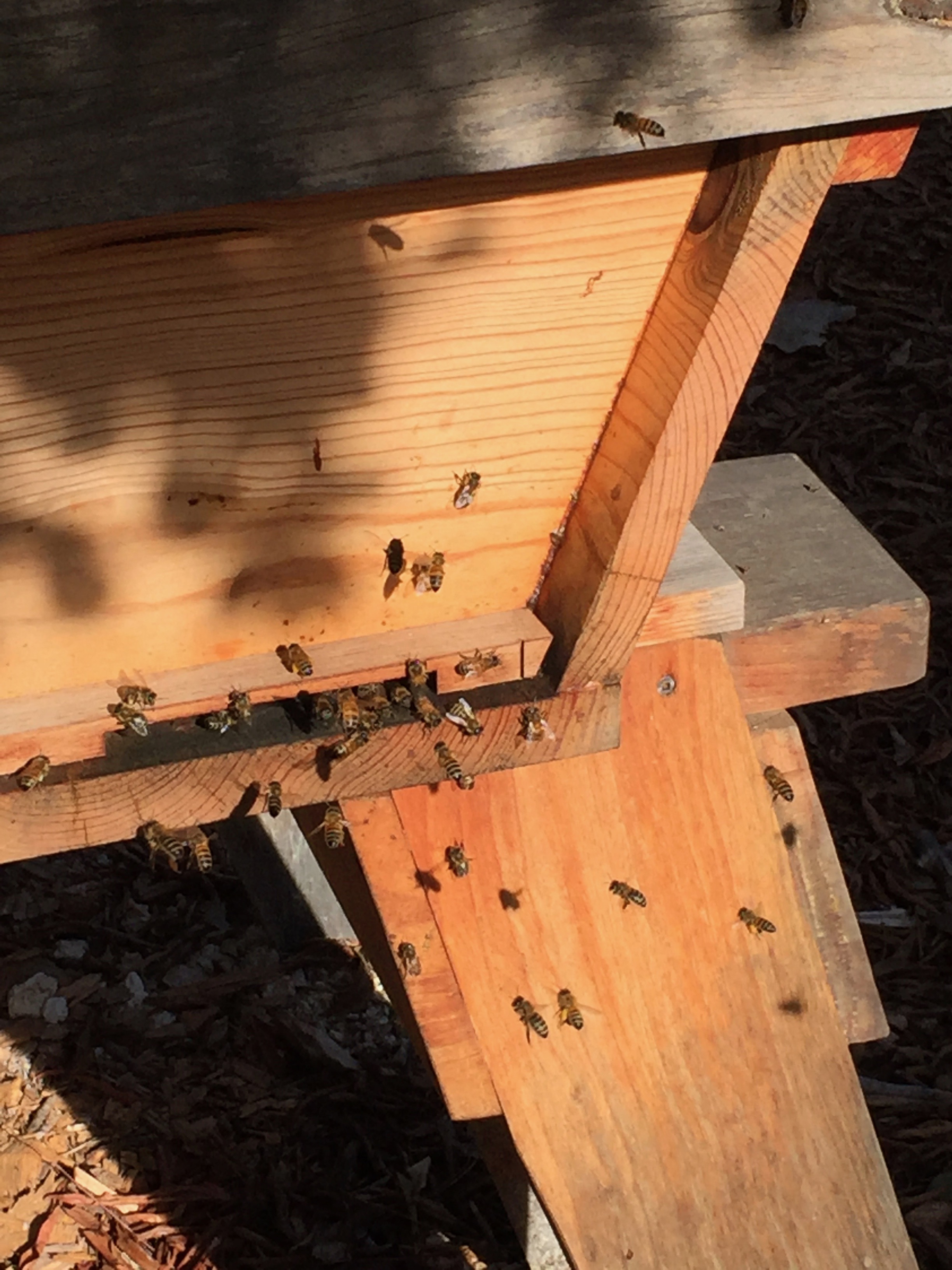
Your small, local producer knows nearly every plant from which his or her bees are feeding (a large area, but we know our neighborhoods, and most of us provide gardens nearby from which our bees mainly forage). They are completely hands-on, checking hives daily. They extract and bottle the honey by hand, no small job. If they label it raw and unfiltered, that means nothing has been done to it, except for screening out a few dead bees and a stray wing or two. If it's labeled organic, that means that farmer had control of 3 -5 square miles of territory, as the bees can forage that distance if they need to. That's a huge area, if you consider a mile is 640 acres. It's not easy to find organic honey, simply because most farmers can't afford that kind of land, especially in California. Your neighborhood beekeeper probably won't be able to say he or she is organic, but that's ok - in this case it's more important to know that you're buying real honey rather than the fake stuff.

Buying local means that your average jar of honey at the farmer's market is going to cost twice as much, if not three times as much, as that bear-shaped container in your grocery store. And most of us don't like to pay that much for food. We have become accustomed to thinking that our food should be cheap. I've said it before, with regards to eggs and meat, and I'll say it again: Your food should not be cheap. Stop buying $4 cups of coffee and new iPhones, and instead put that money into pastured, organic food. Support your local farmers. Budget more for the stuff you put in your mouth, because it really matters, not only to your health and your conscience, but also to keeping the little guys in business. 

We personally don't sell our extra honey (and we do get more than we need from just one hive), because we like to give it as gifts to our neighbors, teachers, family, and friends. I know they are all grateful for those small gifts, but I often wonder if they know how precious this stuff really is, considering that what is in our food supply chain is so inferior. The honey that comes from local hives tastes different depending on the season and what the bees were foraging on. It's different colors and has different scents. It has just as much terroir as a bottle of good wine. I'm sure those who drink milk from their family cow feel quite the same way about that milk. These things need to be better appreciated. You deserve to drink good wine, right? You deserve just as fully to eat good honey. 

So buy local. Find your farmers market. Get to know your neighborhood beekeeper. Buy from small local groceries. Ask questions. Know the providence of your food.

 

Tags bees, beekeeping, honey, rant, learning, food economics
Comment

When is the Best Time to Replace Fruit Trees?

January 7, 2018 Elizabeth Boegel

When we moved in to this house thirteen years ago, there were three fruit trees already in the landscape: An apple, a peach, and a quince. There's no telling when these trees were planted, but it's safe to say that they are at least 20 years old, and probably older - this house was a rental property for decades before we bought it, and the owner was, by all accounts, very hands-off. So I'm guessing these trees are quite old. The quince has resisted all attempts to remove it, and just keeps coming back. Now it has earned its space by providing cover for the chickens in their run and I don't intend to remove it, no matter if it fruits or not. (I never know what to do with the fruits anyway.)

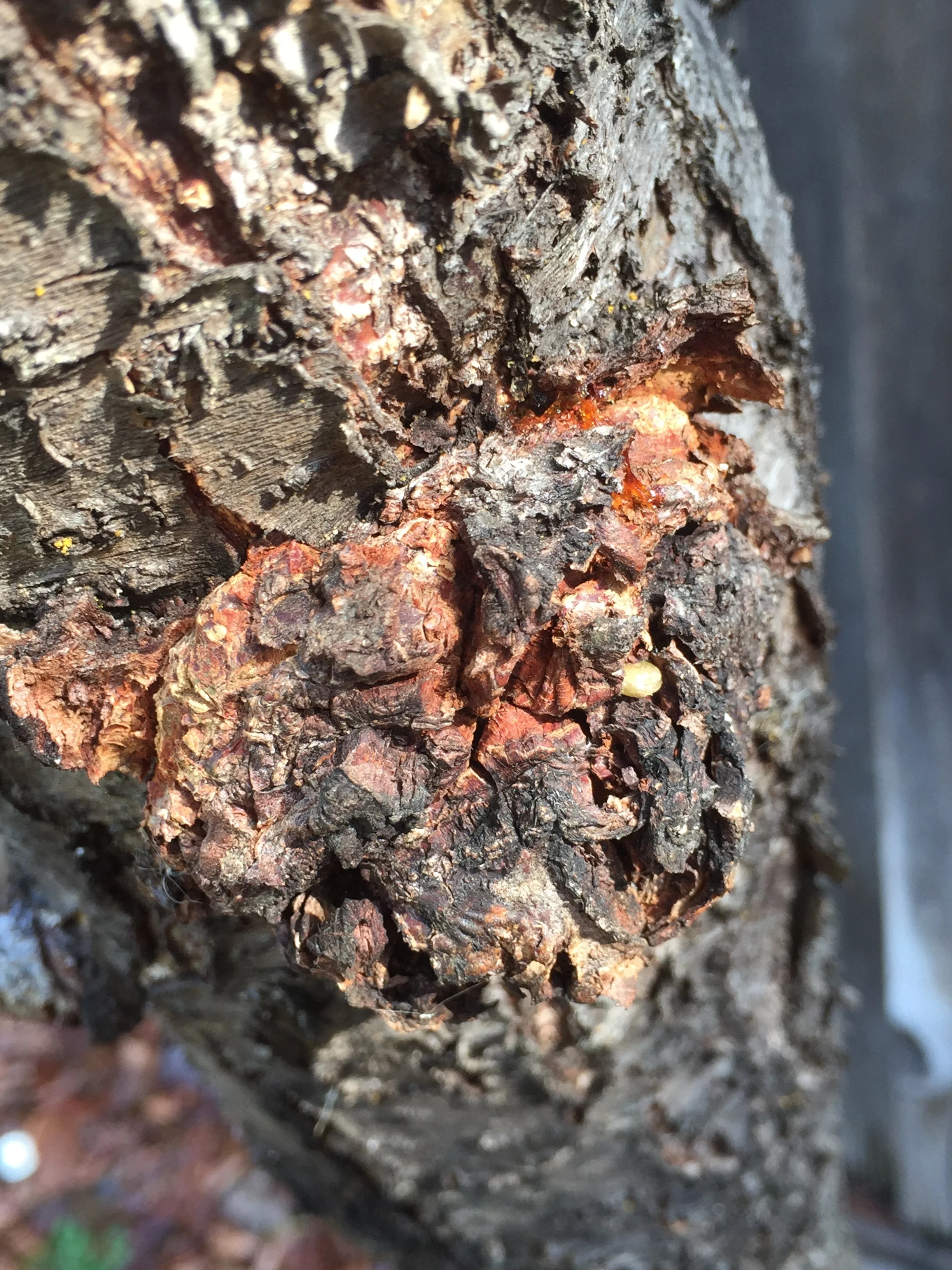
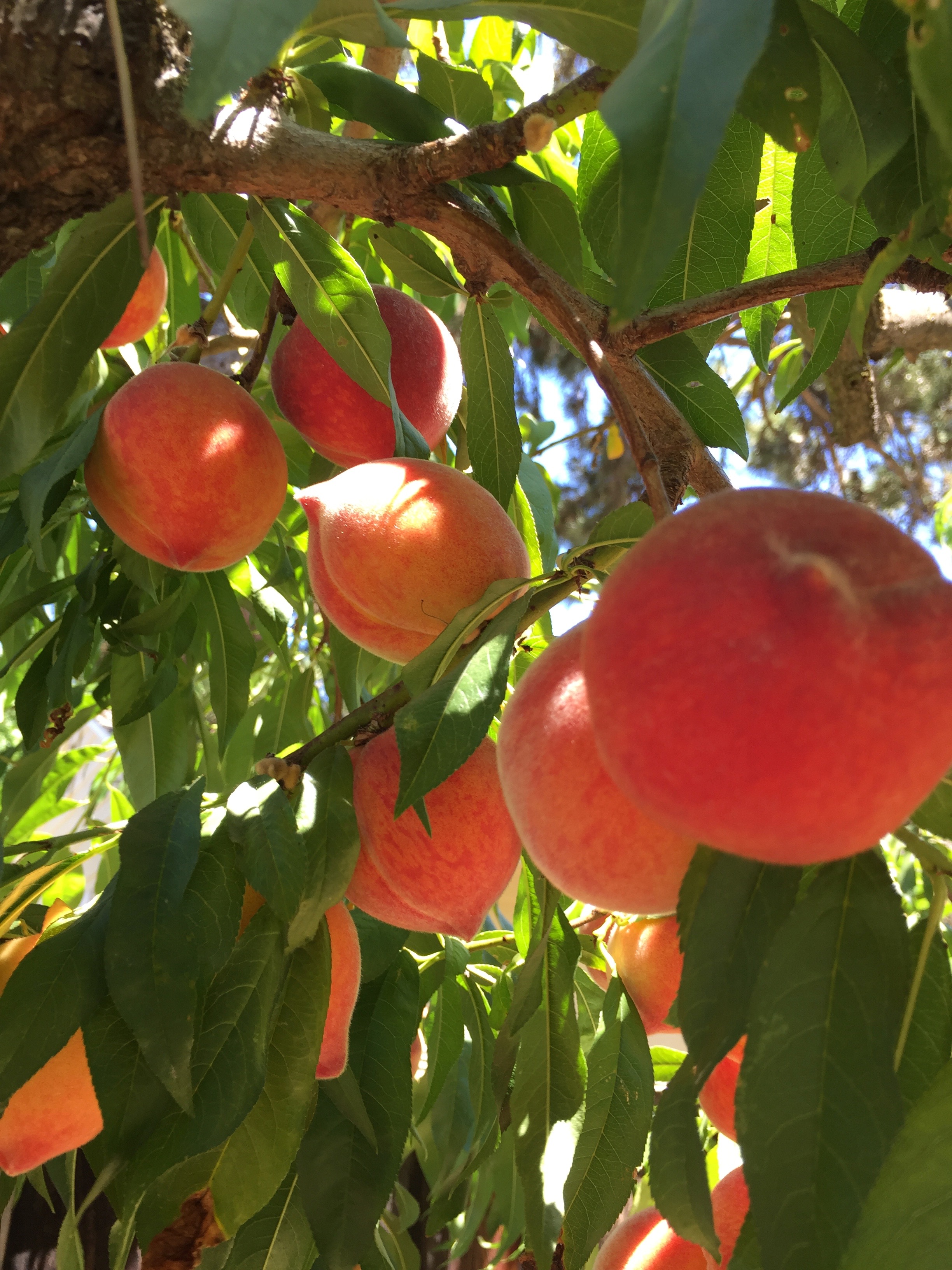
But the peach and the apple are dear to us. They've borne well in the time we've lived here, despite their age. They were pruned badly before we came, and I pruned them badly again before I knew what I was doing. They've withstood changes in the landscape (non-irrigated 'lawn' when we moved in, irrigated 'lawn' for a while after, and then sheet mulching and raised bed vegetable production), changes in maintenance (left alone for years, then highly fussed over), and my over-zealous clippers. But in the past six months, I've noticed some changes in these trees that aren't so great. They both have weeping wounds, some caused by humans but some just appearing for no apparent reason; they both aren't healing pruning cuts the way they have in the past; and they both have discolored cankerous growths that I can't seem to identify. Plus, the center of the large branches seem to have some internal rot.

Apple:

IMG_7025.jpg

Peach:

Plus the peach has some irreparable structural problems that I cannot correct without taking off very major scaffolding branches, which would mean taking away most of the fruiting capability for a time. 

Fruit trees in production in orchards seem to last about 15 years on average, before the owners replace them, as they decline and produce less fruit as they get older. Since fruit trees generally don't fruit until their 4th or 5th year, that means they have about 10 prime years of production before going into decline, though they can of course live much longer with proper pruning and maintenance (though 'living' and 'fruiting' are two different matters). 

It's hard to know when it's time to replace them, and I'm struggling with answering this question for my own garden. We still get fruit from these two trees; however, production has declined and the quality of the fruit is less. I'm noticing that a significant portion of my time has to be spent correcting problems and enhancing the fruiting ability, rather than the very light pruning maintenance my newer trees require.

If we started fresh this year with two-year-old bare root trees, I could prune them properly right from the beginning of their lives which would help tremendously. I could also plant some resistant varieties so that I don't need to treat them chemically, which is a huge plus. I could choose heirloom varieties that do well in this climate, which is getting warmer and drier every year. I could choose more ideal planting spots for these trees, too, and get some good organic matter worked deeply into the soil while planting. And finally, it would be nice to actually know the variety we are growing, instead of guessing. 

I've loved this apple, though it produces smaller and smaller fruit each year, and is on the tart side. It might be nice to choose a slightly sweeter, larger variety. The peach likewise has been great, but I dislike fuzzy skin and it would be nice to have a nectarine instead so that I wouldn't have to peel it. Might as well plant what you want, right?

This will bear some more discussion and thought, though if I'm going to order new trees, now is the time. I'd love opinions from those who have an orchard and have replaced trees. I'd also like to know what kind of fruit trees you are growing and if you like them. Finally, I'd love to know about tree companies in the area that might not be so well-known. I found a great nursery in Portland Oregon called "Trees of Antiquity." They have a nice selection and good growing notes, but I'd like to find out about others. Please share in the comments!

Tags fruit garden
2 Comments

Dehydrating lemon slices/January wreath

January 4, 2018 Elizabeth Boegel
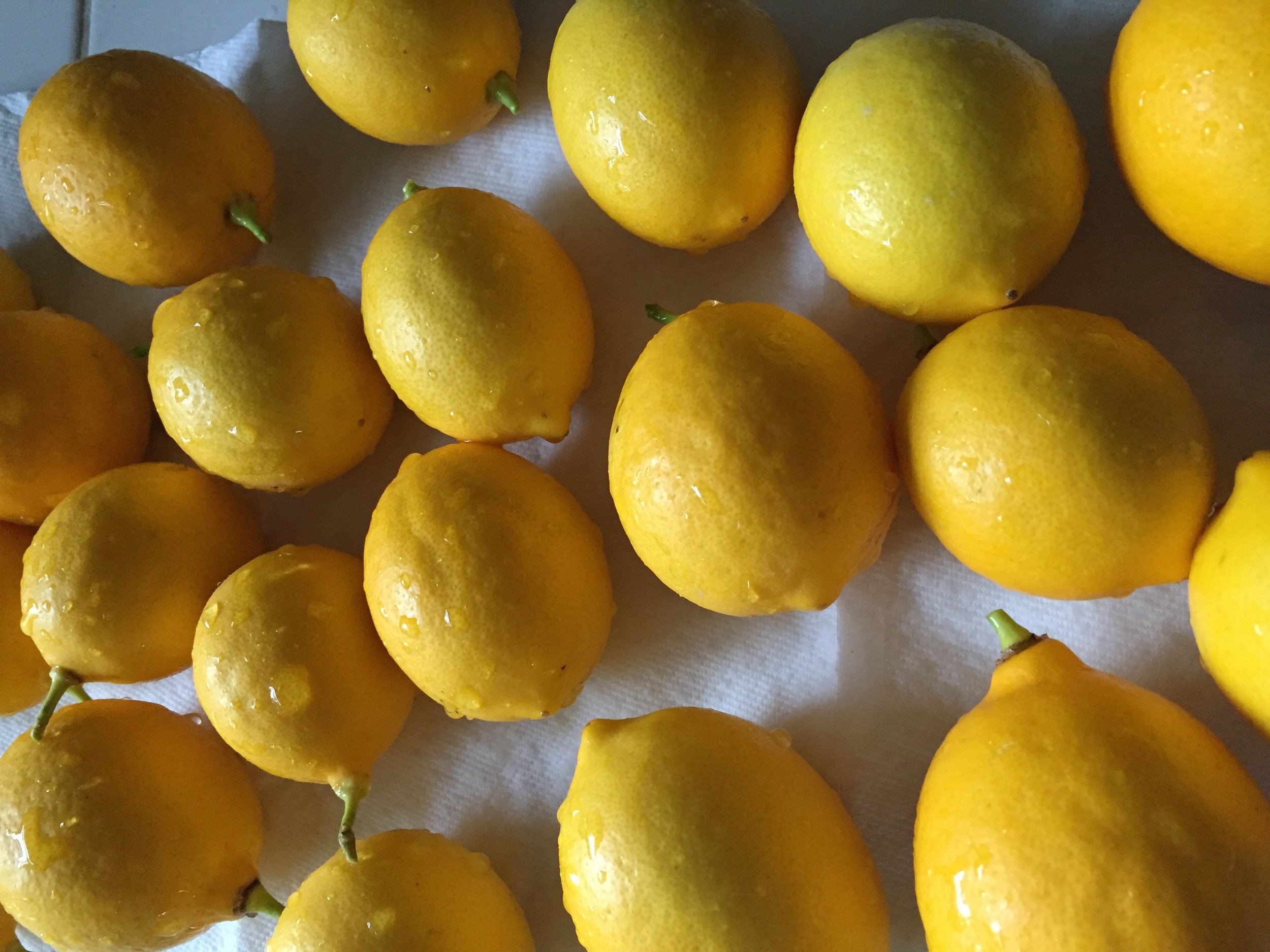
IMG_6998.jpg

My neighbor has a Meyer lemon tree. It's on a strip of land between our two driveways. It certainly belongs to her, but she allows me to freely harvest from my side of the tree, which is terrific. (By the way, I learned a lot about trees and the law in one of my classes last term; if your fruit tree hangs over into a neighbor's yard, that fruit still belongs to you and you can claim it. However, if you want to be a nice neighbor, you'll let them have it. :) ) I always make a batch of lemon curd and lemon bars. I always juice several dozen and then freeze that juice to have on hand through the year. Tom tends to make a batch of limoncello. And then I usually make a quart jar of preserved lemons, which I keep in the fridge, and then those are used for roasting chicken or sometimes fish, though preserved lemons are exceedingly salty (that's how they are preserved, in salt). 

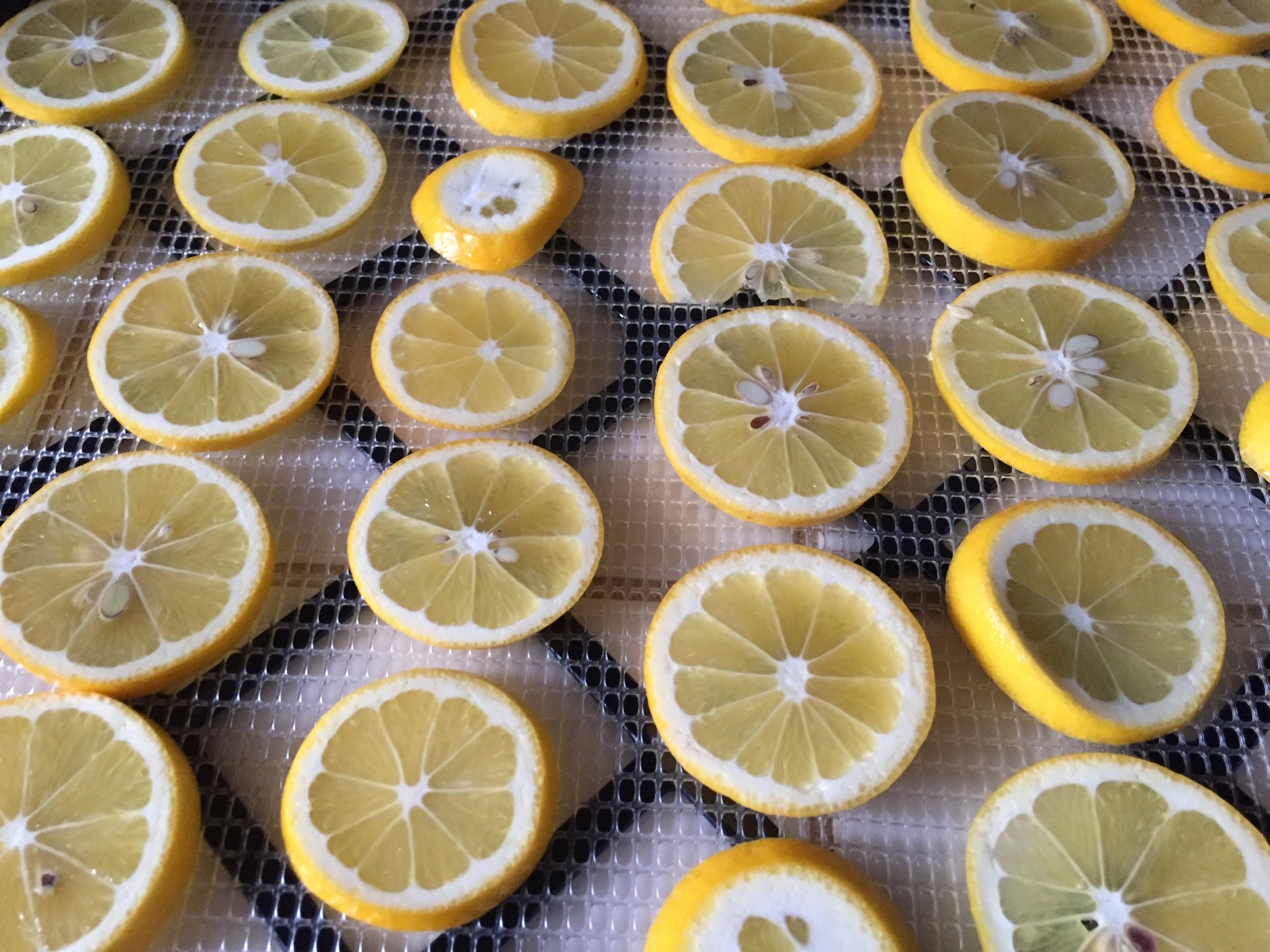
IMG_7003.jpg

This year, Tom bought me an Excalibur food dehydrator for my birthday, so I decided to dry lemon slices instead of making preserved lemons. I imagine these will be much more versatile, as I can take a few out every time I roast fish or chicken, or want a hit of acid in a soup. A slice can also be added to a water bottle, or to a cup of tea. They can be reconstituted and chopped up to be added to vinaigrette. There are dozens of ways these can be used.

IMG_7001.jpg

My dehydrator has nine trays. I filled those with about 40 sliced lemons, which made about 6 quarts of dried slices, enough for me and some to give away. I set the temperature at 135 and ran the machine for 12 hours, which yielded perfectly dry slices.

IMG_7011.jpg

And they look so pretty in the jar.

Before I juice the next batch for the freezer, I think I will remove all the zest first, and then put it in the dehydrator. This way I will have dried zest to use all season and I'll never have to buy lemons.

By the way, Meyer lemons are usually only available from December through May, while Eureka or Lisbon lemons are generally available all year long and are what you find in your grocery store. Meyer lemons are sweeter, thin-skinned, smaller, and darker than regular lemons, and have a sort of floral scent to them which is simply heavenly.  There's a nice post on Kitchn that explains how to tell the difference, with pictures. 

As always, I'd prefer to use what's available seasonally and preserve what I can for the time that fruit/veg is NOT in season, so this dehydrator is going to help me do that in myriad ways.

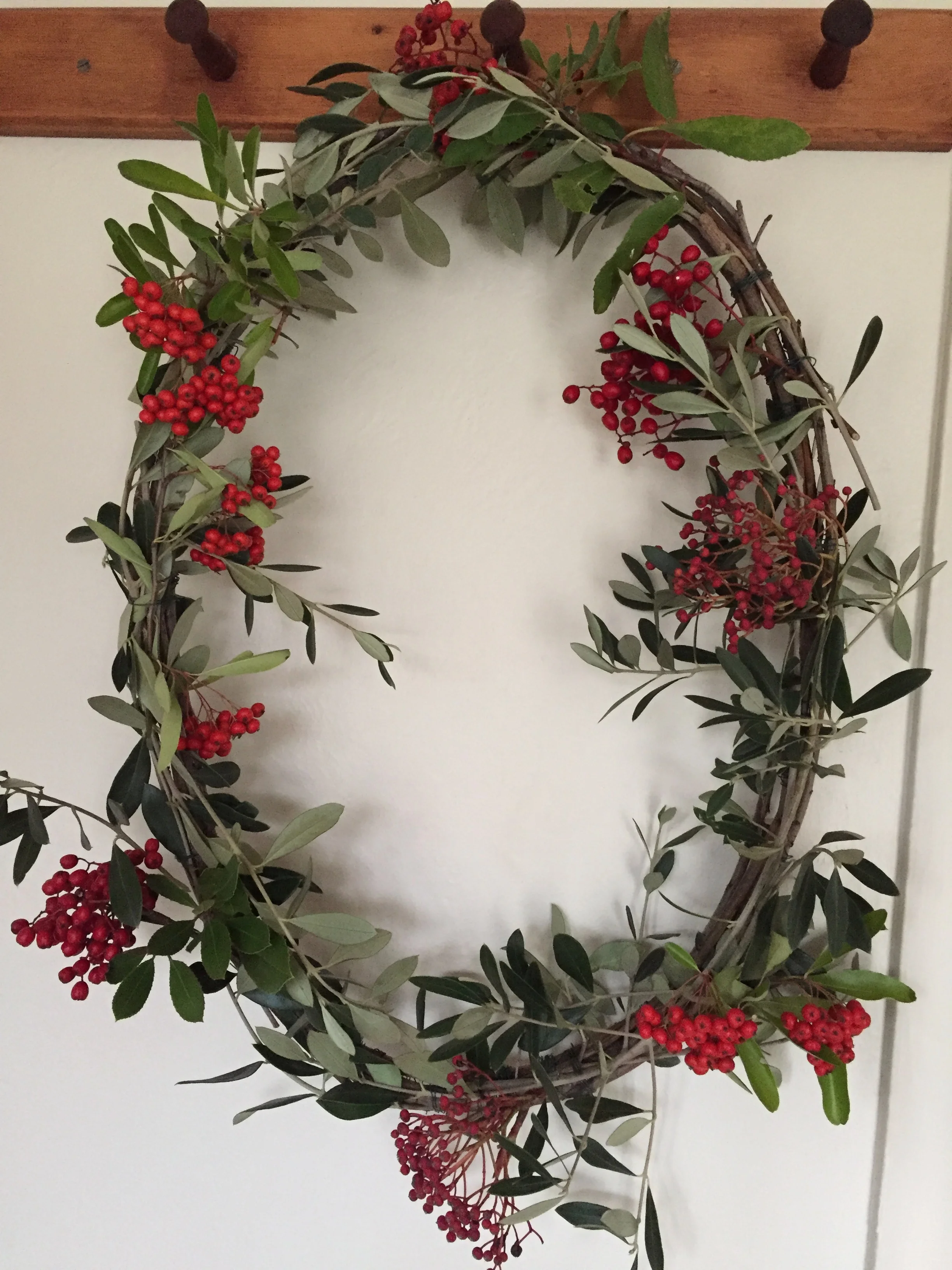
I'm enjoying having some time off from school to manage these winter kitchen projects. I also re-decorated my homemade wreath for January - it was fun tramping through a local open space to find the different berries. This is a mix of olive, cotoneaster, toyon, and pyracantha.

IMG_7005.jpg

I'm thinking of all of you who live anywhere but the West coast, and wondering how you're managing your frigid weather. We finally have some rain, which is desperately needed, but our daytime temperatures in the 50's certainly feel balmy compared to what you're dealing with. I'm hoping that humans and animals are managing ok. Please check in and let us know how it's going in the comments.

Tags preserving, fruit garden
Comment

Ring Out, Wild Bells

January 1, 2018 Elizabeth Boegel
IMG_6983.jpg

The holiday decorations are packed away for another year, the house cleaned, the olives brining, and the sauerkraut... well, krauting. It feels great to "ring out, wild bells, and let him die" and welcome a new year.

“Ring out, wild bells, to the wild sky,
The flying cloud, the frosty light:
The year is dying in the night;
Ring out, wild bells, and let him die.

Ring out the old, ring in the new,
Ring, happy bells, across the snow:
The year is going, let him go;
Ring out the false, ring in the true.

Ring out the grief that saps the mind
For those that here we see no more:
Ring out the feud of rich and poor,
Ring in redress to all mankind.

Ring out a slowly dying cause,
And ancient forms of party strife;
Ring in the nobler modes of life,
With sweeter manners, purer laws.

Ring out the want, the care, the sin,
The faithless coldness of the times’
Ring out, ring out my mournful rhymes
But ring the fuller minstrel in.

Ring out false pride in place and blood,
The civic slander and the spite;
Ring in the love of truth and right,
Ring in the common love of good.

Ring out old shapes of foul disease;
Ring out the narrowing lust of gold;
Ring out the thousand wars of old,
Ring in the thousand years of peace.

Ring in the valiant man and free,
The larger heart, the kindlier hand;
Ring out the darkness of the land,
Ring in the Christ that is to be.””
— Alfred Lord Tennyson

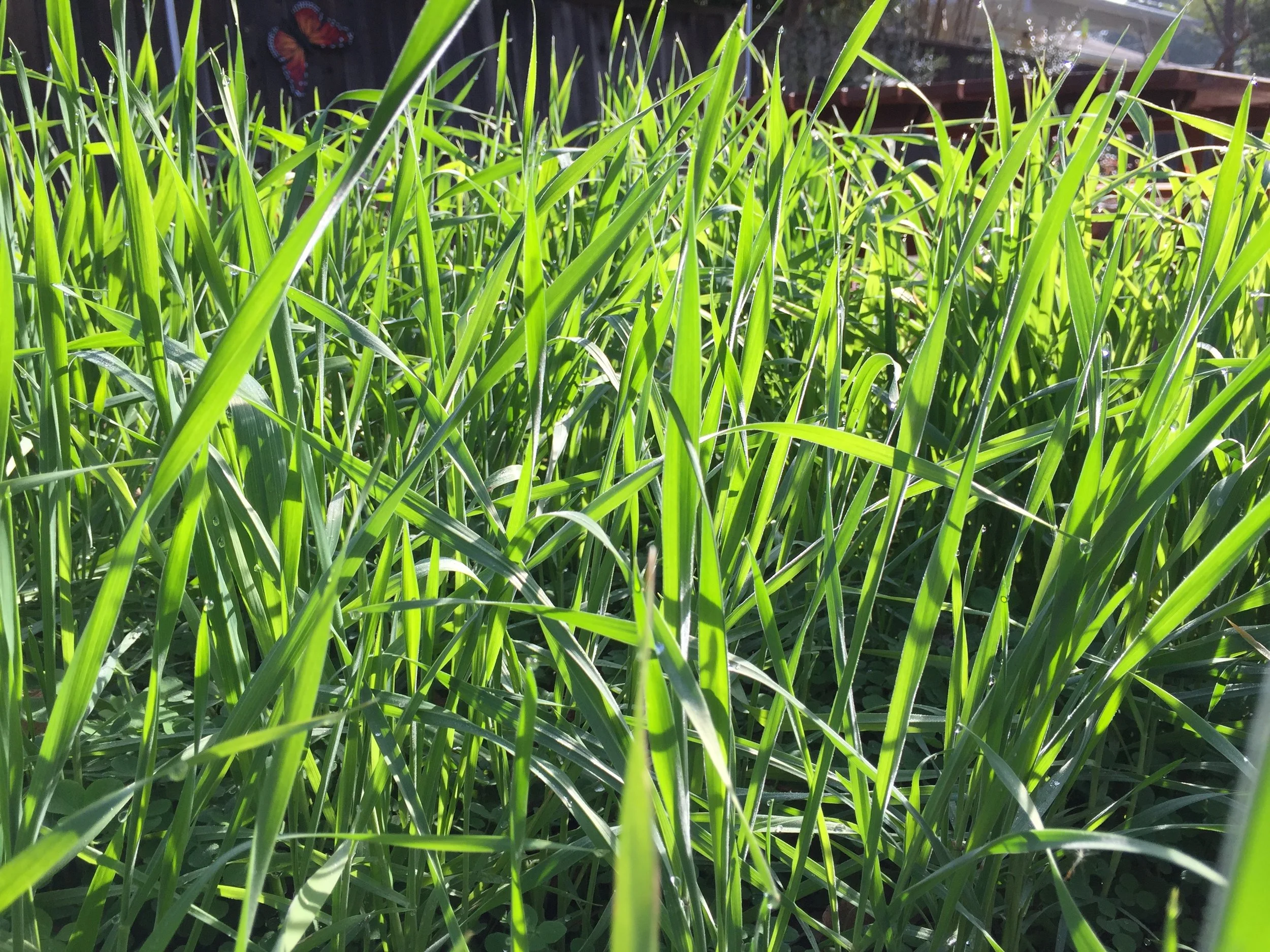
Despite the lack of rain, the garden is humming along. I've got seed trays of kale, chard, rhubarb, purple carrots, and more cabbage in the greenhouse. The wheat is beautiful, thick and green, and with the clover growing beneath it, completely covering the raised beds. It's about 18" tall now. Isn't this the stuff people blend and drink in shot glasses? I imagine a ruminant would like the looks of this wheatgrass.

IMG_6988.jpg

The bulbs don't seem to care if it's still winter. The solstice is past, and something in them says it's time to grow, grow, grow. Spring is different in Northern California. It starts early. I noticed the first batch of new bees coming out to take the air, and orient themselves to home, on this first day of the year. So the queen is laying again.

We have lots of lettuce and spinach growing at the moment. The Brussels sprouts tried their hardest to form heads, but something kept eating the leaves whole (my guess is squirrels) and then the aphids recognized an opportunity and moved in. So I pulled those out, gave them to the chickens, and direct sowed more kale and chard seeds in that bed. The cauliflower is having a second life and looking good, and the broccoli is producing side heads right now. We picked all the ripe cabbage to make into sauerkraut.

The peas succumbed to frost, but I've got more starting in several other places. The garlic and shallots are doing exactly what they are supposed to. After severely pruning all the woody perennials such as sage and agastache, I sowed all my spring wildflower seeds directly into the pollinator gardens. I'll have to keep them moist, since there has been no rain. I'm hoping for a real wildflower show this year.

IMG_6995.jpg

There have been lots of interesting birds to look at lately, including a large golden eagle in my neighbor's oak tree. I miss the summer bumblebees and butterflies, but the birdsong has been glorious every morning, and I'm enjoying watching the hummingbirds at the feeder. 

IMG_6986.jpg

We have several projects in the works. I'm planning the layout of the summer garden, though it will go in late this year, and have received all the seeds I need for the season. I've ordered 75 strawberry crowns (four different varieties) to plant in hanging gutters, more on that project at a later time. My dad got me some carving tools for Christmas, and I'm learning to whittle; I want to make serving spoons from some of the branches I've pruned off our larger trees this winter. Tom tried his hand at rough puff pastry today and the results look promising. Lemons are in season, and we've our annual limoncello to make, as well as enough preserved lemons and lemon juice to last us the year. So we are keeping busy here at Poppy Corners. Everyone goes back to school and work tomorrow, except me. I don't start again until the 22nd!

IMG_6996.jpg

Happy New Year, everyone!

Tags vegetable garden, fruit garden, flower garden, bees, projects, preserving, seed starting
Comment

Solstice

December 22, 2017 Elizabeth Boegel
IMG_6939.jpg

I am always so glad when we reach the solstice, as it helps me to look forward to the coming of warmth and light. 

IMG_6938.jpg

We remain cold and dry. The sun arrives to the yard at about 10 in the morning, and I can feel everything breathe in. No rain is in sight.

IMG_6933.jpg

The drip system is running and I am emptying the rain barrels. There are always birds at the water fountain, as eager as we are for some moisture. 

IMG_6913.jpg

The olives have been harvested, split, and are leaching in water that is changed daily. In a couple of weeks, I'll brine them. Cabbage will be turned into sauerkraut in the coming weeks.

IMG_6937.jpg

The squirrels are eating everything. I'm not planting wheat again next winter. I'm going back to vegetables in beds, with row cover. Not only does that keep the plants warm, it also keeps the critters out. Sparrows eat the clover seed as soon as I plant it; then they eat the sprouts with they germinate. I'm basically feeding the neighborhood creatures this winter with the garden. Oh well.

IMG_6943.jpg

I hope you all have a wonderful holiday season. We have a lot of fun things planned, so I'll take a short vacation from writing and be back again in the New Year. In January, we can start talking about planning the spring and summer garden. Warm wishes to all of you, and blessings for a happy Christmas!


Tags vegetable garden, preserving, flower garden, winter garden
Comment
← Newer Posts Older Posts →

Subscribe

Sign up to get email when new blog entries are made.

We respect your privacy. We're only going to use this for blog updates.

Thank you! Please check your email for a confirmation notice to complete the subscription process.

Powered by Squarespace