Just Chores, but So Much Fun!!!!

Gosh, it's been a fun weekend. The highlight was spending an afternoon with a very good friend, and we had a lively exchange of garden ideas, garden gifts, and love. On top of that we had an impromptu invitation for dinner at a neighbor's house last night - more exchanges of gardening tips and delicious produce! I tasted my first prickly pear fruit (delicious, but lots of seeds!) grown in their garden, and ate some amazing grilled fresh catfish they had caught in Oregon the week before. We brought an heirloom tomato salad with Tom's good Farmer Cheese and basil from the garden on top. Plus some of Tom's garlic dill pickles. Kate made cookies to share, the kids all made a huge bonfire, it was just a great time! A perfect official end to summer vacation, as we get back into the school and work routine this week.

I also had a lot of time to spend in the garden and kitchen, and I got a lot done (I'm headed out again after this post, in fact - potatoes to harvest for dinner!). Mainly just chores, but still, it's such a pleasure to spend time outdoors, then come in for a glass of hibiscus iced tea and make something interesting in the kitchen, then back outdoors for more sunshine and sweat.

Here's the roundup:

Bees and other bugs:
Tom and I opened the hive and there continues to be NO EVIDENCE of wax moths - looks like we caught them just in time. Hallelujah! The ants are also staying away, and the bees are making a LOT of honey. We saw very little pollen, a small amount of brood (consistent with the fact that winter is coming), and a ton of nectar and capped honey. The bees are definitely preparing for cold weather stores. I see them all over my flowers, and I am patting myself on the back that there is plenty of forage for them right now, my early planning is paying off.

In the spirit of continuing that trend, I just scattered many more packets of seed everywhere, mixed in with good compost - more sunflowers, zinnias, cosmos, and lots of herbs - oregano, thyme, sage, marjoram. I hope to continue blossoms all the way through October.

I watched a tiger swallowtail butterfly feeding on some salvia, two cabbage white butterflies (nuisances, but cute ones) chasing each other through the watermelon patch, and scads of monarchs and Gulf Fritillaries feeding on the tithonia. The bees are over everything, especially a very interesting salvia I planted last spring. I can't remember what it's called, darn it.
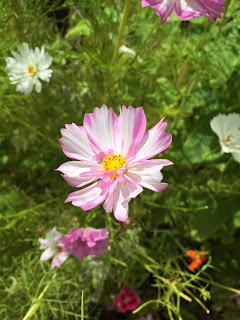
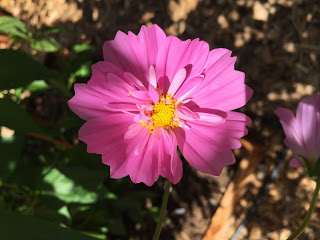
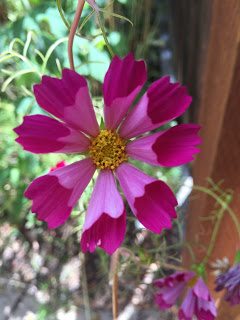
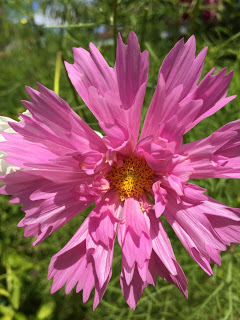
cosmos

cosmos

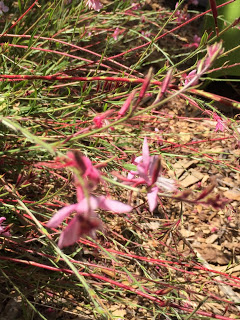
guara

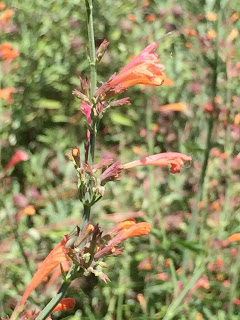
Agastache sunset

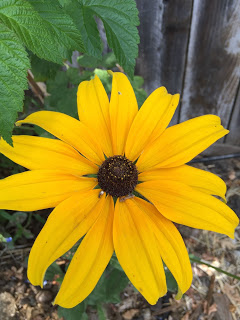
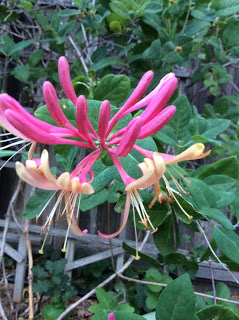
No idea what this is but I like it!

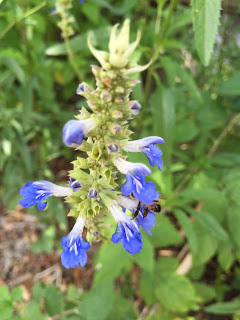
a bee working in salvia

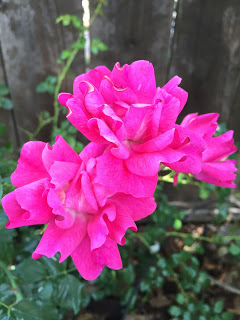
an old-fashioned rose, left over from the previous owners.
I don't keep many roses as the deer just eat them, but this
one seems to stay safe, somehow

bees working in the chive blossoms

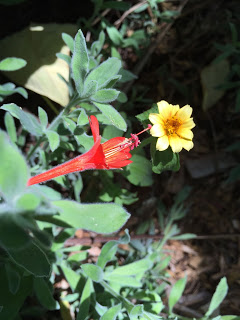
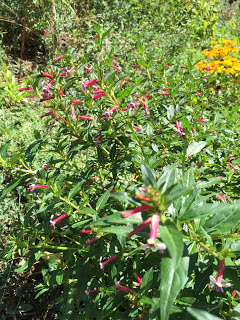
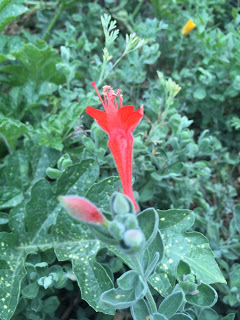
California fuchsia next to a tiny zinnia

nasturtium

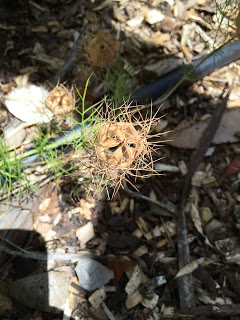
an interesting seed pod, I can't remember what this is

another interesting seed pod, this is from Nigella (Love in a Mist)

another cosmos, the varieties are endless

more beautiful cosmos

some sort of native milkweed, I think, from our watershed

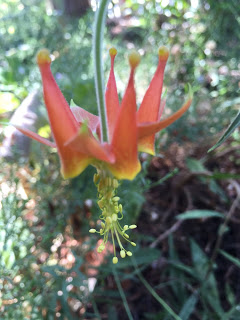
native California columbine

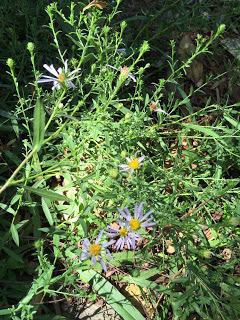
California asters

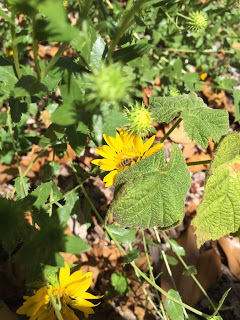
bees working in the native CA gum plant. The buds are very interesting, too

This is that salvia that the bees are going crazy for

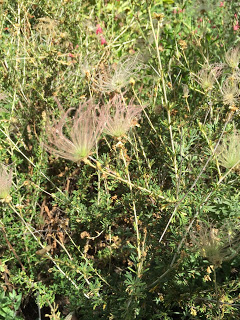
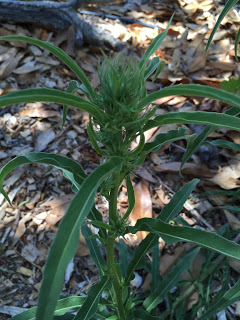
Something about to bloom! Don't remember what it is, but I'm still excited!


Chickens:
We're continuing to get five beautiful eggs every day, and the chooks are in good health. Now that I've fed them the last of the collards and romaine from the garden, I'm trying hard to find other sources of greens for them. Sometimes I'll pick the pole bean leaves for them, they love those. Lately I've been chopping down huge swathes of borage and taking it in to them, and they fiddle with that all day. I just planted some special grass in pots that both cats and birds can eat; as soon as it grows, I'll put a pot in there for them to enjoy, and then switch it out as it gets mowed down. I also give them any tomato that has blossom end rot, cucumbers that have gotten too big and bitter for us, and assorted nasturtium leaves, along with scratch, sunflower seeds, and stale yogurt or milk from the fridge.

That one on the top right is bigger than normal. ouch.


Cooking:
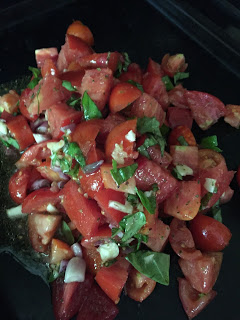
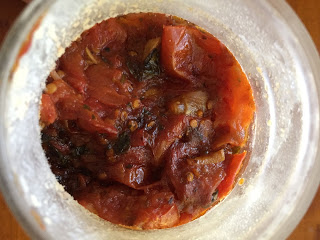
I tried two new experiments in the kitchen this weekend. The first was a roasted tomato sauce for the freezer. I mixed together about four cups of chopped tomatoes (all kinds), five chopped shallots, five cloves of chopped garlic, a few tablespoons of olive oil, salt and pepper, and a handful of chopped basil. I put it all on a cookie sheet, and put it in the oven for two hours at 300 degrees, stirring it once after an hour. It made the most delicious smell in the house, and all of that reduced down to about a pint for the freezer. Not a huge yield, but what's nice about this is I can make a pint or so every weekend with what's available, and soon we'll have a nice hoard of roasted tomato sauce in the freezer.
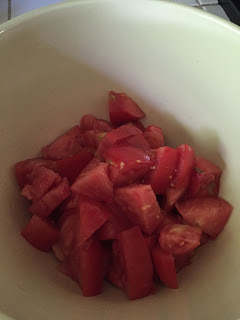
both paste and slicers

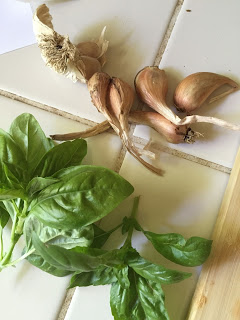
basil, garlic, and shallot from the garden


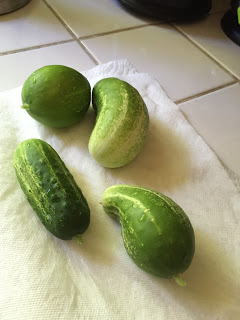
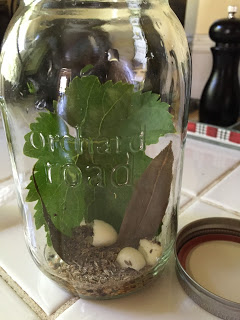
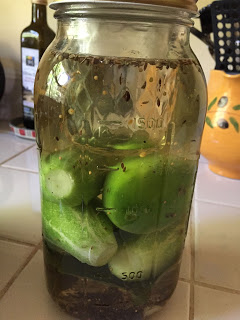
I also decided to try to make fermented whole pickles, like the kind you get at real deli counters. This is also a recipe I can make with whatever is on hand, and add more cucumbers as I harvest them. It works best for smaller fresh pickles, apparently, and if I wait until I have a ton of cucumbers, half of them are too big and bitter, so this recipe appeals to me. I made a brine of 6 tablespoons kosher (or pickling) salt to one quart of water and heated it till the salt dissolved. Meanwhile I added, to a large mason jar, one grape leaf from our neighbor's grapevines, two bay leaves, two smashed garlic cloves, a 1/4 teaspoon of pickle crisp, 2 heaping teaspoons of dill, and 2 teaspoons of other pickling spices (allspice, coriander, mustard seed, etc). If I had any fresh dill left in the garden, I would have added that too. Then I washed the cucumbers and cut a thin slice off the blossom end (apparently you don't want the blossom part in the brine, it makes it taste funky). I put the pickles in with the spices and poured the hot brine over them. I weighted it down with another half-pint mason jar, then put the lid on. You are supposed to let it sit out for two weeks, at least, at room temperature (between 70-80 degrees). The brine will get cloudy. You can add an airlock, like with beer or sauerkraut, or you can 'burp' the pickles about once a week until they are the way you want 'em. You can let them sit up to six weeks on your counter if you want maximum fermentation, or you can put them in your fridge after two. I guess tasting will tell us when they are just right. They'll then keep in the fridge for six months. I'll add more cucumbers, maybe two more, as they ripen.


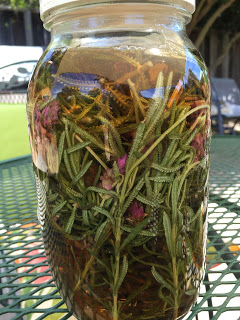
I also mixed up a new batch of Thieves Vinegar. I do this every two weeks. I pick lavender or mint from the garden, stuff it into a mason jar, and cover the whole thing with apple cider vinegar. I let it sit out in the sun, lidded, for two weeks. Then I decant into another clean jar and use it in the laundry room as a natural fabric softener. We love the spicy smell, and we like that it doesn't have any chemicals.


Produce from the garden:
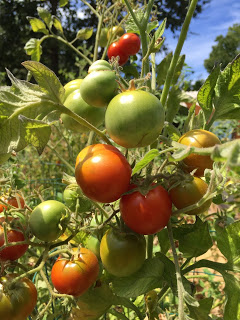
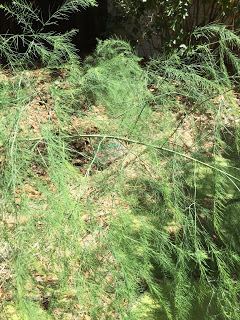
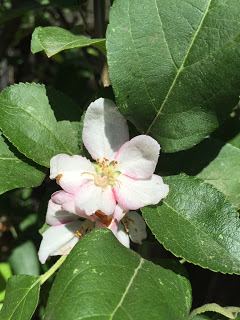
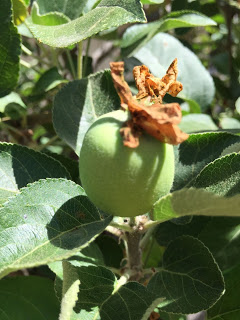
We're harvesting tomatoes (all kinds), both sweet and hot peppers, green beans, delicata squash, watermelons, cucumbers, basil, and potatoes. We're a hairsbreadth away from butternut squash and cantaloupe. We're a little further out from pumpkins and sweet potatoes. The buckwheat cover crop is doing well, and we've had some new growth (surprisingly!) in many areas - the asparagus patch (a spring crop, for heaven's sake), the alpine strawberry patch, and the apple tree seems to be putting out another crop for us! That summer pruning must have made the apple tree feel extremely refreshed. We aren't complaining!
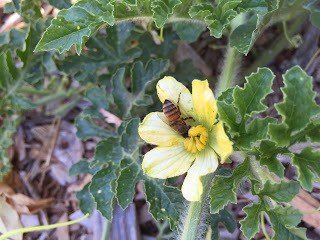
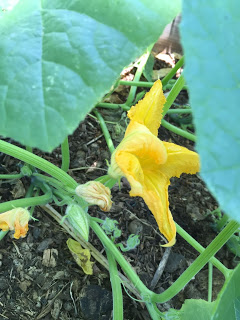
watermelon blossom

Bloody Butcher tomatoes

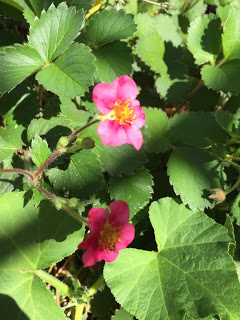
Alpine strawberry blossom

pumpkin blossom

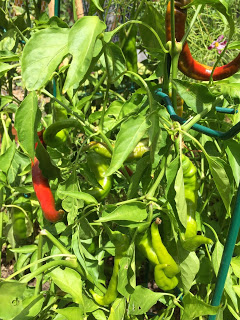
Jimmy Nardello sweet peppers

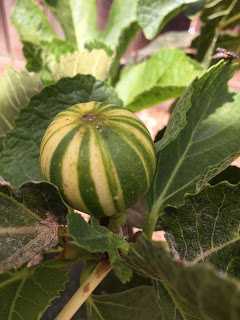
Panache fig

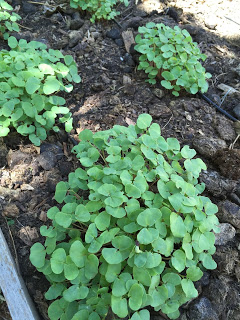
buckwheat cover crop

asparagus patch

apple blossom

second crop of apples


Jobs looming on the horizon:
As crops put out their last fruits, I'll pull them, and put in a quick cover crop of buckwheat. After a month of the cover crop, I'll turn it in and let it rot, then cover each bed with a layer of compost from the chicken coop (heavy mulch made up of hay, sawdust, lots and lots of manure, and whatever vegetable or fruit bits didn't get eaten). Around the first of November, I'll start moving aside that mulch and plant our winter crops in. We'll need to make hoop tunnels for the North Garden and make sure the ones in the South Garden are secure, and order new floating row cover. I'll need to order garlic and shallot starts soon, as well as winter seed (kale, spinach, chard, cauliflower, broccoli, kohlrabi, turnips, more romaine, braising greens, possibly even red winter wheat). We'll need to watch the beehive vigilantly as varroa mite season is coming up, and we don't want a repeat of last year. There's still a lot of preserving in our near future as we continue to can and freeze the harvest - we've got the two hottest months of summer coming up in September and October, here! I need to sheet mulch the little bit of grass we have left and decide what the heck to do with that area - a huge herb garden, with paths winding around so you brush against the plants and smell them? Or a native California meadow, with summer-dormant grasses and lots of spring bulbs? What do you think? I'd like to sheet mulch it in the next month, and plant it once there is a hope of winter rain.

I hope, wherever you are, you are enjoying some time outside and enjoying nature!


A Gift of Seeds, and a Recipe

You might remember that back in March, a neighbor posted on Nextdoor about some free seeds to give away. I jumped at the chance, and came home with maybe three dozen seed packs. I was thrilled. Those seed packs have become the pollinator garden that my bees visit every day, all the cosmos, nictotiana, and forget-me-nots, a bunch of other stuff. It was such a gift.

Yesterday I noticed the neighbor had posted again! this time with even more seed packets. I was volunteering at the middle school, I couldn't go check it out, and today was busy too - but I made a moment to stop by this afternoon when he posted there were some left. I wasn't hopeful because folks are fast here, damn they are fast!

Well, I pulled up to his house and on his front porch was a Rubbermaid bin FULL of packets. I came home with hundreds of dollars worth of seeds, all from Renee's, my favorite seed house.

I dumped my booty on the table and went straight to the canning shelf, pulled out our last 4 ounce jar of homegrown honey, and went back and rang the neighbor's doorbell. I thanked him profusely and told him that the honey (which we harvested by accident back in July) had come from the flowers that came from the seeds he gave me back in March, and I was so grateful. He was glad to have the honey and promised to let me know when the next batch of seeds arrives. Apparently his mom runs a public garden in Southern CA, and always has too many seeds to use, and brings a batch a couple times a year. Oh, my. I hope I can score some next time as well!!!

Here's some of the haul.


It's mostly flower seeds, but there are some winter vegetables as well as some herbs. I could not be more delighted!!!! Some of the flowers seeds will get planted right away, like the zinnias, but others will wait until late winter, early spring. Winter seeds will go in in November. The herbs will wait until spring as well. So my storage box in the fridge is nice and fat. I separated out about a third of the seeds to share with friends and family, but if they don't want 'em, my box'll be even fatter.


Charlie Brown never said it, but I do believe happiness is a full seed box.

I also wanted to share with you a recipe I made tonight that could not be simpler. I don't know why I haven't tried this before, because as you know everything tastes better roasted with olive oil and salt, but thank goodness inspiration struck, because this recipe will be in regular rotation here from now on.

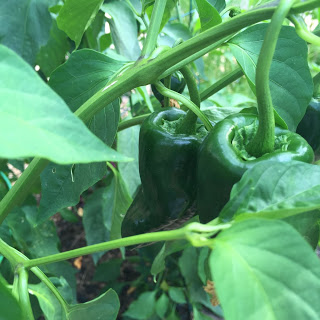
I harvested a couple of delicata squash early this morning (along with a good ten pounds of tomatoes, a good pound of ancho poblano (or pasilla) peppers, six cucumbers of which only 3 are still edible). I just learned that some folks call delicata "sweet potato squash' because it tastes, well, like sweet potatoes. It never has to me, but tonight it definitely did. In fact my kids liked it better than sweet potatoes, which they don't particularly enjoy. But they both ate and liked this squash recipe.

Ok, so wash the squash well, because you're gonna eat the skin. Preheat oven to 425. Slice off the ends, slice the squash in half lengthwise, scoop out the seeds (and feed them to your chickens :) or plant them!), then slice the halves into half-moons. Place on a cookie sheet, brush liberally with oil and salt lavishly, then roast for 15 minutes. Turn them over, roast another 15. Or so. You'll know when they're done because they are golden and crispy.


They tasted like sweet potato fries! oh my goodness. delicious.

So, a happy day, also my first day back at work, a sort of meet-your-teachers-and-see-your-classroom thing. One of the kids from last year saw me in the crowd, walked straight to me, and threw himself into my arms. !!! He held me for a solid minute. I must say, that made it worth going back, for sure!

Yellow Jackets

I was reading back through some posts from last year, and we were battling yellow jackets all the time. This year, I haven't seen very many, and it's one thing my bees have not had to overcome. And so I'm wondering; what's different?

One thing is water. The lack of water for wildlife is certainly having an effect everywhere. The deer and turkeys are boldly walking through gardens in broad daylight; there have been reports almost weekly of coyote, bobcat, and cougar sitings down on city streets. Everything is moving down from the hills in search of water and food.

But no yellow jackets.

At Girl Scout camp last year, the girls were swarmed when they ate lunch, the amount of YJ's was astounding and frankly, scary. This year, we had very few. Water is available there, not copiously, but certainly from faucets and the pool. Still no YJ's. Have they died off in great quantities?

I did not put any YJ traps in my yard this year, convinced that last year, those traps actually attracted more wasps than they killed. Could that be a factor? Not as much here to attract them?

I don't like YJ's at all, but I do understand they serve a sort of 'carrion-eating' purpose. If we don't have our 'garbage collectors,' what happens then?

It'll be interesting to see, as the drought moves forward. Meanwhile, I'm happy not to see them skulking underneath the bee hive.

A Beach Day

The kids and I took off for one last hurrah, to Point Reyes National Seashore and Limantour Beach. For those of you that aren't familiar with Northern California, Point Reyes is north of San Francisco, across the Golden Gate Bridge, and on the Pacific Coast (it takes us a good hour and half to get there). Limantour Beach is part of Drakes Bay, a nice little inlet/cove with calmer water. It's not safe to swim at an awful lot of Pacific beaches, but this one is ok - still not entirely safe, but safe enough to do some boogie boarding.

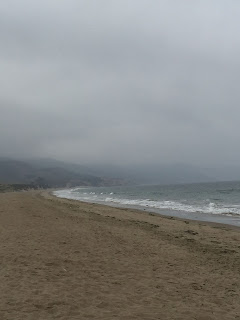
Generally, summer is NOT the time to go to the beach in Northern California. We have this natural air conditioning system we call the marine layer - it causes extreme micro-climates and cooler weather in the summer near the coast, and hotter weather inland. In the winter, it's completely opposite - San Francisco and the Northern Coast often have very sunny, warm weather, while out in the suburbs, we have frost and freeze. It's very interesting. But it makes for better beach weather in the winter.

However. It's been over 100 here inland, and several San Franciscans have been reporting sunny and warm temperatures over their way, so I thought we'd go for it. It's hovering around 92 here today; it was 65 at Limantour Beach.

A typical summer day at the beach in Northern CA

That didn't stop us, oh no! We stripped down to our bathing suits (though this beach does welcome nudity, we did not indulge) and got in the water immediately.

I'd heard reports that, due to a building El Nino system, the water is warmer right now. Another weird thing about the Pacific - the water is generally several degrees warmer in the winter and colder in the summer. Another reason not to go to the beach this time of year! But indeed, the water did seem warmer today, maybe 60 degrees? Cold enough to hurt, but warm enough to eventually manage it without a wetsuit. Typical summer temps would be more like 52-55, so this was positively warm. The kids had a blast in the waves. No surfers around today.


We've heard lots of reports of increased sea life this year (another possible El Nino sign, we're all very hopeful), but we didn't see much of it here. No sea lions, no whales, no great whites (!), no pelicans. Plenty of cormorants and fishing boats. The ubiquitous yellow jackets when we dug out our lunch. A few seagulls. But really, fairly empty. A couple of folks came by on horses. A father and his two sons hiked past us with large packs; they were backpacking the coast and wondered whether to take a dip. Someone flew a kite. Joe and I did some beachcombing, and look what I found!


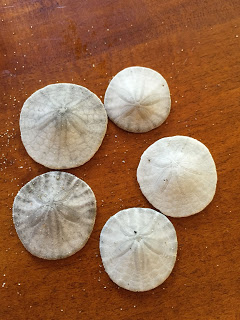
These mini-sand dollars (the size of my thumbnail) made it home unscathed and are now living in my garden. Aren't they adorable? I NEVER find sand dollars, though I've heard many people do, here. I was very excited. Do you know how sand dollars live, in the ocean? I came across fields of them, back in my scuba diving days, and they are fascinating. Let me see if I can find a picture....

Oh, my, I hit the jackpot. Check out this blog post if you want to know more about sand dollars. Underwater, they are fuzzy and often standing upright in the sand, filter feeding.

Anyway, I'm digressing, as usual! It was a lovely (though cool) day at the beach, and if you ever get the chance to hang out in Point Reyes National Seashore, you really can't do any better for fabulous views, soft sand, wildlife, and a good outdoor time.

At home, I've found other treasures.

Not the first acorn I've found this year, but the first from our valley oak.
A little early for acorns.

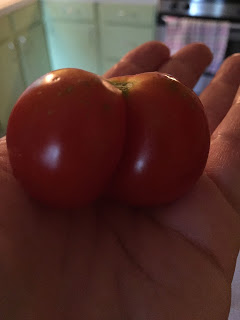
I call this tomato, the 'Kardashian'

The State of the Garden

As we move in to the last half of August, the weather continues in a very strange pattern - one week, extremely hot; another week, cooler than average - and the garden shows the strain. Sometimes we need more water, sometimes less, it's hard to keep up. Things look a little limp and tired. But we're still harvesting some things daily, and looking forward to harvesting others soon.

I removed the last of the romaine lettuce; we'd used every bit of it up in salads, or for chicken feed. As I removed the root balls, I was very glad to see writhing masses of worms, just as if I had bought several pounds and put a mess of 'em at the base of each plant. I can only assume that the worms were attracted to the horse manure that I spread on the garden a couple of months ago, and traveled up through the clay to get in to the beds. Those worms are a sign that the soil is doing just great, no matter the erratic weather and water.

I decided to put a quick cover crop of buckwheat in where the romaine was; this should provide forage for the pollinators, as well as add a 'green manure' to the soil within just a couple of weeks. When I did this last year, I was amazed at the number of beneficial insects the buckwheat brought in, while improving the soil even more. I'll do this in each bed as I harvest a crop, and then in October and November, I'll start planting winter vegetables.

I also took out the remainder of the corn crop. We had a nice harvest this year, though small, probably due to the early haircut from the deer. I had a couple of half-grown cobs in there that I gave to the chickens, and then cleared the bed. I had planted the sweet potato slips under the corn months ago, and I was pleased to see that they were growing like mad under the corn. Now that the tall corn is cleared away, the sweet potatoes should start making a real push, and soon this bed will be covered with vines.


We're harvesting watermelons, green beans, cucumbers, collards, tomatoes (cherry, slicing, paste), peppers (both sweet and hot), basil, potatoes, and an occasional delicata squash.


The cantaloupe is progressing nicely...


Pumpkins are starting to bloom...


... and the Butternut squash is changing to a lovely orange.


This is a mini variety, so won't get much bigger than this, I don't think.

There's lots of flowers in the garden, and the bees are still very busy, though they beard the hive porch every night in the heat. We opened the hive recently and there are several bars filled with honey, which bodes well for the winter ahead. If the bees can just get through mite season, they'll be set for cold weather.


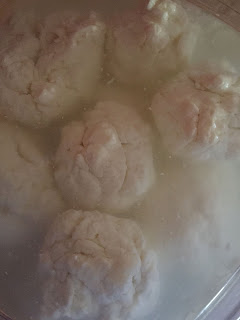
Tom made mozzarella today, and bottled 5 gallons of beer (his third batch).


And we've been having adventures as often as the heat permits us to. The kids got a chance to fly in a Cessna airplane out at Buchanan Field Airport as part of the Young Eagles program. We had to wait a long time for our turn, but it was worth it!


As you can see, it's been very smoky here, as firefighters battle wildfires to the North of us. The fire season is well underway, and it's horrible. No surprise there. Meanwhile people are still washing their cars and watering their lawns with that precious water. Argh. I know folks think it's ok to use well-water to do these things, but it's not. We must conserve!

The kids and I played tourist and headed up to Calistoga (north of Napa) to see a petrified wood forest and lava beds, as well as our local 'Old Faithful' geyser. Both fun.


The grapes were hanging full from the vines as we drove through wine country, and sure enough, an article in the paper today stated that the harvest is already happening, a month earlier than usual. So I'm not the only farmer with droopy crops.

Work starts back for me this week, as well as some volunteer opportunities. The kids start school next week. Hard to believe that vacation is nearly over!