Yellow Jackets

I was reading back through some posts from last year, and we were battling yellow jackets all the time. This year, I haven't seen very many, and it's one thing my bees have not had to overcome. And so I'm wondering; what's different?

One thing is water. The lack of water for wildlife is certainly having an effect everywhere. The deer and turkeys are boldly walking through gardens in broad daylight; there have been reports almost weekly of coyote, bobcat, and cougar sitings down on city streets. Everything is moving down from the hills in search of water and food.

But no yellow jackets.

At Girl Scout camp last year, the girls were swarmed when they ate lunch, the amount of YJ's was astounding and frankly, scary. This year, we had very few. Water is available there, not copiously, but certainly from faucets and the pool. Still no YJ's. Have they died off in great quantities?

I did not put any YJ traps in my yard this year, convinced that last year, those traps actually attracted more wasps than they killed. Could that be a factor? Not as much here to attract them?

I don't like YJ's at all, but I do understand they serve a sort of 'carrion-eating' purpose. If we don't have our 'garbage collectors,' what happens then?

It'll be interesting to see, as the drought moves forward. Meanwhile, I'm happy not to see them skulking underneath the bee hive.
A Beach Day

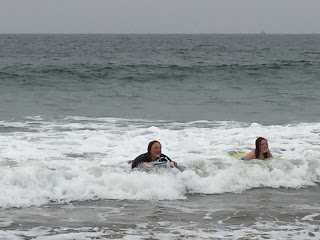
The kids and I took off for one last hurrah, to Point Reyes National Seashore and Limantour Beach. For those of you that aren't familiar with Northern California, Point Reyes is north of San Francisco, across the Golden Gate Bridge, and on the Pacific Coast (it takes us a good hour and half to get there). Limantour Beach is part of Drakes Bay, a nice little inlet/cove with calmer water. It's not safe to swim at an awful lot of Pacific beaches, but this one is ok - still not entirely safe, but safe enough to do some boogie boarding.

Generally, summer is NOT the time to go to the beach in Northern California. We have this natural air conditioning system we call the marine layer - it causes extreme micro-climates and cooler weather in the summer near the coast, and hotter weather inland. In the winter, it's completely opposite - San Francisco and the Northern Coast often have very sunny, warm weather, while out in the suburbs, we have frost and freeze. It's very interesting. But it makes for better beach weather in the winter.

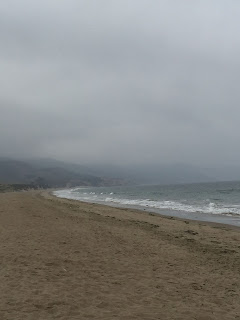
However. It's been over 100 here inland, and several San Franciscans have been reporting sunny and warm temperatures over their way, so I thought we'd go for it. It's hovering around 92 here today; it was 65 at Limantour Beach.

A typical summer day at the beach in Northern CA

That didn't stop us, oh no! We stripped down to our bathing suits (though this beach does welcome nudity, we did not indulge) and got in the water immediately.

I'd heard reports that, due to a building El Nino system, the water is warmer right now. Another weird thing about the Pacific - the water is generally several degrees warmer in the winter and colder in the summer. Another reason not to go to the beach this time of year! But indeed, the water did seem warmer today, maybe 60 degrees? Cold enough to hurt, but warm enough to eventually manage it without a wetsuit. Typical summer temps would be more like 52-55, so this was positively warm. The kids had a blast in the waves. No surfers around today.


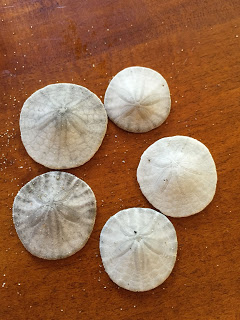
We've heard lots of reports of increased sea life this year (another possible El Nino sign, we're all very hopeful), but we didn't see much of it here. No sea lions, no whales, no great whites (!), no pelicans. Plenty of cormorants and fishing boats. The ubiquitous yellow jackets when we dug out our lunch. A few seagulls. But really, fairly empty. A couple of folks came by on horses. A father and his two sons hiked past us with large packs; they were backpacking the coast and wondered whether to take a dip. Someone flew a kite. Joe and I did some beachcombing, and look what I found!


These mini-sand dollars (the size of my thumbnail) made it home unscathed and are now living in my garden. Aren't they adorable? I NEVER find sand dollars, though I've heard many people do, here. I was very excited. Do you know how sand dollars live, in the ocean? I came across fields of them, back in my scuba diving days, and they are fascinating. Let me see if I can find a picture....

Oh, my, I hit the jackpot. Check out this blog post if you want to know more about sand dollars. Underwater, they are fuzzy and often standing upright in the sand, filter feeding.

Anyway, I'm digressing, as usual! It was a lovely (though cool) day at the beach, and if you ever get the chance to hang out in Point Reyes National Seashore, you really can't do any better for fabulous views, soft sand, wildlife, and a good outdoor time.

At home, I've found other treasures.

Not the first acorn I've found this year, but the first from our valley oak.
A little early for acorns.

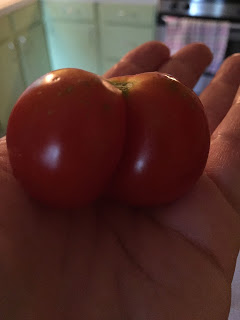
I call this tomato, the 'Kardashian'

The State of the Garden

As we move in to the last half of August, the weather continues in a very strange pattern - one week, extremely hot; another week, cooler than average - and the garden shows the strain. Sometimes we need more water, sometimes less, it's hard to keep up. Things look a little limp and tired. But we're still harvesting some things daily, and looking forward to harvesting others soon.

I removed the last of the romaine lettuce; we'd used every bit of it up in salads, or for chicken feed. As I removed the root balls, I was very glad to see writhing masses of worms, just as if I had bought several pounds and put a mess of 'em at the base of each plant. I can only assume that the worms were attracted to the horse manure that I spread on the garden a couple of months ago, and traveled up through the clay to get in to the beds. Those worms are a sign that the soil is doing just great, no matter the erratic weather and water.

I decided to put a quick cover crop of buckwheat in where the romaine was; this should provide forage for the pollinators, as well as add a 'green manure' to the soil within just a couple of weeks. When I did this last year, I was amazed at the number of beneficial insects the buckwheat brought in, while improving the soil even more. I'll do this in each bed as I harvest a crop, and then in October and November, I'll start planting winter vegetables.

I also took out the remainder of the corn crop. We had a nice harvest this year, though small, probably due to the early haircut from the deer. I had a couple of half-grown cobs in there that I gave to the chickens, and then cleared the bed. I had planted the sweet potato slips under the corn months ago, and I was pleased to see that they were growing like mad under the corn. Now that the tall corn is cleared away, the sweet potatoes should start making a real push, and soon this bed will be covered with vines.


We're harvesting watermelons, green beans, cucumbers, collards, tomatoes (cherry, slicing, paste), peppers (both sweet and hot), basil, potatoes, and an occasional delicata squash.


The cantaloupe is progressing nicely...


Pumpkins are starting to bloom...


... and the Butternut squash is changing to a lovely orange.


This is a mini variety, so won't get much bigger than this, I don't think.

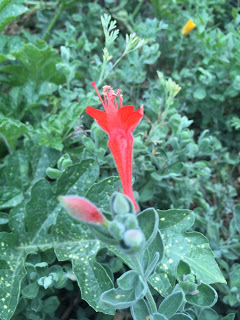
There's lots of flowers in the garden, and the bees are still very busy, though they beard the hive porch every night in the heat. We opened the hive recently and there are several bars filled with honey, which bodes well for the winter ahead. If the bees can just get through mite season, they'll be set for cold weather.


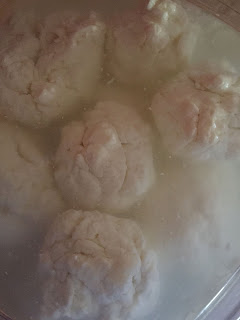
Tom made mozzarella today, and bottled 5 gallons of beer (his third batch).


And we've been having adventures as often as the heat permits us to. The kids got a chance to fly in a Cessna airplane out at Buchanan Field Airport as part of the Young Eagles program. We had to wait a long time for our turn, but it was worth it!


As you can see, it's been very smoky here, as firefighters battle wildfires to the North of us. The fire season is well underway, and it's horrible. No surprise there. Meanwhile people are still washing their cars and watering their lawns with that precious water. Argh. I know folks think it's ok to use well-water to do these things, but it's not. We must conserve!

The kids and I played tourist and headed up to Calistoga (north of Napa) to see a petrified wood forest and lava beds, as well as our local 'Old Faithful' geyser. Both fun.


The grapes were hanging full from the vines as we drove through wine country, and sure enough, an article in the paper today stated that the harvest is already happening, a month earlier than usual. So I'm not the only farmer with droopy crops.

Work starts back for me this week, as well as some volunteer opportunities. The kids start school next week. Hard to believe that vacation is nearly over!

Drying Hot Peppers

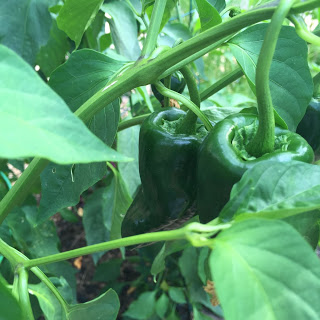
So. many. peppers. What else can we make with them?

Friends over today, so I put all the kids to work threading string through them and making tiny wreaths. Then we hung them up to dry - in two or three weeks, I'll put 'em through the food processor, and hopefully we'll have enough dried pepper flakes (green, though, not red) to last us for many moons.


New Potatoes!

I've never successfully grown potatoes before. They always start out ok, then the deer get them. This year that problem was eliminated so I was very hopeful (though tentatively very hopeful) that we might get some potatoes, finally. Then the Colorado Potato (or cucumber, depending on who you ask) Beetle showed up. Argh! Foiled! But I just kept on tentatively hoping that the plant was strong enough to resist those wee buggers, and guess what??? IT WAS. Tonight, I dug down beneath and plucked out treasure: New potatoes.

Dirty, this treasure. But what did you expect?

I washed 'em, parboiled 'em, rubbed 'em with olive oil, salt, and fresh rosemary bits from the garden, and they are now roasting and smell HEAVENLY.

I felt so many potatoes while I was in there digging, I'm positively CHUFFED that we are going to have a full crop of taters. I want to wait until the foliage is completely withered before I dig them all out and 'cure' them; but I might go in there for another batch of new potatoes before that happens.

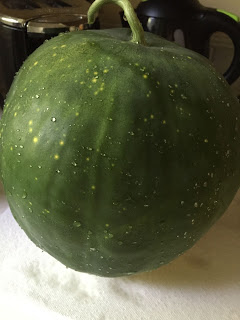
We're also enjoying a watermelon per day.


This variety, Moon and Stars, is tasty, but seedy. Eating it is like watermelonus-interruptus because you're constantly spitting out seeds. But it's still like a miracle to eat a huge 25 pound watermelon from the garden. Not just once. Every dang day!!!! And the chickens love the rinds and seeds.

I had to rearrange the canning shelf a little today. Not much room left! The garlic braids are gone, but I still have a ton of shallots there - they might be headed for pickling next. I also want to can some crushed tomatoes before the season is over. Guess we'll have to figure out another place to put canned goods!