Raising the Fence

We worked all weekend on raising the fence. Tom did all the cutting and measuring of wood, I helped with the wire, and chopped down several old, woody bushes that were in the way. What we have now is, hopefully, a subtle but effective deer deterrent.


You can barely see the three-tiered wire going across these posts, which is just how I like it. Neighbors can see in, we can see out, and yet no one wants to jump it. The fence goes around our entire property, except for the driveway and garage, so this was a major undertaking. Tom bought six foot lengths of 4x4 posts and cut them into two foot sections. Then he bolted them on (using deck screws) to the existing posts using metal plates on two sides. The wire is heavy gauge and is threaded through staples pounded into the wood.


We have three gates, one of them double-sized. So Tom's next project is to make, essentially, four gates, each six feet tall. He'll make them similar to the chicken coop door, since we have some supplies leftover from that. They'll each be latched by some sort of string system that can be accessed by either side.

I cleared out a truck-sized load of old westringia, ceonothus, sunrose and buckeye. It was difficult, scratchy, and painful,  and I would have liked a nice huge bonfire afterward to celebrate, but that's not allowed here. So we borrowed Dad's truck and took it to the compost facility at our local waste center.


This project took up most of the weekend, but I managed to make some new bars for the beehive; paint a brick for the new blackberry vine I scored for free on Nextdoor; open the hive (all looked well); reseed some corn, beans, watermelon; add dirt to the potatoes; clean the coop and the house; do laundry; and weed and mulch and get everything looking nice - plus a half day of training for Girl Scout camp. We did cross everything off the list except I didn't get to the herb purees. That will be a job for the week to come!

I've ordered three new bare-root fruit trees to take the place of some of the bushes I took out. I chose two different sweet cherries and a Santa Rosa plum variety hybridized by Luther Burbank. Once I plant those, I'll spread a ton of flower seed around them, and hopefully have a pollinator garden in the North Garden as well as the South. 

Everything in the veg garden has sprouted and looks great. I have yet to harvest kale and plant basil in its place, and I have yet to harvest the shallots and plant cantaloupe in its place, but everything else is in.  It's all wonderful, but it's the flowers that are really knocking me out these days, so I'll leave you with pictures of those, plus a funky mushroom (I think it's a stinkhorn).

Clarkia, Mountain Garland

Blue Flax

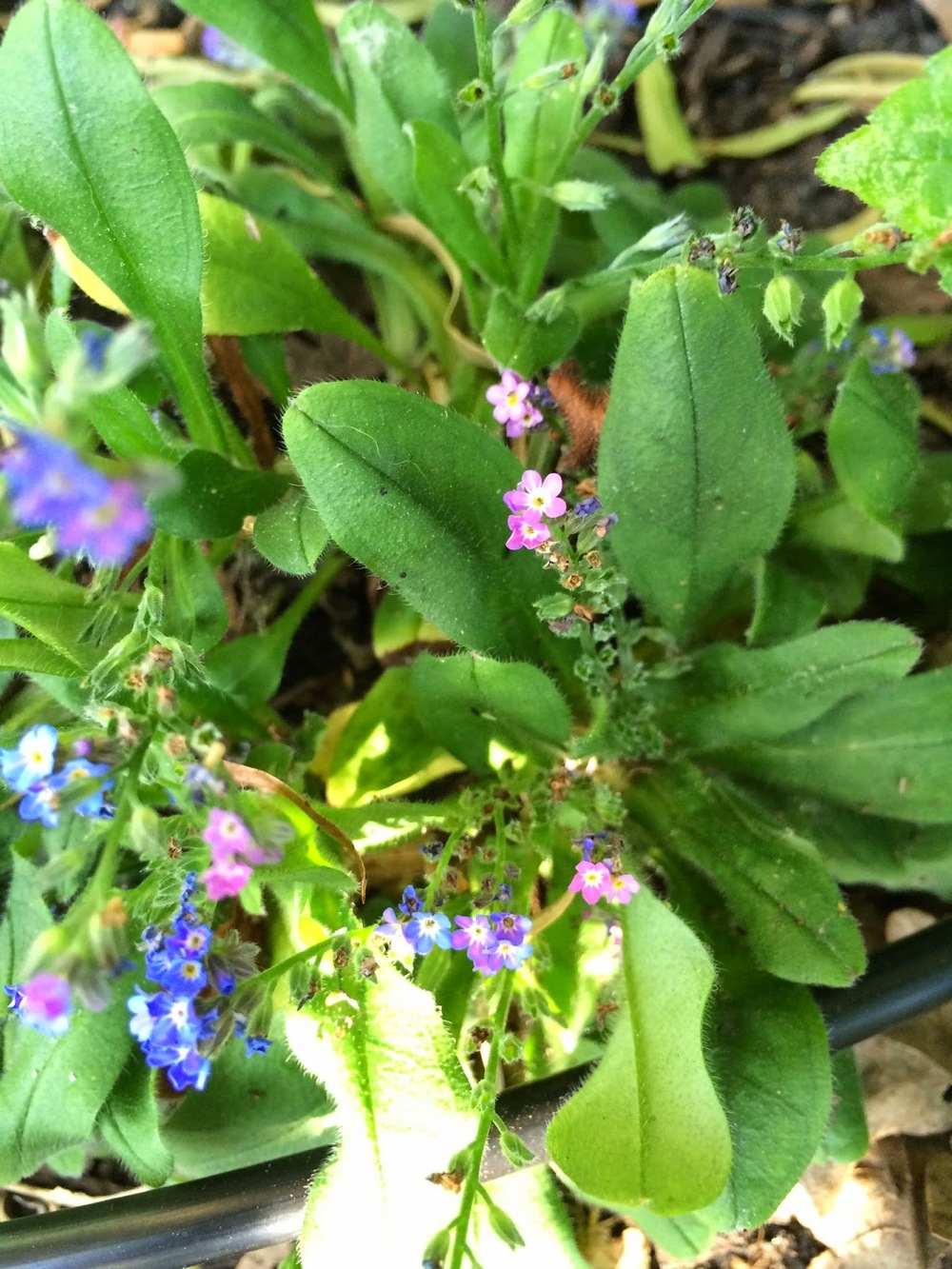
Forget-me-not

Pollinator section of the South Garden

Redbud seedpods

Tidy-tip and Phacelia 
Stinkhorn?
 Bonus picture -

Gopher snake Tom saw on a hike with Joe


May Day

Tra la, it's May, the lusty month of May
That lovely month when everyone goes blissfully astray
Tra la, it's here, that shocking time of year
When tons of wicked little thoughts merrily appear

It's May, it's May, that gorgeous holiday
When every maiden prays that her lad will be a cad
It's mad, it's gay, a libelous display
Those dreary vows that everyone takes, everyone breaks
Everyone makes divine mistakes, the lusty month of May

-Lerner and Loewe, Camelot


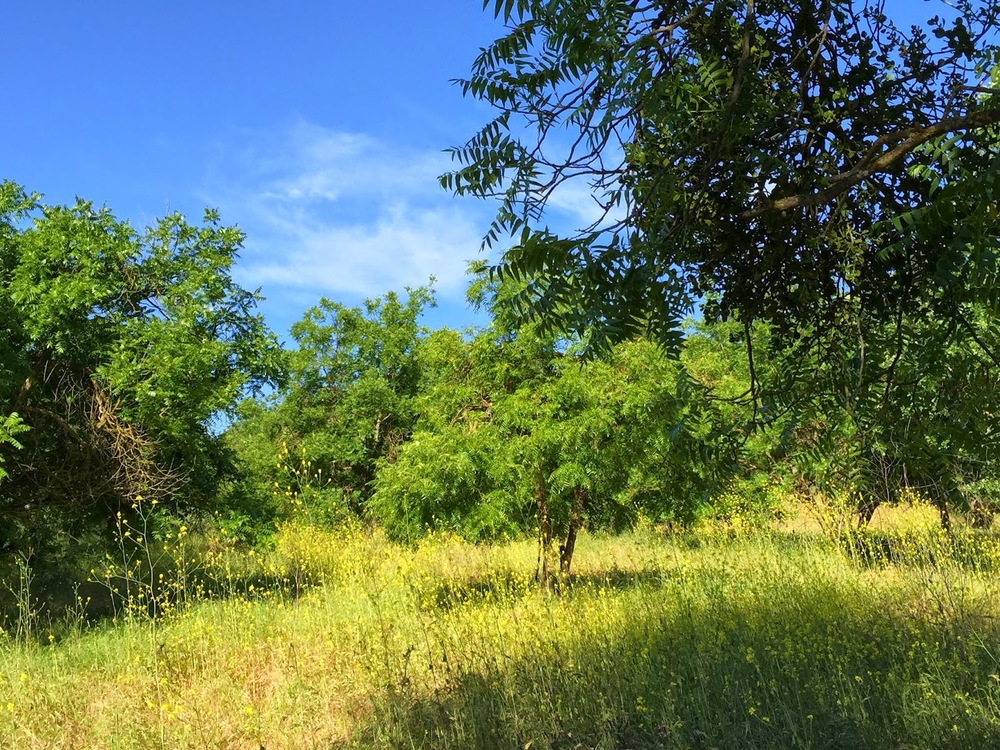
May 1st, Sugarloaf Open Space, Walnut Creek, CA

I don't know if I feel quite like THAT during May (though maybe I'd like to!), but this month does seem fresh and bursting with life and full of possibilities. (If May DOES make you feel like that, perhaps this event is for you! World Naked Gardening Day.) The wilting heat of summer is yet to come, there is still green in the hills, and wildlife abounds.

Speaking of abounding wildlife, we are having serious continuing issues with the deer. So, near the top of our list this weekend is to start our fence-raising project. The list, you say? What list is that? Why, it's the list that I start on Monday and add to all week long, until by the time Friday night comes around, I'm confident it won't all get done over the weekend. Somehow it always does. See, we really are weekend hobby farmers - almost nothing happens in the yard over the working week. Spot watering, yes, sporadic weeding, yes, an occasional digging in of a plant, yes. But nothing substantial, that is all saved for the weekend. We're just too busy with work, school, and kid activities. And this weekend, I'm going to be gone for a day, and that's stressful, because we have so much to accomplish in such a short time.

Here's this week's list of projects for the weekend.


Notice the lack of a nap on this list. :)

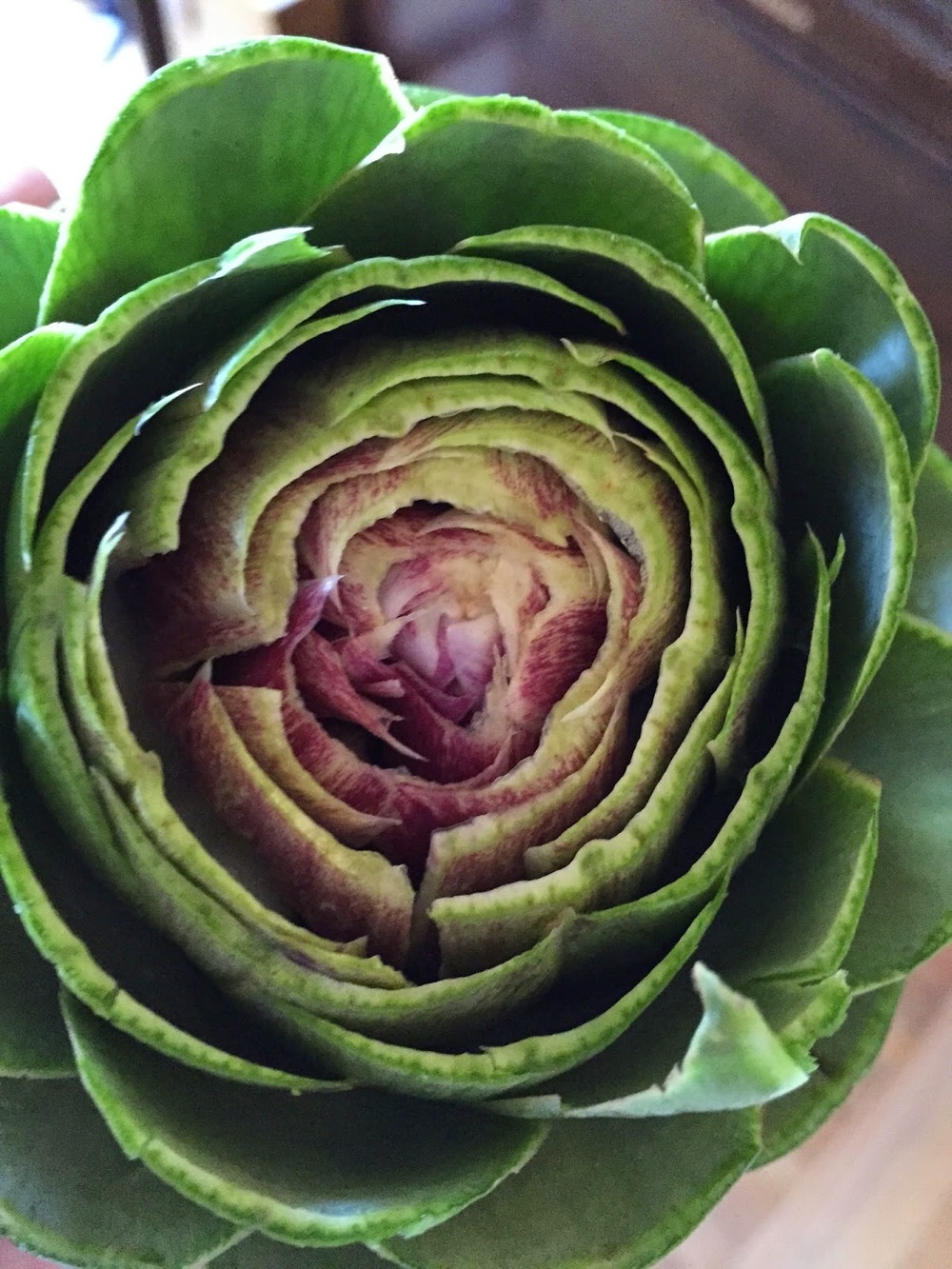
Last night, I cut off the largest artichoke and we all shared it! The smell coming off it right after I cut it off was heavenly, and it tasted pretty good, despite my mistakes during cooking. (I thought that since it was fresh, it would cook faster. No.)


All the seedlings are coming up - corn, beans, squash, collards, romaine, collards - it's the miracle of gardening. I never get tired of this wonderful surprise, that life begins from a tiny seed, so small you think it will never sprout.

It's hot, though - 91 today. The hot weather brings other surprises. At work each day, we take a walk with the kids. Many of them like to walk off to the side of the path, through the weeds. Earlier this week, the child I was walking with bent down in the weeds to pick up a stick and a movement caught my eye - a four foot long snake slithered away from us and stopped about a foot away. Not shy at all, and definitely not a rattlesnake, I stopped to take a picture, which was difficult because I was wrangling kids. Not the best shot.

Just his head and neck

I thought it was probably a gopher snake, and Gary at California Herps agreed with me when I consulted him. This was an exciting find for me, but I think it freaked out the other teachers. It also makes us realize that we need to be more careful with the kids walking in the weeds!

May also brings flowers on the buckeye trees, spotted all along paths and woods.


The blooms are actually poisonous to honeybees, and we have one in our yard that I planted years ago. It's only gotten about three feet tall, and the deer eat the leaves constantly, so I won't mind removing it. (That's on the list!) But they sure are gorgeous in the wild.

Farm Tour tickets are selling, and we hope very much that you can come be a part of it.


Catch you on the flip side of the weekend, and when I do, we'll see if everything on the list got done.

Summer in April

We always have a little heat wave in April, getting us ready for the real heat yet to come. My sweat glands (and attitude) have not adjusted, so by golly, when it hit 90 here yesterday, the air conditioning went on. And it's supposed to be hotter by the end of this week. Around this time, I start wondering; when is the neighborhood pool opening?

Since it feels like summer, some summer projects are in order. First up, sweet potato slips. I checked my records from last year, and it looks like I started this in late April, and they were ready to put in the ground by late May. It's easy to do; just pick out some organic SP's at your local market (they must be organic, as conventional SP's are sprayed to stop them from sprouting), cut them in half, and set them cut side down in a shallow dish of water, in a sunny spot. Add water as needed throughout the weeks. When they sprout on top and on bottom, it's time to plant!


I had very good luck with my SP's last year until the deer ate them. Sigh. Well, this weekend we start with the 'raising the fence' project, so that should take care of the problem. More on that later.

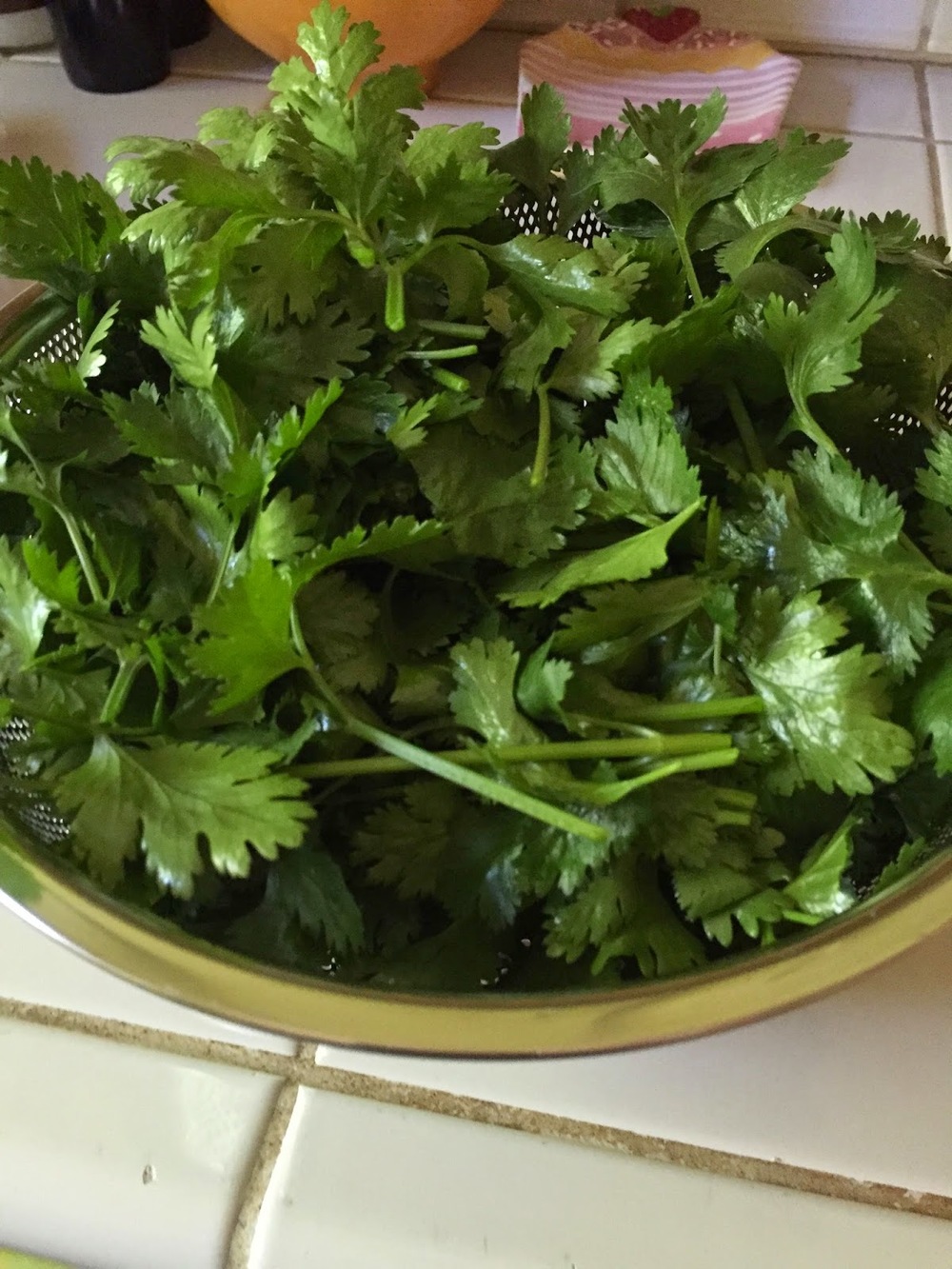
I have a huge amount of cilantro in the garden, and even after advertising it to neighbors, co-workers, friends, random strangers on the street - there's still a lot of it. And the herb spiral is fit to bursting with sage, thyme, marjoram, oregano, sorrel, and mint. So I went searching for a way to preserve fresh herbs. I ended up trying something like a pesto, by which I mean I blended a lot of herbs with a little bit of oil, then put the puree in ice cube trays to freeze, then decanted them into a ziploc to keep in the freezer.


And then today, on the Living Homegrown website, I saw this article about making herb concentrate. It's basically the same idea, except stored in jars. I'm so glad to know that I can preserve this fresh summer flavor for all year! (These cubes, or jars, will last a year in the freezer.)

When it's this hot, we get really sweaty running after kids all day at work, and we all desperately want an iced coffee as a pick-me-up. I finally got around to making cold brew to take to my co-workers, and it was a huge hit. Much richer, much more flavorful, no bitterness, and with simple syrup and cream it was a real treat. (It's also much stronger, so I might be making it with extra water next time. And we're all used to strong coffee, here - I was surprised how strong this was - so if you prefer a lighter coffee, adjust your ratios.)

So here's how you do it: Put 10 cups of cold water in a pitcher, along with 12 oz ground French Roast (next time I am going to use a ratio of one cup of water to one ounce of coffee and see if that makes it a little less strong). Stir and let sit overnight. In the morning, drain through cheesecloth and store in a pitcher (or in a Mason jar, as I did). That's it! Make sure to put those coffee grounds in your compost!


It is SO GOOD. This is going to be a weekend staple for me at home, for sure. I just might need to make it decaf, because I'll be drinking it all day long. Oh - and the simple syrup really makes it good - just heat up a cup of sugar to a cup of water on low heat until the sugar dissolves - that's simple syrup. It mixes more easily into the cold coffee. And use plenty of ice! Enjoy!

Oh, fishy, fishy, fish... (with apologies to Monty Python)


Non-comformist!


I ate the fish's typical friends for breakfast, yesterday.

Harvested the last of the beets and ate 'em for dinner last night. Delicious! We didn't get enough beets this year and I'll have to plan accordingly next year.


The greens make a nice addition to my morning scramble. Besides the last of the kale (which just keeps pumping out produce), we won't have fresh greens again until the collards, romaine, and Bibb come up.

Planting takes time - adding compost, getting the drip lines right, making furrows and putting in seed, or digging in starts, adding cages or trellises - but harvesting takes more time, because the food needs to be processed. Cleaning beets, for instance requires four containers, one for edible leaves, one for chicken leaves (whatever looks marginal), one for the actual vegetable, one for compost. I enjoy processing the harvest if I can do it outside.


Remember those compost bins we built out of pallets? Well, one's already nearly full.

That's figwort growing out of the bin at the top center
I'm trying to add layers of brown and green. For the brown, it's all chicken straw, all the time - once a week I add a big amount of that. Of course the straw is soiled with their excrement, which is very good. For greens I add the leavings from our harvests, and my next-door neighbor brings over his grass clippings when he mows (isn't that nice of him?). Though he said yesterday that it was probably the last batch, as they won't be watering their grass this summer due to the drought. And now that most of my harvesting is done (shallots yet to go - next week, and kale when it stops producing or when I can't stand not to plant basil any longer!), I'll have to trim a lot of plants to keep up with the green stuff for the compost balance. Or not. One thing I've learned over the years, compost always happens, irregardless - it just takes more time.

I've been making lists of vegetables that do well here in winter, and ones that do well in summer, as well as those that do well on the edges of the seasons. I'm also making lists of winter veg I want to try, like rhubarb and brussels sprouts. I'd also like to try growing wheat or some other grain, for both our needs and the chickens needs. If any of you have experience growing grains, I'd like some advice.

Flowers continue to open up, which makes me and the bees happy.

Mallow, just on the verge
Not just here, but in the open space too. 


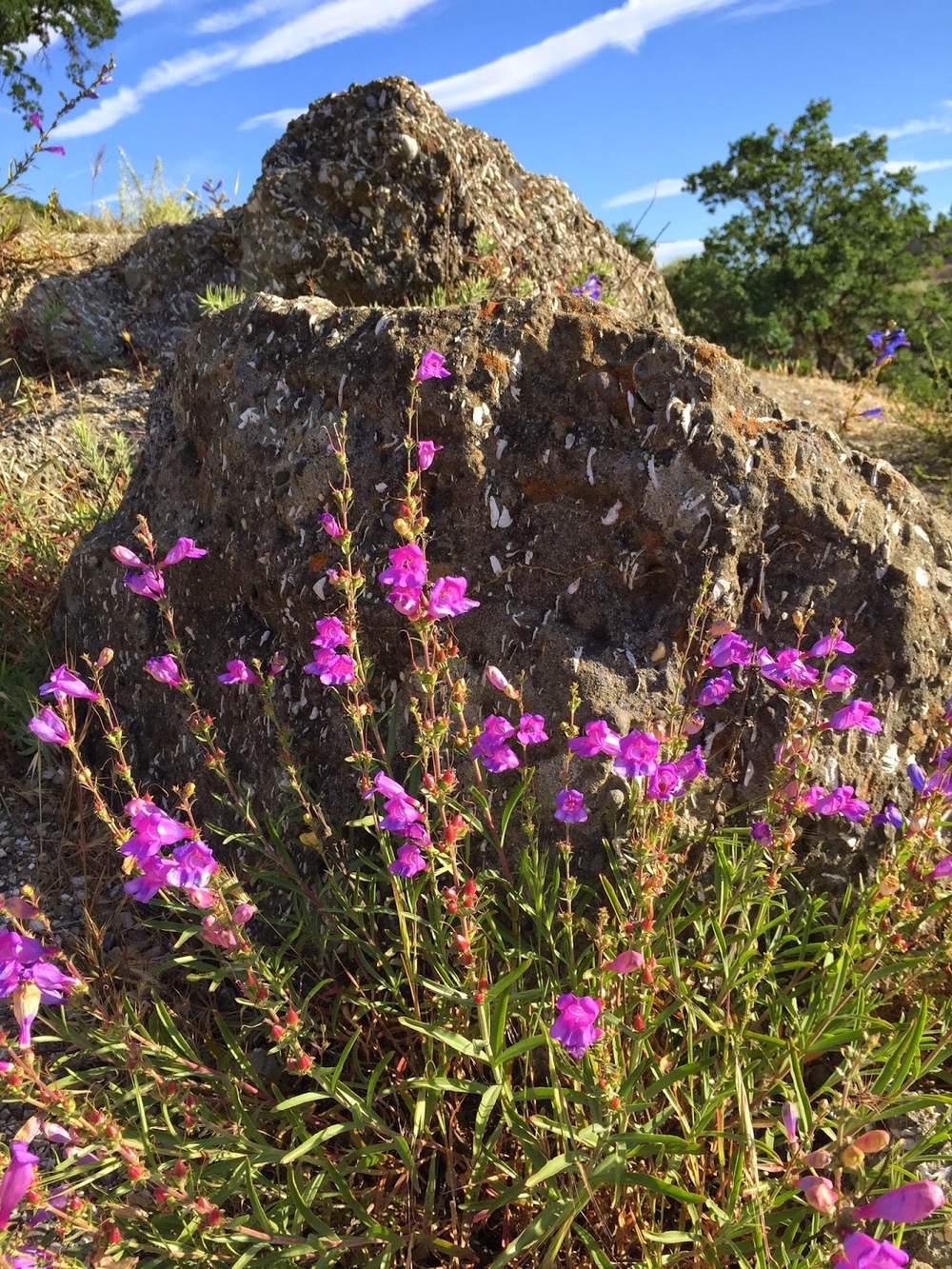
Native penstemon
Beautiful now, but it's fleeting.

Garlic!

Oh, it's one of those times I wish you could just scratch 'n sniff the computer screen. It's garlic harvest time!

These HUGE bulbs were a pleasure to pull out of the ground; they came up easily, as though wanting to be released from the dirt. The soil was interspersed with tons of mycelium, threading its way around the garlic roots. It was just a beautiful experience, the smell of the garlic and the soil, the ease with which I pulled up the bulbs, the lovely sight of roots mixed with healthy fungus. We planted these last November.


That's a lot of garlic!

A quick rinse of the roots, then up on top of the chicken coop for drying. The coop is covered first with a layer of hardware cloth, then with a light roof of sun-deflecting panels. The garlic will stay in between layers for a month, to cure. Then they can be braided and hung and used all year!


Now the coop looks like a Tiki hut! Where's my umbrella drink?
The shallots will get the same treatment, but they don't seem ready to be harvested, yet.

The thought of garlic braids hanging, plus any preserving I might want to do (last summer the thought of canning anything just made me tired, but I'm feeling differently this year), made me wonder where to keep preserved food. Our house is tiny, maybe I've mentioned that once or twice or a thousand times before? I kept pumpkins in my bedroom last September, for heaven's sake. Seed potatoes were kept there, too. I need a better solution. 

I have one spare corner in the living room. It's where the dog sleeps, but if I install some sort of hanging rack, it won't usurp his spot. Dad has made Shaker pegboard hanging shelves before, and I think something like this would be ideal for my needs. The garlic can be hung from hooks in the ceiling. It's a cool, dark corner, and filled jars would look pretty there. 


Not my dad's; just some random pic off the internet


Anyway, more on that as it develops.

While barrowing some dirt, I came across this chrysalis, lying on a rock. I think it must have fallen off the oak tree, as we've been having some significant winds. I put it in a more sheltered spot, and hope it hatches. No idea what it is.


Which reminds me to give you a bee update. They have been going through about two cups of simple syrup per day. Yesterday, Tom went back to add more to the feeder, and got stung! So we've both had our stings for the year. I'm sure the bees will understand that we've met our 'sting quota,' and will be careful with us in the future. :)

Today, we opened the hive to see if they've finally figured out how to build straight comb, and everything looked the way it should, yahoo. The bees are bringing in a lot of pollen, which is a good sign that babies are being made, and we also saw capped brood. We don't normally see the queen, but all signs point to her doing her job. 

Here's a picture, just before we closed up the hive. This is taken from the back looking forward, so you can see the last several bars of comb. The comb near the front of the hive is complete, but this comb near the back is still being built, so you can see the layers on each bar. It's a cool shot. We only have ten bars available to the bees just now; we will add more as they continue to build and grow in number.

Capped brood on the third bar in. I love this fresh, white comb.


Walking around the garden today, I saw lots of interesting things. Blue flax has bloomed. I haven't been able to grow this wildflower in years, and I'm delighted. More forget-me-not has bloomed in the pollinator garden, as well as new salvias blooming every day. The tomatoes have gotten bushy and are starting their slow climb to 6-10 feet tall. (Actually it feels like a fast climb!) The potatoes have sprouted, too!

We didn't make this basket heart-shaped on purpose. I just can't seem to get it straight on the seam!
The new pea plants are growing beautifully...


...while the old ones, having served us well, are starting to look tired. Tomorrow, they get composted, and cucumbers planted in their place.

The strawberry wall is doing better than I'd ever hoped!
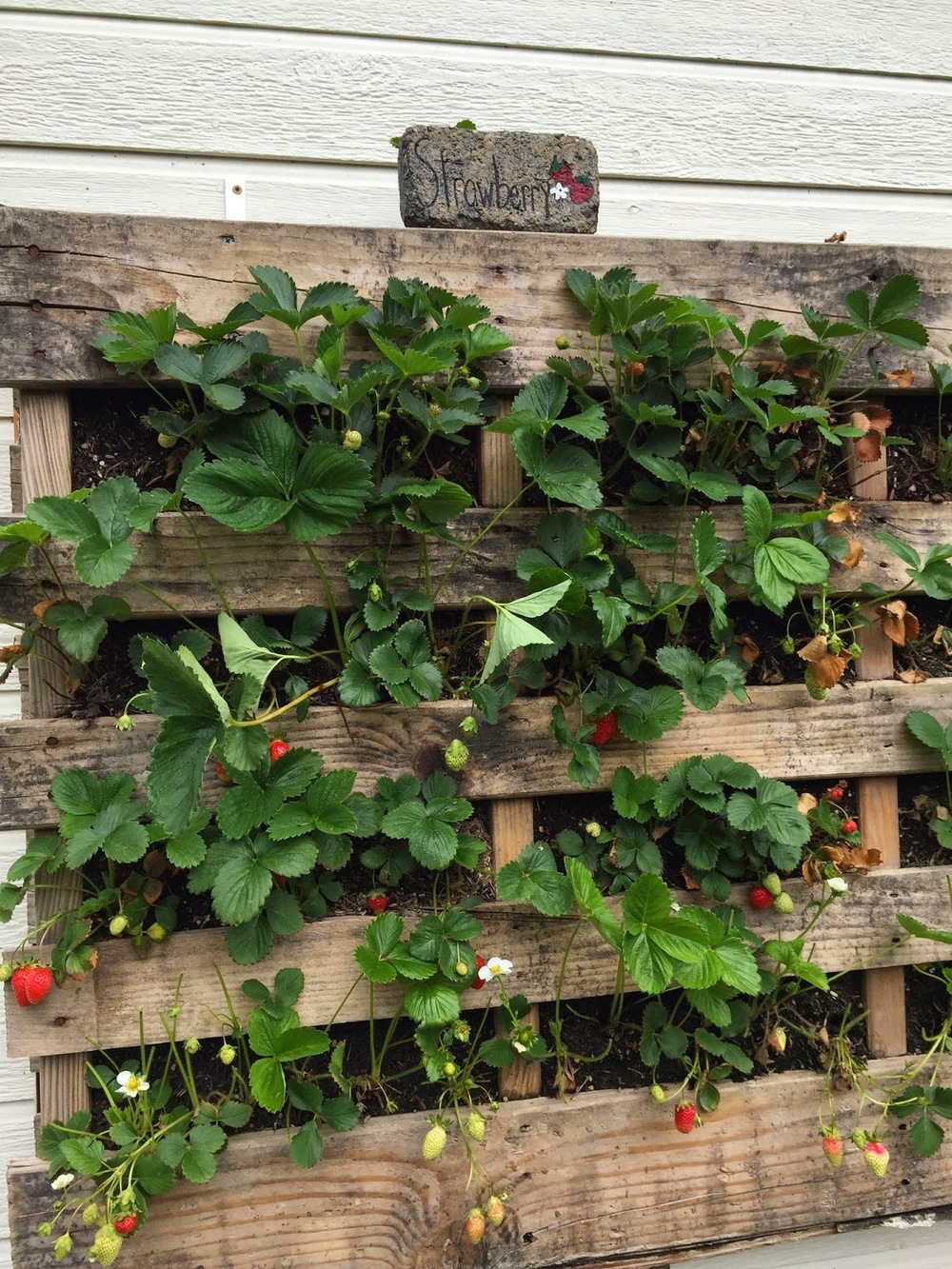
and, the slugs never seem to climb up here!

I've had two reader questions: One came from a friend who couldn't believe, with the amount of mulch we have, how much I'm having to weed. I guess I don't talk about weeding much. Margaret Roach from Away to Garden says you need to walk each bed, be it flower or veg, every week. I've come to agree with this advice. The main weed villains here are seeds that have sprouted from our trees. Two trees in particular - the Brazilian Pepper and the Chitalpa. Both have a zillion seed pods with two zillion seeds per pod and they turn up everywhere. And now in the North Garden (the new garden which was sheet-mulched last November) there is Bermuda Grass coming up, as well as Jimsonweed (or bindweed). The stuff drives me crazy. It's enough to make you wish for many bottles of RoundUp. I resist the urge and pull by hand. And that means it has to be done frequently. I only wonder how bad the weeds would be if we didn't have this much mulch? And they are easy to pull out, which is some consolation at least.

The second reader question was a request for a panoramic picture of the original, South Garden, since we posted a picture of the North Garden last week. So here you go:
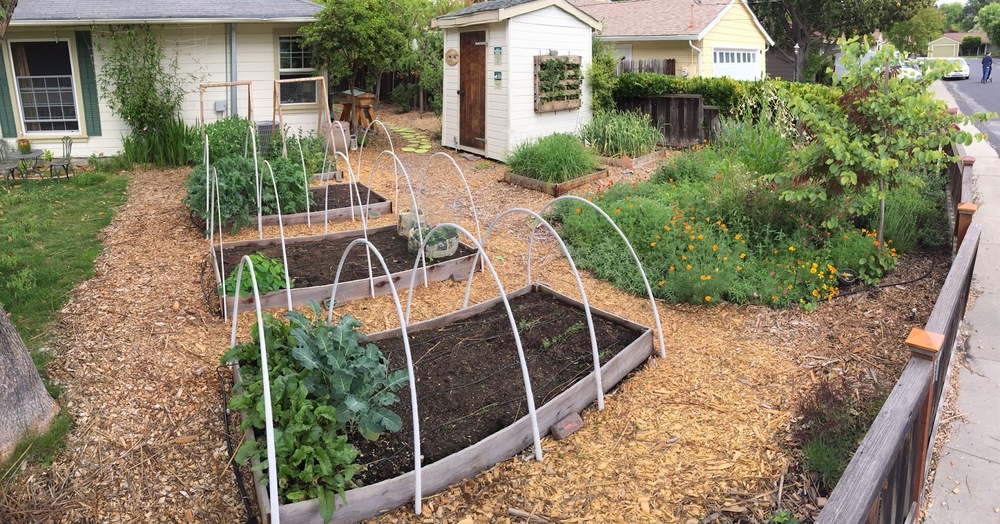

In front are the leftover beets and broccoli (soon to be culled), the right side of that bed is a succession planting of carrots. Behind that I seeded collards (the nasturtiums have a head start), some marigolds, and the potato baskets on the right. Behind that is the end of the kale (still vigorous!) and to the right of that I seeded romaine. Behind that are the peas, and on the right I will be seeding cucumbers tomorrow. On the train shed you can see the strawberry pallet, underneath which are shallots, and the garlic, which is now gone. The right corner is the pollinator garden. I hope to re-create this in the North Garden, but that's a project for next weekend. Over to the left is what's left of the lawn, which has been heavily seeded with red and white clover for the bees. You can just make out the bee hive in the back center of the picture.

In educational news, I've recently signed us up for an online beer making class, through The Kitchn! It starts May 4, promises to get us brewing a gallon in 20 days, for under $100. I don't drink a lot of beer, but I think this will be fun, and Tom's always wanted to do this. (And secretly, once we've brewed some beer, I'm going to use the equipment to make vinegar.) I've also signed up for a fruit tree pruning class in June. I'm really glad to be doing this, because I hack away at our poor trees every year without knowing what I'm doing in the least. Lastly, Tom is going to take a grey-water class in May as well. Education is important and we're glad these sorts of classes are offered!

I'll end this entry with something bittersweet. I've noticed several dead birds both here in our yard and out on the trails lately. I did wonder where all the birds go to die, because we have an awful lot of birds visiting our yard. They have to die somewhere, right? Two photos are posted below, they aren't gross, in fact I'm posting them so we can admire the gorgeous feathers on these little guys, but if you get upset at stuff like this, best to leave now (I won't be offended)!


*********************************************************************************
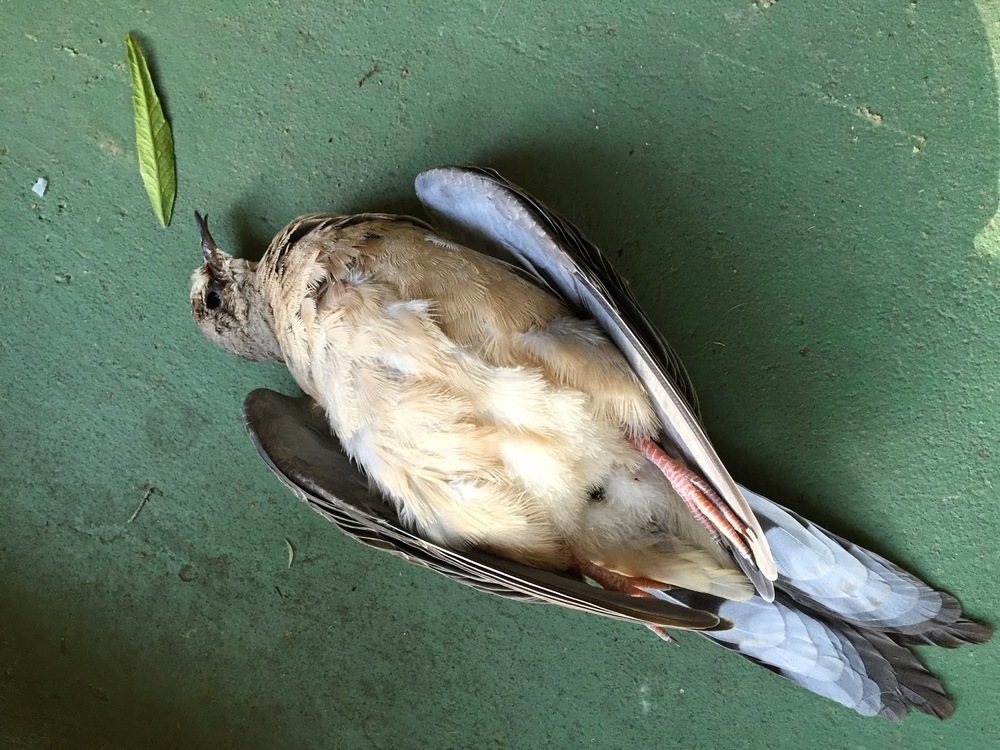
Mourning Dove on our porch

Anna's hummingbird in the open space