Getting it done, one bed at a time

Earlier in the week, we managed to get the tomatoes and peppers planted and caged. We had to make six more tomato cages, and had to use some cucumber cages for a couple of the peppers. But everything is in and that makes me feel good! Especially because we had rain shortly after.

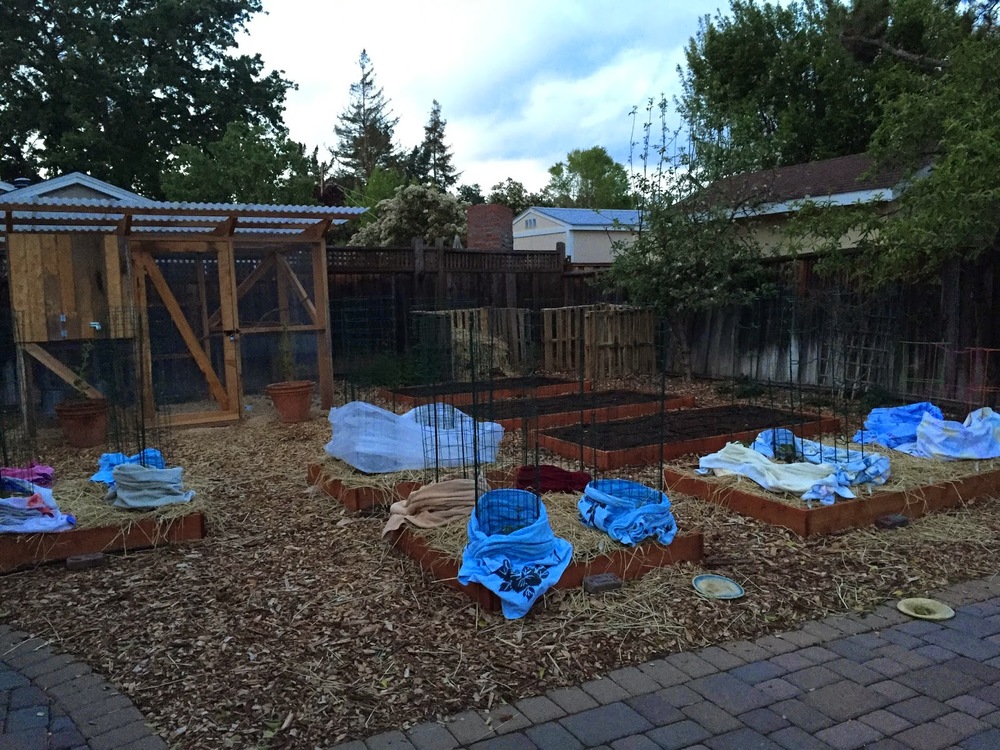
Of course, since then we have had chilly nightly temps, dipping down into the low 40's, so I didn't feel ok leaving the plants exposed. I couldn't cover them, with those cages. So I decided to swaddle them in towels and blankets. It looks mighty strange, but seems to be doing the job.


I also managed to get one potato crop planted. We made this cage out of hardware cloth (wire mesh) last year, and the potatoes did wonderfully in it, until the deer got to them. So, I'm using it again. Half of our seed potatoes are layered in the bottom with some of the good soil we had delivered last week. 


The basket needs to be lined with newspaper (or burlap) so the dirt stays put, and as the potato vines grow, we'll add more dirt, until finally the entire thing is filled. We'll make another cage for the remaining potatoes, this weekend.

I pulled out the chard, as it was starting to look pretty peaked. This was the "Bright Lights" variety from Renee's Garden.


It sure was pretty, and also tasty, and fed us through the winter and into April. So we'll definitely plant that variety again! This weekend, I'll get some romaine in, where the chard used to be. It's supposed to be warm during the days, but still in the 40's at night for the next week, so I'll probably hold off on everything else until later in April.

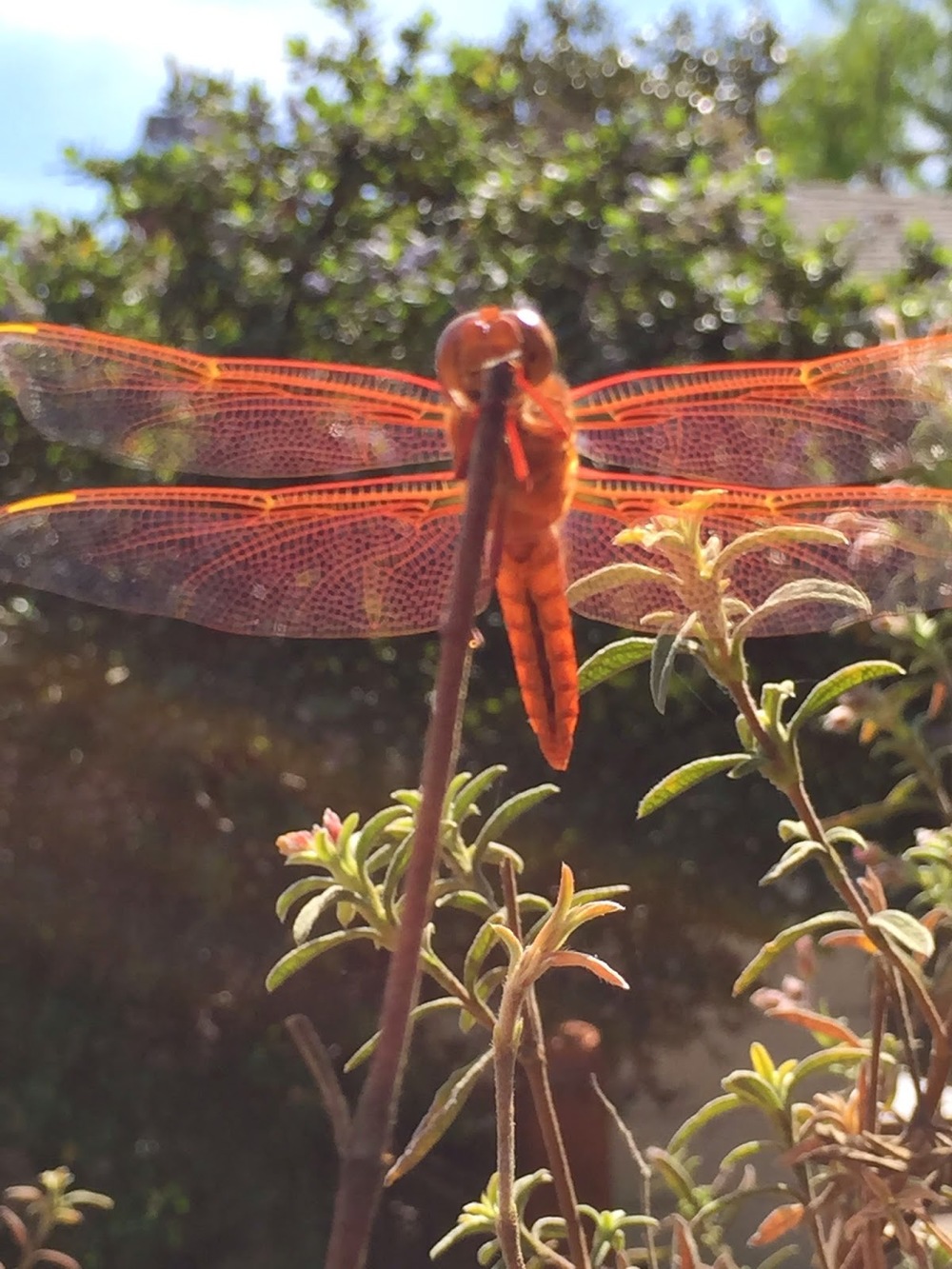
Today as I was checking on the chickens, I noticed this interesting guy perched on the dead branch of a sunrose:


Isn't he beautiful? Looks to me like a male Flame Skimmer. Of course we have water in the yard, in the form of a water feature, and also some shallow water and mud pits for bees and butterflies, but I never expected to see dragonflies here. But in researching it, I found that only the dragonfly larvae feed on water bugs. The adults feed on moths, flies, and ants, all of which are in great supply at Poppy Corners. I gotta say, when we increased our plant production, we also increased our insect population, which has increased all kinds of other populations. First I noticed lizards and salamanders everywhere, now dragonflies? Pretty cool. I'd say we've got habitat going, for sure. Are snakes next?

Speaking of habitat, I'm already thinking about fall projects. I know, our spring projects aren't even completed yet, but I've got an idea and I can't shake it. I'd like to replace the tiny bit of lawn we have left with a meadow full of native grasses, flowers, and bulbs. This caused me to get out the books. You know, the BOOKS. Do you have a pile of books like this? The ones you consult when you get a bee in your bonnet? These are my favorite resources:


And this time I went right for "The American Meadow Garden," by John Greenlee. I've spent some time over the last few days re-reading this book and figuring out how it will all work. I'm very excited to try this experiment. But - like I said - this is a fall project, because fall is the best time to plant in Northern CA. The ground is still warm and the rains are coming. (At least we hope they are.) 

Speaking of rain, I suppose you've heard of California's mandatory water restrictions. Our new drip system is basically going to take us down the required 25%. We're thrilled. Of course we'll also continue to use the rain barrel when it's full (as it is right now, hooray!) and cut down our use in the house. We won't water that tiny lawn at all, and I'll let it die in preparation for the fall meadow planting - it couldn't be more perfect.

I think that's all I have to share with you for the moment. I'll leave you with a beautiful flower I found while hiking in Shell Ridge the other day. It took me a long time to identify it - finally I asked East Bay Regional Parks to help me, and they sent me the greatest resource! A website with all the wildflowers of the parks listed by color. And there it was - this purple salsify. A European transplant - but lovely all the same!


Happy Easter!


Happy Easter! This is a happy day! And Happy Passover, a couple of days late!
Our kids still get Easter baskets, because you're never too old for chocolate, or Legos.


Our neighborhood has a big egg hunt for the little kids, and then an outdoor brunch. Everyone brings a dish to share, and whatever patio furniture they can haul over to the yard where the brunch is held. This year I volunteered to do the flowers for the tables. There's a lot blooming already, so it was fun to make about 10 tiny posies, or Tussie-mussie's, as I like to call them. I know very little about flower arranging, but it seems to me that if you add a lot of color and variety, they turn out nicely.

Everything laid out for arranging

Here they are all together, waiting for transport


Saturday was the Great Tomato Sale, a local fundraiser put on by the Master Gardeners. I bought four slicing tomatoes, four cherry tomatoes, and four paste tomatoes. I also bought four sweet peppers and four hot peppers.


I plant most everything else from seed, including a few herbs like cilantro and basil. (Other herbs, I buy starts.) I don't know why I have a mental block about starting my own tomato seeds indoors and then transplanting them in to the garden - it might be that we just don't have room - it might be that I don't want to buy all the equipment, like grow lights. I'm happy supporting the Master Gardeners, who do good work, by spending a very reasonable $3 per veg.

Nothing got planted this weekend, though, between one thing and another (and a little RAIN!), so I'll try to get to that this week.

But first, I have to solve a problem. We're having some issues with Tasha the cat in the prepared, but unplanted, raised beds. And Joe the dog has been digging near the huckleberry. This never happened on the South Garden, but this back garden is firmly in house-cat/house-dog territory and I think the pets are really noticing that their hang-out space has been reduced. For the dog, I noticed that the digging happened when I hid his frisbees (because they are always littered around the yard), so I've given him those and hopefully that will appease any boredom when he's left alone in the yard (which isn't often, let me be clear). For the cat, I'm going to try a technique I found on the web, very scientific :), where you stick plastic forks, tines up, in the beds. I can't imagine those will feel good on soft padded paws. I'll let you know how this works. I'm not worried about beds where I am planting seedlings and cages, I'm more worried about where there are seeds. I don't mind pee - pee is nontoxic and a good source of nitrogen - but I don't want feces in the beds. And I don't want things dug up after the hard work of planting them.

I had a wonderful afternoon walk with Joe in the foothills of Mt Diablo/Shell Ridge area on Saturday. The hills are so green right now, and the wildflowers really lovely.

CA willow tree seed pods

Hills covered in purple vetch

Elegant Brodaiea

Blue-eyed grass and vetch

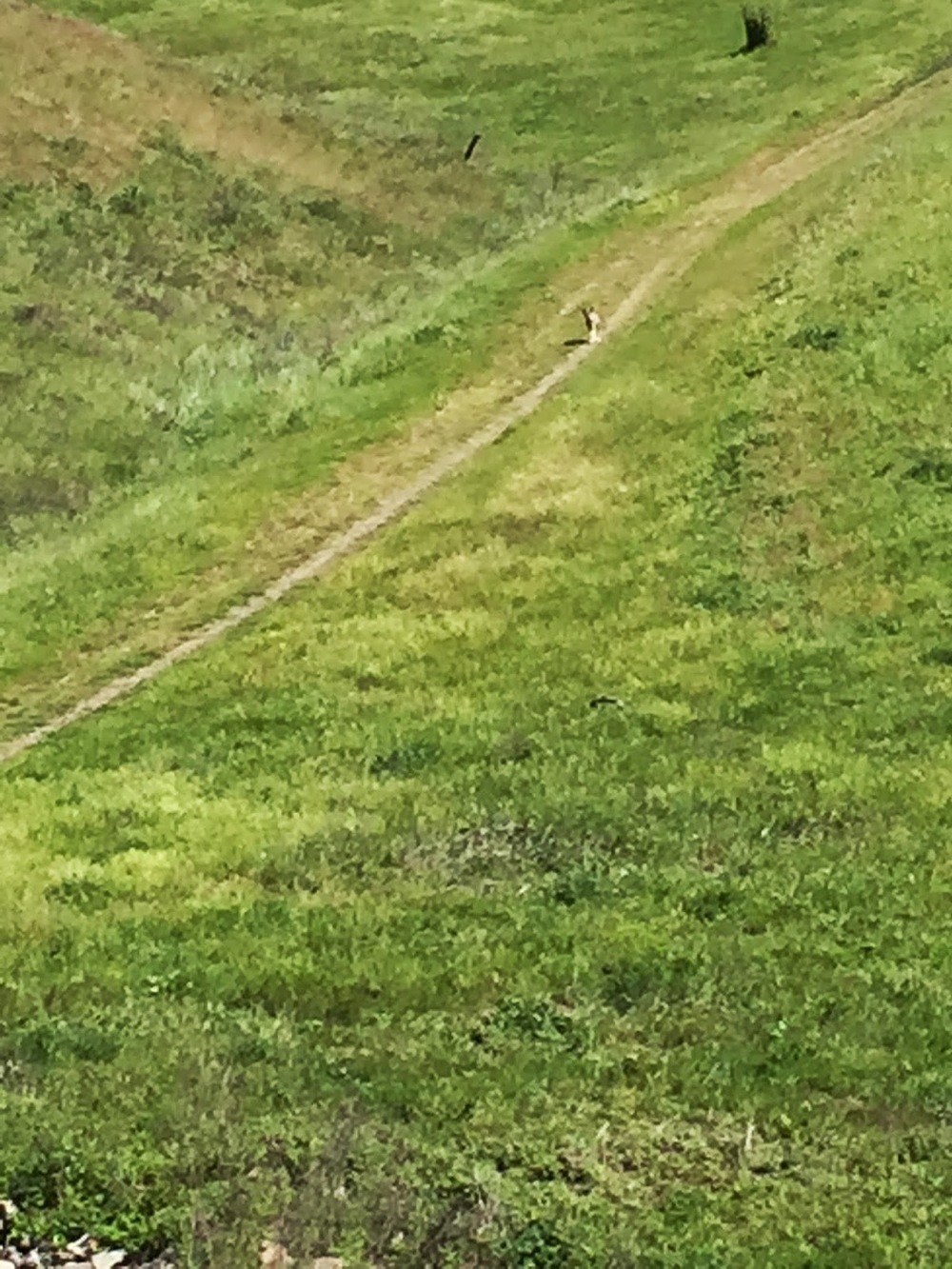
As I was heading toward the gate at the end of our walk, I looked back up the hill and saw a creature  loping down. Something made me stop and watch. It continued loping down towards me, while another one split off and went up the side of the hill. As the creature came closer, I realized it was a pair of coyotes, and the one heading my way was still coming, and was going to cross my path. I moved forward with Joe and got to the gate and watched the coyote lope up the opposite hill, then stop and look around. It was young and fairly small and quite beautiful. Normally coyotes, though curious about humans, stay well away as they are very shy. This one seemed unafraid. 


I love seeing predators in the wild. Mostly because it's unusual, I guess, where deer and turkeys are as common as  pets, it seems. I've never seen a cougar but would love to.

Hope you're having a wonderful Easter weekend, and that it involves chocolate. :)

New Raised Beds, plus news about the Urban Farm Tour

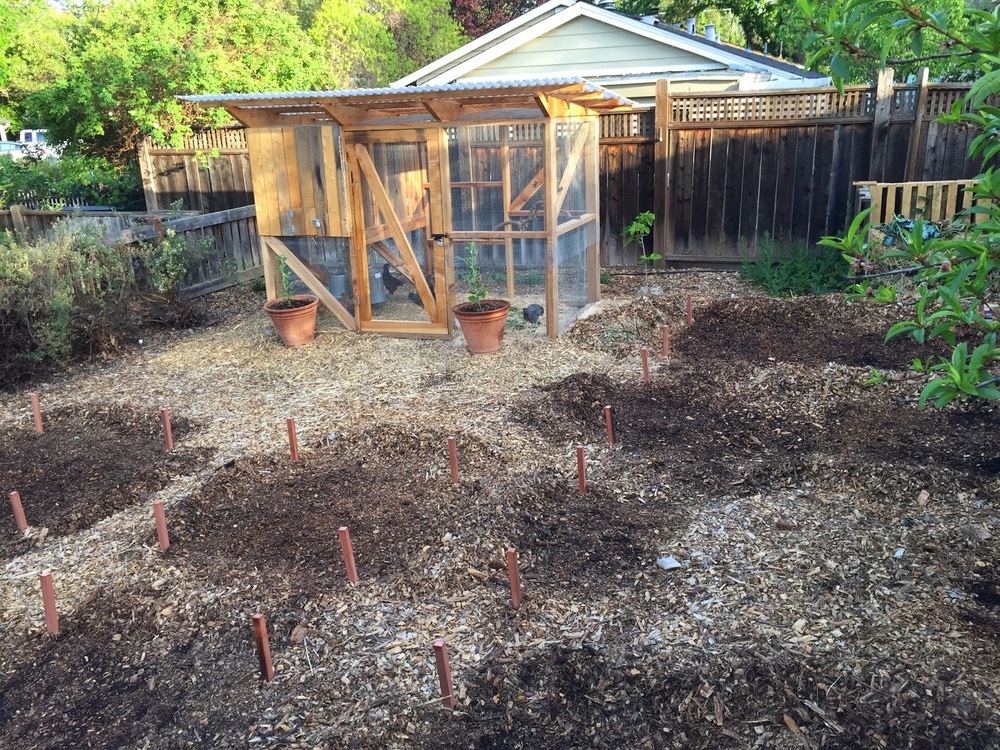
Last November, if you recall, we sheet mulched the North Garden in preparation for this week. The area had been grass and had housed first a play structure, and then a trampoline. About two months after we laid down the sheet mulch, we built the chicken coop. This week we finally began the raised beds in this area of the garden.

The first step is to stake out where you want the beds to go, which Tom did with 2"x2" redwood stakes and some string. After those are in place, it's important to rake the wood chips out of the beds. I didn't do this last year in the South Garden, and we had serious nitrogen issues, or more precisely, lack-of-nitrogen issues. When soil mixes with wood chips or mulch, the nitrogen in the soil immediately goes to work breaking down the mulch, and that work of decomposition ties up all the available nitrogen, leaving none for your seedlings. So learn from my mistake! Rake out the wood chips before you build the beds and fill with soil.

Staked 'n raked

The next step is to purchase lumber, either redwood or cedar, to build your raised beds. Tom likes redwood, and he buys 1'x8' boards. These can be made into either 4x4 beds or 4x8 beds quite easily, with few cuts. He then puts them together with deck screws. This project takes about a day, depending how many beds you're making.


The lumber and the soil are the priciest part of this project. But the beds will last for many, many years, and I'll never have to replace the soil in them - just amend with manure and compost and occasionally top off.

As Tom was working on the beds, I noticed some stubborn Bermuda grass growing in the dirt under the mulch. I hate this stuff. It spreads so incredibly easily and is so difficult to kill. So I spread a little bit of cardboard in the bottom of the beds to help smother it.

The next step is dirt! It takes more dirt than you think to fill raised beds. I ordered 5 cubic yards, which will take care of the new beds, and anything left over will top off the six beds in the South Garden. I ordered it from American Soil in Richmond. I decided to try their special blend called "Local Hero Veggie Mix," which is a mix of sandy loam, green waste compost, rice hulls, chicken manure, grape compost, fir bark, and cocoa bean hulls.  

It smells so good and is steaming and cooking in there! Living soil, for sure.
The dirt was delivered at 8:30 this morning, so now you know what the day ahead holds for me. 

We've had some fun this week, too. The kids and I went with my folks to the de Young art museum in San Francisco, where we got to see some Impressionist art from the Scottish National Galleries. My favorite piece was a Cezanne, called "The Big Trees." I learned an awful lot about painting from looking at this.


The kids' friends have all been traveling on their breaks, but some were finally back in town, and a few stayed for dinner last night. Dinner outside with friends and a fire in the fire pit - this says 'summer' to me, for sure. I know we're pushing that envelope, but still... it was all I could do not to break out the s'mores.


The Institute of Urban Homesteading has just announced the Urban Farm Tours for this summer, in their spring newsletter. Here is a description of the Walnut Creek/Concord tour: 

Walnut Creek & Concord June 6 9am-3pm
Featured Sites
How It Works
Your ticket includes 3 urban farm tour sites and one special interest site (choose at ticket purchase), plus morning hospitality and a simple homegrown lunch.
Come to the staging area in the morning topick up your itinerary, come back for lunch f you desire.
General Admission $40, kids $25,
Friends of the Farm Tour Ticket $60 (includes a gift of farm fresh egg or honey from our farmers)
Patron of the Farm $80 farm fresh eggs or honey plus Ruby Blume's Book, Eveyday Cheesemaking

Tickets on sale April 15

And here is how our farm is described!

Poppy Corners 
Hosts: Elizabeth & Tom Boegel
Lot: 7,000 sq ft
Used for agriculture: 4,000 sq ft

Poppy Corners is a testament to what one suburban family can accomplish while raising a couple kids and going to work full time. This thriving hobby farm resides in a tidy neighborhood of overwatered lawns. Most of the grass has been replaced with 14 vegetable beds which produce year-round. There are fruit trees, bushes, vines, and canes interspersed within a perennial garden, as well as vegetable patches tucked in between the flowers. Whatever land is left is devoted to native and drought-tolerant plants and flowers for pollinators. The Poppy Corners farmers raise bees and chickens. They build their own structures wherever possible and tend the garden and critters themselves. They continue to research and apply new ways to use less water in the hot and dry summers, and to catch water in the winter. Diverse farming methods are employed from permaculture principles to square foot gardening. Come enjoy research in process! 

We are really excited and hope you will attend and support this effort, if you are anywhere near the area! 

Find Your Park

Just want to make you aware of a neat thing the National Park Service recently launched - a service called Find Your Park, which is celebrating the centennial of the NPS (in 2016) and wants everyone to get involved in finding your local national park, enjoying it, and helping others to find and enjoy their parks, too.

As you know, I am a great fan of our local open space recreation areas, and local/state parks, and also of the NPS. It's cheap to visit them, you usually learn an awful lot about history, native peoples, and native plants and animals, plus you get to be outdoors in nature with your family, away from computers and phones and all the other distractions of daily life. The more time we spend looking at our devices, the more we have to carve out time to be away from them. I truly believe this.

As John Muir said, "Everybody needs beauty as well as bread, places to play in and pray in, where Nature may heal and cheer and give strength to body and soul alike."

Spring Break is here!

This week is spring break for all four of us. It's a gift of time: Time to actually accomplish the projects on the list, maybe take a nap, perhaps rent a boat on a reservoir? The possibilities are endless. However, the projects will likely get first priority, as having a considerable amount of time to complete them is just too tempting. Also, did I mention how busy it is in the garden, in spring? And with temperatures in the mid-80's over the past weekend, we got a head start on the list. We wished the neighborhood pool was open, after some sweaty working days.

a local hiking trail
Due to the warm temps, we keep a window open in our bedroom at night, and often in the wee hours around 3 am, I've been woken by coyotes up in the open space near our house. They howl and yip, and make quite a racket. I did some research and it looks as though this behavior is very common among coyote family members, especially at night. In fact, the coyote's Latin name, Canis latrans, literally means 'barking dog.' At this time of year in California, females are probably pregnant, having mated in February, and are expecting babies in April. There's still water in the hills in vernal pools, but I'm not sure how long that will last, and when the water runs out, the coyotes venture down in to our neighborhoods. They are generally not aggressive and can be quite shy, but I wouldn't be surprised to find out that they visit our backyard water fountain during summer nights. Which is why our animals are shut up tight after 8 o'clock every evening.

In the garden, there's still lots of greens to eat.

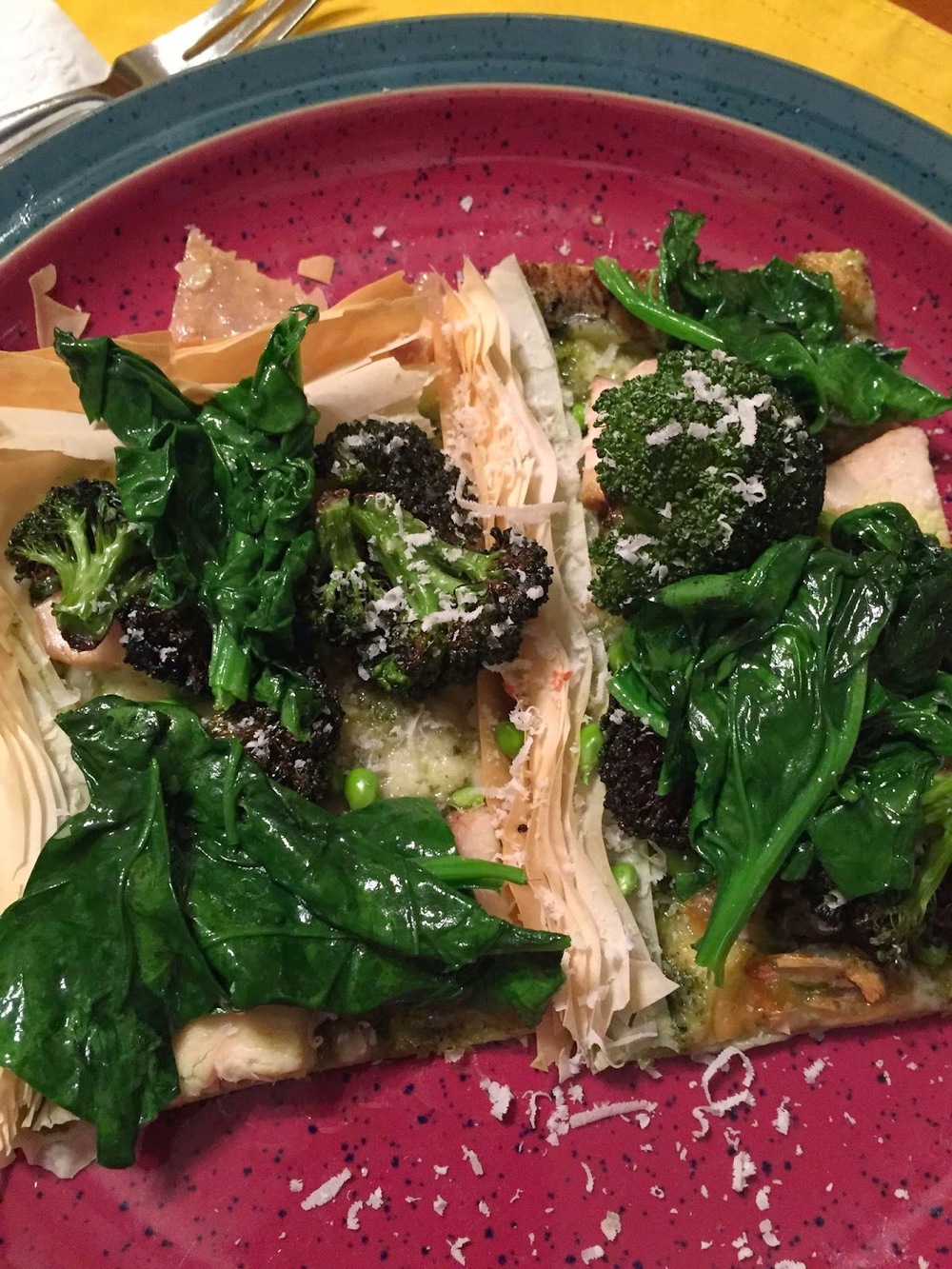
Pesto Chicken tart with spinach, broccoli, and peas from the garden

The kale and spinach are still producing, but the chard is starting to look a little tired, and the romaine is looking like it's going to bolt any minute. The broccoli seems to be finished, and the beets are no longer growing. Peas are being harvested daily. The garlic is starting to get a little brown in the foliage, which means it might be time to stop watering it and then harvest. I didn't expect the garlic to be ready until June, but with this hot weather, it could be ready much earlier. The strawberry wall has tiny berries and I can't wait to taste the first one. The blueberry bushes have tiny berries, too.

garlic

kale

spinach

strawberry wall

peas, and a little friend

And, we have an artichoke coming up in the garden!

My only question is: who gets to eat it???

We eat from the garden constantly; I add greens to almost every dish I make. Tonight I was making a pasta bake, and I realized I was out of ricotta. So Tom whipped up a batch in thirty minutes. That was fun!


Preparations for Easter have commenced. I had so much fun dying Easter eggs naturally last year that I wanted to do it again this year. This project takes most of a day, but the result is so pretty, it's worth it. I used turmeric, red cabbage, red onion skin, yellow onion skin, and beets this time. Put your veg or spice individually in pots with a cup or two of water, bring to a boil, then simmer for 30 minutes, covered. Strain, add a tablespoon of white vinegar, and pour over hard boiled eggs. Then store in fridge for four hours. Drain and let dry.

I used white and brown eggs this year, and I have to say I like the effect on white better.

The darker ones are brown eggs, lighter = white eggs

Blue is white egg with red cabbage, bright yellow is turmeric, orange is yellow onion skin,
green is brown egg with red cabbage, red is beet, red onion skin made the brownish colors

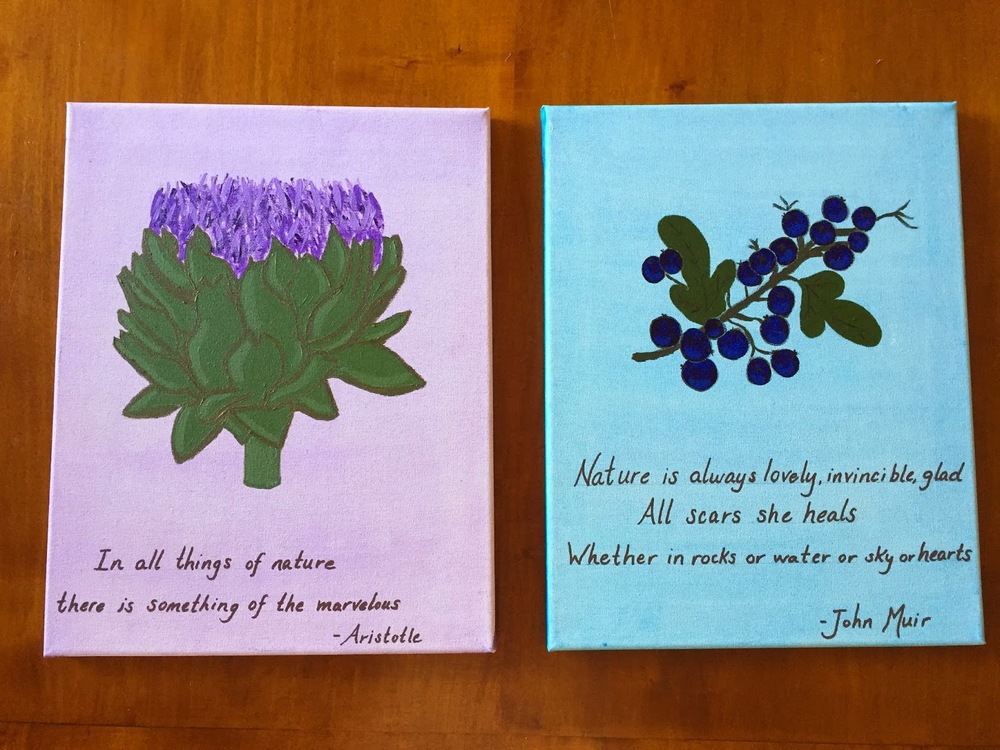
I also spent some time over the weekend making a couple of new paintings for a blank wall. I knew I wanted to paint something from the garden, and add quotes about nature that are meaningful to me. Next time, I'd like to try a mixed media thing, with the quotes made from 'found' letters or torn out of magazines, some sort of decoupage sort of thing, though I've never tried that. Maybe that will be a summer experiment.

Artichoke and Blueberries

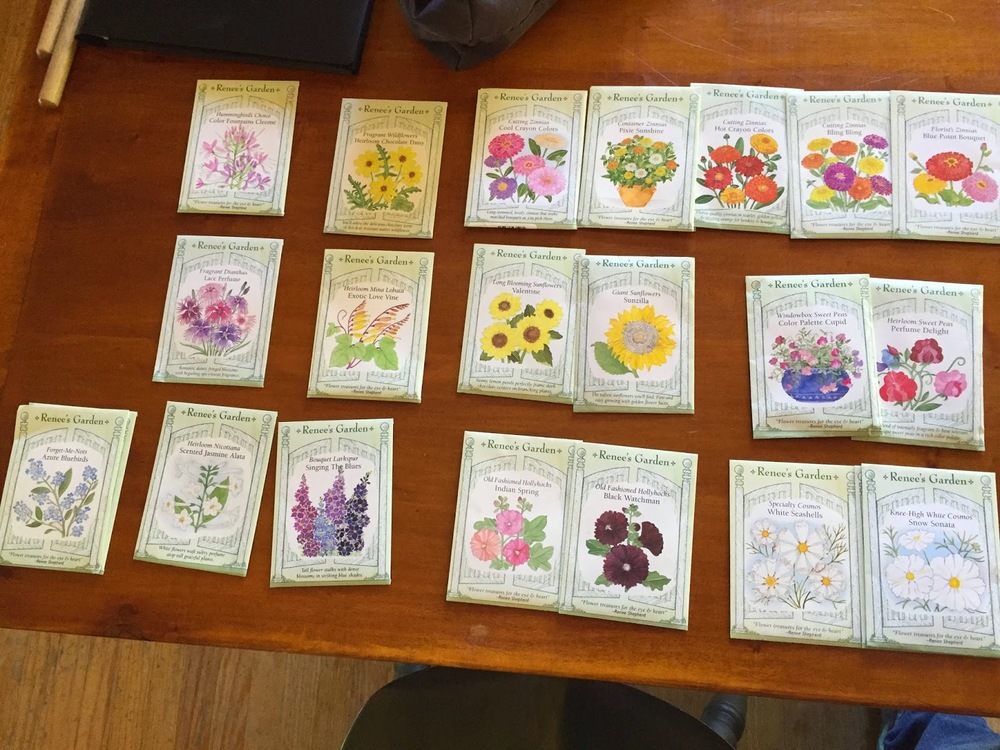
Do you know about the website Nextdoor? I've enjoyed being a member. Last Friday, a neighbor posted that his mother was a Master Gardener, and he had many hundreds of seed packets to give away. I responded immediately and met him later that afternoon. I scored about $100 worth of seed packets! It was like Christmas. Not only that, they were from Renee's Garden, my favorite seed house! I'm not sure how old the seeds are, or if they are even viable, but I'm willing to give them a shot. I planted a lot of the flower seeds over the weekend. I have saved the zinnia and cosmos and will plant them in a couple of months.

Flower seeds

Veg seeds

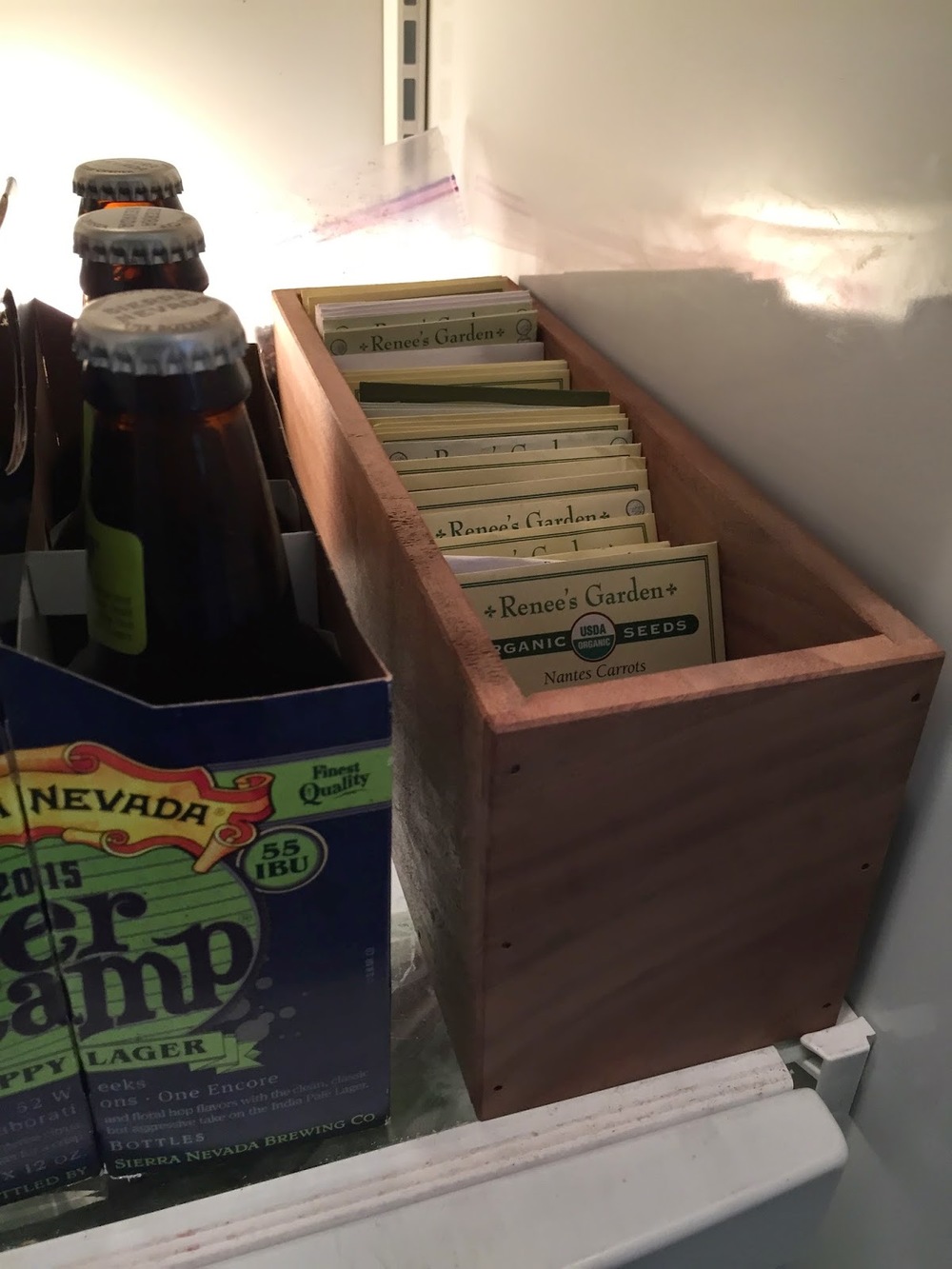
I'll store the winter veg seeds in the fridge until fall, as well.

Speaking of storing seeds, I realized that my haphazard method wasn't working. I asked Dad to build me a seed caddy, and he built one for me (that same day) out of California Claro Walnut, a special kind of wood.


It fits perfectly in the fridge!

I know I've said it before, but it sure is great to have a woodworker in the family.

We cleaned out the garage, moved some lumber, and I took some stuff out of storage. The tomato, cucumber, and pepper cages are ready for use next weekend, after I attend the Master Gardener sale. We'll need to make a few more.


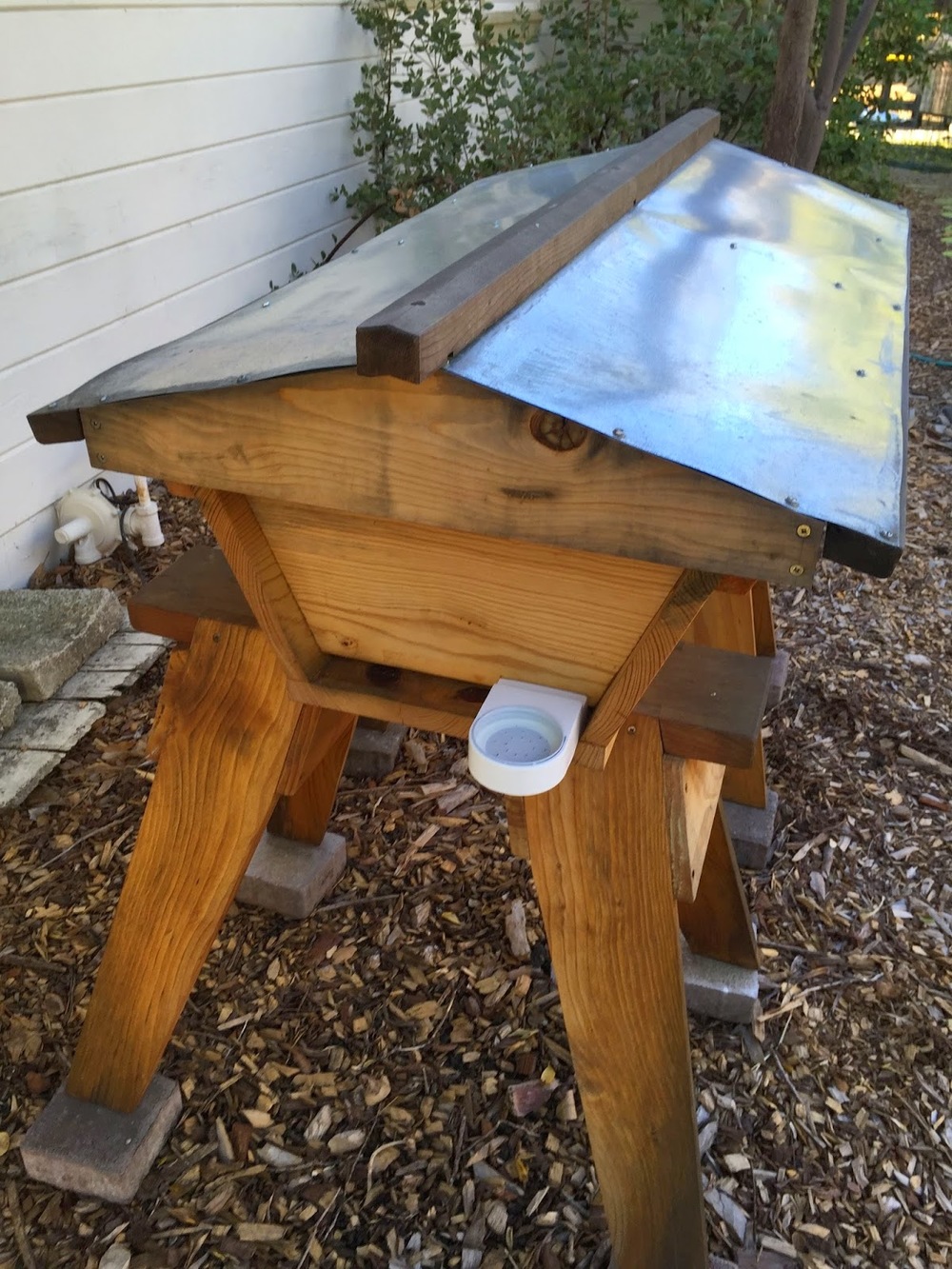
I also got the bee hive ready, as the bees will be here in less than two weeks. I took the bars out of storage and put them in the hive, and made simple syrup for the bees to eat as they are building comb and starting to collect nectar. It takes a lot of energy to build comb, and I want to make sure the bees have the calories to do that. Honeybees like a 1:1 ratio in simple syrup (hummingbirds like 1:4, a less sweet concoction). 

Bars are in and tools are ready

the bee feeder is ready, just needs a mason jar full of syrup

pretty yellow simple syrup, which will be stored in the fridge until the bees arrive

Flowers continue to pop up in the spring sunshine and heat.

Harlequin flower

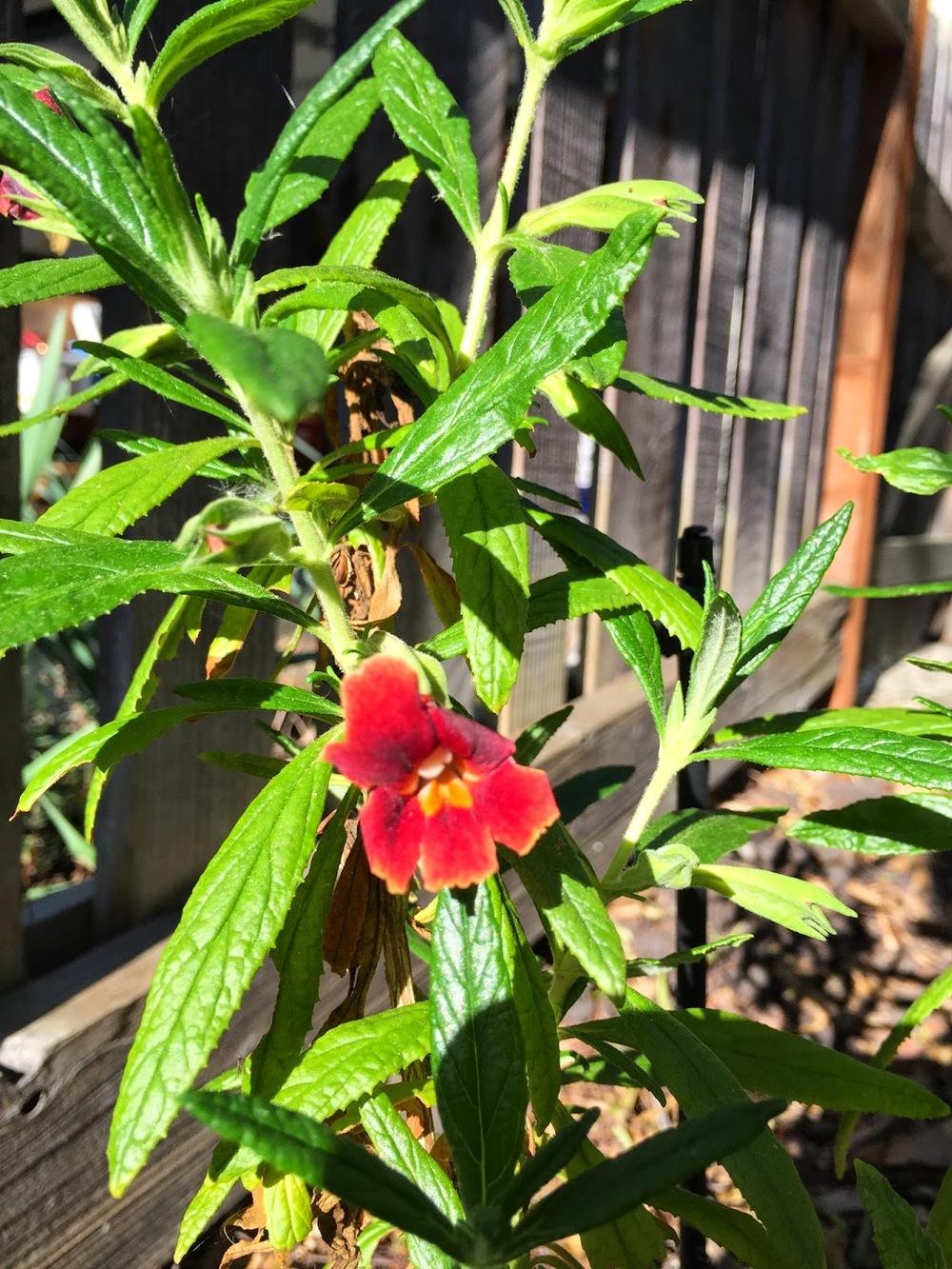
Monkey flower

geraniums

another geranium

Plans for this week include: Building the raised beds in the North Garden, ordering and hauling dirt to fill them, buying and planting all tomatoes and peppers, and starting nearly all the summer vegetable seeds. I'll be taking winter veg out of the South Garden and replacing with summer crops. Early April is planting time. I guess Spring 'break' means something other than a break, at least in the garden.