Homemade Suet Cakes

On Christmas Eve, my mom made a wonderful prime rib. When it came time to do the dishes, she decanted the drippings from the roasting pan into a mason jar to save for broth, of course, but she was left with a large amount of rendered beef fat. I mentioned that it might be good to have it for some purpose or another, and then Tom thought maybe he'd make plum pudding with it, so we brought it home. Today I took it out and made it into homemade suet cakes for the birds.

Suet cakes aren't expensive, but I thought it would be fun to try my own. I found this great tutorial at Instructables and loosely used their method.

First I melted the beef fat, which had hardened in the fridge, down to a liquid using low heat.


Man, this smelled good. Suddenly I had a dog in the kitchen, watching my every move, and drooling.

After the fat was completely melted, I took it off the heat and added a substantial amount of peanut butter. Then bird seed, until it was a very chunky mix of goodness.


There's a great store near me called East Bay Nature that sells bird seed by the pound, specifically mixed just for our area. I would have much rather used their seed, but since I already had to go to Safeway this morning, I just bought generic. Not the best quality, but will do in a pinch.

I poured it into a tupperware container and put it in the fridge to harden. It didn't take long. I cut it with a sharp knife and pried a chunk of it out - not easy. Very sticky. My peanut butter ratio must have been too high.


I slipped the little chunk into my suet feeder (reserving the remainder in the fridge) and hung it in a Chinese Pistache tree, next to the cute feeders Mom gave the kids for Christmas. This is very near the water feature and many birds hang out in this tree, after bathing. Plus, the house you see behind the fence belongs to our wonderful neighbors who have many feeders, too, so it's a popular area for birds.


We'll see who visits. I'm expecting chickadees and finches, mostly. We do get titmice and pygmy nuthatches at the bird feeders, and scrub jays of course, and probably a squirrel or two. I wonder if the sweet little black phoebe we've been seeing in the yard will partake?
Christmas Cookies

Our family has had a wonderful friendship with another family for three generations. Somehow, through 45 years, we have lived practically next door to each other, first in Maryland, and then in California. The grandkids of the original friends are now growing up together, though with a more challenging distance, as Adam and Kate are in Northern California and Olivia and Luca are in Southern California. Still, we manage to meet several times a year and celebrate major holidays together.

One non-negotiable date is for Christmas cookies. We've been meeting at one of the matriarch's homes for this for 11 years now. She makes a wonderful dough ahead of time, from a recipe that has been passed down in her family, and the kids cut out the cookies into various shapes. When the kids were little, they basically just made a mess, but as they've grown older, they've been able to roll, cut, and bake more and more cookies. This year, I think they would have kept going as long as there was dough!

After the cookies are baked comes the decorating with Nana's buttercream. Again, when the kids were young, this stage mostly involved eating, but now they like the decorating best. As the years have gone by, second generation buddies Greta and I have stretched our creative wings and gotten more adventurous with our decorating. I remember graduating from spreading buttercream with knives to cobbling makeshift pastry bags together using ziplocs, which was a major step up in our skillz. 

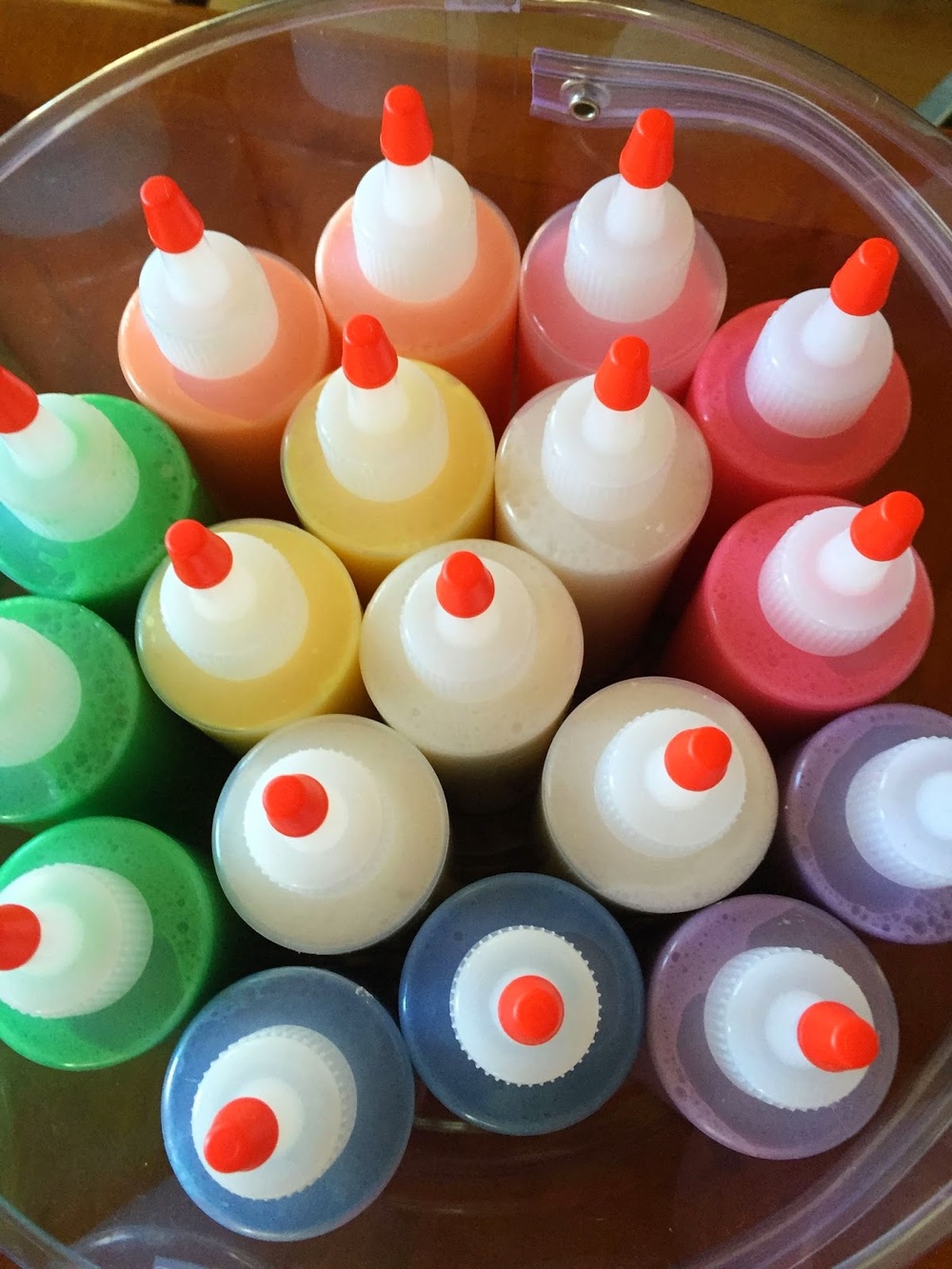
This year, I found an interesting post on The Kitchn, my go-to place for new and different food ideas, and thought this icing technique might raise our game even further. I bought a giant pack of four- ounce Wilton mini squeeze bottles on Amazon, and spent a morning making icing out of powdered sugar and milk. This is exceedingly easy - just dump some powdered sugar into a bowl, add a little bit of milk, and whisk. Add more milk to make it the consistency you want. If you make it too thin, add more powdered sugar. You can't mess it up. It has a very simple taste; it's not as delicious as buttercream, but this icing allows the flavor of the cookie to come through.

I find that many fancy food colorings add a bad taste to icing, so this year I went back to the standard liquid stuff you can find at any grocery store. Certainly not good for you, but just once a year, I think it's gonna be ok. And it's tasteless and makes great colors. I made a rainbow and filled the squeeze bottles.


This technique had a learning curve. Unlike buttercream, this liquid frosting floods the cookie and everything runs. We had a few melted-looking snowmen and listing trees, at first.


We finally got the hang of it, realizing that you need to flood the cookie with a base coat first, let it dry, and then add decoration. Either that, or make the icing thicker to begin with, which I'll try next year.

Greta also stumbled upon a great way of making a sort of tie-dye with the colors, and dipping the cookies into it. This yielded some very interesting results. Here's one of Kate's:


Greta always makes cute cookies:


The cookies look great all together.


And, the best part is, no matter how they look, they taste AMAZING!


I found this picture from seven years ago - so fun to look back at these cuties.


And here they are this year, teenagers or almost-teens:


Watch out for sisters with rolling pins!

I hope all of you had a blessed Christmas, filled with family, friends, and love. Our plans for the coming week include researching chicken coop building plans, taking the dog for long walks, and trying to keep the nighttime frost from killing the winter veg (so far, the hoop houses are winning!). I'm actively seeking chicken advice, so if you've got some, lay it on me.

What the Rain Brings

We've had rain almost every day here in Northern California, for the past few weeks. It's sorely needed and we're all grateful, but our wildfire-razed hills and unprepared infrastucture in the valleys makes it hard to take in and absorb all the bounty. We've had flooding, electrical lines down, and uprooted trees. None of that has happened here at Poppy Corners - at least, nothing more dire than the 'river' we get in front of our house, which is a permanent fixture in rainy winters. Our garden seems to withstand quite a bit of moisture, which is one of the benefits of having an abundance of organic matter - it just holds on to the water more efficiently, allowing less to run off.

I haven't gotten out much in the yard, however, because - well - it's kinda miserable to garden in the rain. All the greens and peas are growing gangbusters, the shallots and garlic are doing brilliantly. The broccoli, beets, and kohlrabi are another matter. I never seem to have luck with these vegetables, no matter which season I plant them. Luckily there is plenty of other green stuff to make up for that.

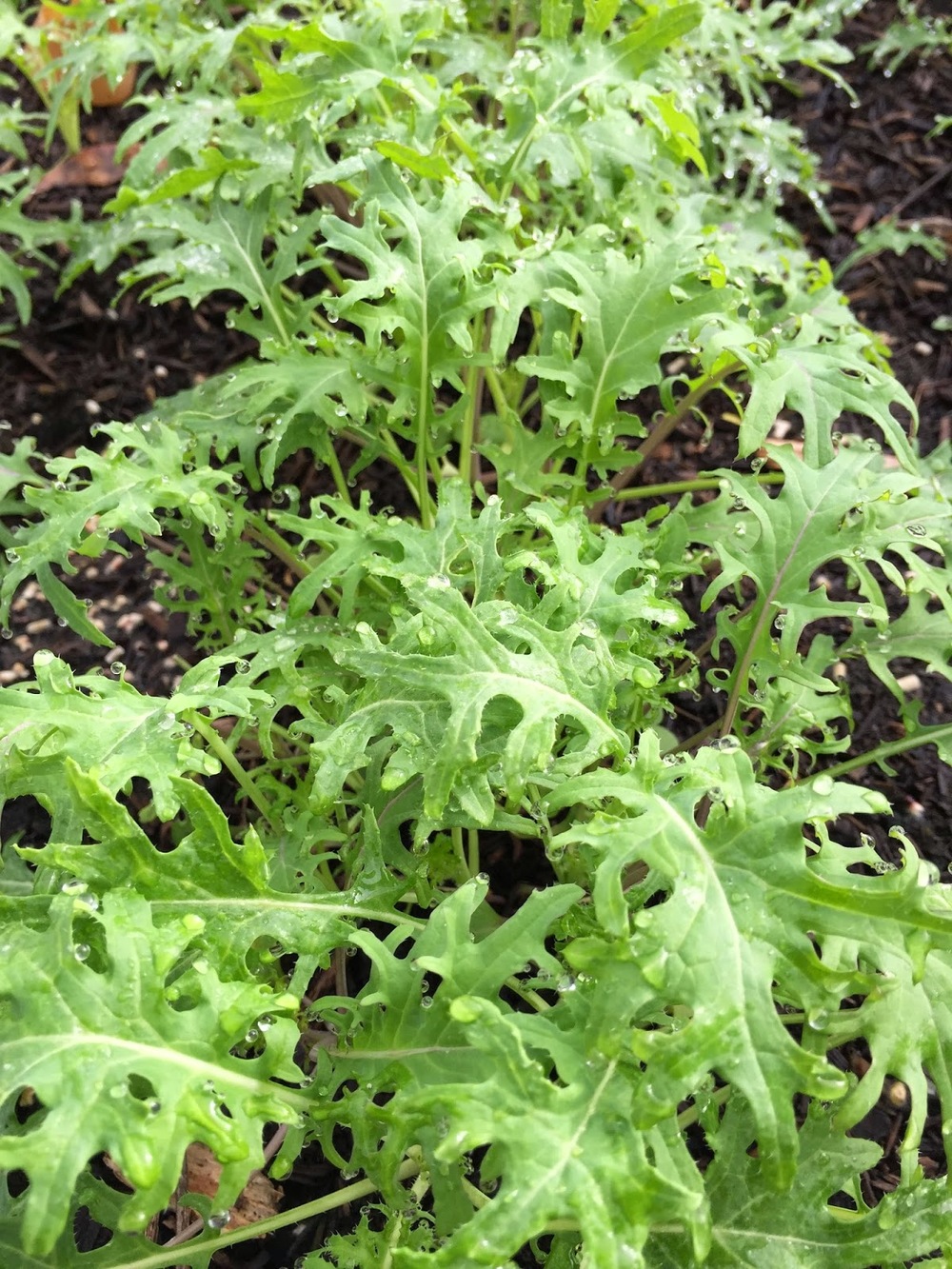
Red Russian Kale, my favorite!

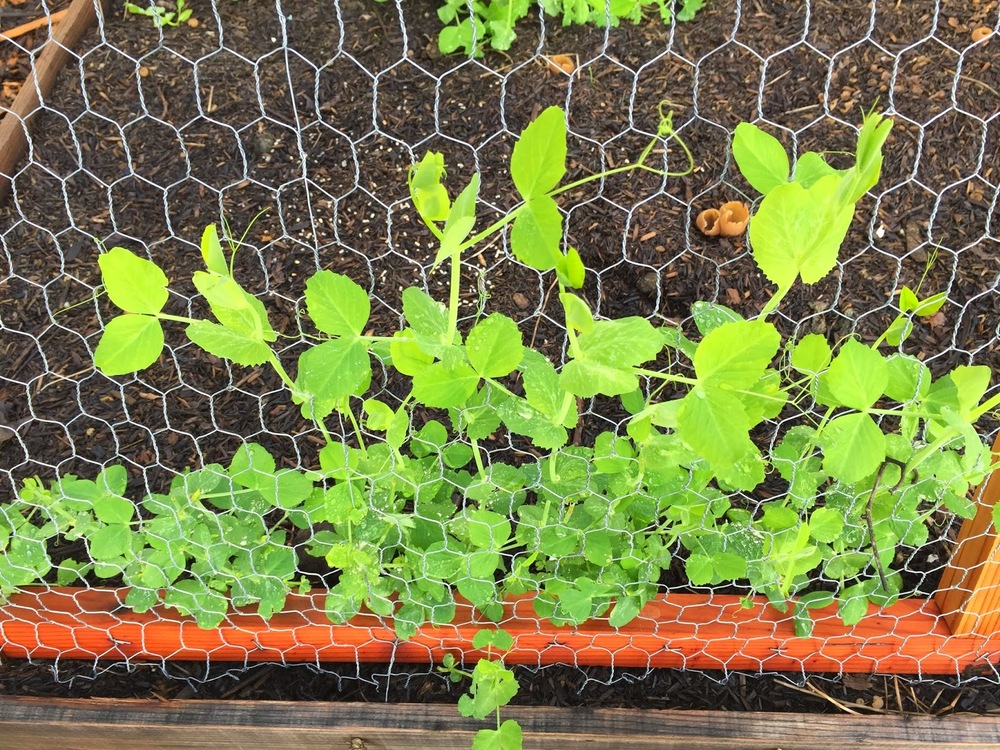
Snap peas
I've been harvesting braising greens from Renee's Garden (Asian stir fry mix) and eating them every day, they are just so delicious right out of the garden. The spinach and chard are almost ready, and even the romaine is making a go of it.

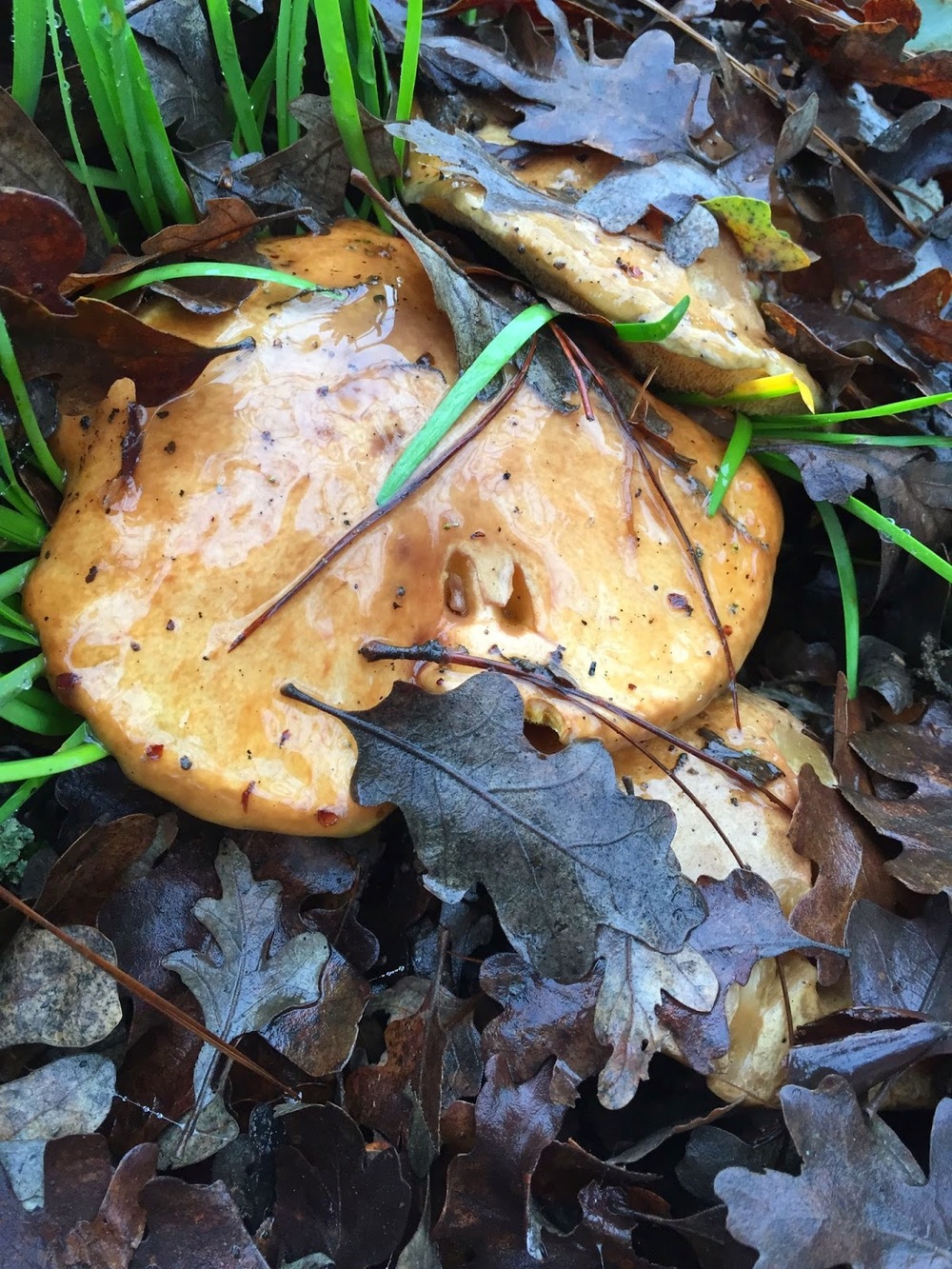
Another thing the rain brought, in abundance, is mushrooms.


I'm really fascinated by fungi. I've found a great guide online, but it really is hard to identify some of these. Ideally I'd like to take a class, but so far the only one I've found is in SF (the Mycological Society of San Francisco), and it seems a long way to go for a passing fancy.

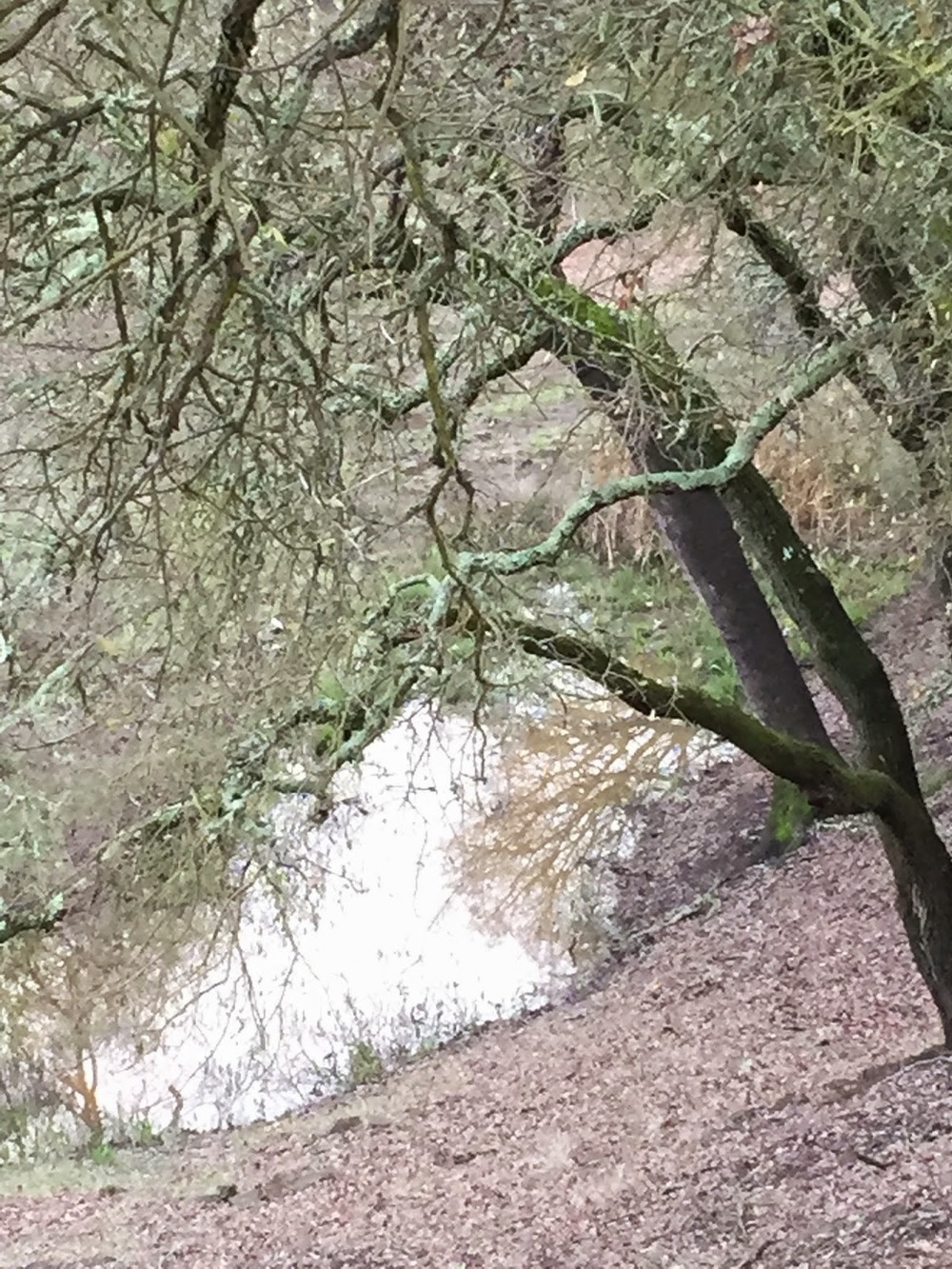
On my walks with Joe, I see changes all around, as creeks and streams start to run again, and vernal pools fill in the hills. I hear bullfrogs and wonder how many eggs, deeply buried in mud, just hatched in the past few weeks.


Joe loves to eat the fresh, new grass bursting out everywhere in the open space. Walks take twice as long, because he's snacking his way through them.

In my yard, I noticed that the manzanita is blooming. The hummingbirds are happy, but this is occuring at least a month earlier than it should. Also, my neighbor's narcissus are blooming, and that's at least two months early. While the rain is nice, we also need some colder weather (and some frozen water in the form of snow in the mountains!), and that hasn't happened yet; I think the plants are a little confused.


We finally got out to cut down our Christmas tree. We went to Castro Valley Christmas Tree Farm, where we were told that the trees grew very little this year, due to the drought. We picked out a very small tree and it took about one minute to chop it down.


I don't think the Christmas trees will have that problem next year. So far, it looks like it's going to be a wet winter. Stuff is growing EVERYWHERE, even in unexpected places.


Now that I've sent out my holiday cards, I can share them with you. I decided to paint a seed packet of sorts, and include a few seeds for each recipient. I enjoyed working on this project, and smile at the thought of California Poppies growing in little swathes all over the world.


I also thought you'd get a kick out of my honey labels - we gave honey to all the kids' teachers this year (just a taste! there really wasn't enough for much more than that.):

We're a brand!

With just one more day of work and school, we're looking forward to having a couple of weeks off to enjoy Christmas - family, church, food, presents, concerts, and of course, getting stuff done in the yard. I have several projects lined up, including moving the remainder of that pile of mulch, and taking a trip to the dump. It's possible that we'll be part of an urban farm tour coming up in the next year (details to follow, if it comes through), and preparation for that needs to start now.

oh! I almost forgot a recipe I wanted to share with you: Lacinato Kale Gratin. This was incredibly delicious and we had zero leftovers. I used the kale they recommended (also called Dinosaur Kale), because of the large, puffy leaves, but I suppose any kale or hearty green would work. I also took the cream down to two cups, and used leftover gruyere I had in the fridge. This was an amazing recipe that will be in our regular rotation. Enjoy!

Stash the Phone!

Thought you all might appreciate this little gem from Tom Stienstra, outdoor writer for the San Francisco Chronicle.

Get your 5 senses’ worth from outdoors


Updated 4:14 pm, Sunday, December 14, 2014

On a walk last week, on the trail from the other direction, a hiker approached who was holding his cell phone in front of his face.
As we crossed, he held up a hand to stop me. “Is this the right way to the waterfall?”
Turns out he was reading one of my stories on his phone as he walked.
Yet the trail was right there in front of him. A stream was running alongside. It sounded like a water symphony. Ferns were electric green. Mosses oozed water. Just ahead, a newt was trying to make its way to a mate, walking as if each leg operated independently of the others.
“The waterfall is right there,” I said, pointing, “just upstream.”

This has happened a half-dozen times or so this year. It seems that the advancement of cell phones, electronics and gadgets in general has people more disconnected from the land than ever.
It has a lot of people living in a bubble. You can miss all the sensory triggers, the smallest of sights, like all the mushrooms that emerged last week, the smell of the woods, the taste of clean air, the sounds of the wild and how a trail, softened by rain, feels underfoot.
When you become aware of all the senses, that’s how you have experiences you never forget, especially when you share them with people you care for.
In addition, you can learn to read the land and water. You often don’t need a map. You get so tuned in to the landscape that you can figure out, on your own, where everything is.
On trips on BART last week, it seemed every person on every train had a phone in his or her face. No books, magazines or newspapers, and nobody ever looked out the windows.
Life in a bubble might work on BART, but it isn’t the best way to enjoy the outdoors.
On your next trip, stash your phone deep. Or better yet, venture to where it is out of range and doesn’t work anyway.

Tom Stienstra is The San Francisco Chronicle’s outdoors writer. E-mail: tstienstra@sfchronicle.com Twitter: @StienstraTom

Honey!

Today, Adam and I got out the big bucket of wax and honey that has been draining since Sunday, curious to see if we had much product.

The comb was cut off the bars into this bucket, made for the express purpose of harvesting honey. If you have a Langstroth Hive, you can also drop some big bucks on centrifuges for harvesting those frames. Since I have a Top Bar Hive, that isn't an option for me. This bucket suits the purpose perfectly, with a screen inside to keep most of the wax out of the honey, which drains underneath. I borrowed this bucket from my dad.


The front of the bucket is fitted with a pipe for draining the honey into jars, which is secured by a flap and a wing nut.


Just open the flap, and out comes the honey. It's fun to fill the jars.


You can see a little impurity here, coming out with the honey. It's impossible to keep all the wax and pollen out. I did not filter the honey any further, because I don't mind the impurities. However we might gift this honey to someone who does, in which case, they can just pass it through a finer sieve.

We filled up all the the little Mason jars I purchased for this purpose. There was still more honey. We got out some medium sized jars. Still more honey! Adam kept saying "WHAT????" I got out a big daddy jar, the only one I had left unused in the cupboard. There's still more honey. I'm going to have to go buy more jars tomorrow.


Isn't it pretty? We finished just as the sun started going down. I stirred up the wax in the bucket, breaking it up further, and put the bucket back in the garage. I'll jar the rest of it, tomorrow.

Next I had to clean all the bars that had had combs built on to them. This was a messy job. I can't get all of the propolis off, because it's basically glue. So I left that on - you can see a lot of it at the right of the bars. Plus I left just the thinnest shaving of wax on top, so that the new colony will have a pattern to get them started. It looks like a spinal column on the bar. Kinda cool.


Adam and I weighed the honey we harvested today. We were amazed to find that we had 19 pounds of honey! Wow! I think my colony would have made it through winter with enough food, had they lived. I am so impressed with their industry. So much of this honey came from the flowers in my yard, and from all the flowers in my neighborhood. You just can't get much more local than that.

I am so grateful to my little colony of bees, and so sorry that they did not survive. But I have already ordered another colony, and will pick them up in April.