Birds, Art, Dessert

The hummingbirds arrive to the water feature first. Around six in the morning, they start to bathe. They're mostly Anna's Hummingbirds, beautiful small bundles who 'chirp!chirp!' fairly constantly. The males have a gorgeous pink neck. Some perch lightly on the side, dipping their heads and beaks in; some hover and drink from the side where the water cascades; and still others like to motorboat across the water, giving a good shake at the end.

After the hummingbirds, the finches arrive. Lesser GoldfinchesAmerican Goldfinches, and House Finches all come for a bath. They like to face outwards, and put their backsides in the water. Then they fluff up and shake. It's super cute.

Later, with no apparent schedule, the chickadees arrive, along with the occasional larger bird, such as a scrub jay or robin. Often we'll see mourning doves in the late afternoon hours. We have lots of other birds in the garden, like titmice and woodpeckers, but I rarely see them at the fountain. I don't know if they get their water elsewhere, or if they are just too shy.

This past week, nearly every morning, we've had a new visitor - a small black bird with a white belly. I finally looked him up - it's a Black Phoebe. I find this so exciting! It's fun to see someone new!

Putting that water feature right outside the kitchen window was a stroke of genius, if I do say so myself. Watching the birds as I cook or clean just makes me happy.

The view from my kitchen window
I went through a bird painting stage a couple of years ago. I know nothing about technique, but every so often I get a hankering to hold a brush, and why not indulge that and enjoy myself? I look for sales on canvas at the local craft stores, and I've collected good brushes and paints over the years, so it's not an expensive endeavor if it fails.

Western Bluebird

Western Meadowlark

Anna's Hummingbird

I used to get very down on myself because I cannot paint from imagination. I must have a model or a photo. 

From an informal art class many years ago


I somehow thought this was wrong. Just two weeks ago I watched "Tim's Vermeer" (available on Netflix) and realized that many of the great painters used models or still life groupings to create their masterpieces. So I don't feel bad any more. However, I have no illusions that my artwork is anything other than amateur!

I also like to make carvings on lino, but they are often created by tracing other artwork, so it's not original at all. It can be quite difficult, though.

From the original 'Candide' illustrations

These darker afternoons and evenings lend themselves to craft and art. The dusk comes earlier, the weather grows colder, and I suddenly find myself rummaging in my drawers for the paint. I've been working on the yearly Christmas card project. I make our cards every year (with the exception of last year; I had gone back to working every day and the faster pace of home life was a steep learning curve); sometimes I make a carving and print each card by hand, sometimes I do a painting or drawing and have the cards made using that artwork. This year, I've decided to do a painting based on our garden adventures this past year. I'll post a photo as we get closer to the holiday.

The turn of the seasons also makes me want to bake. I've been experimenting with different recipes for a Thanksgiving alternative to pumpkin pie (as if there CAN be any alternative to pumpkin pie) and we've had some good eats lately. Danielle Walker's Apple Cake was a hit, moist and delicious with a little cream instead of icing. I also took a chocolate cake recipe from Food52 and substituted almond flour for the regular flour, and coconut palm sugar for the regular sugar. I also didn't frost it, but made whipped cream with a little stevia for the topping. It was delicious. Next up, Calabrian Walnut Cake, also from Food52.

This past week, we had a tree service come and trim up all the big trees in the yard - a Valley Oak, a Brazilian Pepper, a Catalpa, and a horrible Magnolia which I can't bring myself to remove as it provides good shade. I had them remove the Quince, which I will replace with a sweet Cherry. I also had them remove our Flannel Bush - it had the most excellent large yellow blossoms in the spring that attracted every kind of bee you could imagine - but it was the size of a tree and it's called 'flannel' for a reason - the leaves were covered with fine hairs that itched like crazy if you came in contact. Trimming it was a nightmare. I'll miss the blooms, but I'll replace it with some kind of Manzanita and the bees will enjoy that, too.

In the vegetable garden, the braising greens have already germinated! I can't wait to have fresh greens again.

Chilly, wet weekend

We had some much-needed rain this past Friday, and with it came a cold front. The heat in the house kicked on, and it's truly starting to feel like autumn. Leaves are just starting to change.


On my daily early morning stroll with Joe, it's still dark, the air is crisp and clear, and the neighborhood Great Horned Owl is back. This morning he was in the huge redwood tree on the far corner, but his calls followed me all around the block. Hoo hoo.... hoo..... hoooo.... Apparently this is just a territorial hoot, but I find it a bit melancholy. "I need..... a.... friend...." No? Too fanciful? Probably it's more like, "I'll take... you... down...." as these guys are pretty badass, eating prey even larger than they are. I'm hoping they're eating the moles and gophers digging in my garden. Too bad they can't eat deer.

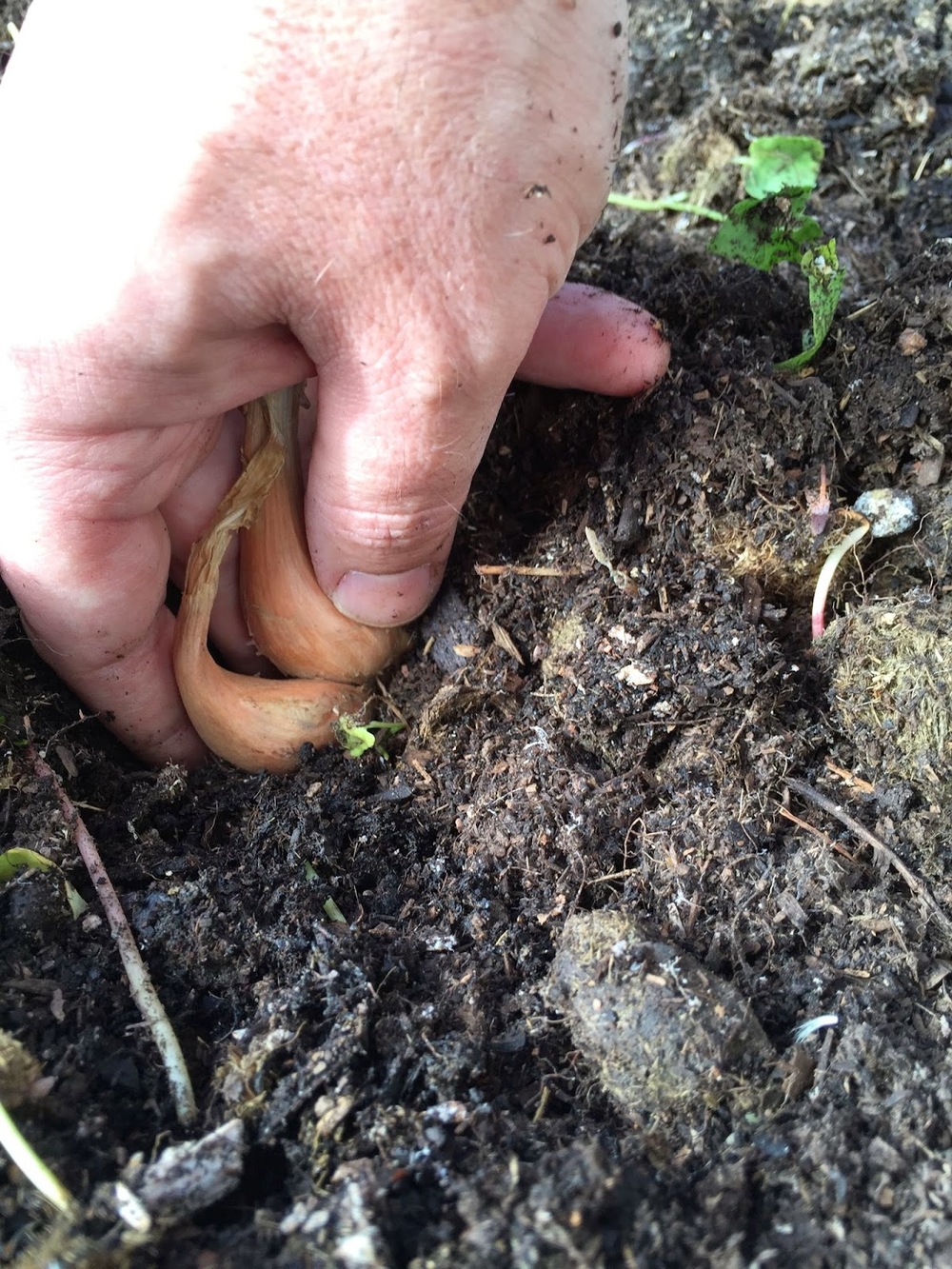
Speaking of the garden, weekends are for getting stuff done, right? I bought some extra dirt to fill up the beds, which were looking low, and Tom added it and raked it. Then I planted my winter crops. Bulbs of garlic and shallots (a first for me) were fun to shove into the warm, good-smelling dirt. Tom enjoyed it, too.


They will grow all winter, and be ready to harvest in June.

I planted seeds of broccoli, kohlrabi, beets, braising greens, kale, chard, spinach, romaine (this one may not grow in the cold, we'll see), shelling peas, and snap peas. I planted organic varieties of each of these. I am committed, now, to growing only from organic seeds and starts. I will NOT be tempted again by the beautiful big mums displayed in the front of Trader Joe's. They are likely grown with neonicotinoids.  I will only buy plants of which I know the origin. My winter seeds came from Renee's Garden and High Mowing. I think in the summer I will likely buy some seeds from the Seed Savers Exchange. I've been reading their blog, and getting their catalog, and I like what they are doing. I don't necessarily need all heirloom varieties, though, so I imagine I'll get tomatoes and peppers again from the local Master Gardeners (they save their own seeds).

I painted 6 or 7 bricks for plant identification. You wouldn't believe how many neighbors and passers-by have commented on these - saying how glad they are to know what's growing. I think they look pretty, too.


We're still trying out different trellis ideas for vining crops. The bamboo trellis' are easy, and cheap, but they are a bit rickety, and our bean trellis totally collapsed this past summer. I noticed a type of trellis on the Seed Savers website that I wanted to try it with the peas this winter. I showed the picture to Tom, we talked measurements, he went off to the hardware store, and by the end of the day I had my two trellis' (trelli?).


It's quite nice to have a husband who is not only able to do these projects, but willing; and even more than that, enthusiastic. He doesn't sigh and mope, he just gets to it with a hearty spirit. I sure appreciate that about him.

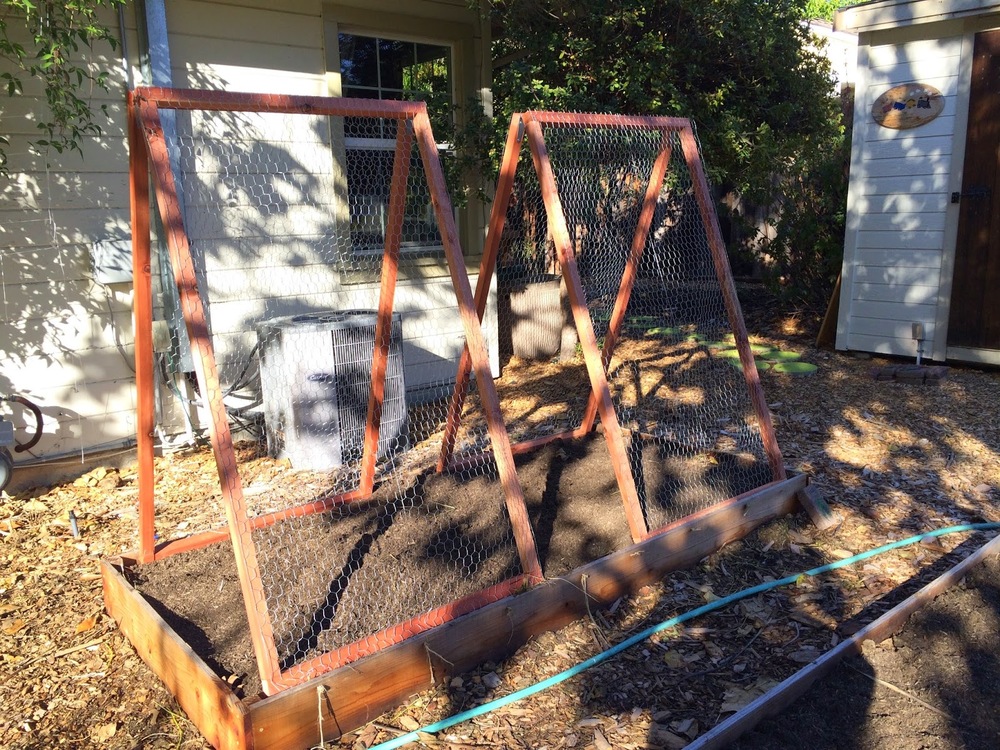
Anyway, they are 3 feet across and 5 feet tall. The frame is made of redwood and that's chicken wire stapled to the frame. At the top are two hinges, so it can lie flat for storage in the garage. I am so pleased with this trellis, I might have Tom made them for everything - cucumbers, beans, they would even work for tomatoes. They are sturdy and definitely won't collapse!

Here are Tom's instructions for building this trellis:

Each trellis took four 2x2x8' pieces of redwood, two strap hinges, some long deck screws, and some chicken wire. I started by sawing each redwood piece into a 3' and a 5' section, then assembling a frame:


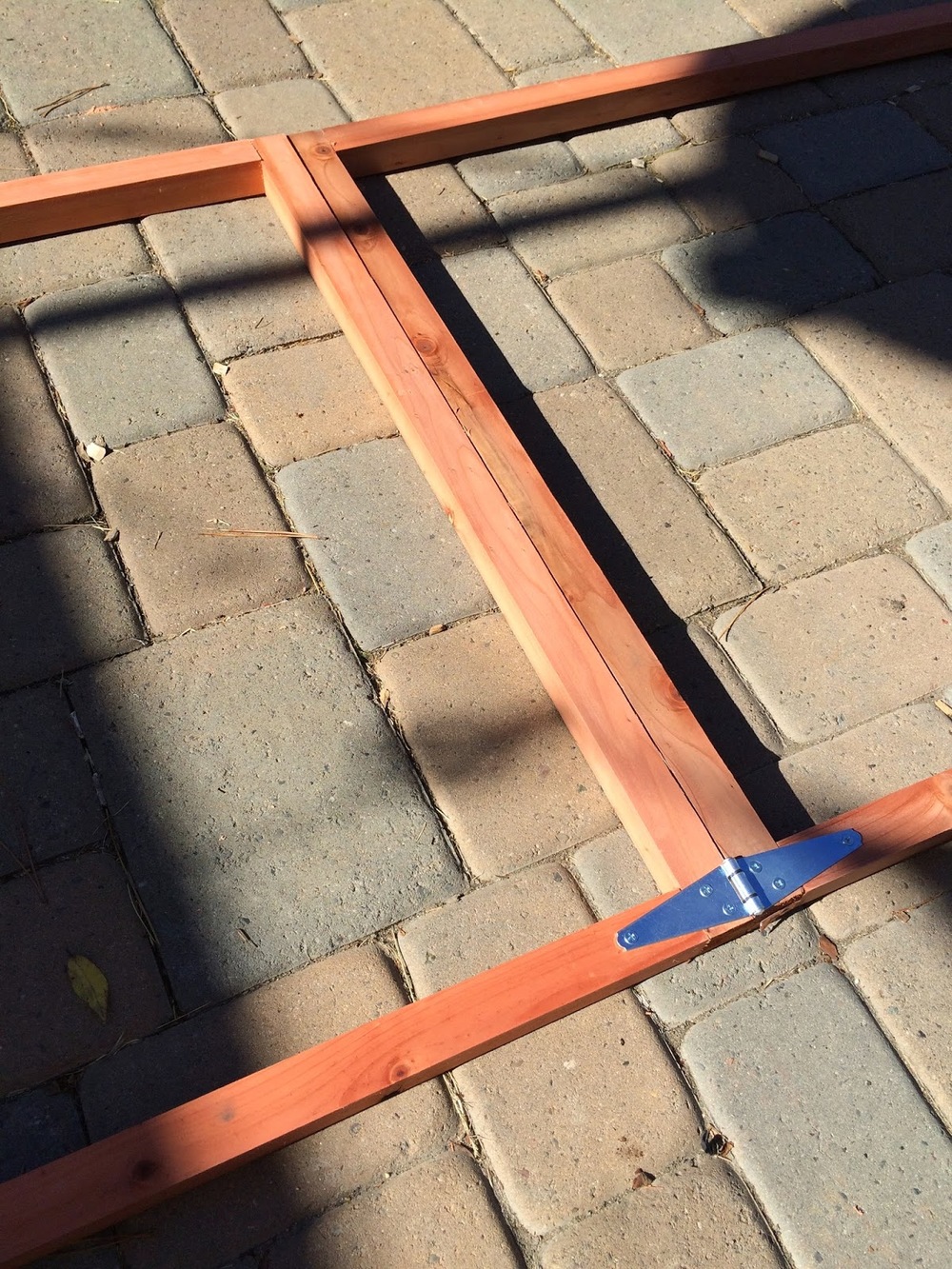
Repeat the process to make a second frame, then lay them end-to-end to attach the strap hinges. Pay attention to how the strap hinges work so that the trellis will fold correctly:


Roll out the chicken wire and use a heavy-duty stapler to staple it to each side of the frame:


That's it! Here's how the trellises look in our raised beds:


Aren't they fabulous?

Kate and I worked on separating the flower seeds I had saved last spring. We opened up the bags of poppies, tidy tips, clarkia, and milkweed seeds that were stored in the garage; some of the seed pods had opened and released their seeds down to the bottom of the bag, but some needed to be manually opened and released. This took quite a long time, but it netted thousands of tiny seeds for my flower garden.


This is probably 2 cups worth of seeds, and a little chaff. I added all of these to a wheelbarrow of compost, along with all the milkweed seeds I've collected from the hills. Stir it up, throw it on the garden in any empty spots, and Bob's your uncle. (I used this English idiom on the kids recently, and Kate's been using it all over the place, completely out of context. It's hilarious. Maybe next, I'll teach her, 'Et Voila!'  Though she would probably go around saying "Et VIOla!" Oh, dear.)

I also, happily, found some tansy-leaved phacelia seeds (native to the West) buried in the garage, so added those to the mix. This flower/herb is very important for both native and European bees!

Speaking of bees, we opened the hive, since it was a warm, sunny afternoon. The bees have four full bars of capped honey and uncapped nectar:


You can see the shiny nectar at the bottom. The bees fan the nectar to reduce the water content, then cap it. They can't cap it too early, or it will ferment. Isn't that amazing, that they know how to do this? I've read that a hive needs 30 pounds of honey for winter. I'm guessing mine'll have about 10. So sometime in December, when the weather is warm, we'll open up the hive and see how they are doing. Clearly they are still collecting nectar right now, and they have one comb started with new wax, which can hold whatever they collect in the next few weeks. In December I will determine if the bees need feeding with simple syrup, or if they have enough food.

Since we've had some rain, and are hoping for much, much more this winter, I made sure my downspout was connected to my rain barrel. One good rain fills this barrel up. I really need more, on every downspout. So much rain comes off the roof, I really need to be collecting it. It sure seems like serious drought is going to be a permanent part of California's future.


Oh well, a cistern is on the five-year plan. No more rain in the forecast this week, anyway - apparently we'll get some 80 degree days. And that's November in Northern CA for you!

Halloween

Happy Halloween, everyone! I gotta admit, this isn't my favorite holiday - but our neighborhood makes it a REALLY big deal. We live in a very old neighborhood without street lights, so it's very  dark, and the area is completely flat, which means everyone from the hills comes down to trick or treat. Ten years ago, on our first Halloween here, we were completely gobsmacked when we saw a horse go by, ridden by, you guessed it, a headless horseman. Every year since, it's gotten bigger and crazier. We're talking hundreds and hundreds of kids.

I tend to focus on 'autumn' and 'harvest' rather than Halloween. However, there are a few things that must be done, or it just isn't Halloween. Pumpkin seeds? Yes, please. Carving? Wouldn't think of skipping it. A stray Kit Kat stolen from my children's baskets? Affirmative.

I harvested eight pumpkins from our crop this year, and they kept wonderfully in the corner of our bedroom. I put them out on the front porch around the middle of October. The squirrels ate one completely, and took nibbles out of two others. Luckily, I had several left that had a nice shape and were destined for carving. I hacked in and pulled out the guts (all the while thinking of Linus saying: "YOU KILLED IT!") and picked out the seeds. I've never had homegrown pepitas before.


Roasted with a little olive oil and sea salt, they are really delicious. 


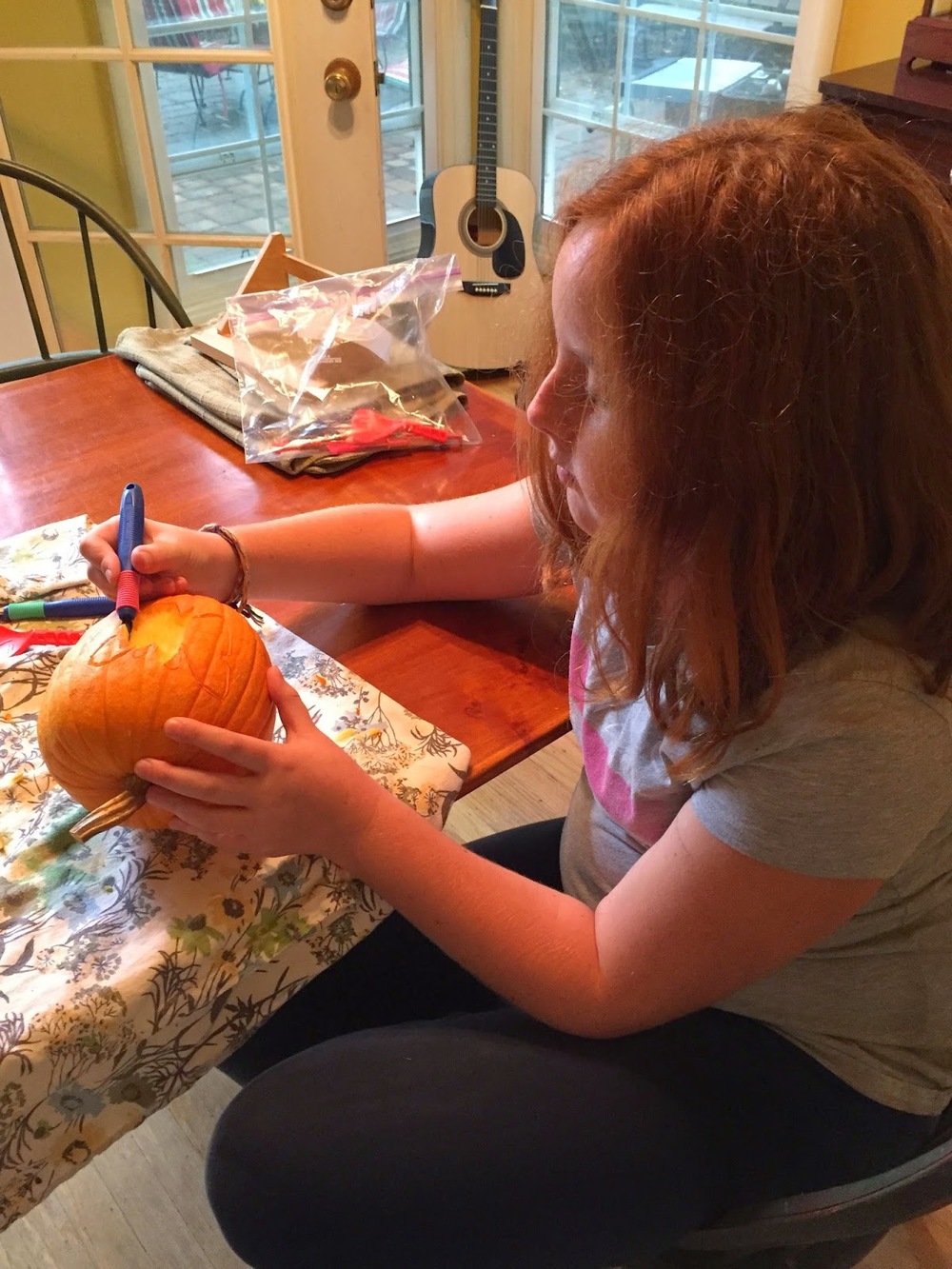
I have a set of carving tools that I use every year. I originally got them, and used them, for lino carving, but they work great on pumpkins, and they allow a lot of detail. You can get these at any craft store. The pumpkin cleaning tools I got years ago in some random stencil kit.


I freehand a design on the pumpkin, and then carve out any 'negative' space.


Kate decided she wanted to do a simple butterfly. She only cut herself once.


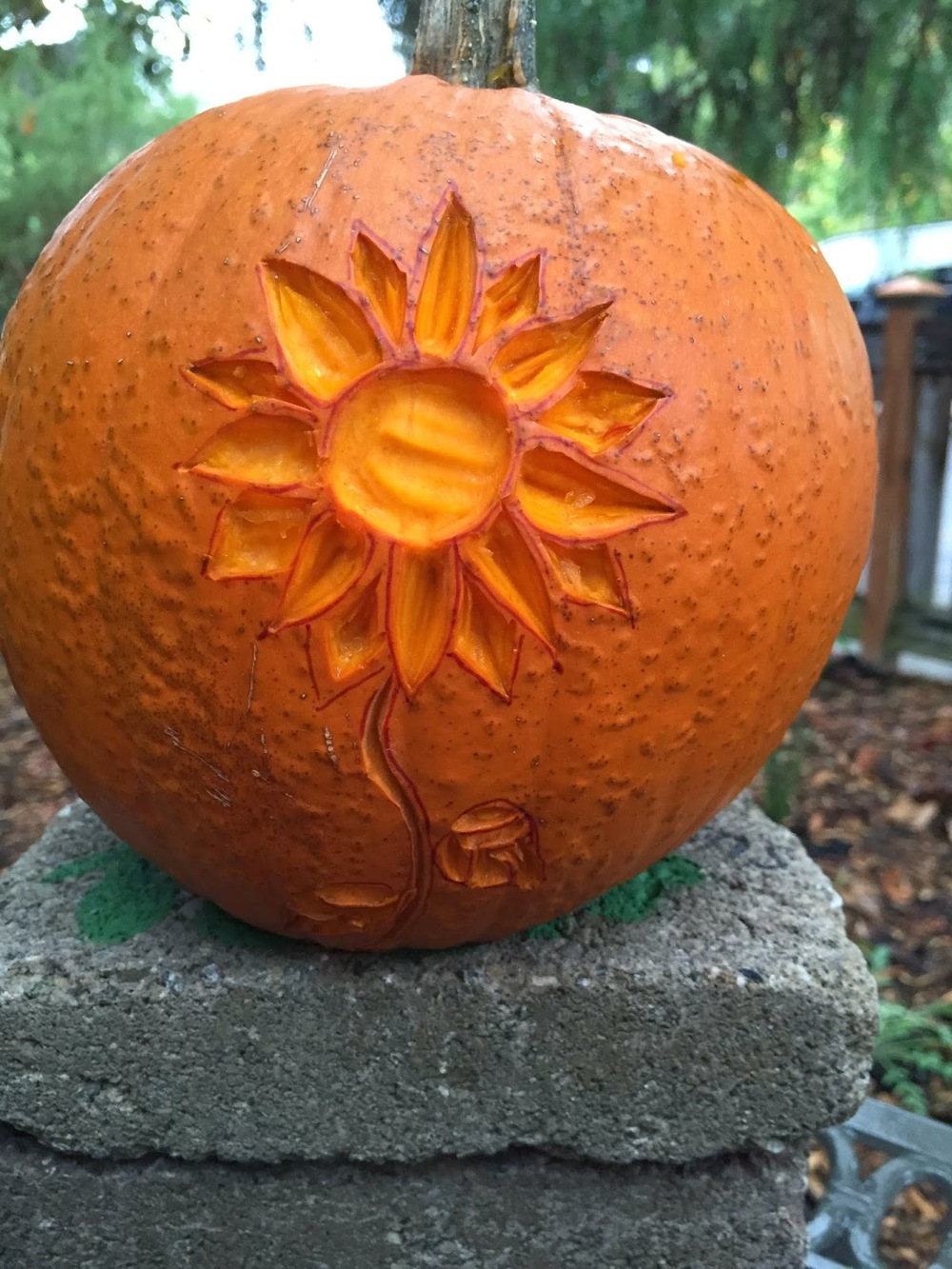
I did three of my own, and all four look nice grouped outside together, with a bit of a nature theme. (What else?)


You've seen the leaf, but here's a close-up of the sunflower:


And the skep bee hive:


And here's how they look lighted:


I felt pretty good about my tiny pumpkins, until I walked over to my neighbors house - 100 pumpkins, all home grown, most huge, all carved the normal way of course, but looking spectacular grouped together. Wow. I need to up my game.

Pollinating

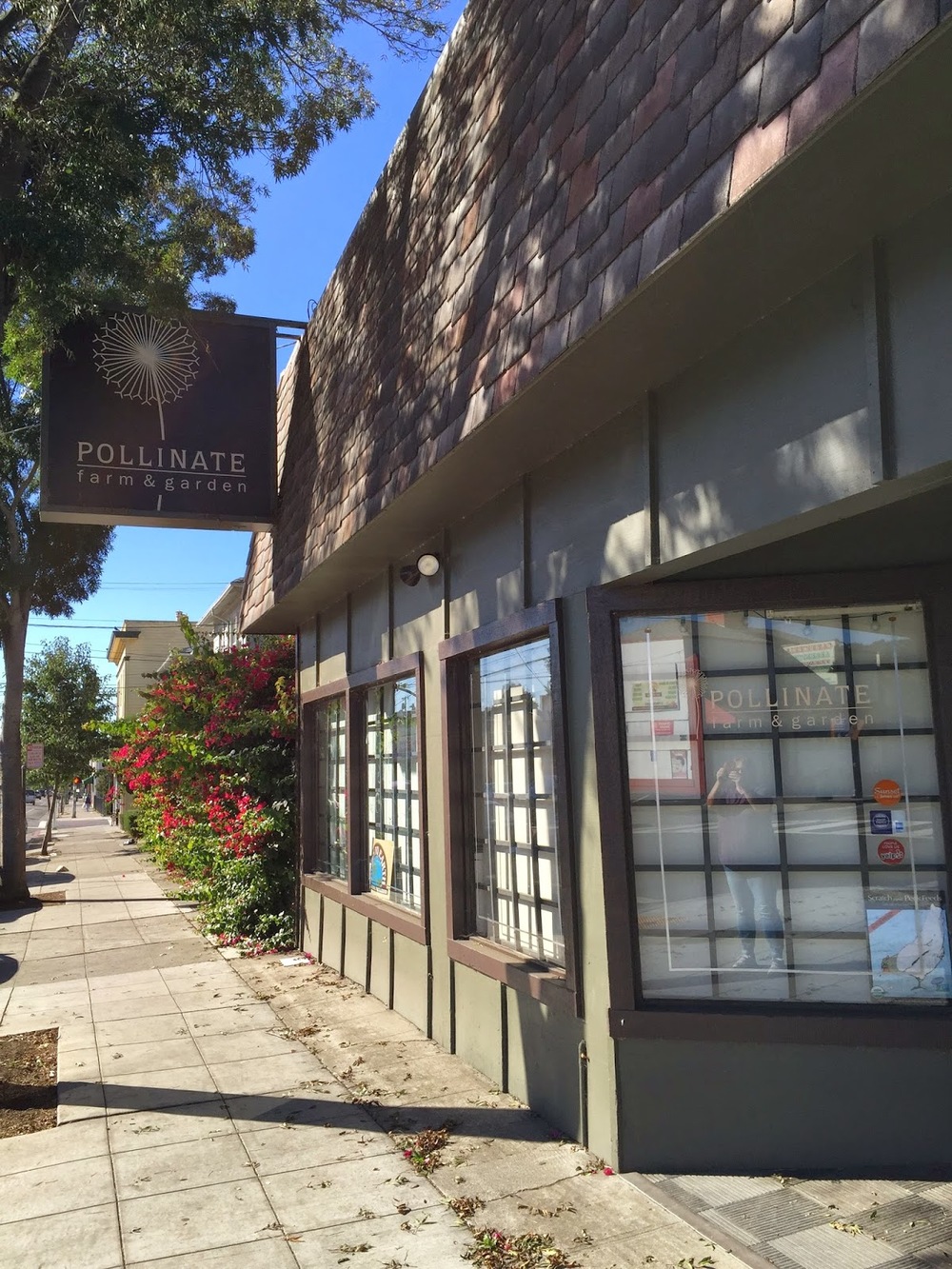
My garden-partner-in-crime and good friend Barbara introduced me to a really neat place today, Pollinate Farm and Garden, in Oakland (in the Fruitvale neighborhood).


I went to hear a talk on native bees, but whoa - this place was amazing! They had everything you could possibly want for beekeeping, chicken keeping, canning, preserving, and fermenting food, garden starts, compost, books, crockery - and even a fertilizer bar! Yes, you could buy different fertilizers by the pound, all organic. I was geeking out. Jewelry stores? Nah. Show me a store with a fertilizer bar and this girl is happy!

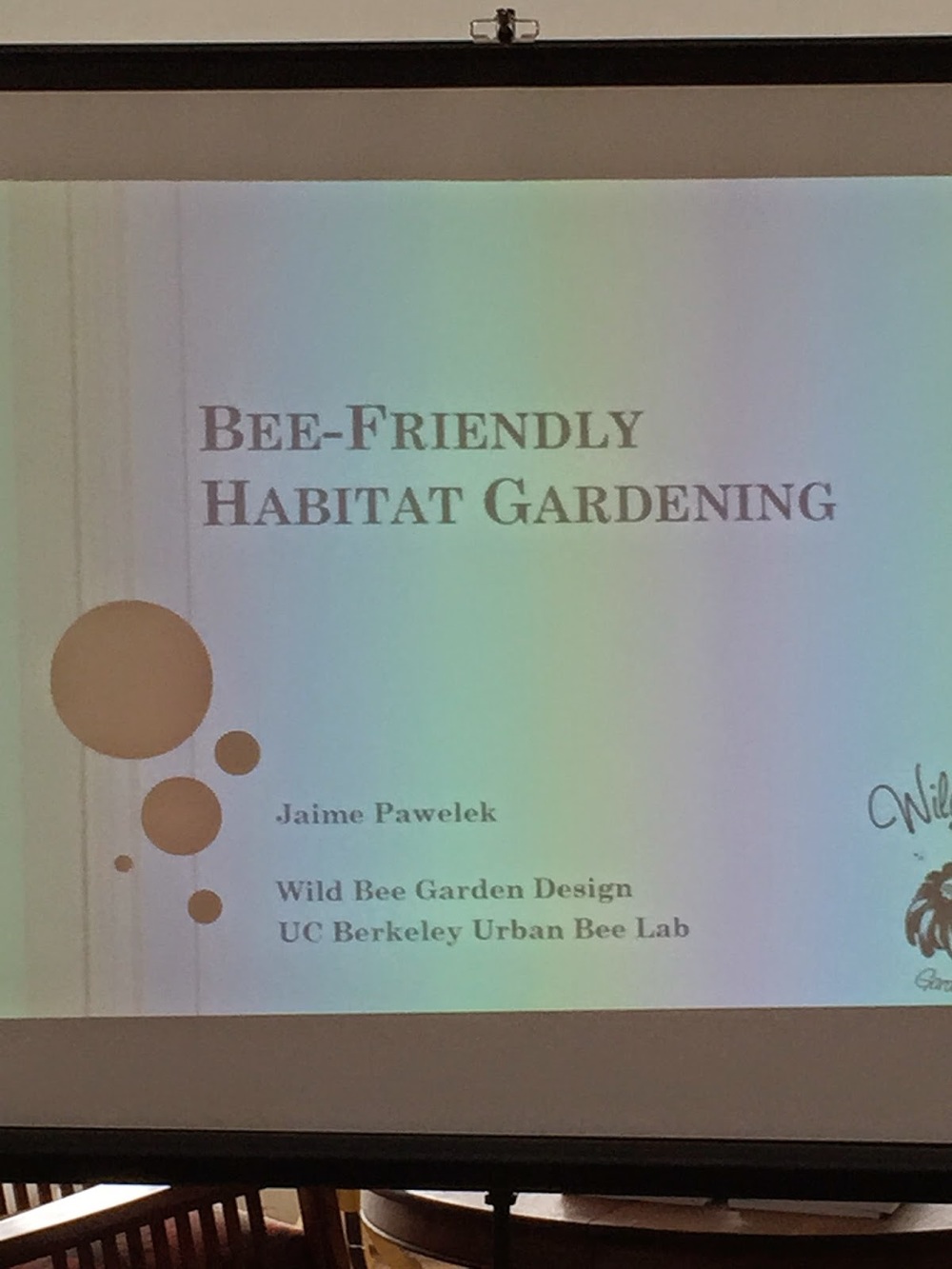
The talk was by Jamie Pawelek, from the UC Berkeley Urban Bee Lab. She was amazing, and I learned so much! But a couple of things stuck out in my head:


1) We have 4,000 native bee species in North America, and 1,600 of those reside in California! While we tend to think honeybees (which are European, of course) do most of our pollinating, quite a bit of it is done by these native bees.

2) Native bees make nests in undisturbed dirt (bumble bees), hollow logs (carpenter bees), and hollow tubes (mason bees). They line their nests with leaves (leaf cutter bees) and soft plant material (wool carder bees). Some are social and some are solitary. Some are incredibly beautiful (green metallic bees).

3) All female bees sting, because they also lay eggs. So the stinger is primarily an ovipositor, but can be used for venom as well. No male bees sting, because of course they don't lay eggs.

4) All collect both pollen and nectar. Nectar is the main source of sugar and carbohydrate; pollen is the main source of protein and vitamins. Most bees only eat pollen at the beginning of their lives.

5) Native bee mothers make a sort of 'loaf' of pollen and nectar, and lay one egg upon it. Once the egg hatches, the immature bee eats the loaf, then pupates. The adult can stay dormant until spring, when some instinct tells them that the flowers are blooming, and it's time to come out. They then eat themselves out of either the mud or leaves blocking the nest, and start to forage.

6) These pollinators are incredibly important to our existence.

7) Neonicotinoids, the pesticide getting all the press now, is truly evil stuff. Companies produce GMO seeds impregnated with the neonics, and these pesticides within the plant are water soluble. So as the plant grows, the neonics become part of the foliage, part of the flower, part of the soil around the plant. Bees eat the pollen and nectar from these plants, and are poisoned. They feed their babies this poison. They get confused and disappear. This is considered one of the main reasons for colony collapse disorder, which is happening not just with honeybees, but with native bees. Please, please, please don't use pesticides in your gardens. Buy organic seeds and starts, and plant lots of native plants in your gardens!

The speaker recommended a few websites. One is Help A Bee, which has plant lists for California, by season. SO helpful! Another is Pollinator Partnership, which has lots of good info. I found this great chart there to help identify native bees: Native Bee Identification.

After the talk, we moved out back and planted some raised beds for the store, filled with pollinator plants. Then we made mason bee habitats out of old bamboo. Just clip the bamboo into sections, different sizes are best, and band them together. Hang them somewhere protected from rain, that gets morning sun and afternoon shade. Here's mine:


After that we made seed bombs. Just mix together a little compost, a little clay, some seeds, press them into balls, and let dry. Then throw them in your garden to germinate. (Or, if you're feeling subversive, throw them in empty urban lots.) We made some with California bluebell seeds and I brought home six of them to throw in my garden.

I bought a bee feeder (for winter), some fire starters for my bee smoker, books on gardening for native bees (signed by the authors, whom I met there!), a couple pounds of fish meal for the raised vegetable beds, and some acid fertilizer for the blueberry bushes. What a great place, I will definitely go back soon, and there were some things in there that I'll put on my Christmas wish list, for sure!

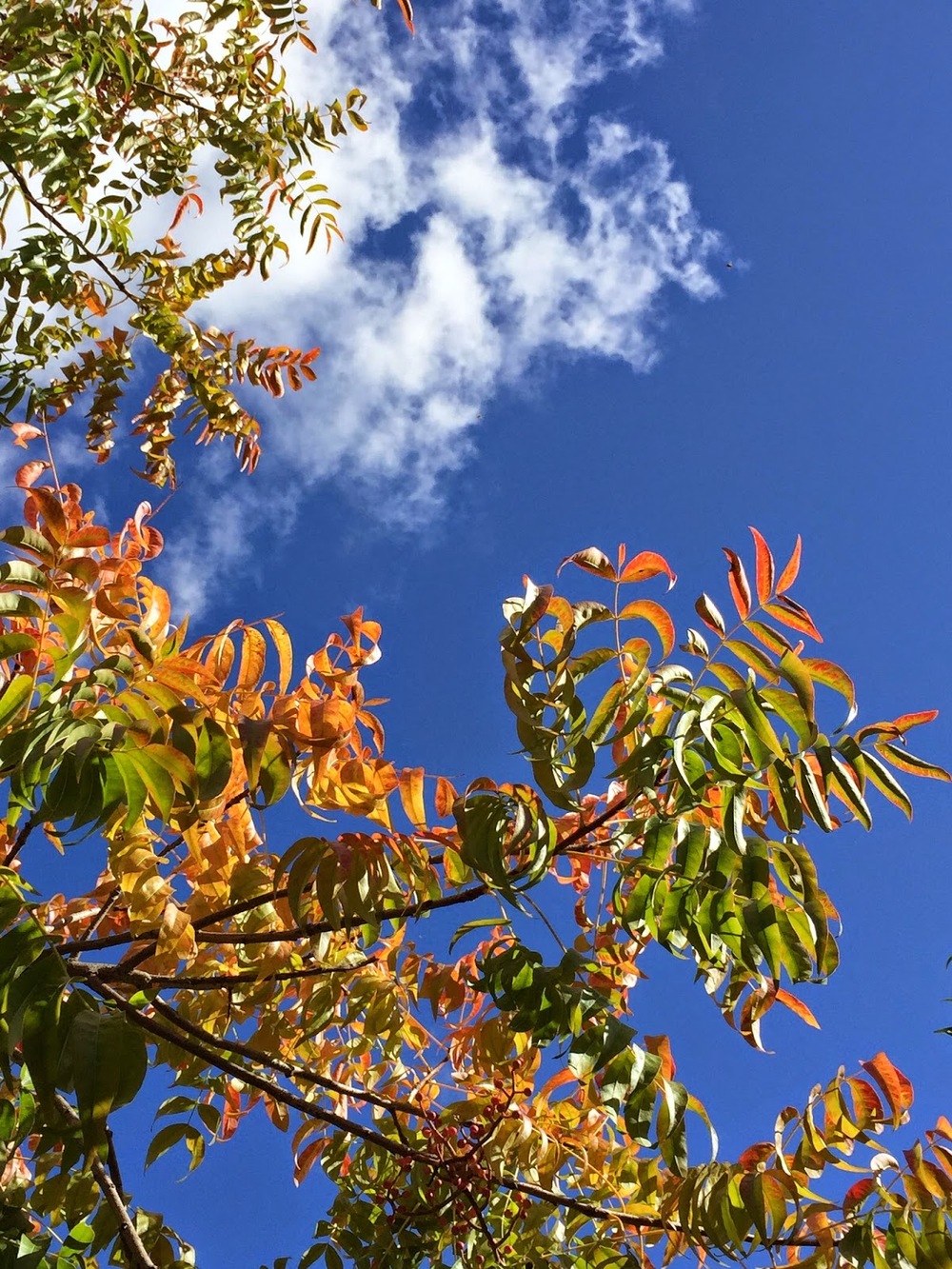
This weekend we pulled all the rest of the vegetables from the beds (reserving a few last cucumbers for Tom to make pickles), and hoed everything well. Next week I will plant winter seeds and bulbs. We are starting to get a little rain, which is exciting, and I'm hoping that will start growing some plants in the hills, so the deer will leave my little lot alone. It's definitely starting to look more like autumn, here. The berries on the Toyon and the Chinese Pistache are starting to change color.


November will soon be here.

Weekend Chores

Any time a job involves a shovel, I know it's gonna be hot and sweaty work. Saturday was 'turn in the cover crops' day, and it turned out to be harder than I thought.

I'd spent a good amount of time researching how to turn the buckwheat in, and it all sounded fairly straightforward - just spade it up, and turn it over. In reality, it wasn't quite that easy. My buckwheat was tall - three feet - and when I turned it over, several feet of green stuck out sideways. So then I decided to first 'scythe' (read: large clippers) the plant and collect the clippings; then I would turn it over. This proved more fruitful. I put some clippings in the compost, and some in the flower garden as mulch.


Turning over the soil wasn't nearly as hard as my digging project a couple of weeks ago. The dirt, first fully composed of purchased compost, then amended with horse manure, then planted with the cover crop, was simply gorgeous. Dark, loamy, and smelling good, it was a pleasure to spade up and turn over.


Again, I was happy to see lots of fat earthworms. Also plenty of white mycelium, and pill bugs, who always like to be a part of the decomposition process. I did a fair amount of chopping the roots of the buckwheat, and mixed everything around.

As I was digging, many bees and butterflies hovered around, as if to say, "Hey, buddy, why are you messing with our food?" I've never seen so much insect life as I did when the buckwheat was flowering.

I also pulled out the tomatillos. They were a great experiment for me, I just couldn't possibly eat as many as were produced. They also apparently self-seed readily, so I was worried that they might already be doing that. I harvested the rest of the acorn squash and watermelon, then pulled up those plants.


The watermelons look right on the outside, but when I cut in to them, they weren't quite ripe. This melon experiment was also interesting. I think they need just a touch more sun. This week, we're having a tree guy come and trim up our trees quite a bit, so the sun problem will be fixed, and I might try melons again next year. It's Adam's favorite fruit, so I'd like to be able to provide it!

I've left the tomatoes and cucumbers in for now, also the butternut squash. I'll probably pull those next week.

I was pleased to open the compost bin and find a good six inches of black gold at the bottom.


I dug out four huge bins worth and added them to the beds.  It's beautiful stuff.

Kate likes to have her own garden. She planted some pretty stuff in the spring, but now the lantana has taken over.


I like it, and it provides nectar for insects, but Kate is unhappy that her flower garden has turned into a lantana garden. So I told her I would provide her with large containers, and she could move her garden around wherever she wanted. However in order to provide her with those containers, I needed to transplant the strawberries that had been growing in them.

We love strawberries, and I'd like to have a lot of them, and the plants spread and root themselves, so we could possibly have a lot if I plant them in the ground. They are perennial, so they last year after year. Those plusses causes a bit of a problem, though - who has the space for long-lived plant that continues to spread? I finally decided on a place back by the water feature, between a California Buckeye and a Chinese Pistache. It gets dappled sun, and high heat in the summer, and if the berries spread, it's mostly okay.


This is a spot where I used to grow corn, before the trees got so big. I also used to grow sunflowers here, so I expected the dirt to be fine. It wasn't. Here are some the clay clods I pulled out to throw in the green bin.


I hate our dirt. I need a special budget just for soil amendments.

Anyway, Kate was ready to plant her garden.


We went to a special sale at a nursery near here. The sale was part of the fall event schedule of Bringing Back the Natives, a great foundation that sponsors spring tours and all kinds of educational events. The sale we went to was at Markham Arboretum, a neat little place in the heart of Concord. Kate chose a few natives, like buckwheat and milkweed, and a few other pretty things that are drought tolerant:


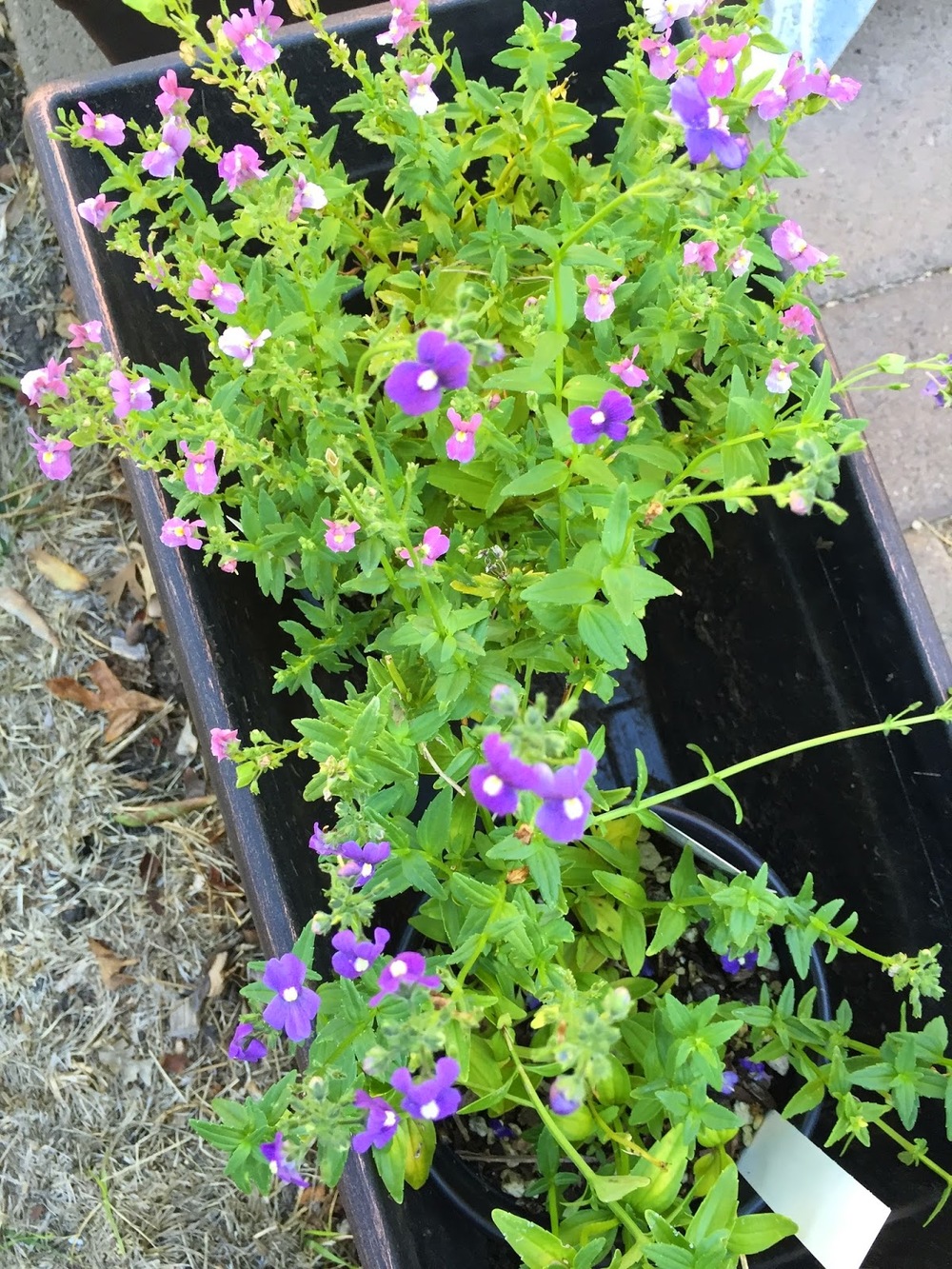
I bought some interesting new plants, for sunny areas:


After planting all of that, I decided to saw down a small Ash tree, which was in the middle of my main flower bed. I planted it years ago, when we wanted more shade. Well, it hasn't grown at all, and now we don't want more shade, so out it went. I sawed it into pieces and will use the slender trunk in the garden. As I was sawing, I was sat amongst the flowers, just an idyllic spot, with bees and butterflies visiting, and birds swooping through. If I squint, I can picture I'm in a meadow somewhere in the country, instead of in crowded suburbia.


In other news, Adam had his first San Francisco Opera rehearsal in the War Memorial Opera House yesterday, and I was there as a parent monitor. We were up on the 5th floor, while a performance of Handel's Partenope was in progress down below. It was so fun to hear the announcements: "Places, five minutes, ladies and gentlemen," and watch the action on monitors all over the building. Our accompanist for rehearsals is also a native Italian singer, so he was helping with pronunciation and singing the main parts, while the Studio School teacher took notes nearby, and the boys sung their hearts out.


Things can only get more exciting, as this week Adam has a costume fitting, his first day of Studio School (required by law for child performers), and his first staging rehearsal on that massive stage. I'm not sure the boys realize how cool this all is, but I'm in geek heaven, wishing I had gotten this experience when I was in 7th grade.

Tom made vanilla extract this week, I'll let him explain his process here:

Making vanilla extract is about the simplest thing in the world. There's just three ingredients - vanilla, some kind of alcohol, and time. I read about making extracts online, and most agreed you could use any kind of alcohol (vodka being the most neutral, whisky or bourbon imparting some of its own flavor). While I'm personally partial to bourbon, it seemed risky to experiment with some Knob Creek or Maker's Mark, so I went with Absolut Vodka. Rather than pay exorbitant amounts for supermarket vanilla beans, I ordered in bulk from Amazon.


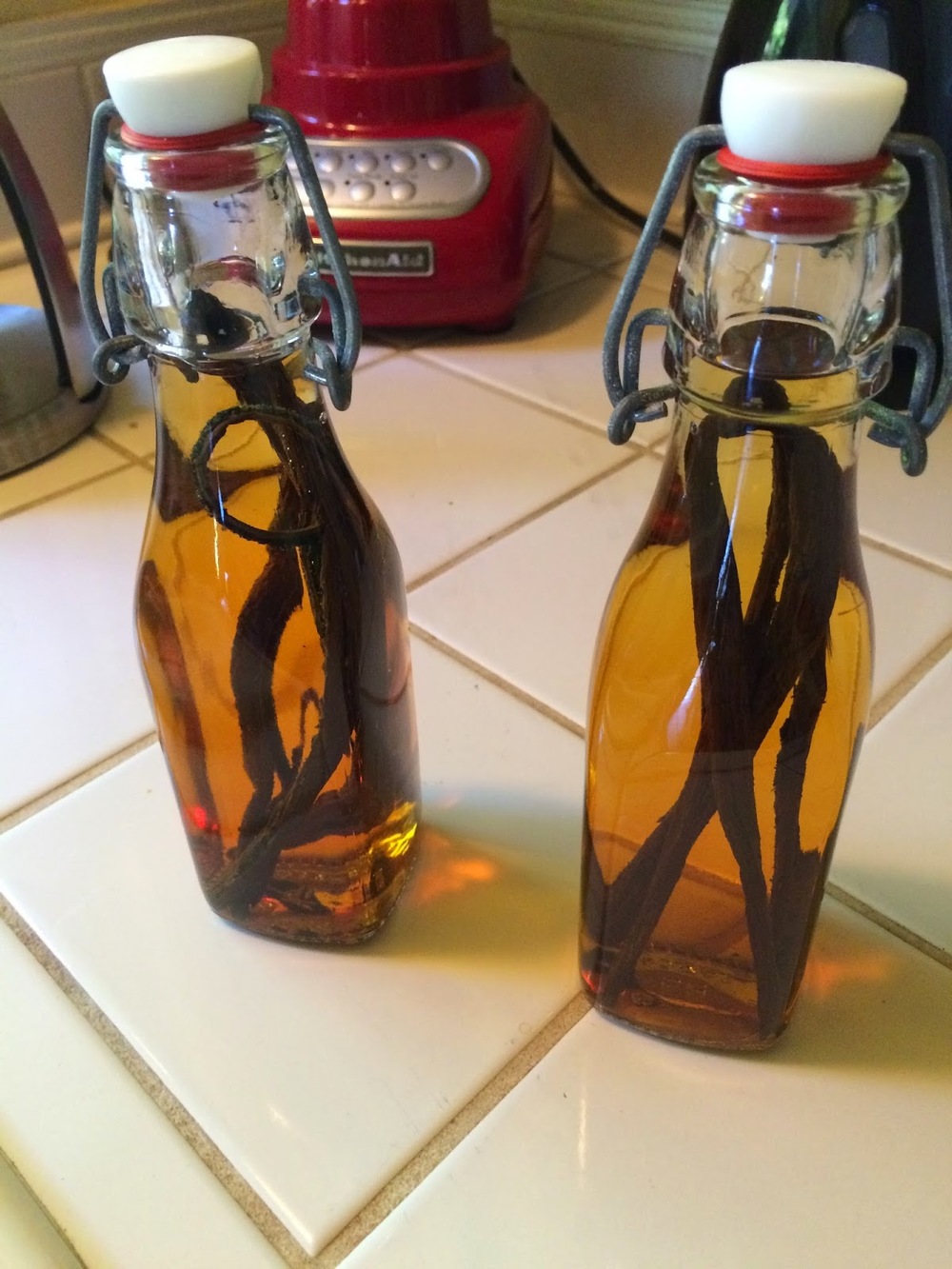
I used three split vanilla beans to about a cup of vodka, and put them in bottles in the cabinet:


It's been about five days now, and the extract is taking on a brown tinge and smells more like vanilla than vodka now:


Most places said I should wait a month or two before using. I'll be curious to see what kind of final color I get.

And a final note from our weekend: If you haven't seen Food Forward on PBS, follow the link and you can watch online. We've really been enjoying it.