• About
  • Blog
  • Contact
  • Favorites
  • Archive
Menu

Poppy Corners Farm

Street Address
Walnut Creek, California
Phone Number
Walnut Creek, California

Your Custom Text Here

Poppy Corners Farm

  • About
  • Blog
  • Contact
  • Favorites
  • Archive

May Arrangement

May 14, 2020 Elizabeth Boegel
IMG_4389.jpg

My weather app is inadequately preparing me each day, or maybe it just can’t keep up: We’ve had temps in the mid-90’s, all the way down to the low-50’s with both intense sun and rain showers. May is increasingly becoming a month in which Anything Goes. But finally, between tests and essays online, and anxious trips to the store for supplies, I was able to dodge the weather and cut some flowers for a May arrangement.

I love this new vase, a perfect mix of art and science! It also really highlights the more fragile blossoms, of which we have many this time of year (summer flowers seem much more sturdy somehow). I knew I wanted to highlight the red Flanders poppies, so called because they flourish in a meadow called Flanders in Belgium. During the Great War, they did not bloom for four years, but after war was over, the poppies began blooming again. They symbolize the hope that seized us all after the war. And I figure, we could use a little hope right now, yes?

IMG_4392.jpg

Poppies don’t last long in vases, but apparently you can extend it by searing the ends of the stems with a match. I don’t bother, because I appreciate their ephemeral qualities. I’ve combined them with other delicate blooms from the garden - white columbine, purple Foothill penstemon, and fragrant sweet peas.

The garden is very much a riot right now, with all kinds of flowers opening up, vines twining, vegetables starting to produce tiny fruit, and bees everywhere. We’re back to getting 5-6 eggs a day and I am freezing some for the next low-production point. I just crack two at a time into little mason jars and stick them in the freezer. I’ve been cutting and drying herbs like crazy, and my plantain “confit” (as Adam calls it) is about ready to be mixed with melted beeswax and made into a salve. More on that later (first we have to get some beeswax from the hive!). I have a long list of woody plants to prune, now that they’ve finished their spring bloom, and more straw to mound on potatoes, and seeds to sow! I just have to get through finals first.

I’d very much like to hear what’s happening in your gardens. I’ve certainly heard of more crazy weather (i.e. snowstorms) in other areas this spring. How’s your garden looking?
Tags seasonal flower arrangement, flower garden
Comment

The Broody Hen

May 5, 2020 Elizabeth Boegel

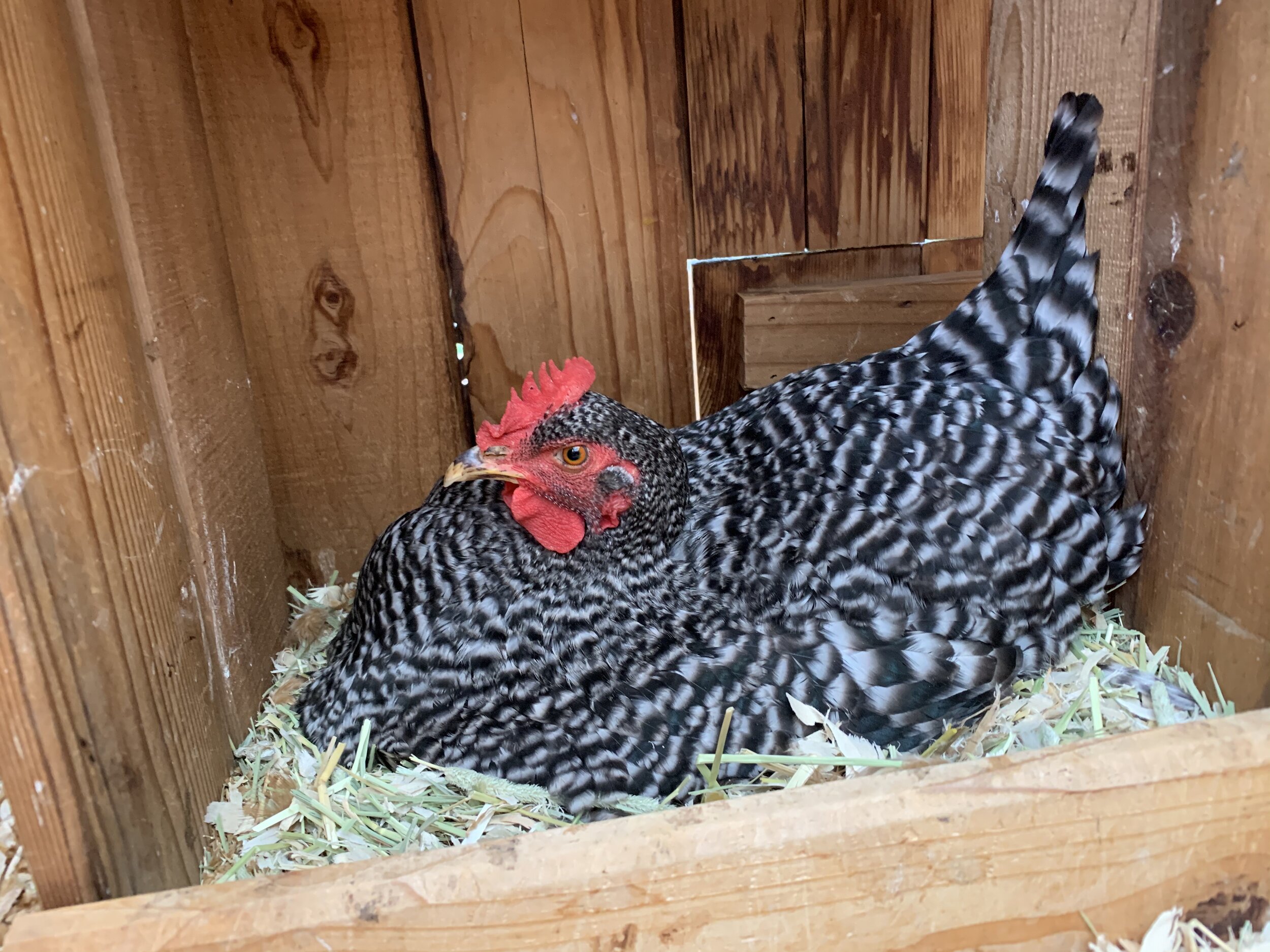
In all our years of keeping chickens, we’ve never had a hen go broody, but our Plymouth Barred Rock, Florence has decided it’s time to be a mama. What does this mean? It means she sits on the nest all day and all night, leaving only once a day for some water and a little food. She does this even if there are no eggs underneath her. See how flat her body is? She’s maximizing her body heat for full coverage of the eggs. And when I come to take the eggs out, I have to carry a long flat stick, which I use to block her mouth - she is viciously guarding her eggs and retaliates by pecking my hand, hard. It hurts!

IMG_4378.jpg

She also fluffs up her tail and neck, hunches down prepared to spring, and makes a low noise in her throat. And check out that evil eye. I talk to her soothingly and tell her she would have been such a good mother, but for some reason that doesn’t stop her from lashing out. As you know, we have no rooster and never will, which means she can sit on her eggs until kingdom come and they still won’t hatch (as they are not fertilized).

When a hen is broody, she doesn’t lay eggs. And another rather unfortunate thing is that it is causing the other hens to stop laying eggs. They have not gone broody, but they are acting decidedly different and we are getting only three eggs per day rather than six. I’m afraid another hen will follow Florence’s example and then we’ll really be in a pickle.

However, I’m of two minds about all this. We use a lot of eggs and we miss having so many, but on the other hand I believe that the hens should live as normal a life as they can in our urban backyard. This means plenty of room to hop, run, bathe and stretch. This means foraging for greens and bugs from the compost pile. This means no artificial lights in the winter (which keeps the birds laying when they are supposed to be having a break from laying). And this also means letting them express their chicken-ness, which is a thing harder to define, and can also be inconvenient. For instance, this past Sunday morning some sort of predator got in the run (I think I saw a hawk fly out of there when I ran out to see what was wrong). I knew there was trouble because the chickens warned me with their extremely loud squawking at 7 a.m. They were SUPER loud and SUPER freaked out, and my shushing didn’t stop them from making a terrible ruckus for at least 30 minutes. I was sure the neighbors were going to confront me, but no one did (I have such great neighbors). This is what chickens DO when they are scared. They huddle, stare, and squawk. It’s just the way it works.

And apparently, another way chickens work is to go broody. There ARE ways to break them of this, and one common one is to take them out of the nesting box and put them in a wire cage for a few days so they cannot nest. I could do this. We have a cage like this. But it just doesn’t feel right to me. I’ve read that chickens stop being broody quite suddenly after 21 days, the amount of time it would have taken to hatch a clutch of eggs. Florence has been broody for about half that time, so we have a good 10-12 days of this yet to go. It’s hard to just let her express her chicken-ness.

Here’s another interesting behavior: When Florence comes down that one time each day to eat and drink, she does the cutest thing. While walking around taking care of her physical needs, she clucks softly and constantly, as though she is herding chicks - albeit chicks that are nonexistent. It’s quite adorable, and completely at odds with the demon who sits on the nest and waits for my tender hand to creep under her to steal her “babies.”

Have any of you dealt with broody hens? What sorts of things have you tried, successfully or un, to break them of the habit? Am I silly for just letting it linger on?

***UPDATE 5/8/20 After reading the comments my readers left, I decided to take some light action. I started taking Florence off the nest regularly. I collected the eggs in an extremely timely manner. I took Florence out of the nest and put her on to the roosting bar at night. I sometimes closed the coop door to keep all the chickens in but Florence - she was alone in the run. I think the game-changing moment came when I took her off the nest one night and put her on the roosting bar and then blocked access to the nesting boxes. That way she had to come down FIRST that next morning instead of going right to the boxes. Also collecting the eggs numerous times a day so that she can’t sit on them, helped a lot. I think we are over the hump and are back to getting 5-6 eggs per day. Thanks to all that commented!!!

Tags chickens
15 Comments

Strange Days

May 2, 2020 Elizabeth Boegel
IMG_4353.jpg

What a strange world we are living in at the moment.

In ‘normal’ life, Adam spends every Saturday at the San Francisco Conservatory of Music studying classical voice. He’s done this ever since his voice changed in 7th grade (before that he was a member of the San Francisco Boys Chorus); he has hopped on BART at 8 in the morning and arrived back home by 7 in the evening, one day a week, for this serious study of music. It has enriched his life immeasurably.

Once shelter-in-place began in mid-March, instruction moved online. It’s been interesting watching Adam trying to find a place to sing and study in our small cottage. He spends some of the day in his room, some at the piano, and some outside. In normal times, he and his Conservatory friends would spend lunch at a local restaurant near the school, enjoying interesting cultural food. Now, they all Zoom at lunchtime, each of them in their kitchens making something to eat, laughing and enjoying each other. I must admit it’s been fun to have a little window into his Saturdays. And I love hearing him sing, even though I know it must be hard for him to do it when he knows we can’t help hearing! And his teachers, all world-class musicians, are also really fun to listen to, at least the parts I can hear, with interesting stories and jokes at the ready.

Today, the last Saturday of class (before juries and testing and ‘commencement’), was bittersweet, especially for the seniors. It ended with a Zoom recital in which we got to hear all the kids in the vocal program sing. I must admit it was nice to watch it on Tom’s laptop while we lounged in bed - no trafficky commute into the city, no uncomfortable salon chairs. Afterward there was a little salute to the seniors in the group, and at that point I really missed all being in the same room, congratulating these brilliant young musicians. It made me sad that we will miss all the ‘lasts’ - the last band concert at school, graduation on the field, the senior awards, the last day of high school. Similarly we are missing a bunch of Rin’s events as well. The kids seem to be taking it in stride, but what a strange end to all the hard work of many years. At the same time I am so impressed with the administrators and teachers who figure all this stuff out and make it happen and make the kids feel special.

And then there’s all the ‘firsts’ - with Adam going to Cal Poly in the fall. How???? I mean really, how are they going to manage all of this? I have a bit of an insiders view since Tom is trying to figure all that out for the college where he works. Let me tell you, it’s constant change and constant re-planning, and then planning more than one scenario, and then staying flexible. I can’t tell you how glad I am that I’m not in charge of anything like this. Nothing is concrete.

Last night Tom and I watched a Zoom comedy show featuring a local guy that we like very much named Greg Proops - we had to buy a ticket just like in ‘normal’ times (though way cheaper). Everyone in the audience kept their microphones at a very low volume, so that the performers could hear and respond to the laughter. It worked ok, and it was fun to do something different, but gosh it was strange. I think about the possibility of seeing Broadway shows or Symphony concerts in this way, and I have so many feelings about all of it - awe at the planning, amazement at the technology, and sad that we can’t all be together.

Anyway, the concert today was very nice and took us out of our circumstances for a short while. The whole time Adam was singing we were praying that the chickens wouldn’t start squawking, but they were perfectly behaved. And the neighbors got an unexpected concert. :)

I can’t imagine any of this is going to end anytime soon (at least not in California), so I’ll just have to adjust. Some things already feel completely normal, like wearing a mask. Can you imagine not wearing one at this point? Or can you imagine walking into a cocktail party and hugging everyone?

I’d love to hear about some of the things that you are missing, or experiencing in a new and different way. What milestones are you having to postpone or celebrate differently?

Tags pandemic
Comment

Things that made me happy this weekend

April 26, 2020 Elizabeth Boegel
IMG_4307.jpg

We’re starting our seventh week of sheltering in place, and our lives seem to be made up of tiny moments of joy amongst all the other emotions we’re feeling. There’s lots to stress about, but here are a few things that made me feel good this weekend. Chiefly flowers, and there will be more pictures of flowers at the end. Very warm weather here has made everything go a bit nuts, in a very good way.

IMG_4288.jpg

For a long time, I’ve been wanting to make salves, tinctures, and syrups from the herbs and flowers I grow in our garden. Now that I finally have time, I ordered this book and began the process. I have quite a lot of plantain, grown from seeds that my mother brought me back from the Chelsea Physic Garden years ago. Plantain salves are quite good for minor scratches and burns and stings, all of which are abundant around here. So I cut a bunch of leaves for a plantain salve and I am drying them on the herb rack.

IMG_4289.jpg
IMG_4291.jpg

The drier they are, the better, before I then soak them in olive oil for two weeks, and then blend with some of our melted beeswax. I’m anxiously awaiting our first elderberries to make syrup, and I may make another salve to help with my aching hands. I have lots of ideas I want to try. Being at home all these weeks makes me realize that I have an untapped resource that I should be utilizing. Well, I guess I do use herbs for cooking and drying, which is also great, but there’s so much availability and so many ways to use them. I’m glad to have a new project to tackle.

Speaking of projects, the shallots are just beginning to brown up in their bed (garlic still bright green), so I’m starting to think about how to dry them for longer than I usually do. Our main practice has been to put them up above the chicken coop to dry, but it’s crowded up there, and they need more air. Plus I want to dry them for at least four weeks this year before bringing them in to the house (after last year’s aphid debacle). I started looking up how this used to be done in the old days, and saw lots of interesting pictures of drying tables.

image credit: modernmissouripioneers.com

image credit: modernmissouripioneers.com

The table has slats so the onions/garlic can rest above and the greenery down below. Plenty of air circulation here! This got us thinking about some kind of rack to build, or if there is some way to repurpose our A-frame trellises, which are wrapped in chicken wire. Stay tuned for a solution on this. I love having a new building project to figure out! (I’m not sure Tom feels the same….)

IMG_4303.jpg

I’ve struggled with this narrow border between the fence and the chicken run for a long time. This year, I think I’ve finally hit on a combination that really works. At the very back is a large, white-blooming ceanothus, then we have both orange and red geums, followed by a red salvia and a rangy white salvia. Then there is a new planting of verbascums, plus the California poppies in front looking all cheerful. There’s a new dahlia here which is starting to come up with black foliage and a blood-red flower, and the cinquefoil which is yellow will bloom also in summer. I’m so pleased with this planting scheme.

IMG_4297.jpg

The verbascum has the most adorable fuzzy stamens in red and yellow. I adore them.

image credit: thefield.asla.org

image credit: thefield.asla.org

I watched a documentary on Piet Ouldof filmed by Hauser & Wirth (you can find that here - I hope it is still available to watch). He is the landscape architect who designed the High Line in New York and the Lurie Garden in Chicago. I find his drawings just spectacular, and his gardens absolutely delightful, like modern meadows. It’s worth watching the documentary just to see the seasons change in the gardens.

This is a feature about a man who lives in the redwoods in Northern California. I do not know how to adequately describe him or his farm. He built his home (and several others on the property), beautiful gardens, a gallery for his redwood sculptures, several yurts for camping, and knows as much about redwoods as any park ranger. He’s looking for people to pass all this on to, and teach about the conservation of this kind of property. It’s an amazing video and he’s an amazing guy. And he’s 88!

IMG_4320.jpg

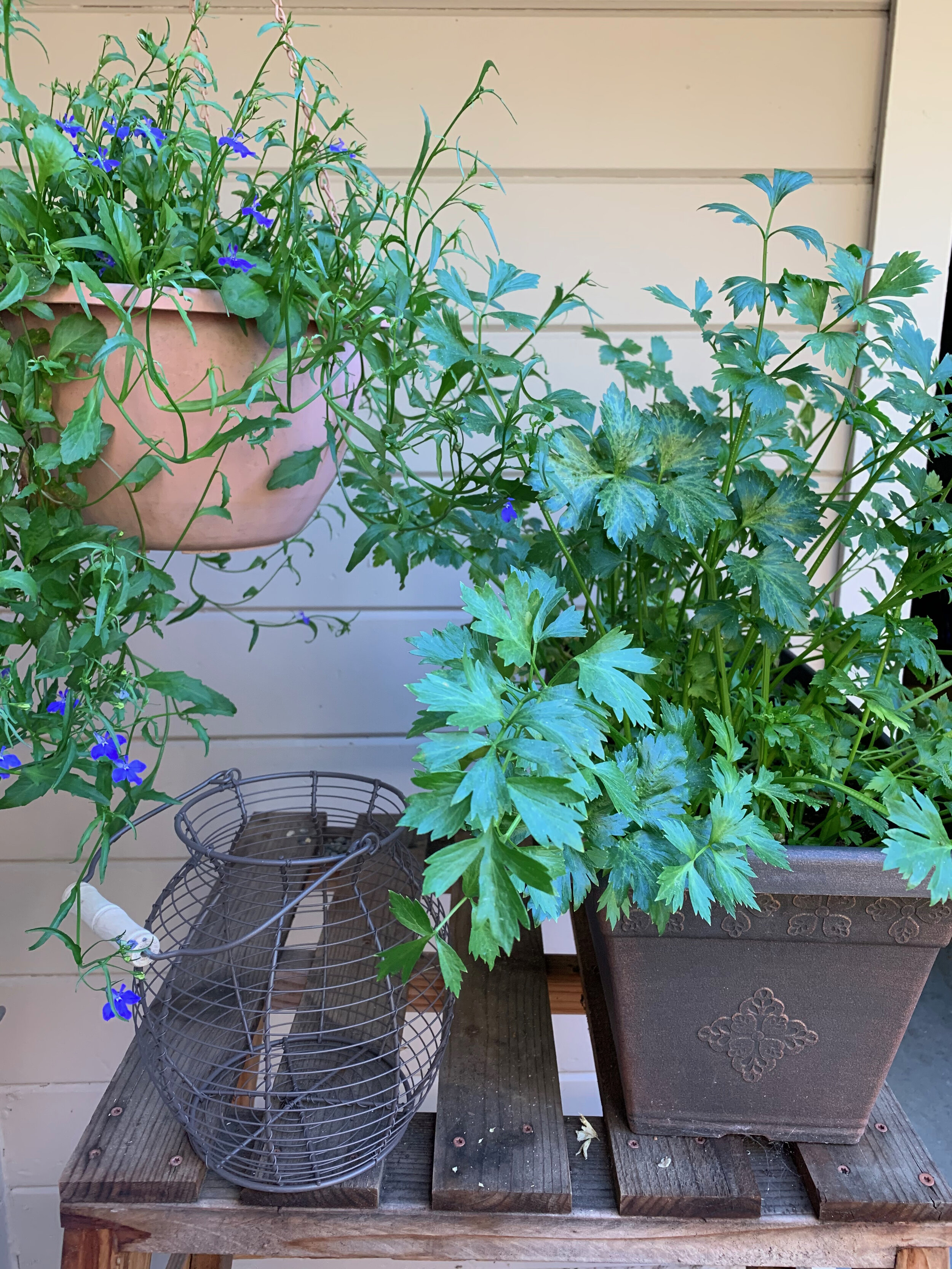
Finally, I am so excited to have procured an egg basket. Here it is on its perch outside the back door. We’ve never had one - I’ve always carried eggs in my shirt, and sometimes in my pocket (and you know what happens to eggs in pockets). It’s such a little thing. But I love it and I feel like a real farm girl when I go out to gather eggs.

IMG_4285.jpg

Hope you are finding moments of joy in all the unknowns.

IMG_4305.jpg


Tags flower garden
Comment

Tomato System 2.0

April 20, 2020 Elizabeth Boegel
IMG_4268.jpg

I think I write those words every year! I’ve tried so many ways of growing tomatoes. Many years ago, I started out (as everyone does) with those flimsy cages you can get at any hardware store. Then I graduated to larger store-bought cages, then homemade cages, then various trellising systems such as Florida weave, then pruned onto stakes, and now finally have settled on something that will last for years.

The idea is to emulate the way tomatoes are grown in greenhouses, on strings. Of course greenhouses are expensive enclosed buildings, which require careful ventilation. They’re built with a sort of grid of rafters so that wires can run across the top, and then strings can be tied into the wires, and the tomatoes trained on to the strings. Technically we have space for such a building (if not the budget), but it wouldn’t look right in our yard or our neighborhood, where the houses are built close together, and would likely require a permit. Our climate is such that we don’t really need such a large enclosed growing space. Plus, there’s the “pretty” factor, which is important to me. I wanted our system to be practical, while open to the elements, and artistic. At the same time, we’ve been trying to add vertical interest to the garden with all kinds of trellising systems and new mid-level plantings at the 6-8 foot level. So I asked Tom to build me some tall structures with cross beams that I could use as ‘rafters’ onto which I could tie the strings which would be the growing support for the tomato plants.

IMG_4267.jpg

Tom has become quite a builder in recent years; he’s built us a farm table and benches, big wooden planters for things like hops, and of course the chicken coop. I knew he could do this project and that, while difficult, would provide some much-needed respite from his crazy job. It took him two weekends, plus some planning and sketch-up time, to come up with this design, which we tweaked a few times in the course of the project. We needed plenty of structural strength to stand up to winds and weather and random bumps by humans. We needed to be able to access the plants easily. We needed to be able to fit other trellises and hoops underneath them, for different crops and different seasons.

I’m quite pleased with the result. These trellises add a real sense of permanence to the garden, and will be great for our most important yearly crop (tomatoes). It has allowed me to plant 10 seedlings per bed, as each will be trained to its leader and side shoots pruned. I put the cherry tomatoes in the back next to the chicken coop, so I could let them grow a little wide and expand onto the fenced run, if we like. It’s possible (but maybe I’m stretching here) that squirrels will find the strings confounding, or too slight to confidently support their weight, and they’ll leave the fruit to us. We’ll have to see about that.

IMG_4272.jpg

Each string is tied on to a crosspiece at a height of 6 feet, and then tied on to a wire ‘pin’ that I made from 16-gauge wire, which is firmly anchored in the soil at the plant’s base. Enough slack is left to give plenty of room for twisting as the season goes on. If the tomato wants to grow taller than six feet, I’ll extend the string at the top to the highest crosspieces which are at 8 feet.

IMG_4269.jpg

I bought 200 of these clips which are made for greenhouse growing; they have a little clip which clips on to the string, and a big clip that holds the stem of the tomato plant. I intend to use about four per plants as they grow. Hopefully, with care, I can use them again next year.

Tom used 2x2 redwood posts to build the structure. Using my dad’s woodshop and tools, he was able to make angled joints to join the pieces together in the frame, for added strength. If you’re interested in knowing more about how he made them, or to see his sketch-up design, contact me here and I’ll get those plans to you. These structures were built so that they could be taken apart and stored each year, but I don’t intend to do that - I’ll leave them up year-round, as I believe they add so much interest to the garden.

All in all, we spent about $300 on this system. We felt this expense was reasonable, since we grow many hundreds of pounds of tomatoes each summer to preserve for the off season. Any method of trellising tomatoes costs money; my other idea for a permanent structure was cattle panels on t-posts, and those panels are $50 a pop and we would have needed eight of them. I much prefer these wooden structures. They will last for many years, and I think the instillation is beautiful.

Tags tomatoes, vegetable garden, projects
4 Comments
← Newer Posts Older Posts →

Subscribe

Sign up to get email when new blog entries are made.

We respect your privacy. We're only going to use this for blog updates.

Thank you! Please check your email for a confirmation notice to complete the subscription process.

Powered by Squarespace