• About
  • Blog
  • Contact
  • Favorites
  • Archive
Menu

Poppy Corners Farm

Street Address
Walnut Creek, California
Phone Number
Walnut Creek, California

Your Custom Text Here

Poppy Corners Farm

  • About
  • Blog
  • Contact
  • Favorites
  • Archive

April Arrangement

April 9, 2020 Elizabeth Boegel
IMG_4197 (1).jpg

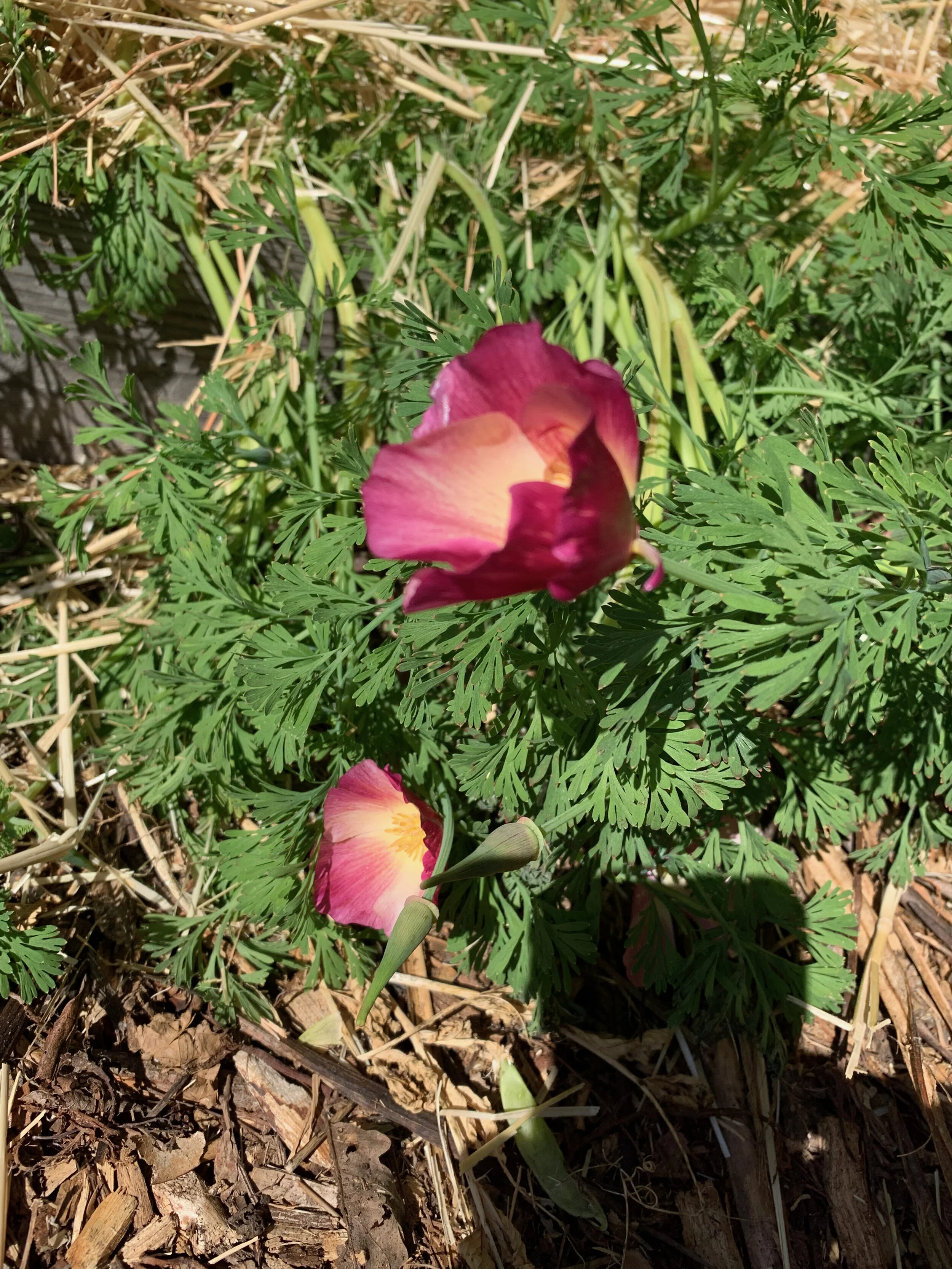
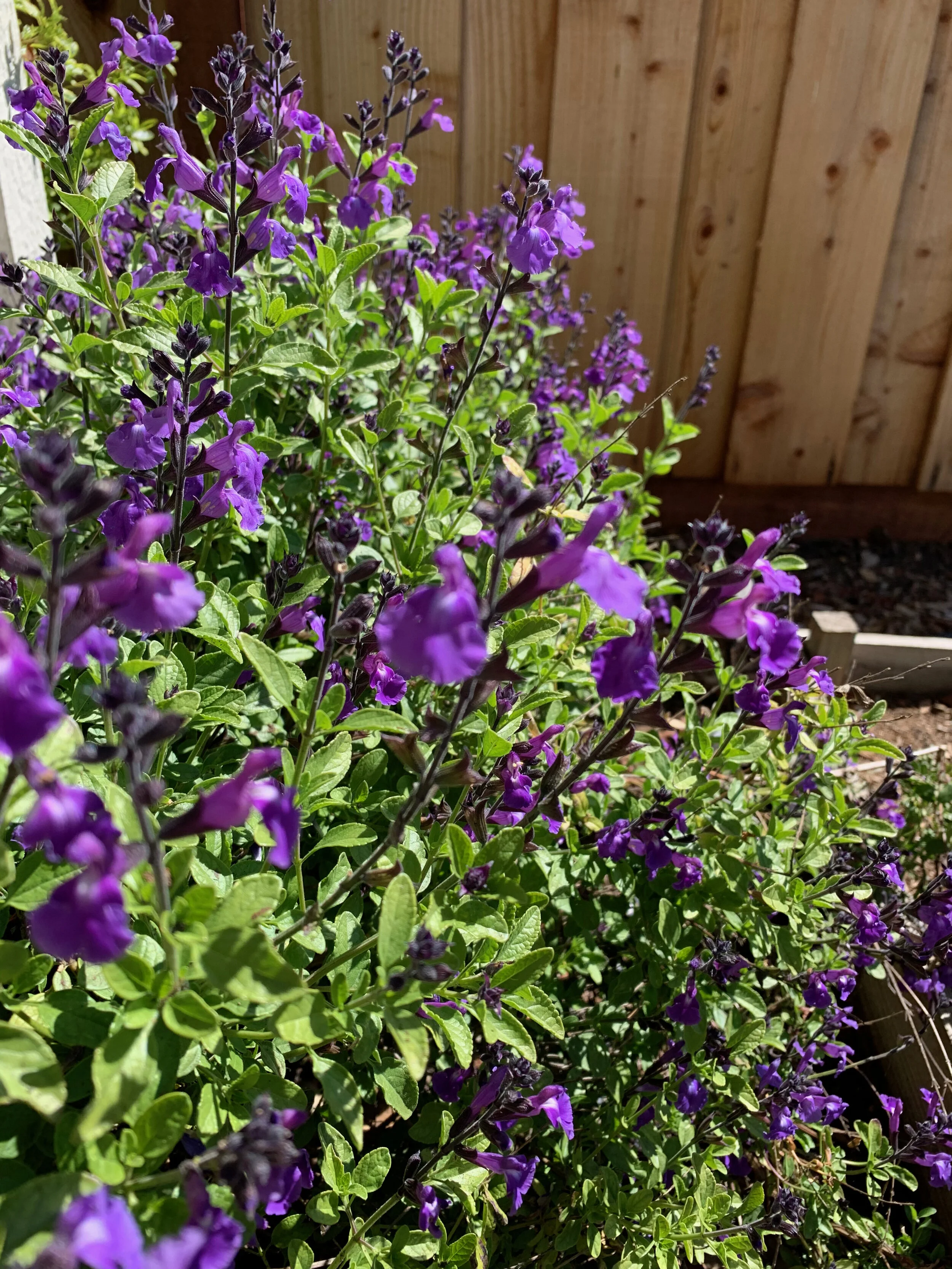
Here’s a simple Easter posy, which includes the pink version of California poppy (the Mission Bells mix), shelling pea blossoms, Cerinthe major purpurascens, sweet pea blossoms, Phacelia tanacetafolium, purple salvia, blue-eyed grass, and a sweet little surprise pink penstemon I found growing sideways on the very edge of the pollinator garden near the fence. Did I plant it? Who knows!

IMG_4202.jpg

It’ll be a strange holiday, won’t it? We usually celebrate by joining our neighbors in a large outdoor potluck brunch (after the little kids have an egg hunt), and it’s always a fun time of fellowship, which we’ll miss. We’ll still have a family dinner with ham and maybe some spring peas from the garden. This little bouquet will help decorate our table.

Two things that heads-of-state have said lately have resonated with me: Gavin Newsom, Governor of California, reminded us that the Bible said that we are all parts of one body; and Queen Elizabeth said firmly, “We will be with friends again, we will be with family again, we will meet again.”

Hope you have a blessed holiday weekend.


Tags seasonal flower arrangement
Comment

Local Tomato Sale (plus other veg)

April 8, 2020 Elizabeth Boegel

So many folks are looking to start a garden for the first time, and now is a great time to begin. Even if you don’t have a yard, you can grow most fruit and veg in containers. Start with the best potting soil you can find, water thoroughly every other day (probably daily when it gets hot), mulch the soil surface if you can, and feed once a week with an organic, low-nutrient fertilizer like fish emulsion. Grow bags are a great alternative to pots and have a lot of built in benefits such as allowing the roots to air prune, and they are mostly made out of recycled plastic. You’ll need at least a 10 gallon container for each tomato, but you can fit two peppers in that size pot, and many more lettuces.

Seeds are cheap and many things grow better from seed (cucumbers, squash, peas); however I have heard that many seed companies are running low on stock. You can check on my recommendations page for the seed houses buy from each year. You can start almost anything from seed except tomatoes and peppers - it is too late now to start those from seeds, so you’ll need to buy seedlings.

I’ve just learned that the Master Gardeners are selling the 24,000 plants they raised for their sales this year out of Orchard Nursery in Lafayette. All orders are online, with curbside pickup. There’s many different kinds of tomatoes and lots of peppers to choose from. Orchard is also selling many other veg starts as well as herbs and fruit trees/canes/bushes. I can’t speak for the other veg, but the tomatoes and peppers raised by the Master Gardeners will be far superior to anything you can buy at big box or hardware stores. The proceeds from these sales also benefit their local programs for gardeners, which is terrific. You can get your potting soil from Orchard, too - I like the organic Bumper Crop, but have also had good success with Paydirt.

This is a great project to do with kids, and absolutely fulfills science requirements. While inspecting your plants for bugs is a good idea, resist the ‘urge to purge.’ Do not spray your plants with any kind of insecticide. If you notice bugs like aphids or caterpillars, it is totally appropriate to remove them with your hands. First you might enjoy photographing them and posting your photo to iNaturalist, or removing them and studying them and learning about them. Again, this is science! (I recently completed a multiple-intelligences unit for my Psych class, and one of the ways people learn is through nature, so why not incorporate it into your home schooling curriculum?)

Even if you don’t have kids at home, gardening is something that can take you into a State of Flow and out of the State of the World, which is probably a really good thing right now. You might find that it becomes the thing that shapes your day. And you already know that a fresh tomato out of the garden (in season) is better than anything Safeway is going to deliver you. So why not go for it? And if you run into any problems, please contact me and we will work through those problems together. You can do it!

Tags vegetable garden, herb garden, fruit garden, learning
Comment

Our First Snake! *

April 7, 2020 Elizabeth Boegel
IMG_4179.jpg

*That we know of, that is.

This is a Western Sharp-tailed snake. It is endemic to the West from the Central Coast of California up through the Pacific Northwest. I found it under one of the bricks I use as vegetable markers. It’s about the size of a golf ball, all curled up like that, but these snakes only reach about a foot in length, so they are naturally small. It tends to like wetter areas in the garden, and guess what they eat? Slugs and slug eggs! This is so amazing. I could not have asked for a better first snake sighting. Yes, I’d like something to eat rats, and this snake won’t take care of that, but I sure do have plenty of slugs. I hope there are lots of these little snakes all over the garden!

Today was a great day. The sun shone! It was in the 60’s! I spent half the day doing classwork and half the day in the garden, which felt close to normal. Drunk on sunshine, I threw caution to the wind and planted out all my peppers. I have three 4x4 beds full of hot, sweet, and paprika peppers. The soil felt warm, the nights will be warm for the next ten days at least, and I think we are out of danger of frost. Normally our last average frost date is February 15, but we didn’t really have winter until March! And even as late as last night, it was quite chilly with snow down to 3000 ft. But tonight it all changes, and I’m hopeful that spring is well under way, now.

My mood is just so different on days like this, when I have some purpose to shape my activities. We are feeling very hopeful here in California that our curve is somewhat diminished; our governor was very quick to make social distancing recommendations very early in March, and we’re seeing some signs that that was a good decision. The battle is not won, however, and we also watch the news coming out of NY and Louisiana with heavy hearts. It was good to forget about the virus for a few hours. I hope you are able to do the same.

Tags vegetable garden, peppers, wildlife, IPM
Comment

The Mental Shift

April 2, 2020 Elizabeth Boegel
the first Clematis bloom

the first Clematis bloom

I have a group of friends I call my ‘Sunflower’ friends; we met 15 years ago when our kids were all 2-3 years old and attending preschool (Sunflower Preschool in Alamo) for the first time. Adam was three when we began there, and was in his first year of what is called ‘maintenance’ treatment for leukemia (the first year of treatment is very harsh; after that, boys have a further 2-1/2 years of maintenance and girls have a further 1-1/2 years - boys have more because they tend to relapse in the testicles). The two years Adam spent at Sunflower are very special to me because he learned how to be away from adults (of course he’d been very much a part of the adult world while sick) and with his peers instead. It was hard for him, but good for him, and Sunflower was a small, local preschool with very nurturing teachers. I became quite close with the other moms there and six of us have remained close to this day. We don’t get together more than twice a year, but we always have such a blast when we do.

Anyway, in this time of pandemic, we are texting each other several times a day. It’s interesting to see which people you can talk to about which aspects of this. Many people only want the pollyanna version of things, but my Sunflower friends happen to be the people I can talk to when I’m feeling either very silly or very depressed. And though I haven’t written about it here at all, I have had moments of pretty deep depression during this shelter-at-home period (we’ve been on official lockdown for 16 days, but I was home a week before that as my college had closed earlier). My depression tends to rear its head when I have too much time on my hands, and, well…. I have nothing but time on my hands right now. I’ve noticed that I have maybe one day a week when I feel really bad. That’s a pretty good ratio, actually, six okay days compared to one bad day. Yesterday was one of the bad ones. I wrote to my Sunflower friends and told them what was happening and tried to reason it out. I got some interesting and encouraging responses, things like “I haven’t showered in five days” and “The other night, I spent six hours crying, no exaggeration” and “I’m so sad and disappointed in the human selfishness that’s being shown at the local stores right now” and “I’m not sleeping either, I’m up every morning at 3 am.”

IMG_4166.jpg

It felt so good to know I’m not alone in these feelings.

But I still wondered why I have them. I mean, I know anxiety and worry are not exactly in short supply right now, and it’s normal to feel that way. We fear the unknown and we fear for our family’s safety. But looking at it from an outsider’s point of view, what do I have to complain about? My husband is still working and we are still getting a paycheck (and I’ve never been so grateful). We have a lovely (though small, and getting smaller by the day) home in a lovely neighborhood. None of us is ill. None of my extended family is ill. None of us works in health care (and God bless those folks, they are true heroes). Tom and I are in our early 50’s and not in any risk group. Even Adam is not at any higher risk due to his cancer history (you better believe I checked with his oncologist). And while my kids seem sad and confused and frustrated, they are not deeply morose.

So why this once-weekly struggle of mine?

IMG_4162.jpg

As I was talking this out with Tom, I realized that we mothers in my Sunflower group were all in the same place in life. We’re all happily partnered, with older children, and confidently pursuing either work or degrees now that the children are fairly self-sufficient. One of us is a tutor, and that work is now cancelled. One of us is a salesperson who travels, and she has been laid off. One of us owns a business as a professional organizer, so she’s not working at the moment. Of course, I’m a full-time student, and that’s all moved to distance learning, which is really not all-consuming. Our days, normally spent out of the home in fruitful pursuits, had all come to a halt. We had raised our children (many of them special-needs, we all ended up at Sunflower for a reason), put systems in place to make it possible for us to work and/or go to school, and had a beautiful rhythm to our lives. Sure, we still cooked dinner and cleaned our houses, but we were reinventing ourselves too. Suddenly that’s all been stopped. And here we are, back in the home, cooking and cleaning, but without small children to care for and to fill our days.

IMG_4157.jpg

I imagine our kids are feeling that same pause. Many of them are seniors, like Adam, suddenly stopped in the middle of that trajectory out of the home and into the world. In a time when they should be celebrating their accomplishments and gearing up to move into adulthood, they are forced to wonder what September will now look like. Will they have the grades they need for their chosen colleges? Will they be able to take AP tests and get credit? How to choose a college if you can’t go visit them right now? And how to ‘mark’ the end of their grade school years without any kind of public celebration or recognition? And our kids that are juniors, like Rin - suddenly the SAT isn’t possible, so how is that going to affect college applications? (The UC system just announced that SATs would not be necessary this coming year for application; hopefully other colleges will follow suit.) Rin said to me recently like she felt, last January, like 2020 was HER year - she finally felt healthy and comfortable at school and totally ‘on it’ academically, and now that’s all toast. What will her senior year look like? It’s all very unknowable. And all of Adam’s friends that are a year older, now forced to return home from college, just when they felt like their adult lives were well on the way. Now they’re back in their parents’ houses, doing chores and hanging out with mom and dad. No matter how great your parents are, that has to feel like a regression of sorts.

IMG_4156.jpg

I’m been feeling jealous of Tom, who has a very difficult job right now and probably can’t imagine anyone being jealous of it, but my feeling is that at least he has something to THINK about other than this crisis. He has something to DO. Even the volunteering that I’ve explored seems to make no sense right now when the most helpful thing I can do is stay home. I keep finding places to donate money but what I really need is somewhere to donate time. Other than taking some groceries to people that need it and checking in on some seniors in my neighborhood, I am utterly useless at the moment.

And I am so completely aware, while writing this, of my privilege. How fortunate I am to be in this position, and I really have no business being sad about it whatsoever.

While I was talking with Tom about all of this, he was bringing up an article on his computer for me to read. It’s geared towards those in higher education, but he thought it might be helpful for me. It’s hard to overstate how profound I found it to be. I found it so meaningful that I am going to copy it here in its entirety and share it with any of you who might be feeling the way I am feeling.

“Why You Should Ignore All That Coronavirus-Inspired Productivity Pressure

By Aisha S. Ahmad, The Chronicle of Higher Education, March 27, 2020


Among my academic colleagues and friends, I have observed a common response to the continuing Covid-19 crisis. They are fighting valiantly for a sense of normalcy — hustling to move courses online, maintaining strict writing schedules, creating Montessori schools at their kitchen tables. They hope to buckle down for a short stint until things get back to normal. I wish anyone who pursues that path the very best of luck and health.

Yet as someone who has experience with crises around the world, what I see behind this scramble for productivity is a perilous assumption. The answer to the question everyone is asking — “When will this be over?” — is simple and obvious, yet terribly hard to accept. The answer is never.

Global catastrophes change the world, and this pandemic is very much akin to a major war. Even if we contain the Covid-19 crisis within a few months, the legacy of this pandemic will live with us for years, perhaps decades to come. It will change the way we move, build, learn, and connect. There is simply no way that our lives will resume as if this had never happened. And so, while it may feel good in the moment, it is foolish to dive into a frenzy of activity or obsess about your scholarly productivity right now. That is denial and delusion. The emotionally and spiritually sane response is to prepare to be forever changed.

The rest of this piece is an offering. I have been asked by my colleagues around the world to share my experiences of adapting to conditions of crisis. Of course, I am just a human, struggling like everyone else to adjust to the pandemic. However, I have worked and lived under conditions of war, violent conflict, poverty, and disaster in many places around the world. I have experienced food shortages and disease outbreaks, as well as long periods of social isolation, restricted movement, and confinement. I have conducted award-winning research under intensely difficult physical and psychological conditions, and I celebrate productivity and performance in my own scholarly career.

I share the following thoughts during this difficult time in the hope that they will help other academics to adapt to hardship conditions. Take what you need, and leave the rest.

Stage No. 1: Security

Your first few days and weeks in a crisis are crucial, and you should make ample room to allow for a mental adjustment. It is perfectly normal and appropriate to feel bad and lost during this initial transition. Consider it a good thing that you are not in denial, and that you are allowing yourself to work through the anxiety. No sane person feels good during a global disaster, so be grateful for the discomfort of your sanity. At this stage, I would focus on food, family, friends, and maybe fitness. (You will not become an Olympic athlete in the next two weeks, so don’t put ridiculous expectations on your body.)

Next, ignore everyone who is posting productivity porn on social media right now. It is OK that you keep waking up at 3 a.m. It is OK that you forgot to eat lunch and cannot do a Zoom yoga class. It is OK that you have not touched that revise-and-resubmit in three weeks.

Ignore the people who are posting that they are writing papers and the people who are complaining that they cannot write papers. They are on their own journey. Cut out the noise.

Know that you are not failing. Let go of all of the profoundly daft ideas you have about what you should be doing right now. Instead, focus intensely on your physical and psychological security. Your first priority during this early period should be securing your home. Get sensible essentials for your pantry, clean your house, and make a coordinated family plan. Have reasonable conversations with your loved ones about emergency preparedness. If you have a loved one who is an emergency worker or essential worker, redirect your energies and support that person as your top priority. Identify their needs, and then meet those needs.

No matter what your family unit looks like, you will need a team in the weeks and months ahead. Devise a strategy for social connectedness with a small group of family, friends, and/or neighbors, while maintaining physical distancing in accordance with public-health guidelines. Identify the vulnerable and make sure they are included and protected.

The best way to build a team is to be a good teammate, so take some initiative to ensure that you are not alone. If you do not put this psychological infrastructure in place, the challenge of necessary physical-distancing measures will be crushing. Build a sustainable and safe social system now.

Stage No. 2: The Mental Shift

Once you have secured yourself and your team, you will feel more stable, your mind and body will adjust, and you will crave challenges that are more demanding. Given time, your brain can and will reset to new crisis conditions, and your ability to do higher-level work will resume.

This mental shift will make it possible for you to return to being a high-performance scholar, even under extreme conditions. However, do not rush or prejudge your mental shift, especially if you have never experienced a disaster before. One of the most relevant posts I saw on Twitter (by writer Troy Johnson) was: “Day 1 of Quarantine: ‘I’m going to meditate and do body-weight training.’ Day 4: *just pours the ice cream into the pasta*” — it’s funny but it also speaks directly to the issue.

Now more than ever, we must abandon the performative and embrace the authentic. Our essential mental shifts require humility and patience. Focus on real internal change. These human transformations will be honest, raw, ugly, hopeful, frustrated, beautiful, and divine. And they will be slower than keener academics are used to. Be slow. Let this distract you. Let it change how you think and how you see the world. Because the world is our work. And so, may this tragedy tear down all our faulty assumptions and give us the courage of bold new ideas.

Stage No. 3: Embrace a New Normal

On the other side of this shift, your wonderful, creative, resilient brain will be waiting for you. When your foundations are strong, build a weekly schedule that prioritizes the security of your home team, and then carve out time blocks for different categories of your work: teaching, administration, and research. Do the easy tasks first and work your way into the heavy lifting. Wake up early. The online yoga and crossfit will be easier at this stage.

Things will start to feel more natural. The work will also make more sense, and you will be more comfortable about changing or undoing what is already in motion. New ideas will emerge that would not have come to mind had you stayed in denial. Continue to embrace your mental shift. Have faith in the process. Support your team.

Understand that this is a marathon. If you sprint at the beginning, you will vomit on your shoes by the end of the month. Emotionally prepare for this crisis to continue for 12 to 18 months, followed by a slow recovery. If it ends sooner, be pleasantly surprised. Right now, work toward establishing your serenity, productivity, and wellness under sustained disaster conditions.

None of us knows how long this crisis will last. We all want our troops to be home before Christmas. The uncertainty is driving us all mad.

Of course, there will be a day when the pandemic is over. We will hug our neighbors and our friends. We will return to our classrooms and coffee shops. Our borders will eventually reopen to freer movement. Our economies will one day recover from the forthcoming recessions.

Yet we are just at the beginning of that journey. For most people, our minds have not come to terms with the fact that the world has already changed. Some faculty members are feeling distracted and guilty for not being able to write enough or teach online courses properly. Others are using their time at home to write and report a burst of research productivity. All of that is noise — denial and delusion. And right now, denial only serves to delay the essential process of acceptance, which will allow us to reimagine ourselves in this new reality.

On the other side of this journey of acceptance are hope and resilience. We will know that we can do this, even if our struggles continue for years. We will be creative and responsive, and will find light in all the nooks and crannies. We will learn new recipes and make unusual friends. We will have projects we cannot imagine today, and will inspire students we have not yet met. And we will help each other. No matter what happens next, together, we will be blessed and ready to serve.

In closing, I give thanks to those colleagues and friends who hail from hard places, who know this feeling of disaster in their bones. In the past few days, we have laughed about our childhood wounds and have exulted in our tribulations. We have given thanks and tapped into the resilience of our old wartime wounds. Thank you for being warriors of the light and for sharing your wisdom born of suffering. Because calamity is a great teacher.

Aisha Ahmad is an assistant professor of political science at the University of Toronto and the author of the award-winning book Jihad & Co: Black Markets and Islamist Power (Oxford University Press, 2017). Her Twitter is @ProfAishaAhmad.”
— The Chronicle of Higher Education
IMG_4168.jpg

From this article I have deduced that I am moving into Stage 2, which is the Mental Shift. When the author says that this work will be “raw, ugly, beautiful, and divine” I know exactly what she means. Right now I’m in the raw, ugly part of it and that’s why I feel so bad. I am hopeful that I will eventually be able to make the shift to acceptance, and I look forward to the beautiful and divine when I finally make that shift.

I shared this article with my Sunflower friends and we all felt a sense of validation and hope. My wish is that this (rather personal) post will find someone who is feeling as bad as I have been and help them to feel that same validation and hope. We all need to help each other feel strong right now.


Tags pandemic, learning
2 Comments

With warmth

March 31, 2020 Elizabeth Boegel
The first sweet pea of the season

The first sweet pea of the season

When the daytime highs reach the mid-60’s, and the nighttime highs inch close to 50, I know that things are truly going to start hopping in the garden. Flowers feel safe enough to bloom; warm-season veg begins to put forth tiny buds; and the insects start to wake up. I’ve noticed native bees in more numbers, flies hanging about the compost pile, and even a butterfly or two. And today, I spotted my first paper wasp. I like paper wasps. They are excellent pollinators and good predators of the kind of caterpillars that I don’t want (like tomato hornworms). They aren’t aggressive and stick mostly to themselves, so I welcome them every year to the eaves of the train shed where they build their nests. But, if paper wasps have arrived, that means yellow jackets will soon follow. I feel a bit differently about yellow jackets.

IMG_4141.jpg

Yellow jacket queens overwinter in their underground dens, emerging (as so many insects do) with sun and light in spring. They are looking for food and a mate. If we can trap the queen before she mates or lay eggs, we can break one tiny part of the cycle now, and hopefully have less of them over the summer months. Today I put one by the chicken coop and one by the beehive, because those are both areas where YJs like to hang out. Let me be clear: I don’t want to eradicate all YJs; after all, they are an important part of the ecosystem and valuable because they eat dead things. But even if I wanted to, I could never get rid of them all. There will always be plenty of them. So I’m just trying to put a little dent in the population. If you’re in agreement with me, now’s the time to start putting out traps. The one above is the only kind that has every worked for me. Those plastic round things are useless, in my opinion.

IMG_4139.jpg

This warmish weather also brings other creatures out of their dens, namely the college administrator who is on video and phone meetings from early morning till evening. Any outdoor spot is a good place for that, as long as it’s quiet. And it has definitely been quiet, although there are a lot of people doing house projects right now (and why not?), which means the college administrator is also taking a fair amount of meetings from the bedroom with the doors and windows closed.

IMG_4142.jpg

Warm weather also causes the winter veg to bolt. These are Brussels sprouts flowers, aren’t they pretty? Like all members of the mustard family, they attract lots of bees. I’ve been feeding the chickens one of these plants each day. I just cut it off at the base and throw it to them, and they strip it to the stalk. Chickens love brassicas. Not so much the chard or beets, a different family of plants altogether.

I’ve planted potatoes - three kinds (Russet, French Fingerling, and Yukon Gold) for three different harvest times, and also seeded some sunflowers in cow pots for later transplant. This weekend, Tom and I are hoping to work on a new way to trellis tomatoes. What are you working on in your garden?

Tags insects, wildlife, vegetable garden, flower garden
6 Comments
← Newer Posts Older Posts →

Subscribe

Sign up to get email when new blog entries are made.

We respect your privacy. We're only going to use this for blog updates.

Thank you! Please check your email for a confirmation notice to complete the subscription process.

Powered by Squarespace