• About
  • Blog
  • Contact
  • Favorites
  • Archive
Menu

Poppy Corners Farm

Street Address
Walnut Creek, California
Phone Number
Walnut Creek, California

Your Custom Text Here

Poppy Corners Farm

  • About
  • Blog
  • Contact
  • Favorites
  • Archive

Greenhouse Thermometer

February 24, 2020 Elizabeth Boegel

Our greenhouse isn’t much to look at, just some old redwood fencing and plastic sheeting that we repurposed with the help of my dad, but its creation several years ago revolutionized my efficiency. Tom went to the trouble to figure out mathematically how to build the shelves inside to best capture the angle of the sun, particularly in winter. I don’t have anything in there right now, but starting March 1, the first batch of pepper seedlings will need to move in here to make room for tomato seedlings in the house. I’ll also start a lot of flower seeds, and squash/melon seeds at the same time, and just keep them in the greenhouse.

In an effort to maximize efficiency, I decided to buy a cheap greenhouse thermometer from Govee. This has allowed me to see, from my phone, the temperature and humidity inside it, without opening the door and letting out all the heat. If you allow Govee to have a lot of information about you, you can also make some neat charts and get a history of temps over time, wherever the thermometer is placed. I didn’t allow that, but I’m still able to collect enough data to get an accurate picture of what’s happening in there. Last week, I added a bowl of water to see if that would affect the humidity. I’m not sure it has, actually. But the data is interesting and it caused me to ask some more questions about humidity and its relationship to heat.

Here’s a morning reading:

IMG_3940.jpg

You can see that temp and humidity are at about the same level.

Now, here’s an afternoon reading (the door is closed, remember):


IMG_3941.jpg

Notice how, when the temperature rises, the humidity level goes low. I couldn’t figure this out, so I asked Tom to explain it to me. That allowed us to do some research together about it. Now, I know some of you probably already know this, but I did not, and I’m guessing some other folks don’t either. So bear with me as I share what I learned.

Relative humidity represents a percentage of water vapor in the air that changes when temperature changes. Warm air holds MUCH more moisture than cold air. So when it’s very warm, the air is ‘holding on’ to the moisture, and when it’s cool, the air can’t hold on to it, releasing it into the atmosphere. For instance, a rain cloud can only release its moisture when it cools down enough. That’s one of the reasons rain clouds are higher in the sky - it is colder as you get higher. 100% humidity makes a cloud, but it won’t release water until it’s cold enough to do so.

So, roughly, when the air in the greenhouse is at a very high temperature, it is ‘holding on’ to the moisture and I get a low humidity reading. But when it cools off at night, the air ‘releases’ the moisture, allowing it to be read by my thermometer.

Does that make sense?

Now, when there are plants in the greenhouse, they will be photosynthesizing; taking the sun’s energy and converting it to sugars to be taken to the root of the plant. While this is happening, the plant is transpiring - releasing moisture from the leaves. Photosynthesis ‘pulls’ the water up from the root of the plant to the leaf of the plant, where it is released into the air (there’s a complex process of using some of the water in the process of photosynthesis which we can leave out for the purposes of this conversation). Will this increase the humidity in the greenhouse? It won’t be happening at night, because there is no photosynthesis at night (for the most part - some plants do this but not the ones I’m talking about, usually only desert plants). It will be interesting to see the results of that.

The thing to remember is that air circulation is the MOST important thing about greenhouse management. If the air doesn’t circulate, the plants will have too much humid air around them, therefore they won’t be able to make any more water evaporate, and that means no nutrients will be coming up from the soil. So open your greenhouse doors during the day when plants are in there, no matter how much you want to keep them closed. Open the greenhouse during the day and close it up at night to keep things warm and snug.

IMG_3946.jpg


Tags learning, greenhouse, seed starting
Comment

Natural Trellises

February 22, 2020 Elizabeth Boegel
IMG_3927.jpg

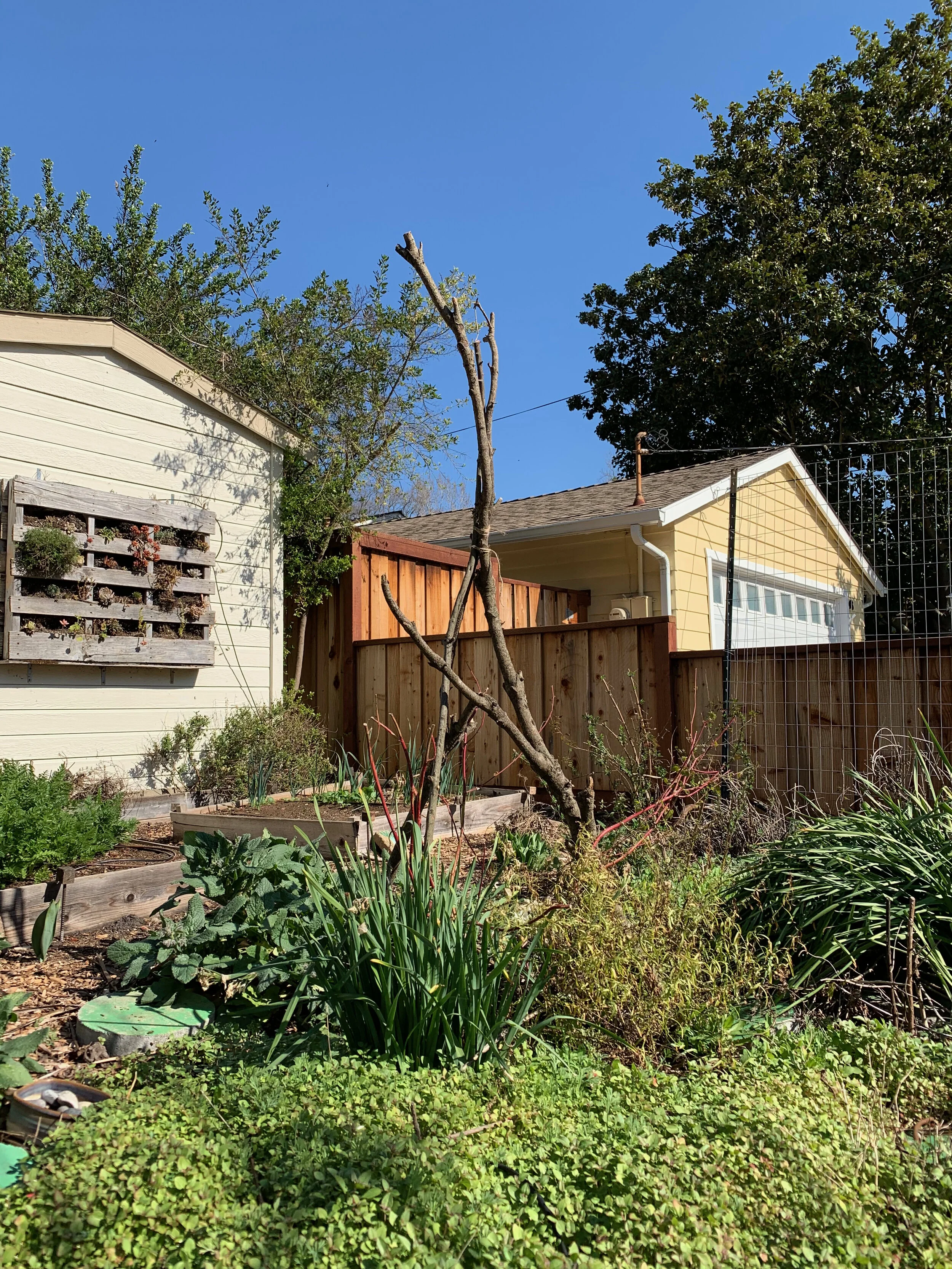
I have written recently about my desire to add structure and mid-level height to the garden. We are on a very flat plot; there is not a lot of varied terrain here, not to mention that it’s not terribly large. The picture above is of the South Garden, which has two towering trees, neither of which we planted: A southern Magnolia (Magnolia grandiflora), totally inappropriate for our climate, and a Catalpa bignonoides, which IS appropriate. The only thing I like about the Magnolia is that it shades the house in summer; however it also shades the house in winter, uses a TON of water, and has enormous leathery leaves that never break down and have to be removed from the garden. I love the Catalpa but my neighbors hate it, because it has these long seed pods (you can see last year’s desiccated pods above) that hold roughly a zillion seeds and they go everywhere and germinate everywhere. I love it because it has huge, orchid-like flower racemes in spring, gigantic heart-shaped leaves, and the seed pods when green are quite attractive, hanging like ornaments. Anyway, these trees provide plenty of canopy (sometimes too much, the pruners are coming in March to help me with that!) and high-level interest, and the Catalpa is very favored by birds and insects.

Then there is the shrub-level, which I’ve got covered, and the ground cover level, which is also good. Lots of low stuff. But not a lot in that mid-level.

image found on Pinterest

image found on Pinterest

I’m absolutely obsessed with English gardener Monty Don, who has written scads of books and is on Gardener’s World in the UK every Friday night. His garden, Longmeadow, is filled with stone walls and box/yew hedges which all add plenty of structure in winter when the garden is covered with snow. But he also coppices numerous trees like Hazel (a practice that has largely fallen out of favor here) to make these free-form, natural trellises for climbing flowers, fruits, and vegetables. He has a lot of them in the garden and I think they are quite charming. Unlike fruit trees, they are also free! So I decided that we should make several of these to add structure to our garden, and I can use them for climbing vines, peas, beans, or even pumpkins (which I think I will do this year, more to come on that).

Last weekend, Tom and I went to my parent’s house, about 10 minutes away. They live on a large hill which is basically native oak woodland, with CA live oaks and bay trees intermingling with toyon and buckeye. One of their oaks had a dead section, which Dad sawed off for me, and we took those branches as well as some toyon to add to our pile of branches from the trees in our yard. Today, it was just a matter of figuring out which ones looked good together, finding a solid place for them to rest, and tying them together. The twine loops are to aid plants in climbing, though I’ll also have to train them to the trellis.

We put three of them along the fence next to the street, to add vertical interest for those walking by, as well as hide portions of the garden to make it a little more mysterious. With the leftover shorter branches we made one more to put in the South Pollinator Garden for the red mallow to grow on.

IMG_3933.jpg

This week I also added a Boysenberry and a Red Globe Grape to our climbing fruiting vines, so we look forward to harvesting that fruit late this summer.

It’s full-on spring here, we have had not a drop of rain in February, and soon it will be time to start tomatoes.


Tags projects, design
2 Comments

Winter Honey

February 17, 2020 Elizabeth Boegel
IMG_3913.jpg

In response to our unseasonably warm afternoons, Tom and I opened up the hive yesterday for our first check of the year. We wanted to take off the entrance reducer, make sure the bees had enough room, and clean out any old stuff from the winter, as well as preemptively treat for varroa mite. All our plans kind of went out the window the minute we opened the hive. The bees were there, all the way at the back of the hive, and all the bars were full!

To explain why this is so unusual, you need to understand hive logistics. In November here in CA, a hive is opened one last time before winter, to make sure the bees have enough honey for the coming season. At the same time, beekeepers reduce the hive space, which helps the colony conserve heat during cold weather. In Langstroth hives (the ones you’re used to seeing), that means taking off excess boxes and keeping the colony down in the bottommost one or two. It’s a little different in our top bar hive. It’s only one long box, designed a bit like a hanging file system. The bars, about two inches wide, hang from either side on a ledge in the long, narrow box. In summer time, the entire box is filled with these bars - there is no excess room. But in winter, the bars are reduced, and something called a ‘follow board’ is put in behind the last one to make a sort of ‘false’ back to the box. This keeps all the bees up in the front end of the hive, compact and snug, with all their food available to them within a short distance. If I remember correctly, the queen lays her last batch of eggs about a month before the winter solstice. Those bees live a bit longer than usual to help the hive make it through winter. Then the queen starts laying again shortly after solstice, to have new bees ready to go in January as the days start lengthening. Therefore, depending on the weather, the hive can gain quite a few thousand members in late winter, in preparation for spring.

IMG_3911.jpg

Since it’s still solidly winter, we didn’t expect the bees to have expanded the colony quite as much as they had; finding a full box was a surprise! Not only that, there were four entirely full bars of capped honey, with many more half-full. We took out the full bars, but then we needed to replace those four bars plus the bars we took out in November. I had three bars ready to go back in the hive (they need to be cleaned first, and I glue in a little strip of beeswax at the top to ensure them a good building pattern), but today we need to get the rest ready to go in. We may as well open up the whole hive and let the bees do their thing. With this warm weather, the brood will eventually fill the bottom half of every bar, with stores of honey and pollen at the top to make feeding the babies convenient for the nurse bees. The numbers will increase very rapidly.

IMG_3915.jpg

Tom’s gone out to get more mason jars, since we have about 20 pounds of honey to bottle up. I don’t believe we’ve ever taken honey this early before. Likely, the bees made it before the first frost, and it’s been ripening all winter. It’s a deep, rich color, unlike the honey made from spring flowers which tends to be lighter in both appearance and flavor.

Meanwhile, the garden is taking off. I’ve been spending a good deal of time clearing out the flower beds in preparation for some new plantings. I believe I’ve written previously with regards to refreshing certain borders. This is a long process which includes cleaning out detritus, taking stock, moving plants that aren’t appropriate for the area, amending the soil, and researching what will do best in the space, with consideration given to which ones will provide the best habitat for insects and wildlife. I’ve recently watched this video of one of my favorite entomologists, Doug Tallamy, and have renewed my vow to make our garden a welcoming place for the ‘Little Things that Run the World,” providing more native plants on which the native insects evolved to depend. Dr. Tallamy has written several books that I can recommend heartily, my favorite being “Bringing Nature Home.”

I’ve also been moving certain big plants around, trying to create the structure that I am longing for in the lower canopy. Tom and I spent a happy hour on my parent’s hillside, cutting very large branches to use in our upcoming trellis project, which should help provide height. We are grazing daily in the garden, eating as we work, and I’ve cleared out the last of the spinach and planted a crop of head lettuce. I think I mentioned that I bought a thermometer for the greenhouse so I can monitor the conditions; I’ve added a bowl of water to see how that affects the humidity. I’m excited to get things moved and planted in there, in preparation for the coming season. This nice weather makes me antsy to do more.

IMG_3907.jpg

The sad fact is that we’ve had very little rain or snow in California this winter, and the latest maps (from NW Climate Toolbox) show that as of early February, we are running near or below 50% of average precipitation for the state. This does not bode well for the upcoming year. It reminds me to be even more thoughtful while revamping the flower beds, and to carefully choose the right plant for the right place.


Tags bees, honey, beekeeping, vegetable garden, flower garden
Comment

Eggs, please

February 11, 2020 Elizabeth Boegel
IMG_3898.jpg

The days are (slowly) getting longer, the temperatures are rising, the rain has disappeared (bad), and the chickens are laying! Or, at least, I know one of our older hens is laying, every other day. The new chickens keep going up to the hen house looking purposeful, but no success yet. Soon we will be swimming in eggs!

There were three of us for dinner last night (Rin was out of town at a competition) and I wanted to use our freshly laid eggs for something simple. I found this recipe on Smitten Kitchen and we tried it last night, using our rosemary, garlic, and lemons. Oh my goodness, it was wonderful. First of all, to cook with our fresh eggs - those firm whites and deep yellow yolks - so delicious - and then the marriage of flavors from these simple ingredients - it was a winner. I highly suggest you give it a try tonight. (Note: I doubled the recipe to serve three with some pasta left over for another use, but we used all the pangrattato and six eggs. I pumped up the zest and the garlic, using the zest of an entire small lemon, and a couple of extra cloves of garlic. We also use more parmesan, generally, in almost every case.)

Elderberry, pushing for spring

Elderberry, pushing for spring

I’ve been casting a critical eye over many of my borders, and determining how I want to change or refresh them. It’s interesting when you decide to look at something established and then erase it all in your mind and allow yourself to think up something new. I was unhappy with how my garden looked this winter, and it’s because I don’t have a lot of formal structure, other than the trees and the fence and the raised beds, to “hold the space down” when there aren’t a lot of things going on vegetatively. One way to do this is to add height. What I’ve determined is that I need more lower canopy, either with plantings or with built structures, to provide a higher mid-level. I have high level stuff, high canopy (big trees), and bushes and low level stuff, but very little at, say, a six-foot height. I want to make this layer without making too much more shade (I’ve got plenty from the big trees, thank you). Tom and I have had many conversations about this, and things will be changing, and we’ll let you know what we decide. This sort of structure might also add a bit of mystery by hiding areas of the garden from direct view, so that you always feel you are discovering something as you wander around. Think of the walled gardens in Europe, but now picture trying to do this without walls, or big yew/boxwood hedges. It’s a bit of a challenge! Any ideas appreciated! Meanwhile I’ve been ripping out or severely cutting back some things that I’ve had for years, things I planted over 10 years ago, and replanting those spaces with something different. I also very much want to make my borders bigger and fuller. This takes time because it takes money, but ultimately I’d like to narrow any walking spaces and fill the edges with plants so that there is more abundance.

The veg garden is looking lovely and is providing us with lots of good food. Broccoli, cauliflower, beets, kohlrabi, carrots, spinach, kale, chard, and snap peas are keeping us in delicious dinners. The first batch of peppers has been potted on and is sitting under one grow light, while another new batch is slowly germinating under another. I bought a thermometer for the greenhouse so I can monitor nighttime temps. So far, it’s still too cold at night to put anything in there, but in March, the first batch of peppers will be moved there to make room for tomatoes indoors under the lights. I will also start a TON of flower seeds in flats in the greenhouse, for planting out in April/May. March will also bring the tree company out to prune all our big trees, which should allow for better health for the trees and greater light in my garden.

IMG_3892.jpg

I found this little rock in my garden the other day, just inside the fence, and quite tucked away. On the back there was writing. It said, “Martinez Rocks on FB. Enjoy or re-hide.” I don’t belong to Facebook, but Tom does, so I had him look up the group. It’s a group of artists that are painting rocks and hiding them to bring pleasure to those that find them. Of course, I love this idea (remember my letterboxing phase?), nature and art all wrapped up in one. I wanted to find a fun place to re-hide it. Tom and I took a Sunday drive out to the Capay Valley to view the almond blossoms (the trees by our creek are blooming, so we thought they’d be blooming in abundance in almond country, but there were only a few, which was a bummer! We were too early. The Almond Blossom festival is the last weekend of February).

We found a few trees starting to bloom!

We found a few trees starting to bloom!

We stopped by Full Belly Farm, one of our favorite places, and took a walk to look at the chickens, cows, and fields being prepared for planting. I ‘hid’ the rock on a tree stump near a beautiful empty field. I hope someone else finds it and enjoys it.

IMG_3893.jpg

Our chores for the coming weekend include our first hive check of the year. I’ve noticed the bees bringing in a lot of pollen, and I can smell the brood. So that means they’ll need more room very soon for both babies and honey.

So you can see, the chores to be done are building up, while we enjoy the fruits of the autumn work we put in last October. Busy times are coming!

Tags design, flower garden, vegetable garden, chickens, seasonal recipes, cooking
Comment

February Arrangement

February 4, 2020 Elizabeth Boegel
IMG_3871.jpg

When I went out today to pick this arrangement, I noticed many flowering plants that were severely damaged by our recent frosts. The Brussels sprouts, which I staked recently, are halfway uncovered and this morning had the finest ice crystals decorating them. The winter veg doesn’t mind the cold, but the flowers are another matter. Luckily, there are some great flowers blooming despite the cold.

For this bouquet, I chose a Hellebore as the main stem, and built the rest of the arrangement around it. Hellebores are stars of the late winter garden. This white one is a cultivar called “Wedding Ruffles;” I bought it two years ago and planted it in a pot. Last summer I replanted it into the garden. It’s the only one to survive this (I replanted four different kinds), and I think because it is in very deep shade and is well-watered. However, that makes it very well hidden and it’s nice to cut the blooms and bring them inside to enjoy them. I wish I could afford a lot of hellebores in all different colors! I love them.

The tiny daffodils are a reliable variety called “Tete a Tete.” They are only about six inches high and they are the earliest to bloom in my garden - the big guys will come later. I also have included some white narcissus, some yellow narcissus, a couple of purple spikes of Salvia leucantha (which I also included in the January arrangement; that tells you how well the do all winter long) , and some snap pea tendrils and flowers. Oh, and some rosemary, which is blooming now, surprisingly.

Altogether, I think this looks like a little handful of early spring.

Tags seasonal flower arrangement, flower garden
2 Comments
← Newer Posts Older Posts →

Subscribe

Sign up to get email when new blog entries are made.

We respect your privacy. We're only going to use this for blog updates.

Thank you! Please check your email for a confirmation notice to complete the subscription process.

Powered by Squarespace