• About
  • Blog
  • Contact
  • Favorites
  • Archive
Menu

Poppy Corners Farm

Street Address
Walnut Creek, California
Phone Number
Walnut Creek, California

Your Custom Text Here

Poppy Corners Farm

  • About
  • Blog
  • Contact
  • Favorites
  • Archive

Changing the Narrative

November 21, 2019 Elizabeth Boegel
IMG_3568.jpg

This morning in my Chemistry class, I was talking with a fellow student about her plans, and what she wanted to do after her time at Merritt. She is a super smart student, and gets really great grades, even in Chemistry (!), and I admire her very much because she is working full time as well as going to school full time. I was advising her to join the honor society at Merritt because you can get great scholarships and I know she gets good grades, so they would welcome her joining. I could see her take that in, and struggle with something internally, and then she shared with me how she is the first in her family to go to college, and how her brother is “into drugs,” and so there is a lot of pressure on her to do well and make something of herself. I was even more impressed with her, and told her so. Then I said, “you’re doing a huge thing - you’re changing the narrative.”

IMG_3572.jpg

Which stopped me in my tracks, because why had I said that? It’s not something that would normally be in my head. I realized that I had said that because Tom said it to me this morning, and it was fresh on my mind and heart.

You see, earlier today I got an email from one of the universities I have applied to, for transfer as a Junior in Environmental Studies, for the Fall of 2020. It’s the first response I have gotten, and I was accepted. I smiled and filed it away, glad but not overwhelmed - after all, I’ve been working hard, doing what I was told to do to transfer, and getting excellent grades - I expected to be accepted. But when I offhandedly mentioned it to Tom, he made me slow down and take it in, really digest it. He was beaming with pride as he said to me, “This is so great! I’m so proud of you! Look what you’ve done - you’ve changed your narrative!” and once he said that, of course I dissolved in tears, realizing that’s just what I’ve done, at the ripe age of almost-52.

IMG_3570.jpg

I’ve carried a lot of shame and regret with me all these years since I failed at my first attempt at college. It’s funny how that stuff affects a person, and creates these stories that we tell ourselves about ourselves, which may not really be true. My story went something like this: “I’m a rotten student, I really suck at math, I’ve never gotten it, I fail even in classes I like and enjoy because I just suck.” It isn’t much of a stretch to assume that maybe that story carried over into every aspect of my life - relationships, parenting, career. Maybe it shaped my need to overachieve. Maybe it shaped my need to be seen as a busy, productive person. Maybe it shaped my need to be desired and loved. But it was never really truth - it was just a story I told myself about myself.

IMG_3565.jpg

Last year, I told a friend that this second attempt at college was a sort of redemption for me. But what I didn’t realize until now was that if I succeeded this time, all the stories I told myself about myself might be shattered, and I’d have to create new ones. Like this one: I can do equations, and I can wrestle with a problem until I figure it out, and I’m actually not intrinsically bad at math. Here’s another one: I can see something through to the end, I’m not the quitter I thought I was, and I can actually do something I think is very hard and succeed at it. Here’s another one: I’ve been so busy trying to prove myself to the world, all these years, because I never could accept that I was enough without some kind of accomplishment backing it up, but I’ve just learned that the accomplishment doesn’t come at the end of something, it comes in the process of something.
IMG_3574.jpg

What pleases me very much is that I have discovered this exactly when my children will be going out into the world with the stories they are telling themselves about themselves, and I hope I can convey this to them properly somehow:

They can change the story any time they want to. I know, because I’ve just done it.

Tags learning
14 Comments

Saffron Crocus

November 6, 2019 Elizabeth Boegel
IMG_3529.jpg

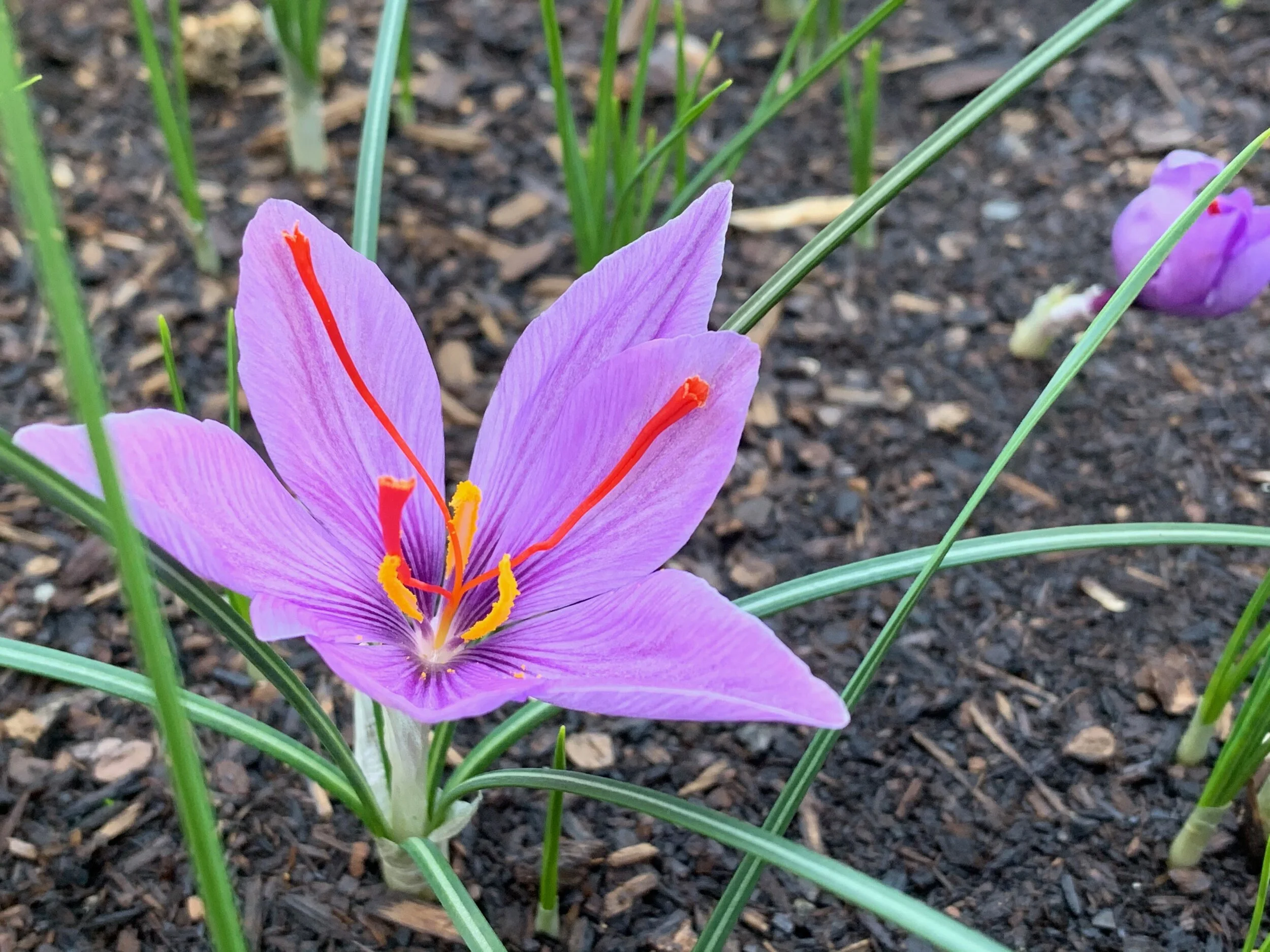
I decided to try my hand at growing saffron crocus this year, and so far it has been a very interesting project. Saffron crocus, Crocus sativus, is a Mediterranean bulb (technically corm), and likes extremely well-draining soil, with somewhat dry conditions. They bloom in fall, rather than spring, after a dry summer, in full sun. I live in a Mediterranean climate, and thought it would be easy to grow these here, and it has been, so far. I decided to plant them in a very large container, to which I added a 75/25 mix of compost-amended potting soil and grit (I used chicken grit rather than horticultural grit, which is what I had on hand and is a bit larger in size), mixed thoroughly. I have watered sparingly. These flowers have just begun to open, and they are lovely. They apparently handle frost with no problem (Mediterranean plants usually do fine with cold, they just don’t like to be in soggy soil) and will bloom for about a month. In very cold climates, they need to be dug up and stored for the winter; here, they will be just fine.

As you can see from the photo, there are three orange stamens (the male parts) and three red stigmas (the part of the pistil ((female parts)) that receives the pollen). [*Botany tangent: This means there are three chambers in the ovary. There are also three petals and three sepals. They are in the Iris family and this is a hallmark of that family.] The red stigmas are the saffron ‘threads’ that are so treasured for cooking, and cost so much in the store. You can see why. It would take a very great many flowers to make any amount of saffron. For home use, you need the amount that about 10-12 bulbs provide, for most recipes. That means I’ll have enough each year for 1-2 recipes. However, the bulbs, like all bulbs, increase each year, and I’ll be able to divide them and plant them throughout the garden. They are a welcome addition to the fall garden, which can look faded. It is best to pick the stigmas in the morning and then dry them during the day, storing them in a jar when fully dried. Much like asparagus, however, you are not supposed to pick them the first year. In the second and third years there is apparently a very abundant harvest, and then likely they’ll need to be dug up and separated and the whole process starts again.

I bought mine from Renee’s Garden for about $30 for 25 bulbs. They will be available for sale again in spring.

Tags flower garden, cooking, preserving
Comment

The Wind is Increasing

October 27, 2019 Elizabeth Boegel
IMG_6193.jpg

When I was a child, I loved the wind. Growing up in Maryland, if we had a big wind, it was something to enjoy. My mom would bundle me up and I’d go outside and across the street the woods. The trees were up on a slight rise and there was a sort of bowl-shaped lawn down below between two lines of townhouses. I’d stand in that spot with the neighborhood kids, letting the wind buffet me, and move my body back and forth. If it was fall, the trees in the wood (probably maples?) would begin to shed leaves. All the kids would race to catch them as they fell. It’s a happy memory, and so clear in my mind.

It’s nearly 2 am here, and the promised wind has started picking up. I was woken by the sound of acorns being flung from the oaks and hitting the cars and the house. It sounds like 3 inch hail, or like someone throwing a rock at the house. I’ve come to dread the wind in October, as I imagine all Californians do. This is a fairly new feeling. I mean, we had two huge events here years ago, both in October - the Loma Prieta earthquake happened 30 years ago on October 17, 1989, and the Oakland Hills fire was 28 years ago, October 10-21, 1991. So we’ve had a common feeling of portent since those events happened. But in the last three years, the wind events have increased, and as we’ve discussed before, they always happen this time of year. Always when our vegetation is at its driest.

Our house is lucky tonight - we have power. Most of Northern CA is in blackout. This is the second major loss of power in the last couple of weeks. Many areas have lost power more than twice. Sonoma county was in the middle of a blackout when the fire started in Geyserville last Wednesday. In many ways, having the power out makes things worse for everyone. Certainly it increases the dread.

We’ve never had a fire come within five miles of Poppy Corners - I mean the big wildfire kinds of fires. And yet I hear the wind and I am on high alert. Partially this is because I am thinking of what this wind is doing to the fire up north - now I see that there is a new evacuation warning for the entire town of Santa Rosa - and partly this is because of this sort of PTSD thing that I really believe all Californians have regarding this time of year. If I’m feeling it this much and I’ve never had any fire-related trauma, can you imagine what the folks in Santa Rosa feel like tonight, who haven’t yet recovered from the 2017 fire?

I also can’t stop thinking about the firefighters, how difficult their job is, how many of them are at the scene right now, how many haven’t slept in days. How there are people organizing this tremendous effort, what they must feel like, how they will dream of smoke and fire for years. How it will affect the children of these places. What it must do to a person to hear a bang on the door in the middle of the night and have two minutes to grab things and leave a home you may never come back to.

Maybe it’s because it’s the middle of the night, or maybe it’s because of this latent anxiety, or maybe it’s just fanciful, but I can’t help but think: This is only the beginning.

4 Comments

It's Nice to Spend some Time in the Garden

October 19, 2019 Elizabeth Boegel
IMG_3499.jpg

I’ve been so inundated with homework this term. I’m taking some very mathy classes, which twists my brain and requires a lot of extra work for me to GET IT, DAMMIT, and also some very writey classes too, which is a lot easier for me but then has the sad side effect of not wanting to write anywhere else, including here. Honestly my brain is just completely full and kinda tired. I never worked this hard before in any of my college classes, which tells you a couple things: One, I failed a lot (truly, my first college experience was all about failing) and Two, if I wasn’t failing then it was a class that really interested me and so I was motivated to do well and it never felt like work. So, I’m learning what it is to be an ambitious college student and to be afraid of losing a perfect GPA, which I know, not such a big deal in the scheme of things, just - I’m having feelings and worries and anxieties.

Luckily there is the garden to which I can escape when I’m really overwhelmed. Some days, I just can’t get out there, and with the daylight slowly leaving us a bit at a time, the days are shorter too which doesn’t help. Today I made a list of things that I absolutely had to get done in the garden and I firmly stacked my books away from sight and headed out. Tom came with me which made it even more delightful. We had a big morning job which was turning the compost and sifting out whatever was finished, which turned out to be about 8 wheelbarrows-full, a wonderful result. But turning that big pile is a really big job, with long pokey things and big chunks of smelly wet things and just a huge mass of stuff to move and then to re-pile when the good stuff is taken from the bottom. The chickens absolutely LOVE it when we do this job, because the amount of bugs to be found is astronomical - the entire pile, literally, crawls with life. Since the birds are coming out of molt and need lots of protein to grow new feathers, this was a good time to expose all those creepies for them to gobble up. But having them running all over everything while you’re trying to move it… also a hassle. That’s ok. I was able to put a deep layer of compost under all the blueberries (they need a lot of low pH organic matter, and compost is acidic so it’s perfect), a deep layer under the apple tree, a deep layer around some ornamentals that really needed it, and to create two new beds for perennials and bulbs, which I’ve wanted to do for a while. One is under Adam’s window and is filled with plants his dear friend Sophie grew from cuttings and lots of bulbs, and the other is under our magnolia tree where I grow some natives but it needed some punch in the summer when the natives are dormant. I put a lot of bulbs there too. I splurged on a good amount of alliums and fritillarias. I also seeded a bunch of native poppies in those places.

just part of the haul

just part of the haul

The winter garden is coming along marvelously. I’m always surprised how, when the soil is warm but the nights are cool, everything really germinates well. The shallots and garlic are already up, the snap peas are starting to bloom, and I’m surprised how big the broccoli plants are this early in the season. Very little needs doing in the veg beds, except that I need to sow a cover crop of red clover everywhere. I am just waiting until the veg crops have a good head start. The flower patches are all looking really wonderful, with six-foot tall (or taller) zinnias, cosmos, and tithonia. The bees and butterflies are still out during the sunny part of the day, but the lizards are starting to hibernate. Some birds have migrated back into the garden and it’s good to hear their songs again (the chickadees, the yellow-crowned sparrows). Leaves are starting to turn and drop and acorns are falling constantly from the Valley Oak, making very loud kerplunks when they hit the cars. It’s seems to be a bit of a mast year for them, while the galls are quite a bit fewer, at least it seems right now. Last year was a banner year for galls.

A friend from Idaho was visiting and said she’d already had snow, and I imagine many of you have already had your first hard frosts. We’ve got a while to wait for that. Meanwhile we’ve had some exciting, smaller earthquakes and some scary moments with wind and fire, but our October has been fairly quiet so far (knock on wood). Octobers are always interesting in California.

This afternoon is back to homework, but I’m glad I got to get out in the sunshine and use some muscles. What are you working on in your garden?

Tags compost, vegetable garden, wildlife
4 Comments

October cooking: More Winter Squash recipes

October 9, 2019 Elizabeth Boegel
Oatmeal Squash Bars

Oatmeal Squash Bars

I thought I’d better get this post out to you before we lose electricity. (If you just want to read about food, scroll down quite a bit. First, a digression.)

Remember two years ago, when Santa Rosa was burning? Well, the same weather conditions are on tap for both today and tomorrow, and to make sure that a repeat of that distaster doesn’t happen this year, our power company is shutting down the grid. There’s a lot to say about our power company, and the fact that our infrastructure is in miserable condition and hasn’t been properly repaired, but I’ll leave that for someone else to discuss. I’m more interested in the conditions that cause these kind of fire events and how we can better prepare for them.

Our particular climate here in California is summer-dry; that is, we receive no significant precipitation from about April until November. This is not new, this is the way our state has always been. It has to do with the currents in the Pacific, the mountains and valleys, the way California sits on the west coast of the United States. The local plants and animals have adapted to this climate. It’s the addition of humans that makes the equation difficult.

Picture, if you will, hills and valleys. California is covered with them. That’s because we are a state formed by volcanoes and earthquakes. Fill those hills with oaks, bays, pines. Let them cook in the summer dry heat for six months out of the year, and deluge them with water for about 3-4 months. The hills are green and lush in winter, brown and bone-dry in summer. Now picture a beautiful ocean or bay view. Those same hills are prime real estate. In order to preserve the views, roads are one lane. They twist and turn around the ancient oaks and pines. More and more and more houses go in, jam packed on these tiny roads, surrounded by dry vegetation. October arrives and with it, the Diablo winds. These winds come from the Great Basin, a desert region with exceedingly hot dry temperatures. Those are regions of high pressure which force those hot, dry temps to a region of low pressure, the Bay Area, in the form of very strong winds. They tunnel over the Sierra and through the valley to the bay, carrying very dry air. The combination of strong dry hot winds and the extremely dry vegetation in the hills (which are all throughout the area) can cause extreme fire danger.

image credit: Forbes

image credit: Forbes

As we saw with Santa Rosa, and with Paradise last year, a faulty power line can spark a fire with terrible consequences. (Or a car backfiring, or a smoldering cigarette butt, or lightning, or just about anything.) So, the power company figures it’ll just shut off the power and that will at least mitigate the chance of those wires starting a firestorm. But imagine being a business owner with no power. Or a school. Major commuting roadways and tunnels are affected. The trains are affected. And the power company is saying that, before they can turn the power back on, they have to check every single line. Power may not come on for many days. It’s a real problem for everyone. And as our summers get drier and hotter (this July had the hottest global land and ocean temps on record) , this is going to happen more often. As Bill McKibben says, “If climate change is shutting down the wealthiest corner of the wealthiest country for five days, imagine what it’s doing to, say, Bangladesh.”

Ok. I’ll leave that there for you to muse about, and get on with recipes.

We’re slowly eating our way through the pile of winter squash that is adorning our piano. Since most of it is delicata squash, I wanted to find old standard recipes that used pumpkin or butternut and adapt them for delicata. The first I tried was a sort of oatmeal pumpkin bake, a healthy breakfast alternative. I saw this recipe on a YouTube channel I occasionally watch, Off Grid with Doug & Stacy. Stacy used her own canned pureed pumpkin, but I wanted to try with roasted delicata. I think it turned out great, but would absolutely be bettered with the addition of nuts for crunch.

“Oatmeal Bake with squash of your choice

4 cups whole rolled oats (I used extra-thick from Bob’s)
milk or water to cover
16 oz pureed squash/pumpkin (I roasted my own delicata for about a half hour on 425, then pureed with skin on, but if using another squash, you’ll need to scoop the flesh out and toss the skin)
4 eggs
2 tsp baking powder
1 Tbsp vanilla
about a Tbsp of pumpkin pie spice; I used a mixture of cinnamon, nutmeg, cardamom - cloves might be nice - whatever you like
pinch of salt
4 eggs, beaten
3/4 cup - 1 cup of maple syrup, or honey
a cup or so of chopped pecans or walnuts
2 Tbsp butter

Put the oats in a large bowl and pour in milk or water, just to cover. Soak overnight or for several hours.
Melt the butter in a large baking dish (I used a casserole dish) in a 375 degree oven.
To the oats, add eggs, baking powder, spices, squash, nuts, and syrup and mix together gently.
Pour into dish with melted butter. Bake for about 30 minutes or until the center no longer jiggles.

Serve with cream or yogurt and sliced fruit if you wish.”

We have been enjoying this for breakfast. It is extremely filling and keeps you satisfied for hours.

IMG_3458.jpg

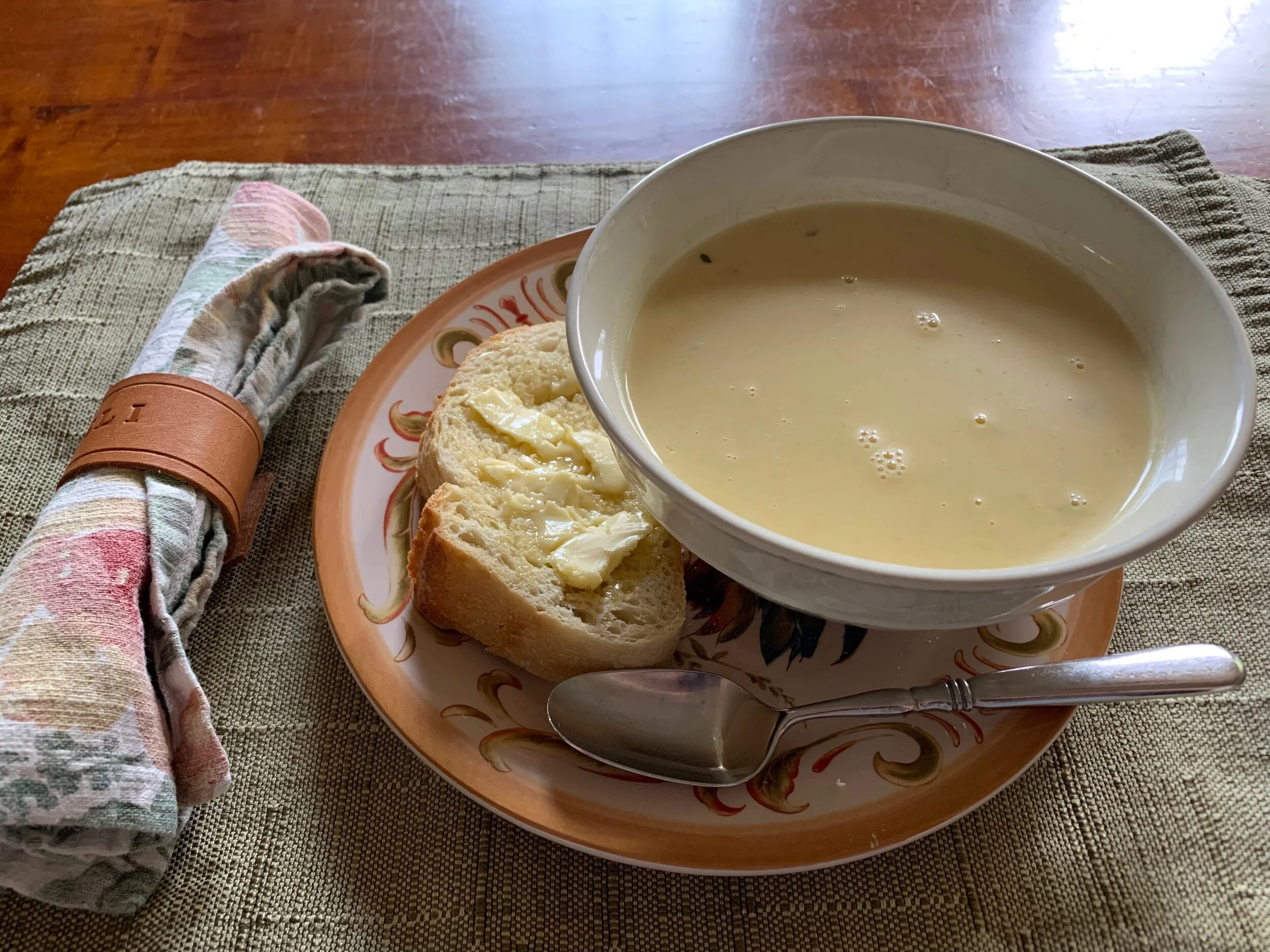
While I was roasting delicata for the above recipe, I also roasted some for a soup. I love butternut soup, and wanted to see if the lighter, more delicate flavor of the delicata squash would translate. Luckily I found a recipe from Grant Achatz at Food & Wine magazine. We thought this was a delicious dinner and also made delicious leftovers.

“Delicata Squash Soup, adapted slightly

3 one-pound delicata squash, halved lengthwise and seeded
3 Tbsp butter
salt and pepper
1 small onion (or two shallots) chopped
1 spring of fresh thyme
3 cups stock (I used homemade chicken)
1-1/3 cups heavy cream
(Grant asks for a shaved truffle; needless to say I skipped this step)

Roast the squash. Grant says to put it cut side up on a tray with butter in the cavities, a little water on the bottom of the sheet, and roast at 300 for 45 minutes. I just roasted it with the others, cut side up with butter on 425 for half an hour. The water in the bottom of the pan was a good suggestion. In any case, you want the squash to be tender when it’s done.

In a large skillet, melt some butter and add the onion and the thyme. Cook over low heat until onion is softened but not browned, about five minutes. Scrape the flesh out of the squash and add it to the onion mixture. Add stock and cream. At this point I added salt since my broth doesn’t have any, as well as pepper. Cook over moderate heat for about 20 minutes until the liquid has reduced by a quarter.

Puree the soup in batches in a blender and then decant into saucepan. Check seasoning and continue to warm gently over very low heat until you’re all ready for dinner. We had a crusty loaf of bread and butter with it. I felt like the soup could use a little tang and would have appreciated a dollop of creme fraiche or plain yogurt on top; I’ll do that next time.”
— Food & Wine

OK! Got this done before the power was shut off, yay. Hope you’re enjoying the fruits of your harvest, too. If you have any squash recipes to share, I’d love it!

Tags seasonal recipes, cooking
Comment
← Newer Posts Older Posts →

Subscribe

Sign up to get email when new blog entries are made.

We respect your privacy. We're only going to use this for blog updates.

Thank you! Please check your email for a confirmation notice to complete the subscription process.

Powered by Squarespace