• About
  • Blog
  • Contact
  • Favorites
  • Archive
Menu

Poppy Corners Farm

Street Address
Walnut Creek, California
Phone Number
Walnut Creek, California

Your Custom Text Here

Poppy Corners Farm

  • About
  • Blog
  • Contact
  • Favorites
  • Archive

August cooking: Preserved Peppers and Pimento Cheese

August 18, 2019 Elizabeth Boegel
IMG_3041.jpg

With our recent heat, the peppers have started coming in. While the majority of the sweet peppers get eaten fresh, with excess going to the freezer (either just cut into strips, or roasted first), the rest need to be processed in some way (with the occasional hot pepper getting sliced into salads, etc).

I grew and made all my own paprika last year; the quality was so superior to anything I could buy in the store that I decided to do it every year. So today I am dehydrating paprika peppers for the plain variety. When I have a few more come in, I’ll smoke them, then dehydrate. I also dehydrate cayenne for my own ground spice, and make chili powder using all of the above as well as some other ingredients. I also make our own sriracha every year.

IMG_3063.jpg

Tom is making pickled hot peppers today as well; these are then canned using the water-bath method and available through the next year for use in all kinds of things. Tom and Adam are particularly fond of any kind of pickle. I prefer the fermented kind and used a new recipe this year which I like a lot, substituting our own apple cider vinegar for the distilled kind. You can find that recipe HERE.

IMG_3062.jpg

I also experimented making my own pimento cheese today. Last year I was reminded of this southern delicacy and decided to grow pimentos precisely for the purpose of making it. I spent a good deal of time researching different recipes; it seems that every town in the south has its own regional spin. I finally went with a recipe from Sean Brock, author of the southern cookbook Heritage. I liked it because it included pickles and brine, of which we always have quite a lot (see note above). I tweaked it a little, using homemade sriracha rather than generic hot sauce, pickled sour cucumbers rather than ramps or bread ‘n butter, eliminating both ground peppers and the sugar. I also processed it in the food processor after mixing it by hand and not liking the lumpy texture. And, well, I’d say it’s okay. I’ll eat it in sandwiches this week (I have to brown bag it M-Th) or as a dip for veg, but I want to make it differently next time. I want it thicker, not so runny (too much brine). It is also a little too salty (depends on your pickles, I guess). I definitely want the ratio of peppers to cheese to be higher - it should be mostly pepper, in my opinion.

This recipe included both sharp cheddar and cream cheese. I’m wondering if I used cultured cream cheese and no cheddar cheese, if I’d like it better. Maybe I’d just prefer a sort of roasted pepper cream cheese thing. But then, is that even pimento cheese?

So I’d like to ask you guys, how do you make it? I know we have some southerners on here (Linda, I’m looking at you!). I grew up in MD, ostensibly the south, and yet I never had this as a youth.

Here’s an interesting article about why pimento cheese is considered a southern dish, even though it turns out that it was born in New York City. I like the suggestion at the end to bake it with sausage (and maybe bread crumbs) as a sort of casserole. What do you think?

Tags peppers, vegetable garden, preserving, cooking
Comment

Lucid Gem Tomatoes

August 15, 2019 Elizabeth Boegel
IMG_3034.jpg

Like many of the Wild Boar Farms tomatoes, these start out green with purple shoulders, ripening to a beautiful orange color on the bottom and a dark red/purple color on the top. I’ve noticed that many of the tomatoes from this breeder ripen later than others, which I think has something to do with the dark shoulders. It takes a LONG time to get results on these plants, but when you do - whoa mama. They are really, really beautiful. Check out the inside of this one.

IMG_3038.jpg

Looks like a stained glass window, doesn’t it?

I’m slicing these up for a Caprese salad tonight, and they sure look amazing on the plate. I mean, they taste great too; all of the tomatoes from this breeder have a nice sweet/tart balance, and they are all meaty. And that’s what’s really important, right? But the beauty of them really blows me away. It’s like an extra little gift.

IMG_3039.jpg

I don’t know Brad Gates, this breeder, personally, but I have to imagine that he is just delighting himself at this point. Like, how much more gorgeous can tomatoes get? And his delight is rubbing off on me.

The only downside is that, since they are hybrid varieties, you can’t save seed. I mean, you could I guess, but there’s no telling what they’ll be like - they won’t necessarily come true. But I still think it’s worth it to buy one or two varieties each year, save the leftover seed carefully, and use the rest up the next two years. Just for the delight and beauty!

Tags tomatoes, vegetable garden
Comment

Letting Go

August 13, 2019 Elizabeth Boegel
Salsa fixin’s, minus the cilantro

Salsa fixin’s, minus the cilantro

I’ve been thinking a lot lately about letting go. We’ve had a lot of milestones here in the past few months which are putting this issue front and center for me. Our daughter, 16 and a junior in high school this year, got her drivers’ license earlier this month. Our son, 17 and a senior in high school this year, got his first job, which is in a little French bakery near here. We’re all looking at colleges, SAT tests are being scheduled, school shirts labeled SENIOR have been distributed. This morning, after I took what will possibly be the last ‘first day of school’ photo of the kids together, they hopped in their car and took off. No more school dropoffs and pickups for me. It feels like one more way I’m letting go.

Maybe parenting is just one long series of letting go. The first time you leave them with a sitter. The first time you take them to preschool. The first time they go to sleep-away camp. The first time you leave them at home alone for an hour. Etc etc etc, all culminating in them leaving for college. I used to scoff at people who worried about this stage, and now I’m in the thick of it. Trust me when I say I am no longer scoffing. It is a true adjustment and the feelings about it start long before the actual event. I mean, I’ve got a year before I have to deal with any big-time letting go. And actually, maybe it’s a form of protection that we start feeling the angst of it early on - hopefully that means no tears on the actual day and the adjustment will already have happened. A friend and classmate of mine, who has a son going to Boston for college this year, said to me, “I hardly saw him senior year. And it helped prepare me for this day. Well, that and therapy.”

IMG_3007.jpg

I don’t start classes until Monday, which means I have some overly-contemplative time to fill. I did some more letting go this morning by removing 16 tomato plants that were looking very sickly, and replanting that space with edamame and more cover crops. The tomatoes were basically done producing, and since they were diseased, I thought it best to take them out and put them in this week’s green bin for pickup. I still have 16 beefsteak tomato plants, and nine very productive cherry tomato plants. So we won’t be lacking harvest potential anytime soon. I’m also making the first batch of summer salsa, as I have enough Jalapeno and Anaheim chilies to make it worthwhile. I always use the recipe from an old Ball Blue Book, and we love it.

It’s hard to think about things changing. Our Augusts are usually on the cool side, with temps in the 80’s for most of the month, and then the heat comes roaring back in September. Bu so far this year, August has been quite hot. We can’t count on ‘the usual’ any more. We have to expect changes and become resilient as gardeners and farmers. I’m reading tons of hopeful stories about farmers changing the way they farm, or changing crops entirely, or thinking differently about the idea of a ‘farm’ (one story I read was of a midwest farmer who traded acres of grain for acres of solar panels). Patterns are not patterns so much anymore. We’re going to have to learn to live with the uncertainty and let go of the ways in which we ‘used’ to do things. Maybe your plant palette will have to change, or you’ll have to move things around to account for more/less heat, more/less rain. Maybe gardening, like parenting, is just a series of letting go.

Tags tomatoes, vegetable garden, climate
2 Comments

A Bat in our Garden

August 7, 2019 Elizabeth Boegel
IMG_0192.jpg

The picture above was taken last August at the Yolo Bypass - an event that I wrote about at the time and can be accessed HERE. I love bats and have always wished to have them in our garden. The likelihood is that they already are, but last night we had proof: For about ten minutes, around 8:30 pm, I watched a single bat fly around the North side of our garden.

First, the behavior: The bat flew quite low, about 8 feet off the ground (sometimes higher) in a roughly circular pattern over this portion of the garden, dipping lower as it flew over the compost pile in the chicken’s run, and then higher as it flew over and around the plants and trees. It kept coming back to the compost pile, and all I could figure is that there were a lot of flying insects in that particular area. It dodged and changed patterns, swiftly and surely. At one point I could hear its wings beating, but of course I could never hear its chirps as they are in a register far above our hearing ability. What an absolute delight. Tom and I just could not get over it and were so happy to see that evidence of a healthy ecosystem.

Many years ago, Tom and Adam built a bat box to erect in the garden, but we never got around to putting it up. It has been sitting upright on the ground, against the fence, behind the quince tree, ever since. It would require a large pole; bats are notoriously fussy about boxes and they have to be positioned just right, it just always seemed too difficult to make it ideal for nesting (for a list of requirements, see this page). I’m regretting that now, and will begin again to figure this puzzle out. Meanwhile, where was this single bat nesting? We do have a highway overpass about a mile away, where we’ve seen swallows nesting for years. It’s near a not-quite-dry-in-summer creek, which is ideal for bats. We are also not far from a series of cliffs and rock walls in the Mt Diablo foothills. Bats can fly many miles to find good forage.

Wherever the bat is nesting, it is likely nesting in a colony, and they all leave the area at the same time each night. Then they each go their separate ways, looking for prey. I’ll have to remember to go down to the freeway overpass and see if there is a bat ‘exodus’ in the evening! Bats are also migratory, so they might only be nesting here in the summer months.

Photographing this single bat would prove difficult. First of all, it’s heavy dusk. Second of all, its flight pattern is so fast and erratic. It seemed quite small, which makes me think it was a Mexican free-tailed bat (Tadarida brasiliensis), but it could have also been a big brown bat (Eptesicus fuscus) or any one of the genus Myotis. I just do not know enough about bats to be able to ID it on the wing, in the dark.

You can be sure that tonight at the same time, I will be outside sharp-eyed, looking for the bat to return - maybe with friends. Do you have bats in your garden? Have you successfully installed a bat house? I’d love to hear about it. Meanwhile, for more information about Northern CA bats, please visit the Northern California Bat Rescue and Education website (you can also get info on the tours at the Yolo Bypass, like we attended last August - they are usually booked ahead of time so plan ahead) and also see this interesting article in Bay Nature, written by one of my Horticulture classmates! Also, the following video from Growing a Greener World (PBS) has some fabulous information.


Tags wildlife, IPM
6 Comments

"Gardeners as Superheroes"

August 4, 2019 Elizabeth Boegel
IMG_2947.jpg

There’s a few odds and ends that I want to share with you today. One is that our tomato crop is coming in - yay! - and I’m processing/eating/giving away as fast as we can. I shared some ‘new-to-me’ varieties a couple of weeks ago - and I promised I would show them again as they ripened. So here you go!

One is Indigo Apple, from Wild Boar Farms. It’s a small slicer, about 4-8 oz, maybe in the saladette category. A nice size, bigger than cherry but smaller than some of the big slicers like Black Krim. That makes it hard to use for canning, because it’s a pain to take the skins off smaller tomatoes. But it makes it excellent for fresh eating. And it’s delicious and very sweet! It starts out on the plant as a green tomato with purple shoulders, and then when it ripens it looks like this.

Beautiful dark shoulders and terra-cotta skin color. The inside is a bright pink, which looks great next to the dark edges of the skin.

IMG_2975.jpg

I really like this variety and will grow it again.

Another is Blue and Gold Berries, also from Wild Boar Farms. This is a cherry tomato, and it starts out a dark purple color nearly all over. Eventually it ripens to gold. This is one of the most prolific cherry tomatoes I have ever grown, with huge clusters of fruit. However it takes a LONG time for them to ripen, and once they are ripe, there is a very short window before they are overripe. This requires swift action at a very certain time, so while they are productive and beautiful (and tasty!), the amount of fussiness required for harvesting is a deterrent to growing them again.

IMG_2944.jpg

Another tomato I wrote about was Black Beauty, yet another selection from Wild Boar Farms. This one is nearly all black when unripe, but ripens to a rose-red with black shoulders. It’s really, really lovely. Also very prolific (all three of these are prolific!) and this one is larger than the Indigo Apple, more like 8-12 oz.

Let’s move on to non-tomato news, shall we? I had a visitor at the water fountain the other day.

IMG_2956.jpg

This is one of those juvenile Cooper’s Hawks we’ve had flying around our yard. Isn’t she gorgeous??? You can tell she’s still young because she has some white spots on her back, which will disappear with age. I took this picture from the bathroom window, and I was breathless at the time. These birds are just so magnificent. We were wondering if they were still around, and I guess they are. I wonder how many times they’ve visited the fountain when I didn’t see them.

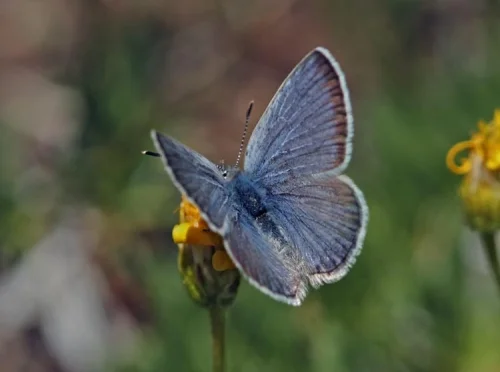
Next, I’d like to draw your attention to two interesting websites, both geared towards California gardeners and landscapers, but offer valuable information for those in other states, too. One is Calscape, which is a division of the California Native Plant Society. Calscape is a great resource for deciding which native plants belong where in your garden. For instance, you can search out ‘dry shade’ and get a list of plants for that kind of situation. Recently they have added a new tool with aims to provide gardeners lists of plants to meet the specific food needs of certain pollinators. So, for instance, if you want to help out particular butterflies, you find out what to plant to attract and feed them. Once you go to the site, you click on the ‘butterfly’ button at the top of the page. Then you enter your address and it will give you a list of butterflies and moths that are native to your address! When I did this, it came up with 212 species!!! Incredible. Then you can pick a species you are interested in and Calscape will give you the range for the butterfly, the confirmed food sources for them, and the likely food sources for them. These are plants that the butterfly can lay eggs on - food sources for the larvae (caterpillars). I entered Boisduval’s Blue (a butterfly I love) and found that they need lupines to raise babies. Good thing I plant a lot of those!

image credit: Ron Wolf, 2014 for Calscape

image credit: Ron Wolf, 2014 for Calscape

This could be a great tool for those of us who love wildlife and want to plant to attract and support them. Pretty much everyone can get behind butterflies, so I imagine this will be helpful for a lot of gardeners in California.

Another site that I am finding helpful is the one belonging to the Pacific Horticulture Society, of which I am a also a member. They have a new series of ‘digital classroom’ videos which are extremely helpful. I particularly enjoyed the one titled “Gardeners as Superheroes” which was really about soil. It’s extremely thorough, 90 minutes of good, entertaining explanation about how the water cycle works and how to improve your soil. It really is about watershed gardening, which I’ve talked about before, but it’s always good to get a reminder of what that means. The other videos are interesting, too, and there will be more in the future. While you’re there, check out their ‘recent stories’ to learn more about the way trees talk to each other, look at their travel opportunities, and upcoming events all over California. There’s some great information here. They also have an extremely beautiful publication that I really enjoy receiving.

image credit: Pacific Horticulture Society

image credit: Pacific Horticulture Society

One last thing: I usually start seeds for the winter garden now, the first weekend of August. I’m going to hold off a week or two, for two reasons: 1) It’s still extremely warm, and 2) the summer garden got going very late this year because of our cold and rainy May. If I start seeds now, I’ll want to plant them out the first week of October as I always do, and I’d rather give the summer garden a bit more time. It won’t hurt to wait a couple of weeks. However, it is certainly the time to start thinking about your winter garden. Sow all the brassicas in soil blocks or trays and let them hang out in a warm, sheltered, protected place for a couple months until they are ready to plant in the ground. I’ve planned for broccoli, cauliflower, cabbage, Brussels Sprouts, and kohlrabi. I will also direct sow all the greens - lettuces, kales, chards, spinach etc. Also leeks, carrots, peas, and beets will be direct sown in October. I may also sow a crop of winter potatoes, and of course garlic and shallots will need to be planted sometime in October. If you haven’t started to think about this, do so now. Planning ahead and keeping good records is key to a productive space.


Tags learning, tomatoes, vegetable garden, winter garden, pollinators, birds, wildlife
Comment
← Newer Posts Older Posts →

Subscribe

Sign up to get email when new blog entries are made.

We respect your privacy. We're only going to use this for blog updates.

Thank you! Please check your email for a confirmation notice to complete the subscription process.

Powered by Squarespace