• About
  • Blog
  • Contact
  • Favorites
  • Archive
Menu

Poppy Corners Farm

Street Address
Walnut Creek, California
Phone Number
Walnut Creek, California

Your Custom Text Here

Poppy Corners Farm

  • About
  • Blog
  • Contact
  • Favorites
  • Archive

Pressing Fresh Cider

December 3, 2018 Elizabeth Boegel
IMG_1284.jpg

My friend Nils invited us over this past weekend, to press fresh apples in his cider press and taste the resulting juice. This was a very interesting experience!

First, Nils had to cut out any wormy bits. He collects apples from his own trees, from neighbor’s trees, and also buys some from the farmers market. This full steel pot of apples (probably 8-ish gallons?) made about 1 gallon of juice.

IMG_1289.jpg


The next step is to feed the apples into the grinder, which is operated by someone turning a sideways wheel quite fast. The inner cylinder with sharp teeth makes short work of the apples, turning them into pulp below in a lined wooden basket.

IMG_1291.jpg

Then a wooden disc is applied to the apple mash and the top screw is turned, to press the juice. It runs out the bottom into a tray, and then into the bowl of your choice.

IMG_1294.jpg

The bowl is emptied several times during the pressing, and the screw is turned ever tighter, pressing the mash further down into the basket. The leftover mash is ideal for the compost bin (or livestock), and the juice is either drunk straightaway or warmed up for hot cider. Or, of course, you could freeze it, can it, or ferment it for hard cider (and then again for vinegar). We just tasted the fresh, cold juice, and let me tell you - it was one of the best things I’ve ever had.

IMG_1293.jpg

I don’t know why, but it tastes completely different from what you can buy in the store. It’s lighter somehow, and very refreshing. Unpasteurized of course. And I suppose the flavor changes depending on what kind of apples you press. We pressed mostly Granny Smith, and it was so incredibly tasty. I could have drunk a pitcher by myself.

So of course on the way home Tom and I were angling for a press - how could we get one of our own? Nils had found his on Craigslist or some such, and refurbished it. I looked online and found new ones for about $300 or so. That’s too pricey for something we won’t use often. But I’m thinking that maybe we could rent Nils’ for an afternoon next year. We have neighbors who always bring us lots of apples and I’m sure we could find more. It would be great to pay a fee for an afternoon’s press use, and have our own cider to do with as we pleased. Something like the ‘village mill’ that would grind everyone’s grains, or the ‘village bakery’ which would bake everyone’s bread. I love this idea.

Something about this process was very familiar, and it made me wonder if I had done this as a child back in Maryland.

Do any of you own a press, or know someone who does? Is this a tradition in your house? If so, I’d love to hear your stories about it.

Tags fruit garden, cooking, preserving, learning
Comment

December Wreath

December 1, 2018 Elizabeth Boegel

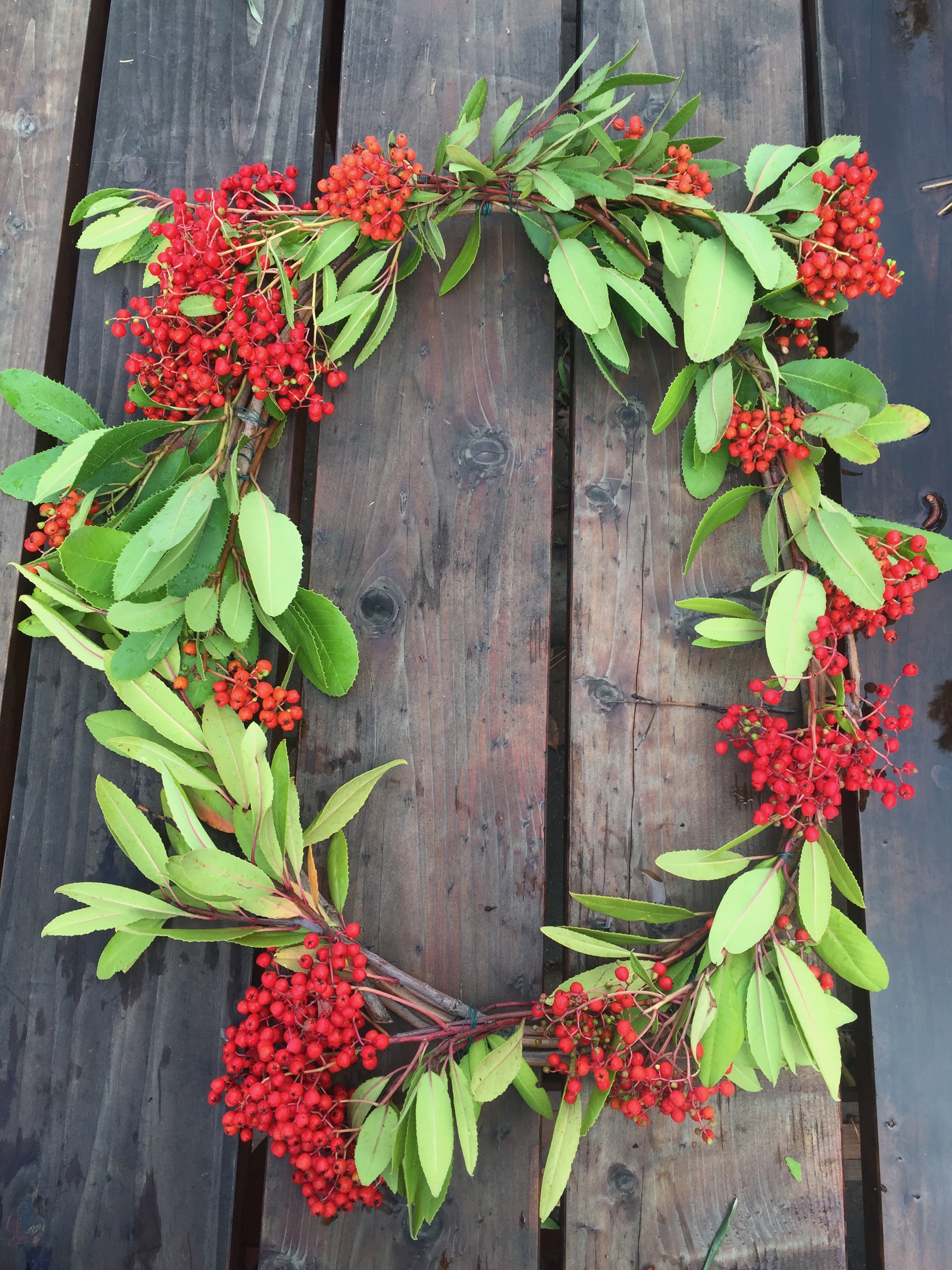
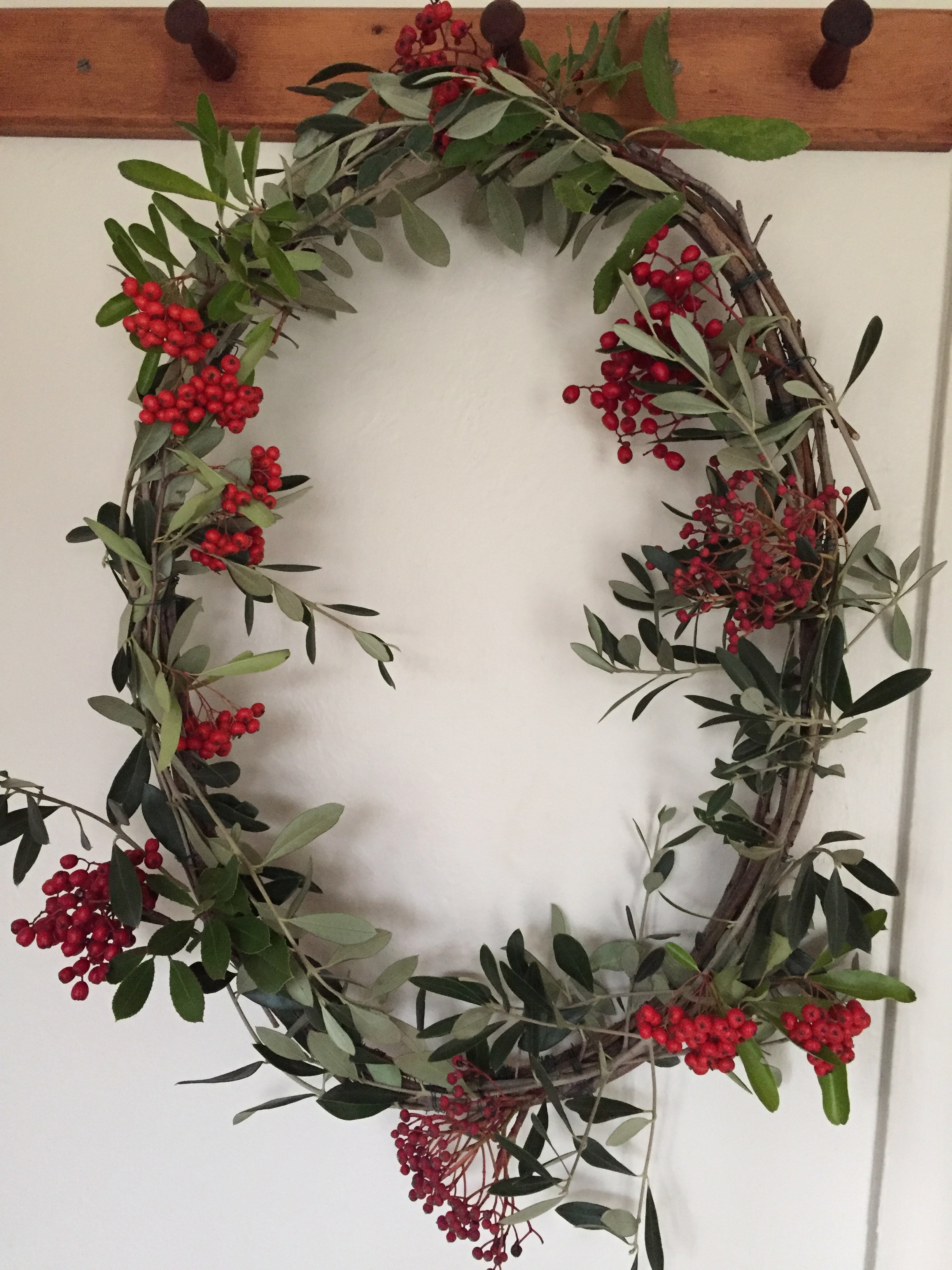
My last wreath of the year! This one is made from Toyon (Heteromeles arbutifolia), a California native shrub/small tree. Toyon is a great addition to the garden. Once established, it needs no supplemental irrigation; is evergreen, even in those hot summer months; has lovely tiny white flowers which bees love; and either red or orange berries to celebrate December holidays (and keep the birds happy in cold weather). What’s not to love? I took cuttings from several bushes at a local open space park for this wreath. Because it’s such a hardy plant, this wreath will look as good at the end of the month as it does now.

This monthly wreath project was super fun for me and I am working on something for 2019 that will follow the same spirit. Stay tuned! Meanwhile, if you want to see all the wreaths from this past year, I’ve made a little photo display below.

Several things have been keeping me from writing here lately. One is simply that it is the end of the school term, and all my writing skills and brain power have been used to finish term papers. (Ok, I’m still not finished, but will be by the end of the weekend.) We did visit that local dairy I mentioned last post - they make primarily cheese and it was fun to visit and taste, but I was overwhelmed by what it takes to keep a large operation like this one running (450 dairy cows). I wasn’t entirely on board with some of their practices, but recognize that some things need to be ditched in the name of efficiency. I guess, more than anything, it made me want to have a small dairy herd for my own use; for milk, butter, cream, and cheese. That isn’t possible here of course, and so some compromises have to be made. I’m still wrestling with that one so haven’t felt compelled to write about it just yet.

I’m also feeling completely knocked down by the scary news in the recent climate reports, but they do present a LOT of new opportunities and challenges for those of us that want to make a difference. I am trying to figure out my place in all that. I find myself wanting to write more and more about these issues, but this space began as a place to share gardening ideas on smaller urban/suburban plots, and I recognize that many of my readers are here for that, and that only. So I am struggling with where to take this space in the future. Your comments appreciated.

IMG_1273.jpg

Meanwhile, we’re enjoying frequent, steady rains which make the winter garden pop with good things to eat. I’ve picked our olives and have started the leaching process, and in a couple of weeks will begin the brining process. I’ve started the annual leaf-haul to both the chicken coop and the walkways. As our trees lose leaves I can start to better calculate what needs pruning and shaping, which is a major winter project. We pick greens daily for salads and sautés, and I eat fresh peas every time I walk through the garden. Winter citrus is starting to come in from the neighbors, and Adam made the first batch of lemon bars yesterday. We crave hearty meals, which I’m happy to cook this time of year. I’m re-reading ‘My Antonia’ by Willa Cather and am struck by how much those Nebraska pioneers had to eat in order to stay warm (descriptions of daily pie baking, yum!), and though we don’t work nearly as hard, something in our DNA tells us to fill up the bellies!

I’d love to hear what’s happening in your own gardens, and what you’re cooking and eating. I’m off to work on those term papers some more, at least until the sun shines - and then it’ll be back to work outdoors.

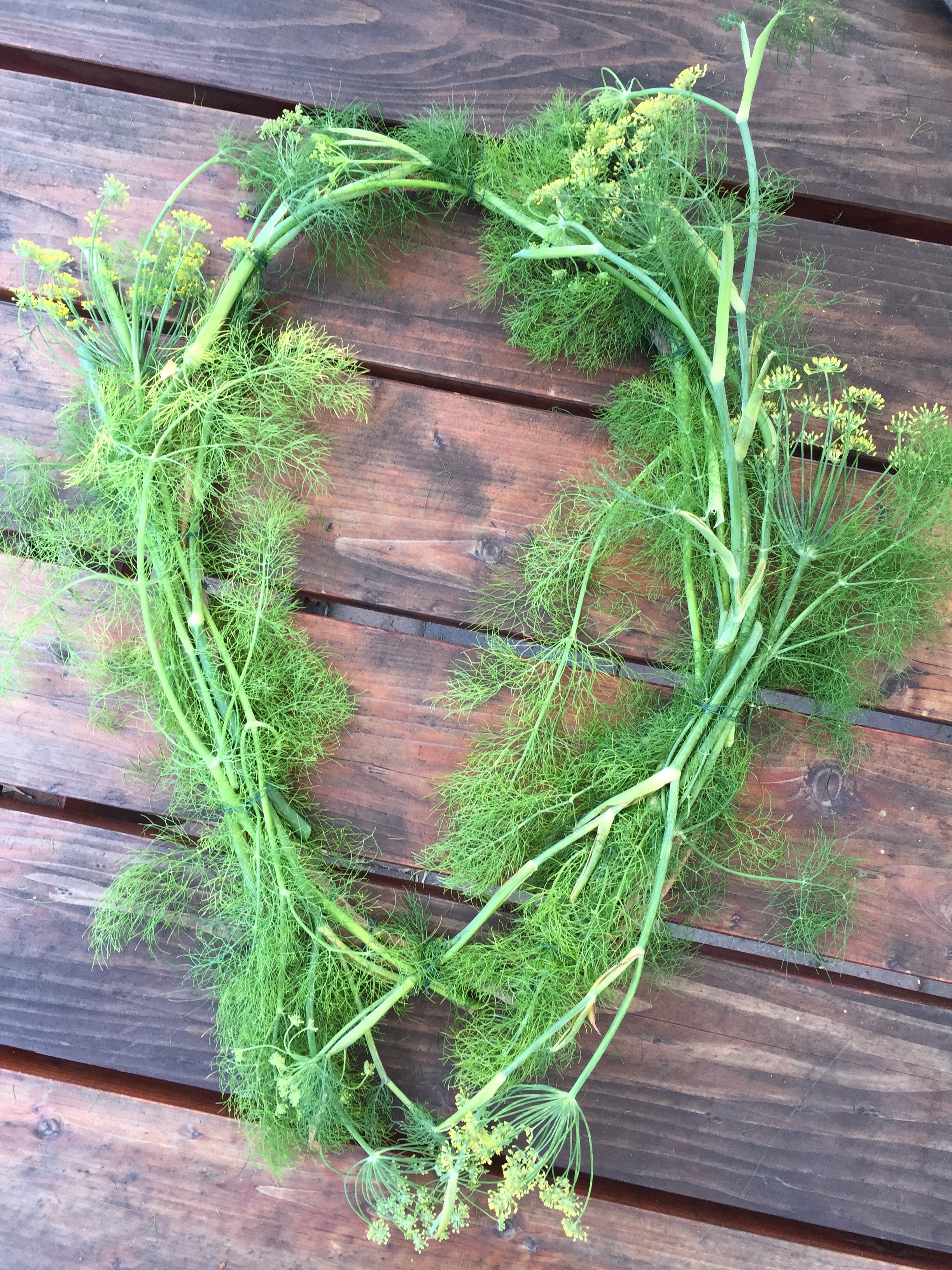
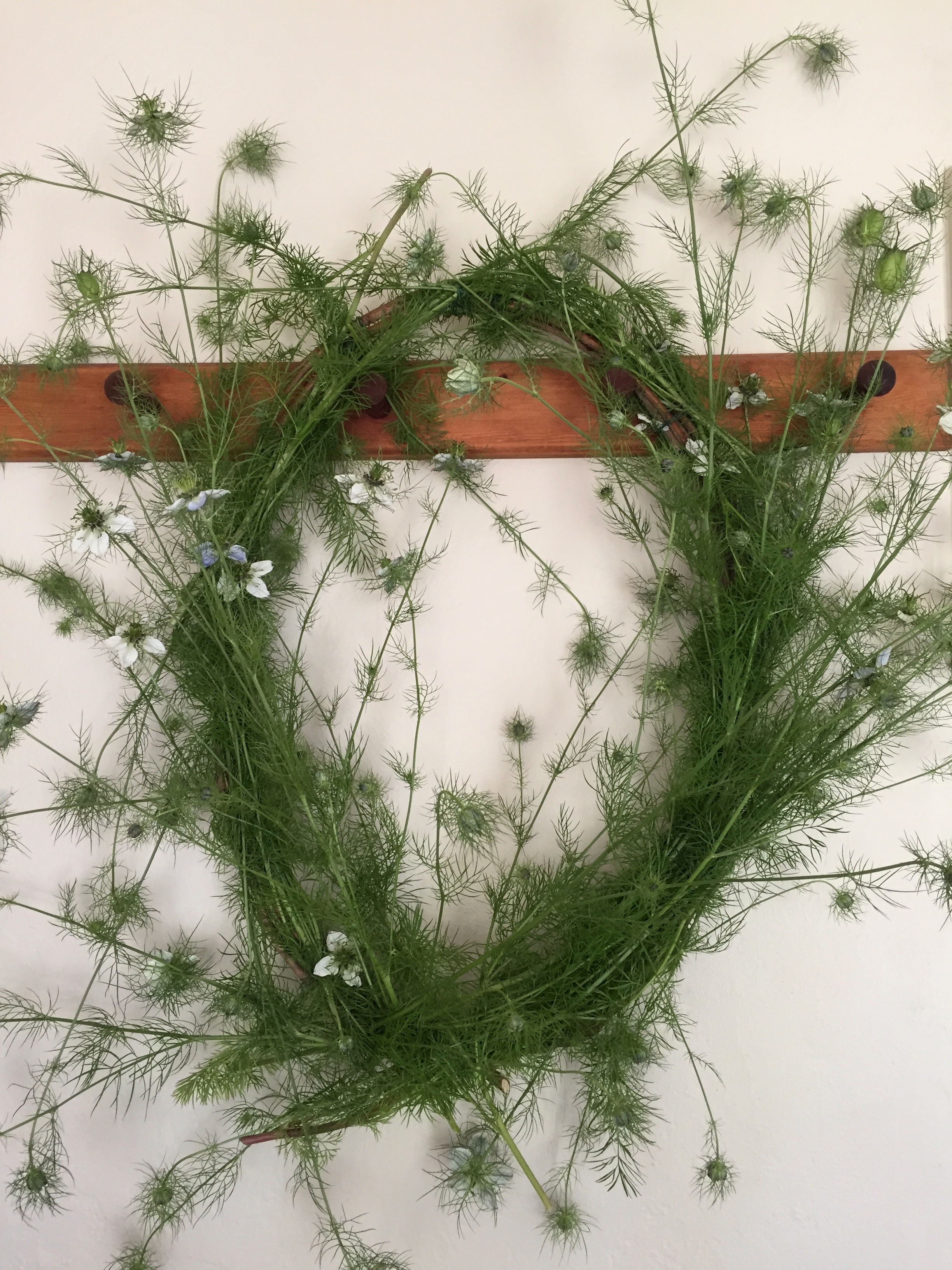
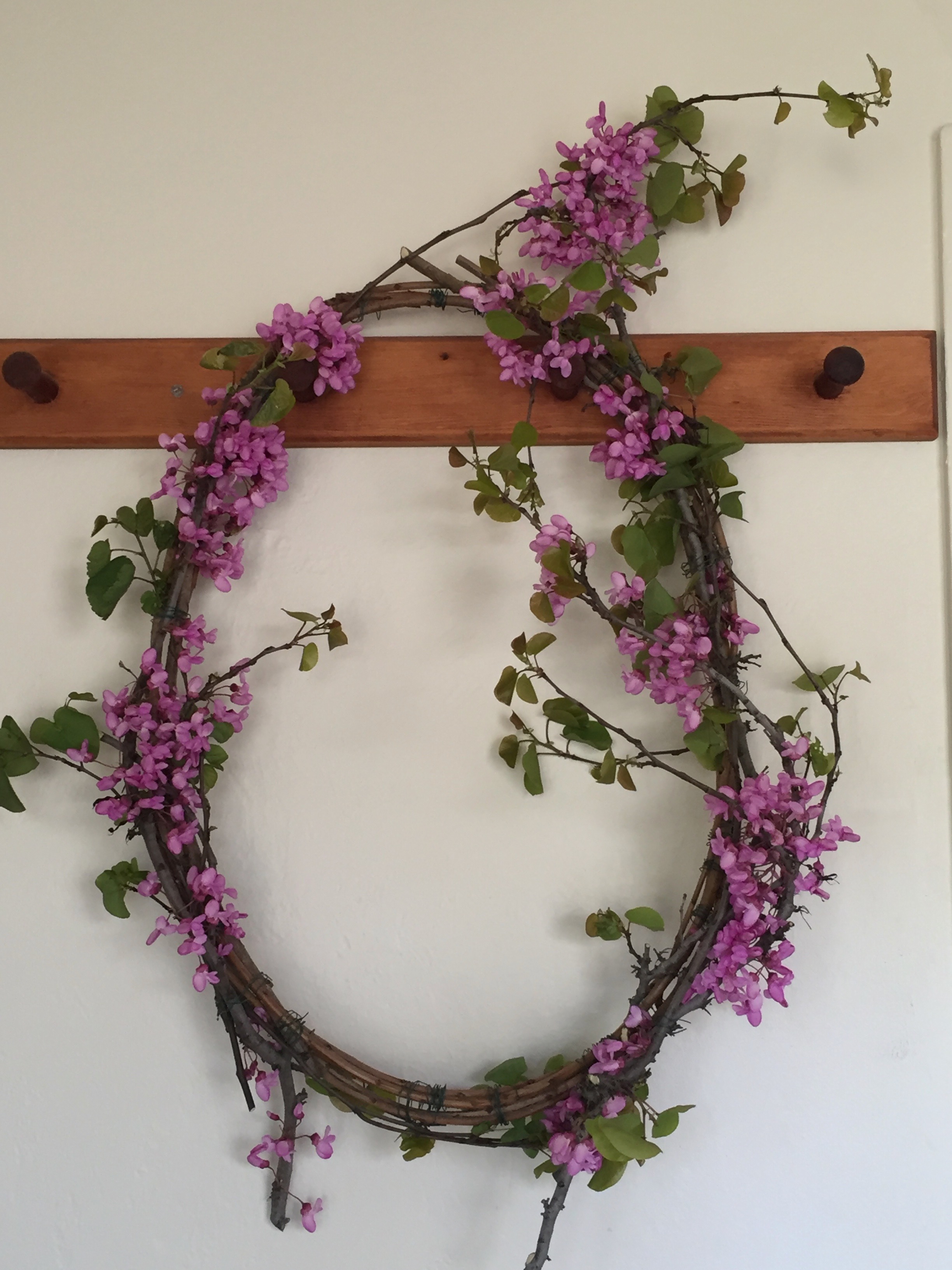
Below is the slideshow - just click to work your way through it.

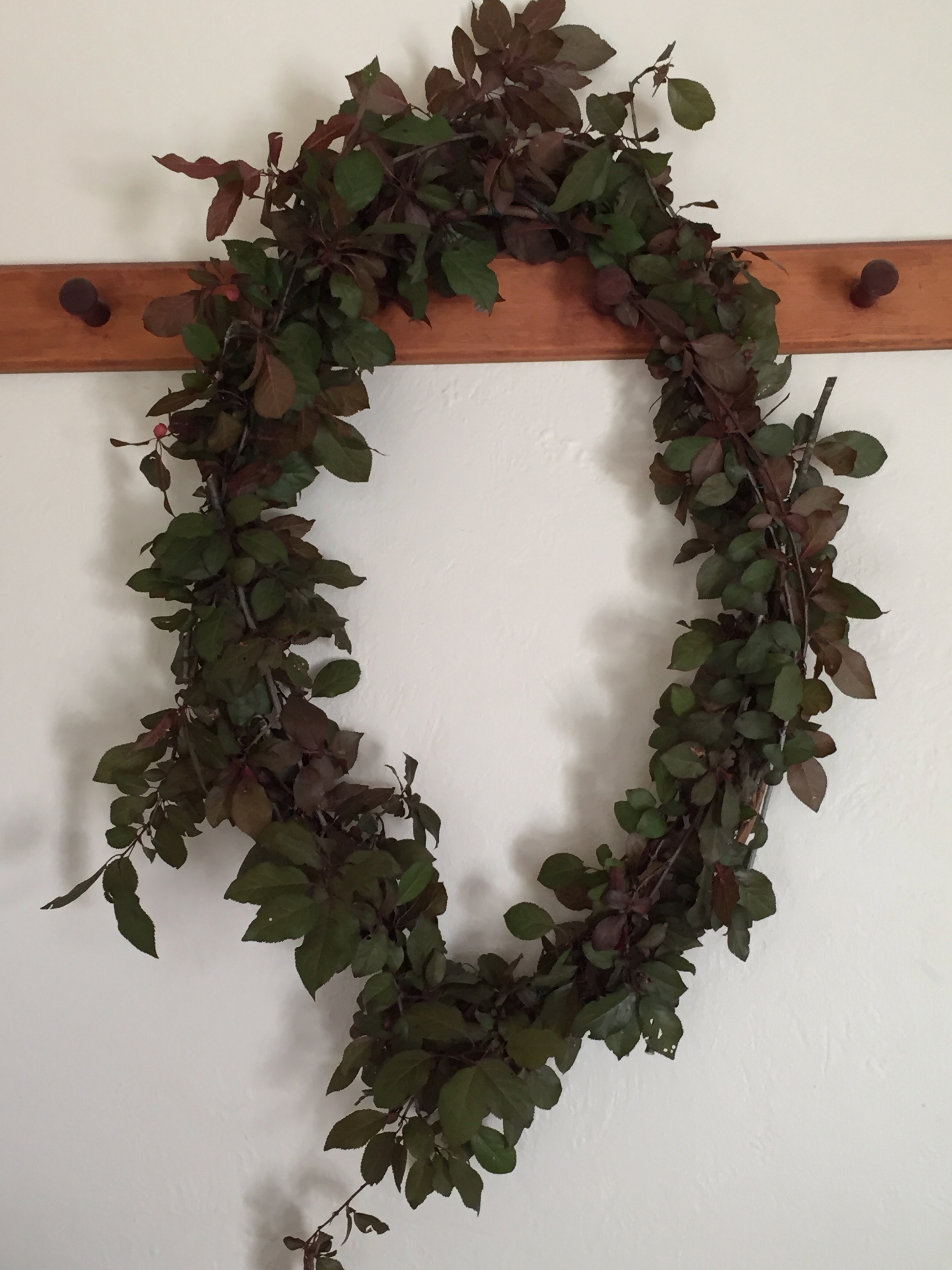
January - Cotoneaster, Pyracantha, Toyon

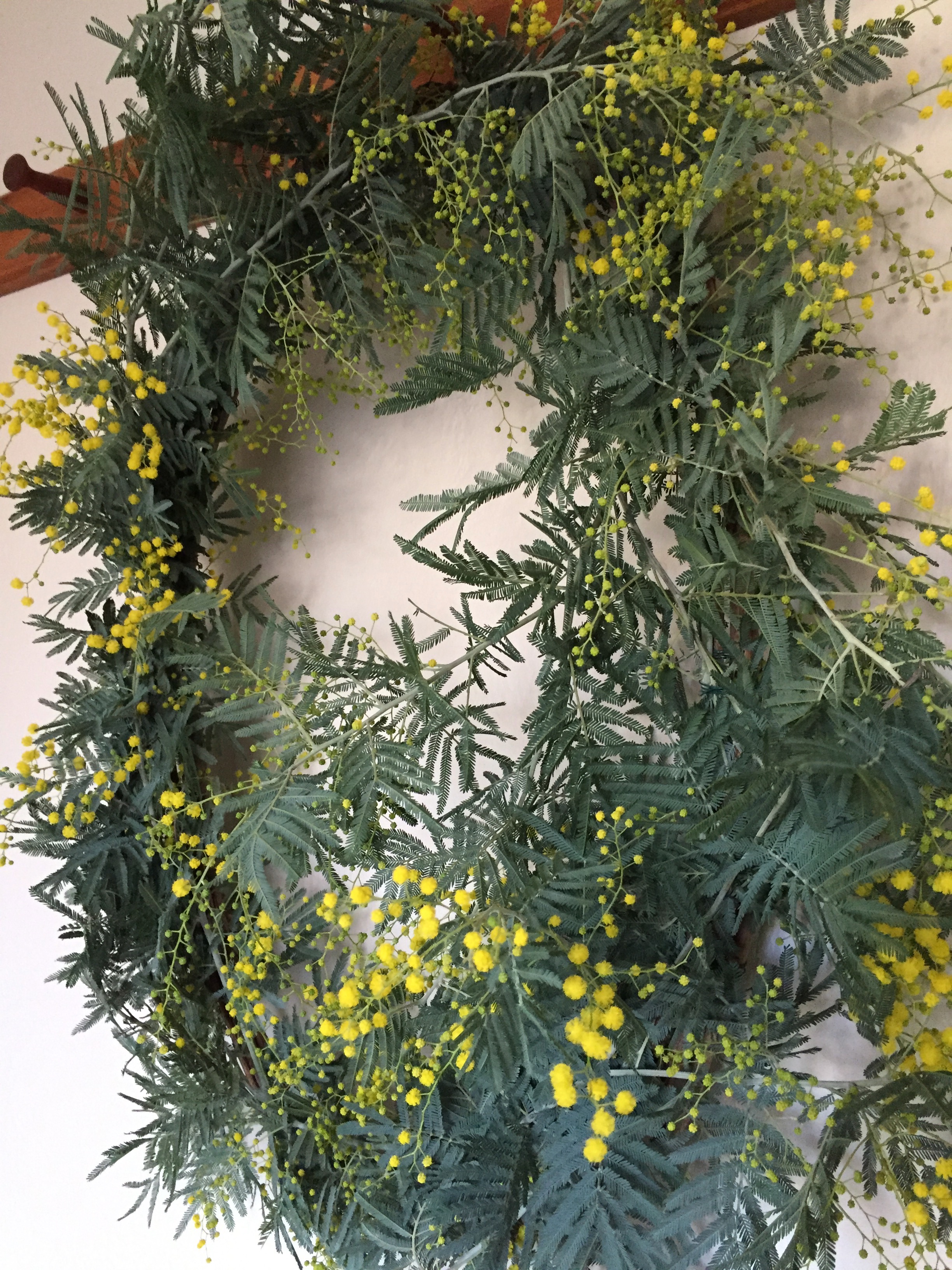
February - Acacia

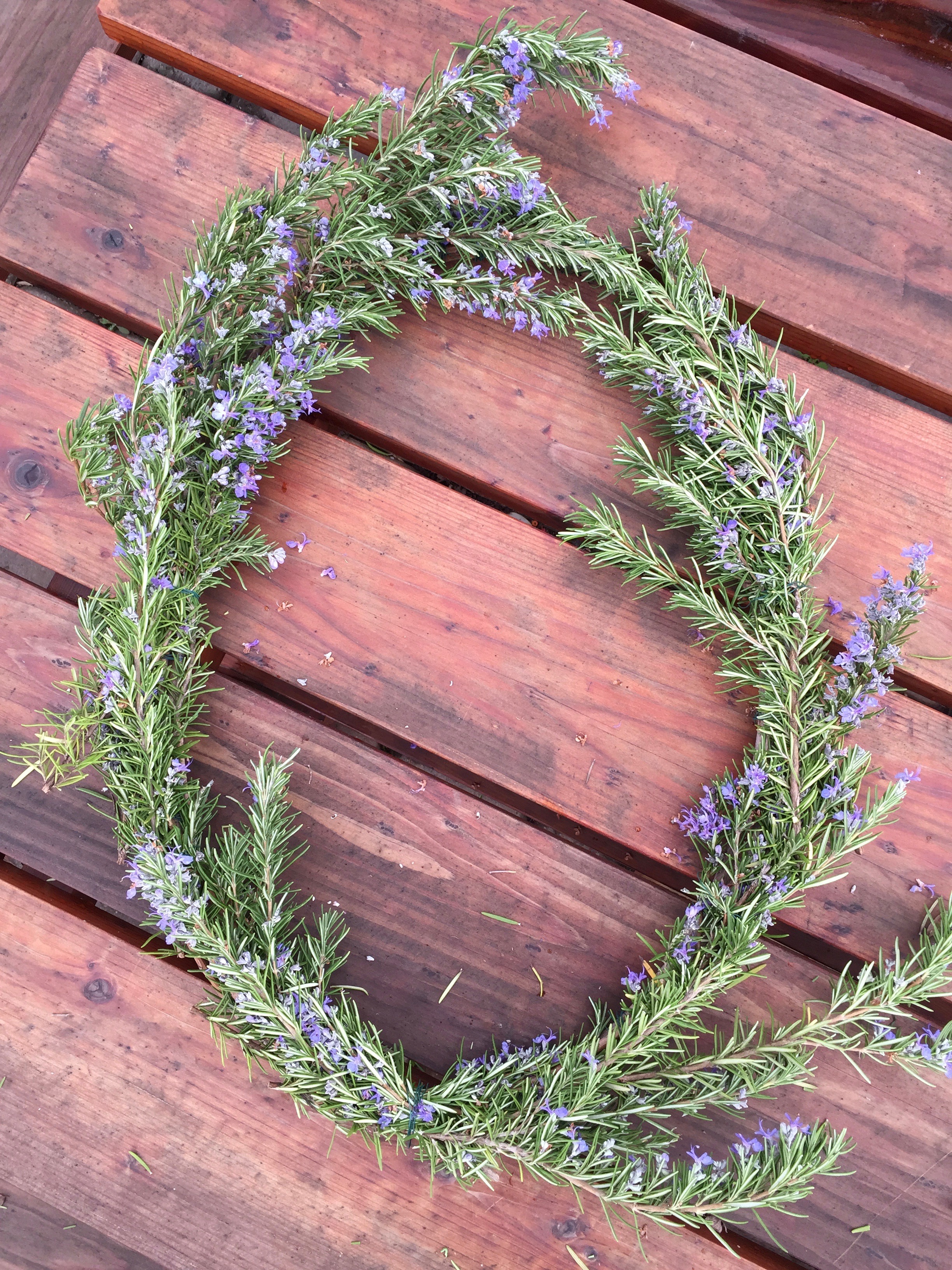
March - Rosemary

April - Western Redbud

May - Love-in-a-Mist

June - Fennel

July - Wild Cherry Plum

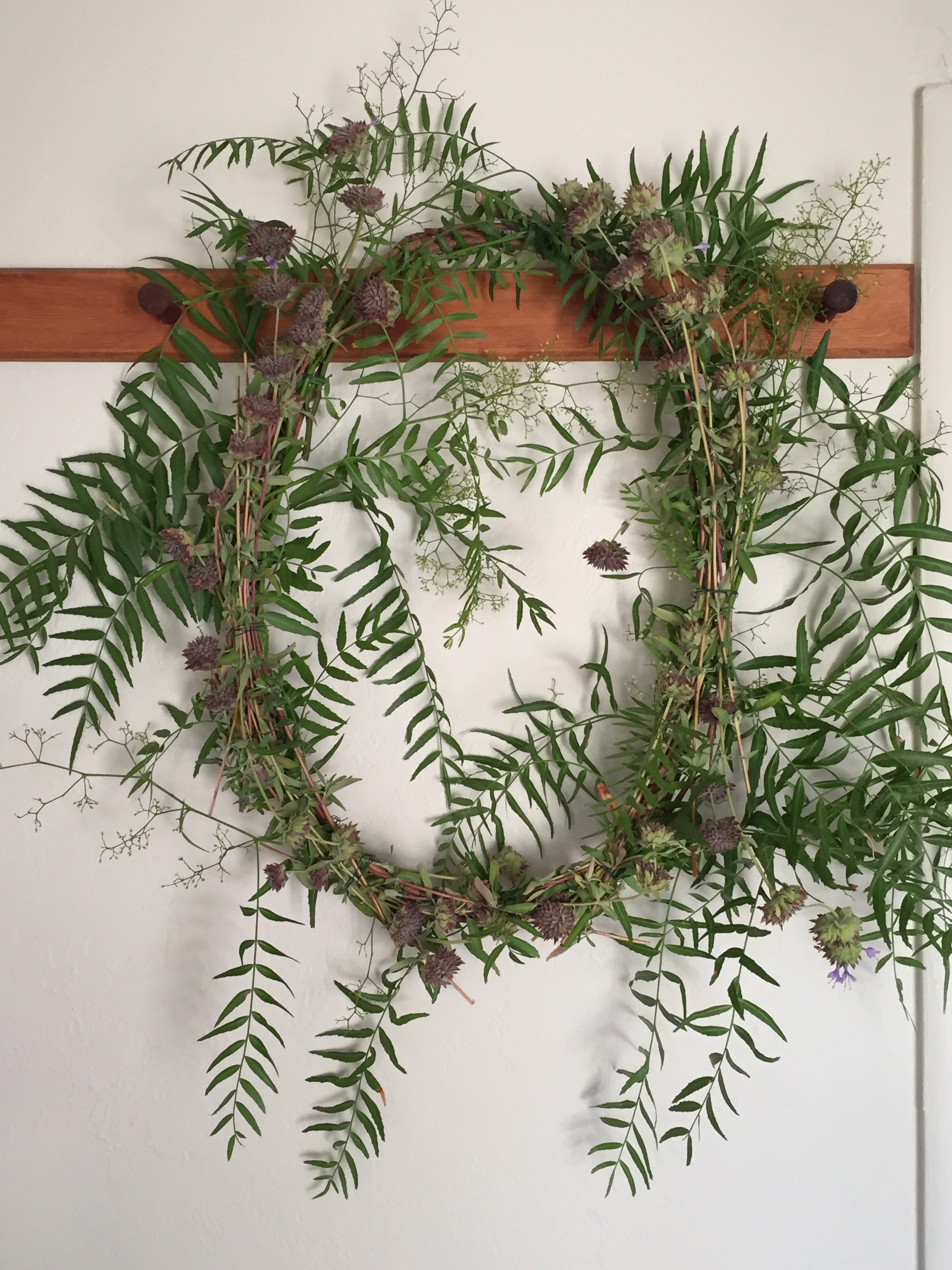
August - California Pepper, Salvia clevlandii

September - Germander, Monarda

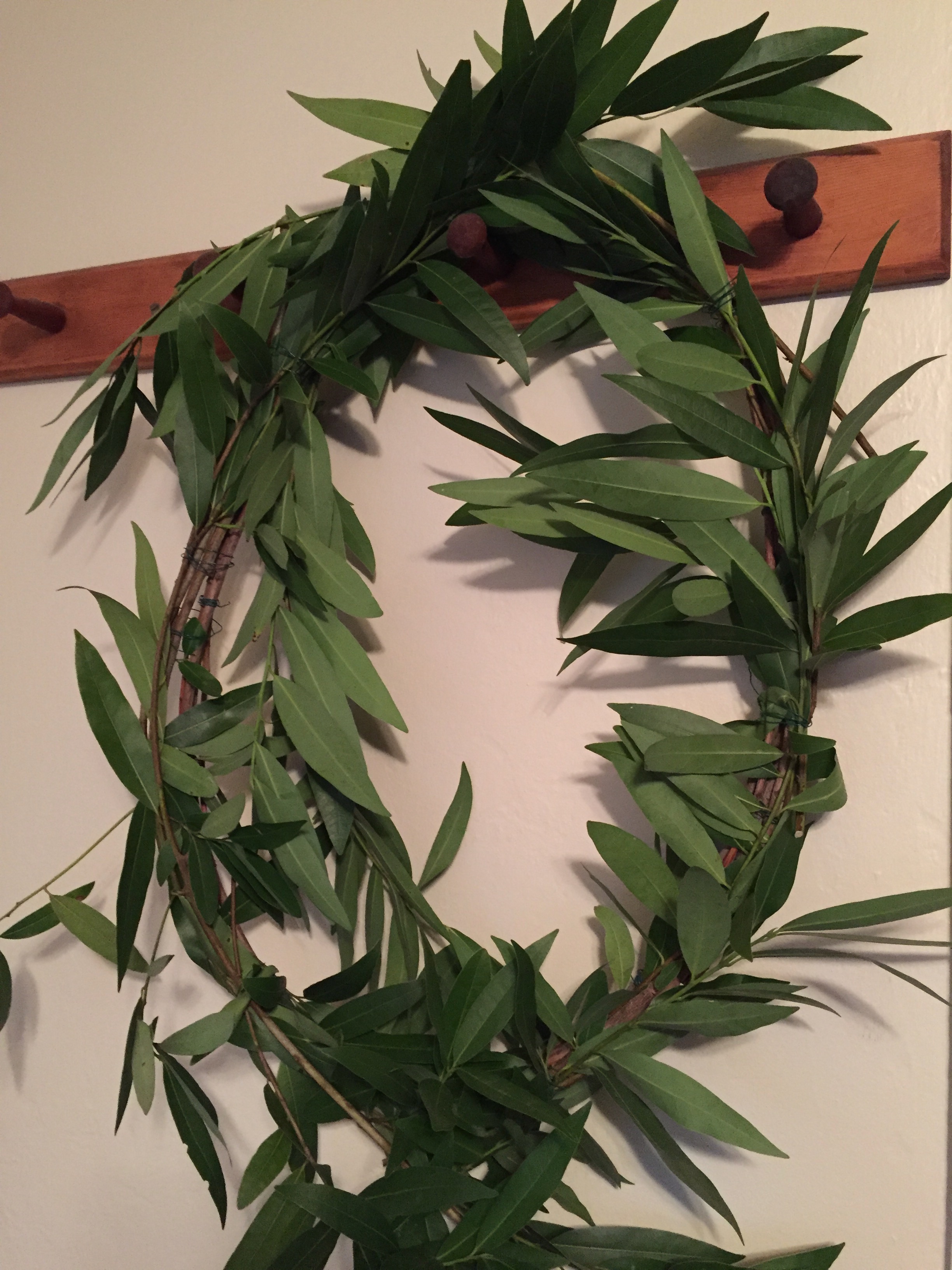
October - California Bay Laurel

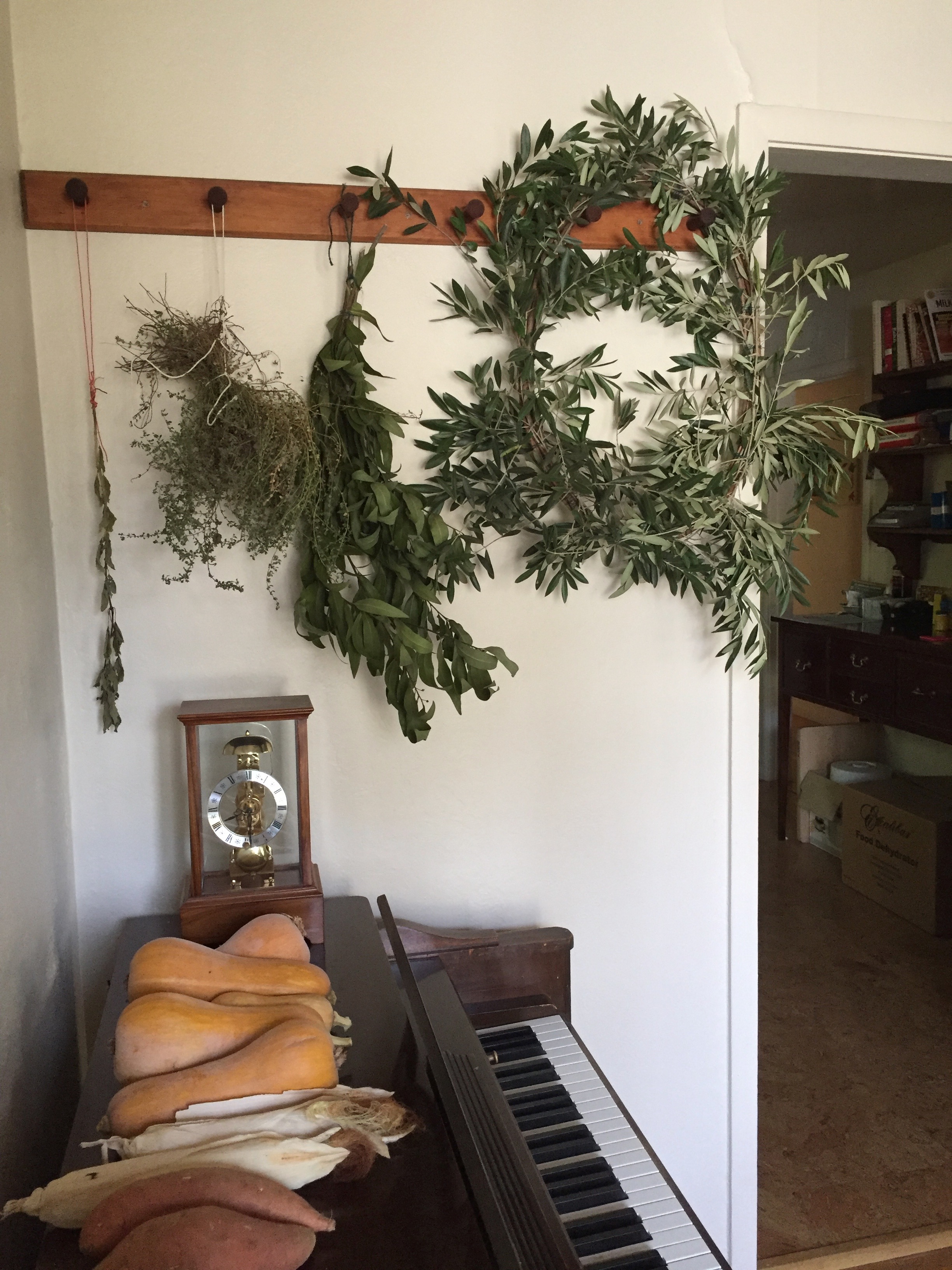
November - Olive

December - Toyon

IMG_1280 (1).jpg
IMG_1120.jpg
IMG_0884.jpg
IMG_0425.jpg
IMG_0167.jpg
IMG_9751.jpg
IMG_9517.jpg
IMG_9291.jpg
IMG_8308.jpg
IMG_7751.jpg
IMG_7201.jpg
IMG_7005.jpg
Tags seasonal wreath
5 Comments

Today I Turned the Irrigation Off...

November 20, 2018 Elizabeth Boegel
IMG_1227.jpg

… For the first time since April. Gosh, it felt good to do it. We are expecting rain. Hopefully it will do a lot of good for the fires that are still burning (without causing landslides in the burn scars), it will prevent further fires, and it will clear out this horrible smoky air we’ve been living under for two weeks.

An aside: I was extremely glad not to have small children during this smoky period. We all had to stay indoors - and everyone was out of school - and honestly I was a little crazy, so it’s good that my kids are in the self-sufficient age.

IMG_1231.jpg

Today the air was merely ‘unhealthy’ rather than ‘very unhealthy,’ so I decided to prepare for the rain and spent the entire day outdoors. I may have overdone it, especially considering I have a cold. However I got so much done. First I turned off the irrigation system and said a little ‘hooray’ to myself. Then I made sure the rain barrels were clean and ready to be filled. I took all the floating row cover down too. It’ll be around 50 at night, so the plants will be fine, and everything will benefit from a nice soak. Above you can see the north garden, which has greens, shallots, garlic, and two beds of chard that I just replanted.

IMG_1232.jpg

Above is the south garden, which has all kinds of kale, cabbage, broccoli, cauliflower, lettuce, potatoes, peas, fava beans, carrots, leeks, and parsnips.

Then I spent the rest of my day clearing out the pollinator gardens. All the summer flowers had turned black with frost, so it was time to put them in the compost. This took a LONG time. Having a full and glorious flower garden means a lot of plants, and I got slower and slower removing them as the day went on. At least the compost pile is overflowing with biomass. And it was fun to uncover bulbs coming up (the narcissus are already blooming, it gets earlier and earlier each year), and surprises I didn’t know about, like a huge tomato vine that had sprouted underneath all the zinnias. It even had five large fruits on it.

IMG_1235.jpg

After the beds were cleared and raked, I took all the spring seeds out of cold storage and sowed them with some compost; lupines, poppies, echinacea, flax, delphiniums, and phacelia. This rain will water them in and start the process for them to grow and bloom in spring. I need way more seeds though. I don’t have any clarkias, or tidy tips, and that just won’t do!

I’m sure you’re all looking forward to and planning for Thanksgiving. I hope you have a wonderful holiday filled with all kinds of family, good food, and good friends. On Friday, we are spending the day in Pt Reyes visiting a large cow farm and exploring their milk and cheese operation. We’ll be sure to take our boots as we’ll likely be touring in the rain (another cheer!). I’ll write on Saturday about what we experience and learn there. My first born turned 17 this week and he adores cheese, so this is his birthday celebration. :)

Happy Thanksgiving!

Tags vegetable garden, flower garden, pollinators, climate
Comment

Hard to Think

November 15, 2018 Elizabeth Boegel
Sunrise

Sunrise

It’s hard to think about anything other than the fires right now, especially the one north of us in Butte County. The devastation and loss of life are horrific. And due to a strange weather pattern called ‘inversion,’ the smoke is just hanging in the atmosphere. Our local air has been in the ‘unhealthy’ or ‘very unhealthy’ range for a week now. I’ve read reports that it’s like smoking a half a pack a day. We all feel it - sore throats, weepy eyes, chest congestion, coughing, runny noses. All the local schools have been cancelled, and people walk around with masks on. I bought my first case of masks (N95) to have here at the house, since smoky conditions seem to be getting more common in California.

I work one day a week at my school as an intern. I’ve mostly been doing transplanting of all the cuttings that other students start in propagation classes. They need to be looked after, because they will be put out for our spring plant sale. Some have been quite interesting to work on, like sugar cane (a story for another time). I work with a young woman who is a fairly recent immigrant from China. Her work ethic astounds me - she has an art history degree from UC Berkeley, but she isn’t having any luck finding a job in that field, so she is working full time at the San Francisco airport, plus taking classes in Horticulture at Merritt, plus doing this internship. She even helps support her family and is still somehow cheerful and happy at work. I have to say, this so-called ‘laziness’ that people talk about with millennials? I just don’t see it. What I do see is young people working hard in a ‘gig’ economy, trying to make ends meet. Tom sees that same ethic in his students at City College. These young people do not have the same advantages we had and work harder than we did.

I digress. What I wanted to say was that this young woman I work with has lots of questions. It’s always very interesting to see what she’ll ask me next. Sometimes she asks me about American holidays and how we celebrate them (she’s cooking a turkey this year for Thanksgiving and is so excited!). We’ve talked about the ‘Green Revolution,’ and how to bring up children, and the difference in education in China and America. Yesterday we talked about the fire a lot, as the greenhouse in which we were working was filled with smoke and it was hard to breathe and concentrate (school was finally cancelled in the middle of my class today). And she asked me, what causes these huge fires? Is it really just because the forest hasn’t been thinned out enough? In other words, is Trump right and it’s all about managing forests?

Mid-day. Usually there is a large mountain right there ahead of me.

Mid-day. Usually there is a large mountain right there ahead of me.

What a great question, and you know what I admire? Someone who isn’t afraid to ask questions. I love that. I wish we were all better about being curious and willing to be taught. None of us knows everything. I do believe that if our government (both sides) was more willing to ask questions, we might actually get somewhere. I am so guilty of this too. Someone in my family expressed a view I didn’t agree with right before the election, and instead of asking why they felt that way, I just shut down the conversation. I regret that. It’s just my own fear getting in the way.

Ok, that was another digression, sorry. My co-worker’s question opened up a really interesting conversation which made us explore all the reasons that these fires become as destructive as they do. And I thought I’d share it with you, because there is a lot of false information out there. We probably didn’t think of everything, so if you have something to add, please share it in the comments.

Perhaps the most important issue is where people are choosing to live. More and more folks are moving to the Urban Wildland Interface, which is a zone of transition between unoccupied land and human development. The US Forest Service defines it as a place where “humans and their development meet or intermix with wildland fuel.” Right off the bat, you can see where this could be a huge problem. These areas are basically wild, and as such, have their growth controlled by fire. Fire is a natural thing for these forests, and it is what has kept them in check for millions of years. With people now living in these areas, fire is not allowed to come through as it normally would, and that causes brush and dead material to build up. These communities are often built with one road going in and out, to minimize disturbance from more people. Living in the woods sounds like an excellent proposition, but when you realize that it’s all combustible fuel combined with choked transport roads, it’s a disaster.

The next consideration is climate change. Due to just a slight elevation in daytime (and nighttime) temperatures, plants behave differently. You may remember from your high school biology that plants transpire - that is, lose water from their leaves. Water is pulled up from the soil, in to the roots of the plant, and then throughout the plant, and then out through the stoma (small openings on the underside of leaves) and into the air. Transpiration is what drives the water cycle through the entire plant. More heat = more transpiration. All this vegetation is extremely dry to begin with, this time of year, and the rise in temperature is making it even drier.

Also due to climate change, our rainy ‘season’ is compressing. Where we used to get rain from November to April, now we get rain in January and February (or at least most of it). That means the soil is saturated from this quick deluge, and a lot of water runs off rather than soaking in and making a difference later in the year, when the plant really needs it (those higher temperatures again).

Another factor is wind. When the mountains to the east of us (the Sierra Nevada) begin to cool down in the fall, they are cooling faster than our coast, and that acts as a sort of vacuum and causes air from east of the ranges to blow very hot and fast towards our coast. These are called the Diablo winds in Northern California, and the Santa Ana winds in Southern California. Wind was certainly a part of this fire event, with gusts up to 70 miles an hour on our peaks for days on end.

Something that is very strange about this event is that it happened this late in the year. We’ve still had hot days, yes, but our nights have gotten very cool, in many cases down in to the 30’s. This usually suppresses fire. But our plants and trees are SO dry after a very hot summer, and our rain is so late, and the wind was so gusty, that the cool temperatures aren’t making a difference this time. It’s particularly hard on the thousands and thousands of folks that have lost their homes, because they are sleeping in tents and cars. It is also strange to be cold and smoky here in the Bay Area. We are used to being hot and smoky. So, as I heard a climate scientist say on the news this morning, there is no ‘normal.’ You can’t even call it the ‘new’ normal because it could all change in an instant.

Forest management is certainly an issue, though as we have seen, it is not the only issue. According to the US Forest Service: “Federal lands comprise the vast majority of the 5.9 million acres of reserved forest lands” in California (link HERE). So that leads one to believe that much of the mismanagement of forests is actually not due to our state laws or restrictions, but to federal authorities. Not pointing fingers. There has been quite a bit of environmental messiness in our state, and so it’s confusing to figure out who to blame. Let’s just say there is plenty of blame to go around, and it may not be useful to look at it that way; rather, it would be helpful to start now and look ahead to what may come, and how best to prepare for that.

Dusk

Dusk

Tom and I talk a lot about our retirement and where we want to live. Both the likelihood of big fire events and predicted sea level rise have us re-thinking locations, not to mention that the South is getting ever-hotter and the West is getting ever-drier. That means a house on the coast is out, as is a house in the deep woods. And meanwhile, our current little house here in Walnut Creek needs to be as prepared as possible.

For information on how to help the fire victims, please go to THIS page.

Tags learning, climate, environment, preparedness
4 Comments

Always Dusk

November 11, 2018 Elizabeth Boegel
IMG_1206.jpg

This morning we saw the sun for the first time in days. There has been so much smoke in the air that the sun is usually obscured, like a permanent dusk. The smoke we are experiencing is coming from the Camp Fire up in Butte County, which is about 150 miles northeast of here. Of course it is burning in Southern California too, so basically the entire state is under smoke cover. The reason we had a little sun and clearer skies this morning was because the wind picked up. Which yes, blows the smoke out, but also strikes fear because wind + fire = catastrophe. So we’re never really sure which we’d rather have, wind or smoke. What we really need is rain, but we haven’t had significant moisture since April. And as I’ve said before, it doesn’t help matters that the president continues to express opinions (not facts) about the fires in California. There are myriad reasons for the problems with fire here, and there is no simple solution.

Meanwhile, we try hard not to look at the news all the time, try to stay positive, and pray with all our hearts for those affected. Our beloved Camp Okizu is in the path of the Camp Fire at the moment, and the town it resides in, Berry Creek, has been evacuated.

As for our own preparedness (we live under a mountain that has been under a red flag warning for days now), I’ve made sure our Emergency Binder and supplies are up to date, and that’s about all we can do.

IMG_1190.jpg

It’s finally lettuce season, and we could have a salad every day if we wanted to. There’s nothing better than going out to pick greens for a scramble with our chicken eggs and a little bacon, or for a lunch chicken Caesar. I’ve given up on one bed of beets and kohlrabi - after replanting three times, and having it all eaten three times, I sowed in a cereal rye cover crop. At least I can improve the soil in that location if nothing else. Everything, everywhere else, looks great.

I rescued the butterfly you see above. Or at least I think I did. I found this Gulf Fritillary in the same bed I was seeding to rye, on the soil, barely moving. I think she must have overnighted in there and got too cold (it’s been in the 30’s at night). I carefully moved her to a warm spot on the fence; she graciously allowed me to photograph her as she fanned her wings, and then she flew off. Hooray. The frost is getting to a lot of things - many of our zinnias bit the dust last night, and the tithonia is looking peaked.

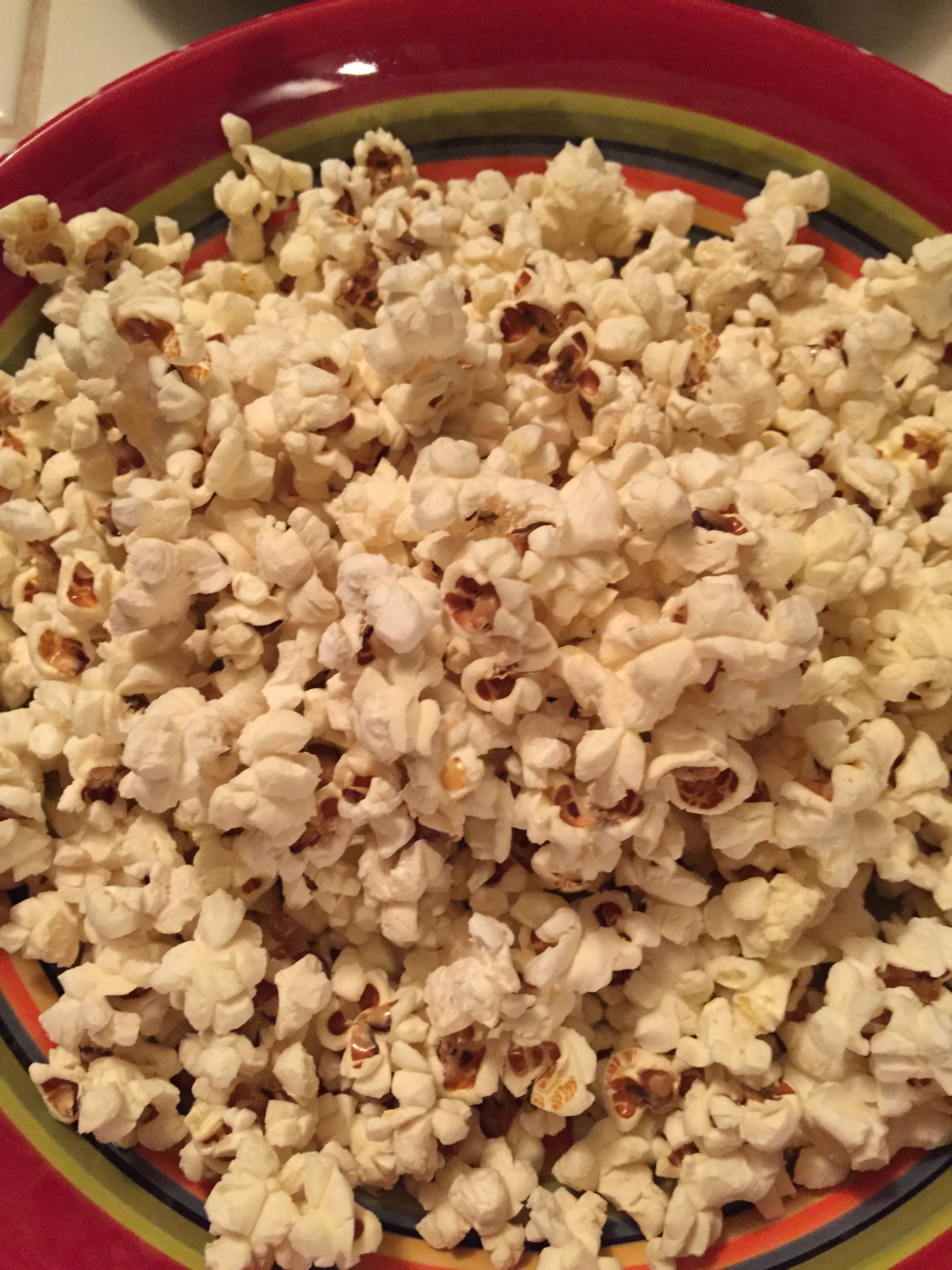
My urban-farmer-friend Nils grew popcorn this year and generously gave us a couple of ears. We let it cure for a month and a half, and then shucked it last night and popped it on the stove. It was the best popcorn we ever had.

IMG_1193.jpg
IMG_1200.jpg
IMG_1201.jpg


Popping corn on the stove is something I did not do a lot of when I was young, but Tom did, so he handled that part of things. I do remember popping corn on top of our wood stove back in Maryland. It does taste so much better than air popped.

I saved a few kernels even though I think this is an F1 hybrid and the next generation may not come true. I may order an heirloom variety and try to find a place for a few stalks next year. The problem with corn is that you need to plant a certain amount of it in a cluster, for best pollination. So finding room for it is questionable. Anyone have a spare veg bed I could rent out for the summer?

Tags preparedness, vegetable garden, cooking, insects, flower garden
Comment
← Newer Posts Older Posts →

Subscribe

Sign up to get email when new blog entries are made.

We respect your privacy. We're only going to use this for blog updates.

Thank you! Please check your email for a confirmation notice to complete the subscription process.

Powered by Squarespace