• About
  • Blog
  • Contact
  • Favorites
  • Archive
Menu

Poppy Corners Farm

Street Address
Walnut Creek, California
Phone Number
Walnut Creek, California

Your Custom Text Here

Poppy Corners Farm

  • About
  • Blog
  • Contact
  • Favorites
  • Archive

Gulf Fritillary Butterflies

June 28, 2018 Elizabeth Boegel

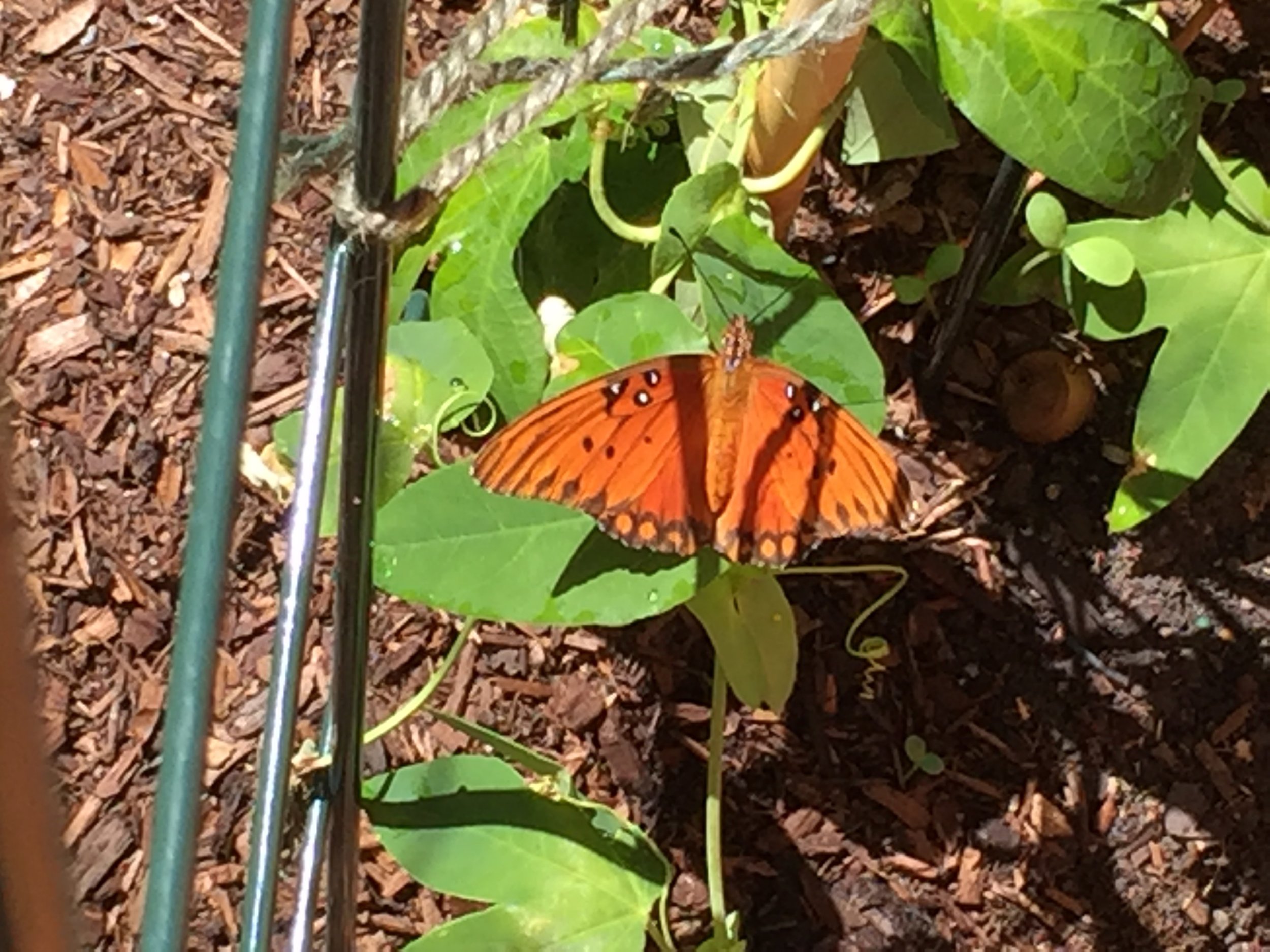
It seems like every day I read yet another article about how insects are disappearing. Butterflies seem to be particularly of concern, and I have certainly noticed that in our garden; other than Cabbage Whites, I had yet to see a butterfly until yesterday, when this beauty showed up. 

Gulf Fritillary butterflies are native to the southern portion of the United States and down into South America. They prefer more tropical climes, and their larval food source, passionflower, is also tropical. We have somewhat colder winters than is usual for tropical plants, but I planted eight passionflower vines in the hopes that I might attract these butterflies, and I will protect them if the temps go down below 25 this winter. The variety of passionflower I planted is 'Blue Horizon' and here's what it looks like when it blooms:

Image credit: Annie's Annuals

Image credit: Annie's Annuals

My little eight have not bloomed yet, but they do have buds on them.

As you know, our neighbor is replacing the fence between our properties; in one area he removed a lot of tall bushes in order to do that. Those bushes were preventing the deer from jumping over a low section of fence, so I needed something there to protect our yard. I put in a sort of pea-trellis and planted the passionflower vines at the base. They are growing well, and have already attracted this one Fritillary. So they are doing exactly what I wanted them to do! 

And I was awfully glad to see this butterfly flitting about, passionflower or no. As I said, I am really noticing the lack of butterflies this year. Of course, most of my summer flowers are not blooming yet - the cosmos, the zinnias, the tithonia - and those really seem to bring them in. But I do have a lot of nectar-producing flowers up and you'd think butterflies would be flocking here. All I can think is that they cannot find my little habitat in a sea of grass and oleanders. 

I did have a neighbor write to me the other day and mention that her mass plantings of gaillardia (blanket flower) had attracted my bees and she was so happy to host them and show them to her young children. This made my heart so glad. All is not lost - some folks on my block are planting for pollinators. There's precious little of that going around, unfortunately.

How's your insect population? Are you noticing more or less of them, or par for the course? I'd love to hear your experiences.

For more information on Gulf Fritillaries returning to the Bay Area, here is an interesting article from UC Davis.

Tags insects, wildlife, larval food, flower garden
Comment

Overview

June 26, 2018 Elizabeth Boegel
IMG_9710.jpg

Just some overview photos of the garden today, so you can see what it looks like in late June. 

Above is the North side of the property. Here we have tomatoes, sweet and hot peppers, pole beans, most of our fruit trees unseen around the edges, and some pollinator gardens maturing with summer flowers. Behind me and out of sight is the patio and the hops, strawberries, olive trees, and huckleberries. You can see how many tomatoes are hanging from the vines, and we have lots of unripe peppers too. No beans, yet. Lots of peaches, plums, and strawberries. No hop cones yet.

This is the East side of the garden. All along the fence we have rhubarb which is doing simply great. To the left and right are our blueberry bushes, plenty of berries being harvested every day now. Further down on the right is the bee hive, and to the left we used to have asparagus, but is now being transitioned to woodland natives. 

IMG_9718.jpg

The South side of the garden is larger so I'll split it up into three sections. To the right, we see a bed of collards and basil, and I just sowed some peas there too. Next to that is the bed where I just harvested potatoes, now sown to a summer cover crop which is just coming up. Next to that are the cucumbers; we only planted the pickling type, because we like the taste of those best, even for eating fresh. Beyond these beds you can see two smaller beds, one planted to pumpkins and one to butternut squash. To the right of those is the other pollinator garden. At the bottom of the picture is a round bed of cilantro, with several succession seedings.

IMG_9719.jpg

Moving left from my perch you can see the last bed, which is seeded to several kinds of watermelon and cantaloupe, all growing extremely slowly. Our empty 'greenhouse,' which might be filled again soon with fall veg if I can figure out my timing, and some clematis I just pruned. You can see some of the artichokes.

Moving left, more artichokes and our herb bed, which at the moment is a bit overrun (I need to do some dehydrating). 

And finally, the West and front of the house, with mainly woodland plants, both native and exotic. 

We have had our first few cherry tomatoes (Sungold and Green Vernissage) and are anxiously awaiting a big 'un. We should see some the next two weeks, I think! We've had some very up and down temperatures, which isn't unusual for June. July will see the beginning of settled hot weather, and then some settled harvesting of summer crops. We can't wait.

How's your garden coming?


Tags vegetable garden, fruit garden, herb garden, flower garden
4 Comments

The Rat Problem

June 24, 2018 Elizabeth Boegel

Before I get into the disgusting subject of rats, I wanted you to see this gorgeous new sign my dad made for us. He hand-carved this lovely design into a plank of basswood, and highlighted the carvings with lamp black. I have it inside now to stay, but if you subscribe to the blog, when it arrives in your inbox you will now see this lovely plaque instead of the basket of tomatoes. Thank you Dad!

Now, on to the considerably less-pleasurable topic of our rat problem.

main_roof-rat-bug-book.jpg

We have a serious issue this year with roof rats. Rats have always lived in and around our garden; I've often found them nesting in the compost bin, and last summer we would see them running on our fenceline. We've always been able to keep things under control, but this year nothing we have done has put a dent in the problem. We know these are roof rats because we hear them in the attic in in the walls of our home. We have tried trapping, with minimal success, and have even resorted to poisons, though those have been even less effective. We practice severe cultural control, with all of our home-grains in the freezer and all of the chicken grains in gnaw-proof bins. These rats are active at night, and every morning we evidence of their nocturnal carousing in our garden. Roof rats love garden vegetables and are likely what has been eating our tomatoes and peaches every year (even though the squirrels also take their share, it's not all their fault). 

Every neighbor has complained about the rat problem this year, and Tom and Adam have had some serious skin problems recently that we thought might be bites from tropical rat mites, which can travel pretty far from a rat to find another host. My gross-out meter had the needle pinging on 'high' and no one was sleeping because of all the scratching we heard in the walls. Time to figure something else out.

I talked to several neighbors about their methods, which was enlightening. One of them has a pest company come out every three months and spray her home and yard. She brought me the list of pesticides the company was using and I was literally gobsmacked - there were several poisons on that list that have been banned in the UK. Another of our neighbors had a quote from a rat control company of $9k. !!!! Our next door neighbor had simply sealed off every single hole from his crawl space (we don't have basements here) to his attic, from the outside. And he hasn't had any problem since. 

I decided to call Vector Control. Recently they came out to talk to my beekeeping association about yellow jackets, and they mentioned that rats were also part of their purview. A really nice man from Vector Control came out a few days after I left a desperate message. And he was a font of information! It was a very interesting hour I spent with him, and completely free by the way (our tax dollars at work), and I learned a lot.

IMG_9685.jpg

Dave went through our entire house, from attic to crawl space, and all around the foundation and roofline. He also spent a good deal of time in our messy garage, and also went around with me looking at compost piles and food sources. Dave also used to be a bee-and-chicken-keeper, so he had a good idea of what to expect here. He also used to be a roofer so I got some side advice about the roof! Anyway, no surprise, but it turns out that there are many many ways the rats are getting into our attic and Dave found every one. He advises closing these up using 1/4" hardware mesh at the very minimum; he would prefer we follow that up with galvanized steel sheeting on top of the mesh. Where our roof lines overlap there were clear holes going into the house. And where our air conditioning lines go in, there is also a clear path. In our garage, there were holes we didn't notice near our fireplace. 

Dave also showed me the way to tell if my peaches have been eaten by rats or squirrels. If they are on the ground, and all that's left is the pit and some shreds of flesh, that's a rat. If there are a couple bites out of the fruit but the rest is intact, that's a squirrel. He said tomatoes are a rat's favorite food. 

He does not advocate poison and gave me zero recommendations about it because they don't want us to use it (and, in fact, he found the poison chunks we had put out completely intact and told me to throw them out as they were useless). He advocates trapping, and wanted us to buy the old-fashioned Victor rat traps with the copper hook (the newer ones have a yellow plastic plate). He impaled a whole, unshelled peanut on that hook, and said we could use those or chunks of dried apricot - something the rat would have to spend some time working off the hook.

IMG_9671.jpg

Dave told us to bait 10 traps and to put three in the garage, three in the attic, and three in the crawl space, as well as one under our sink (where we keep a covered compost bucket). He said to check them every day. He recommended that we give them one free feeding so they get used to eating on the traps, but we're so desperate for relief that we just went ahead and spring-loaded all of them. Nothing would give us more pleasure than hearing 10 large SNAPS tonight.

IMG_9684.jpg

Unfortunately two of the traps snapped Tom and he has a very sore (but not broken!) thumb right now. These traps really work. 

Dave also liked my cultural controls and approved of the way I composted, but said it was likely all the produce that was attracting the rats to our house. Free shelter, free food, and free water (from the back fountain) - it's like a neon sign pointing "COME HERE!" Since I'm not going to stop growing food, we have to just constantly be vigilant about this issue. Trapping is going to have to be a daily thing around here. And once Tom and I have a handle on it, we're going to have to spend a day sealing up every crevice and crack so that they don't come back.

Have you had roof rat problems? How did you handle them?

Tags wildlife, projects
4 Comments

Dramatic Flowers

June 21, 2018 Elizabeth Boegel
IMG_9651.jpg

The artichokes are blooming, and they always attract a lot of attention, from both humans and pollinators. It's impossible to take a photo of them without a bee of some sort, dusted in pollen. These neon purple blooms cause our local walkers to stop and take a second look. I love these dramatic blooms.

But they aren't the only showstoppers in the garden right now. The hollyhocks have been amazing, with bright pink and coral hues, but one just opened that takes the prize.

IMG_9655.jpg

This is the variety 'Black Watchman,' which was also grown at Monticello.  The bees like it as much as I do.

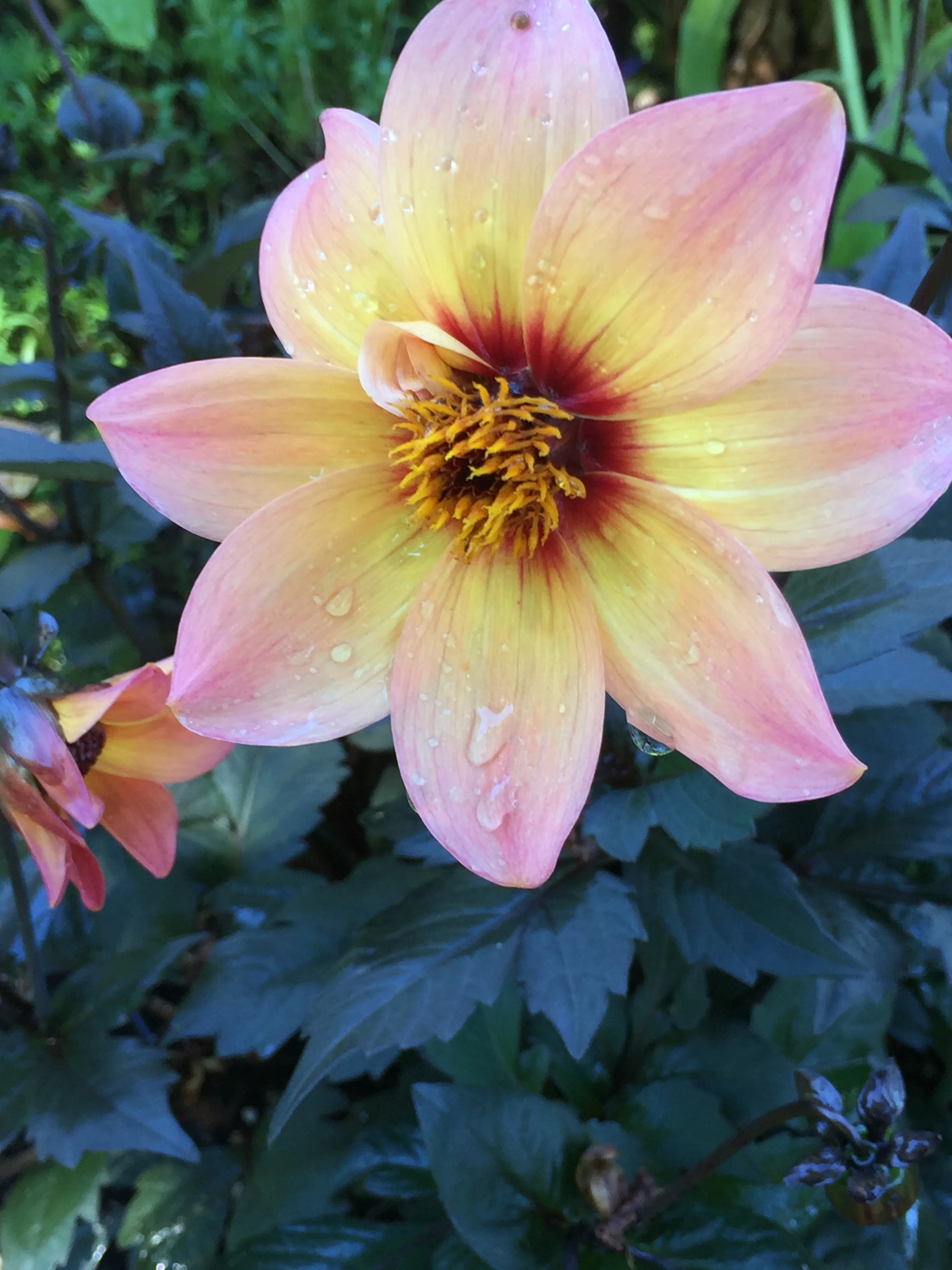
Another new plant for me is a dahlia that was an impulse purchase, because its dark foliage just called to me. It's a variety called 'Mystic Fantasy.'

IMG_9663.jpg

I just love the color of those flowers against the nearly-black foliage.

I had another impulse purchase (sensing a theme?) and ended up bringing home some liatris for a difficult part of my garden. This prairie native loves full hot sun and can take a drier soil. The plants are rewarding me with some fabulous blooms. This is Liatris spicata.

IMG_9658.jpg

And I know I've shown this sunflower before (Chocolate Cherry), but it's just so dark and lovely, I need to show it again. Here it is silhouetted against a clear blue sky.

IMG_9661.jpg

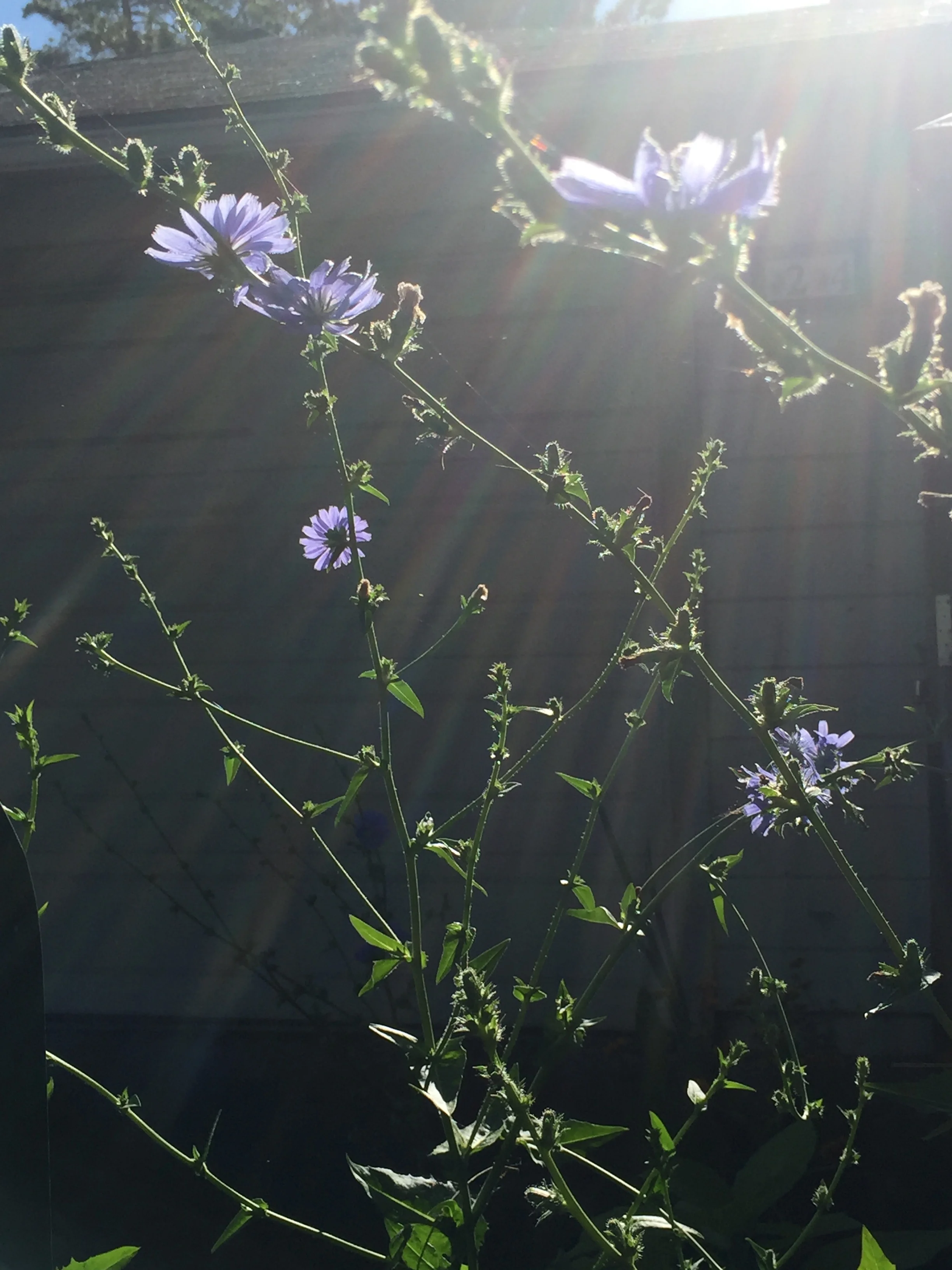
And the chicory that I seeded two years ago is finally up and blooming, in a difficult strip of dry soil next to the mailbox. I love this true-blue flower, and hope it reseeds abundantly.

I'm really enjoying these flowers in my garden. I tend toward the cottage-y things normally, but these dramatic options really add some flair and attract a lot of attention. They are also bridging the gap between spring and summer annuals - I pulled out all the spring annuals a while ago, and while the summer annuals have germinated, they are nowhere near blooming yet.

Tags flower garden
Comment

Plums, Peaches, and Potatoes

June 19, 2018 Elizabeth Boegel
'Santa Rosa' plum

'Santa Rosa' plum

The plums are beginning to ripen. I pruned this tree a little severely this past winter, probably too severely for a youngish tree, but I wanted to get started early on good structure. And the tree has rewarded us with some lovely-looking fruit. I've started picking them when they reach this color, and bringing them inside to soften. The squirrels are diabolical this year.

IMG_9635.jpg

I'm doing the same with the peaches, because I'm finding several half-eaten ones every morning at the base of the tree (they go to the chickens). The fruit this year is on the small side, but a good volume. I haven't sprayed it for peach leaf curl now in two years - there is a little bit of the disease on some of the leaves, but so far it's not terrible, and we still have a good harvest. I don't want to use that copper spray any more, so if this tree begins to suffer badly, we'll just remove it and try again with a resistant tree. The tree is at least 20 years old, maybe more, so it's a miracle it's still producing this well.

'Yukon Gold'

'Yukon Gold'

I finished harvesting all the potatoes. The fingerlings were ready first, and we had such a good harvest that we could share extras with family. Today I got the Yukon Golds and Pioneer Russets out of the ground. We had a decent harvest on the golds but not the russets. Several of the russets had a sort of watery, disgusting, smelly rot (fermenting?):

IMG_9644.jpg

Anybody else have this? I think it's a disease called 'Leak,' caused by a pathogen that likes saturated soil and warm temperatures. The three potatoes I found with this rot were in very saturated places in the raised bed. I'm not sure if there is a leak in the drip line, or it it's just naturally wetter on that side, but we certainly have had some very warm temperatures at times, so this could be it. The trick is not to plant potatoes in this same place next year, to avoid this pathogen. I've had potatoes in this particular bed every year for a while now, so I need to change locations. I'm not sure if I should go ahead with a pea crop in that bed, or put in a summer cover crop to heal the soil. When I was digging out the potatoes, the soil was really compacted, though absolutely full of worms. I mixed in the coffee chaff that I used as a mulch, and I'll probably cover it with a couple inches of compost, and let the bed sit for a couple of weeks. Then I'll decide what's next.

Meanwhile, I'll fix roasted potato salad for a pot luck tomorrow night, and we can enjoy the rest however we like (hash browns! roasted with olive oil and salt! mashed with butter!). It's fun to have our own organic potatoes. They taste so much better than store-bought.

Tags vegetable garden, diseases, fruit garden
Comment
← Newer Posts Older Posts →

Subscribe

Sign up to get email when new blog entries are made.

We respect your privacy. We're only going to use this for blog updates.

Thank you! Please check your email for a confirmation notice to complete the subscription process.

Powered by Squarespace