• About
  • Blog
  • Contact
  • Favorites
  • Archive
Menu

Poppy Corners Farm

Street Address
Walnut Creek, California
Phone Number
Walnut Creek, California

Your Custom Text Here

Poppy Corners Farm

  • About
  • Blog
  • Contact
  • Favorites
  • Archive

June wreath

June 1, 2018 Elizabeth Boegel
IMG_9517.jpg

This month's wreath is made out of fresh fennel. I have several large plants growing right at our fence-line; they tend to grow out over the sidewalk, so I need to prune them every so often. Today I cut them very far back (they'll have no trouble growing again) and used some of that to make this wreath.

Fennel is a versatile plant to have in the garden. We love to cook with it (for some of our recipes, click here). But even if it's just grown for beauty, it's worth it. The flowers are those great umbel shapes that pollinators love; and Anise Swallowtails use this for their larval food source. I also learned recently that aphids adore fennel, which makes it a perfect trap crop. The idea is that the aphids will go to the fennel rather than your more delicate crops. And fennel can stand quite a bit of predation and still have plenty left over for your dinner plate!

June feels like the true beginning of summer: School lets out, cherry tomatoes come in, sunflowers rule the garden, and berries make their way into every breakfast. Time to start reaping the bounty of the garden, hooray!

Tags seasonal wreath, flower garden, herb garden, insects
4 Comments

Eggshells and Coffee Grounds

May 30, 2018 Elizabeth Boegel

As you all know, I took a Plant Nutrition class last semester. It was really interesting and I learned a lot about the biology of how plants take up nutrients, and the chemistry of the soil solution. Each of us had to choose two forms of fertilizer to research and speak about to the rest of the class. It was a fascinating couple of weeks as folks talked about everything from worm castings to mined phosphorus from Florida.

I wanted to research two things I have in abundance (and I'm guessing you do, too): Coffee grounds and eggshells. There are a lot of myths surrounding both, and in the course of my research, I was able to determine the truth of these two products and how they work in the soil.

coffee-grounds-fb.jpg

Let's start with coffee grounds. When you google "how to use coffee grounds in your garden," you will see fantastical claims: They improve disease resistance, repel ants and slugs, acidify your soil (lower the pH), add nutrients, earthworms love them, and they add tilth to your soil texture. 

Here's the truth of it: 

Coffee grounds DO have a nice nutrient profile, with an NPK of 2-.06-.6. That's a nice, low amount of nutrients, with a good hit of nitrogen, some of it soluble. So they are definitely good for your soil in this regard. It's still best to add them to your compost first, so that they can be broken down before adding to your soil. However, you can sprinkle them around your plants. Just don't add a thick layer, because that will form a mat that air and water cannot penetrate.

Coffee grounds are acidic, but they don't lower your pH. You would need an enormous volume of coffee grounds to change the pH of your soil. I remember adding them to my blueberries to acidify the soil; but that doesn't work.

It is also a myth that snails or ants will be repelled by grounds. There is some evidence that they help to repel fire ants, but not Argentine ants, which is the variety most of us have in our yards. Grounds do not cause any barrier to snails or slugs at all.

Worms will process coffee grounds just as they do any other food.

And finally, grounds do nothing for disease resistance.

So, to conclude: Definitely add your coffee grounds (and filters!) to your compost pile, where they will improve the nutrient content of your finished compost.

IMG_0136.jpg

Eggshells are a bit more complicated, because they are less well studied. But I was able to find pretty decisive research papers to help us figure out how to use them.

One of the biggest claims is that slugs don't like to travel over the sharp edges, so the shells can protect your plants if sprinkled around them. This one has been debunked quite thoroughly. In fact I found a study where the conclusion was the slugs were actually attracted to the eggshells and decimated the plants even more readily. So don't use them for this purpose!

The other big claim is that eggshells add lots of calcium to the soil. I can't tell you how many posts I've sen about adding eggshells to prevent blossom end rot in tomatoes. I assumed that was true and have used them myself for this purpose.

Well, each eggshell does contain about 2000 mg of calcium, so if there was a way to put this back into the soil, that would be terrific. However, they don't readily break down. In fact, studies show that it takes many hundreds of years before they break down completely.

So then you might ask, do they break down in water? That's been studied, and it's been found that they do not. So don't bother boiling your eggshells first.

So then you might ask, do worms eat them? They do not; they don't have teeth and can't bite.

So then you might ask, what about other microbes? Bacteria? Fungi? Protozoa? Well, there is very little research on this, surprisingly, but I did find a study where differing amounts of eggshells were composted, and the calcium content of the finished compost was higher in the piles that had greater amounts of eggshells. So that makes me think that something breaks them down. Eventually. Here's the deal: You won't reap the benefits, but your descendants might. 

HOWEVER. There is one way to get calcium from eggshells, and that's to pulverize them. Once pulverized, the shells can break down into soil solution and become available to the plants. Plus, worms can eat them in this form, and add them to their gizzards (worms digest food like chickens do, in the gizzard). 

So here's what we need to do: Put your eggshells on a baking sheet to dry. (DO NOT RINSE THEM. Eggshells have two layers - one hard, one thin and soft. This inner layer is full of organic matter that you want in your soil. ) When dry, run them through your blender, or pound them with a mortar and pestle. Then sprinkle on your soil or add to your compost.

That's if you want an immediate calcium hit. If that's not a concern to you, you can just continue to add them to your compost in chunks. They do help to aggregate the soil, making nice channels for air and water, and eventually, they do become a part of the soil. It'll just take a long, long, long time. 

Tags fertilizer, inputs, learning
Comment

Appreciating California

May 28, 2018 Elizabeth Boegel
The Walnut Creek Rotary Odyssey of the Mind team at Iowa State University

The Walnut Creek Rotary Odyssey of the Mind team at Iowa State University

Adam and I just arrived back home after a trip to the middle of the country; namely, Ames Iowa, home of Iowa State University. Adam participates in a yearly competition called Odyssey of the Mind; it's too hard to explain it here (click the link for more), but it's a great organization and he's been doing it since the 3rd grade. His team has twice gone to the international portion of the competition after acing both Regionals and State; both times the event has been held at Iowa State in Ames. Tom went with Adam last time, so it was my turn this year. The event itself was mind-opening and exciting, we saw teams from all over the world and saw incredible performances. Our team is already looking forward to next year's event and hoping to attend (it will be in Michigan in 2019).

And the university itself is quite lovely, with all the things we don't get to enjoy in California - vast mowed lawns, swathes of peonies and hostas in the woodland areas, and fireflies in summer. We saw a dramatic afternoon thunderstorm, with dark clouds racing across the big prairie sky.  We had frogs hop in front of the car on the freeway, which bordered a river. Large groups of robins fed from the lawns everywhere we looked. Bunnies hopped out of the bushes at dusk. All of that was quite charming and fun to experience.

But there were far more things that made me appreciate coming home to California. I'm not knocking the midwest, but there are just some things we Californians do better. Like carry reusable water bottles everywhere we go, rather than buying plastic. Having recycling and compost bins next to every trash bin in any public place. Reducing the use of water whenever possible (I watched a landscape-worker watering a flower bed the morning after the heavy rain. When I asked why, he said 'they pay me to do this, so I'm doing it.') Making sure fresh fruit and vegetables are available at every meal (understandable to have canned or frozen in the winter in the midwest, but why in late May, when many things are at their peak?). Don't even get me started on the university's cafeteria food (five soda stations at every cafeteria and only one with water). 

Adam and I ate twice at the cafeteria, and then we had to stop. It just made us feel horrible to eat what was available there (reheated, plastic food). We had the foresight to rent a car which allowed us to explore the nearby town of Ames. Among a million fast food places, we found a diamond:  Wheatsfield Cooperative, a tiny natural grocery store that featured locally grown, organic produce and meals. We were so happy to have a place to buy salads and sandwiches, kombucha and real lemonade. I told Tom when we got back that you really know you are from California when you read a sign on the co-op picnic area wall ("These oak tables were milled and made from the 200 year-old oak that stood next to our store and was felled in a storm") and think "THESE ARE MY PEOPLE." We make fun of ourselves for our "Portlandia" mentality but it really is true that there is a care for the artisanal that lives deeply in us. 

It made me think again about food security and food justice. There we were, in the middle of one of the greatest agricultural places on earth, and it was difficult to find real food. We are fortunate enough to have the means to search out and purchase the best we can find. But what about the people who can't? Why is the cheap, fake food so much more available than the real stuff? This is an issue that many folks are wrestling with and it's a noble battle.

Another very interesting aspect of our time in Iowa was that I saw no bees. The campus is full of flowers that are empty. We visited Reiman Gardens on campus, a lovely 14-acre property filled with gorgeous flowers and trees. I saw two native bees, one carpenter and one bumble. That was it. I asked a docent, "Do you have a native garden section? I'm very interested in the native prairie ecosystem." I was told no. They used to have one but it's being torn up to make more landscaping. I searched their 'pollinator garden' - no insects. I found it incredibly disturbing. 

Meanwhile, we arrived home last night to find a homemade dinner waiting for us, chock full of real ingredients, that Tom had lovingly prepared. This morning, I woke at 6, grateful (for a short time at least) for the dry sunshine. I went outside in my pj's and picked and ate the first blueberries from our bushes, and some strawberries from our strawberry wall. I visited the chickens and gave them some collards from the garden. I watered all the plants and had visions of soon-to-appear tomatoes, peppers, and cucumbers. I sat and watched the bees for a minute and appreciated their presence. I knelt down in one of our pollinator gardens, which happens to be full of poppies at the moment: there was a bee in every.single.flower.

I'm often disdainful of California and this state is in no way perfect. But there are a few things we really have gotten right here. I'm very grateful to be home. 

Tags learning, travel, insects, cooking, food justice
Comment

In Praise of Messy Borders

May 22, 2018 Elizabeth Boegel

Last weekend I was working in the garden when a neighbor walked by and asked a question about a particular plant. This plant wasn't in my yard, it was down the street a bit, in a newly landscaped yard of another neighbor. So I walked down with her and we looked at this new landscaping and identified some plants. The particular plant this particular neighbor was interested in was Kangaroo Paws, which is an interesting and wise choice for drier California gardens. As we stood there in this other yard chatting, I mentioned that they way the landscaping had been planted was displeasing to me. It's a vast expanse of lawn with a border of these kangaroo paws and other more common plants, all planted about four feet apart from each other. The ground in between the plants is mulched with wood chips (and that's great!) but the plants are so far away from each other. I said that I preferred a riot of plants, all close together, making a kaleidoscope of color and texture; some high and waving in the breeze, some low to provide a living carpet mulch. I waxed poetic about that type of planting until I looked at this neighbor next to me, who had a sort of blank look on her face. So I stopped talking and she said, "actually, I'm the opposite. I prefer plants to have lots of blank space around them, so you can appreciate each blossom."

Well, that was interesting. I had never considered that there were people who preferred that type of planting, something I've always read about and thought of as 'polka dots.' I then remembered another neighbor who once looked at my front woodland border and said, "I prefer things neat." It's fascinating, isn't it, the way we each have our certain ways of doing things, and the way our eyes see beauty? 

I don't think of myself as a messy gardener; after all, we have a strict pattern of raised beds all over our yard, each of which has a neat, defined border of wood, and plants growing within that border. In spite of that, or perhaps even because of it, I like my borders to be a bit wild. The interior spaces are dedicated to production - food for our family. Therefore they must be organized and neat. But the borders can be a tumultuous array of natives, ornamentals, perennials, and annuals, all growing in a haphazard manner and lending the garden a sense of the carefree.

I'm not knocking my neighbor's preferences for orderly spaces, but there is some science behind letting your flower beds, and indeed even your vegetable beds, be a little bit on the overgrown side. Let's go through those reasons one by one.

1) These wild borders mimic natural spaces. Where in nature do you see a neat, orderly, polka-dotted landscape? Nature fills in space, with whatever it needs in that place to improve the soil for the next plant. Soil life depends on living roots in the ground for optimum health. Living plants are constantly feeding the microbes in the soil and making important exchanges to improve both the soil and the life of the plant. Dying foliage offers nutrition to the area. Conversely, orderly landscapes show only the asserted will of humans. I'm not sure when the trend of orderly landscapes started, probably a long time ago in Europe and Asia, when humans decided they could improve nature, and started manipulating plants. I'm not saying there is anything wrong with asserting a human force of will on your garden. But I'm saying that, while it might be enjoyable to the gardener, it may not be what nature intended. I would say mowed lawns fall into this category. Where in nature do you see a lawn? Now a meadow, maybe. 

IMG_9453.jpg

2) Pollinators like drifts of flowers. You'll attract more butterflies and bees if you plant drifts of flowers, all close together. Pollinators like a place where they can go and stay awhile. If your plants are few and far between, they may just skip the joint all together - it's too much work for too little reward. If you like seeing beautiful wildlife (birds too) in your garden, and if you like having your food plants pollinated, plant more closely and in drifts. 

IMG_9454.jpg

3) A plethora of plants helps shade the soil and conserve water. Here in our dry state of California, choosing plants by water needs is a good way to go. If you plan your border to reflect a particular plant community rather than 'native' or 'imported,' you can have lots of flowers that you enjoy that may not be particularly suited to our state. Natives are important and I try to keep the contents of my borders 50% native; but you don't have to limit yourself to those as long as you put plants in similar communities and water needs. Plus, if you have lots of plants, you'll actually conserve water. This is because the plants form a canopy that shades the soil and allows less water to evaporate from the ground. A moister soil also helps regulate the temperature under that canopy, so that the plants don't get too dried out. It's a win-win.

4) A dense canopy of plants also helps to crowd out weeds. If every space is taken by a plant you intended to be there, there will be no room for weeds. 

5) You'll attract beneficial insects. Not just the pollinators that we all know and love, but also weird creatures that like to shelter in a denser canopy. These weird creatures are often the good guys, eating up the aphids and thrips and whiteflies that plague our crops. We all have plenty of prey insects, regardless of whether we want them. The trick is to invite the predators in too. And one great way to do that is to plant a full and diverse border.

6) And that brings me to the subject of diversity. When you plant a diverse grouping of plants, you're solving lots of problems at one go. You'll get some plants that have shallow roots, some that have deep. You'll get some lower growers and some tall growers. You'll get some flowers with daisy-like heads and some with umbrella-like heads. You'll get some who have lots of pollen and some who have lots of nectar. You'll get a gorgeous flower show from the entire rainbow, as well as different greens from the leaves, which create texture. You'll get big leaves and small leaves, coarse foliage and fine foliage. In other words, it's a delight for your eye, for the insects, and for the soil.

7) Plants grow better with friends. As long as you are careful to plant in correct communities (things that like acid soil, things that like clay soil, things that like shade, things that like dappled sun, etc), plants will do better with a diverse community around them. Permaculture has the right idea about this with their guilds. 

8) Perhaps the best reason of all, it's less work for you as a gardener. Why are you spending time mowing and chopping and weeding and watering and cleaning up all the time? And you can do this in containers, too, if you don't have yard space. My mother, who lives on a rocky hill that has remained (sensibly) a native habitat, has hundreds of pots on her deck which are always awash in color and beauty. 

IMG_9460.jpg

I don't mean to imply that having this kind of garden is no work at all. I do spend a lot of time on these borders. First of all, they take years to establish, depending on the kind of plants you purchase. The full look that I've gotten (and love) has taken me all my 13 years at this house to achieve, and there's plenty of spots where I have yet to achieve it. It takes planning, time, and money at the outset. And the ongoing maintenance also is an issue if you choose more annuals over perennials. I like to have about half of each, so that means some seasonal work to replace the spring annuals with summer annuals, for instance. Some clean up is necessary and some re-seeding. And if you put out seeds frequently, you'll need to clear a little space for those seeds so that they have room to germinate, and you'll need to water a little more frequently. 

So it's not work-free! But the constant 'taming back of nature' isn't part of that. Instead, your goal is to allow nature to take over and do the work for you. 

IMG_9455.jpg

So, for my part, I shall leave the heavily tended, cultivated polka-dot look to my neighbors. Instead I will continue to crowd my space with diversity and beauty, and reap all the rewards of it. I believe that, once you understand the reasons to do it this way, you'll want that too. 

Tags flower garden, learning, insects, wildlife, wildflowers, design
Comment

Shallots and Sunflowers

May 20, 2018 Elizabeth Boegel
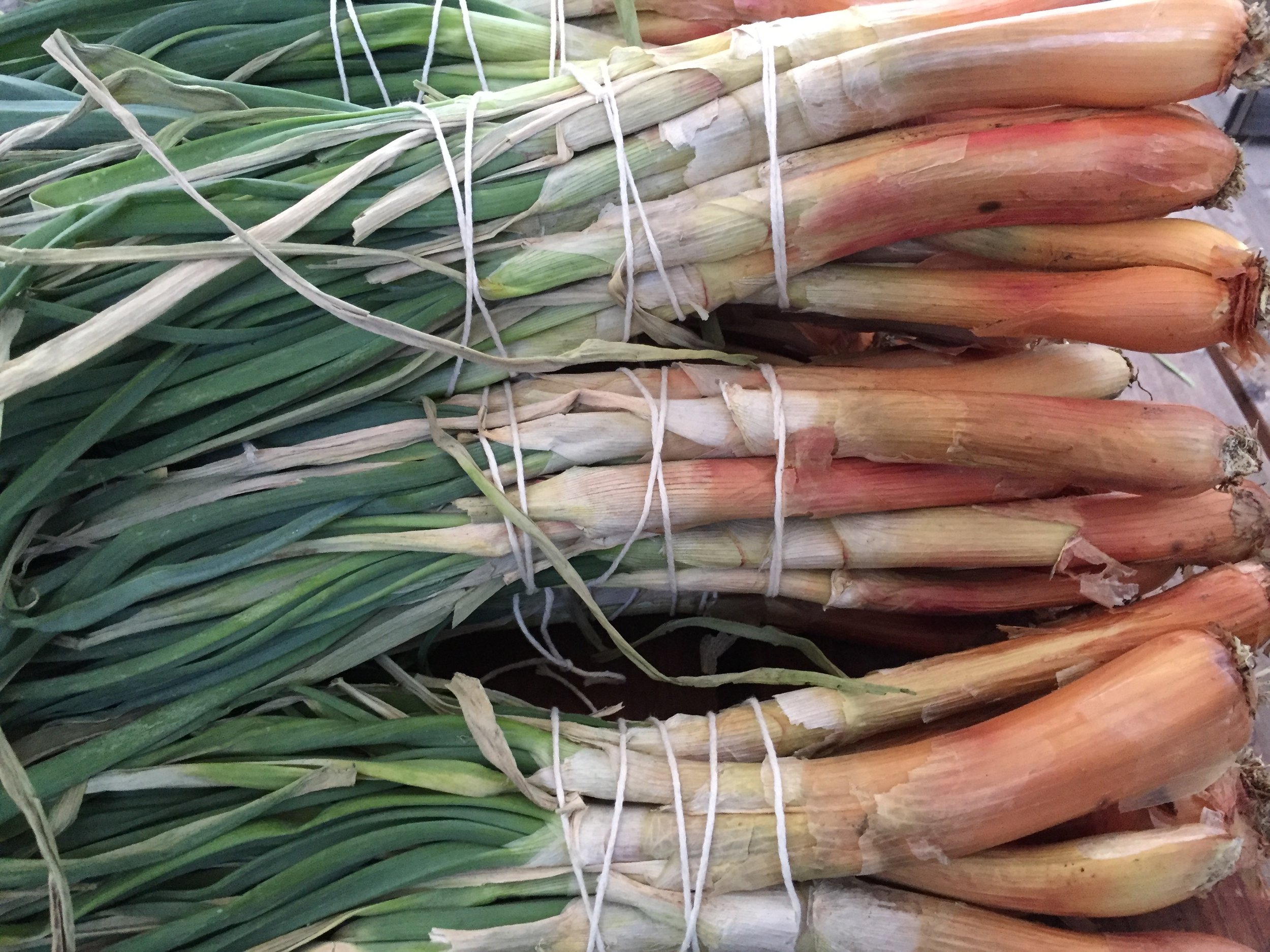
Bundled and ready to hang

Bundled and ready to hang

When I pulled this season's shallots out of the ground a couple of weeks ago, my first impression was that it was a great harvest. The actual bulbs weren't developed as fully as I would have liked, but some had started to put up flower stalks, and all of them were wilted and clearly at the end of their growing time. So I had to pull them out. I hoped, after drying and curing, they'd look more like they were supposed to - more round in the bulb, not quite as skinny.

I took them down from my curing shelf (the top of the chicken coop) and bundled them this weekend. And I have to say, I'm not thrilled. In fact I'm somewhat disappointed. Easily half of the shallots were mushy to the touch, not firm like they should be; I had to compost those. And the half that seemed firm enough to eat are still on the skinny side. Not the plump, full, firm bulbs I'm used to.

So what happened? 

I planted three allium crops last October for harvest this spring. Crop #1, leeks, were planted in the North Garden, where there had been both cabbage and beans before that. If you remember, the bush beans succumbed to spider mites and we had only a brief harvest. After that I added compost, then transplanted cabbage into that bed along with clover. Both did well and the clover continued as a companion crop, all winter, to the leeks. Plus, when I planted the leeks, I added more compost to the bed. And the leeks were a great success. We didn't have a huge amount, nor were they very large in size, but they were delicious and perfectly formed. So, no problems there.

Crop #2, garlic - my usual favorite variety, 'Inchilium Red' - was put into a bed in the South Garden that had housed tomatoes up until garlic planting. I did not add compost at that time for some reason. I did sow clover along with the garlic. The garlic came up quite well and seemed to be doing great; the clover never germinated. The garlic stayed the same all through the winter. When the earth finally warmed and the sun came out, it didn't start growing again like I expected it to. I gave it fertilizer and mulch, but nothing much else happened in that bed. The harvest was meager; we got about 75% of what we expected, and all the bulbs were much smaller than usual. Some never formed cloves, just made one larger clove. I also noticed numerous black aphids on the green part of the plant. So, the garlic was an almost total fail. We do have some bulbs that are usable, but we will go through them very quickly.

Crop #3, shallots - a new-to-us variety called 'Red' shallots - were put in a bed in the South Garden, which, like the garlic, had had tomatoes up until the day before. I do think I added compost to this bed. I seeded clover as well. Both the shallots and the clover grew wonderfully - an almost perfect growing season. But when I pulled out some clover that was about to go to seed, I noticed that space had been pretty tight in that bed; everything was really  crowded. And, when I harvested the shallots, I also dislodged quite a few earwigs.

So. I've learned a few things. Always add compost after tomatoes!!!! (or how about always add compost period!) Tomatoes are heavy feeders and likely the soil was depleted. The clover, had it grown correctly in the garlic bed, would have helped add nitrogen, but still needed nitrogen to grow in the first place! The fact that it didn't germinate at all should have been a big red flag for me - I mean, clover isn't hard to grow. You people with lawns know what I'm talking about.

Also, I think some floating row cover over these crops would have helped. I didn't use any covers this winter as an experiment and I won't repeat that. Like everyone else in creation, we had a weird winter. In early February we had 80 degree weather. It only rained once between November and March. Then winter moved in and it rained all of March, hailed several times, and was around 25 degrees nearly every night. Row cover would have protected the crops from those extremes of weather.

Another thing - maybe it's best not to crowd alliums.

Another thing - maybe it's best to loosen the soil a little after tomatoes before adding the compost - just some broad-forking to assist with air exchange, no tilling or anything. 

Well, live and learn. Hopefully next winter's crop will do better. Meanwhile, how lucky we are that we have grocery stores to supplement our harvests! If we had to rely on what we grew, we'd have some very bland meals without those alliums. 

Now, on to some sunflowers. 

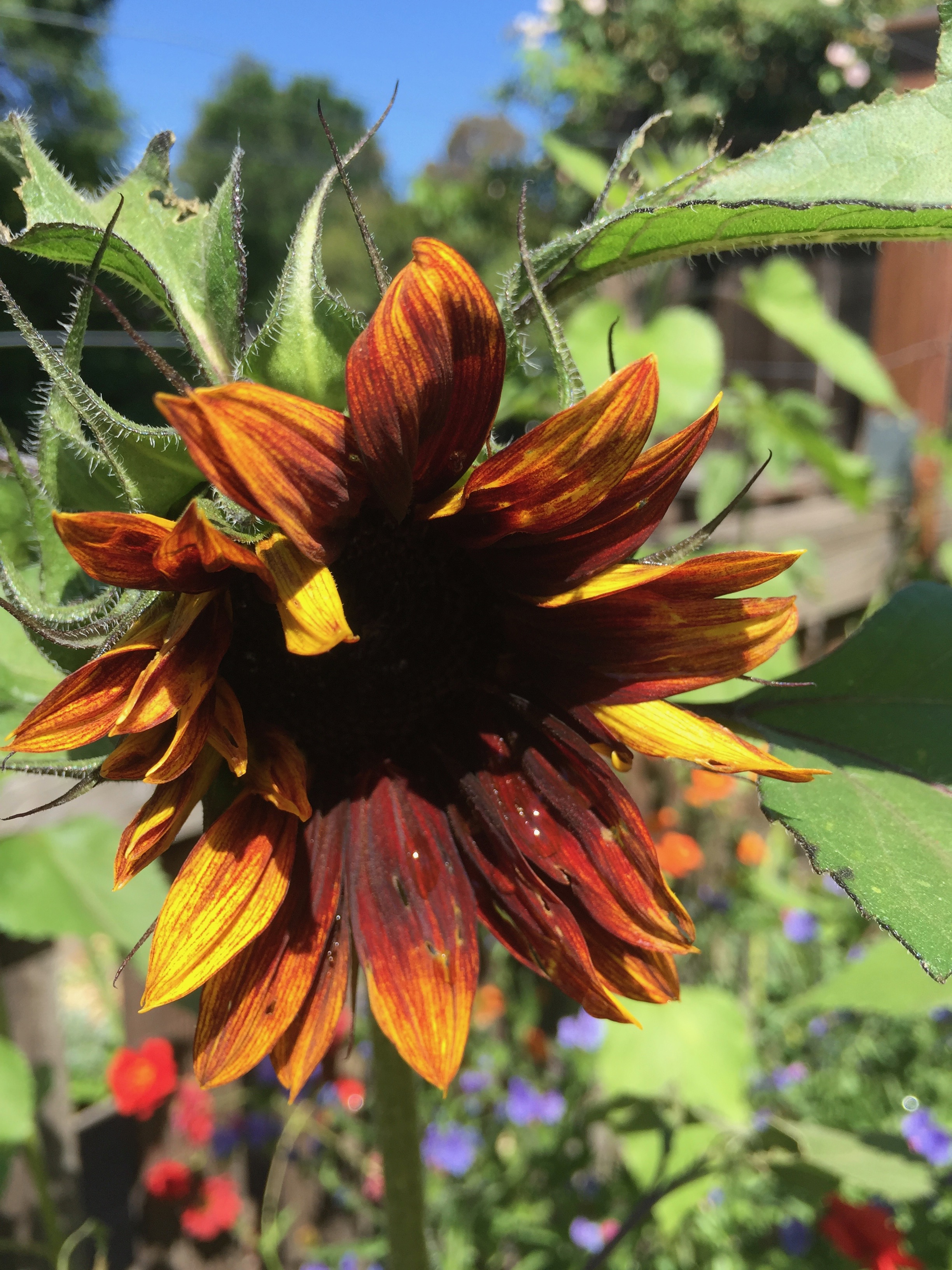
I have three different kinds blooming right now, none of them very common, and I think all of them should be more used because they are my very favorites. All are from Renee's Garden.

IMG_9415.jpg

This first is 'Sun Samba,' a variety which contains different sunflowers of different colors, so you get a variety, and some with very unexpected combinations. Isn't this one gorgeous, with it's tri-colored petals?

And this one is 'Cinnamon Sun.' I love its deep red petals and that inner ring of yellow which sets it all off.

And lastly, 'Chocolate Cherry,' with it's reddish-brown petals and inner ring of brighter red. You have to work to see this one in the garden, but what a reward when you do.

If you're tired of regular sunflowers, give these varieties a try - I think you'll love them!

Tags vegetable garden, flower garden, troubleshooting
Comment
← Newer Posts Older Posts →

Subscribe

Sign up to get email when new blog entries are made.

We respect your privacy. We're only going to use this for blog updates.

Thank you! Please check your email for a confirmation notice to complete the subscription process.

Powered by Squarespace