• About
  • Blog
  • Contact
  • Favorites
  • Archive
Menu

Poppy Corners Farm

Street Address
Walnut Creek, California
Phone Number
Walnut Creek, California

Your Custom Text Here

Poppy Corners Farm

  • About
  • Blog
  • Contact
  • Favorites
  • Archive

The Swallowtail Emerges

April 4, 2018 Elizabeth Boegel
IMG_8372.jpg

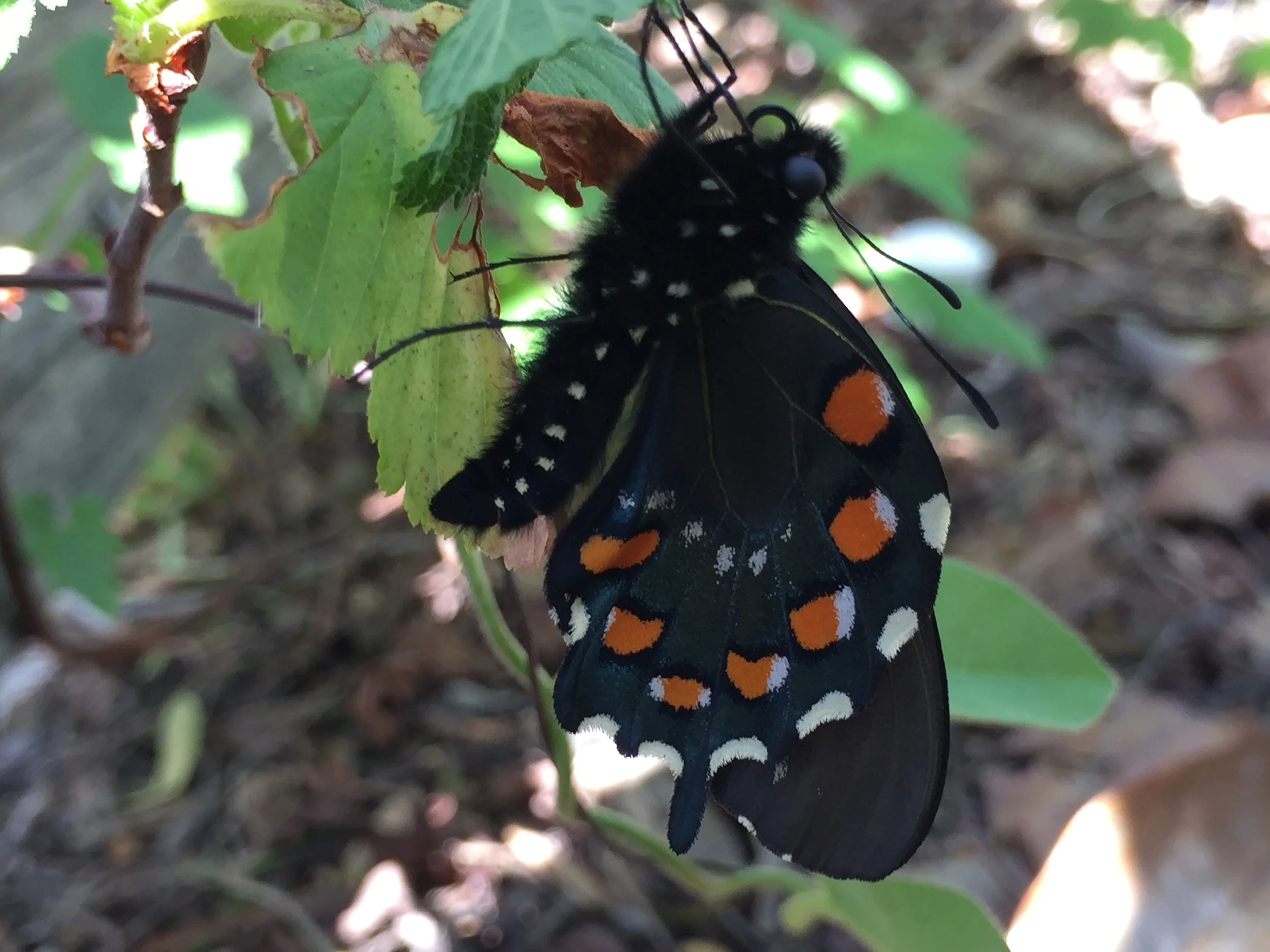
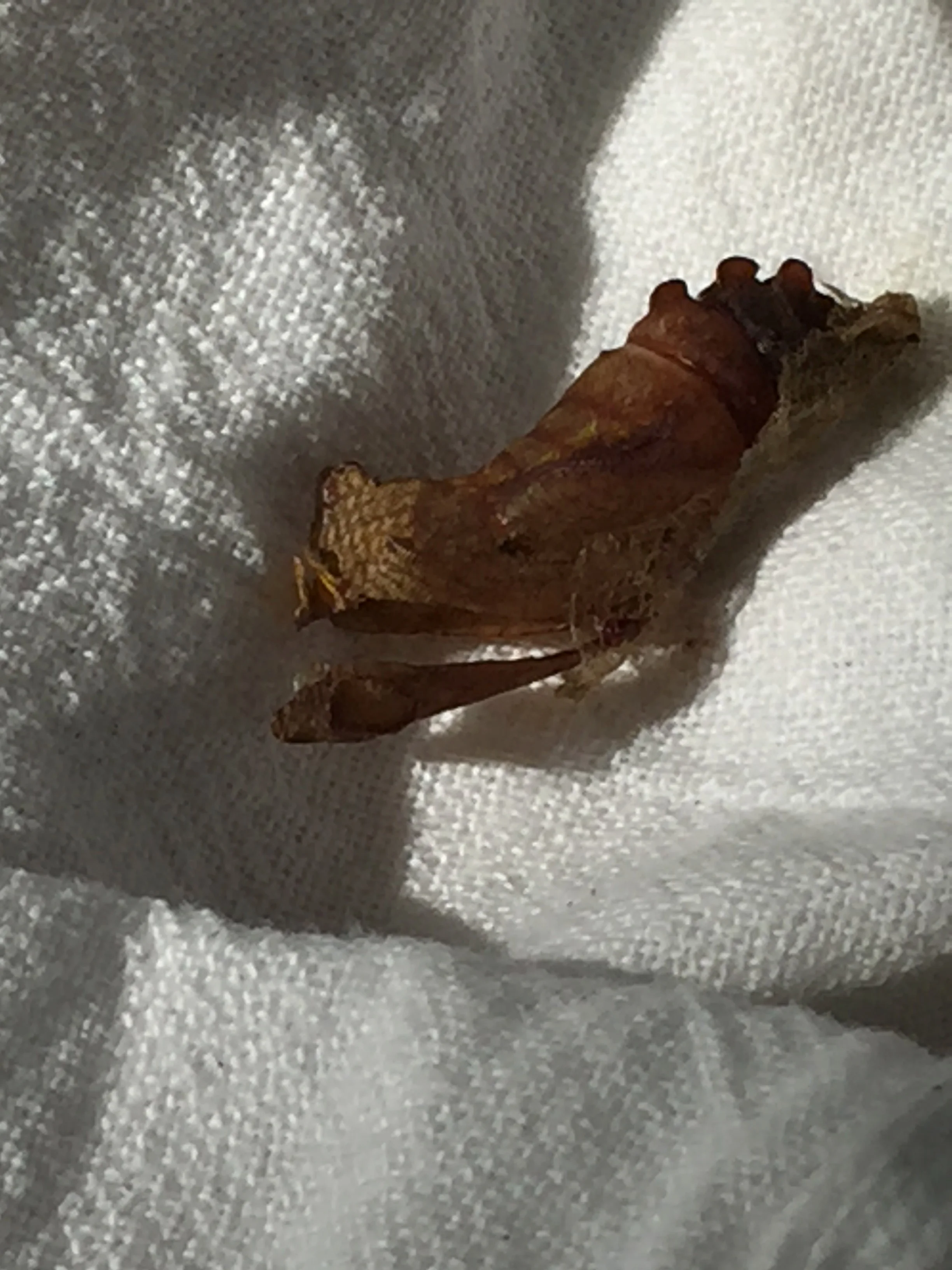
This morning, I went out to check the chrysalis and give it a drop of water. When I touched the eyedropper to it, it wiggled! So I knew it was nearly time for the butterfly to emerge. And a few hours later, it did. I don't remember ever watching this process before - it is fascinating - the butterfly climbs up the side of the mesh enclosure and stops to let her wings unfurl and dry. She is wet and bedraggled and clearly working hard. The wings stay small for a while, and then, with every breath of wind, they grow a little more. 

Before she was completely dry, I let her crawl into my hand and I took her out of the enclosure and sat with her in the garden for a good long while. She crawled up my arm and to my shoulder where she perched for a long time. 
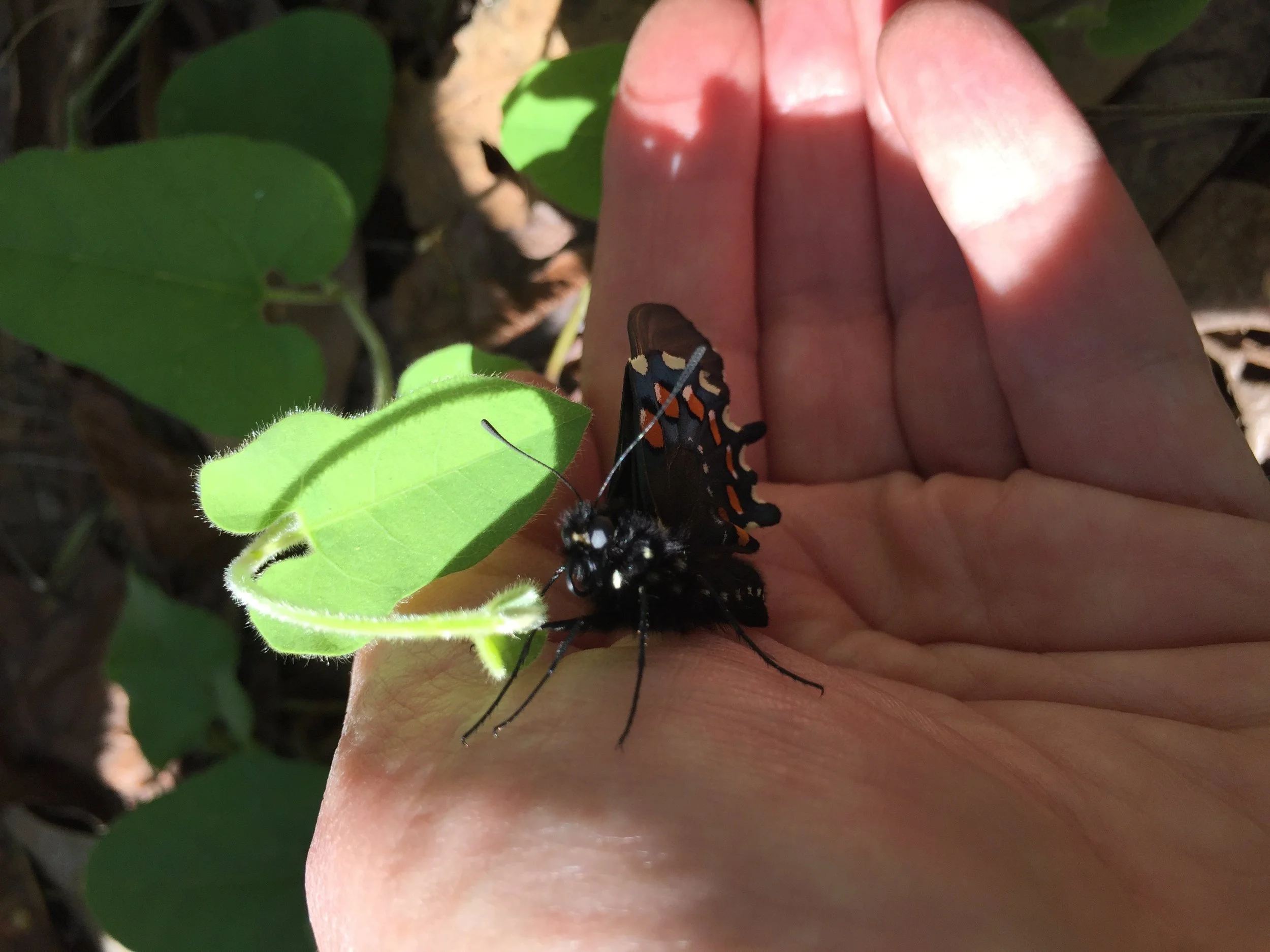
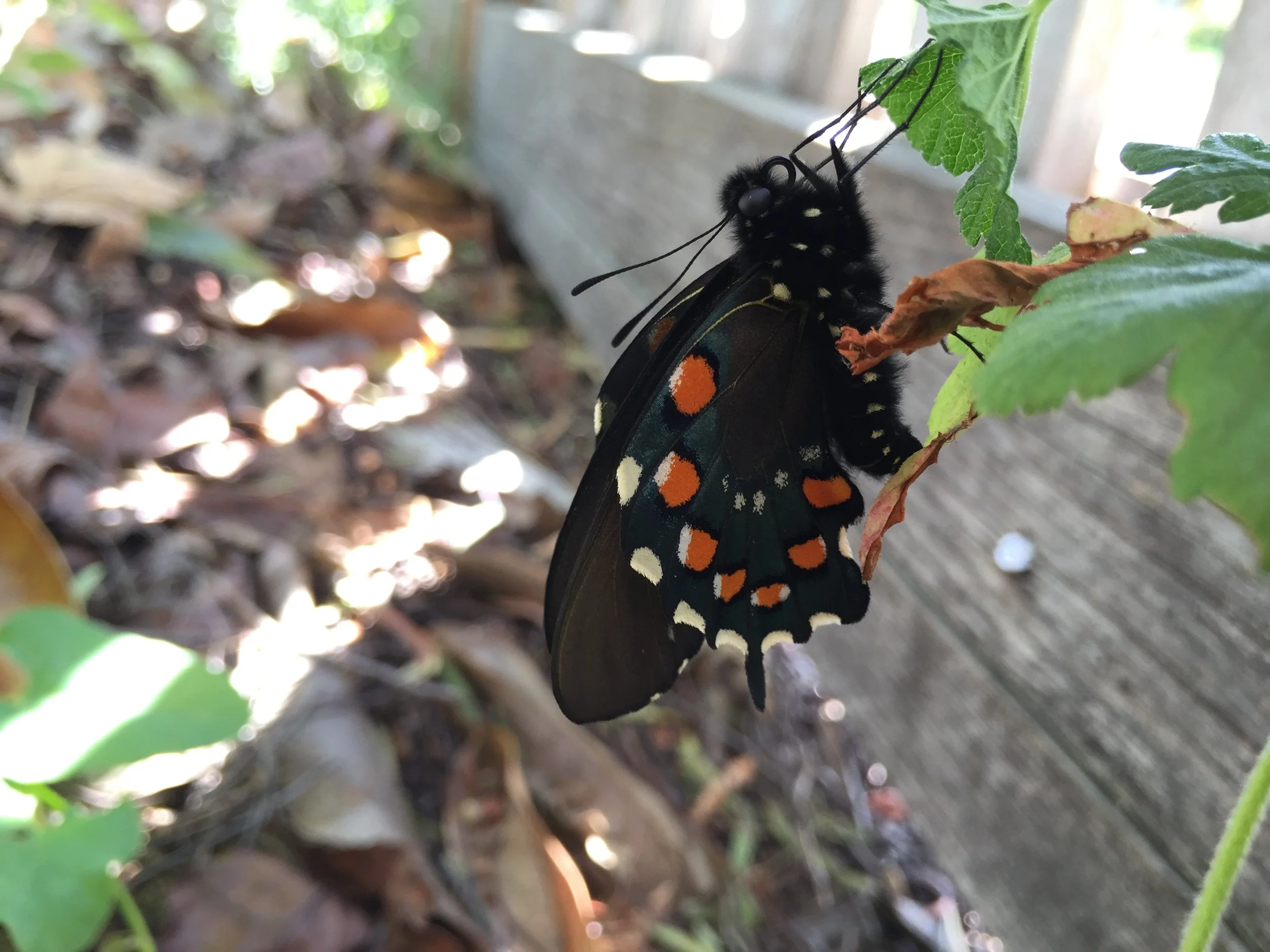
Her proboscis stayed curled up, and every so often she would straighten it out as if to taste the air. I kept trying to get her on the Dutchman's pipevine, so she would know where to come and lay eggs later in the season (if indeed she is a female) but it was a little floppy for hanging. Finally I put her on the Ribes (flowering currant) right next to the vine and there she stayed until I left to go hiking with Adam. 
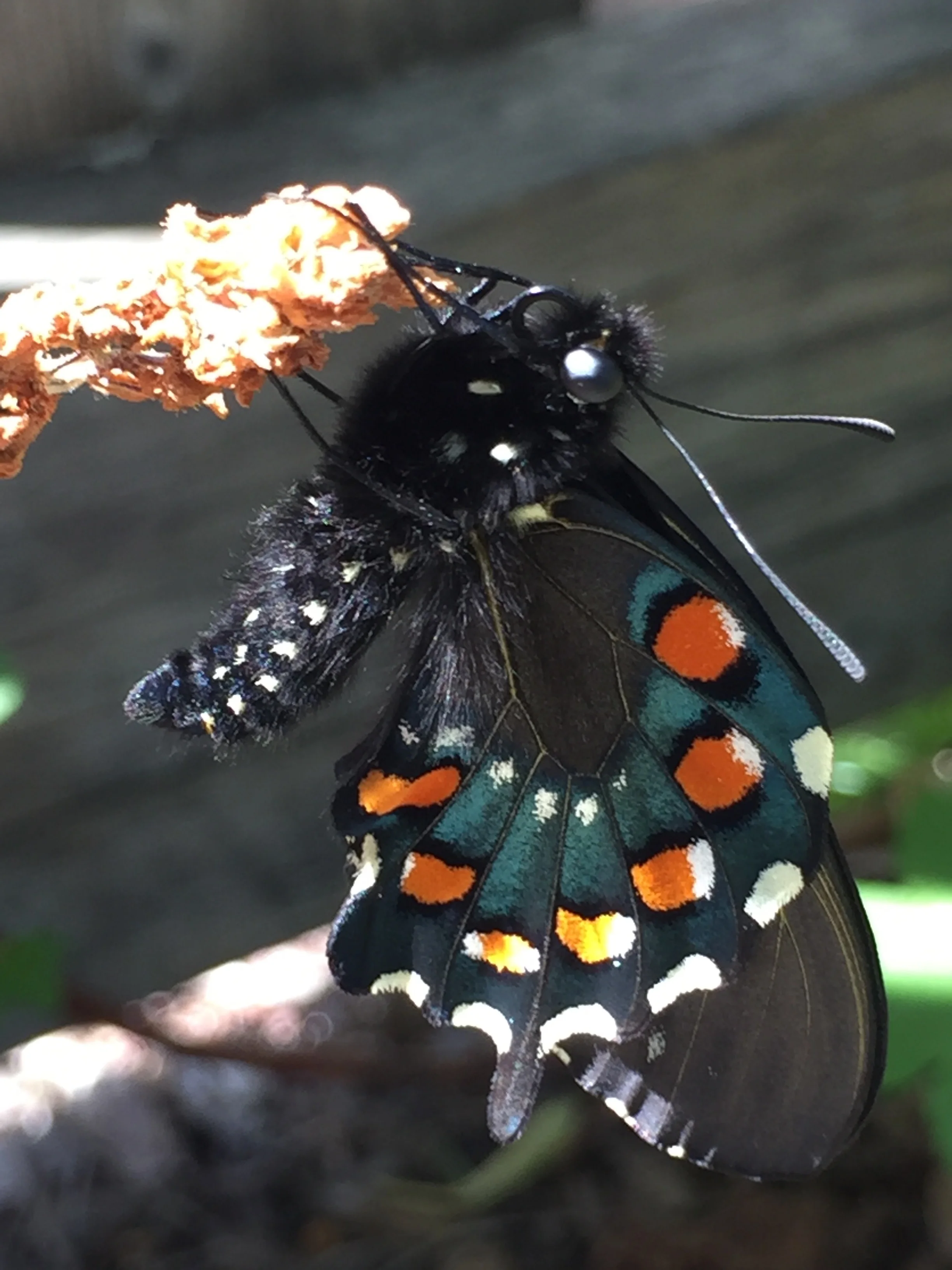
Her colors are so beautiful! 

When I came home, she was gone. I hope to see her fluttering about again. I sure have plenty of flowers for her to feed from.
The husk of the cocoon:
Tags insects, wildlife, natives
2 Comments

April Wreath

April 3, 2018 Elizabeth Boegel

This month's wreath is made from the trimmings of our native Cercis occidentalis, Western Redbud. It's a lovely, small tree, whose blooms attract many kinds of native bees. These trees in April are not only gorgeous, but havens for wildlife. I'm not sure how long the blooms will last once cut, but this sure looks pretty for now, hanging in our home.

I made this wreath in honor of Joan Whalen Boegel, Tom's mother, who passed away yesterday. She adored flowers and was an excellent gardener herself. She taught me a lot about how to be a thoughtful plantswoman. We lived across the country from each other, but I and the kids have wonderful memories of Grandmother, and are so glad to have had her in our lives. 

Tags seasonal wreath, natives
4 Comments

Spring Fruit Clafoutis

April 1, 2018 Elizabeth Boegel
IMG_8280.jpg

Happy April, Happy Easter, Happy Fruit Desserts! 'Tis time, now, for regular bakings of crumbles, crisps, cobblers, and clafoutis - not to mention buckles, slumps, grunts, and pandowdy. Oh, don't let all those terms stop you from making something with spring fruit. Crisps and crumbles are cooked fruit topped with some sort of streusel, cobblers are baked fruit topped with biscuits, buckles and slumps are fruit-and-batter cakes that sink after cooking and on the plate; Clafoutis can be considered in that same category. 

Clafoutis is a French term which, strictly speaking, should only be used when the fruit is cherry. The French say that if you use any other fruit, this dessert should be called a flaugnarde. But again, why let terms stop you? Just make a mess of batter and spring fruit and call it Buster, for all I care. I just say Clafoutis (Claw-foo-TEE) because it's fun.

Our rhubarb is coming up nicely, so I trimmed off all the largest stalks to make this cake today. It only gave me a scant two cups, however, and you need six cups of fruit for this recipe. No matter; I added in a cup of blueberries and three cups of strawberries. Delicious!

One rhubarb plant after trimming - more stalks will come up soon

One rhubarb plant after trimming - more stalks will come up soon

You know not to eat rhubarb leaves, right? The leaves are very high in oxalic acid, which can cause kidney problems in humans. However you'd have to eat something like 11 pounds of rhubarb leaves to put your life in jeopardy. Still, it seems wise to stay away. Just enjoy the tart stalks.

I use the recipe that we got from the Apple Farm - which is below - but there are a million different recipes out there. It's a very custardy cake batter, with lots of liquid. I am enjoying making them in my cast iron pan, but you can use a pie plate if you prefer. 

IMG_8279.jpg

I don't make the sauce, just serve it with whipped cream, whipped creme fraiche, or ice cream.

We've been super busy here at Poppy Corners. First, livestock news. One of our chickens died of natural causes this past week. Ginny, the Rhode Island Red who had been not-quite-right for a long time, was found dead in a nesting box. She was a sweet chicken, but had been sick on and off for the past year and had not laid in all that time. I just couldn't bear to cull her because, at one time, she had followed me around the garden and sat in my lap, while she was recuperating. She died as quietly as she lived. She was a very unassuming chicken.

And, we opened the hive (after the swarm) to a box still overly-full of bees - so many bees - I think they may swarm yet again. Plus, one comb had been built improperly and slid right off its bar onto the floor of the hive, in a pleated mess. So, we got some honey. That's the good news. The bad news is that the bees were seriously pissed at us being in there and one gave me a jab on the leg (she flew up my jeans to my knee). I immediately took Benadryl, grabbed my epi-pen, and stayed horizontal for a solid hour, hoping the Benadryl would kick in before the throat-closing would. And it did. I made it through without the epi-pen. Hooray! However I realized that I have, because of this allergy, become a timid beekeeper, and that is no help to Tom whatsoever. So, we are going to trade some time with my dad - he'll come help Tom when the hive needs seeing to, and Tom will go help him when his hives need work. That will make me feel much better about the whole situation. Neither Tom nor I am ready to get rid of the hive - we just can't imagine it here without bees.

IMG_8274.jpg

And, Tom spent his entire spring break helping me (well, I was helping him, truth be told; he did the lion's share of the work) build some set pieces for Kate's theater company. It was an interesting project. We made three 4x8 Hollywood panels to be used as walls, and one other 4x8 panel with a working door. We purchased the door pre-hung at Urban Ore, it is hollow, but this one panel is still very heavy. Dad helped us with some Sketch-Up plans, and allowed the use of his tools and shop for the cutting of the wood. After everything was cut, it was just a matter of assembling, which took us a few days. In the coming week, I'll be painting these pieces. We enjoyed learning how to do this and feel even more confident now of our building skills.

And can I just say? A husband who says 'yes' to your every project and finds it a learning process and actually enjoys it even though he has very little experience in said project??? Priceless. Tom's a Prince, for reals.

Lastly, I've potted up all the tomatoes and peppers into gallon cans. They are growing like gangbusters in the 'greenhouse,' after all the mid-80-degree days we've had here. This week, I need to transplant basil into the beds, and sow some collard seeds. 


Tags cooking, fruit garden, chickens, bees, top bar hive, projects
Comment

The Many Benefits of Cover Cropping

March 28, 2018 Elizabeth Boegel

If there is one takeaway that I've received from my last year studying Horticulture at Merritt, it is this: Your soil is the most important thing in your garden. Without the life, the microbiology, or the nutrients they provide, your garden won't thrive. Good soil increases everything - water holding capacity, nutrient holding capacity, nutrient availability, and gas exchange.

So our 2018 goal here at Poppy Corners stems right from that knowledge: We will only implement practices that actually improve the soil, and remove any that don't.

Along those lines, I decided to grow a cover crop this past winter in all of my vegetable beds. In most beds, I sowed both heirloom wheat and crimson clover; in a few others (that were housing larger winter crops, like garlic and shallots) just the clover. The reasons for this are scientifically proven. Cover cropping 1) reduces soil compaction, 2) prevents erosion, 3) improves tilth of existing soil, increasing water and air infiltration, 4) uses the nutrients left in the soil from the previous crop, instead of them being washed away by winter rains/snows, 5) increases soil life, 6) covers and shades soil, 7) increases nutrients in soil by either nitrogen fixation or with extensive root systems which bring up nutrients deep in the soil, 8) increases organic matter content in soil, and 9) crowds out weeds. I'd also add another benefit, which I didn't expect at the outset, but that I found was very welcome - 10) they attract beneficial insects. Oh, and how about 11) they increase carbon fixation while growing. I could probably keep going. Keeping a living root in the soil at all times really does nothing but improve that soil.

They can also provide 12) a crop, which is what I intended by sowing the heirloom wheat, but as you all know, that sort of went pear-shaped on me. 

I thought about all of this as I cut down my winter cover crops, in order to prepare the beds for spring. Cutting down all the oats and clover was difficult work without a scythe; I had to do it with my hand pruners and it took a lot of (backbreaking) time. Once the crop was removed and stacked, I simply removed the drip line, and added a couple of inches of the rabbit-manure-enhanced compost pile that's been sitting for a month or so. Then I replaced the drip line, and replaced the chopped cover crop, which will begin to degrade into straw.

The soil in these beds is much improved by the growing of these crops. Digging down, there is loose, rich dirt, dark in color, and filled with life.

The beds, when filled with the living cover crop, also teemed with life. It was a delight to find regular visitors that are familiar to me, such as lady beetles and lacewings, both of whom are voracious predators of bad guys like aphids. We also saw hundreds of spiders, and a few creatures that were new to me, or at least not as common:

IMG_8007.jpg

This shot was taken with my new macro lens, and it works so great, I just can't recommend it enough for close ups of tiny things. This insect is a Snakefly. I have seen these in the garden before, but not enough to get curious enough to look it up. This time I saw so many on the oats that I had to figure out whether it was good or bad. It's VERY good. The adults and larvae both predate on crop pests. There are very few things that eat them, which means they'll stick around for a while and clean up your bad guys. So I was very glad to know that they are living and thriving here.

This insect, the Soldier beetle, was another frequent visitor to the oats. The adults eat aphids and also are good pollinators; the larvae eat grasshoppers and caterpillars. I'm so glad to see these in large numbers in my garden.

The vegetable beds will sit, with their layer of manure and straw, for a month or so, until it's time to plant my tomato and pepper seedlings, as well as melons, cucumbers, beans, and pumpkins. By the time I do this, that soil should be beautifully rich and ready to feed a new crop. I will just move aside the straw, plant my seedlings and seeds, and move the straw back around the plants as mulch. So, here's another benefit - 13) I grew my own organic straw.

One negative of this process is that, since I did not dig up the roots of the cover crops, but instead left them intact to decompose in the soil, some will re-grow. Those clusters will form new shoots and send them upwards.  This is already happening in the beds I cut down earlier:

IMG_8170.jpg

So they will take some further maintenance. But that is a small price to pay for all the good things that these crops provided. Don't you agree?


Tags cover crops, soil, beneficials, insects, wildlife, vegetable garden
Comment

This is becoming a regular Spring occurrence...

March 26, 2018 Elizabeth Boegel
The air is full of bees

The air is full of bees

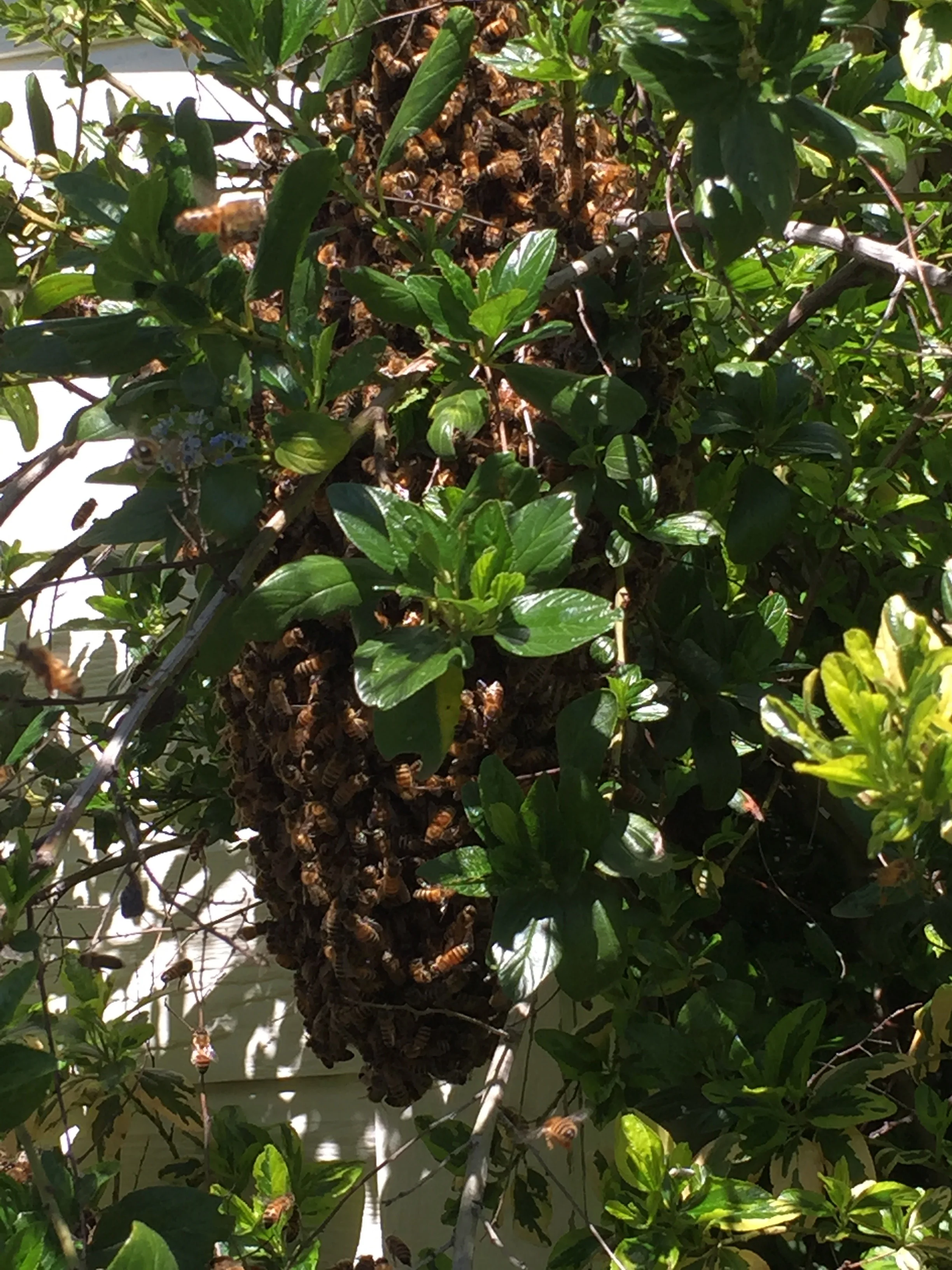
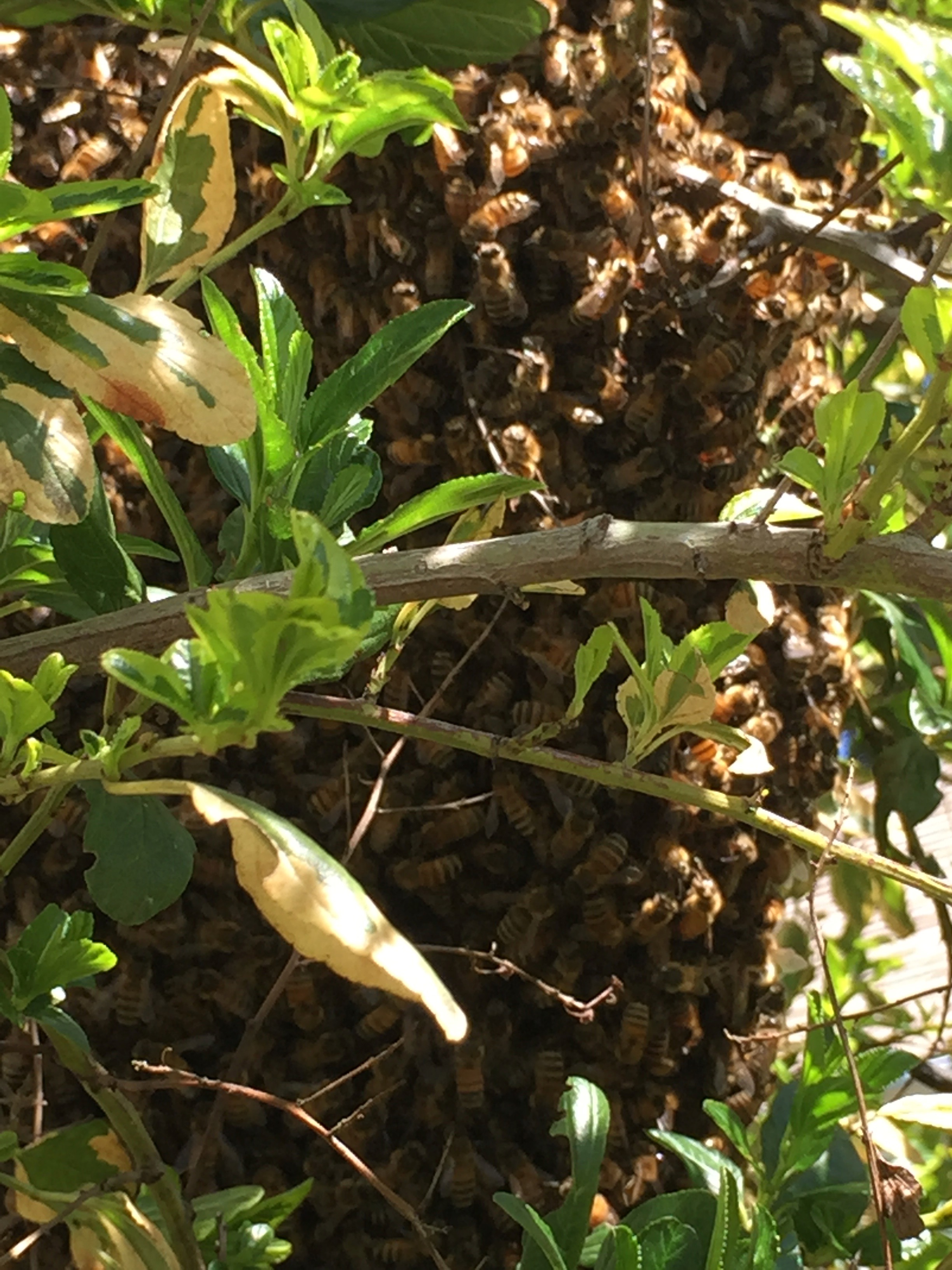
We noticed lately that digs had become a little crowded for our honeybees. When we opened the hive a couple of weeks ago, they were living cheek-by-jowl. And they've been bearding at the entrance a lot, even in bad weather. So, we knew a swarm was imminent. Today dawned clear and sunny; the bees decided to make the most of it.

I know I've said it before, but it always bears repeating: A swarm is a miracle of nature, and if you're lucky enough to witness one, it's important to stop a minute and experience it. Tom is home on spring break this week, and I don't have class till this evening, so we were both home to experience this one. It was awesome. It always amazes me how fast things move - from decision making to clumping all together on a nearby branch in under ten minutes. The hive mind in action. 

This time, the bees settled in a much more accessible place; in the ceanothus bush behind the train shed. Reachable for humans and tools. We called my dad, who has an empty hive ready to be filled, and he raced over with a cardboard box and his bee jacket/hood. We all suited up and proceeded to cut some branches from the ceanothus, and then just deposit them in the box. Easy peasy.

IMG_8133.jpg
Dad just shook the bees off this branch - there was another smaller clump in another spot.

Dad just shook the bees off this branch - there was another smaller clump in another spot.

The bees fly around for a little while but eventually settle in to the box, because the queen is in there, and they want to be with her. Then it's just a matter of taping up the box and quickly taking it to the new home. At that end, you shake the box of bees into the new hive, and they settle in pretty quickly. It's surprising how easy this process is, if the bees are in a place you can reach them.

IMG_8157.jpg

I hope the bees do well in their new home!

Now, Tom and I need to take advantage of our emptier hive and get in there and clean up some old comb and take out some honey. That's tomorrow's project.

Tags bees, beekeeping, insects
8 Comments
← Newer Posts Older Posts →

Subscribe

Sign up to get email when new blog entries are made.

We respect your privacy. We're only going to use this for blog updates.

Thank you! Please check your email for a confirmation notice to complete the subscription process.

Summary Block
This block is invalid. Please check the block settings and try again.
Featured
Aenean eu leo Quam
Aenean eu leo Quam

Quisque iaculis facilisis lacinia. Mauris euismod pellentesque tellus sit amet mollis.

Read more →

Powered by Squarespace