• About
  • Blog
  • Contact
  • Favorites
  • Archive
Menu

Poppy Corners Farm

Street Address
Walnut Creek, California
Phone Number
Walnut Creek, California

Your Custom Text Here

Poppy Corners Farm

  • About
  • Blog
  • Contact
  • Favorites
  • Archive

Good-bye, Tomatoes: Hello, California Dogface

October 7, 2017 Elizabeth Boegel
IMG_6208.jpg

Today was the final tomato removal day; I had spent several weekends cleaning out the ones that didn't have any fruit on them, and left others to ripen. However I knew that today was T-Day, and with a heavy heart I took out everything that was left. As you can see, there were still many big green tomatoes on the vines. I picked them, and hope that they will ripen. However I'm guessing they will not, as none of these have even 'broken' - that is, none of them have any color at all. Perhaps I'll make some green tomato chutney or salsa.

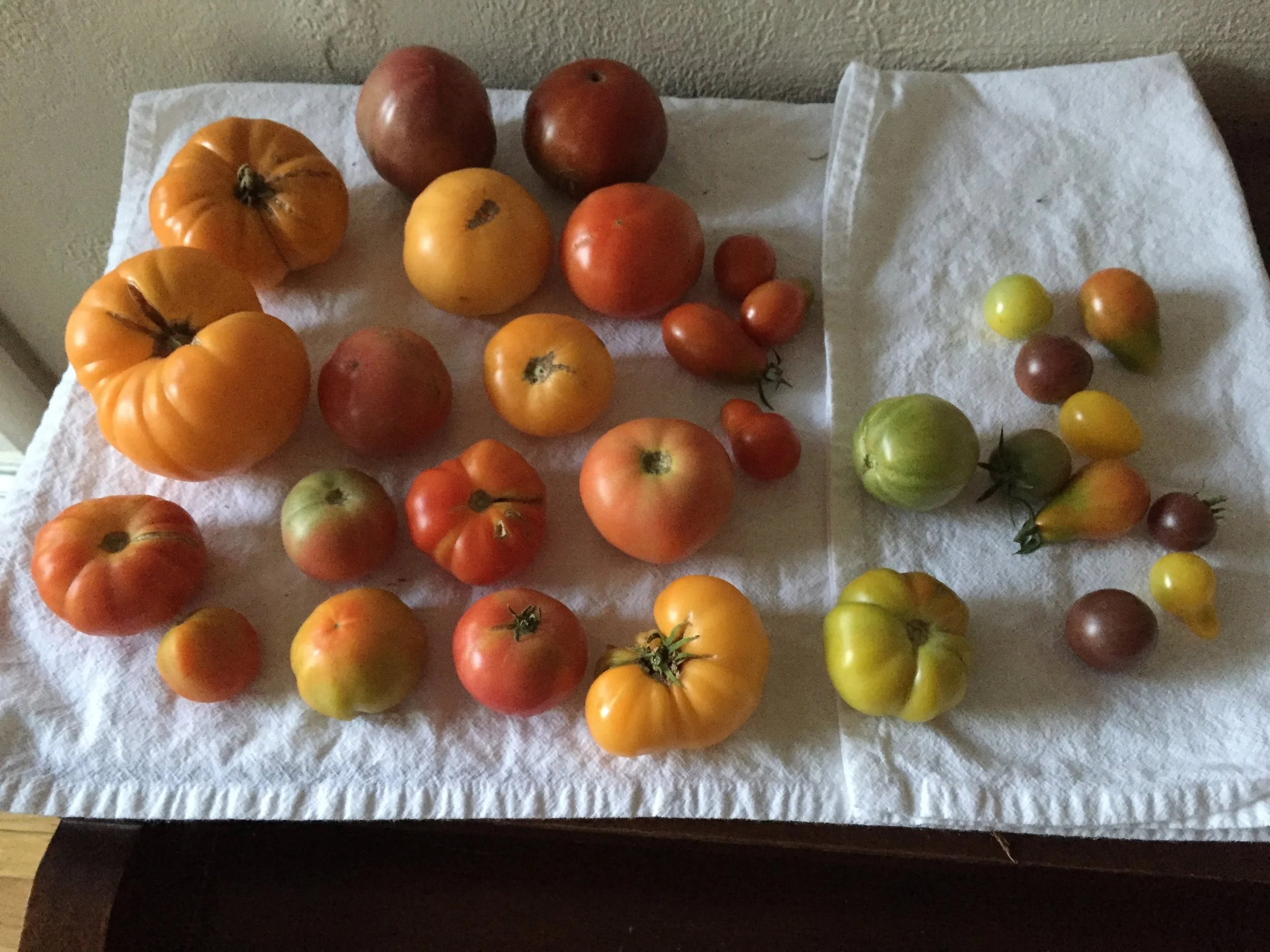
Luckily we still have a few ripe tomatoes to enjoy, and then that will be it until next June. Come December, we'll be glad for our canned and frozen tomatoes. Extra work in the summer pays off, big time, in the winter.
IMG_6209.jpg

Tomato removal day is a long and tiring one. First I have to remove the vines and put them in the compost, then I have to remove all the twine that I used - so much twine - and that goes in the compost too, and then I have to dig up the stakes, four to each bed, and then I have to remove the straw mulch and either give to the chickens or add to the paths, and then I have to take out the drip lines and rake the dirt, and then I add a cup or so of worm castings to the top of the bed, and then I replace the drip lines, and then I water everything thoroughly to get it ready for planting tomorrow. Oh yes, tomorrow is another long day, but this time I'll be adding to the beds rather than subtracting.

IMG_6212.jpg

Everything looks empty and forlorn, but I take heart that in a couple of weeks, green shoots of garlic, shallots, and wheat will be poking their heads up and starting their winter journey.

The butterflies are out in full force in the warm autumn days; I see the usual characters daily. But I got a surprise visitor today and I did not get a very good picture, the visitor was nervous about me and it was shady.

This is a female Zerene eurydice, or California Dogface, our state insect! Or; it also could be the Alfalfa butterfly, or Colias eurytheme. Either way I'm excited because it's a new butterfly in our garden. I'm telling you, Tithonia (Mexican Sunflower) is the biggest pollinator attractant. Everything loves it! Anyway I'll keep my eyes peeled for more of these beautiful butterflies.

I'm sore, tired, and ravenous, but it was a good day's work. How are things going in your fall garden?

Tags tomatoes, vegetable garden, insects, pollinators, flower garden
Comment

'C' is for Chicken Coop, Catching Critters, and Concurrent Cooking

October 5, 2017 Elizabeth Boegel
Ok, ok, C is also for cookie.

Ok, ok, C is also for cookie.

If you've been reading my posts for any length of time, you know how enamored I have been with using sand in the hen house. Not the coop itself, and not the run - both of those are dirt, with many feet of wood chips, sawdust, and leaves as a thick litter layer. This allows all the waste from the chickens to compost naturally; it's a great mix of carbon and nitrogen. But the hen house is a different matter. The chickens lay eggs up there, in their nesting boxes, which have a deep layer of timothy hay. But they also roost up there at night. And while they are roosting, they are shitting. 

I used to line the floor up there with straw; I would let the poop build up until Saturday, and then take all that straw out and replace it. It was a fine system, and the hay was a great boon to our compost piles, but I really didn't like the chickens walking through all that mess whenever they were in the hen house. It also drew flies. It also smelled pretty bad by Saturday.

So then I switched to sand, and this worked great for years. I bought a long-handled scooper, and every morning, I would scoop out the solid wastes and add them to our compost pile. No more mess, no more smell, very little trouble with flies, and a perfect solution, I thought. But after several years of this, the amount of sand in our compost, and therefore in our vegetable beds, has grown considerably. It's only a little every day, but it sure has added up. And the more I study soil composition in my soil management class, the clearer it became that I would need to come up with a different solution.

Enter rice hulls. A waste product from California's huge rice harvests. And as you can see, you can even get organic hulls. The permaculture group from my college uses these to improve soil structure, and home gardeners can use them in place of perlite in potting mixes. I started to wonder if I could use them as a replacement for the sand.

So I ordered a 50 lb bag from Peaceful Valley Farm Supply in nearby Grass Valley. The hulls aren't as cheap as sand (a 50 lb bag of play sand is about $6.50 from my local Ace Hardware; the hulls were $35, and the shipping wasn't cheap either), but they are extremely compressed in the bag, and you're getting a lot of product for the money - probably at least six months worth of product, and I've been buying a bag of sand once a month. It sort of equals out, price-wise. 

Ecologically, the rice hulls are far superior. First of all it's a product that we're taking out of the waste stream. Secondly it improves soil structure, as it can break down fairly quickly into humus, and meanwhile provide pockets for aeration and soil biology (and as you know, sand takes thousands of years to break down). And thirdly it provides a carbon source to offset the nitrogen of chicken waste.

Plus, there is the issue of sand-harvesting and the environmental costs of that.

IMG_6202.jpg

The chickens don't seem to mind the change. The material is lighter than sand, but since I have it in an enclosed space, it doesn't blow around. There's very little dust. It doesn't clump as well as sand, and it takes a bit more shaking of the scooper to separate the solid materials out, but that's a mild complaint. I feel good about this new system.

While I'm home today studying, I'm working on several concurrent cooking projects. I'm baking bread, which feels good. Over the summer we seem to eat less of it, and it's often too hot to justify turning on the oven so high for so long. But with our significantly cooler nights, my thoughts turn to beans and toast. So today I'll make the toast and tomorrow I'll make the beans. 

IMG_6197.jpg

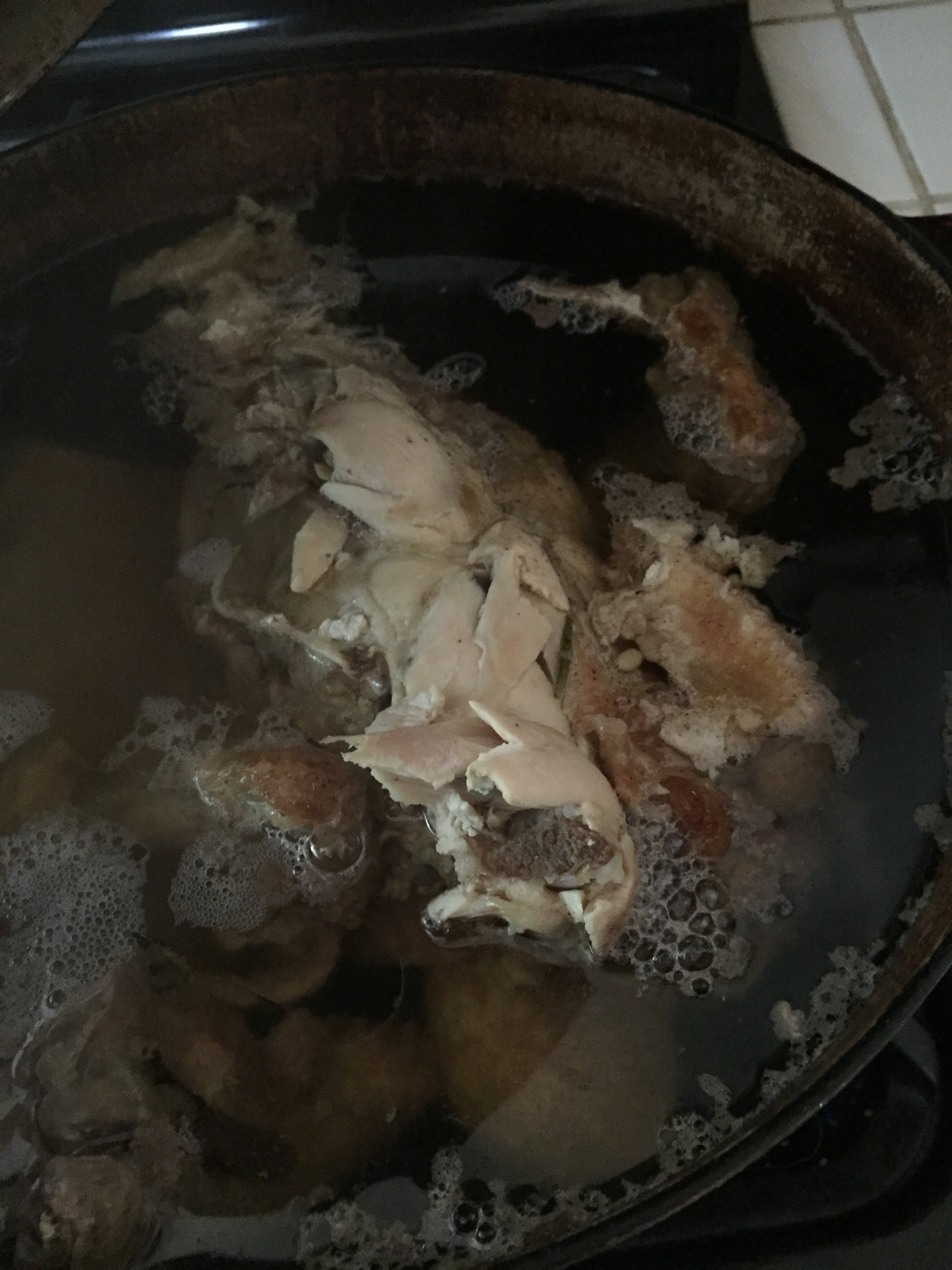
And what goes best with freshly baked bread? Soup, of course! So dinner tonight will be Italian Wedding Soup (which is basically, for me, chicken stock with meatballs and greens, and a dusting of shaved parmesan). Luckily, I had a chicken carcass, a shoulder blade bone from a pork roast, and a parmesan rind sitting in the freezer waiting for a broth-making day. 

IMG_6196.jpg

And when I checked the piano for ripe tomatoes this morning, there were six pounds to contend with (if you don't know, I bring the tomatoes in just after they 'break,' or blush into color, so that the squirrels don't get them, and they ripen on our piano). I have not yet made tomato paste, so that is another all-day project that I began early this morning along with the broth and the bread. I chop up the tomatoes, add a few red peppers, and simmer them for an hour with some garlic and salt. Then I run them through the food mill, and continue simmering (or put in the oven on a low temperature) for several more hours until they reach the desired thickness. I think I will freeze this paste in quarter-pint jars rather than can it.

the beginning of paste...

the beginning of paste...

And as for the critters, well. It has been a banner year for yellow jackets. I don't mind a few buzzing around, but when they arrive in hordes (and yes I do mean hordes), it's time to thin the herd. We've been hanging these traps (the only ones that seem to work) and replacing them every week, and each week every trap is completely full of dead wasps, and we don't even seem to be making a dent. They are hassling the chickens, the honeybees, the cat, and us. They are EVERYWHERE. It's a real problem. 

There must be a nest nearby, but it's not on our property, so there's nothing I can do about it.

Speaking of which, if you ever run into my dad, ask him how well a bee-suit works when digging up a yellow jacket nest.


Tags chickens, coop, systems, tomatoes, preserving, cooking, bread, insects, pests
8 Comments

Searching for Grace

October 3, 2017 Elizabeth Boegel
IMG_6193.jpg

This poem is helping me this week. Maybe it'll help you, too.

“When despair for the world grows in me
and I wake in the night at the least sound
in fear of what my life and my children’s lives may be,
I go and lie down where the wood drake
rests in his beauty on the water, and the great heron feeds.
I come into the peace of wild things
Who do not tax their lives with forethought
of grief. I come into the presence of still water.
And I feel above me the day-blind stars
waiting with their light. For a time
I rest in the grace of the world, and am free.”
— Wendell Berry
Tags art, health
6 Comments

October Planting List for Zone 9b

October 1, 2017 Elizabeth Boegel
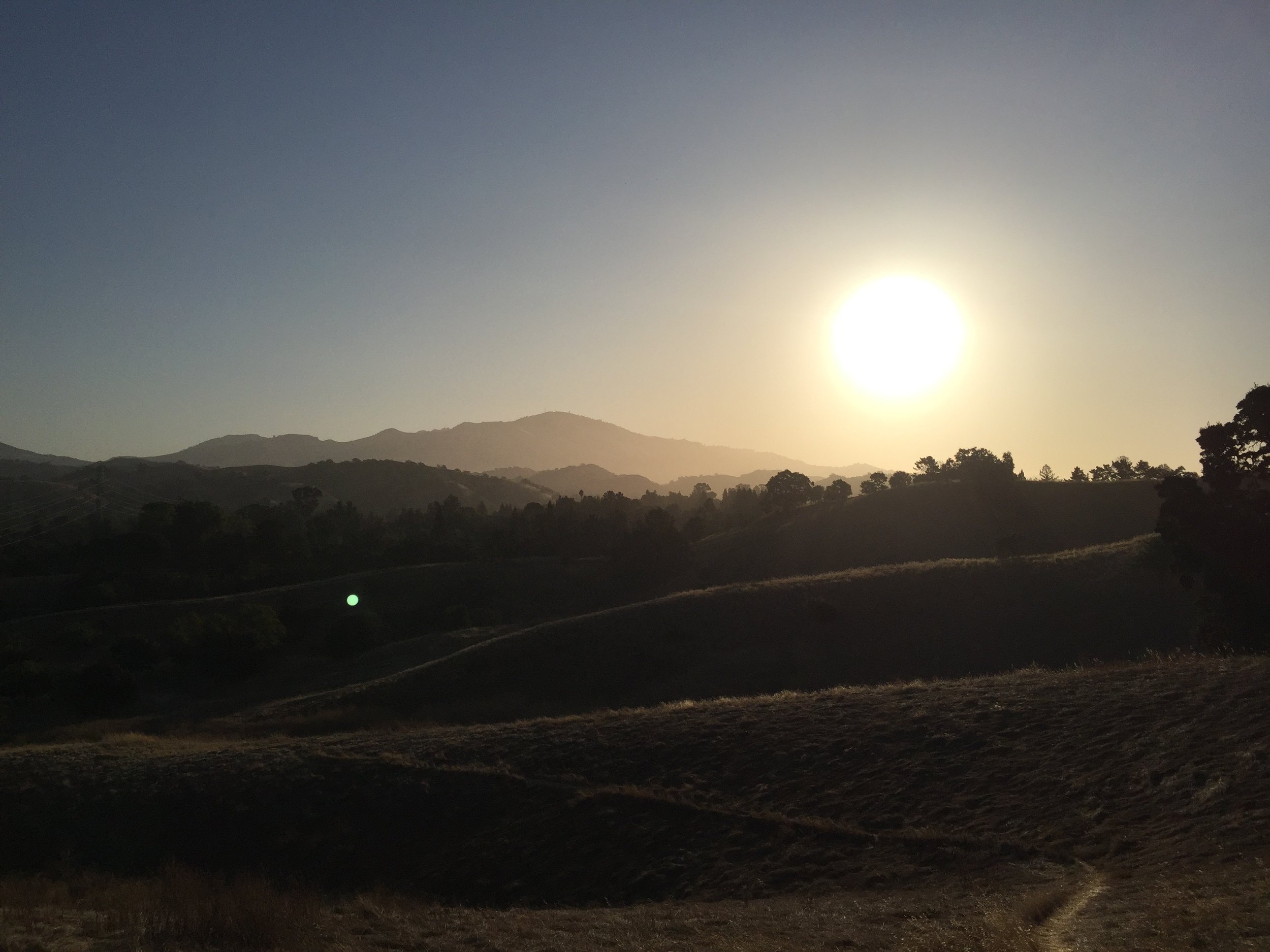
A typical autumn view while hiking this time of year in Northern CA - dry, golden hills, with dark green oaks dotting the landscape. This hike was in Clayton, looking west towards the back side of Mt Diablo.

A typical autumn view while hiking this time of year in Northern CA - dry, golden hills, with dark green oaks dotting the landscape. This hike was in Clayton, looking west towards the back side of Mt Diablo.

Here it is October, and with it, a major shift in the garden. Even though we still have very warm days (mid-80's for much of the month), the nights are in the 50's and we can feel the change of seasons. Acorns are dropping from the oaks. All the deciduous trees are starting to shut down photosynthesis and halt chlorophyll production; allowing the hidden pigments in the leaves to shine red and gold before abscission. It's time to change your irrigation schedule, and drop it down some, since the plants aren't transpiring as much for as long. And as for planting, here is your to-do list for October.

Screen Shot 2017-10-01 at 10.43.11 AM.png


At Poppy Corners, we've picked the last of the cucumbers and removed the vines, replacing them with braising greens and spinach. We've dug the volunteer potatoes, yielding about 5 pounds (not bad for something we didn't even plan on having!). We'll have our last basil pesto tomorrow night. Some of the tomato are clearly finished fruiting and are being removed to the compost pile. Others have fruit that is ripening fast, and will stay in the ground another week. The pepper plants still have a lot of fruit on them, and I am loathe to remove them just yet. So next weekend will see us removing the main bulk of the summer garden and digging out tomato stakes. Then it will be time to get garlic and shallots in the ground, as well as our main winter crop of winter wheat and clover.

And since I didn't have any pumpkins ripen here, I guess a trip to a pumpkin patch is in order! That should be fun.

Tags planting list, vegetable garden
Comment

Now! Now's the time!

September 28, 2017 Elizabeth Boegel
Our strawberry pallet planter - still pumping out berries

Our strawberry pallet planter - still pumping out berries

I was just over at the neighborhood pool, scrubbing the tiles (my yearly work-duty), when a neighbor swimming laps stopped to take a breath, and asked how my garden was doing. After hearing about what's ripe now, the kinds of things I'm cooking, and our winter plans for the garden, she signed wistfully and said, "I'd like to grow a few plants."

still a lot of green tomatoes on the vines

still a lot of green tomatoes on the vines

I nodded vigorously. "Now's the time!"

"Really?" she asked, astounded.

Yes indeed! Here in Northern California, fall is the perfect time to get going on your garden. The rain is a-comin'! Ok, I agree, we still have our driest month ahead of us, maybe even two, but moisture is on its way. With shorter days, and slightly cooler temperatures, we can get some things in the ground now. Or, we can begin the soil-building process, which will chug along all winter, and be ready for planting in the spring.

still plenty of basil to harvest

still plenty of basil to harvest

Perhaps you've been thinking about how nice it would be to dine on fresh tomatoes next July. Maybe you've been eyeing a 4x4 patch in the corner of your yard, and musing about converting it into a tiny food plot. Or perhaps you've been thinking that the edges of your yard could use more color, more flowers for both you and the bees. Great! Now's the time to make those dreams a reality.

Kohlrabi, almost big enough to harvest. Started from seed July 11, transplanted the end of July, potted up again August 19, this is taking longer than the stated 65 days to harvest. No worries.

Kohlrabi, almost big enough to harvest. Started from seed July 11, transplanted the end of July, potted up again August 19, this is taking longer than the stated 65 days to harvest. No worries.

To prepare an area for spring 2018 planting, nothing fancy needs to be done. Clear out any large weeds, or if it's grass, mow it short, then place cardboard over the area. Make sure you remove any tape or labels from the cardboard first. Any kind of plain brown box will do. Or you could use several thicknesses of newspaper, or those paper bags from the grocery store, or burlap. The goal is to cover the area to prevent light from getting in. Then, on top of that layer, spread an inch of compost. You could also used bagged potting soil. You could use a layer of leaves or grass. You could use horse or chicken manure. Just get some good organic matter in there. Then cover that with a layer of wood chips. You could buy mulch, but you could also find a tree company working in your neighborhood and get a wheelbarrowfull of chips. You could use sawdust. You could use pine needles. You could use pet bedding from the feed store. You just want to protect the layer of organic matter in the middle, so that it doesn't wash away, or splash up when it rains. 

Then, you just leave it all winter. Those materials will smother anything trying to come up underneath; meanwhile the worms and sow bugs and nematodes and other little creatures will start to eat the cardboard and organic matter. Fungi (the good kind!) will begin to grow and start to process the minerals in the dirt and make connections. Everything will start to decompose. In spring, you can pull back the top layer of mulch and plant right into to what's underneath. No fertilizer needed (as long as you plant into the dirt, not the mulch). 

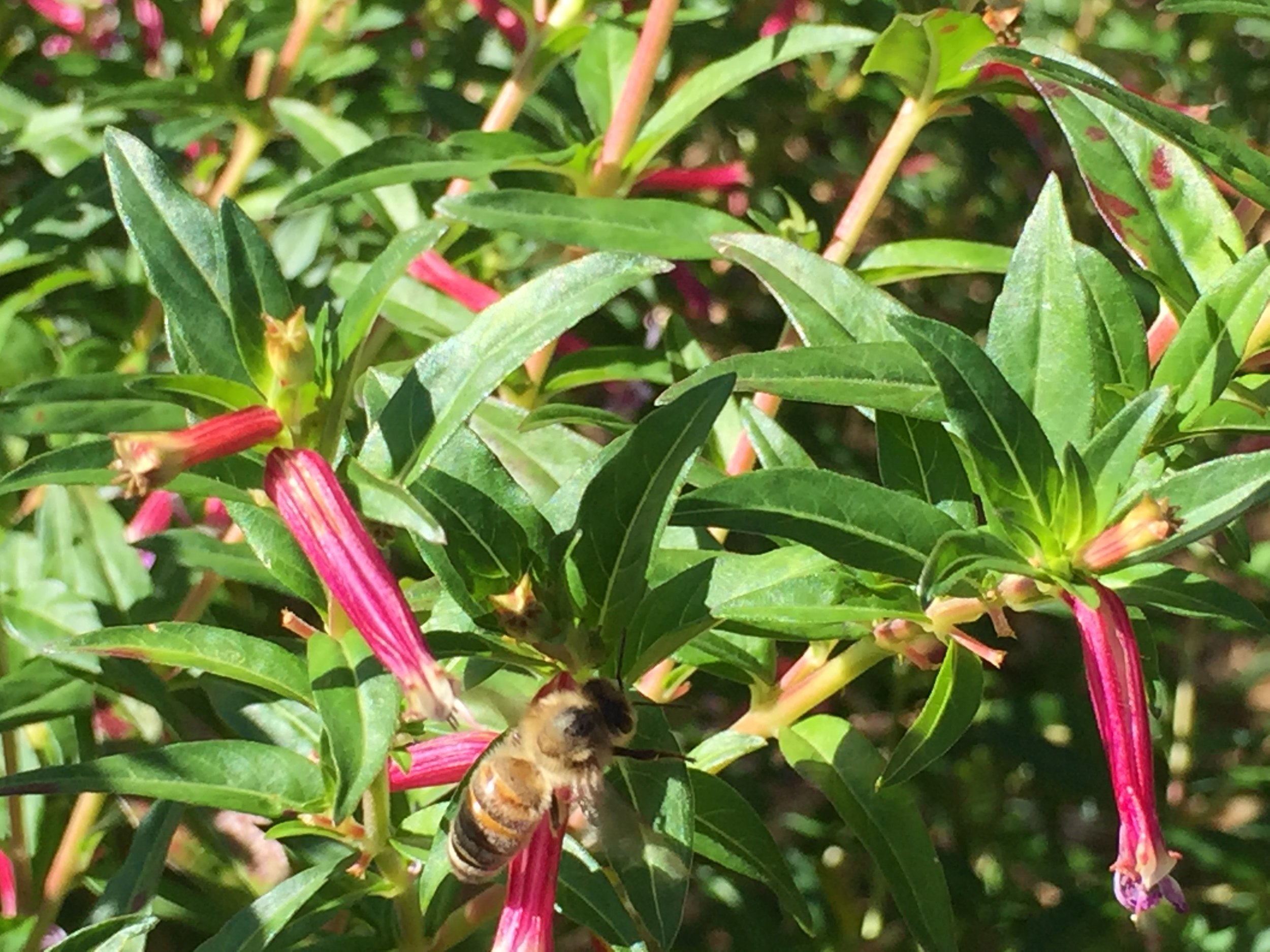
a honeybee in the Cuphea

a honeybee in the Cuphea

Maybe you'd like more native plants and flowers? This is a great time to start them. Go ahead and plant, according to the nursery instructions (some natives don't like rich soil, so make sure you are aware of that) - rough up the root ball really well, backfill with your native soil, cover with a layer of compost and mulch, and water well. Baby it a little through the next two months, then let it fly once the rains come - no more help from you is needed.

You can also sow native wildflower seeds right now - poppies, lupines, tidy tips, Chinese houses, goldfields, nemophila, all the lovely spring plants - and anytime in the next few months. Just mix them up in a bucket of dirt, whatever you have around, potting soil or compost, and then broadcast them in a place with no mulch. Rake them in lightly and then let the winter rains get them going. I tend to sow them several times, except in the coldest months.

Sungold cherry tomatoes, still producing even though the plant itself is looking pretty spent

Sungold cherry tomatoes, still producing even though the plant itself is looking pretty spent

If you already have a bed lying empty, or a few large pots, and you're really feeling motivated, you could plant garlic. It couldn't be easier - just plant each clove a couple of inches apart in compost-amended soil. After they start to sprout, mulch around them with whatever you've got, and then leave them alone until late May or early June. Homegrown garlic tastes SO MUCH BETTER than store-bought. You really will never go back once you've tried it.

a volunteer pumpkin

a volunteer pumpkin

All of this, I told my lap-swimming neighbor, along with: no more sighing wistfully at my descriptions of a tomato lunch! You can have your own next year, with just a little effort right now. It doesn't need to be a big production - it's really quite easy.

 So - off  you go - get started!!!

Tags learning, vegetable garden, flower garden
2 Comments
← Newer Posts Older Posts →

Subscribe

Sign up to get email when new blog entries are made.

We respect your privacy. We're only going to use this for blog updates.

Thank you! Please check your email for a confirmation notice to complete the subscription process.

Powered by Squarespace