• About
  • Blog
  • Contact
  • Favorites
  • Archive
Menu

Poppy Corners Farm

Street Address
Walnut Creek, California
Phone Number
Walnut Creek, California

Your Custom Text Here

Poppy Corners Farm

  • About
  • Blog
  • Contact
  • Favorites
  • Archive

Soil Testing

March 23, 2017 Elizabeth Boegel
Cercis occidentalis (Western Redbud)

Cercis occidentalis (Western Redbud)

Two weeks ago, I brought a sample of my native soil in to my basic landscape horticulture class; as part of the curriculum, we were going to test the composition of our soils (for sand, silt, and clay), and I decided that it would be more interesting to bring in something native rather than the material in our raised beds. And it WAS interesting. I brought in a clump from where I recently dug to plant Lepichinia hastata (or Mexican Pitcher Sage); it was the size of a softball and it was basically like a rock. I had to pulverize it (and it took the flat top of a pickaxe to do that) and screen it and then shake it in a sort of soapy solution for ten minutes; then let it sit for a week. After a few minutes, the sand in the soil will settle to the bottom (I had no sand). Then the silty stuff will settle after about half an hour (I had no silt). Then after a week the clay is supposed to settle and you'll have a layer of water on top. Well, I followed the instructions to a 'T' and after a week there was no water. Just a thick, blackish, smelly sludge - entirely clay. My teacher took one look and said, "Did you know what the soil was like before you bought the place?" Um, no. Clearly. Which is why all our veg is in raised beds, and why we sheet mulched the entire square footage, and why I add organic matter constantly. And why I try to plant perennials that will tolerate the native soil. And why those rock-like clumps that I dig up get recycled into our compost bin for improvement.

our apple tree, here when we moved in 13 years ago and still going strong

our apple tree, here when we moved in 13 years ago and still going strong

Then I got it in to my head that I should test the amended soil in our raised beds for pH, Nitrogen, Phosphorus, and Potassium. Our raised beds were initially filled with a vegetable blend from American Soil, and have been amended every year with a layer of compost, sometimes made here and sometimes brought in, sometimes some horse manure, sometimes cover crops, etc. My understanding is that if you continue to add organic matter, the pH and nutrients will take care of things themselves. But the more I study about the needs of annual plants (which is what most of our vegetables are), the more I realize that they need optimal amounts of nutrients to really thrive. It's why I started adding Azomite, or rock dust, to my raised beds - to increase mineralization. The plants can't access those, but the various creatures and fungi in the soil can, and that eventually makes it's way into the soil 'mix.'

Our quince tree, another plant that was here when we arrived

Our quince tree, another plant that was here when we arrived

I bought a kit from Amazon - I wanted something simple to start with, instead of a real science kit (which I will probably invest in, in the future) - and this one seemed to have everything I needed, including clear instructions. Your local county extension should be able to give you a very good test, but our local office does not do soil testing and I'd have to send it away somewhere, which meant waiting several weeks for the results. And of course I wanted to figure it all out NOW.

I decided to take a sample from one bed in the North Garden; all our beds have been similarly amended, so I figured one sample would be enough to determine the health of all. This bed is currently housing some pak choi and tatsoi, but had paste tomatoes in it last summer. I dug down the recommended four inches and took a cup or two of the soil. Some I used right away for the pH test, which was a super fast procedure. Here is that result:

To me, that looks like a perfectly neutral pH, which was a surprise to me. I expected it to be slightly acidic, since I add so much organic matter (which tends to keep the soil slightly acidic). Most veg do prefer soil on the acidic side. (NOT spinach!) So that led me down a rabbit hole of asking some experts what they recommend - should I add a little sulfur to the beds to acidify? I consulted my LH teacher, a British market gardener whom I admire, and a friend who is a Master Gardener. None of them thought the neutral pH of my soil was anything to worry about. Plus, I'm going to be adding more compost any week now, which should take care of it, anyway. So that was good news.

Next, I tested the NPK of the same soil, which was an overnight procedure. First you make a soil solution, just like we did in class (except no soap), and right away I started to see separation of sand and silt, but zero clay! Interesting. After I let the soil settle for 24 hours, I did the NPK test. Here are the results:

Again, surprising to me. Our beds are extremely deficient in nitrogen, so I'm going to have to do something about that right away. And we have too much phosphorus and potassium. The potassium is probably a result of our watering situation - since our beds dry out so very quickly in our hot, dry weather, they go through a sort of arid phase, which brings salts to the surface. This could be one explanation of our blossom end rot every year in the tomatoes. So I need to figure out a better way to mulch the raised beds. Clearly the straw I put around the tomatoes is not doing the trick - it's just not thick enough, or not dense enough, I'm not sure. So I'm working on finding an alternative. A low-growing cover crop would solve both the mulch problem and the nitrogen problem, but the bad side of that is that the area beneath the tomatoes would be crowded, which isn't good for them - they like a lot of air and light. So I'll continue to think about that. Meanwhile I need to add blood meal or fish meal to the beds to correct the nitrogen problem, before I do my late spring planting. 

Calendula officinalis 'Flashback'

Calendula officinalis 'Flashback'

This was an interesting project, and one I have eschewed all these years because I thought it would be too hard a process, plus I also thought my soil was perfect in the raised beds since I've basically created it from scratch. I was wrong on both counts, and I'm glad I know more about the makeup of my soil and how to correct it, so that we can have a banner crop of tomatoes this summer.

PS: I know many of you would like to know if the bees tried to swarm again yesterday. I was gone until about 1:45; when I arrived home, I went immediately to look at them, and the bees looked totally normal. I saw pollen going in the hive, so they were just going about their business as usual. The weather was unsettled, though. Today it is sunny, so if they are going to make a break for it, today's the day. But the warmer weather also means I can get into the hive this afternoon and see what's going on. So I'll report on all of that tomorrow, that is if there is anything interesting to share. Meanwhile I wanted to comment that I don't mind so much if the bees swarm. It's something bees do, and maybe we'll have an even better new queen, and we are not in it for the honey or the production, so we don't have to worry about losing some bees. What I would very much like to do is catch them if they do swarm and put them to use for someone else. So I'll be watching carefully today.

Tags soil, projects, vegetable garden
Comment

My Bees Swarm. BUT - that's not the end of the story.

March 21, 2017 Elizabeth Boegel

This might be the strangest bee day yet. I didn't think to video early on, but about 1 pm, I was sitting doing homework when I decided to go get the mail. Then I heard them.

Can you see them? A brown spot up high in the pepper tree? It's way up there. If we had a second story, it would be about level with a roof. 

Then - well - after a bit - I started filming. Here you go. Nothing fancy, just me gobsmacked wondering what the hell is going on.

Tags beekeeping, bees
2 Comments

Weekly Walkthrough: cover crops, compost sifter, and other stuff

March 19, 2017 Elizabeth Boegel
Standing inside a Japanese Flowering Cherry at my school

Standing inside a Japanese Flowering Cherry at my school

This week's walkthrough is up. Tom makes me a compost sifter, I deal with the clover cover crop, and we take a peek at the tomatoes and at the bees, along with various other things. 

Hope you're all having a terrific weekend!

Tags video, cover crops, composting, beer, bees
Comment

Dancing Days

March 16, 2017 Elizabeth Boegel
Leona Canyon Regional Park

Leona Canyon Regional Park

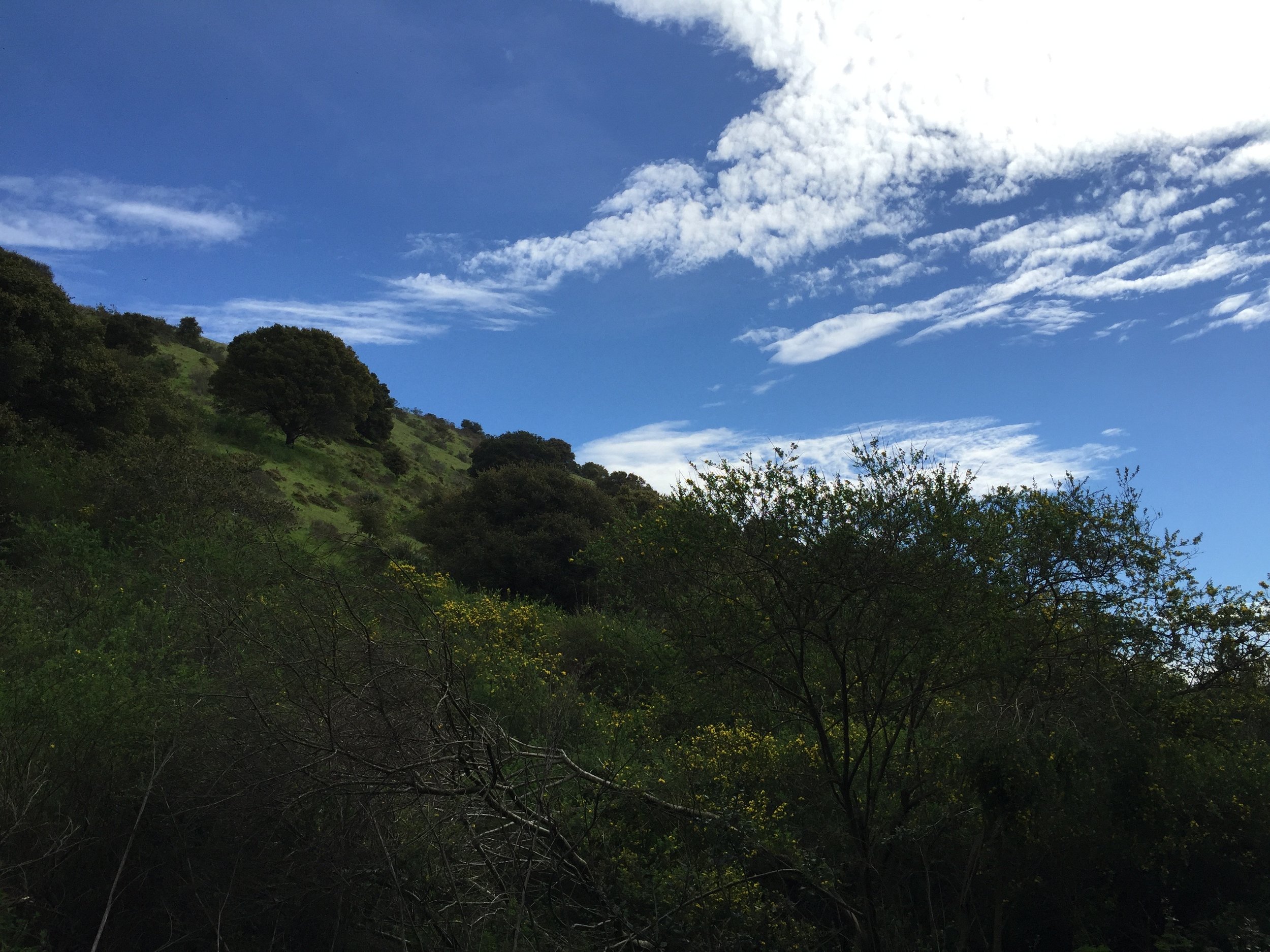
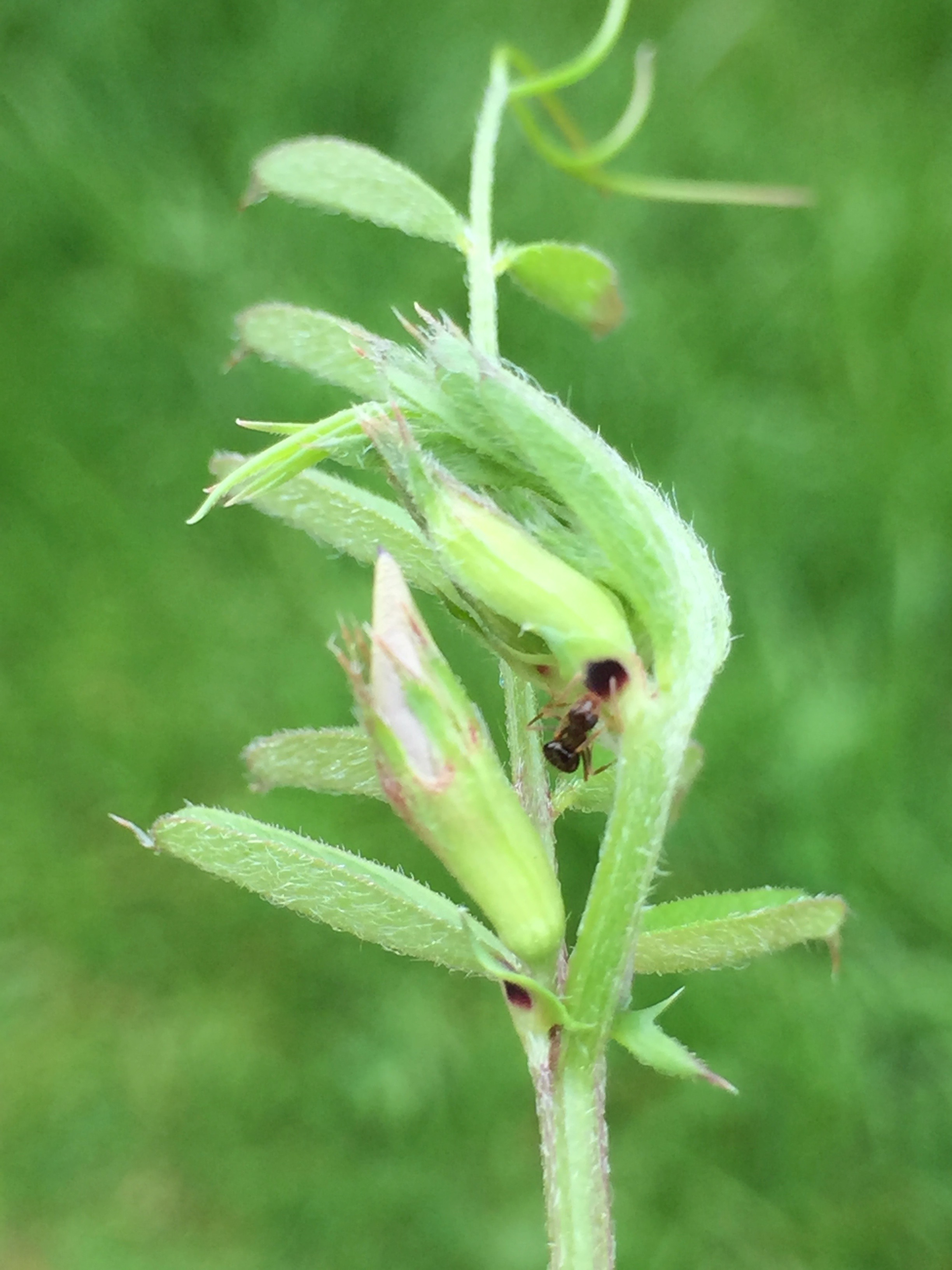
I've got that old Led Zeppelin song in my head - "Dancing Days are here again, as the summer evenings grow" - you know the one. I'm feeling it. We've had glorious weather, as the photo above shows. This was my Weeds class hike yesterday, and we did see a lot of terrible weeds (do you see that yellow flower on the hillside? That's French Broom - Genista monspessulana - which causes sane people to tear their hair out). I'm loving Weeds class, because we get out there and see the plants in nature. Below is a picture of a very prevalent weed here - Vetch - Vicia - which is beautiful but a bully for sure. This particular one we looked at had a couple of ants feeding on the plant's Extrafloral Nectary. Check it out.

Many plants have these; they are a way to attract insects that are not pollinating the plant, but are willing to protect the plant because it's their food source. Ants are very typical visitors at these nectaries; so are wasps. They will defend the plant against things like caterpillars, who would eat it. It's pretty neat to see in the wild.

We also saw plenty of native plants, including trilliums, by an honest-to-God rushing stream with waterfalls. Unless you live here, you can't imagine how cool that is. To have rushing streams where they are supposed to be, where they haven't been for twenty years, is totally euphoria-inducing.

I've tried, with no success, to find a nursery that sells native CA trilliums. I love everything about them, from their shape, to their mystery, to their common name (Wake-robin, if you please), to their delicate scent.


Dancing days are happening in my garden, too. This warm weather has caused all my Asian greens to bolt. Which is ok - both the bees and the chickens like them, and there's plenty of other greens for the Boegels to eat.

Speaking of chickens, I know you'd like an update on Ginny. She's alive, and she seems to be ok, but she is still limping around. I've witnessed her pooping, and she also laid a huge egg, so she's not eggbound. Her foot and leg look fine, so I think it must have something to do with her wing. Our vet, who makes housecalls, is coming tomorrow to give the cat her once-yearly exam; I'll have him look in on Ginny too.

Back to the garden... Here's a few highlights.

The tomatoes are going crazy in the 'greenhouse.' I leave the door open all day, and shut it at night, and I'm going to have to pot these suckers up again soon. I'm so glad we got this greenhouse built because plants LOVE IT.

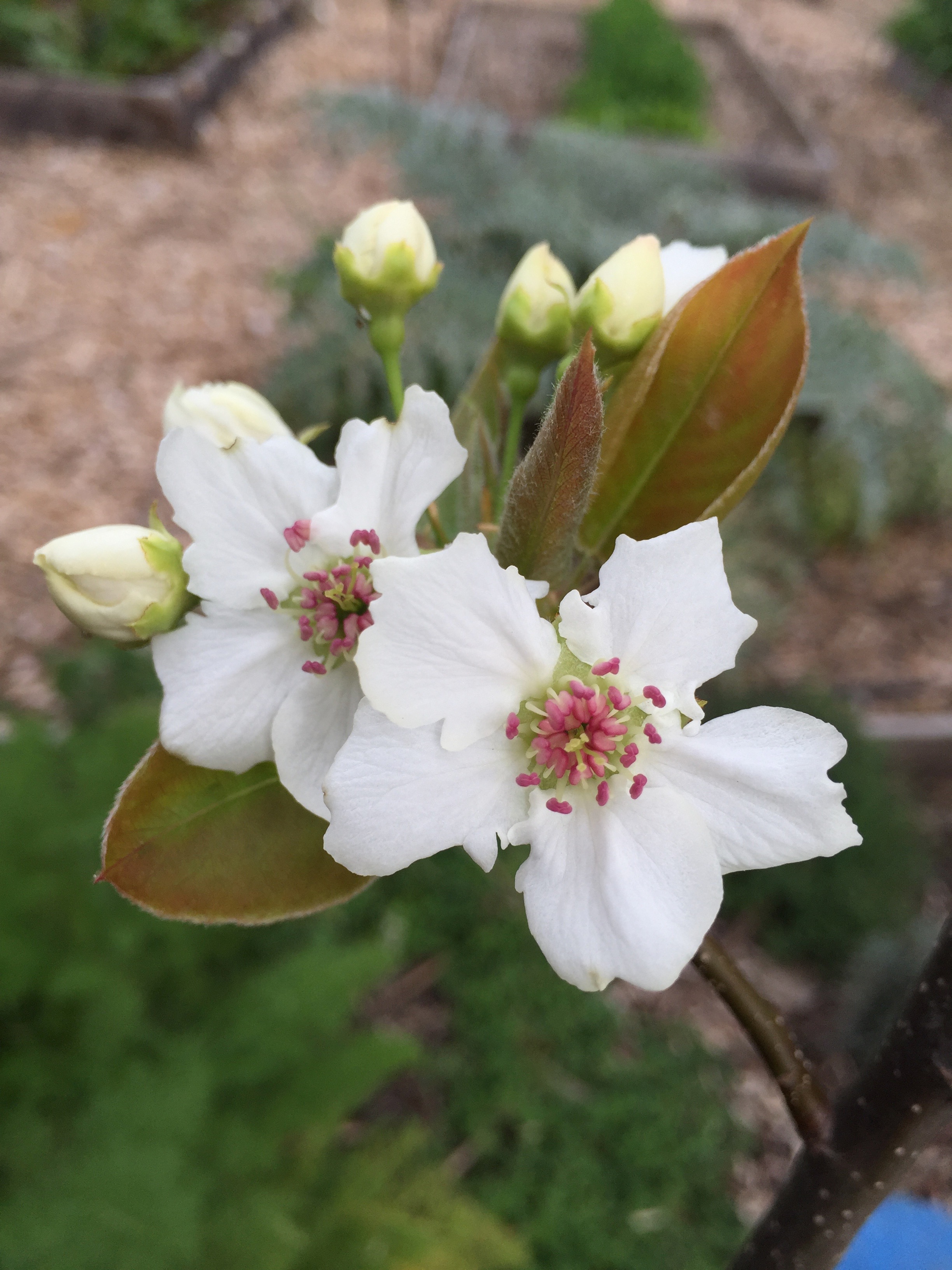
Our Asian pear is blooming! This is exciting, as it's now in it's second year and looks like it will bear. I don't think you can beat these blooms for beauty. Those pink anthers on the stamens against the white petals? So gorgeous. 

The hop vines (bines) have begun their push to the heavens. Tom will need to get some guide strings up for them this weekend - these babies want to GROW. I planted fava beans in these planters over the winter, and cut them down before they set fruit, so hopefully this soil is full of nitrogen for the hops and they will be very vigorous this year.

I just ate my first strawberry of the year! Well that's not exactly true, California strawberries have been back at Whole Foods and the Farmers Markets for a couple of weeks now, but it's especially fun to have the first one from the yard. I recently learned in my basic Landscape Hort class that strawberries aren't really berries, according to botanists. True berries have seeds on the inside, like blueberries. Strawberries have seeds on the outside - but wait - those are actually the ovaries, or achenes, or the actual fruit. The berry itself is an enlarged receptacle, the part of the plant that connects the flower to the stem. You can sort of see this in a strawberry blossom:

All those yellow dotes in the center are each a pistil attached to an ovary, which will become the black 'seeds' on the outside of the strawberry. The green round pillow in the center is the swollen receptacle, which will continue to swell and become red.

Harlequin flowers (Sparaxis) surprise me every year, with their Dr. Seuss insides. Crazy.

And the bees are very very busy, totally recuperated from their brush with concentrated thyme (although I'm going to have to apply it again this weekend), and they are often all over this Ceanothus. 

I've had far too much homework to get into the hills and see the wildflowers, but I keep hearing and reading reports that they are astounding this year. Have any of you been to see them?

Rain is on tap here for next week, which is just what all these thirsty sun-drenched plants need about now, so I'm happy about that. Meanwhile, I'll be humming Dancing Days, because those long summer nights are coming. Nothing beats Led Zeppelin, of course, but I've always secretly preferred the Stone Temple Pilots version of this song, which I just happened to find on YouTube. It's especially poignant to listen to this, knowing how Scott Weiland ended up.

Tags vegetable garden, flower garden, fruit garden, weeds, hiking
4 Comments

Sick Chicken

March 14, 2017 Elizabeth Boegel

Something is wrong with Ginny the chicken.

She's been listless, lately - sitting around the coop, rather than up and pecking and busy. She has a limp that has worsened in the last three days. She seems to hop rather than walk, and her wing on that side is also acting a little funny. 

Her comb and wattle look nice and bright; she's drinking and eating; but she hasn't laid an egg in a long time. And two days ago, her bum looked like this:

Yuck.

Suspecting that she might be egg-bound, I soaked her bum in warm water for a time, then massaged her vent (yes, this means what you think it means - Ginny and I are now very, very close) with olive oil, and palpated her abdomen. I couldn't feel any hard egg in there, needing to come out, but I did all this nonetheless. At least now she has a clean, shiny bum.

She is not managing the climb up to the hen house each night or down each morning; I have to lift her in and out, and I put her in the nesting box to sleep as she cannot seem to roost. The nesting box is clean in the morning - no poop - which is concerning, but I have witnessed her pooping as soon as I put her down near the food and water each morning.

No egg has been produced.

I have inspected her foot and wing thoroughly but see no cuts, abrasions, broken bones, or weird skin issues.

I wrote to the UCANR chicken expert who visited our house last summer, and he also thinks it might be that she's egg-bound. Today I will do the warm water soak and olive oil thing again, in the hopes that Ginny will perk up and lay an egg. I imagine she is in pain, which troubles me terribly. I thought I'd throw it out to you guys, since I know some of you are chicken-keepers. Any ideas?

Tags chickens
Comment
← Newer Posts Older Posts →

Subscribe

Sign up to get email when new blog entries are made.

We respect your privacy. We're only going to use this for blog updates.

Thank you! Please check your email for a confirmation notice to complete the subscription process.

Powered by Squarespace