This week's walkthrough is up. The weather has been so beautiful this past week that I just couldn't wait any longer to get some seeds in the ground.
Time to get a jump on the February planting list jobs.
Your Custom Text Here

This week's walkthrough is up. The weather has been so beautiful this past week that I just couldn't wait any longer to get some seeds in the ground.

Brassicas getting their true leaves in the indoor seed setup
It was another interesting day at school yesterday, full of information; there is a lot of presumed competence going on in these classes (which I appreciate), but that means my learning curve will be steep. Normally I like that. My brain is just a little tired at the moment.

Swiss Chard in the South Garden
The nice thing is that I'm also getting answers for why some things in my garden are working right - and I didn't even know I was doing them. Or if I did, it was for some other reason, and it turns out that it works well for other things, too.

Blueberry
For instance, I learned a tidbit in my "Weeds in the Urban Landscape" class that helped me understand why I have very few weeds. I always thought it was my vigilance paying off - and in fact that is probably part of it - but it has a lot more to do with the way I am managing my soil these days.

Cabbage, acting more as a trap crop at the moment
Did you know that weeds like a high ph? They prefer things around 8 on that scale - quite alkaline. Did you know that gardens high in organic matter tend to be closer to 6 or 6.5 ph, more acidic than weeds like? I didn't know this. I was adding tons of organic matter to the soil to improve water retention, amount of oxygen, and food for the microbes. I had no idea that I was also making an inhospitable place for weeds.

Yarrow
We did apply wood chips with the consciousness that they would smother weeds. But a thick mulch doesn't just smother them - it also prevents seeds, blown in by wind or pooped out by birds, to reach the soil. It also prevents light from getting to seeds that do touch the soil, which means they never germinate. And of course wood chips, or any organic mulch, is also adding a layer of organic matter on top of the soil, thus decreasing ph.

Chinese Forget-me-Nots
Here's something I did know: A no-till system also discourages weeds. Our vegetable beds have not been tilled in many years, and we get very few weeds in them. When you turn over soil, you expose many buried seeds to light and air, therefore causing them to germinate. It's far better to disturb the soil as little as you possibly can.
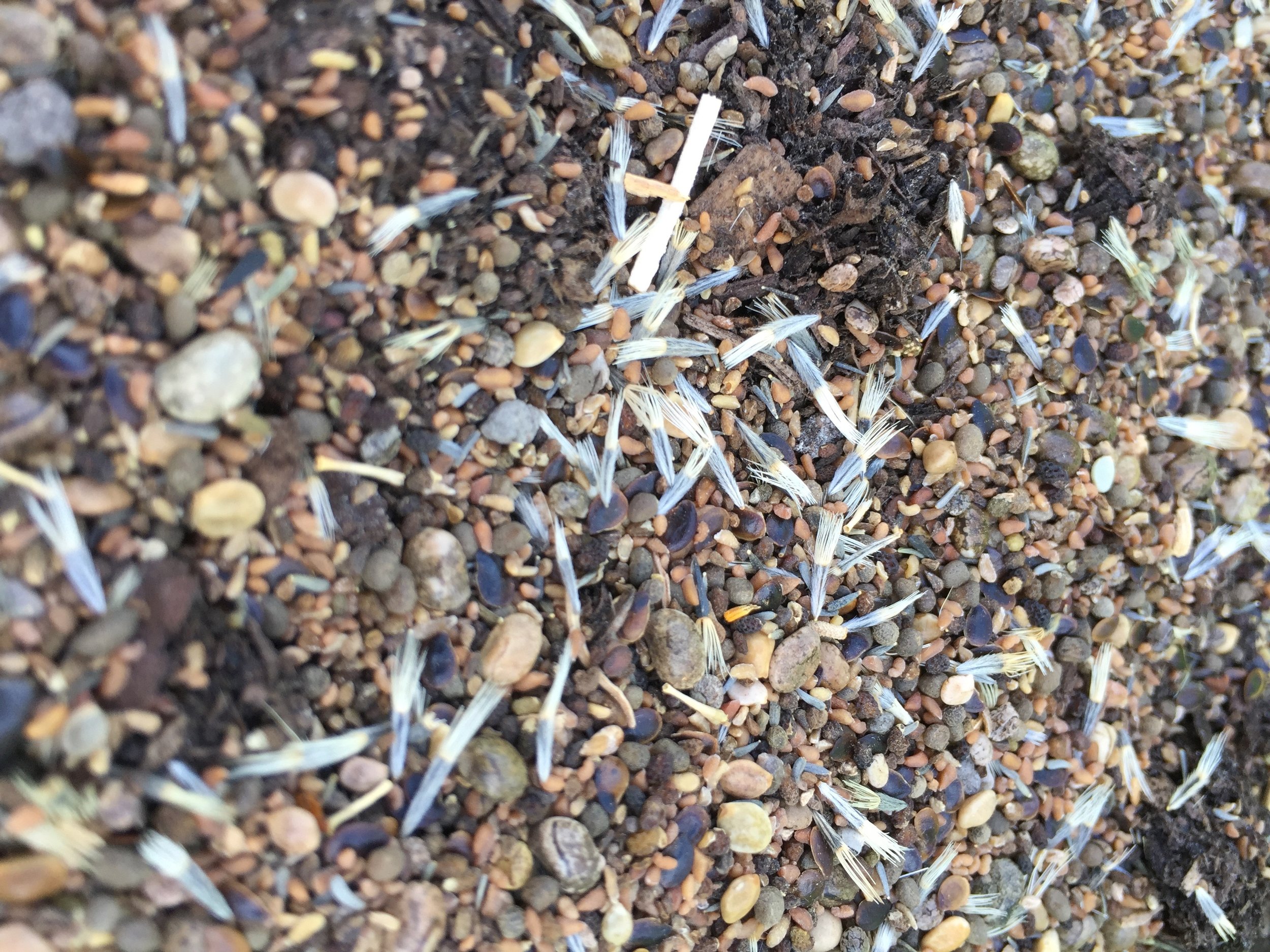
California native annual wildflower seeds, before getting mixed into a bin of soil to add to our pollinator gardens
I do still get a stray weed here and there, but considering the state of our yard before our sheet mulching project (bindweed so widespread I thought we'd never get rid of it, ditto Bermuda grass), the difference is pretty incredible. And another benefit of added organic matter is that it's easy to pull the weeds I do find.

Diablo Foothills, Castle Rock park, this past Tuesday's hike
For those of you that live in California: The instructor of my native plants class is also an avid hiker. He says he believes this year will be a banner year for wildflower shows in the hills, due to the vast amounts of moisture we've been getting. He beseeched all of us to get out there this spring. Don't just be satisfied with seeing other people's pictures! he said. You must get out there and see the beauty for yourself. This instructor, Stew Winchester, also leads backpacking excursions specifically to see wildflowers. If this interests you, you can visit his website for more information. I believe the summer dates are not up yet; check back later or send him an email. He also teaches in many places besides Merritt.
I look forward to learning ever more about what I've been doing wrong (and right!) in my own garden, and I hope to share those things with you as I discover them.
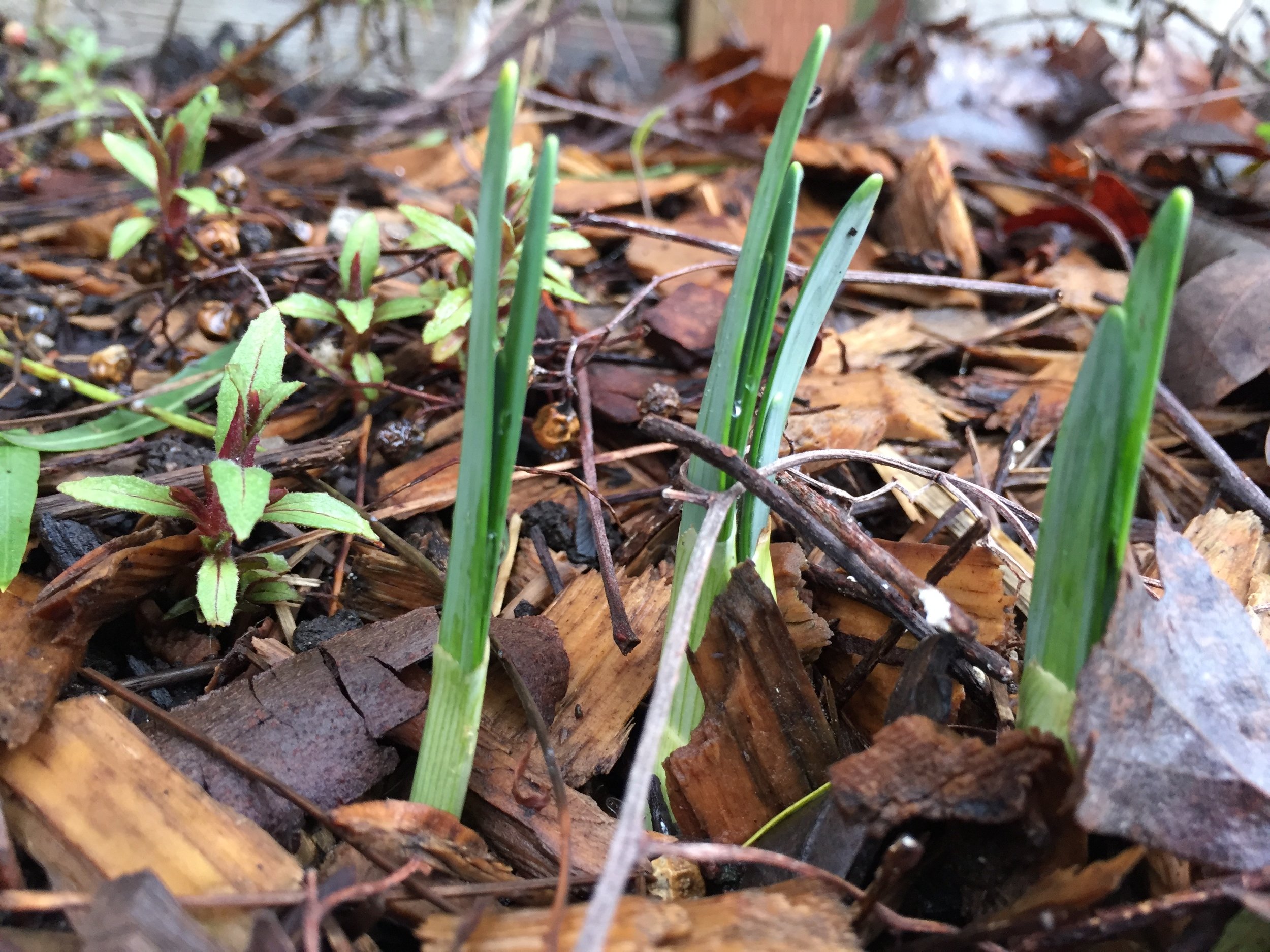
Daffodils
“Nature is always lovely, invincible, glad, whatever is done and suffered by her creatures. All scars she heals, whether in rocks or water or sky or hearts.”
Yesterday, I began my classes at Merritt College. This semester I am taking the basic Landscape Horticulture class, which also includes a lab; plus a class on Weeds in the Urban Landscape, and Native Plants of California. Yesterday was the first basic LH class. We were asked to stand, introduce ourselves, explain why we decided to attend Merritt College, and tell what we love about plants.
And I couldn't answer that last question.
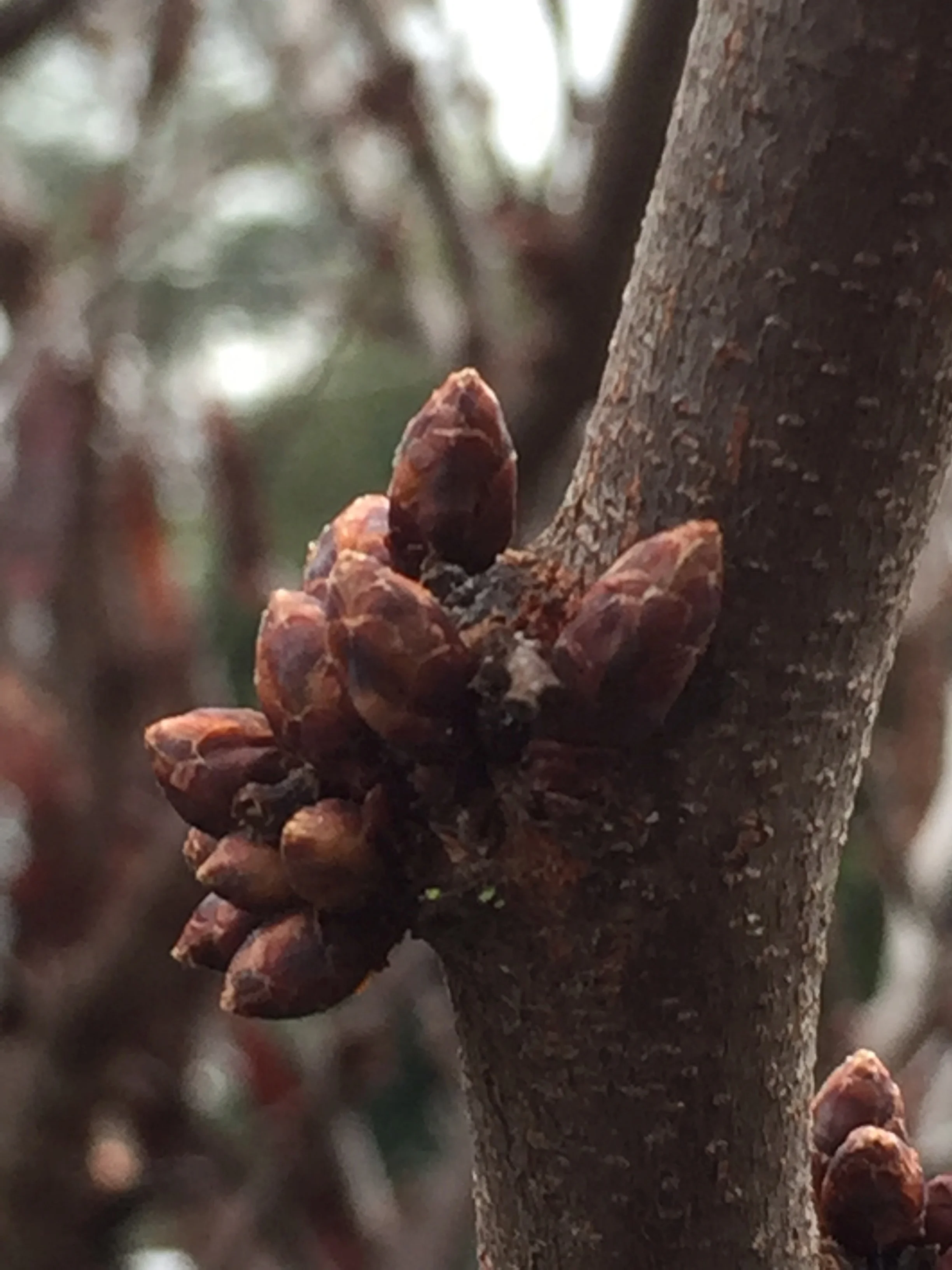
Redbud
Or to be more precise, I couldn't think of a one-sentence, simple answer. Some people said they liked digging in the dirt, some people said that plants couldn't talk back and that was a relief, some people said they liked that their kids knew how broccoli grew. That's all true for me, too; everything everyone said was also true for me. But I couldn't make my answer succinct. So I didn't answer the question at all. Rather, I just muddled around it, saying something about having a suburban farm and bees. It was pitiful.

Rosemary
I thought about it through making dinner last night, dinnertime conversation, an issue with one of the kids around their school stuff, putting the household to bed, and then of course while lying in bed before sleep. Why couldn't I answer this simple question?

Lupine
I'm still trying to process it. But what came to me in the shower this morning was the lesser-known quote by John Muir that I typed at the top of this page. I think my answer is somehow tied up with that. I'm trying to unpack this today in my mind as I clean the house, go to the market, cook some things, get some homework done, and ferry the kids around to activities. I'm hoping to find time for a walk in the sunshine (sunshine! how we have missed you!) and that will also be some good thinking time. One thing I am sure of, and that is the garden is a respite for me: A place I can go to busy my hands and body while quieting my brain; a place somehow separate from the day-to-day stresses of my life and family; a place that feeds me both literally and spiritually. But all of that sounds trite and common. It doesn't get at the kernel of truth that I know I can discover. There's something there about the running commentary of anxiety that is constantly with me. There's something there about the fact that we have two children that have had either serious physical or mental illness and the toll that takes on a parent. There's something there about nourishment both for the body and for the soul. There's something there about the eternal systems of nature and the creatures that live within it. It might just be too large for my brain to figure out.

Huckleberry
Meanwhile I thought I'd ask you, my readers, what you love about plants. Just because I can't figure out a simple answer doesn't mean you can't - perhaps you've got this figured out and can give me a quickie answer. Awesome! Or maybe it's a deep one for you, too - either way, I'd love to know. This is something that I can feel is going to be with me for a while, so anything you can contribute would be fabulous!
It's been a rainy week here at Poppy Corners, and it's January, so not much is happening in the garden.
For this week's walkthrough, we're talking about beer. Tom walks us through his all-grain homebrew setup, and brews up a batch of amber ale.

It's still a long way till spring, but in between rain showers I walked out and took a close look at the garden, and there are some encouraging signs.

I also wanted to share some recommendations with you.
For your spring planting pleasure, enjoy perusing the website of Floret Flowers. If this doesn't make you want to order some seeds and start things blooming in your yard, I don't know what will.

A friend introduced me to a service in Berkeley, Three Stone Hearth. They make prepared food that you take home and warm up - and all their recipes are cooked using pastured, grassfed, organic products from local farms. We are fond of their soups, which I like to pick up for days when I bake bread. I'm imagining this will be a great service after I start school, too - one night a week I will not need to cook. Hooray!

Lastly, we are now in the process of figuring out how to add three chickens to our current flock, for optimal egg production. We ordered our coop-ready chicks two years ago from Dare 2 Dream Farms, and we'll order from them again, though we might get hens that are pullet-sized hens this time. It's a family farm and they deliver all over California. They guarantee their chickens, and will even build a coop for you, stock it with food and water, and put in the bedding, if you like! I've almost decided on Wyandottes this time around - I'll let you know what happens.

Just so you know, none of these are affiliate links. These companies have not paid me to recommend them. This website will always remain ad-free. All my recommendations come from an honest place - they are all products and services that we have used and appreciated, for one reason or another.

It's looking like rain in our forecast (yay!) for a week at least, so it was nice to get outside for a moment and appreciate the little signs that winter will not last forever!