A New Way of Baking Sourdough Boules

For the past two years or so, I've been baking our own sourdough bread at home every week (except when it's very, very hot - then I skip it, not wanting to turn on the oven). I keep a sourdough starter in the fridge; I take it out every Thursday night, feed it twice on Friday, and then either bake with half of it or put it back in the fridge if it's too hot to bake. I'm happy with my starter and hope to keep it going for the rest of my life. But I haven't been happy with my bread results lately. 

First of all, I was having to order organic wheat berries from a family farm in Washington State. I was happy to support them and their mission, but the shipping costs were not sustainable. So I started to do some more searching and then I had a brainstorm. We love a farm about an hour from here, in the Capay Valley, called Full Belly Farm. They are 100% organic, and I called them to see if they grow or sell grain. And they do!!! They grow and sell four different kinds, three of them new to me. I instantly ordered four pounds each of Hard White Wheat, Iraqi Wheat, and Frassinetto Wheat. The cost is $3 for each 2 pound bag, quite a bargain. (They also sell Hard Red Winter Wheat, which I skipped this time, as I still have some in the freezer.)

Frassinetto is an Italian wheat, an heirloom, dating back to 1927. It has protein levels up around 13%, and apparently makes great pasta and bread. The Iraqi durum wheat is indeed originally from Iraq, but it apparently grows well in the Sacramento Valley, which means it could catch on in the local wheat movement. It is a hard wheat with a high protein content. The Hard White is still a whole grain wheat, don't let the name fool you (white flour is traditionally flour that has been ground, with the kernel and bran removed - I am using the whole berry). But it does have a lighter color and flavor, which I am after, because Kate doesn't like the hearty, brown bread I've been making.

I'm thrilled to find a local source of organic wheat. I grind the berries myself in my NutriMill Classic Grain Mill. I try to grind only what I need each week, but whatever is left is stored in the freezer. I keep the berries in the freezer too. As a matter of fact, I also keep all whole flours and meals in the freezer, to keep the nutrition intact, and to keep them from spoiling (since I am using the whole grain, the oil in the kernels can go rancid, especially after grinding). 

I also finally broke down and ordered some proofing baskets. I've been proofing the dough in bowls, and while it's worked just fine, I decided it was time to up my game. They weren't terribly expensive, I was able to buy a couple with liners on Amazon for about $25 total.

And while I was at it, I decided I needed a new method of making bread, or at least a way to slightly skew my method. I believe that whole grains need 100% hydration or close to it, so I wanted to stay with a wet dough, with a fairly light kneading routine, but I wanted an expert opinion. Around this time, a blog I like (Root Simple) posted a video of bread baker Josey Baker speaking to some folks at Google and demonstrating his method. Here's the link. I enjoyed watching his method and promptly bought his book. I wish I had purchased it years ago as he takes you from the very earliest beginner steps, up through to what I'm doing, which is baking a whole grain country loaf from a sourdough starter. 

So, last night I made my levain (or pre-ferment), this morning I ground my wheat (I used half Iraqi and half Hard White), and then I made some bread. I like this method because if you start early enough in the morning, you can get the whole deal done in one day, which means one loaf of bread for dinner and another for the freezer. My previous method was a two day event, with an overnight retardation in the fridge. 

And I have to say, this dough was simply beautiful. The kneading in this method is minimal, and the dough came together with hardly any work from me, into a big, puffed up hill of goodness.

It's a soft, lovely dough. Here it is after shaping, in my new proofing baskets.

And after baking:

I slashed slightly too far to the side (I'm really a dunce with the slashes, the only thing to do is keep practicing! I've ordered a new bread lame for this purpose, I'll report after next baking) so the ear is not great, but there's nice brown crust. 
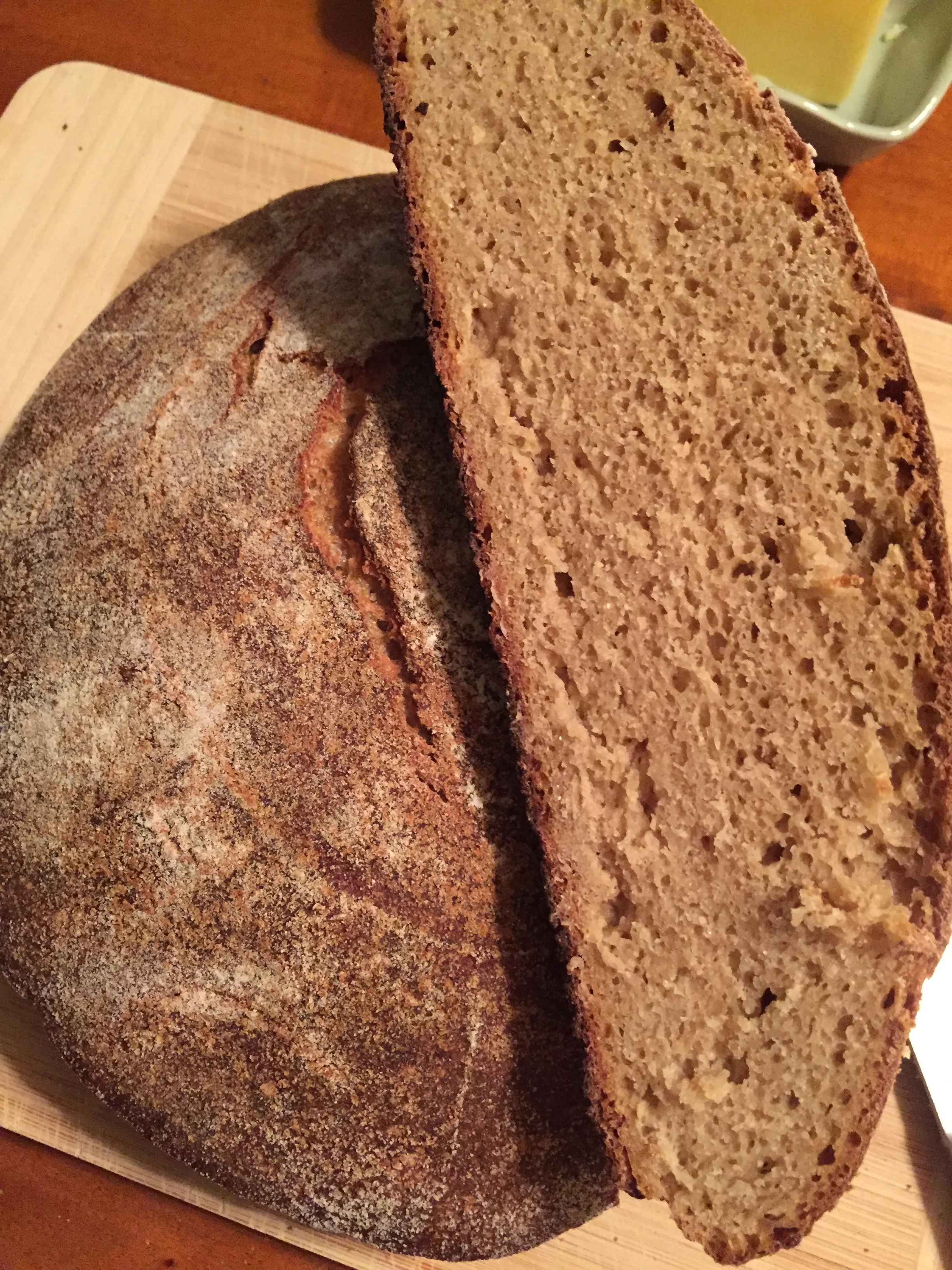
The crumb was moist but dense. I need to prove the loaves longer in the baskets to get a higher rise. And I might bake it just a few minutes longer. But the taste! Delicious, rich but lighter than we're used to. Kate had two big pieces with butter for dinner (we had it with a frittata) so I guess it was considered delicious by all!

If any of you have a favorite recipe for sourdough, I'd love to have it.

Our Favorite All-Purpose Summer Sauce

Sure, in the winter we crave ragu made with sausage and fennel, or ground beef and tomato paste; but in the summer nothing but the lightest and simplest sauce will do.

This sauce is so simple that it doesn't need a recipe. All measurements are flexible (in fact, I've never measured anything while making this sauce). If you like onions instead of garlic, then make that switch. If you like fresh oregano rather than basil, go for it. But for us, it's five ingredients, always - fresh tomatoes, garlic, basil, salt, and olive oil. 

Any tomatoes will do. When I have lots of cherry tomatoes ripe on the vine, I'll use them for this sauce, halving them before roasting. Plum tomatoes and beefsteaks are of course great too. You can mix and match. Whatever you've got that's ripe, that's what you want to use. I add plenty of chopped garlic - we still have tons from our garden, though I had to transfer it to the extra fridge to keep longer. You need a handful of basil from the garden too. I like coarse sea salt here. We'll save the discussion about olive oil for another time, but you're buying the closest to local you can, right? (Imported stuff may not even be olive oil - for more info check out the book 'Extra Virginity' - you will never buy cheapo oil again.) 

Preheat your oven to 375 or 400, somewhere around there. Get out a roasting pan, or a sheet pan, or a skillet that can go in the oven (actually you could do this on the stovetop too), and slick the bottom with oil. Chop up your tomatoes and garlic and spread them in the pan. Add a generous amount of salt. If you're using paste tomatoes, you'll want more olive oil; for beefsteaks, use less (because there's more juice in those). Scatter leaves of basil around. Stick the pan in the oven, and roast for at least 45 minutes (start checking around 30 minutes, especially if you're using cherry tomatoes) and up to an hour. The tomatoes should be cooked and wilted, but not blackened. Let cool in the pan, then decant into mason jars and either refrigerate or freeze.

We use this on everything - pasta, homemade pizza, bruschetta. You could use it to make a panzanella or caprese salad. You could eat it with a spoon (I certainly have). Just don't water-bath can this stuff - the inclusion of oil, garlic, and herbs makes it too low in acidity to do that safely. If you have a pressure canner, that would work. 

Usually the day I make this sauce, half gets used right away, and half gets frozen for the winter. Tonight it'll be used on pizza, with Tom's homemade mozzarella. We have tried a LOT of pizza dough recipes, and have settled on this one from Alton Brown. You have to plan ahead and make it the day before, but trust me, it's worth it. (By the way, you don't need bottled water - just boil some tap water and let it sit out with the top off for a while - the chlorine will off-gas.) 

Enjoy!

Dawn

On weekdays, I'm up before dawn, taking care of the animals and getting everyone ready for school and work. It's just too hectic to go out in to the yard and enjoy the morning.

But on weekends, I still get up at 6, and it's wonderful to go into the garden when it's still early. The birds are waking up and chattering (lately I've really noticed the Bewick's Wrens singing every morning as they scratch in the dirt among the flowers), the bees are foraging as soon as it's light, and the chickens like that I bring them whatever the squirrels destroyed the night before (usually watermelons, argh). 

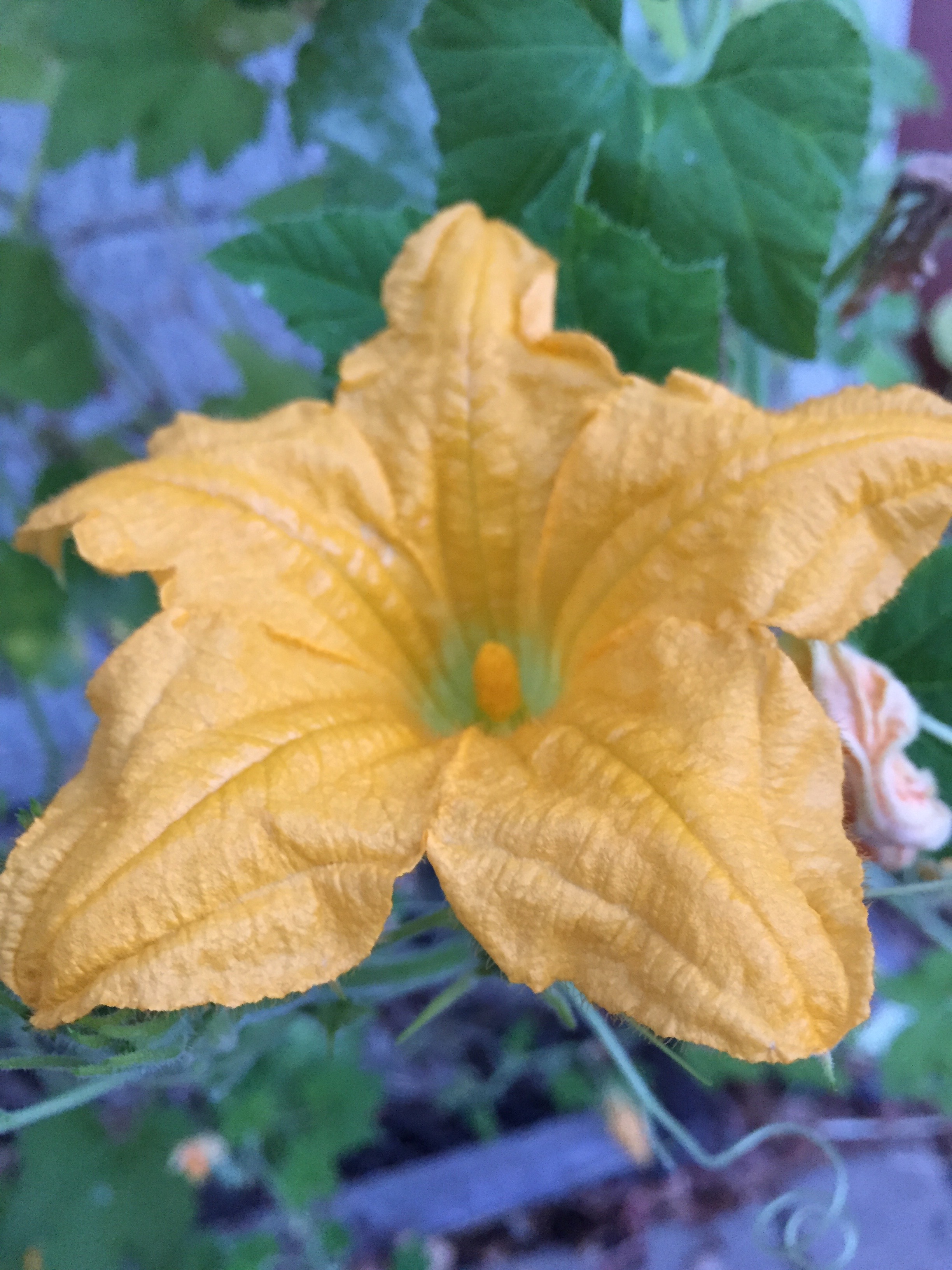
Many of the flowers in the garden bloom only in the cool hours of the morning, such as the Nicotiana Alata, which is a white flower which smells lovely. Or the squash blossoms, which usually close up in the heat of the day. The light is nice too, gentle and cool. In short, the garden is a different place in the early morning hours than it is in late afternoon when I'm usually out there working. I like to sit in the mulch and watch the activity around me, while scratching the cat or the dog.

Tonks, Hermione, and Ginny

Tonks, Hermione, and Ginny

Pumpkin

Pumpkin

Tasha

Tasha

Ladybug eating aphids on fennel blossom

Ladybug eating aphids on fennel blossom

Black Cherry

Black Cherry

California Sunflowers

California Sunflowers

Chitalpa, showing signs of Autumn

Chitalpa, showing signs of Autumn

Amaranth

Amaranth

Jalapeno

Jalapeno

Cosmos, cuphea, and tithonia not yet blooming

Cosmos, cuphea, and tithonia not yet blooming

Delicata

Delicata

Fennel seeds drying

Fennel seeds drying

Russian Sage

Russian Sage

Calabrese peppers 

Calabrese peppers 

Verbascum, or Mullein

Verbascum, or Mullein

Snap peas 

Snap peas 

Cantaloupe

Cantaloupe

Winter Brassicas just starting in trays

Winter Brassicas just starting in trays

this cucumber grew in the wrong place, no?

this cucumber grew in the wrong place, no?

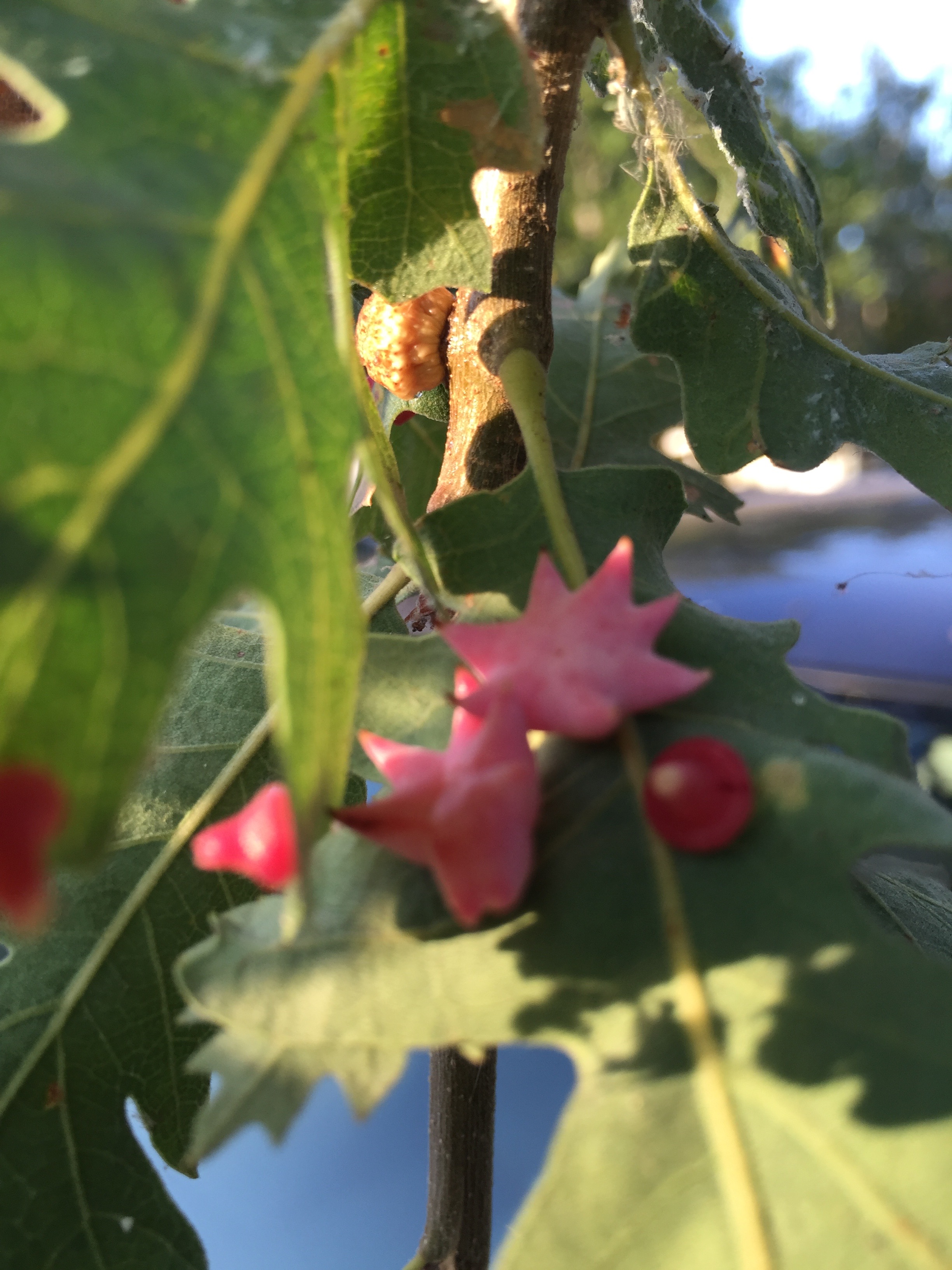
Gall wasp nests on the Valley Oak

Gall wasp nests on the Valley Oak

Cherokee Purple

Cherokee Purple

One of our canning shelves

One of our canning shelves

I hope you're all having a lovely Saturday, and getting to enjoy some time outdoors, too.