Yosemite

Our family just got back from a few days in the glorious Yosemite National Park. We had an excellent time all around, with gorgeous scenery and some challenging hikes.

Upon our drive up, one thing stood out clearly, and that is all the dead trees in the Sierra Nevada and foothills. This is a news story that has been circulating, around here at least, for a month or so. After five years of serious drought conditions, and an increase in a certain beetle that preys on weak trees, the situation is dire. Looking around, it's impossible not to be awestruck at the magnitude of the problem and the possible fire danger. It's going to take years to remove all these trees.

The scope of the issue was very evident on our first day at the Hetch Hetchy reservoir.

Yosemite alone is nearly 1500 square miles. The Sierra Nevada range spans a distance of nearly 40,000 square miles. If one of every three trees is dead, you can start to grasp the enormity of the issue.

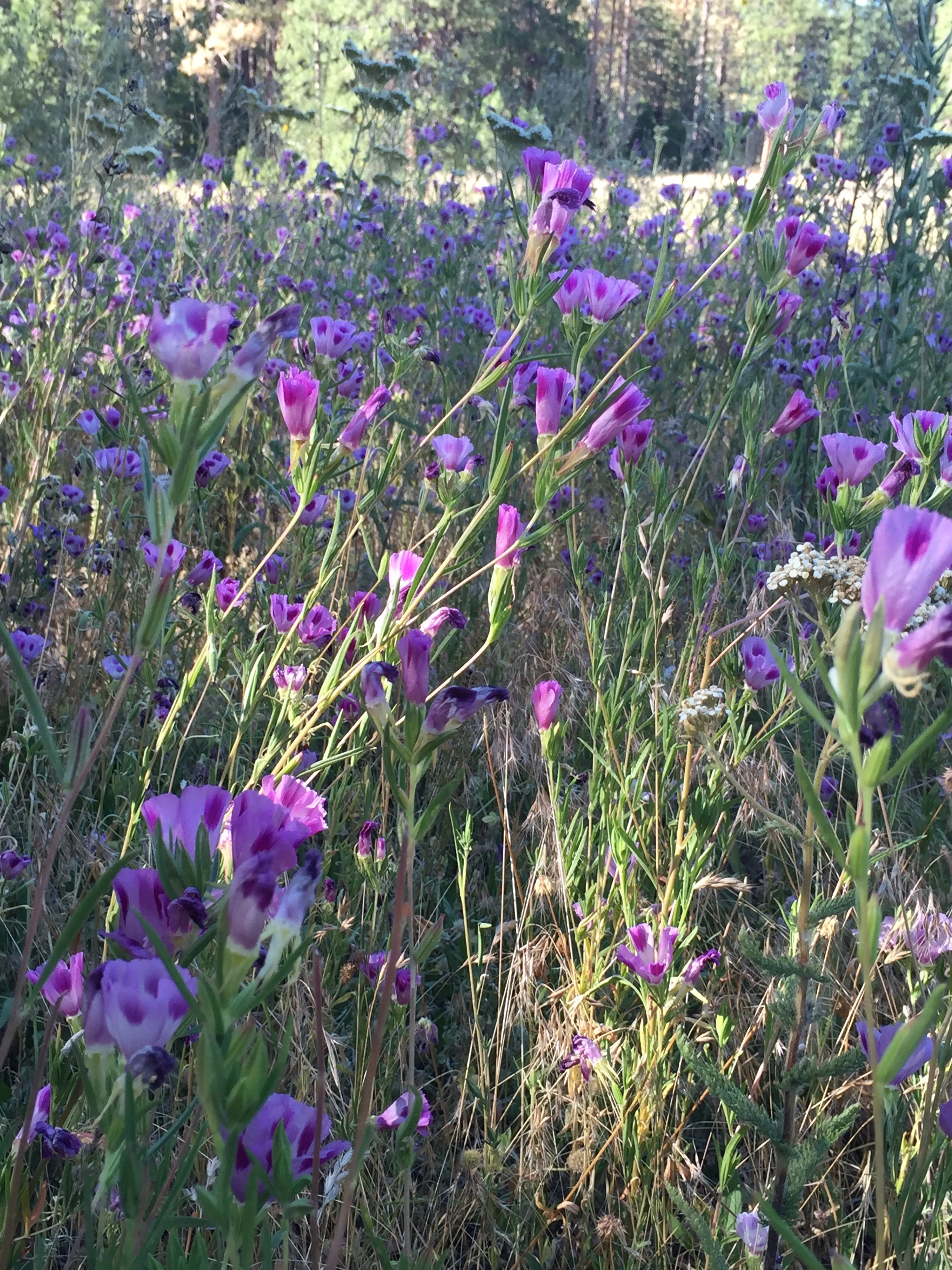
However, at Hetch Hetchy, there were plenty of nice things to look at, too! Clarkias and lupines, flowers that bloom in my yard in April and May, were on full display here, along with goldenrod, prairie coneflowers, and popcorn flower. In the meadows, there were carpets of blossoms.
The reservoir itself is spectacular, with one active waterfall at the moment, and more in the Spring. We took a hike up to see the lone fall. Some of us dropped out after a mile or so up, some of us after 2 miles or so, and Adam and my dad made it all the way to the falls. Dad brought his filter, which was great on these hot, dry hikes - as long as we could find a stream or lake to dip in to.
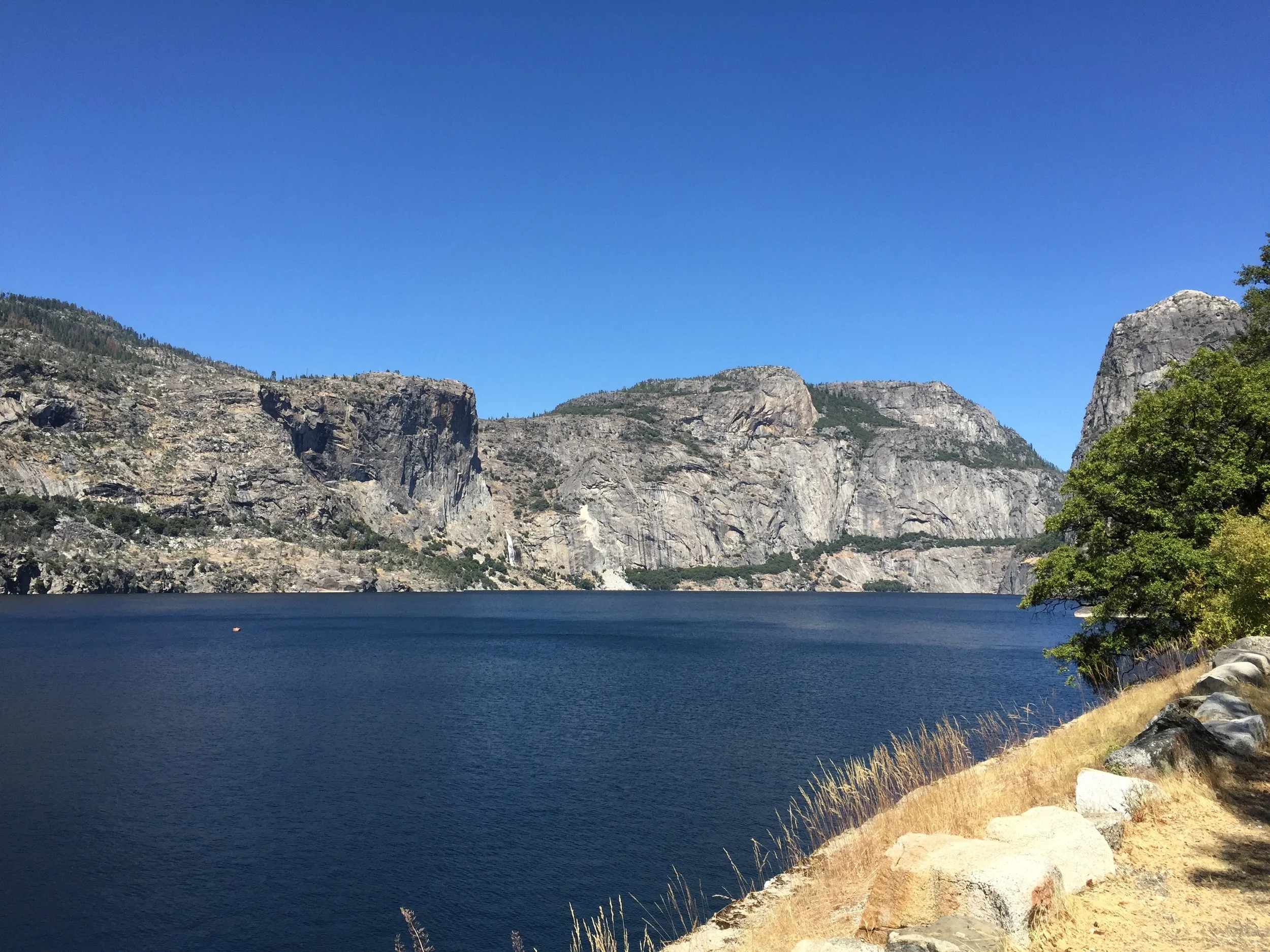
You can barely see the waterfall from here, center of the pic, to the right bottom of the 'shaved' dome

You can barely see the waterfall from here, center of the pic, to the right bottom of the 'shaved' dome

filtering water in a shallow stream

filtering water in a shallow stream

Adam gets his feet wet at the bottom of the falls

Adam gets his feet wet at the bottom of the falls

Our second day, we drove the the east rim of the park and explored Tuolumne Meadows. We started with an overlook of the Valley. 

That's Half-Dome on the right. We are looking West, over the Valley.

That's Half-Dome on the right. We are looking West, over the Valley.

After driving through the meadow, we parked and took a hike up around Lembert Dome to Dog Lake. It was a challenging, rocky path up to 9200 feet, and the altitude made us very short of breath, but the weather here was very cool and breezy and our lunch spot at the lake was gorgeous.

Lembert Dome from the trail

Lembert Dome from the trail

We met a ranger (and his horse, King) on the trail. The rocks in the trail were challenging for us, but must have been even harder for King.

We met a ranger (and his horse, King) on the trail. The rocks in the trail were challenging for us, but must have been even harder for King.

Dog Lake. Those mountains in the distance still have snow on their North slopes.

Dog Lake. Those mountains in the distance still have snow on their North slopes.

While wading, Mom 'found' a leech. On her foot. Not pleasant. But interesting to look at.

While wading, Mom 'found' a leech. On her foot. Not pleasant. But interesting to look at.

Chipmunk! We don't have these in the Bay Area so they're fun to see. But I imagine that for some people, the last thing in the world they want to see is a chipmunk! Kind of how I feel about seeing deer in Yosemite - all the other tourists gushing - …

Chipmunk! We don't have these in the Bay Area so they're fun to see. But I imagine that for some people, the last thing in the world they want to see is a chipmunk! Kind of how I feel about seeing deer in Yosemite - all the other tourists gushing - and me just making a sour face!

Goldenrod

Goldenrod

California Thistle in a rocky field

California Thistle in a rocky field

On our third day, Adam and my dad decided to take an extremely challenging hike to the top of Upper Yosemite Falls. This was a 7 mile round trip, 2700 foot elevation gain climb to the very top. For perspective, El Capitan is 3,000 feet tall, so they hiked nearly that high. It took them all day, but that was an experience Adam will never forget. Tom, Kate, my mom, and I decided to spend the day on the Valley floor, walking around, exploring, and taking a smaller hike to Bridalveil Falls (hiking is very decidedly NOT Kate's favorite thing). Man, was it crowded. There are backpackers getting permits and bear canisters and food and then heading out to the back country. There are tourists from every country you can imagine. There are day hikers, like us, looking for water and a shady patch to cool down (the temperature on the Valley floor was 95, a considerable difference then in Tuolumne Meadows the day before). There are kids everywhere and families riding bikes all along the Valley. It sure is great to see so many people enjoying this National Park, but it does sort of stink to navigate the traffic. Like many National Parks, Yosemite is trying out a shuttle system to prevent folks from driving from one spot to the next, and it helps a bit. There's a LOT of people, though.

Yosemite Falls from the Valley floor

Yosemite Falls from the Valley floor

Halfway up!

Halfway up!

Made it to the top!

Made it to the top!

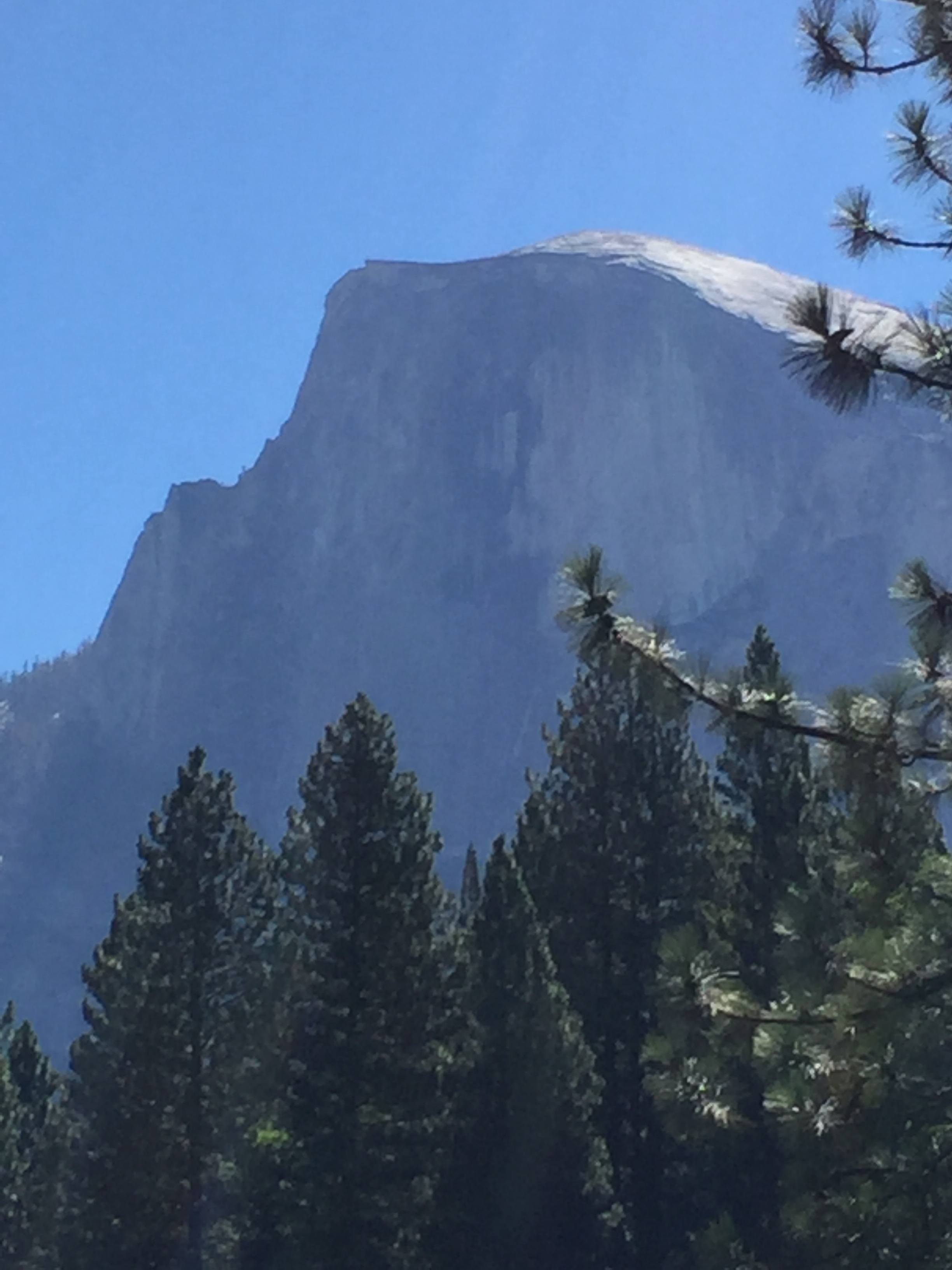
Half-Dome

Half-Dome

El Capitan. No climbers on it this day - too hot.

El Capitan. No climbers on it this day - too hot.

Bridalveil Falls

Bridalveil Falls

Today, we had a nice leisurely drive home with a stop at a cheesemaking farm in Oakdale. We bought some of their aged gouda, some fresh baguette that had just come out of the oven, and some salami. We stopped off at the next farmstand and bought a flat of strawberries. Lunch was complete. Finding a picturesque spot to eat it an hour on, around Tracy, wasn't so easy, but we finally found a neighborhood park in which to enjoy our purchases.

Gouda ripening in the shop's cave

Gouda ripening in the shop's cave

The person who had lived at our home this week did a wonderful job, and we came home to a garden full of tomatoes, cucumbers, and green beans. The animals seemed happy to see us, and I spent a good amount of time taking a look around. It's nice to travel, but nice to come home!

Nebraska Wedding

Nebraska Wedding

Amaryllis belladonna, or 'Naked Ladies'

Amaryllis belladonna, or 'Naked Ladies'

This last plant is very interesting. It puts out greenery in the Spring, which then dies back. In the hot summer, it blooms without any foliage, hence the common name 'naked lady.' But it's actually the only true Amaryllis. The ones we see indoors at Christmas aren't really amaryllis at all. They are from an entirely different family!

Balls!

Not an expletive, but rather an observation. The garden is teeming with ball-shaped fruits.

tomatoes

tomatoes

blackberries

blackberries

apples

apples

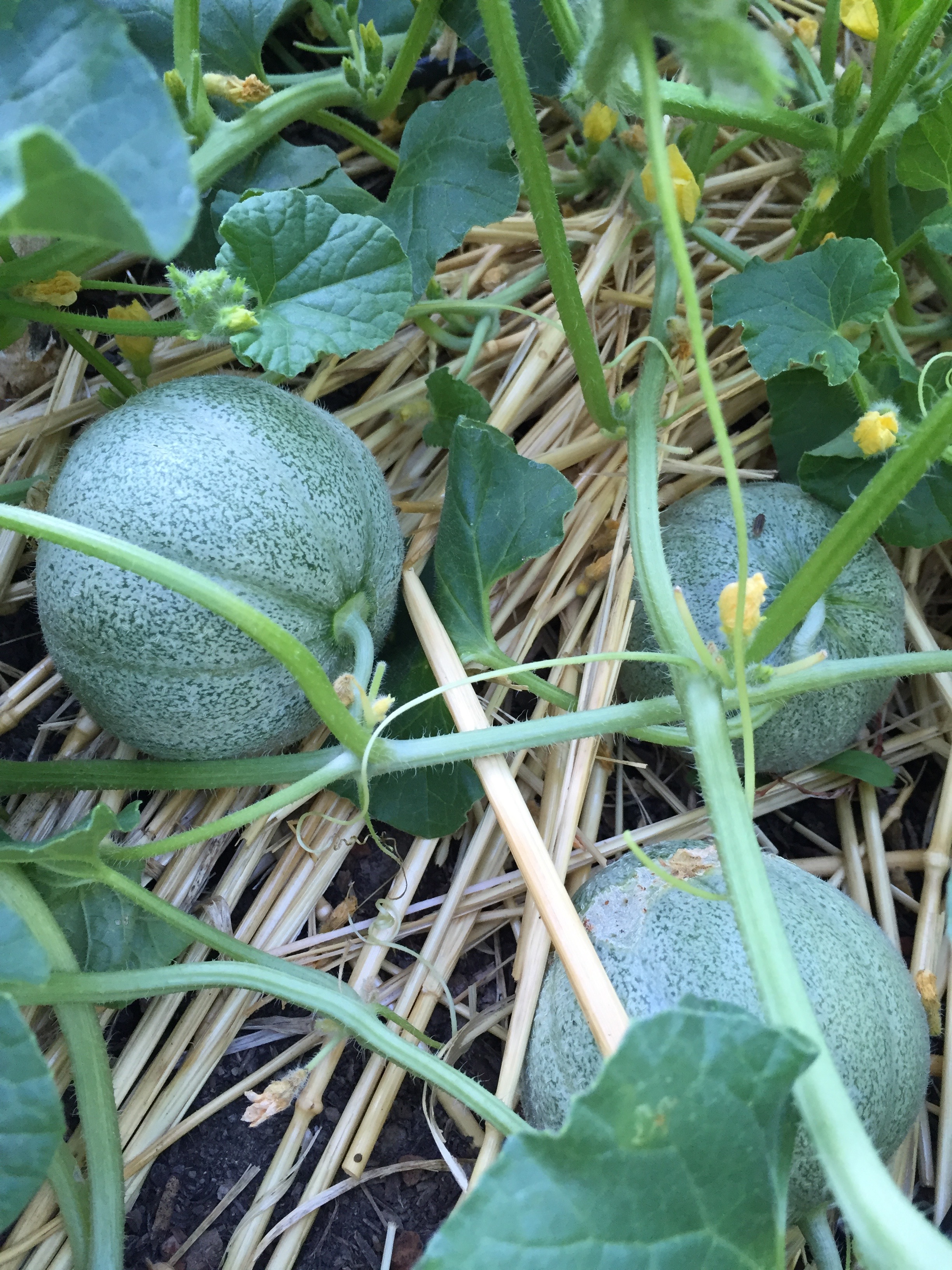
cantaloupes

cantaloupes

pumpkins

pumpkins

sweet peppers

sweet peppers

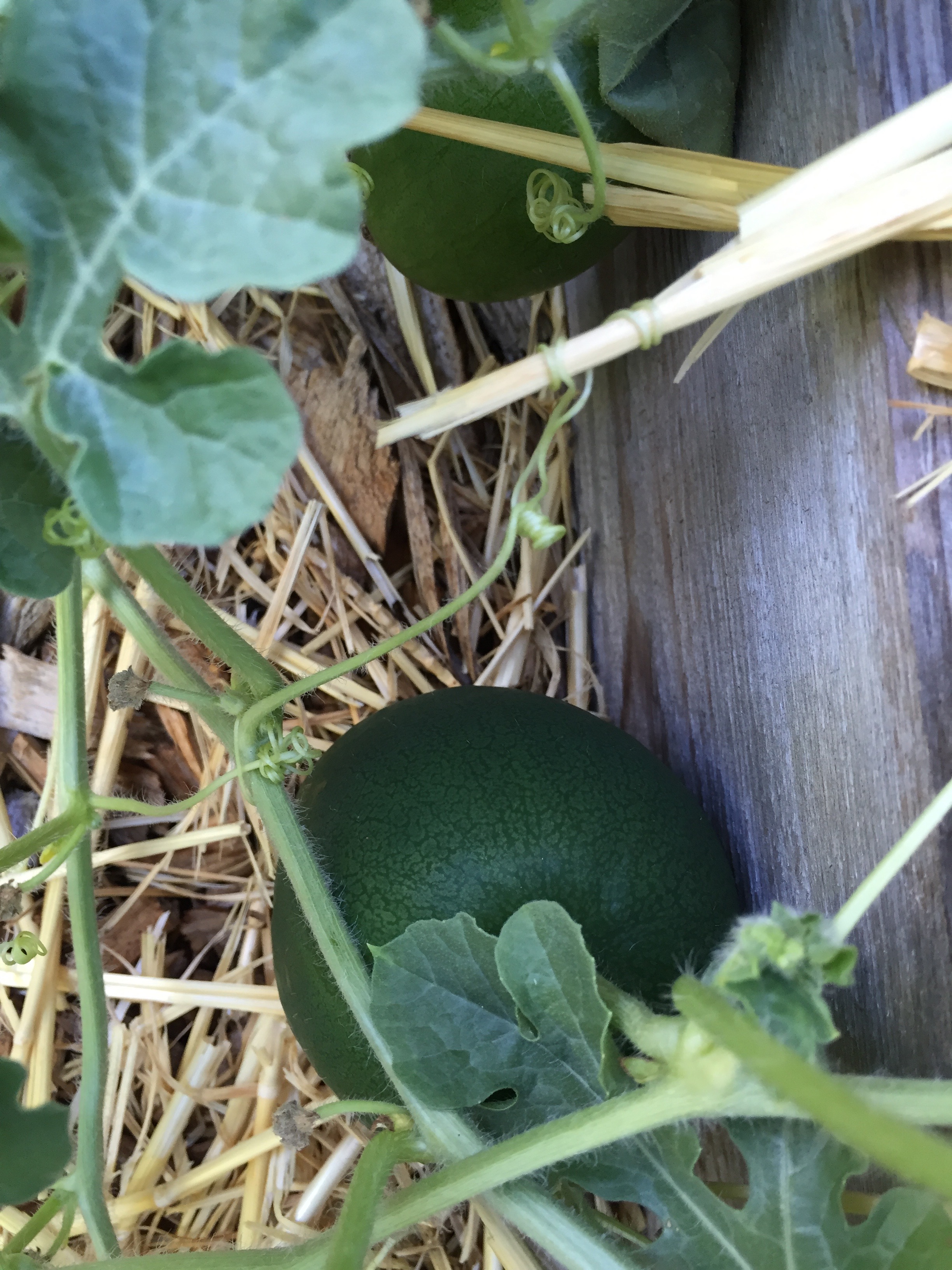
watermelons

watermelons

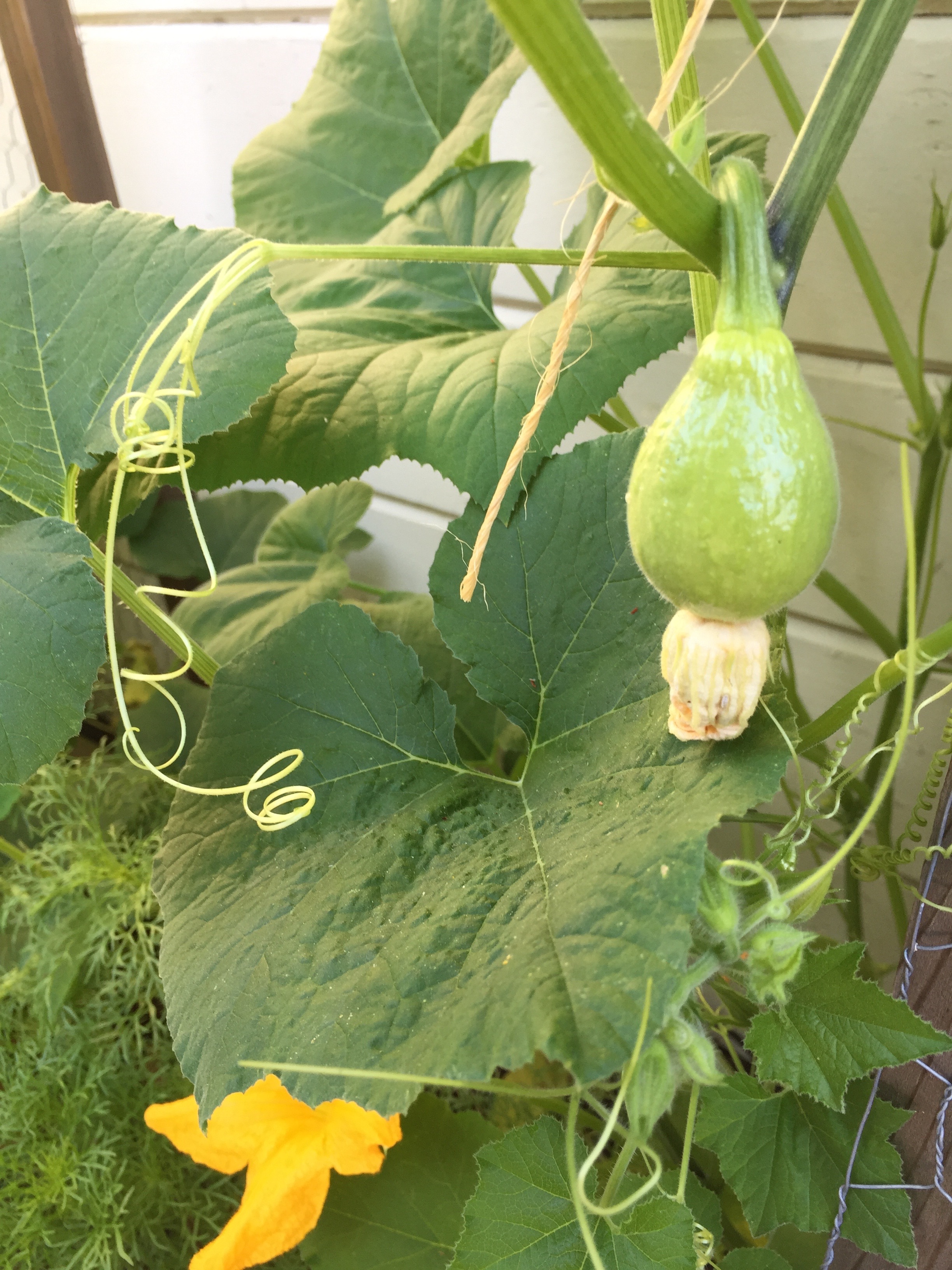
gourds

gourds

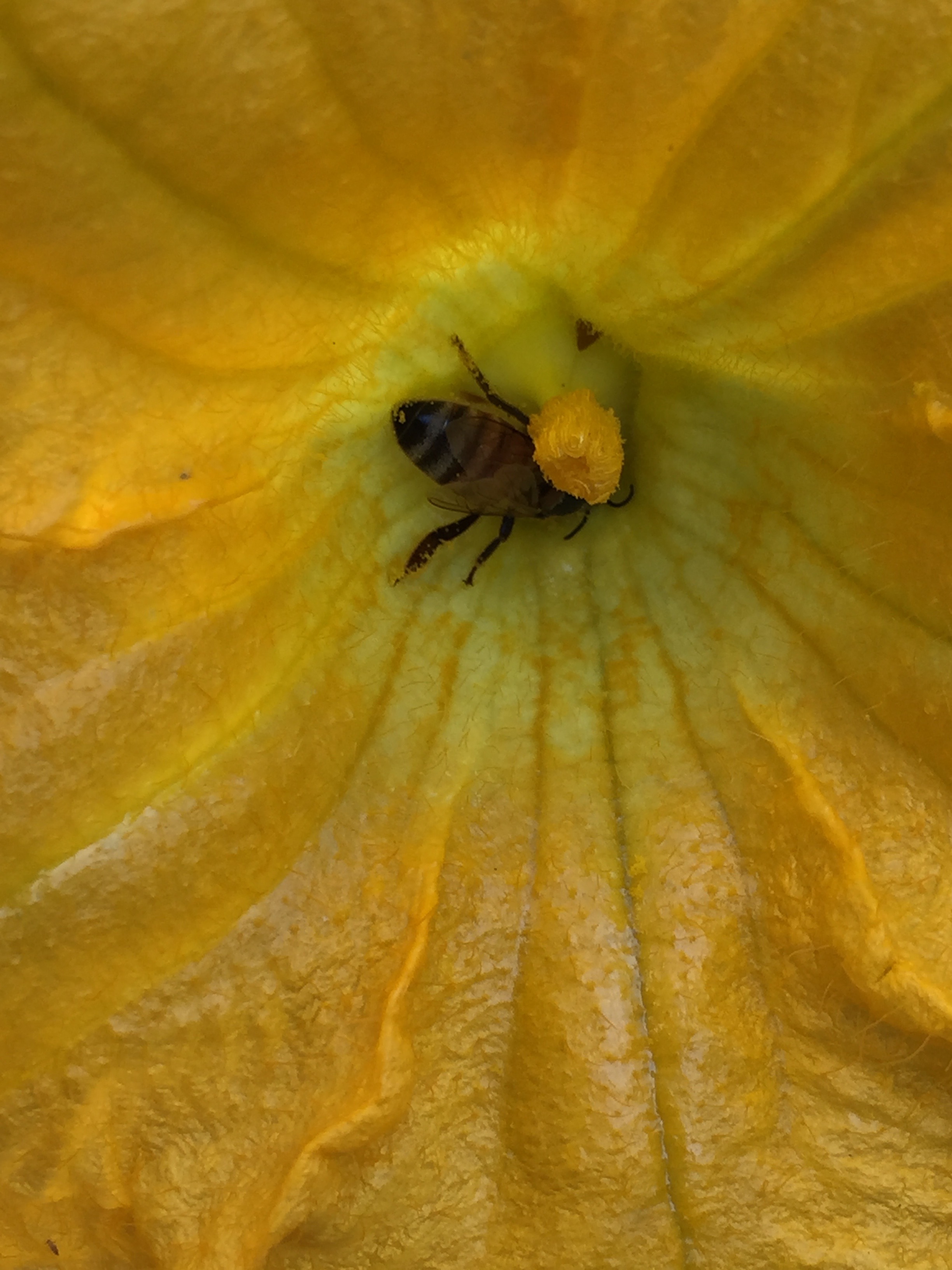
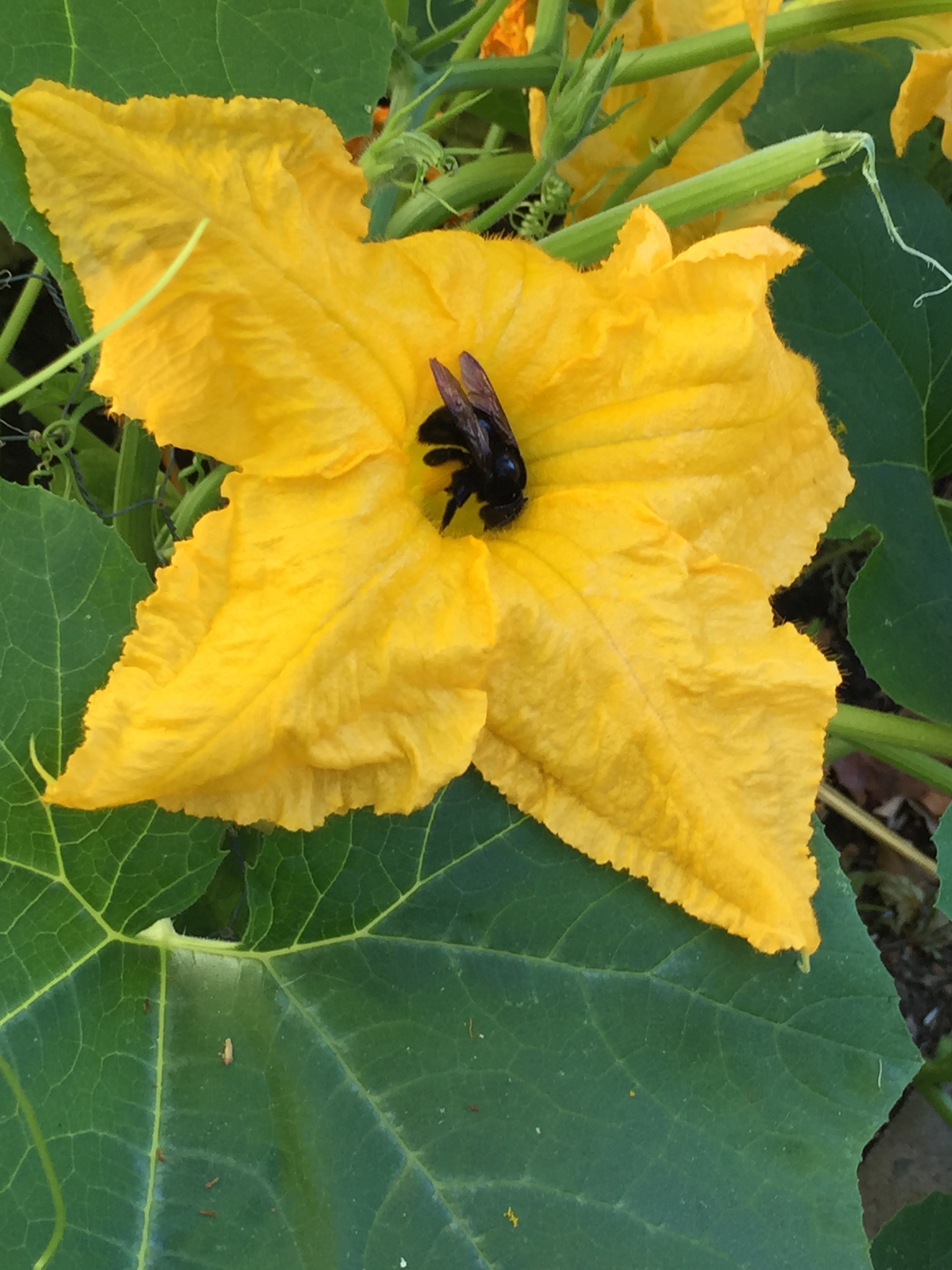
The pumpkins and gourds are especially fun to watch, because there is rarely a blossom without some kind of bee in it. These are growing right outside our dining room door, which is always open to the fresh air in the morning, and I can sit and eat breakfast and watch the activity.

I've had to remove several leaves from the winter squashes and spray all the rest with a powdery mildew preventative. I wish I had started the preventative earlier, as it really seems to help. I mix several cups of milk with several cups of water, add a few teaspoons of baking soda, and a drop of dishwashing liquid, then spray it on the leaves (usually in the morning before it heats up). It's supposed to change the PH of the leaves so that mildew cannot grow; and like I said, as long as I do it BEFORE mildew shows up, it works. 

The garden is just humming this time of year. I haven't noticed many butterflies yet, but then I don't have a lot of butterfly flowers blooming - just the monarda, and it's usually covered with native bumblebees. When the tithonia and cosmos finally blooms, then we should begin to see a lot of butterflies. Hummingbirds are everywhere, as usual, as well as numerous other birds. I love to have all this wildlife in our yard.

Everything is growing like crazy - August will be our primary harvest month, but we're getting lots of tomatoes, green beans, peppers, basil, blackberries, and apples now. I just harvested the last of our first planting of romaine; it'll be a while until we get the next batch. Last night I made a BLT pasta salad for dinner - using bacon that Tom had cured and smoked, and tomatoes and lettuce from the garden. (You can find the recipe at Grit.com.) The night before, our Thai basil was the star in an Asian dish. Berries for breakfast is a usual thing for me, as well as an apple in the afternoon. I bought some pluots from a farmer and made a clafouti, the easiest fruit dessert ever, and the America's Test Kitchen recipe doesn't even call for flour, if you're gluten intolerant. I've always got tomatoes ripening on the piano, and soon we'll have cucumbers, which is important because pickles are a big thing here in this house.

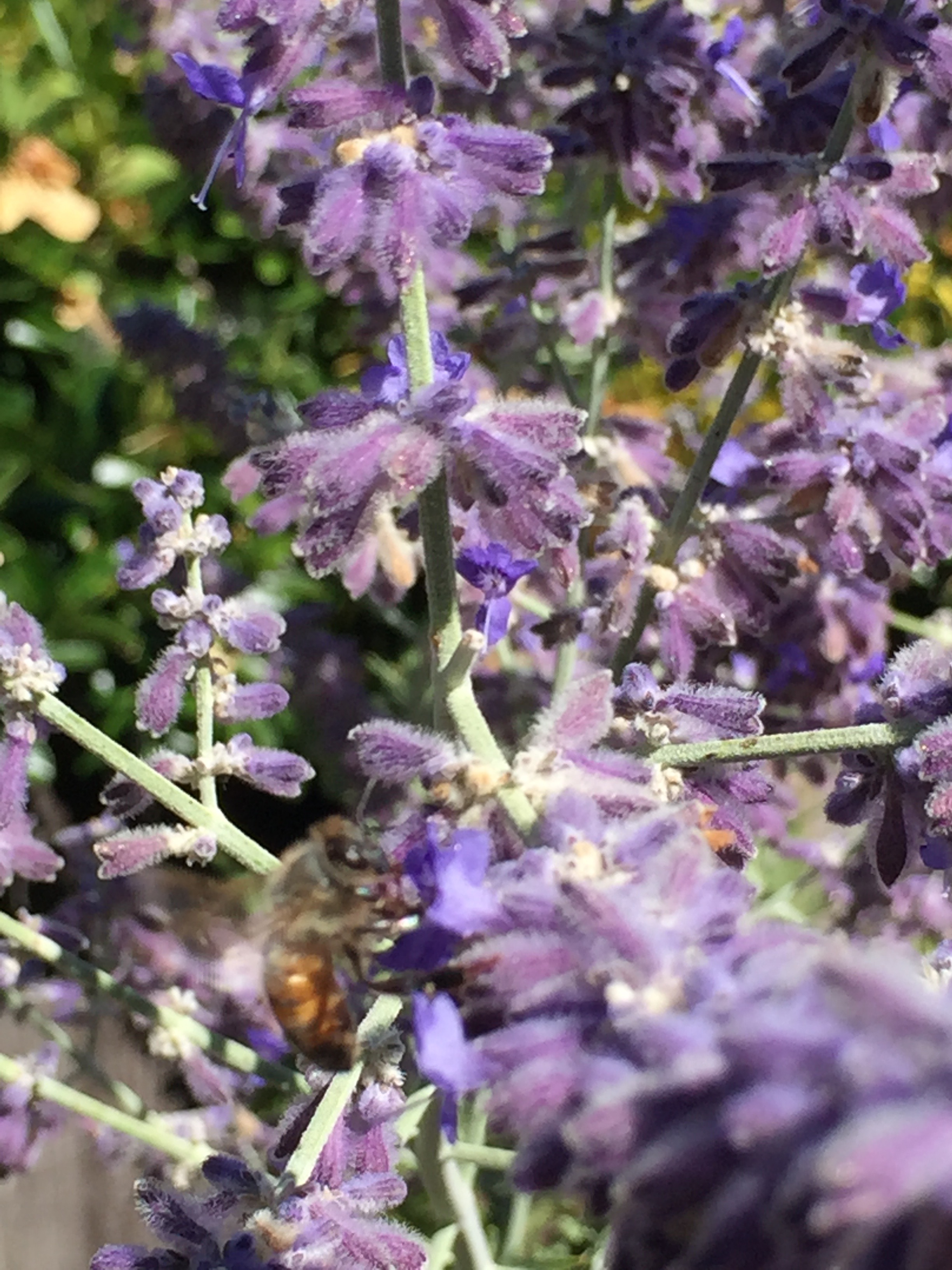
Everything looks full and lush, green and pretty. The bees are bringing in pollen, which lets me know the queen is still laying a lot of eggs, and the chickens are doing well, though they are too hot to lay many eggs at the moment. They are enjoying all the scraps from the garden - tomato juice and seeds, lettuce cores, basil stems. I've been working a bit at a summer camp for special needs kids, and so my time in the garden is even more precious. Luckily right now it's more about maintenance then anything else. Soon it will be all about preserving.

pollen coming in

pollen coming in

Rudbeckia hirta 'Chim Chiminee'

Rudbeckia hirta 'Chim Chiminee'

Russian sage

Russian sage

sunflower

sunflower

Coreopsis tinctoria 'Mahogany'

Coreopsis tinctoria 'Mahogany'

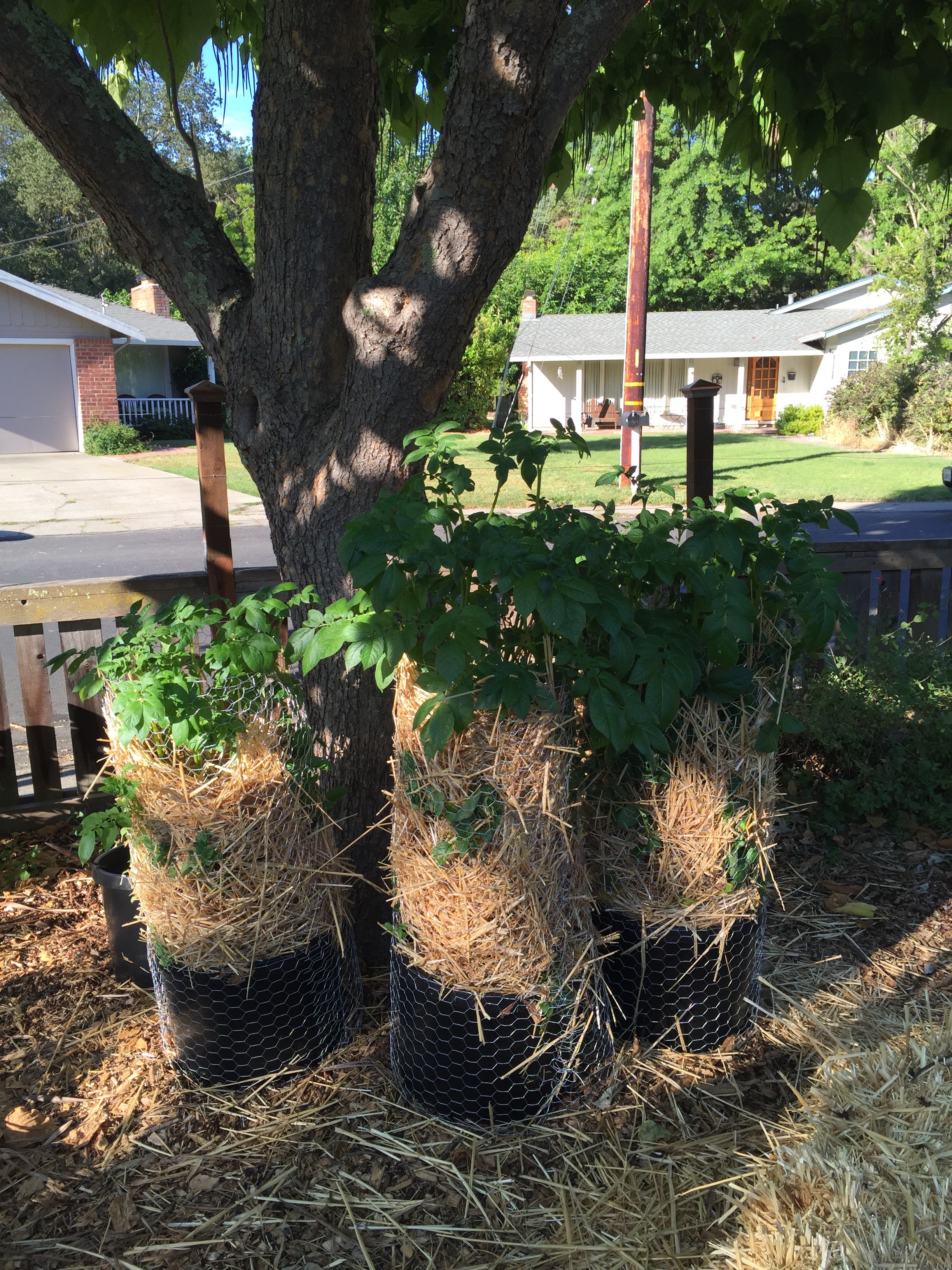
potatoes

potatoes

Cuphea 'starfire'

Cuphea 'starfire'

Bishop's Lace, going to seed

Bishop's Lace, going to seed

corn

corn

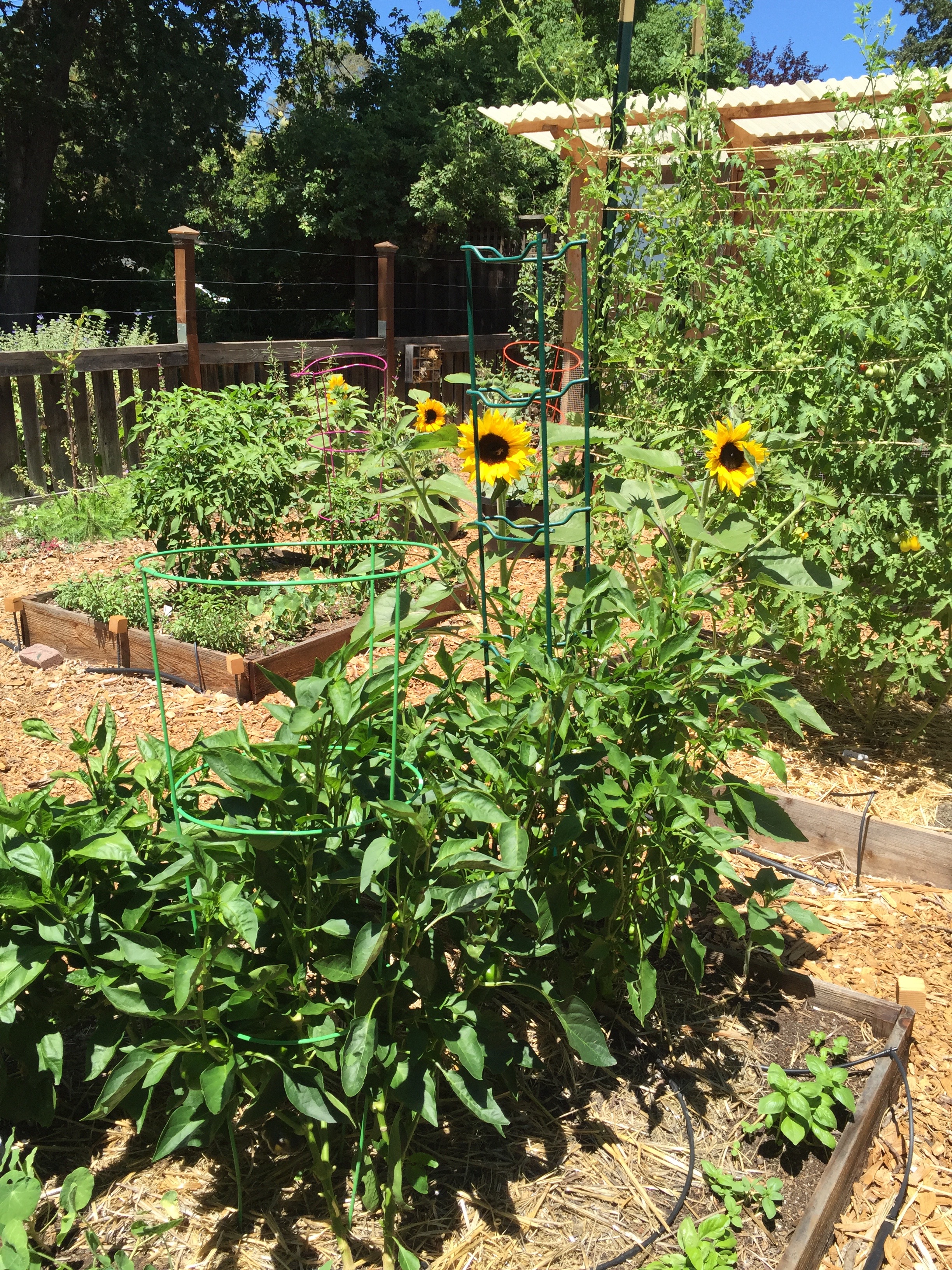
sweet pepper bed with basil and sunflowers

sweet pepper bed with basil and sunflowers

Today I'm home, so some maintenance is required and can actually be fulfilled. I'll have to get my work done early before it reaches the high 90's as it has been doing each day this week. Luckily, unlike other parts of the country, it cools down at night and the house can be opened for the night and the morning. We can close up the house at about 10 am and it will stay cool for hours. These are the days I'm thankful for our big shade trees!


Hops Update

Guest post from Tom, talking about the hops.

Back in March I built four planters for our back patio, with a plan to grow some hops and possibly provide some shade. I got some Cascade hops rhizomes from Ruby at the Institute of Urban Homesteading, and ordered more Cascade, Northern Brewer, and Centennial rhizomes online.

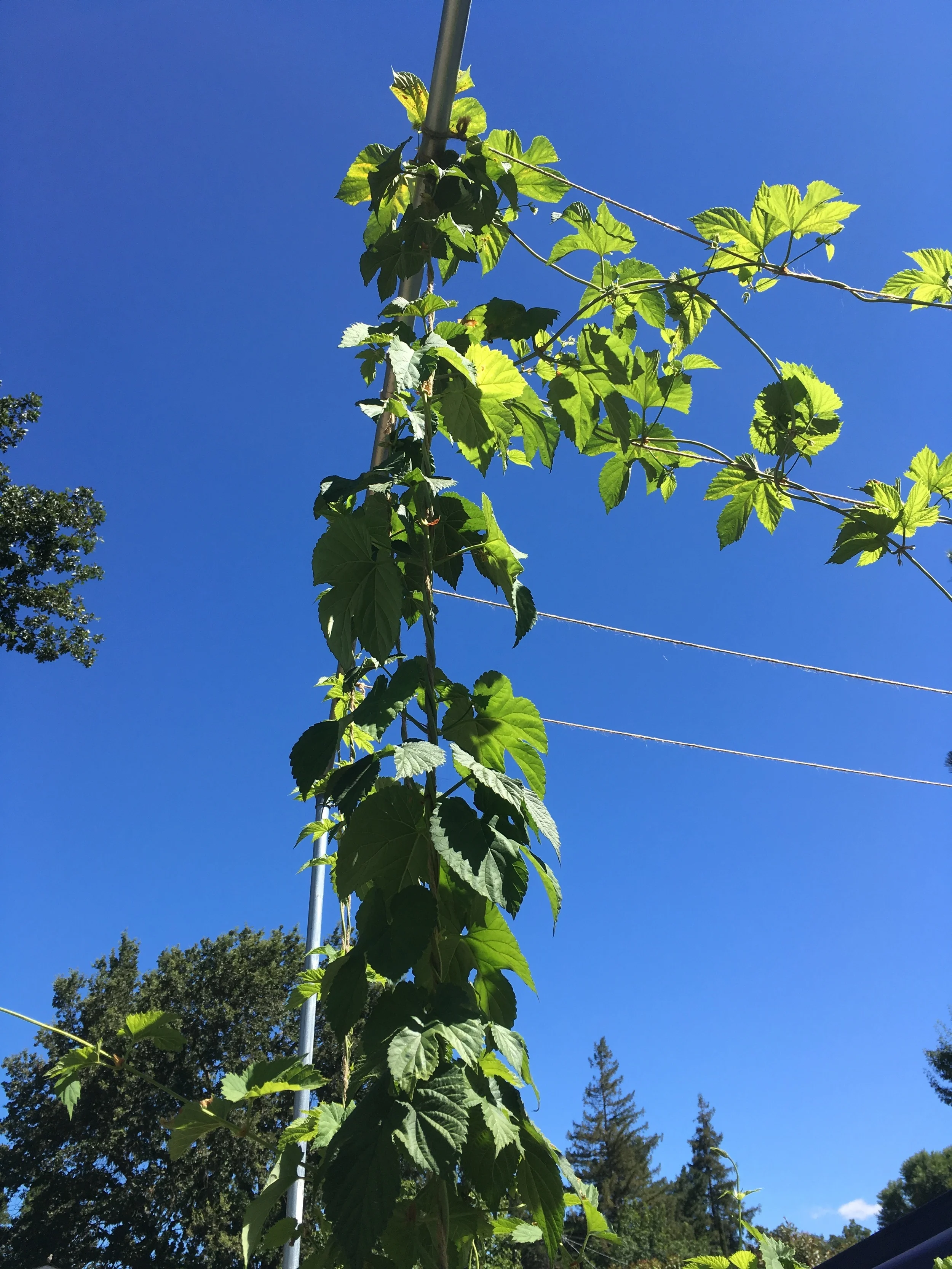
All of the rhizomes have produced a fair amount of growth in their first year. I think we were all a little dubious when we saw exactly how tall our 10' electrical conduit trellis is, but earlier in the spring the hops were growing prodigiously, with the Cascade ordered online winning the race to the top.

Up and over

Up and over

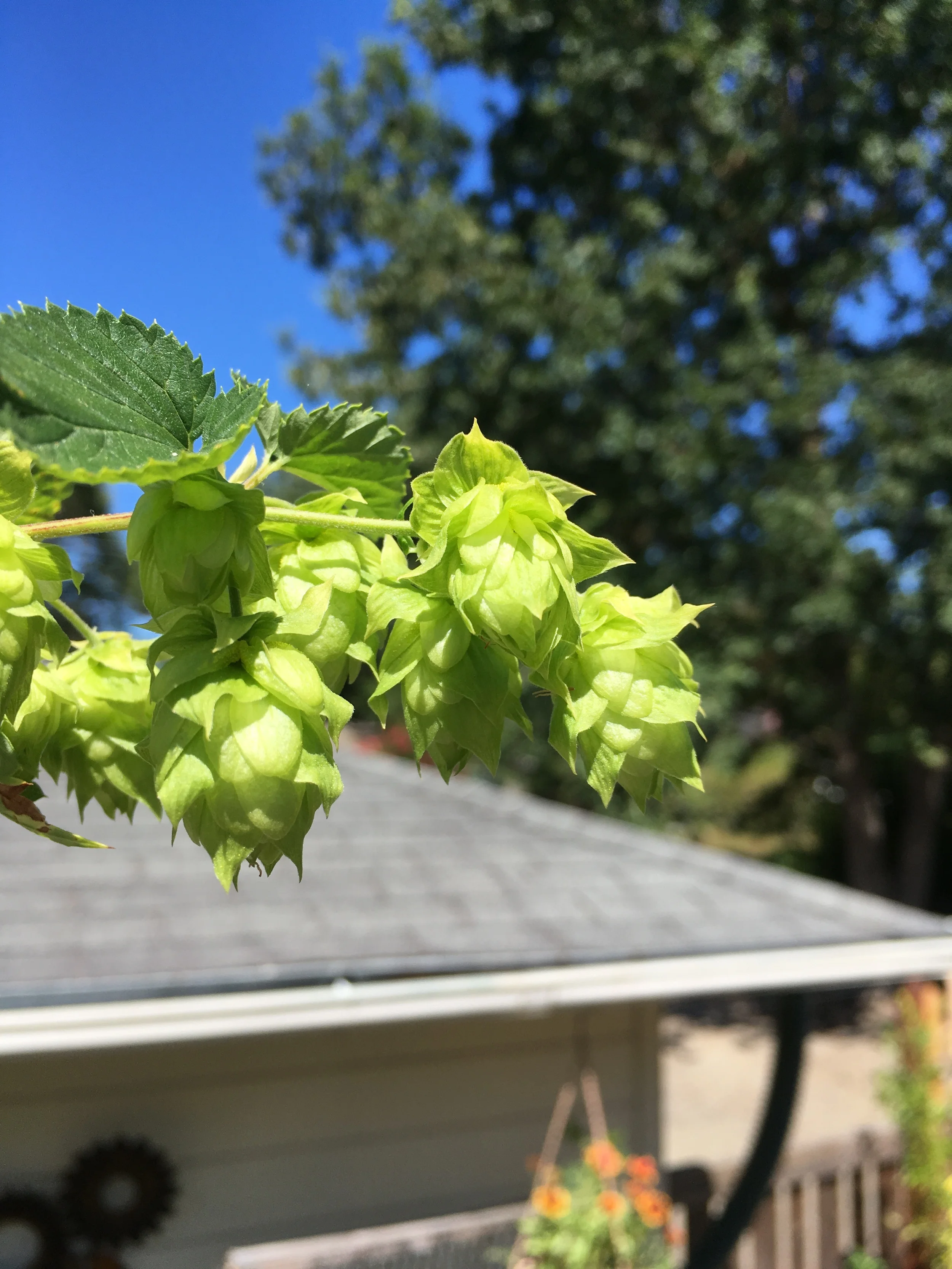
Since then, things have been a little more mixed. So far, we've gotten hop cones just from that one Cascade planter. I keep looking at the other plants to see if I can see beginning signs of cones, but so far, no dice.

Cascade hop cones

Cascade hop cones

Then, about two weeks ago, we had a prolonged hot spell, and that almost did in some of the plants. A lot of newer growth withered on the vine in what seemed like a matter of hours, and it was fairly upsetting. We've done some profuse watering and significant pruning since then, and the plants are looking better now, but we lost a lot of growth.

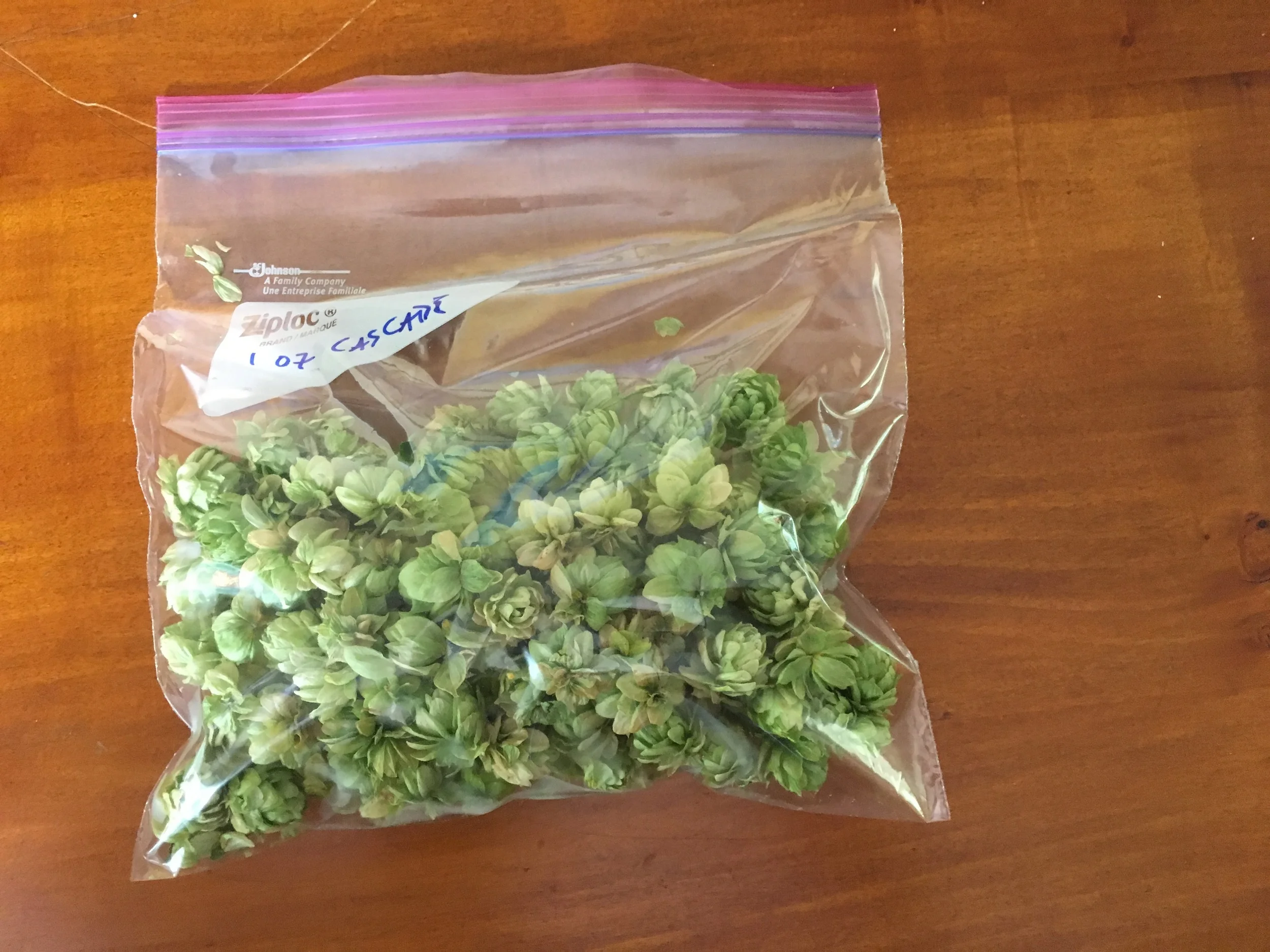
Many of the hop cones on the Cascade plants dried up in this hot spell, so I went ahead and harvested a bunch. You're supposed to dry out the cones before storing them, but these had pretty much dried out with that hot spell, so i just put them into a ziploc bag and put them in the freezer. It took a lot of cones to come up with an ounce (a standard 5-gallon batch of beer will take anywhere between 3 and 7 ounces). I think I'll try using them in my next batch. They smell right, but given the hot spell, I'm not sure if they should have been more fragrant. We've still got some cones growing, so I'm hoping for another harvest at some point.

I swear, officer, it's my friend's bag

I swear, officer, it's my friend's bag

While we did get plants up and over the 10' trellis, from a shade perspective, the plants did not grow enough to provide sufficient shade by the time we got summer heat. 

While I'm hopeful to get more growth and cones this year, I'm already looking forward to a few things I'll try differently next year:

  • While it's hard, I think I need to be more aggressive in pruning some of the early growth. I really should have trimmed down to just 1-2 vines per rhizome, but I didn't. I think we'd get taller and more robust growth with more aggressive pruning. The parts of the vines that really got hit with the hot spell were the newer, thinner growth.
  • Because the rhizomes are growing in planters and not in the ground, I think they're more susceptible to heat and evaporative losses. Mulching the planters early would have helped with that.
  • I drew up plans for a wooden arbor that uses the planters as anchors, but then decided that it was too costly a project to undertake this year. Having an arbor like this, with vines growing up, would look nice and provide the shade we need.

The July Garden is Tall

Walking around the garden today, I realized that if the winter garden is all about short and bushy,  the summer garden is all about tall. Corn, tomatoes, pole beans, potatoes, flowers - everything is reaching for the sun. 

beans

beans

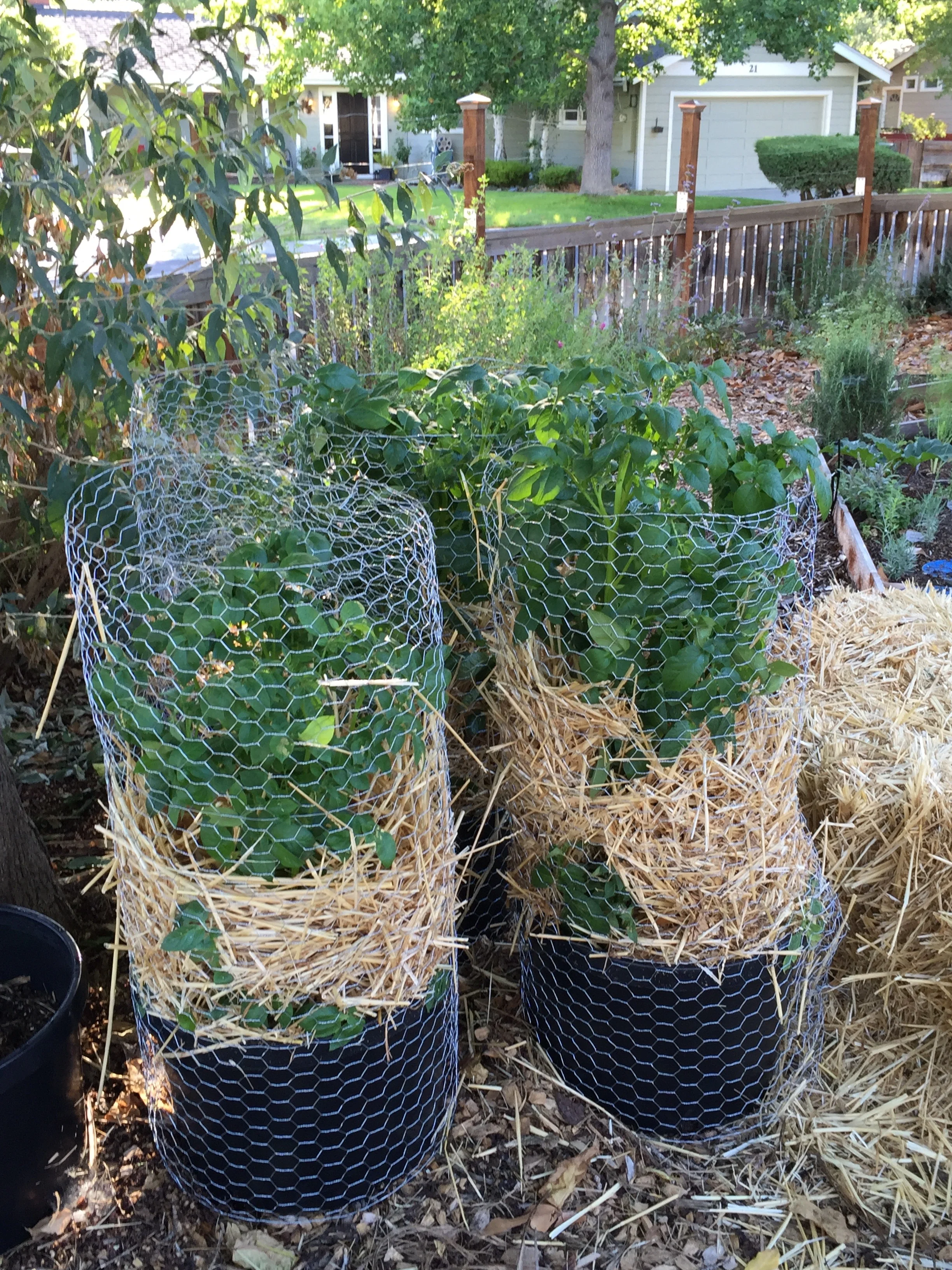
potatoes

potatoes

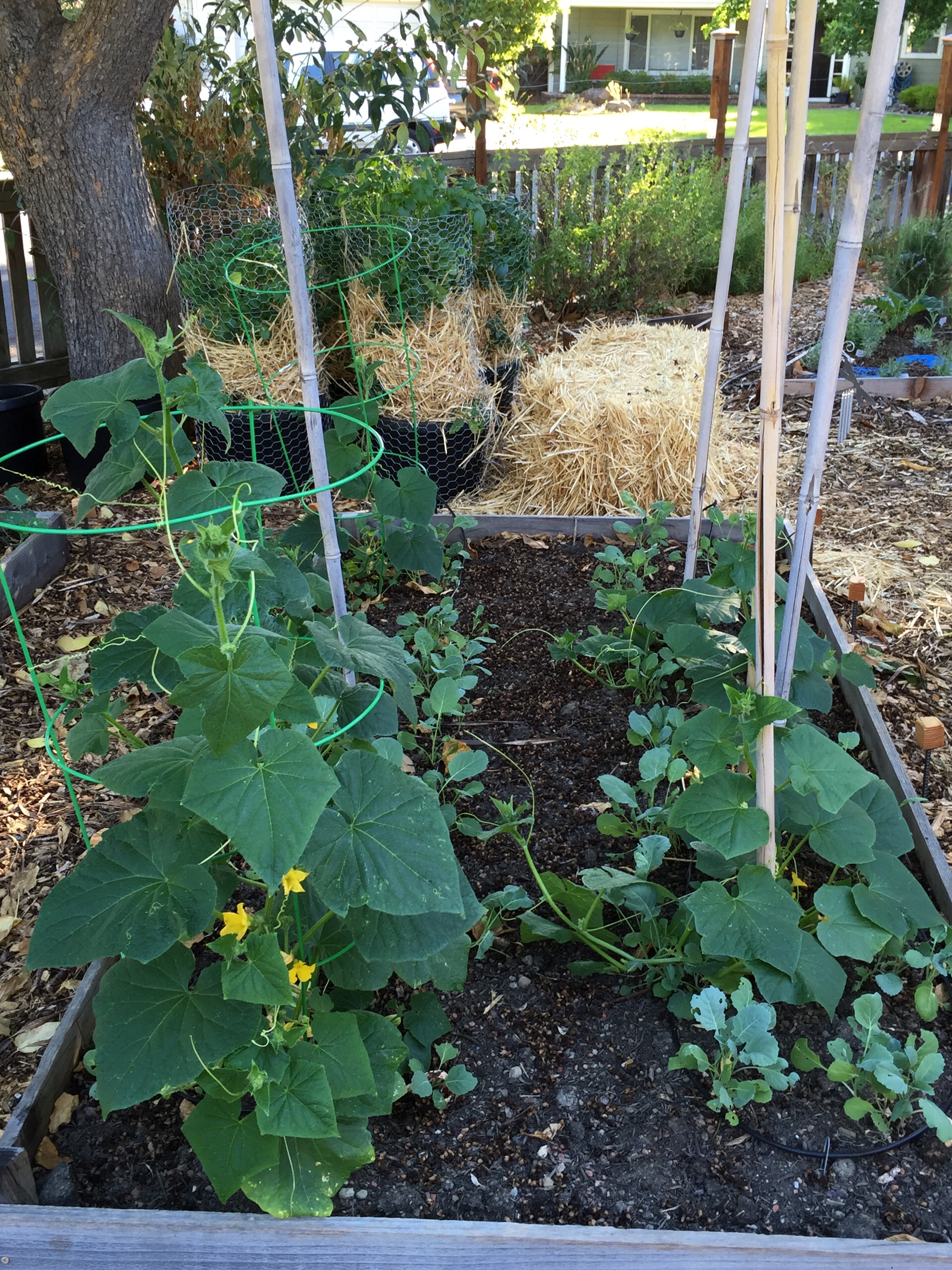
cucumbers (and collards)

cucumbers (and collards)

Monarda

Monarda

corn

corn

succession plantings

succession plantings

mini pumpkins

mini pumpkins

sunflower

sunflower


And if they're not tall, they're sprawling.


sweet potatoes mixed in with winter squashes

sweet potatoes mixed in with winter squashes

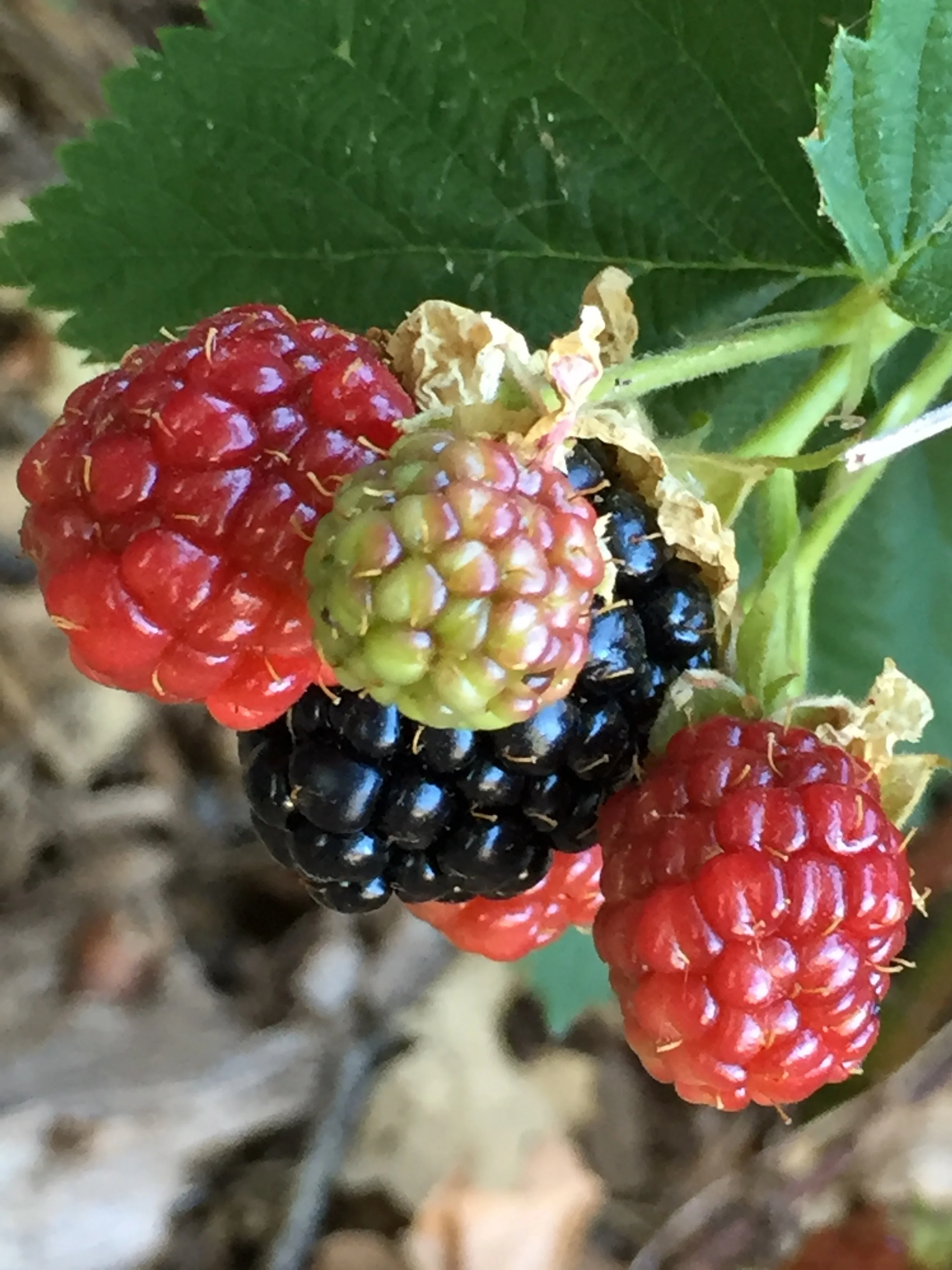
blackberries

blackberries

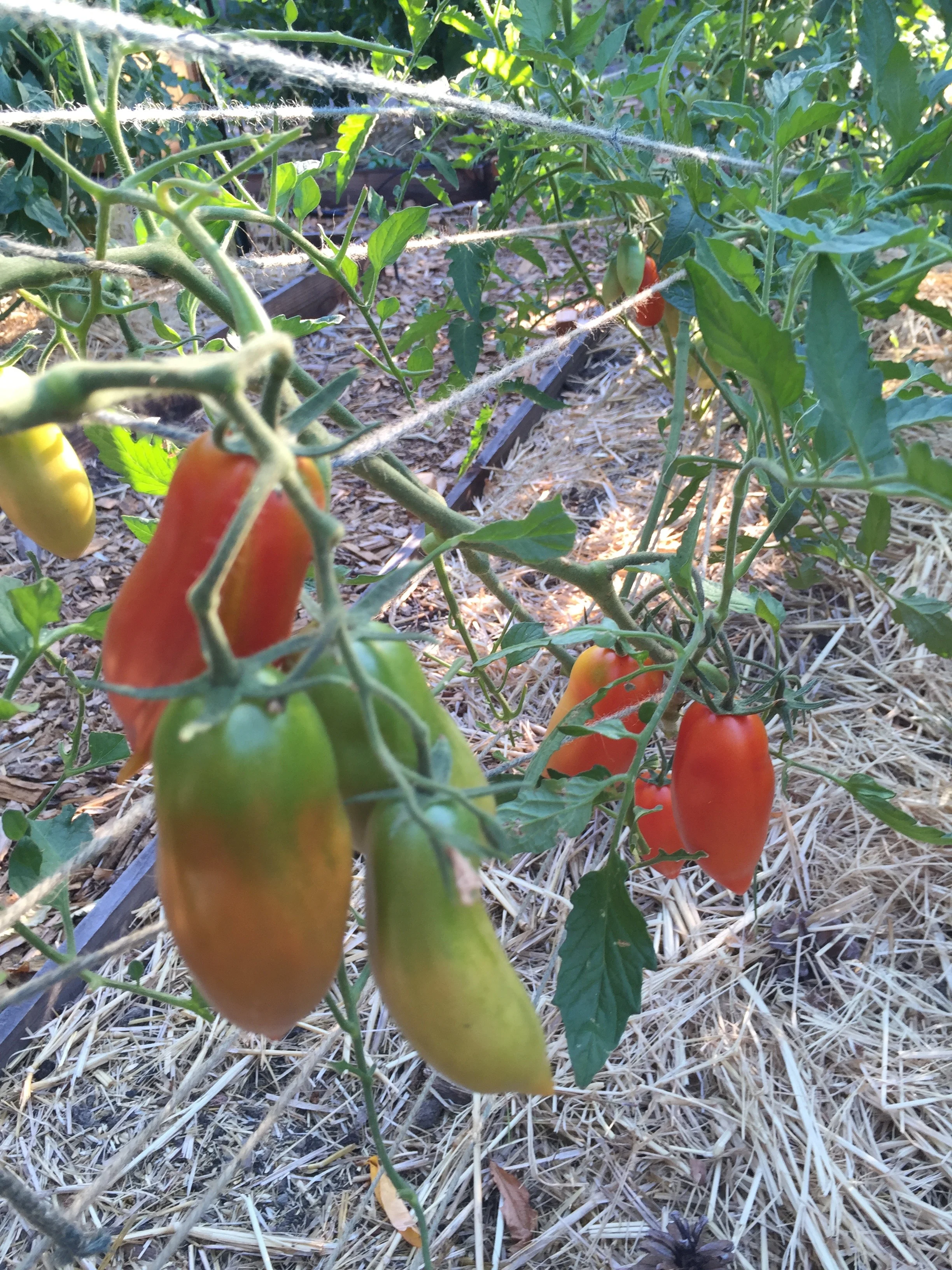
plum tomatoes

plum tomatoes

cantaloupe and watermelon

cantaloupe and watermelon

salad-leaf basil

salad-leaf basil

Thai basil

Thai basil

dark mullein

dark mullein

sheepnose pimento

sheepnose pimento

apples

apples

Cuphea

Cuphea

buckwheat (San Miguel Island)

buckwheat (San Miguel Island)

Olives

Olives

blueberries

blueberries


In other news, I discovered a neighbor had some comfrey. I read that you can dig down, cut out a part of the root of the existing plant, then transplant it to your own yard with absolutely no fuss. I thought long and hard about adding comfrey to the yard, because once it's established, it's hard to get rid of. I decided the benefits outweighed the risks. I got permission from the neighbor to dig up a root, then I planted it beneath our fig tree. It looked dead for a week, but now it's coming alive.

That will provide more forage for bees, plus the long tap root will bring up nutrients for the fig. And, it's right next to the compost, so I can chop the leaves if it gets too big and toss 'em in.

This morning, I realized that it's all happening now. All the preparation has lead us to this moment: the moment right before harvest. It's starting with little bits of things, one tomato here, a pepper there... pretty soon it won't be one at a time anymore. We'll have our second pesto tonight. We've had our first picking of green beans. Our first beefsteak tomatoes have been enjoyed. Any minute now, we'll be inundated and it'll be time to start canning and preserving. 

Black Krim tomatoes

Black Krim tomatoes

My lunch.

My lunch.