Hops Update

Guest post from Tom, talking about the hops.

Back in March I built four planters for our back patio, with a plan to grow some hops and possibly provide some shade. I got some Cascade hops rhizomes from Ruby at the Institute of Urban Homesteading, and ordered more Cascade, Northern Brewer, and Centennial rhizomes online.

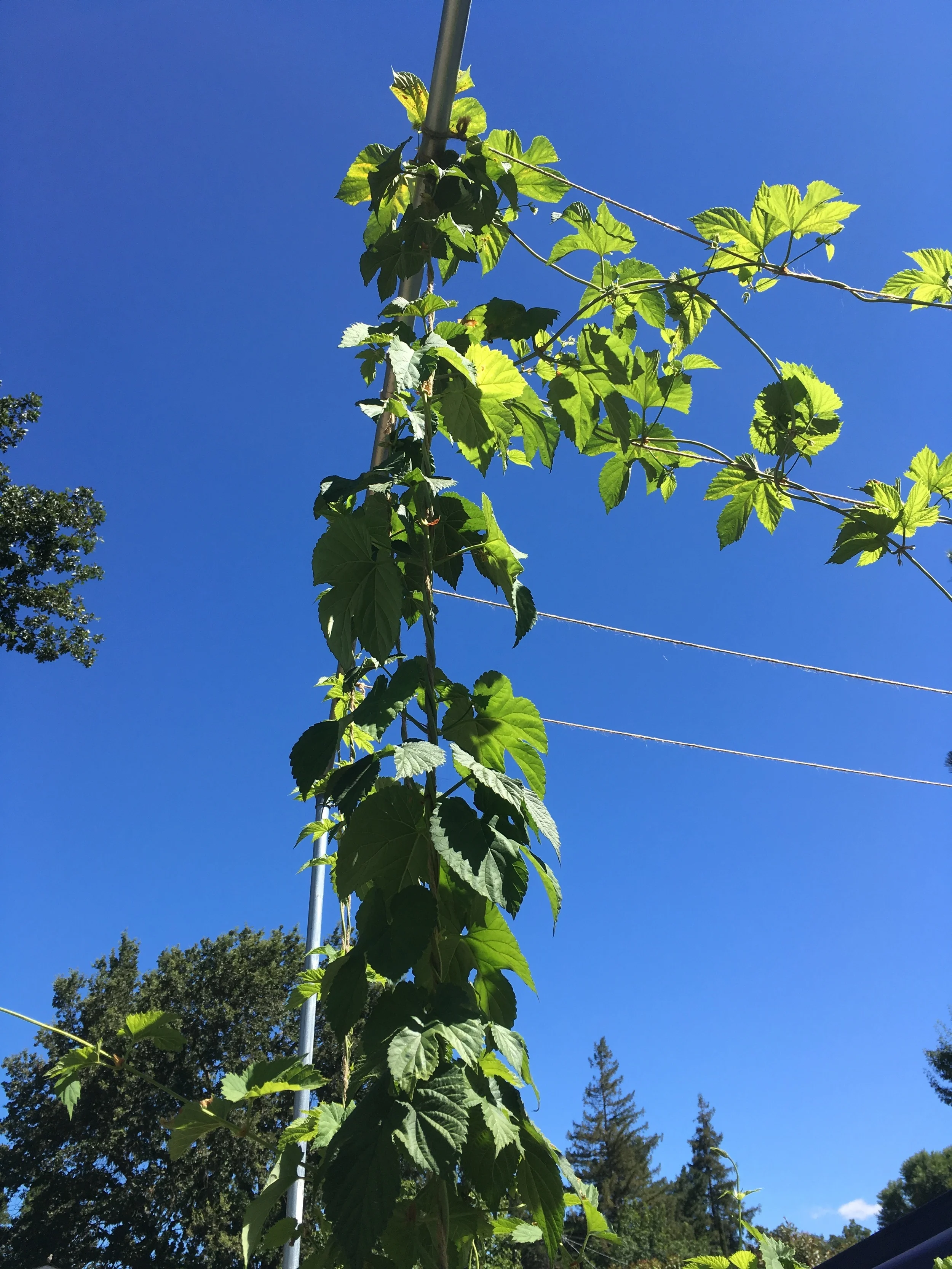
All of the rhizomes have produced a fair amount of growth in their first year. I think we were all a little dubious when we saw exactly how tall our 10' electrical conduit trellis is, but earlier in the spring the hops were growing prodigiously, with the Cascade ordered online winning the race to the top.

Up and over

Up and over

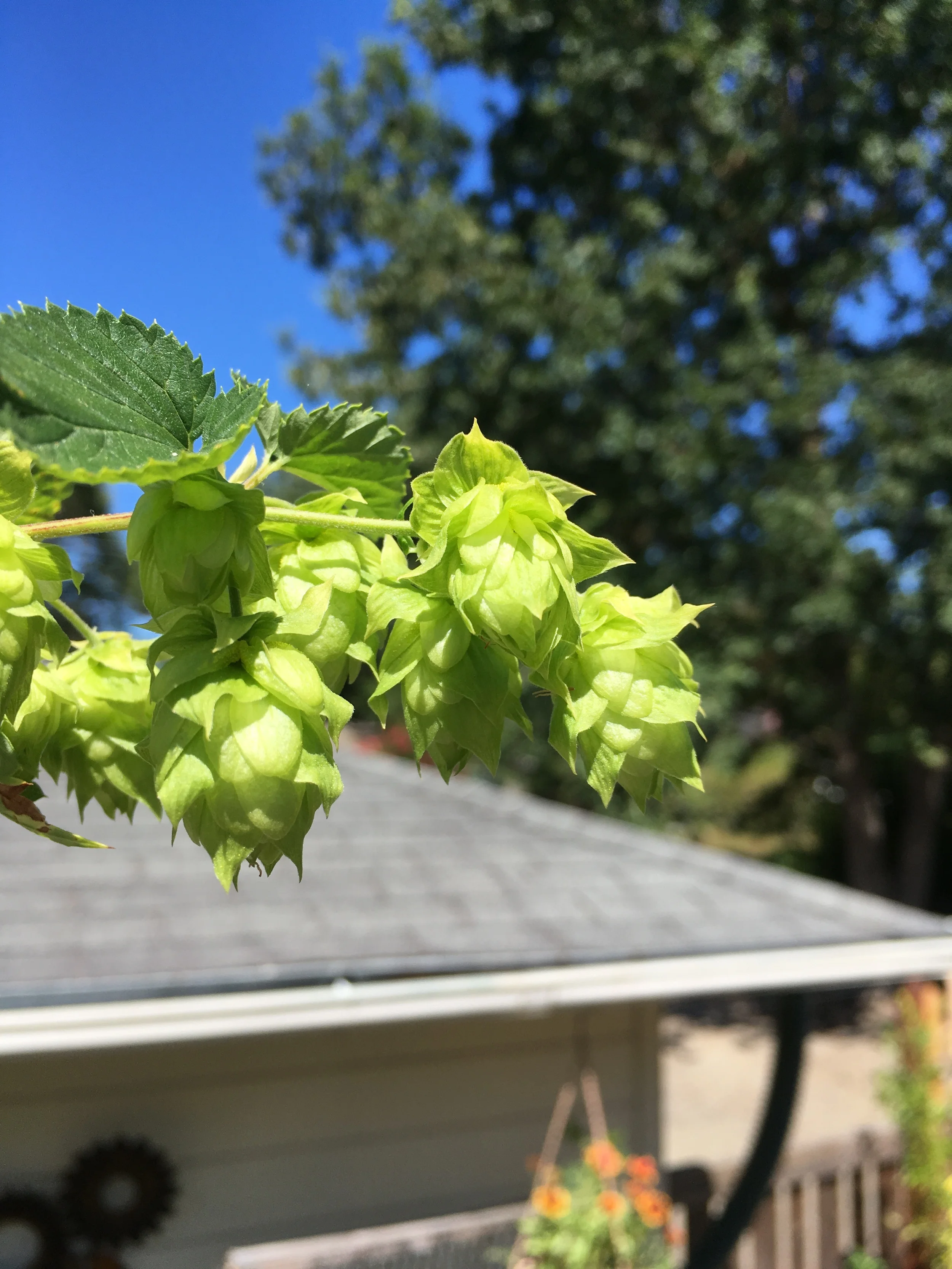
Since then, things have been a little more mixed. So far, we've gotten hop cones just from that one Cascade planter. I keep looking at the other plants to see if I can see beginning signs of cones, but so far, no dice.

Cascade hop cones

Cascade hop cones

Then, about two weeks ago, we had a prolonged hot spell, and that almost did in some of the plants. A lot of newer growth withered on the vine in what seemed like a matter of hours, and it was fairly upsetting. We've done some profuse watering and significant pruning since then, and the plants are looking better now, but we lost a lot of growth.

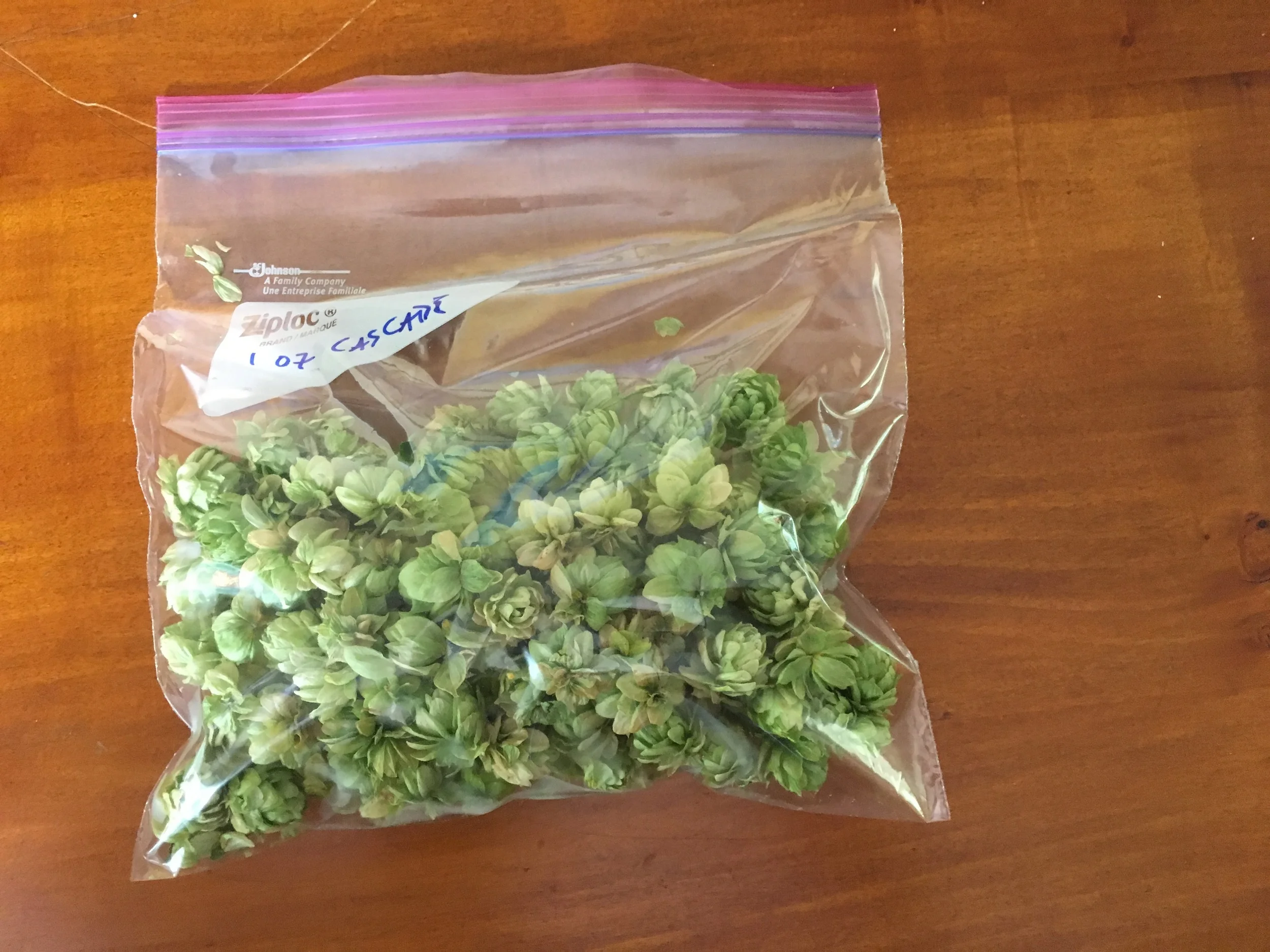
Many of the hop cones on the Cascade plants dried up in this hot spell, so I went ahead and harvested a bunch. You're supposed to dry out the cones before storing them, but these had pretty much dried out with that hot spell, so i just put them into a ziploc bag and put them in the freezer. It took a lot of cones to come up with an ounce (a standard 5-gallon batch of beer will take anywhere between 3 and 7 ounces). I think I'll try using them in my next batch. They smell right, but given the hot spell, I'm not sure if they should have been more fragrant. We've still got some cones growing, so I'm hoping for another harvest at some point.

I swear, officer, it's my friend's bag

I swear, officer, it's my friend's bag

While we did get plants up and over the 10' trellis, from a shade perspective, the plants did not grow enough to provide sufficient shade by the time we got summer heat. 

While I'm hopeful to get more growth and cones this year, I'm already looking forward to a few things I'll try differently next year:

  • While it's hard, I think I need to be more aggressive in pruning some of the early growth. I really should have trimmed down to just 1-2 vines per rhizome, but I didn't. I think we'd get taller and more robust growth with more aggressive pruning. The parts of the vines that really got hit with the hot spell were the newer, thinner growth.
  • Because the rhizomes are growing in planters and not in the ground, I think they're more susceptible to heat and evaporative losses. Mulching the planters early would have helped with that.
  • I drew up plans for a wooden arbor that uses the planters as anchors, but then decided that it was too costly a project to undertake this year. Having an arbor like this, with vines growing up, would look nice and provide the shade we need.

The July Garden is Tall

Walking around the garden today, I realized that if the winter garden is all about short and bushy,  the summer garden is all about tall. Corn, tomatoes, pole beans, potatoes, flowers - everything is reaching for the sun. 

beans

beans

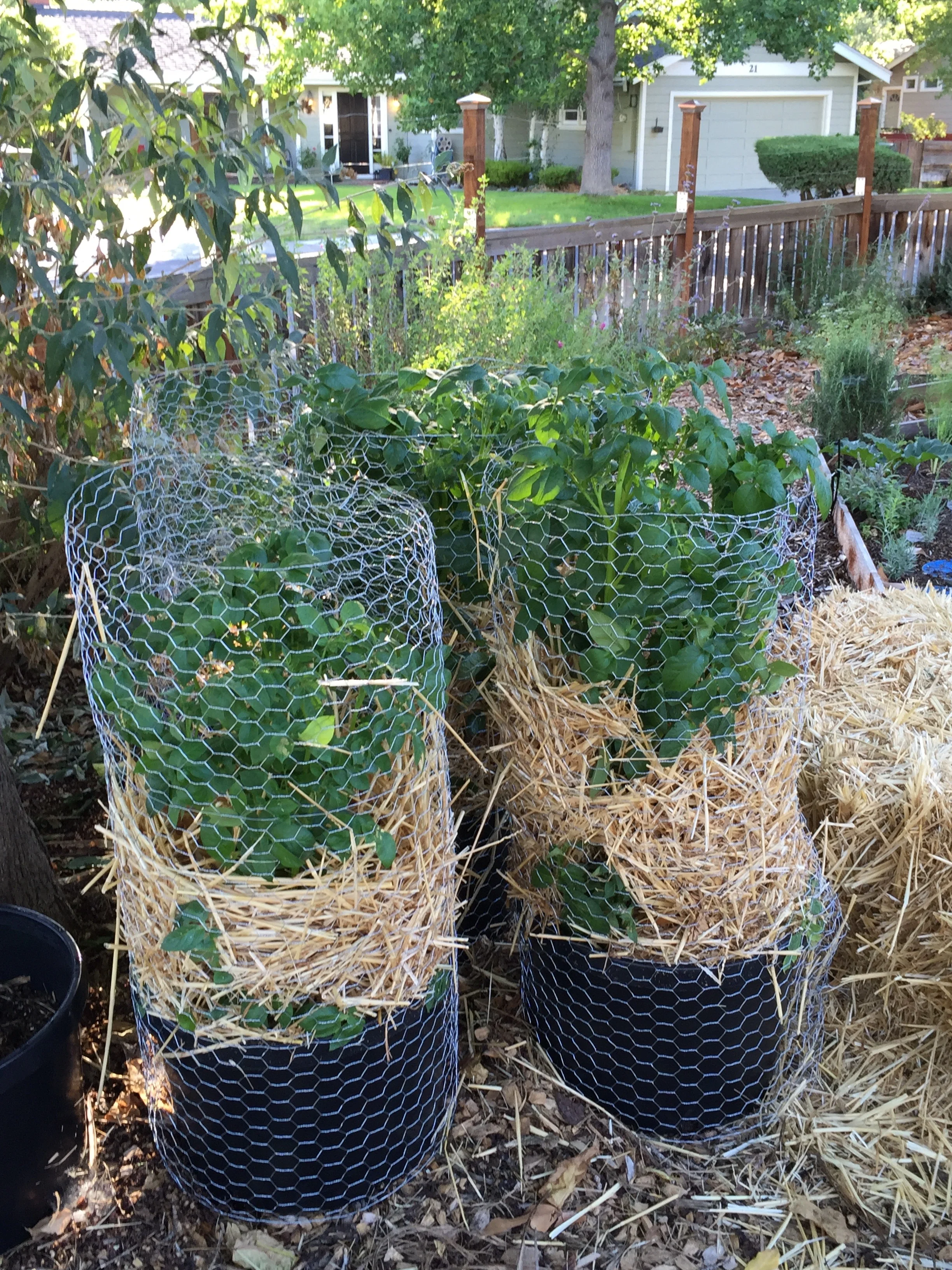
potatoes

potatoes

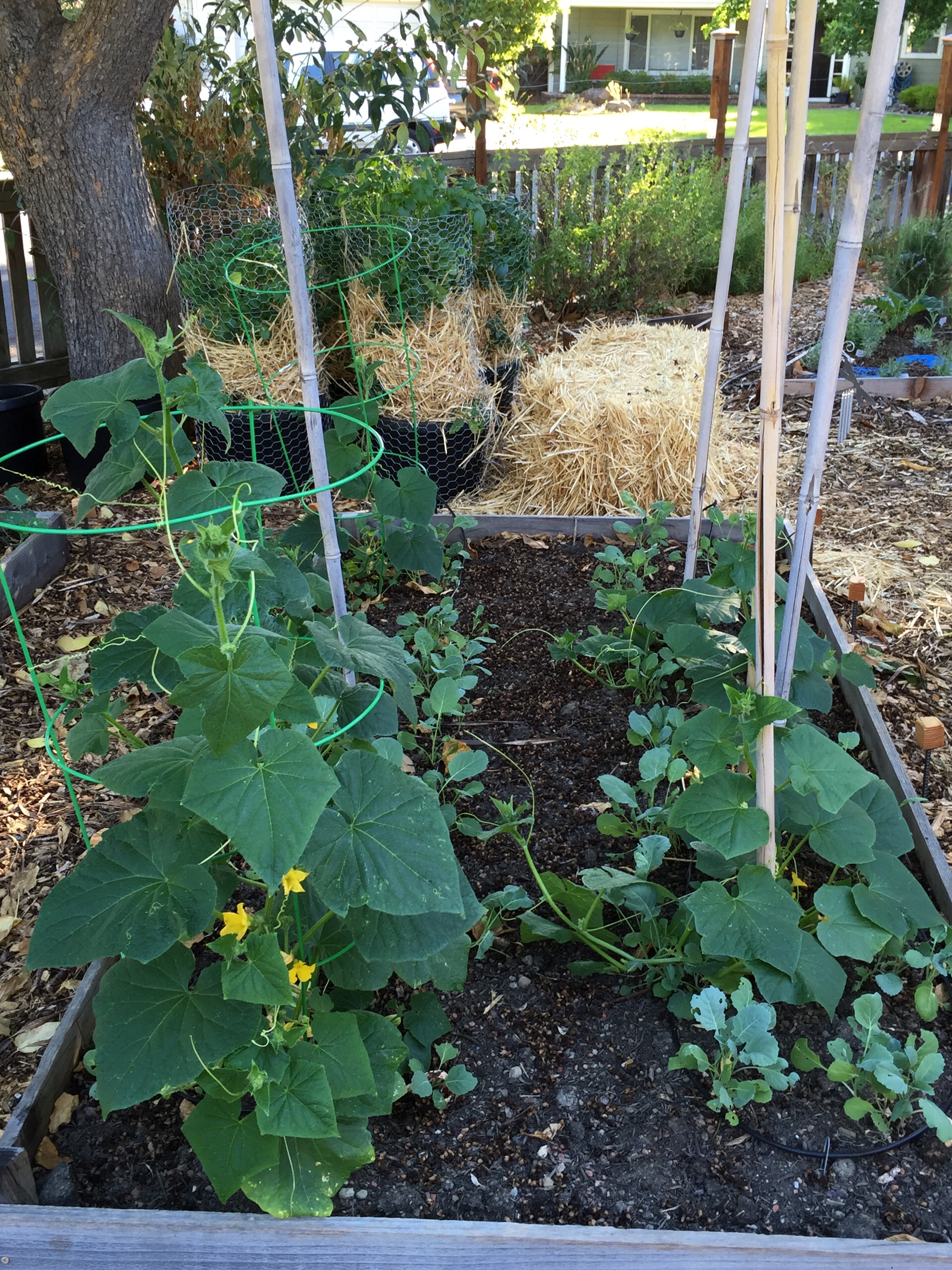
cucumbers (and collards)

cucumbers (and collards)

Monarda

Monarda

corn

corn

succession plantings

succession plantings

mini pumpkins

mini pumpkins

sunflower

sunflower


And if they're not tall, they're sprawling.


sweet potatoes mixed in with winter squashes

sweet potatoes mixed in with winter squashes

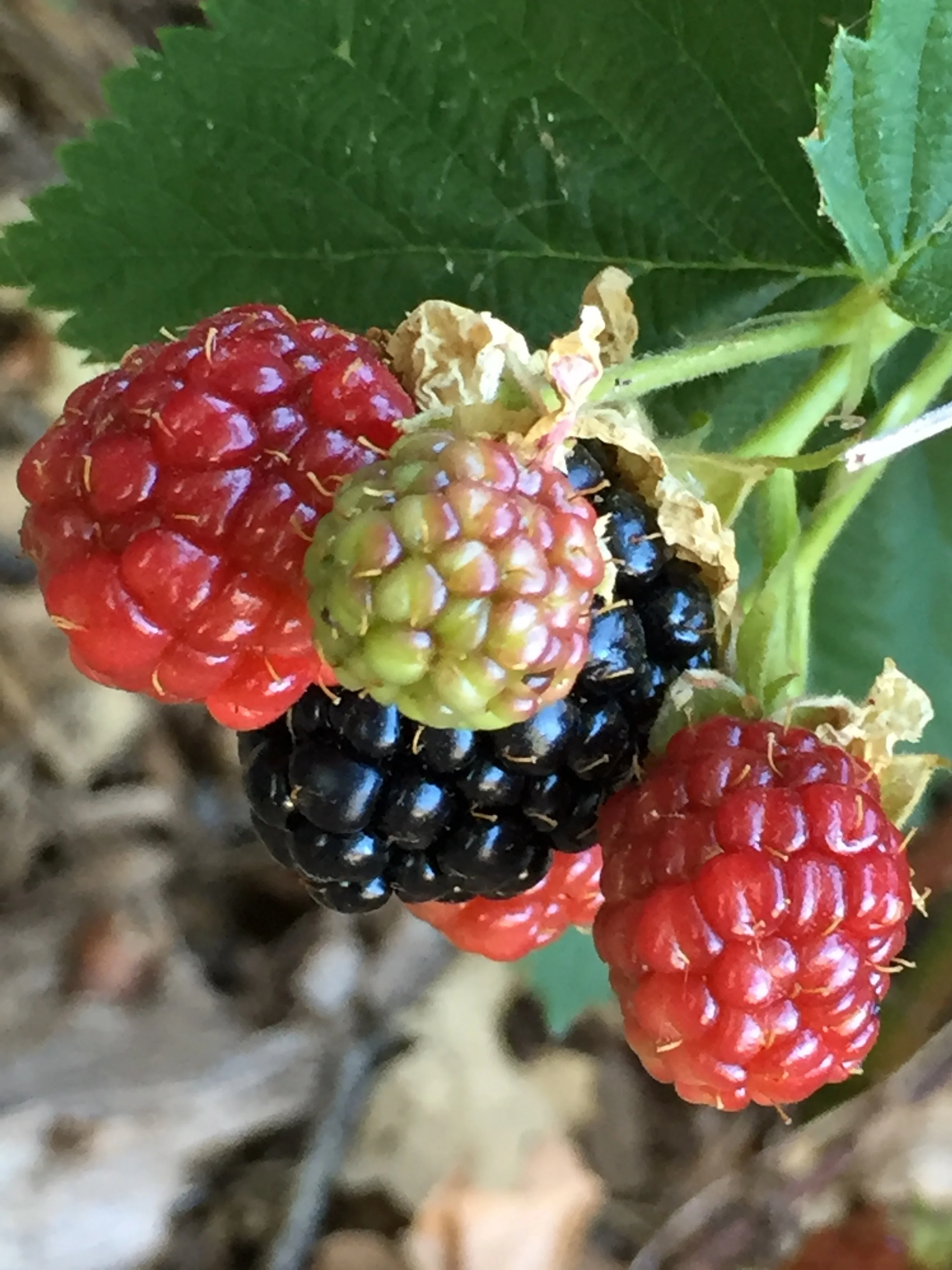
blackberries

blackberries

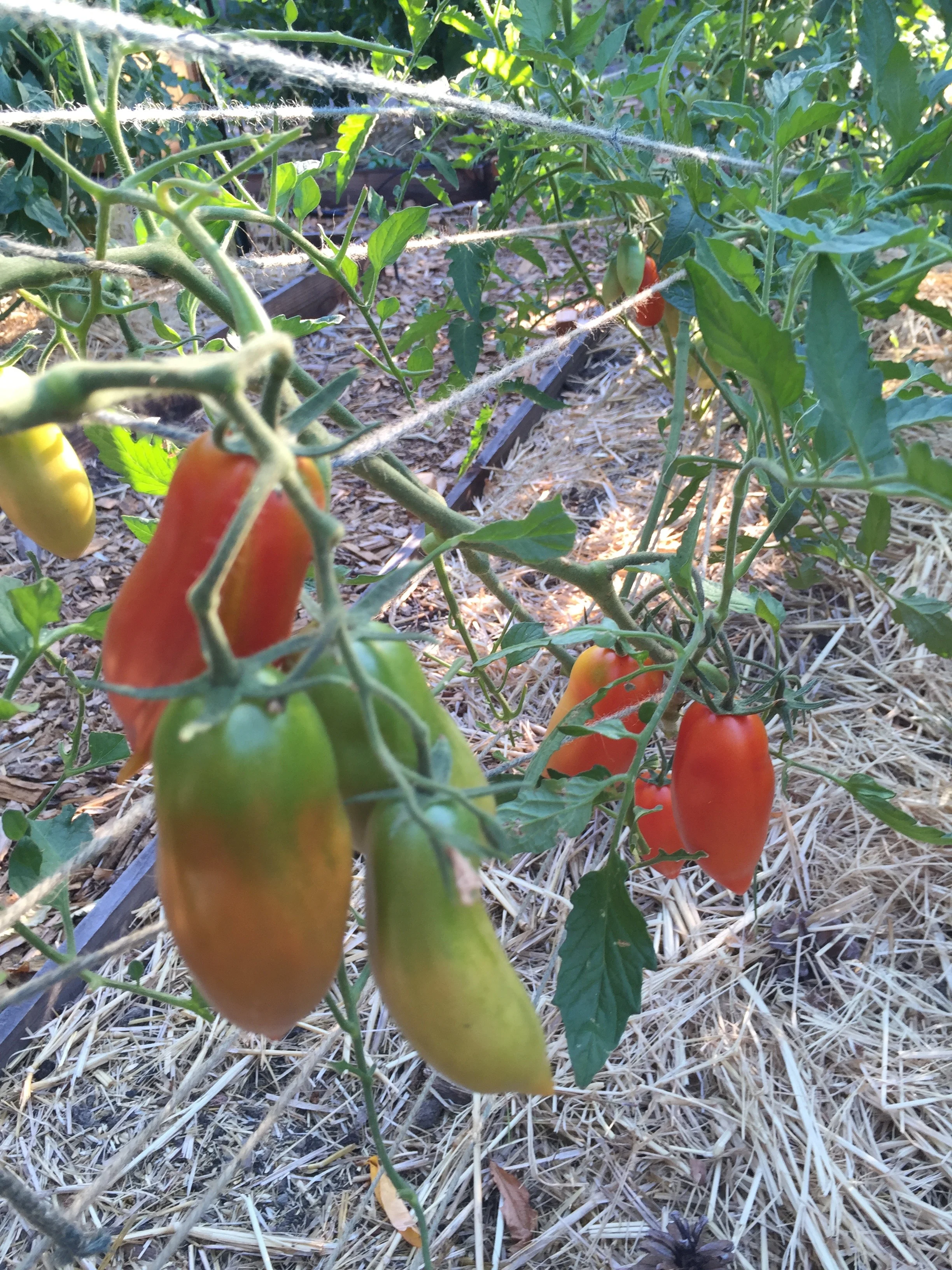
plum tomatoes

plum tomatoes

cantaloupe and watermelon

cantaloupe and watermelon

salad-leaf basil

salad-leaf basil

Thai basil

Thai basil

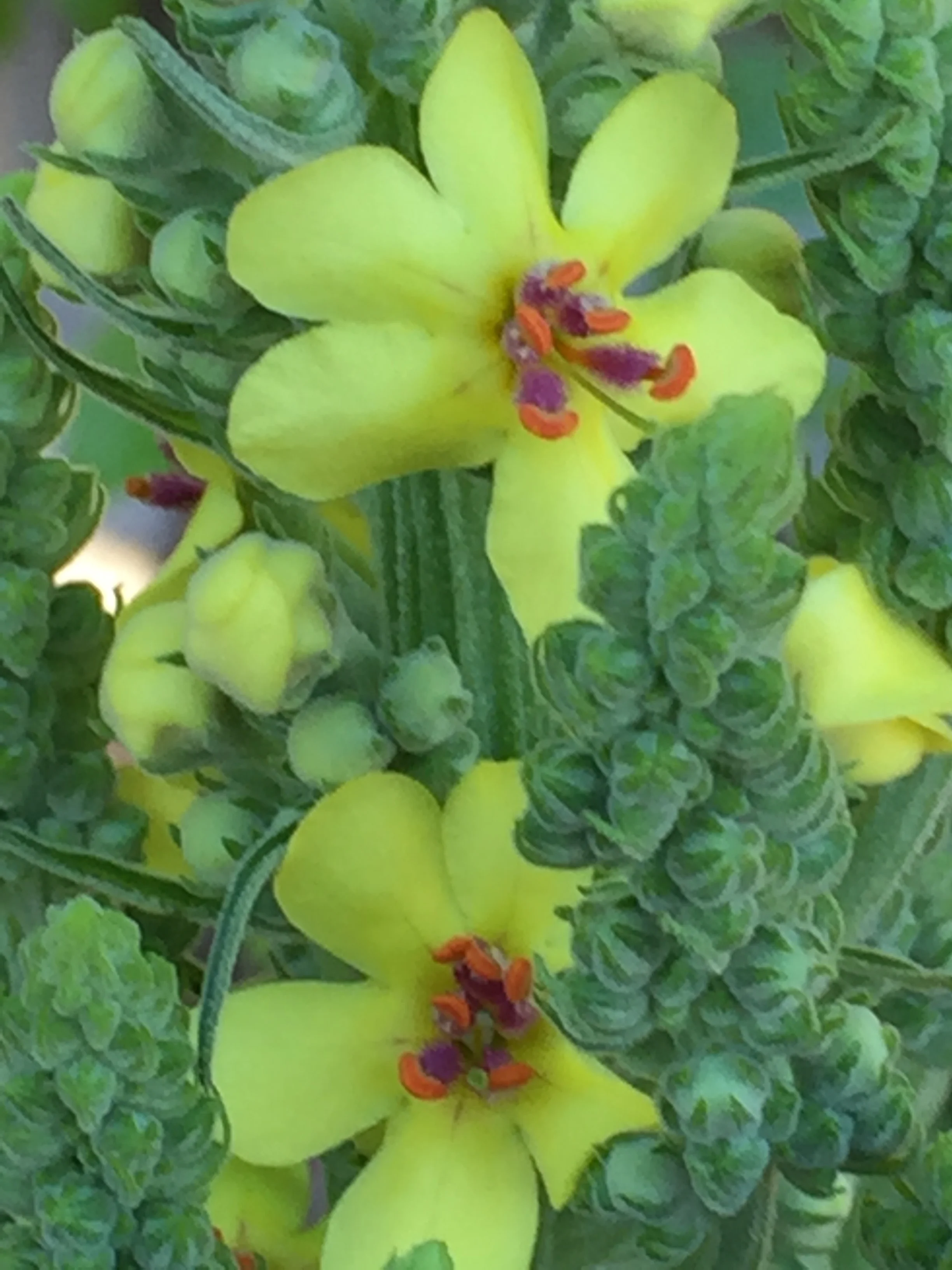
dark mullein

dark mullein

sheepnose pimento

sheepnose pimento

apples

apples

Cuphea

Cuphea

buckwheat (San Miguel Island)

buckwheat (San Miguel Island)

Olives

Olives

blueberries

blueberries


In other news, I discovered a neighbor had some comfrey. I read that you can dig down, cut out a part of the root of the existing plant, then transplant it to your own yard with absolutely no fuss. I thought long and hard about adding comfrey to the yard, because once it's established, it's hard to get rid of. I decided the benefits outweighed the risks. I got permission from the neighbor to dig up a root, then I planted it beneath our fig tree. It looked dead for a week, but now it's coming alive.

That will provide more forage for bees, plus the long tap root will bring up nutrients for the fig. And, it's right next to the compost, so I can chop the leaves if it gets too big and toss 'em in.

This morning, I realized that it's all happening now. All the preparation has lead us to this moment: the moment right before harvest. It's starting with little bits of things, one tomato here, a pepper there... pretty soon it won't be one at a time anymore. We'll have our second pesto tonight. We've had our first picking of green beans. Our first beefsteak tomatoes have been enjoyed. Any minute now, we'll be inundated and it'll be time to start canning and preserving. 

Black Krim tomatoes

Black Krim tomatoes

My lunch.

My lunch.

Checking for Mites

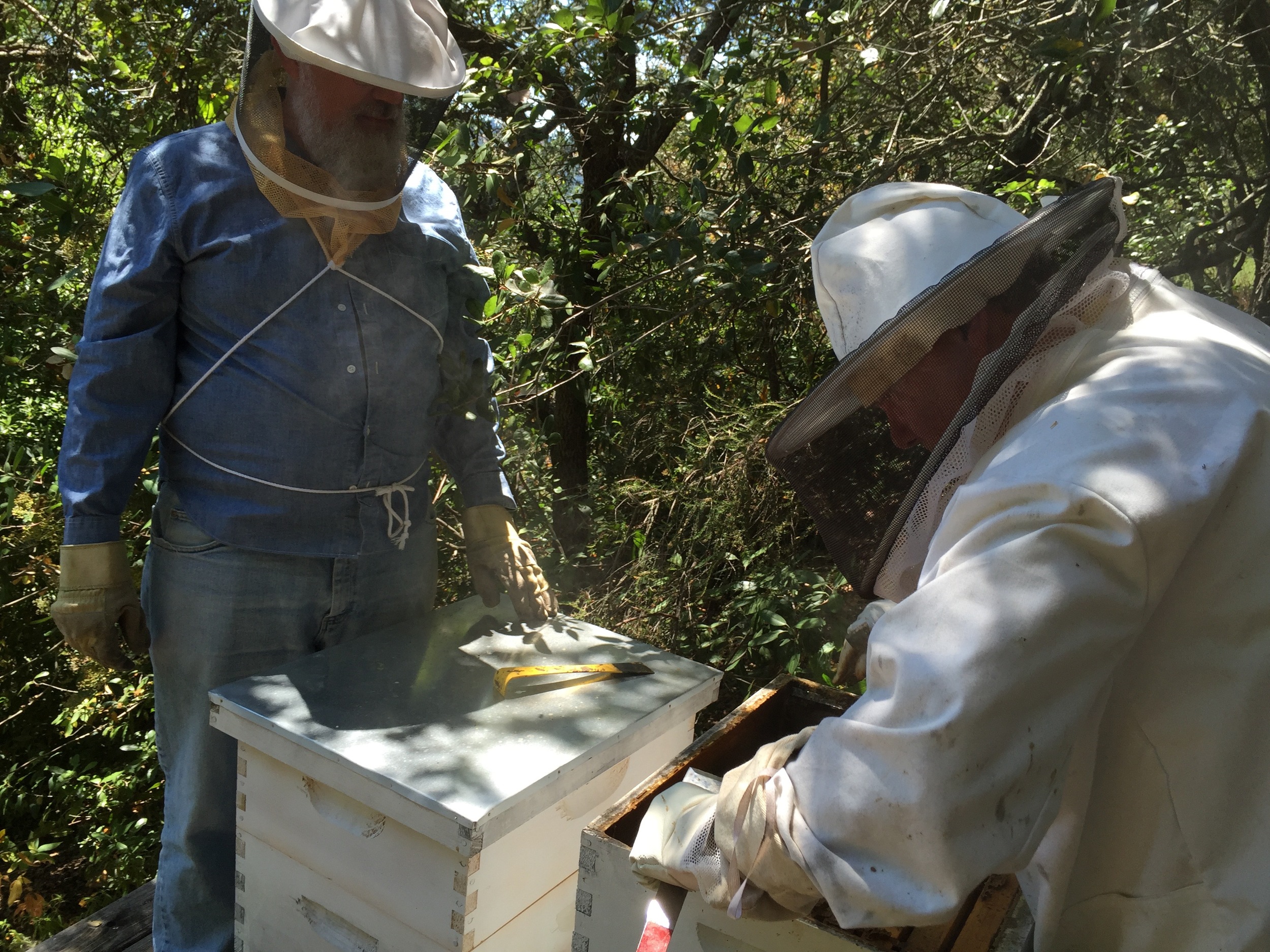
Today, my dad, Tom, and I decided it was a good time to check all of our beehives for Varroa Mite.

As you know, I've recently had a 'come to Jesus' moment about mites, and have decided to stay on top of the situation and assess mite load before it becomes a problem. I learned how to do this by performing an alcohol wash, during my recent Randy Oliver workshop.

Summer is not a great time to treat for mites, honestly, using any of the organic methods. It's too hot for formic acid, which can only be applied if it's under 92 degrees. The bees are busy making honey so thymol isn't the best option because it taints the taste of the honey. Oxalic acid can only be used when it's cool. Both oxalic acid and thymol do not treat the larvae, which is where the mites breed, especially in drone larvae. So formic acid is clearly the best treatment if you want to really knock back the mite population, but there's that little problem of the temperature. 

However, today it was in the 80's, and supposed to be pleasant for a whole week! We decided to take advantage of the cooler weather and check our hives, and treat with formic acid if the mite load suggested we should.

Quickly, we got our gear together. I hastily made the tool we needed to perform an alcohol wash. It's high tech, let me tell you. It's two plastic cups nested together with the bottom cut out of the inside cup, and a screen inserted in its place. 

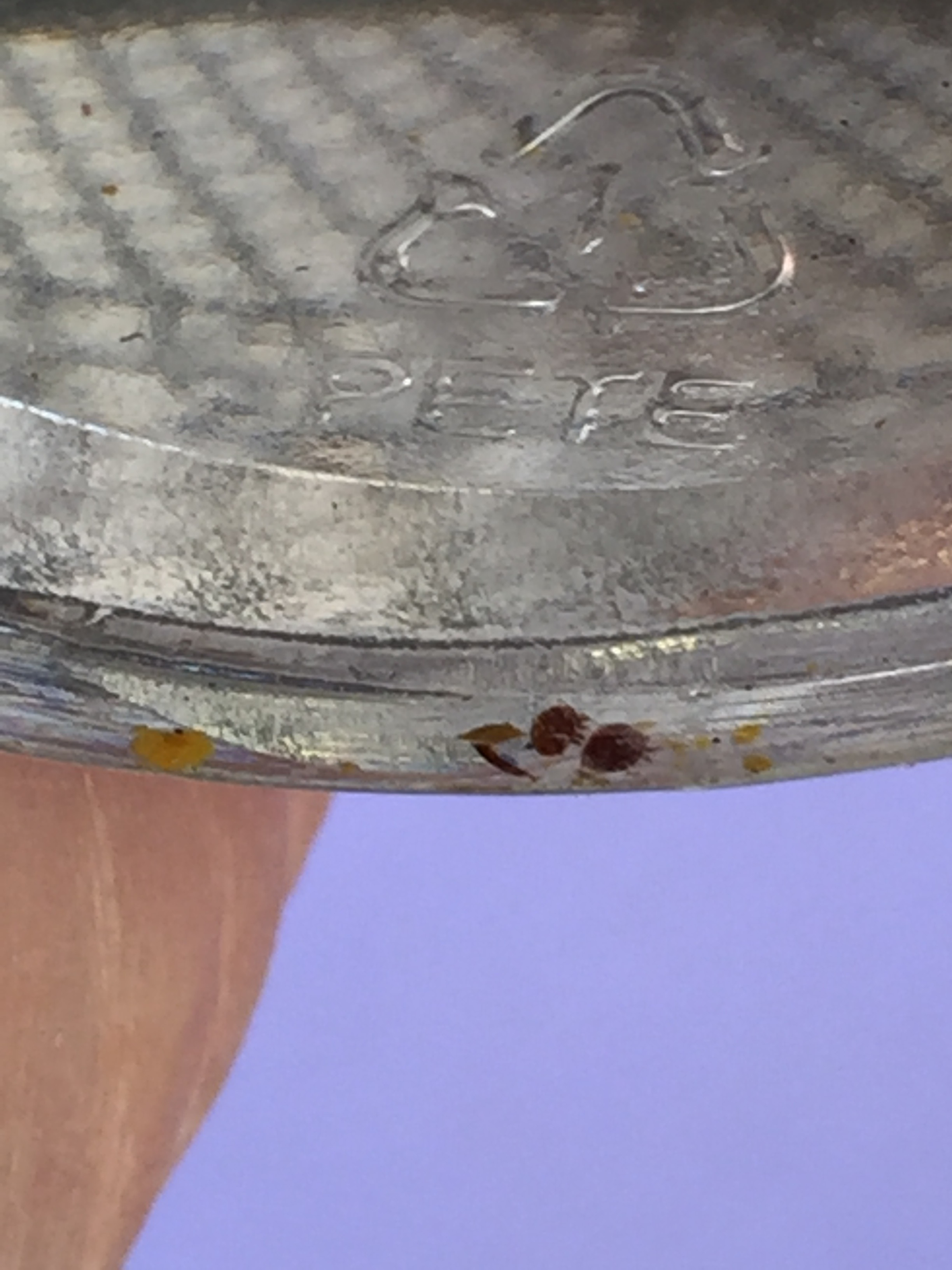
This is then filled with alcohol of any kind (we used denatured). It also needs a lid (we stopped by Starbucks and the venti size lid worked perfectly). You also need a wide bin of some sort and a half-cup measure. 

We started with our hive at Poppy Corners, knowing the bees were gentle and it would be easier to access the brood. (I have a top bar hive, which has it's advantages, but it also has it's downsides. More on this some other time.) We opened up, found a nice bar with lots of brood, checked to make sure the queen wasn't on this particular bar, and then shook it over the tub.

This causes all the bees to fall in the tub. The older bees, the foragers, immediately fly out. What's left in the tub is young bees, who are also nurse bees, which means they tend the brood. Nurse bees often have the biggest mite load of all the adult bees, since they are in constant contact with the larvae.  

Next, you scoop out a half cup of bees from the tub and dump them in the alcohol. This kills them instantly. It's doesn't feel good to kill them, but Randy compares it to taking a blood sample from a human - it's the best way to determine the health of the hive with regard to mites. Then you swirl the cup with the dead bees for a good minute, dislodging the mites, which fall through the screen, into the bottom cup.

Remove the screened inner cup and then you can look at the bottom cup and see how many mites you have, per 300 bees (there are about 300 bees per half cup).

As you can see, I had two. Which is terrific in one way, because my bees are not inundated with mites! But it's also a bummer, because, well, they have mites. The mite load doubles every month heading into late summer/fall, so I knew I need to take action. I used one strip of formic acid (a half dose), placing it on the bottom back of my top bar hive. This will stay there for 5-7 days, though most of the acid has done it's work by day 3. Then I'll remove the wrappings from the hive.

Tonight, the bees are doing just what we would do if we recently painted our house (or, like my son, removed a wallpaper border from his room using a vinegar solution): they hang out on the porch, to get some air.

I expected this, and also expect some loss of bees. This treatment is organic, but the fumes are strong, strong enough to kill the mites. It might also kill some bees. But it's better to lose a few bees than to lose the entire hive. And if my bees somehow drift in to another beekeeper's hive, I'll know that they are mite-free and not contributing to that beekeeper's mite problem.

Then we were off to Dad's house to check and treat his hives. He has two Langstroth hives, one of which had a honey super on top, so there was some 'unpacking' to do first.

This particular hive has some serious propolis, which you can see on top of every frame. The bees use propolis to seal any spaces in between bars or supers. It took awhile to crack this baby open. But we tested for mites, and the mite load here was larger than mine, so we also treated these two hives.

We had to use considerably more gear at Dad's house, as one of his hives is more aggressive. It was started from a feral swarm, and they are certainly not shy about letting us know how they feel about having their hive opened. However, none of us got stung. And we even adjusted the location of the hives a little bit, sliding them forward on their platform so it's easier for Dad to get in the hives. Success!

We all feel empowered, knowing how to do a true test for mites, instead of just eyeballing the bees and spotting a mite on an off-chance. And we feel good that we have acted to prevent further infestation. 

I took a picture of one of my bees on the verbascum today, and you can tell it's an old bee from it's wings - can you see that they are ragged and half the size they should be? This bee is at the end of it's life.

This is different from Deformed Wing Virus - this bee is not sick, just old.

On to other interesting creatures.

Yesterday, this little fellow leapt on to my arm when I went out to pick an apple for a snack.

And today, I noticed these guys in my fennel. They are second-instar larvae of the Anise Swallowtail Butterfly.

The hot weather bites for humans, but most things in the garden love it.

This huge blossom is for a mini-pumpkin!

This huge blossom is for a mini-pumpkin!

Cucumber

Cucumber

Pole Beans

Pole Beans

Rhubarb

Rhubarb

We're excited for the 4th of July and fireworks. My son Adam made a cake to celebrate the holiday weekend, and also to celebrate the start of The Great British Baking Show. If you haven't seen this show, and you like to bake, you simply must. Or if you like UK accents. Or if you like British humor. Go put it on your queue this minute.

Hope everyone is having a great weekend!

Blossom End Rot

Argh.

Every year with the Blossom End Rot. So very frustrating. I've removed 8 paste tomatoes (all of the variety "Pompeii") and one slicer ("Copper River"). This despite my copious use of eggshells from our chickens. It's very discouraging.

I did some further research, and I think the UC cooperative extension explains it best. BER starts "when the demand for calcium in the expanding fruit exceeds the supply." Simple, right? What's not so simple is that my soil may have plenty of calcium available, but for some reason the plant cannot access it. Usually this is because of "severe drought stress or fluctuations in soil moisture." Well, we've had weeks of over-100 degree temperatures, and the sun just beats down in the area where I have the tomatoes. However, we have the drip system running regularly, every other day at the exact same time, for the exact same amount of time. It's plenty of water. All I can think is that the extremely hot afternoons somehow stressed the plants, and UC says "Fruits in the rapid expansion phase are very susceptible to water stress. Even a temporary water stress in this period can induce BER because water preferentially goes to the leaves, reducing calcium delivery to the developing fruit." I suppose we had a temporary water stress in that time, and I didn't even realize it.

Now nine bad tomatoes among the very many we have that are beautiful is no huge deal, but we lost a lot of tomatoes last year to BER, and I don't want that to happen again (hence my preparation with eggshells, so much for that).  So I went searching for a quick fix, and I found many. Epsom salts and pelleted lime came up over and over again. Many folks swear by a foliar spray, but UC says "Foliar applications of calcium are of little value as calcium is poorly absorbed by leaves and does not move easily in the plant." Ok, scratch foliar sprays. UC does say, though, that "liming may be useful to increase the ratio of calcium ions to other competitive ions in the soil." However that's only if you have a calcium deficiency in your soil, and I don't have time for a soil test right now, I want immediate help! These raised beds often do get a pine needle drift from the Monterey Pine next door, so it's not outside the realm of possibility that the soil is on the acidic side. Therefore I decided that a quick application of lime wouldn't hurt matters and might help an awful lot.

I dissolved a cup or so of this stuff in five gallons of water and applied those five gallons to six plants. I also decided to be proactive and added it to the pepper plants as well, because I had BER in those last year too. I'll let you know how things fare from here on out.

Meanwhile, as I said, most of the tomatoes look beautiful, though they are way too slow to ripen for this tomato-lover. We've had enough for a couple of Caprese salads, one Pomodoro, and even given a few away (a very few!), but hopefully soon we'll have scads of tomatoes and I can start canning. I've cleared off two big bookshelves just so I have room for all the quart jars I'm planning to preserve. 

Cherokee Purple

Cherokee Purple

Yellow Pear

Yellow Pear

There's lots of other fun stuff happening in the garden. The first planting of corn is above my head, now, and some of the leaves have a beautiful crinkling. 

The watermelons are far behind the cantaloupes, but are finally blooming.

Some interesting creatures have been visiting.

A juvenile praying mantis on the potato pots

A juvenile praying mantis on the potato pots

I can't figure out what this is, I think it might be a cuckoo bee

I can't figure out what this is, I think it might be a cuckoo bee

And the honeybees have been very busy in the garden. Here's one in the Gaillardia, covered antennae to bum in pollen.

I finally got around to collecting the coriander. Weeks ago I cut the first planting of cilantro down and hung it in a huge bunch upside down in a paper bag. When it all had dried, I spent a couple of hours teasing out the seeds. We'll use these in pickling projects this summer. 

My verbascum is finally blooming - I've transplanted this thing three times; somehow it survived all that, and finally has sent up its huge stalk of yellow blossoms. I love it.

Verbascum nigrum 'Dark Mullein'

Verbascum nigrum 'Dark Mullein'

And a plant that I've been watching for ages in the South Pollinator garden, it just grew and grew and grew and I thought it might be a weed and I just kept waiting and I'm so glad I did! Turns out it's a Monarda! Chalk another one up to my bad memory. I must have scattered seeds of this at one time, but totally forgot. I'm not sure what kind it is, but my guess is Monarda fistulosa (or wild bergamont). Who knows. It's pretty! It forms rhizomes, so I guess we'll have it forever now.

I'm hoping the butterflies and hummingbirds find it soon! 

Everything I thought about Beekeeping was Wrong

Ok, maybe not everything. But a lot of things. My mind has been pretty blown this weekend, and I realize I have been inadvertently passing on some wrong information. So the best thing to do is write about it, so I don't continue to misinform anyone who reads this blog. If I haven't said this before, I will right now: I AM AN AMATEUR at almost everything I do and with regards to everything I blog about! I'm careful about sources and research, but this weekend has shown me very clearly that even someone like me who does her best to wade through vast amounts of information can often be wrong. 

What brought me to this realization? I've just spent the last two days attending a workshop hosted by my local beekeeping association. The leader and speaker was Randy Oliver, of Scientific Beekeeping fame. Randy is a Biologist and strives to understand better ways of beekeeping through scientific methods. Here's a blurb from his website:

"I started keeping bees as a hobbyist around 1966, and then went on to get university degrees in biological sciences, specializing in entomology.  In 1980 I began to build a migratory beekeeping operation in California, and currently run about 1000 hives with my two sons, from which we make our livings.

In 1993, the varroa mite arrived in California, and after it wiped out my operation for the second time in 1999, I decided to “hit the books” and use my scientific background to learn to fight back.  I started writing for the American Bee Journal in 2006, and have submitted articles nearly every month since then (see “Articles by Publication Date”–scroll to the bottom for the most recent).

My writing for the Journal brought me requests to speak at beekeeping conventions, which has also allowed me the chance to visit beekeepers from all over North America and several other continents.  I read most every scientific study relating to beekeeping, and regularly correspond with researchers worldwide.

What I try to do in my articles and blogs is to scour scientific papers for practical beekeeping applications, and to sort through the advice, opinion, and conjecture found in the bee magazines and on the Web, taking no positions other than to provide accurate information to Joe Beekeeper." (italics mine)

Yesterday was spent indoors, with power point, learning everything Randy could teach us in a short period of time. Today was spent outside (in 105 degree temps) in the backyard apiary of one of the members, opening hives and putting a practical point on the information we had digested the day before. 

Much of what I learned would only be of interest to other beekeepers. But I know there are many folks reading this blog who, while not beekeepers, still care about fresh, healthy food and how to live in a more sustainable way, who care about the environment and who try to have gardens and preserve food for winter and maybe even keep chickens. Some of what I learned this weekend affects all of us, not just beekeepers. I've also touted some things here in this blog that I've learned are flat-out incorrect, so I'd like to set the record straight and hopefully, this will be of interest to both those who are beekeepers and those who aren't.

It's pretty hard to argue with the cold data of science. And this particular scientist, Randy, is also an organic gardener who has a vested interest in the health of his food. That makes him a rather perfect vehicle for this message, as far as I can tell. For more information about actual beekeeping, you couldn't go wrong with perusing his website, but I'm just going to hit on two points here. 

The first: I've been wrong about the effect of neonicotinoids on honeybee colonies.

Some background for those who don't know: All honeybee colonies here are European, descended from the first colonialists who brought them from England. European honeybees are social bees, living in colonies of up to 50,000 bees in the height of summer. This makes them different from solitary bees, which are our native bees here in the states. Solitary bees (such as bumblebees, mason bees, carpenter bees, wool carder bees) live mainly alone, rearing a new colony each summer. The queen hibernates alone in winter and develops her entire colony in one warm season, so there is not enough time to rear a colony of thousands. There will only be a few bees in a native bee colony. I learned that honeybees are actually not in decline, as we hear in the news almost daily. So many folks are now so concerned about honeybee health that they've become backyard beekeepers, and this is causing a resurgence of honeybees. Native bees and pollinators, however, are in decline.

Neonicotinoids are a type of systemic pesticide. They are regularly dabbed on seeds, a minute amount, and the pesticide grows as part of the plant in every phase of it's life (it's systemic). The pesticide will be present in the leaves, the flowers, the nectar, the pollen, and the seeds of the plant it started in. Neonics are used most often in monoculture crops, such as corn, wheat, and soy, but they are used in very many of our food crops and also in ornamentals (that petunia you're buying at Home Depot will only be purchased if it's perfect). 

Neonicotinoids have often been blamed for Colony Collapse Disorder, which started becoming more prevalent in beehives at about the same time neonics became commonly used. Also appearing at the same time were two honeybee enemies, Varroa mite and Nosema ceranae (which are probably the true culprits of CCD). Science shows that neonics are actually not terribly poisonous for honeybee colonies. In fact they actually increase production when the bees get a little bit of it. Honeybee colonies are so large that the effect of neonics is largely moot. Not only that, the handling of neonics is much safer for farm workers than the use of organophosphates, and for that reason alone are a better choice for big agriculture. Randy says they're not going away any time soon, either. 

So should you ignore my advice and buy your plants and seeds from big box stores rather than your local neonic-certified-free mom and pop nursery? ABSOLUTELY NOT. And here's why. While honeybees can sustain a certain amount of neonic damage, native pollinators definitively CANNOT. This is a big reason why we are seeing such a decline in the numbers of native bees and butterflies. So my advice stands. Buy your plants and seeds from reputable sources, a place that commits to organic practices. (As an aside, organic foods and plants often have many insecticides/herbicides routinely sprayed on them - they are just certified 'organic' methods. This is better, but still not ideal. Just one of the reasons why growing your own is always better.)

Ok. Time to move on to the second point, which is a bit harder to swallow and may offend some folks. And here it is in a nutshell: We must treat our hives for varroa mite. 

I've waffled openly on this blog, going back and forth about whether it's right as a 'natural' beekeeper to use poisons to kill pests in the hive. Our first year as beekeepers, we didn't treat for varroa, and we lost that hive. Last year, we did treat, and the hive made it through, just barely. That same colony is back to full strength and it looks really good this summer. On that experience alone, I'd say I was already 90% convinced that we'd treat again this year. 

But when I mention this in certain circles, I am positively lambasted. And just a couple of weekends ago, when I went on the Berkeley Urban Farm Tour, I heard one of the farmers vehemently stating that she would never treat her hives because she is a 'natural' beekeeper and because (and I've said this myself at one time or another) 'the bees have to evolve to survive this problem.' I have felt extremely guilty for treating my bees with pesticides. (And by the way, these are organic pesticides we're talking about here, nothing synthetic.) I wouldn't go spray my garden with Imidacloprid to kill the cabbage worms or aphids, so why would I poison varroa in my beehive? It's a conundrum that only those who have kept bees can know. Losing a colony is devastating. It feels horrible. Especially when you know you could have done something to help them. But on the other hand, honestly, don't they need to evolve past this? I've been told that by organic farm mentors more times than I can count.

Well, Randy set me straight on this issue in the strongest possible way.

First of all, he says, there's no such thing as a 'natural' beekeeper. From a biology standpoint, a 'natural' beekeeper would be someone who left a hole in their tree and a swarm moved in, and in that case you're not a beekeeper, you're a bee-haver, and in order to be natural you just watch them. Once you have a hive, once you take their honey, you're intervening. You're a beekeeper and there's nothing natural about it.

Secondly, good animal husbandry is good animal husbandry, no matter the animal. If your dog had mange and you let it go untreated, you'd be put in jail or hounded by PETA. Treating mites on your bees is exactly the same issue.

Thirdly, bees drift. This was new to me. If a bee goes to a hive that is not hers, and acts suspiciously, like she's going to rob the hive, the guard bees will kill her. But if a bee goes to a hive that is not hers, and seems confused, the guard bees will let her in after a period of time, and she'll become part of that colony. Studies have shown that bees drift to and become part of other hives up to FIVE MILES AWAY from their original hive. So, if you live within a mile or two of a beekeeper, let's name her Sheila, that doesn't treat her hive for varroa, your hive will very likely get some of Sheila's bees with varroa when Sheila's hive fails and collapses because of said varroa. So even if you are a beekeeper who is on top of treating the varroa in your hive, Sheila's bees can come screw it up for you. (No offense to anyone named Sheila. Every Sheila I've ever known has been lovely.) Randy put it more succinctly. He said, "Natural beekeepers are messing it up for the rest of us."

And this brings me to the fourth point which is that our European bees, bred for gentleness and good brood-rearing and great honeymakers, are not bred to survive varroa. They can't evolve past it because IT IS NOT IN THEIR GENETIC CODE. Now a hive of feral bees, down the road in the open space, may have indeed evolved to survive varroa. And you can collect a swarm anytime you find one or someone calls you asking for help. But who knows if that swarm is from a feral colony? It could be from Sheila down the block. The only way to tell is to test those bees (using methods detailed on Randy's website, such as an alcohol wash) and find out what their varroa load is. The bottom line is that pretty much all bee colonies have varroa to some degree. The varroa doesn't actually kill bees. It lives on the outside of them, sucking their juices from a hole the mite has drilled into the bee's skin. The mite injects a substance that causes the hole to remain open, rather than healing, which allows all kinds of viruses and bacterias to get in to the bee. (Randy likened this, in terms of ratio, to a human having a mite the size of a Dungeness Crab living on them, sucking out of a 3/4" hole in the skin.) Most bees die of Deformed Wing Virus after having hosted varroa. Honeybees can survive a small infestation of varroa, but the varroa rapidly develop and spread in the bee larvae, and infestation tends to double every month in the summer, coming to a head in early fall. 

A side point: Randy believes that the only way to really prevent varroa is to breed queens who are resistant to it. He's been trying for 25 years to do just that, with no luck. 

Today at the workshop we performed an alcohol wash on the hives we opened. One hive had 25 mites per 1/2 cup of bees (about 300 bees). Randy says that hive will likely fail, but it's possible the beekeeper can do enough to stop it. And this is JUNE, not the fall, when most of us see varroa in our hives. Randy encouraged all of us to start treatment in February and continue 3-4 times through November.
The mites at the bottom of a cup of alcohol wash

The mites at the bottom of a cup of alcohol wash

The treatment Randy recommends are all organic (all the synthetic treatments used for varroa are no longer being used, because the varroa has itself evolved to resist them). He uses three different things to treat, and mixes them up and uses them at different times and in different orders, so the varroa doesn't develop a resistance to them. These are oxalic acid, thymol, and formic acid. The amount of oxalic acid that you use on one hive is the same amount as in 3-1/2 ounces of spinach. Formic acid is found in honey (and ants) naturally. Thymol is from the herb thyme. All of these are effective, but only formic acid gets under the capped brood and kills the mites there, which is of course where they are breeding. Unfortunately formic acid is also a threat to the queen, as she never leaves the hive and can die from the fumes. So there is no perfect solution. We can only manage varroa, not eradicate it.

I hope I've done enough to clear up some of the erroneous things I've written about in the past. I've always called myself a 'natural' beekeeper, but I won't be doing that anymore. I still consider myself an organic urban farmer, though. I don't sell our honey, but by law, to sell organic honey in California, you have to show proof that you've actually treated for mites. So I figure I can still call myself organic. Or maybe I'll just call myself 'doing-the-best-that-I-know-how.'