• About
  • Blog
  • Contact
  • Favorites
  • Archive
Menu

Poppy Corners Farm

Street Address
Walnut Creek, California
Phone Number
Walnut Creek, California

Your Custom Text Here

Poppy Corners Farm

  • About
  • Blog
  • Contact
  • Favorites
  • Archive

Nectar Flow

June 24, 2016 Elizabeth Boegel

Beekeepers often talk about 'nectar flow' - but what is that, really?

Nectar flow is the time of year when the native vegetation is in bloom. Sometimes that's hard to pinpoint, especially because many of us have no idea what the native vegetation really is. In California it's even more difficult because different native vegetations bloom at different times. For instance, some native wildflowers bloom in late Winter or early Spring - things like lupine, clarkia, and poppies, and early Spring is a typical time for nectar flow all around the US. But here, manzanitas and ceanothus often bloom much earlier, providing pollinators with a nectar source when we have mild, sunny days in January and February. Then there's the milkweed flowering in June, the tarweed flowering when nothing else is in the hot days of July and August. What native vegetation can you find flowering in your area? It's fun to figure that out. Sometimes there's not much happening in the native world.

Luckily, there's also an awful lot of non-native vegetation flowering that can also prompt a nectar flow. When lavender flowers all over my neighborhood, the bees go crazy - likewise with sunflowers and dahlias. Bottle brush. Mimosa trees. Crepe Myrtles. Guara. All the non-native things that people have flowering in their yards helps. I'm so grateful for all the suburban flowers. 

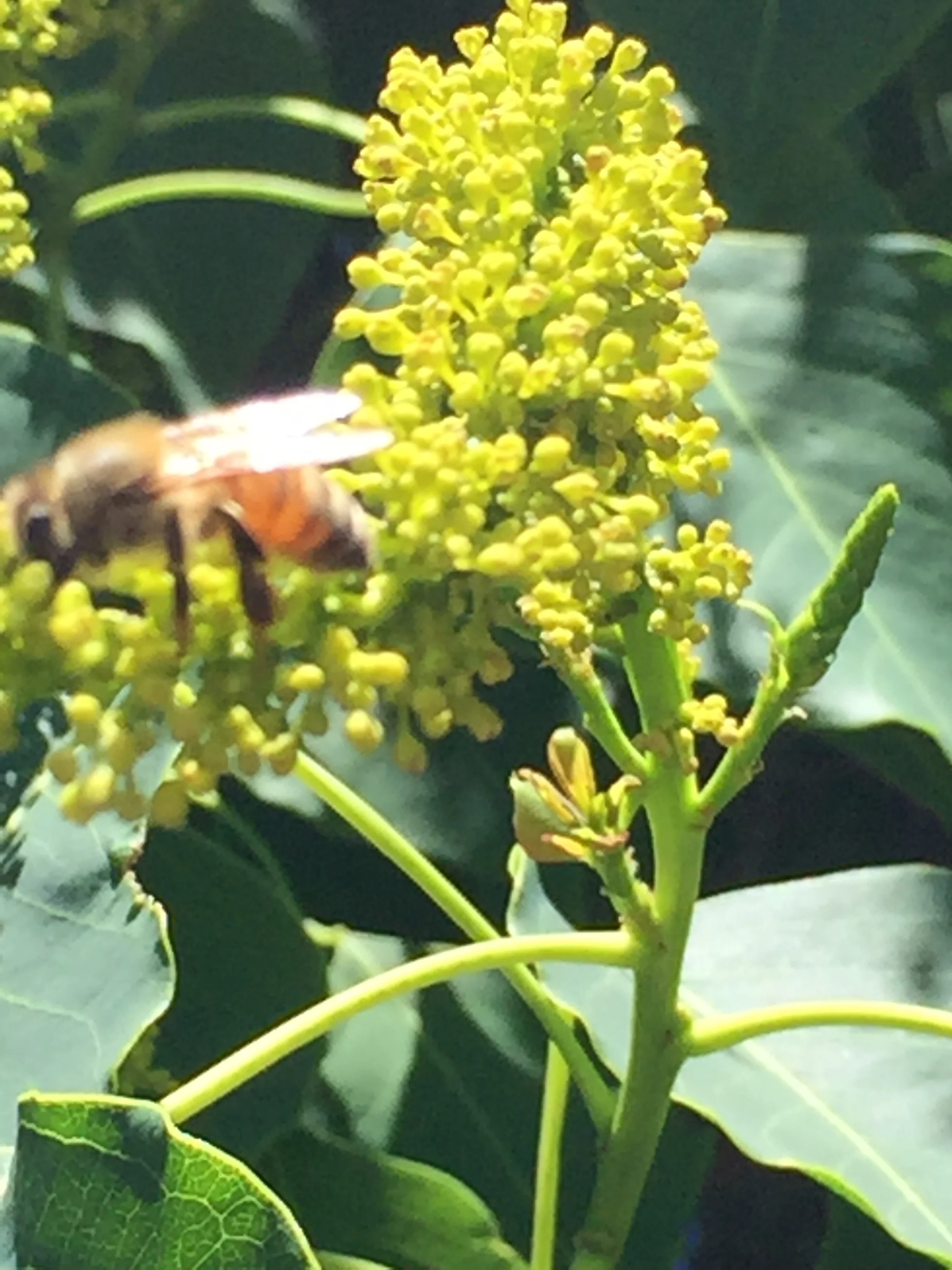
My next-door neighbors have a Chinese Tallow tree. The smell of this tree blooming marks the beginning of summer for me. It's not a lovely smell, but it's deep and rich and pervasive - we smell it constantly. I love it but I could see why someone else wouldn't. But the really fabulous thing about this tree is that it provides my bees with a tremendous nectar flow. That's one of my bees, above (I'm just assuming it's one of my bees, I don't really know), foraging in one of the long blossoms. And here's a short video (one minute long) of the bees in this tree. It gets really good and buzzy about halfway through.

I've noticed some interesting things about this tree. For one, native bees seem to stay away - this tree attracts only honeybees, as far as I can tell. Secondly, seedlings of this tree are very persistent, coming up from the roots as well as from dropped seeds. Since my neighbor's tree is in their lawn, it gets mowed enough that the seedlings don't take over, but I can see that it could be a real problem.

So I did some research on this tree. In its native China, the waxy coating of the seeds is used for candle-making. No one seems to know exactly how it got here, though Benjamin Franklin is often blamed for planting it first. And I say 'blamed' because, in the South, from North Carolina down to Florida and over to Louisiana and Texas, this tree is a noxious invasive. The way folks write about this tree, you'd think it was the devil incarnate. It must be huge issue because the government has even worked hard to eradicate this tree.

In Texas, the local beekeepers have decided to make lemonade out of lemons and move their hives into Tallow stands in order to make plenty of honey. The trees have become important for this reason and beekeepers are actually worried about these trees being removed so rapidly. 

After watching the seedlings of my neighbor's tree, I can see how this tree can be invasive. But it seems to be kept in check here in Northern California, either by drought or by human intervention. So I'm free to enjoy the tree and watch my bees enjoy it. There's little enough blooming at any one time to look this gift-horse in the mouth.

This is one of the reasons I try so hard to have flowers blooming in my yard year-round. Because California is a summer-dry area (and Fall-dry, and often Spring-dry), and on top of that we're in an historic drought which doesn't seem to be abating any time soon, for bees to survive we've got to help them. This is true of all pollinators, not just honeybees. Suburban areas, and even urban areas, are much better at this than rural, actually. The rural areas consist of often thousands of acres of monocrop (though hopefully that is changing, albeit slowly) where pollinators can find nothing to eat, whereas suburban areas are often broken up by plantings, whether native or not. There is actually more for bees to eat in neighborhoods. 
 

So I encourage you to plant for the pollinators! Save a place in your garden where you can sow seeds, or plant things like salivas that bloom constantly through the summer. And remember to buy non-GMO seeds or plantings, and ask your local nursery if they are neonicotinoid free. If we're planting things that have been treated with systemic pesticides, we're doing more harm than good - and you may as well not plant anything at all. 

Tags bees, bee plants, pollinators, flower garden
Comment

Snapshots of Summer in the Garden

June 23, 2016 Elizabeth Boegel
Gaillardia aristata

Gaillardia aristata

'Cherokee Purple' tomato

'Cherokee Purple' tomato

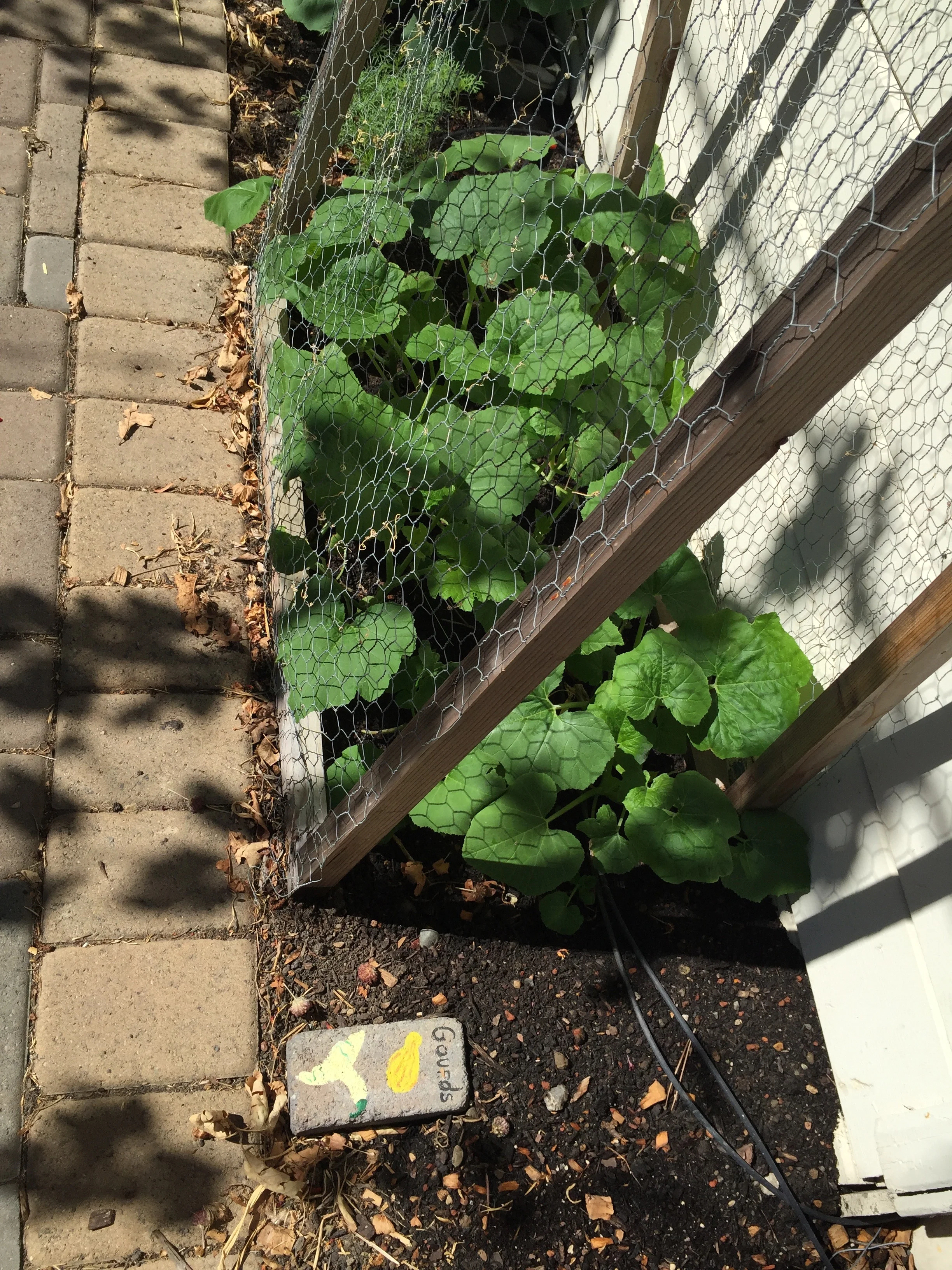
Gourds

Gourds

Basil 'True Thai Queenette'

Basil 'True Thai Queenette'

'Black Cherry' tomato

'Black Cherry' tomato

Watermelon 'Picnic'

Watermelon 'Picnic'

Romaine 'Jericho'

Romaine 'Jericho'

Golden Bantam 12-row, first planting

Golden Bantam 12-row, first planting

Potatoes, 'Red Desiree' 'Yukon Gold' 'Kennebec White' 'Nicola' 'Canela Russet'

Potatoes, 'Red Desiree' 'Yukon Gold' 'Kennebec White' 'Nicola' 'Canela Russet'

'Jimmy Nardello' sweet pepper

'Jimmy Nardello' sweet pepper

'Missouri Wonder' pole bean, first planting

'Missouri Wonder' pole bean, first planting

Fuchsia Thymifolia

Fuchsia Thymifolia

Cuphea 'Strybing Sunset'

Cuphea 'Strybing Sunset'

Blackberry

Blackberry

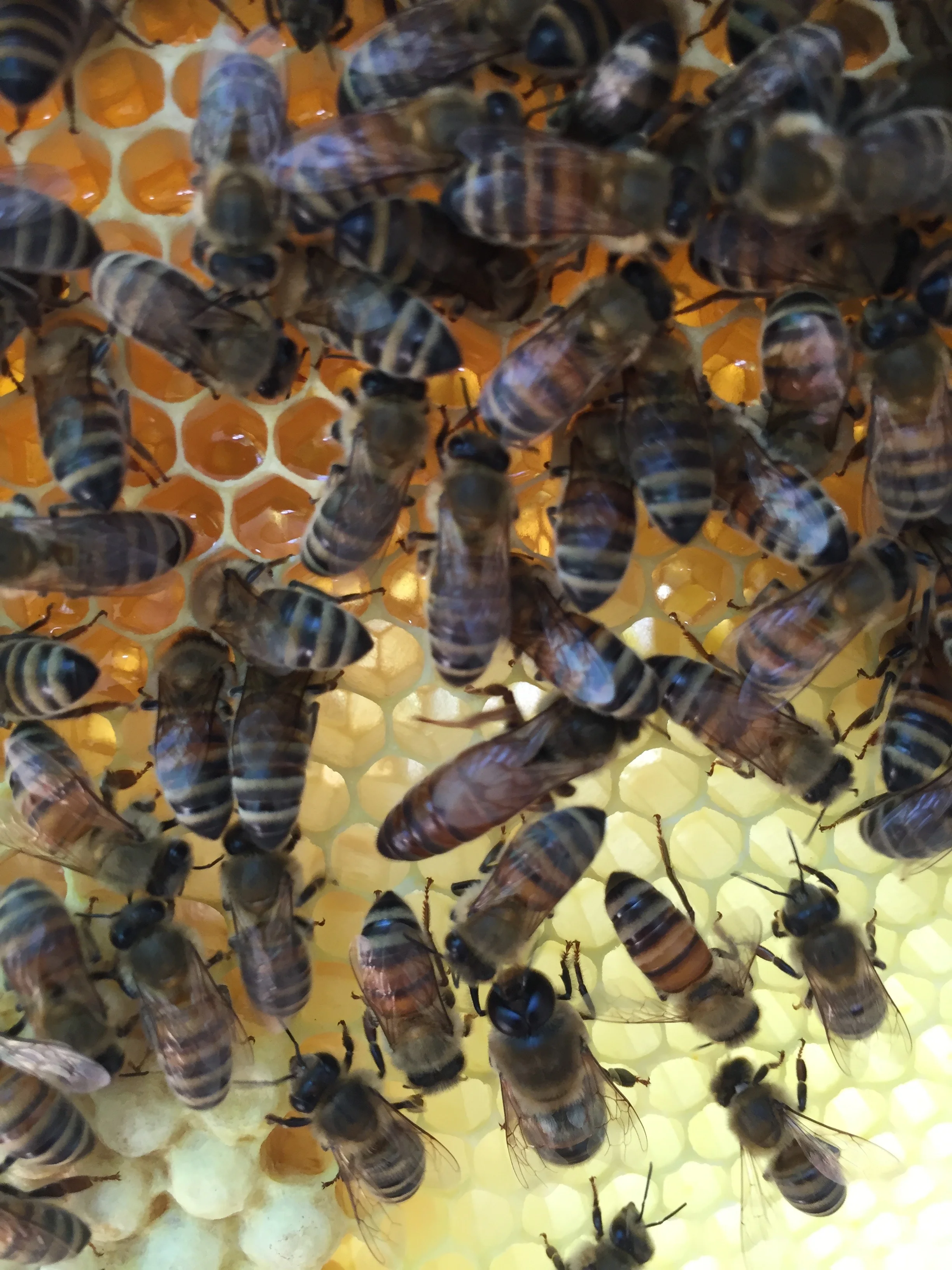
Queen in the middle, laying drone eggs

Queen in the middle, laying drone eggs

the first Caprese salad of the summer

the first Caprese salad of the summer

Agastache aurantiaca 'Coronado'

Agastache aurantiaca 'Coronado'

Asparagus

Asparagus

Madia elegans (Elegant Tarweed)

Madia elegans (Elegant Tarweed)

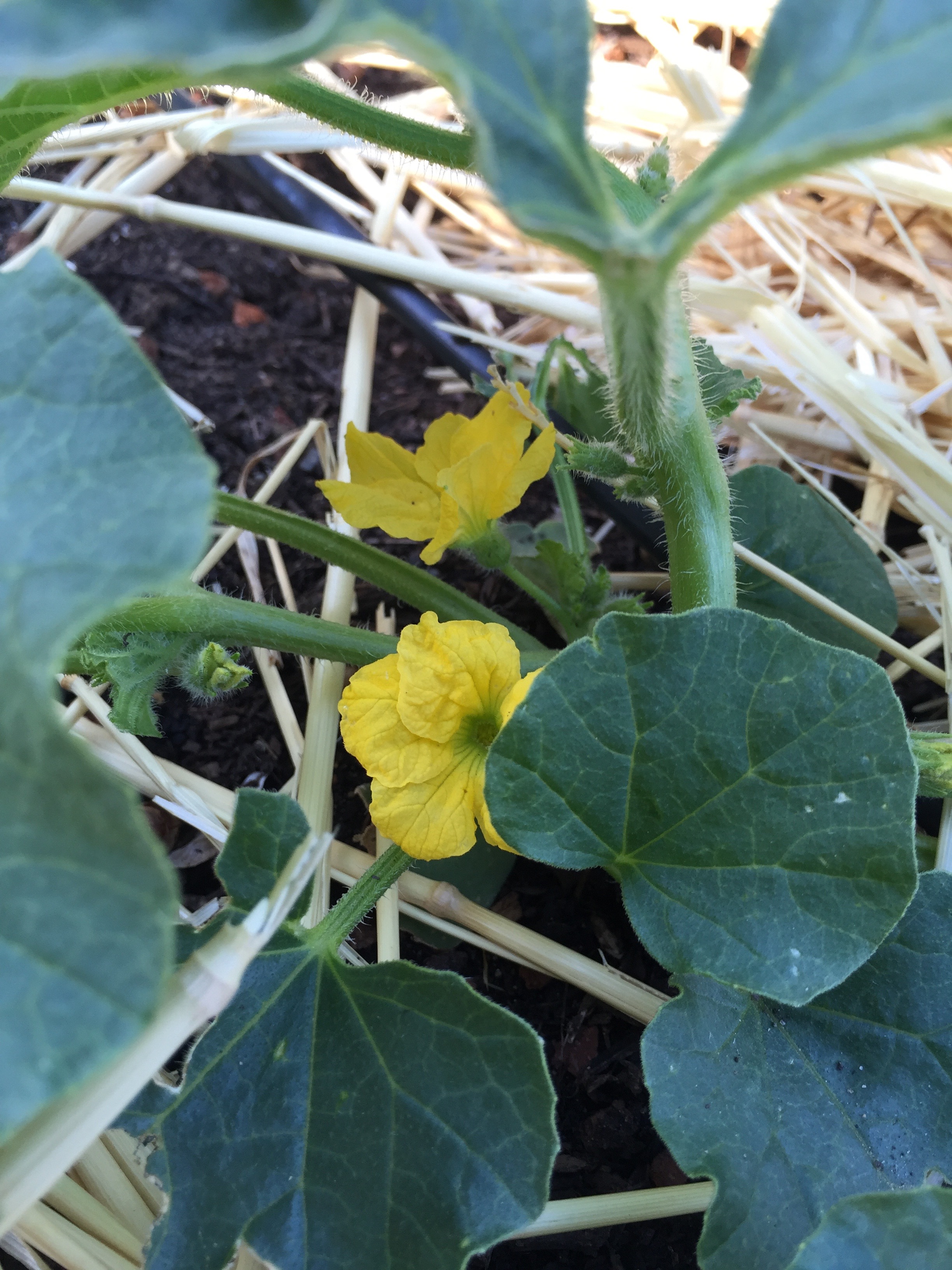
Cantaloupe 'Golden Jenny'

Cantaloupe 'Golden Jenny'

California Aster

California Aster

Verbascum

Verbascum

Tags fruit garden, vegetable garden, herb garden, flower garden, bees, bee plants, natives
Comment

Peach harvest, with a not-so-delicious surprise

June 19, 2016 Elizabeth Boegel

It's peach harvesting time here at Poppy Corners, and so far this year we've got a bumper crop. We've processed them for freezing, for icebox pie, for jam, and of course we've been eating them at every meal.  They're delicious and we realize our trees must have had plenty of chill-hours this past winter to get such a good crop. (We don't know the variety of this peach tree, since it was here when we moved in, and is probably at least 25 years old. It's a wonder it's still alive, let alone producing. With global warming, who knows if it's getting the requirements it needs at this point.)

This morning, Adam made breakfast for Tom (our homemade sourdough toast, topped with thick-cut bacon, sautéed greens, and a crispy fried egg freshly laid from our chickens) and it included a cut-up peach. As Tom got down to the bottom of the dish of peaches, he noticed a bit of extra protein - a small white worm. This grossed us out so badly that we took it out to the chickens before we had a chance to take a picture of it or look more closely. 

Further research reveals it was probably a Plum Curculio larvae. 

This insect is apparently the 'Achilles Heel' of the orcharding community. I had no idea and have never seen it before. But now that I have, I need to deal with it.

Every university extension seems to recommend pesticides. We are committed to avoiding pesticides at all costs. Time and experience have shown us that there is always an organic way to deal with pests, usually some kind of predator. Research shows that ants are the primary predator of plum curculio, and we have plenty of those. But we need some sort of deterrent, and that is where a product called Surround comes in.

Surround is made primarily of kaolin clay, and with repeated applications can completely coat the fruit so that insects cannot access it. This apparently works for all kinds of terrible orchard insects, including the coddling moth, which we have also had in our apple tree in the past. Here is a great blog post about this product. The problem is, it needs to be applied as soon as the flowers drop, just before fruit begins to set. So I've missed the window this year. I've put a calendar reminder in to order this (not cheap) product in January. Arbico Organics has it for a good price. 

I also need to remember to spray copper as a fungicide for the peach tree, as it had minor peach leaf curl this year. 

Many people think fruit trees are kind of a 'plant-it and forget-it' sort of thing. I'm finding that they take a little bit more work than that. Pruning is something that needs to be done yearly, if not twice a year; the trees need adequate organic matter (compost or worm castings seem to be best); and now this issue of pests.

For now, we'll just enjoy the fruit while looking a bit more closely at its contents!

We noticed this good predator on the hops the other day...

ladybug larvae

ladybug larvae

... and while birds can be pests, they can also be helpers. We've had some territorial California Towhees mating in our yard. They can eat a lot of insects. Mourning Doves are often scratching and pecking around the chicken coop, picking up seeds the chickens have flung out with their back feet, helping me avoid unwanted germination. I've noticed Robins in our vegetable beds, probably looking for worms (we have plenty) but hopefully also eating some sow bugs and cutworms as well.
In other news, we've all had one cherry tomato each (Mexico Midget wins the prize for first ripe tomato) and there are some plum tomatoes ripening quite quickly.

The peppers are coming along almost as quickly.

Sheepnose Pimento

Sheepnose Pimento

And some junior sunflowers are recovering from the Reign of Turkey Terror and getting closer to blooming.

Our Father's Day plans including making more jam, fixing a ripped sprinkler line, and opening the beehive for a check. The bees have been very busy and may need more room.

One of our honeybees foraging on a Scarlet Scabiosa

One of our honeybees foraging on a Scarlet Scabiosa

We're also taking in a Blues show later. Should be fun!

Tags fruit garden, vegetable garden, insects, pests, bees, flower garden
Comment

June Garden Overview

June 12, 2016 Elizabeth Boegel

Now that the turkey is gone (and apparently she is loving her new 15 acre home and is even laying eggs for her new keepers), all my plants can start growing again. Luckily we have a long growing season here in Zone 9b in the Northern California interior, and we'll have plenty of time for catch up. 

So as I show you these pictures of the garden, keep that in mind - we have turkey damage we're overcoming, especially when it comes to winter squash, cucumbers, and peppers. Also the pollinator gardens are in a bit of a lull since I cleared out the spring flower debris and we're now waiting on summer flowers to grow up and bloom (things like cosmos, zinnias, tithonia, coreopsis). But I thought you'd like to have a more vegetable-heavy post, as I've been so in love with flowers lately and only seem to take pictures of those.

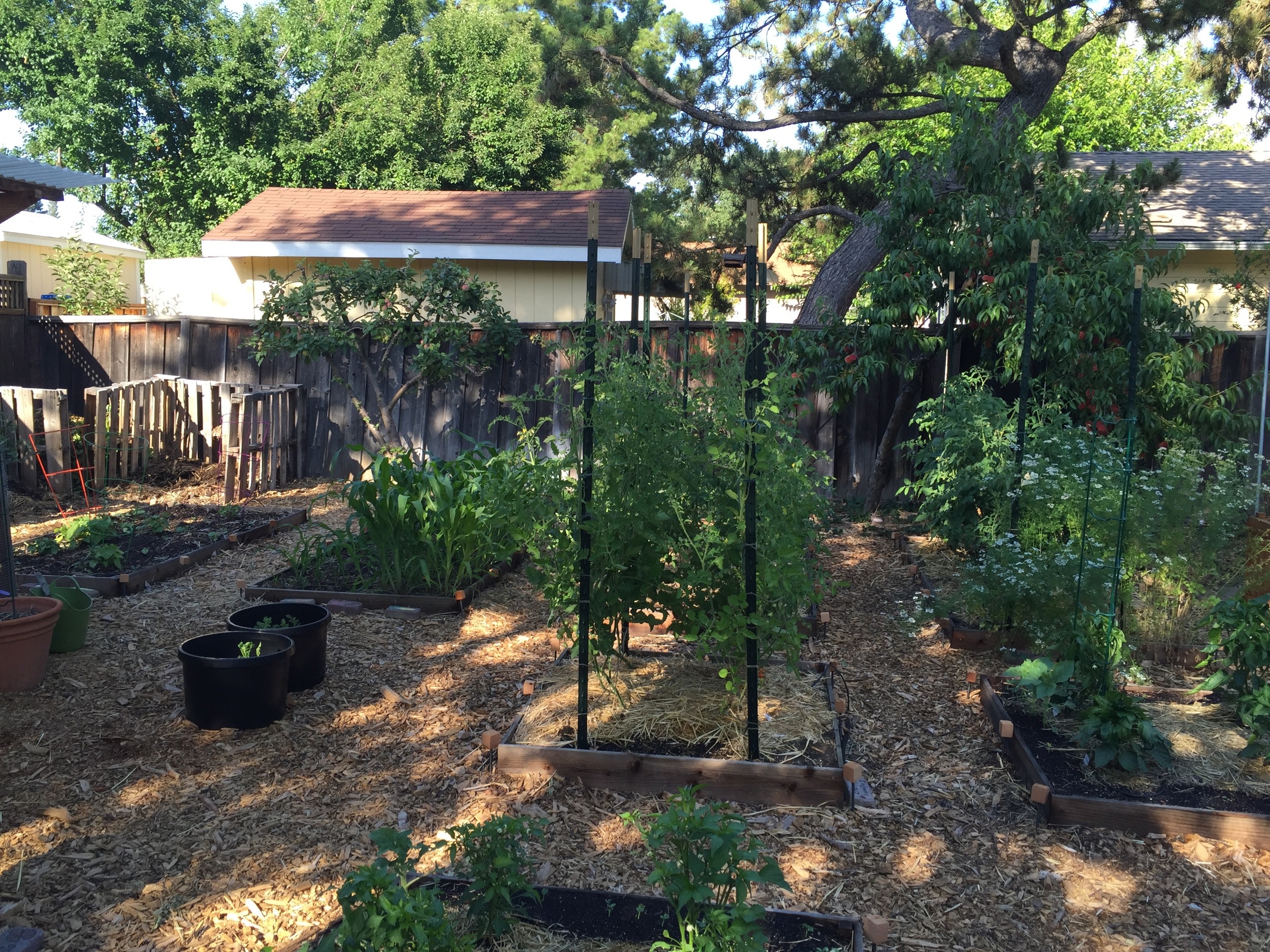
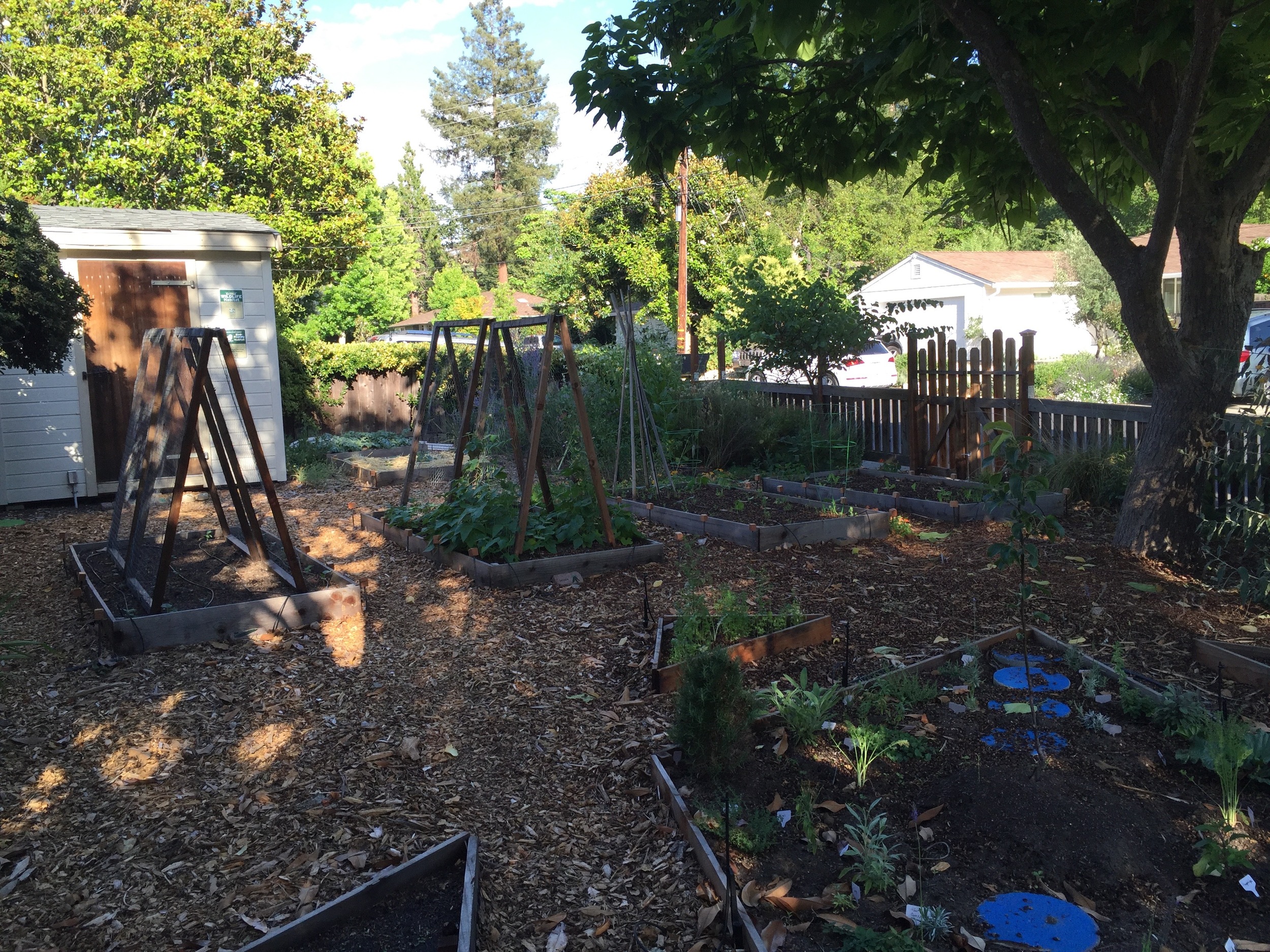
Anyway, here's the North Garden. North Garden is full hot sun all day until dinnertime - and here we have our peach, apple, fig, quince, cherry, plum, and new orange tree, as well as alpine strawberries as a ground cover, tomatoes, peppers, corn, winter squash, sweet potatoes, newly planted basil, cilantro, pumpkins, gourds, potatoes, and hops. Also some containers of basil, lettuces, and cucumbers. Oh, and one huckleberry bush. Plus a plethora of flowers, a chicken coop, and two compost piles.

Scarlet Scabiosa

Scarlet Scabiosa

Hop cones

Hop cones

My friend and coworker gave me a gift certificate on my last day of work, and with that I bought a Robertson Naval Orange. We'll see how it fares. I had to clear out a volunteer flowering pomegranate and severely cut back a flowering currant to make it happen here. Gosh, the orange flowers smell unbelievable.

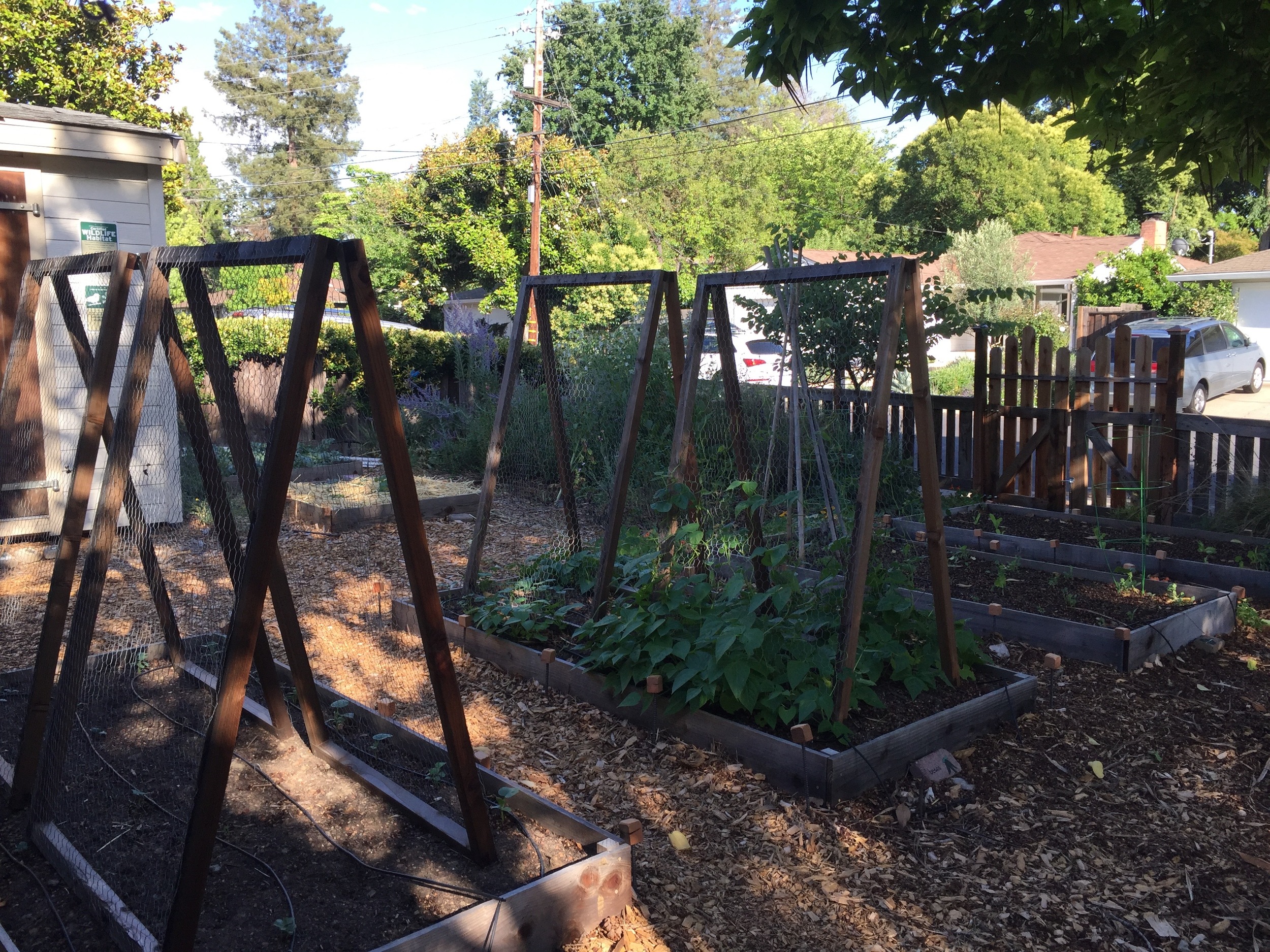
Here's the South Garden. This side gets early morning sun till midday, then sun again in the late afternoon/early evening. There is an exception and that's the back area where we get full sun, and there we have the strawberry pallet wall, plus watermelons and cantaloupe. In the other raised beds we have succession plantings of romaine, collards, cucumbers (both slicing and pickling), and pole beans. Here is also our new herb Understory Garden, with an Asian Pear in the middle, and every kind of herb you could want, as well as rhubarb, lemon verbena, and fennel. Artichokes (still very small) are in each small triangle bed and they are surrounded by basil and cilantro seedlings. We have blueberry bushes next to a warm wall, and lots of both annual and perennial flowers here. 
Cantaloupe blossoms

Cantaloupe blossoms

I didn't take any pictures of the Fountain Garden, but that's where we keep our asparagus bed, a strawberry bed, two more blueberry bushes, and several native flowering bushes, as well as the top bar bee hive (which by the way has been extremely busy), and our bubbling fountain.

I also didn't take any pictures of the Woodland Garden, since that's mainly native flowers this is not a flower post!

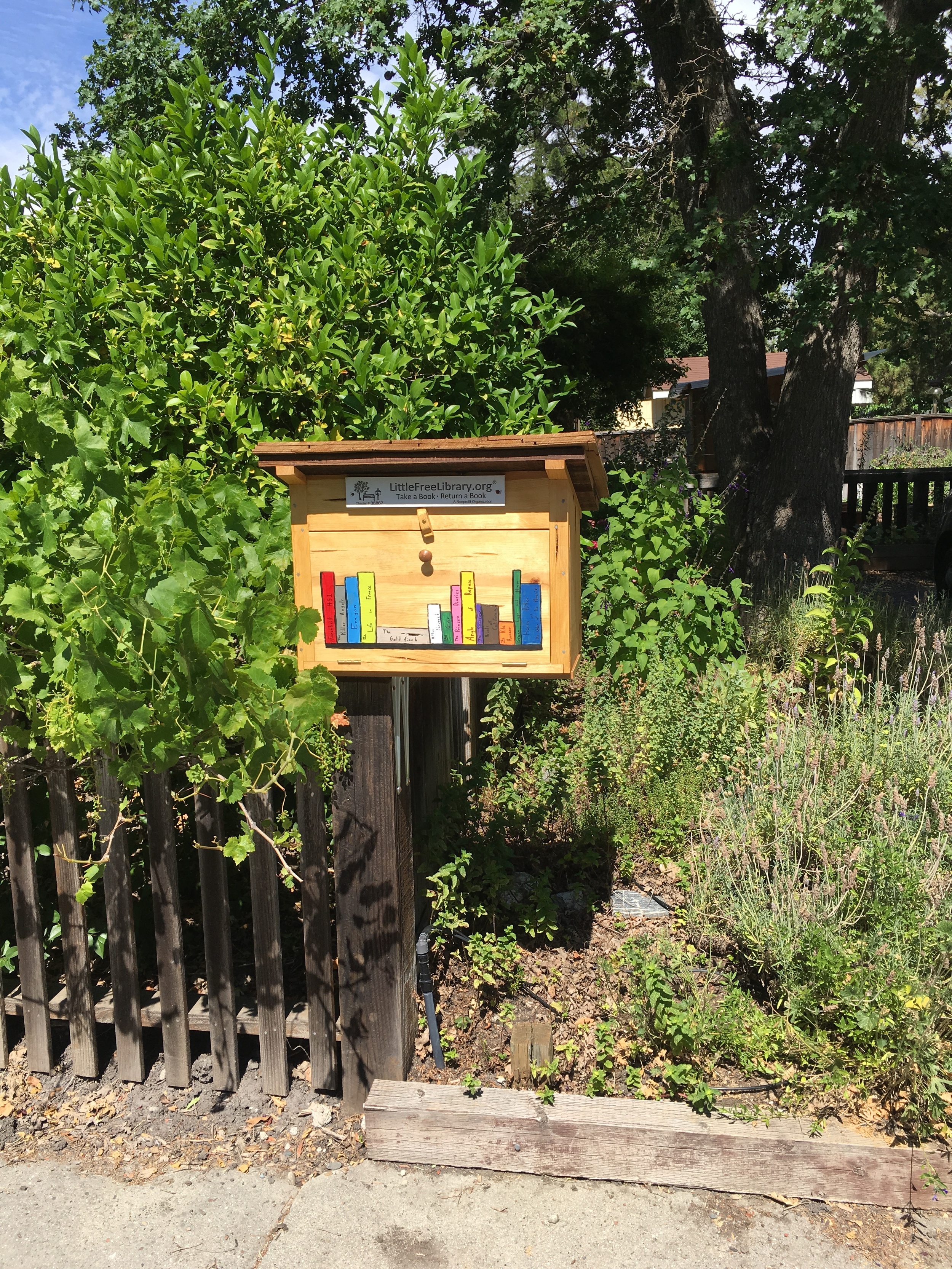
Then there's the Parking Strip Garden, which has an herb mound (slowly being taken over by mint), lots of salvias and lavenders, our raspberry canes (which aren't doing so well) and our thornless blackberry vines, plus a smaller worm/compost bin. The best part of this garden is our new addition - the Little Free Library! It's finally registered, and shortly will be on the world map.

Next to our neighbor's grape vines and lemon tree, and the herb mound I need to do something about

Next to our neighbor's grape vines and lemon tree, and the herb mound I need to do something about

Yesterday I spent several hours touring several Berkeley Urban Farms, which was organized by the Institute of Urban Homesteading. It was enlightening, as always, and I came away with several new ideas. 

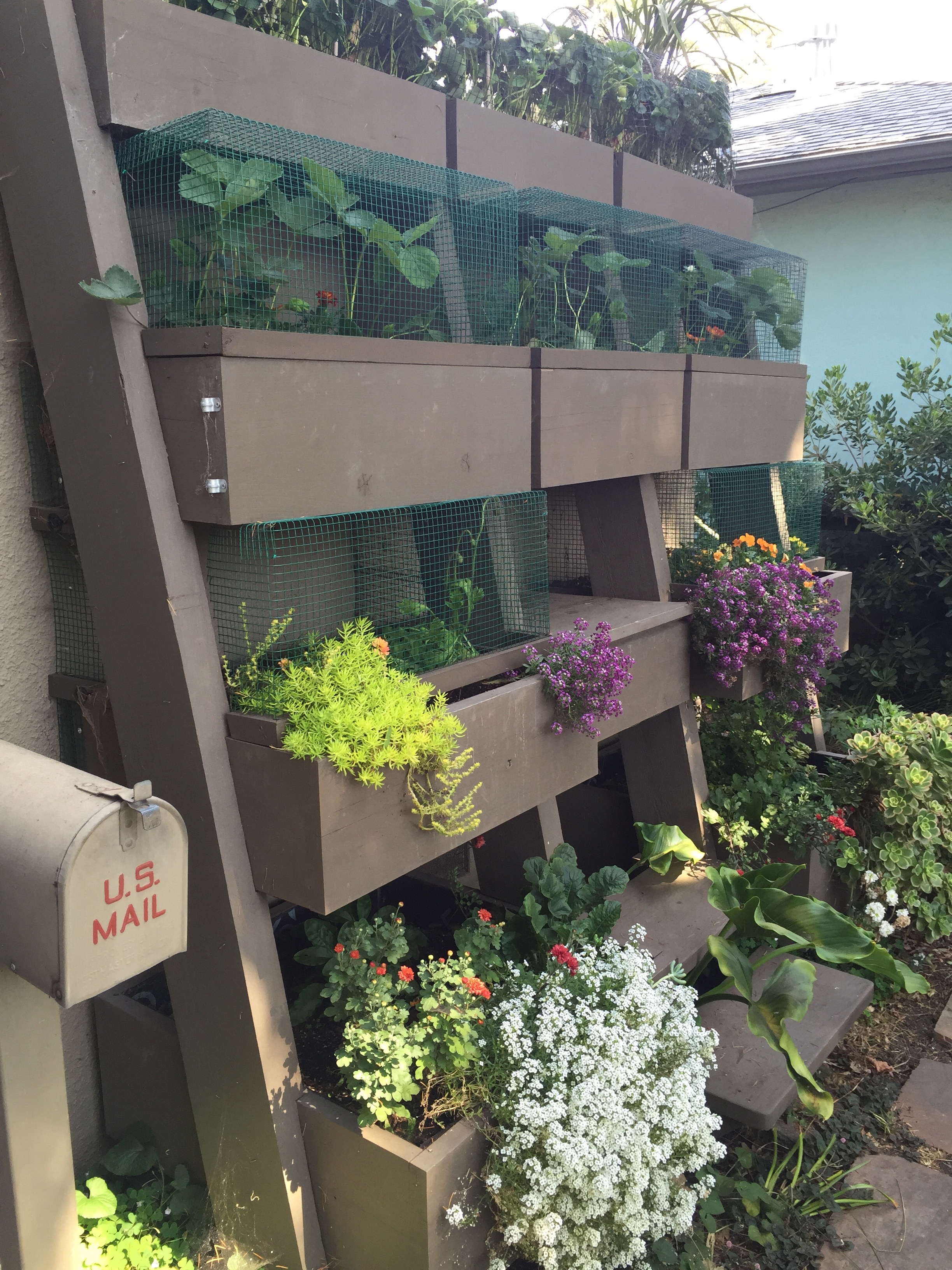
How about this cool vertical planter?

How about this cool vertical planter?

Serious rainwater collection. We need these.

Serious rainwater collection. We need these.

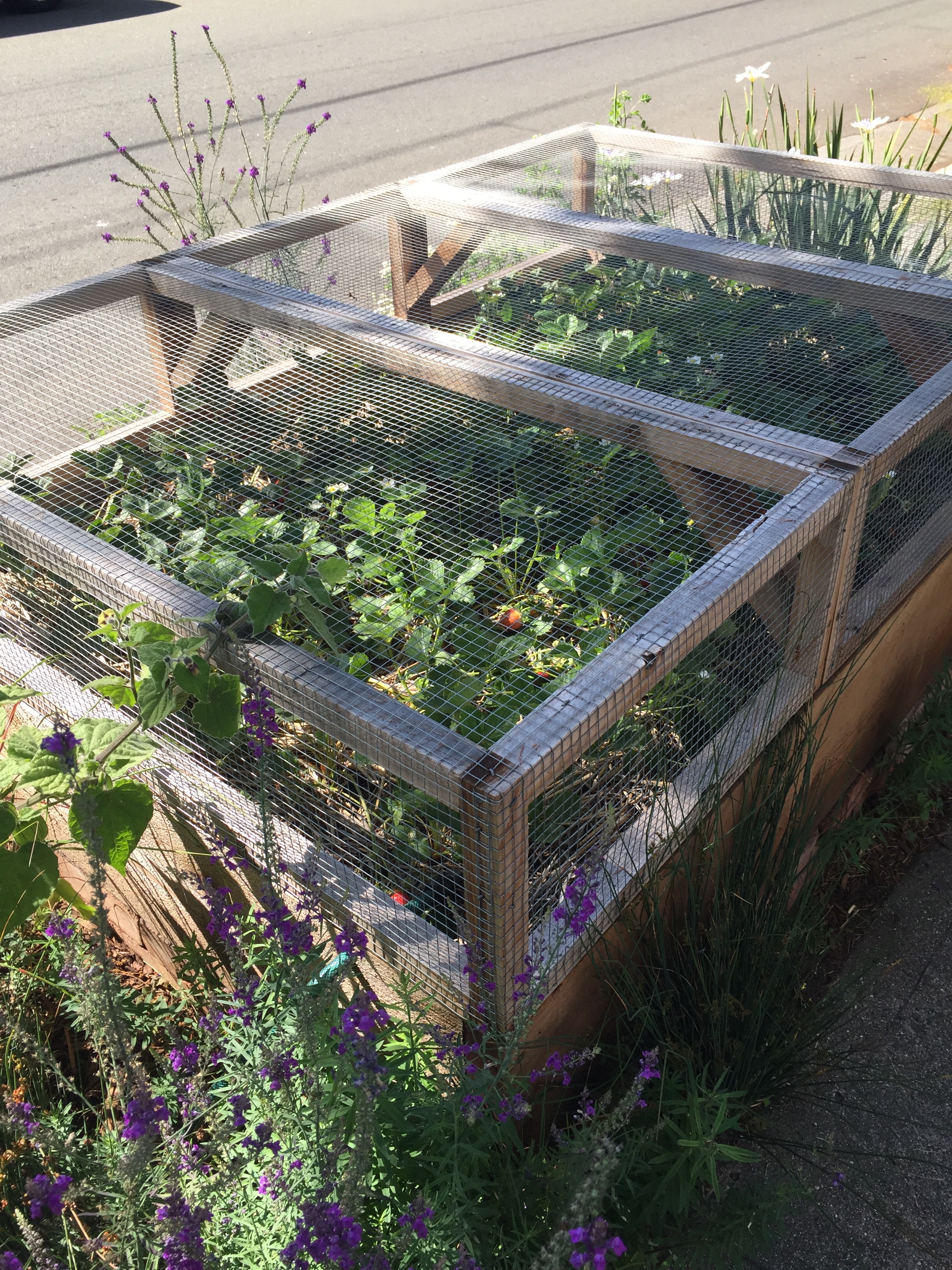
an ingenious way of protecting a raised strawberry bed from critters

an ingenious way of protecting a raised strawberry bed from critters

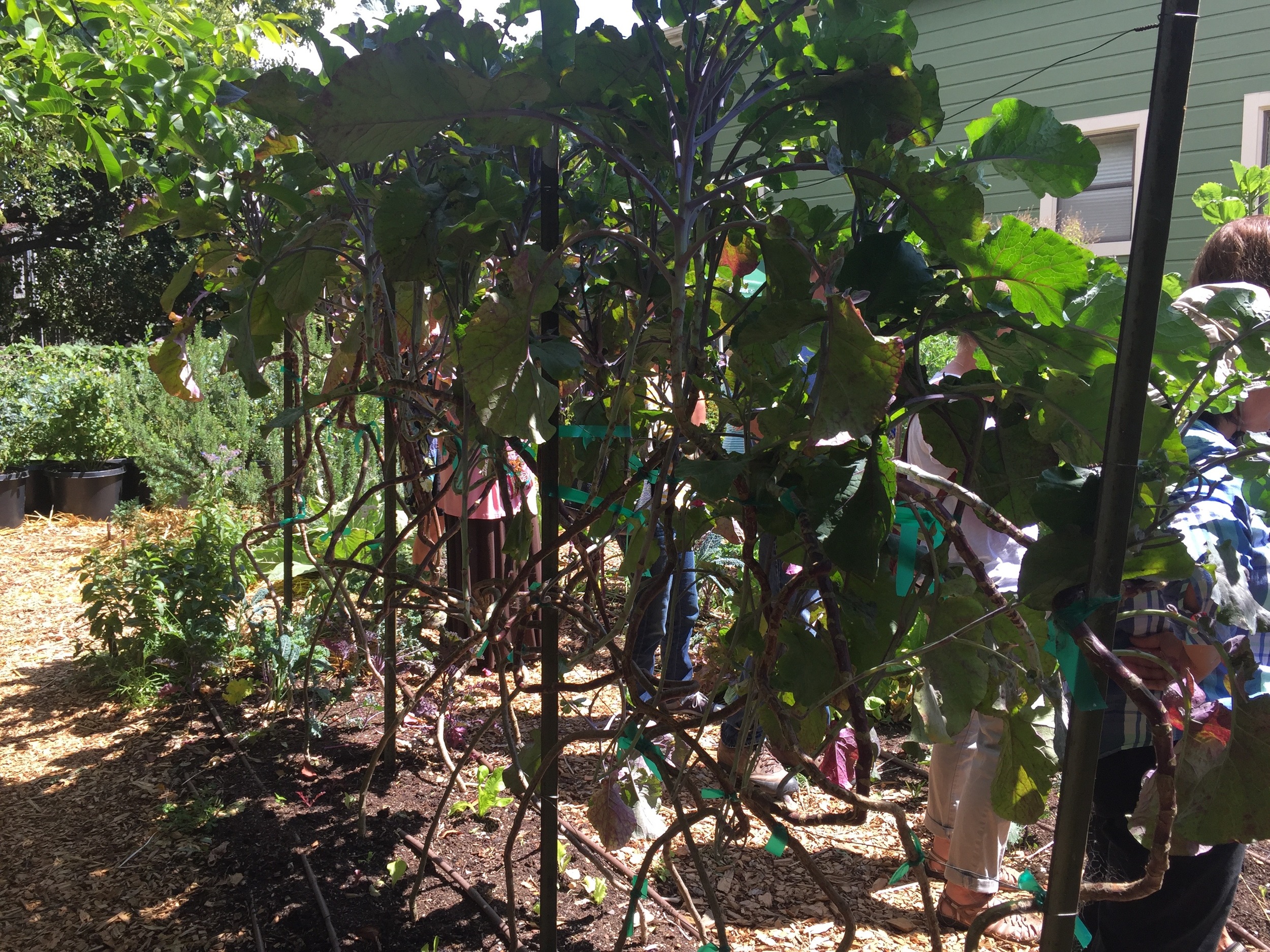
and nearly every garden I toured had these - tree collards - a perennial green. I think I must try them.

and nearly every garden I toured had these - tree collards - a perennial green. I think I must try them.

Fun to see so many people of all ages, backgrounds, ethnicities, income levels, enjoying beautiful and fruitful urban gardens. Inspiring!


Tags vegetable garden, fruit garden, herb garden, Urban Farm Tour
Comment

Tomato and Turkey Update

June 10, 2016 Elizabeth Boegel
Mexico Midget

Mexico Midget

I thought you might like to know what I'm doing differently about the tomatoes this year, and how the new systems are working.

As you know, last year, though we had a fairly big yield, we also had a lot of issues with diseases, especially with the paste tomatoes. This meant that though we had plenty for fresh eating, we didn't have nearly enough to preserve for the winter. This year, I did several things differently to try and increase our harvest.

Copper River

Copper River

The first thing I did was to start most of the tomatoes from seed, which was about 60% successful. Starting them from seed allowed me to rule out outside inputs, since I didn't know if the seedlings came in with diseases or if they acquired them once they were here. 

The second thing was to add many amendments to the soil. I added compost as usual, but to each hole I also added a dozen crushed eggshells from our own chickens, some bone meal, and some organic tomato fertilizer. 

Third, I decided to try the Florida Weave system of trellising. This consists of pounding stakes in on either side of the raised bed and running twine in between them at intervals, weaving it front and back around the vines. I am very happy with the way this is working. Every time the tomatoes grow six inches or so, I add another line of twine. It's keeping the vines contained and neat. Ostensibly we can go all the way up to 8-9 feet this way. It is a little more trouble than just sticking a cage around them and letting them go, but really not much more. In the evenings when I'm doing my garden checks, I just add one more check - do I need to add another line? And if I do, it takes 15 minutes, some scissors, and some twine. No big deal.

Here, you can see the lines of Florida Weave in and around the plants (this tomato in front is Cherokee Purple. You can also see where Joe the dog has been digging between the rows, damn him.

Here, you can see the lines of Florida Weave in and around the plants (this tomato in front is Cherokee Purple. You can also see where Joe the dog has been digging between the rows, damn him.

Lastly, I decided to trim the bottoms of all my tomato plants of extra foliage. As one gardener I know said, "we're growing fruit, not leaves!" and that made a lot of sense to me. The plants need a certain amount of leaves for photosynthesis, but there are plenty, and trimming the bottom sections off allows more light and air to get to the lower-hanging fruit, which is good. It also allows you to keep leaves off the soil, even though most of the soil is covered with mulch. When tomato leaves touch the soil, there are infinitely more chances for the plants to catch soil-borne diseases. And I think it looks pretty, like ornaments on a tree.

Two varieties of plum tomatoes, one a determinate vine (La Roma) and one indeterminate (Rocky).

Two varieties of plum tomatoes, one a determinate vine (La Roma) and one indeterminate (Rocky).

The other advantage to seeing what's happening down below is if a leaf goes yellow for some unknown reason, it's easy to see, and I can snip it off immediately before whatever-problem-it-is spreads. 

Cilantro in front, peaches in the back

Cilantro in front, peaches in the back

So far I am really pleased with the way the tomatoes are growing. We even had some Mexico Midgets nearly ready to eat yesterday, until the turkey ate them. Sigh.

Which brings me to my turkey update. I had made up my mind to build some sort of coop to house her because I couldn't bear to have her keep coming through my yard and eating stuff, and I wasn't ready to try and make her into dinner. As I was asking around my neighborhood for scrap wood and donations, my next-door neighbor solved the problem entirely. Her son has a farmer friend, and they came and caught the turkey last night. Now she has a new home. 

Here she is two nights ago, hanging out on our porch and pooping.

Here she is two nights ago, hanging out on our porch and pooping.

I can't tell you what a relief it's been to not chase her out of the yard ten times this morning, and waking up early because I knew she was out there about 5 am eating up all my winter squashes and sweet potatoes. I'm home today, and I keep looking for her out there. Oh well, maybe I miss her a little, or maybe I'm just still on alert. Turkey PTSD. I took down the row covers so the peppers and basil can breathe again, and the chickens are pecking around their coop without that jittery look on their faces. I guess the turkey reign of terror is over. 

In other news, we've picked our first peaches and already frozen a batch. I might make some jam today too. We also picked the first plums from our one-year-old tree.

The hops are starting to 'cone.'

And our home is full of transitions, with our son graduating from 8th grade and heading to High School next year, and our daughter finishing up 7th grade and looking forward to beginning at a new charter school for Performing Arts, next year. My last day of work at Wellspring was Wednesday, so I've got to start figuring out my next gig. Summer looms, with all its sunscreen and swimming and harvesting and fun!

My new Freshman

My new Freshman

Tags vegetable garden, fruit garden, wildlife
Comment
← Newer Posts Older Posts →

Subscribe

Sign up to get email when new blog entries are made.

We respect your privacy. We're only going to use this for blog updates.

Thank you! Please check your email for a confirmation notice to complete the subscription process.

Powered by Squarespace