Update on our Deer Fence

While Joe the dog and I were walking this morning, we came across a full grown deer and her two babies sauntering down the middle of the street. Our neighborhood is quite close to several different designated Open Spaces, which means we have a lot of critters that more urban areas do not. Turkeys and deer are quite common, along with raccoons, skunks, opossums, and the occasional coyote. We probably also have bobcats and cougars once in a while, but I've never seen one of those.

We used to have quite a problem with deer eating a good portion of our crops - like, easily 50% of our produce. Once we began production in earnest, we knew we needed a more permanent solution. It's been about a year since we devised a way to extend our existing fence, and I thought you'd like an update on how it's working. 

The bottom four feet of fence is Redwood and was installed when we first moved in, 12 years ago. (That high fence belongs to our neighbors.) Putting up post extensions and a three-tiered wire took most of a weekend, and it's not particularly pretty. But honestly, you can barely see it.


Tom and I call this 'deer deterrent' rather than 'deer proof' because any determined animal would be able to knock it down easily, and a truly hungry deer could jump it (it's only about seven feet tall). It's unlikely that they would expend the energy, though, and a mother deer isn't going to go somewhere her babies cannot. About a week after installing this system, a deer DID break through a corner of the fence and get in to the tomatoes, but after repairing that breach, we have not had another. Not one. So I call this extended fence an unqualified success.
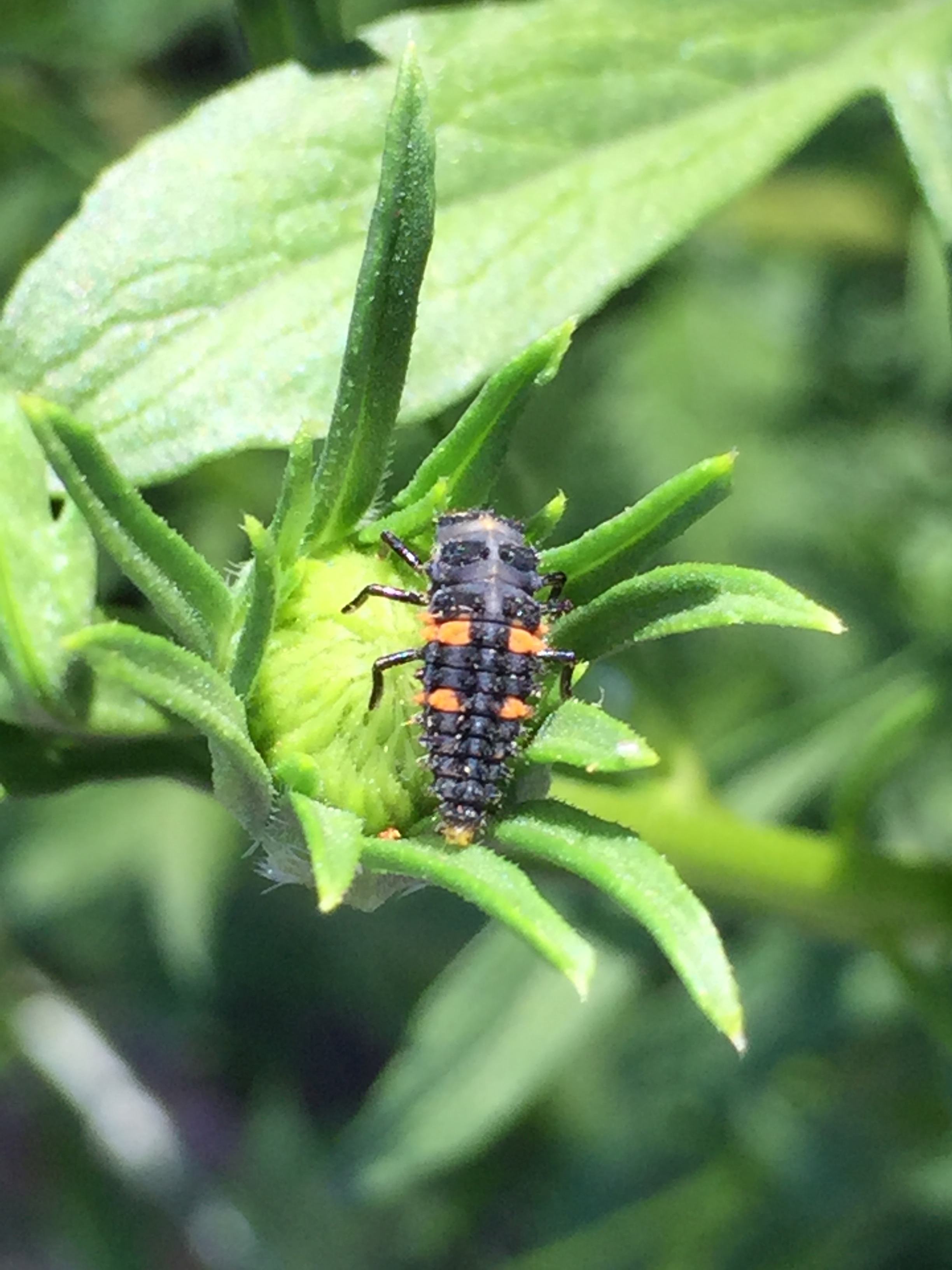
Very excited to see...

Ladybug larvae in the garden!!!!

If there's one, there must be more.

If there's one, there must be more.

This is something I have waited for years to see. Ladybug larvae is the single best hunter of aphids out there, and I have lots of aphids, always (we have a lot of ants, too, so I suspect that is somehow related, since ants farm aphids for their nectar). In order to try to control my aphid problem, I've done several things. I've bought live ladybugs, with the same result all of you have probably experienced - they just fly away. I've bought lacewing eggs; I've seen very little evidence of lacewings in the yard even so. And, I used to spray aphids pretty heavily with garlic and soap, which kills the aphids, yes - but it also makes the plant droop and of course, deters ladybugs (as well as other good insects) too. Not to mention you can't spray a soapy garlic mixture on things you eventually want to EAT. This year, I realized my error and stopped spraying.  I realized I had to let the aphids BE in order to attract ladybugs. And funnily enough, on this same plant (I think it's either a scabiosa or a galliardia, it hasn't bloomed yet so I'm not sure) I recently noticed a few aphids. Then just this morning I noticed a ladybug in that same place. And then this afternoon, larvae. I'm just tickled. 

Here's some other things I noticed as I was out working (re-seeding half the corn bed because of you-know-who, yes, Joe the dog, argh):

Sweet potato vines coming up in the winter squash bed, where we had planted them last year. Now I don't have to worry about making new slips. I forgot that these can be perennial, if you want them to be (or if you leave a couple of roots in the grou…

Sweet potato vines coming up in the winter squash bed, where we had planted them last year. Now I don't have to worry about making new slips. I forgot that these can be perennial, if you want them to be (or if you leave a couple of roots in the ground by accident, ahem). 

All five kinds of potatoes are sprouting. This is Yukon Gold. 

All five kinds of potatoes are sprouting. This is Yukon Gold. 

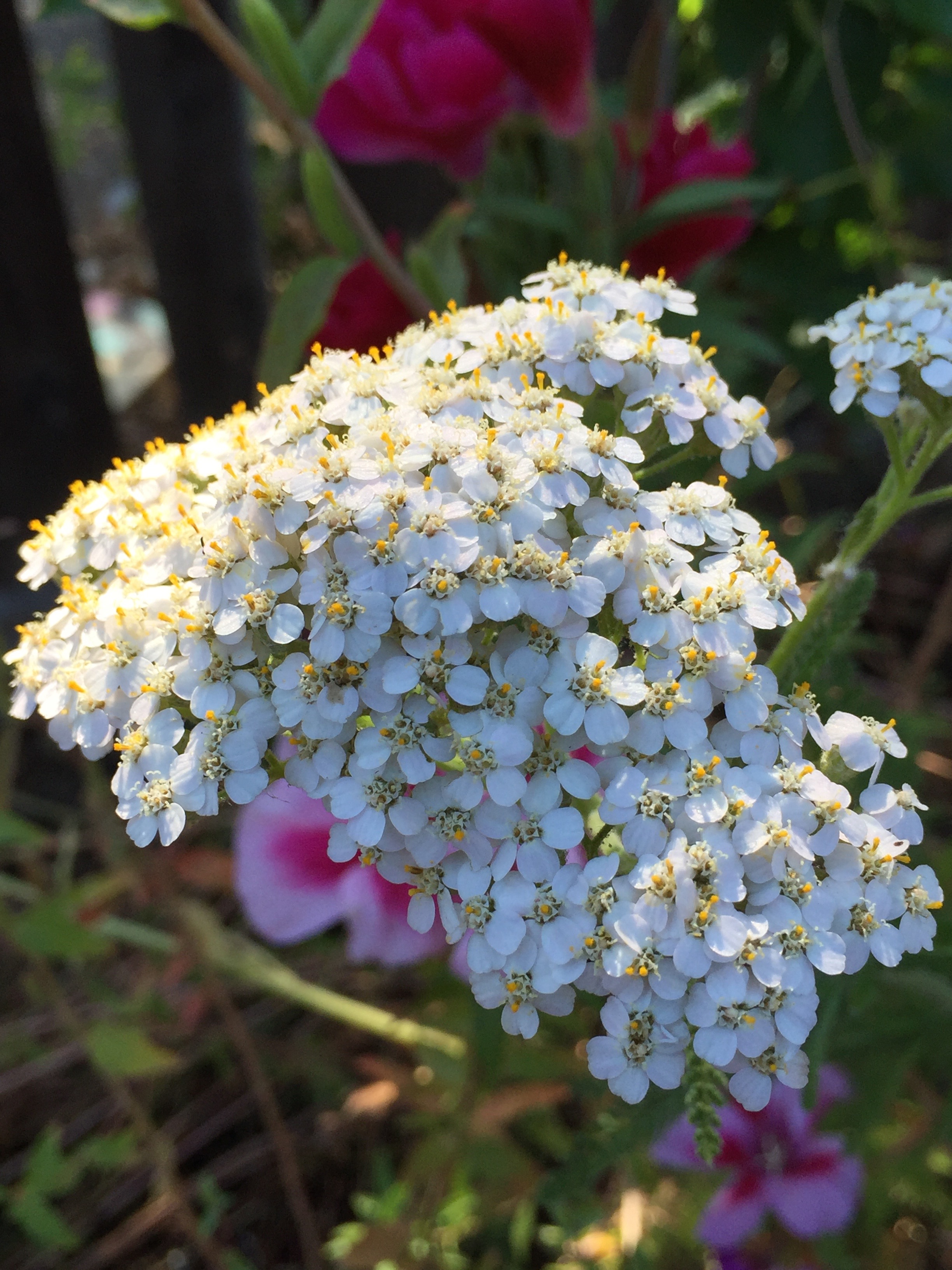
Pretty white Yarrow in the North Pollinator bed.

Pretty white Yarrow in the North Pollinator bed.

One of our honeybees stripping the last drops of nectar from a dying Galliardia.

One of our honeybees stripping the last drops of nectar from a dying Galliardia.

Santa Rosa plum.

Santa Rosa plum.

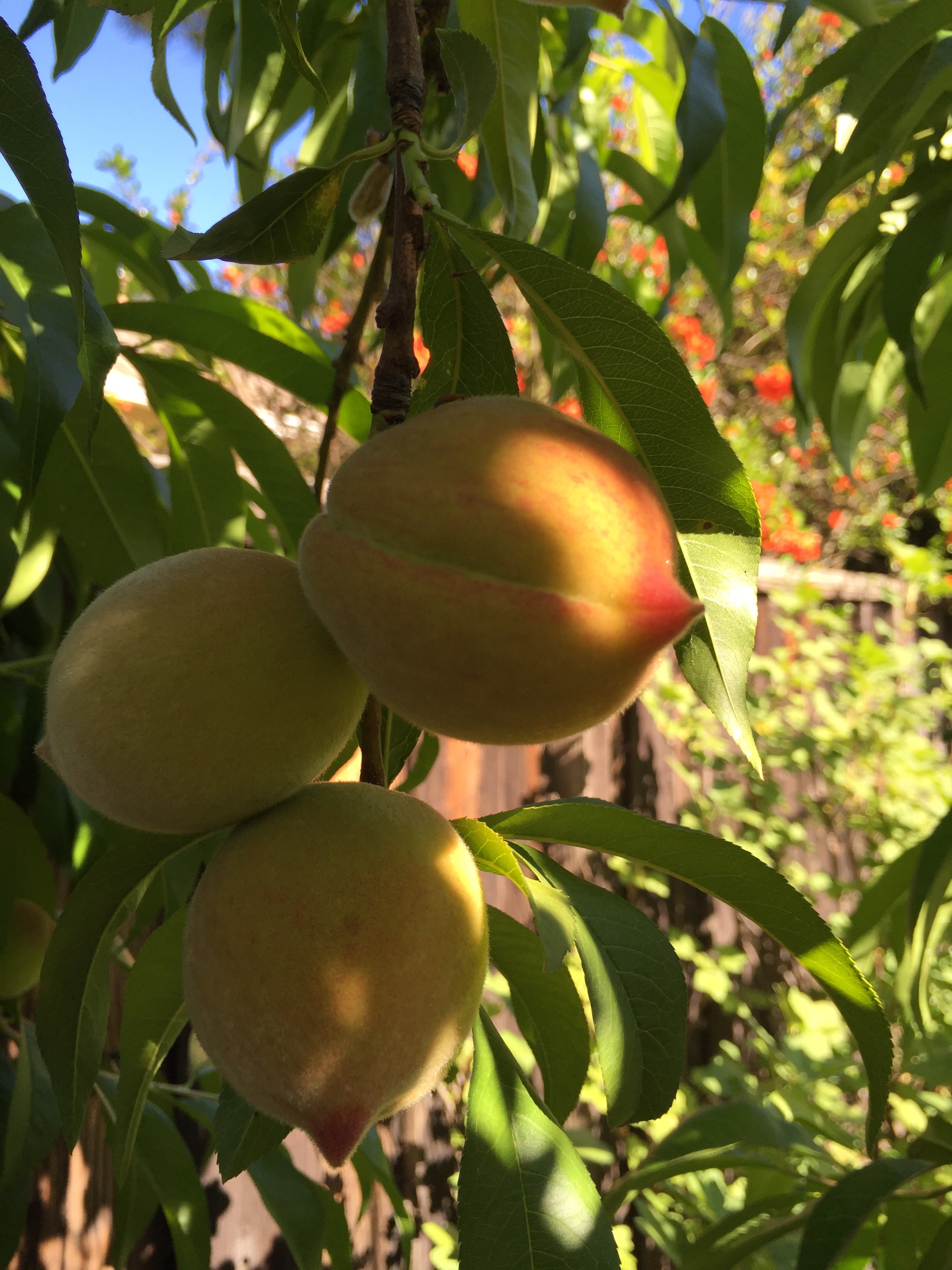
The peaches are starting to look really pretty.

The peaches are starting to look really pretty.

Pink Buddleia...

Pink Buddleia...

... and yellow.

... and yellow.

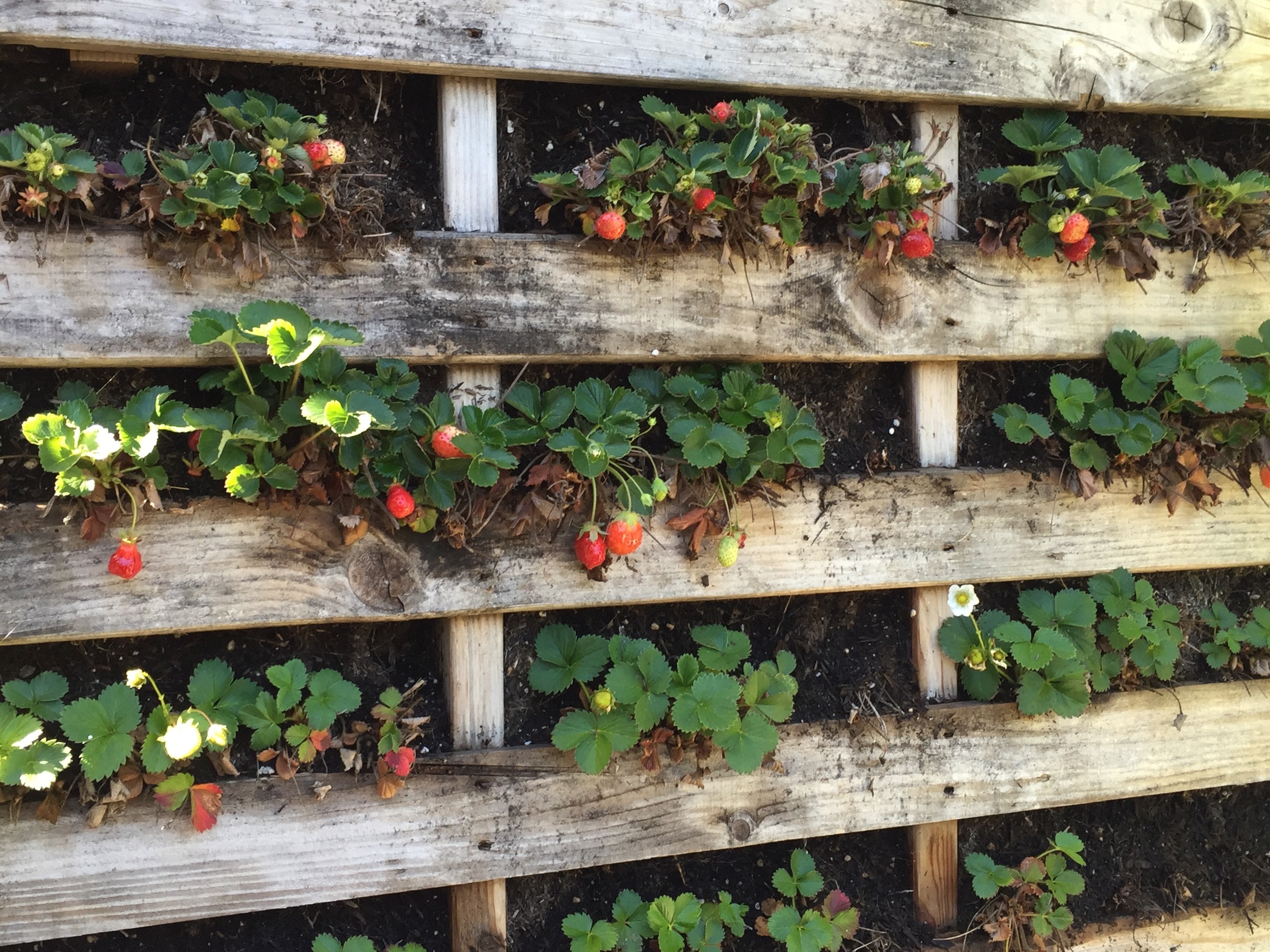
Thought you'd like to see how the strawberry wall looks after its first winter. Each row is a different kind of berry. They tend to ripen at different times. As you can see, I lost a few plants. I will again reiterate that these pallet planters dry …

Thought you'd like to see how the strawberry wall looks after its first winter. Each row is a different kind of berry. They tend to ripen at different times. As you can see, I lost a few plants. I will again reiterate that these pallet planters dry out very, very quickly. If you don't stay on top of water, you'll lose plants. (Like me.)

I finally finished braiding all the garlic. All told, we had just over 100 bulbs. We figure we use between 3-4 bulbs per month, so that leaves plenty to give away after storing our share for the year. I'm very pleased with the flavor, the size of the bulbs, the yield - everything about this crop. I will plant this again (and will save a pound or two to plant out next year, if I can). 

Some of the braids, waiting for hanging. This variety was Inchelium Red, an heirloom.

Some of the braids, waiting for hanging. This variety was Inchelium Red, an heirloom.

Benicia/Vallejo Urban Farm Tour

My friend Barbara and I had an excellent time at the Urban Farm Tour event this past Sunday. This event was organized by the Institute of Urban Homesteading, the same outfit that organized the tour our garden was included in last year. I am always eager to see what other suburban and city farmers are up to - after all, there are as many types of gardens as there are gardeners - and I always learn something. We toured four gardens, one of them a community effort, the rest private. We were supposed to see one more farm but it looked mostly like a large-livestock operation, which didn't interest us much (I personally believe cows should have pasture and room to roam! but not everyone agrees with me).  The gardens were each lovely in their own way, and it was fun to hear the history of each yard and enjoy the accomplishments of the owners. Because make no mistake, completely changing your yard from conventional to farm is a LOT of work. 

Here are some shots I took of the day. I didn't take many photos because, well, privacy. By far my favorite place to visit was Dog Island Farm, which is mildly famous around here for their year-long experiment of not going to the grocery store at all. The farmers blogged about it and got some press. They're super nice people with a lovely farm, and we loved it there and learned a lot from them. 

a ladybug on some celery at the Benicia Community Farm

a ladybug on some celery at the Benicia Community Farm

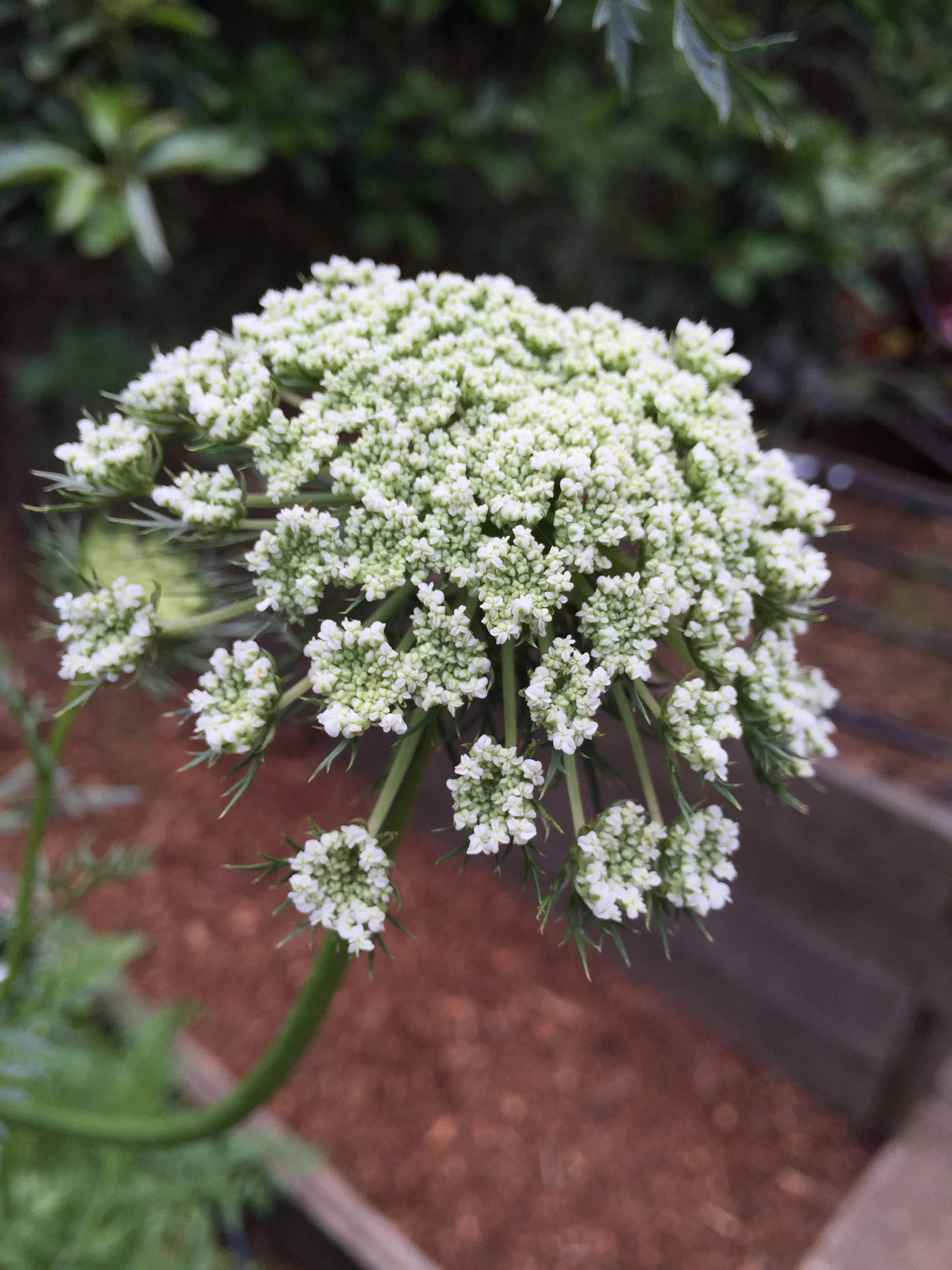
a carrot umbel at a private Benicia residence

a carrot umbel at a private Benicia residence

Immature mulberries at Dog Island

Immature mulberries at Dog Island

One of the friendly Tom turkeys at Dog Island

One of the friendly Tom turkeys at Dog Island

I'm looking forward to the next tour on tap, which is in Berkeley, and there are 8 gardens on the bill. Wonder if I'll make it to all of them? That's in June, and I'm sure tickets are still available, if you'd like to join me. 

Spent some time this afternoon trimming up the tomatoes (we've got lots of fruit on the plants already) - I've decided to trim off lower branches, allowing light and air in to the bottom of the plant (I'd also like to keep some semblance of control in those beds), repairing/reseeding the winter squash bed as Joe the dog dug it up (argh), and braiding garlic. I've only made six braids of six bulbs each, so I still have a long way to go. 

I decided to make smaller braids this year - that way I can share with more people.

The hops are flowering! I guess I didn't expect that, or thought that the cones were somehow the flower, I don't know. Anyway, they are very small and fuzzy, and so far I don't notice a lot of pollinator activity - I hope that ramps up.

Those are gourd trellises on the wall behind the hops

Those are gourd trellises on the wall behind the hops

All else is well and growing.


Our New Door

I've written about my dad the woodworker before. He makes incredibly beautiful furniture, blogs for Fine Woodworking, and teaches classes to other woodworkers. He's always looking for ideas for his classes, and I'm always trying to stay one step ahead and think up things we need around our house. Not long ago, I wondered if he'd be interested in making us a new front door. The old one was suffering from a terrible paint job (mine), torn and trailing weatherstripping, and a faulty doorknob and lock. Dad seized on this idea and made us a gorgeous door out of Douglas Fir. I asked for a dark, reddish-brown stain, and now we have a graceful, solid door with beautiful hardware.

I love the look of the grain.

I love the look of the grain.

Dad has inspired me to be more aware of craftsmanship, and he has inspired Tom to do more of his own building (and Tom has made some beautiful stuff), and he has taught both my kids how to use every tool in his shop, both manual and power. It's a real gift to make useful things that are also beautiful. I think we've lost a lot of those arts in the last 50 years. 

Which brings me to the garden. My goal has always been the same; to make it both useful and beautiful. Hence, all the food PLUS flowers. (Of course flowers are both of those things already.) I'm always thinking about aesthetics. We've started to see that a working urban farm will always have a lot of crap lying around, but we both make an effort to minimize that, and instead try to cover every square inch with beauty. My love of craftsmanship came from my father, but my love of flowers definitely came from my mother, who has always had flowers in every possible place.

And the garden is certainly lovely this time of year, with all the late Spring flowers. 

Looking through native clarkias to the tomatoes, and in the background the hops are climbing ever higher

Looking through native clarkias to the tomatoes, and in the background the hops are climbing ever higher

Pole beans, starting the journey up

Pole beans, starting the journey up

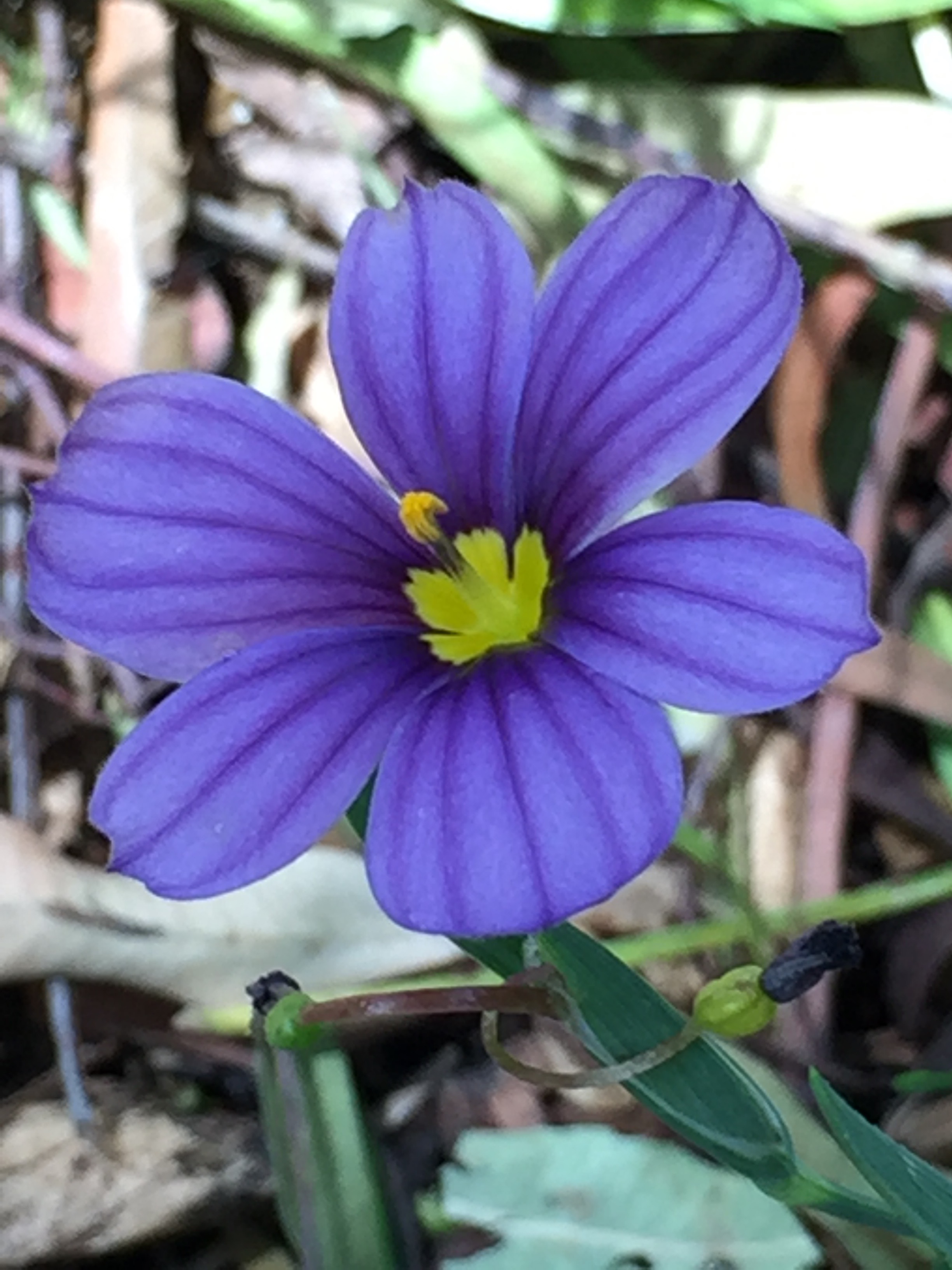
Blue-eyed grass, a CA native

Blue-eyed grass, a CA native

Blackberries

Blackberries

Sprirea "Dark Knight"

Sprirea "Dark Knight"

The sun has come out this afternoon, and there are loads of bees taking their first flight out of the hive. I dug around in the compost pile and found beautiful soil with which to seed cosmos. Tomorrow I'm looking forward to going on an urban farm tour with a close friend. Hope you're all enjoying your weekends, too!