The end of the winter crops

After harvesting the garlic over the weekend, the only crop left in the ground from winter was the fingerling potatoes. Last night, Adam and I went out at 8:30 and harvested those. So that was the official end to the winter crops.

This means the second planting of corn can go in, and it also means we are solidly in to the summer season. At 90 degrees today, there really was no doubt.

There's a happy side to this, though - I noticed the first cherry tomatoes, tiny Mexican Midget, are coming on. Soon we'll have fresh tomatoes!

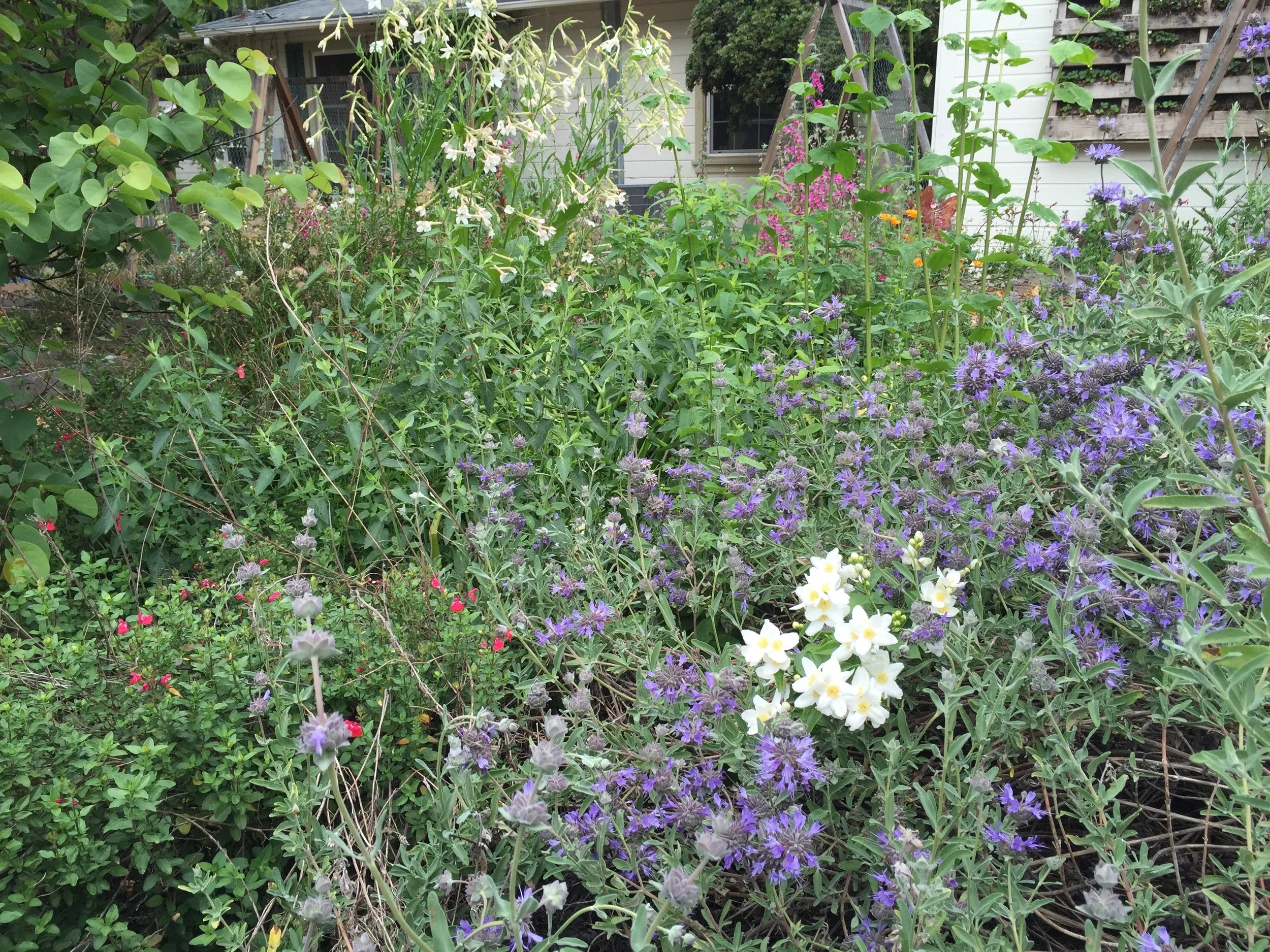
Nigella - 'Love in a Mist"

Nigella - 'Love in a Mist"

Garlic and Shallots

Today I harvested the garlic. The green tops were starting to look a little brown and toasty at the tips, and when I pulled up one plant, the bulb was well-formed and large.

This is a variety called Inchelium Red. It's an heirloom softneck that consistently wins awards for flavor. Upon cutting open the bulb, though rather soft because it was newly harvested, I found the cloves were simply gigantic.

I am very pleased with this harvest. I grew enough to fill the wheelbarrow and it should last nearly a year. I will let it dry between the chicken coop ceiling and roof, and will braid it when it is fully cured. When the garlic begins to show the strain of being hung in a house that is not nearly cool enough in the summer, I will separate the bulbs in to cloves and freeze them in a bit of oil. I did not particularly like pickled garlic and do not plan to preserve it that way again. However freezing worked well.

It's awfully nice to have our own garlic again. I hated buying it in the store, as you never know how long it's been sitting there, and half the time the cloves are mostly mush.

In order to make room for the garlic on top of the coop, I had to pull down the shallots that have been curing there since April 9th. They are not completely dry, but enough so that we could clean them and hang them in mesh bags on the canning shelf.

Pretty, aren't they? I'm also happy with the size of the shallots. It's a pain to peel them when they're tiny. We use shallots in place of onions in all our cooking so I am often peeling them. I believe this variety was French Grey, though they look anything but grey. Perhaps it's referring to the foliage which did have a silvery tint to it.

Today I got the winter squash planted, as well as the gourds and mini-pumpkins; I will save planting of the large pumpkins for a few weeks from now - I want to start them in the collard bed once the collards have a chance to grow tall.

We are all exhausted, it was an incredibly busy week and weekend, and I confess we were all a bit lazy today. I spent a good bit of time sitting in front of the bee hive, spacing out while watching their comings and goings. I witnessed what looked like a bee funeral. I know, I'm anthropomorphizing them, but it really did look like a group of bees paying their last respects to a dead bee before flying it over the side to land it gently in the graveyard below.

I know I'm always talking about the weather (I must be becoming a true farmer!), but we're supposed to get some days of 90 degree heat this week, and I'm hoping the six kinds of basil I planted will finally sprout. Hope you all have a lovely week!

Just a quick post...

To show you this:

I went out last night to do another layer of Florida weave on the tomatoes, because they are growing so fast. And that's when I saw these two tomatoes, the one in front about three inches long already. Wow. Totally unexpected. Way early. Usually the cherry tomatoes fruit first.

This is a variety of paste (or plum) tomato called "Pompeii." There's not a whole lot written about it. According to Renee's Seeds, this tomato has a beautiful flavor, and is meaty rather than juicy, perfect for making sauce or tomato paste. This is one I did not start from seed; I got this as a seedling from the Master Gardeners Great Tomato Sale. I don't know how it'll do in the future, but right now, it's winning the 'prolific' race, for sure!


Yet another potato experiment, some new growth, and a little bee update

Ok, friends, I've now planted potatoes in towers, hilling with dirt (good results!) and in rows, hilling with hay (also good results!). Now it's time to try potatoes in containers.

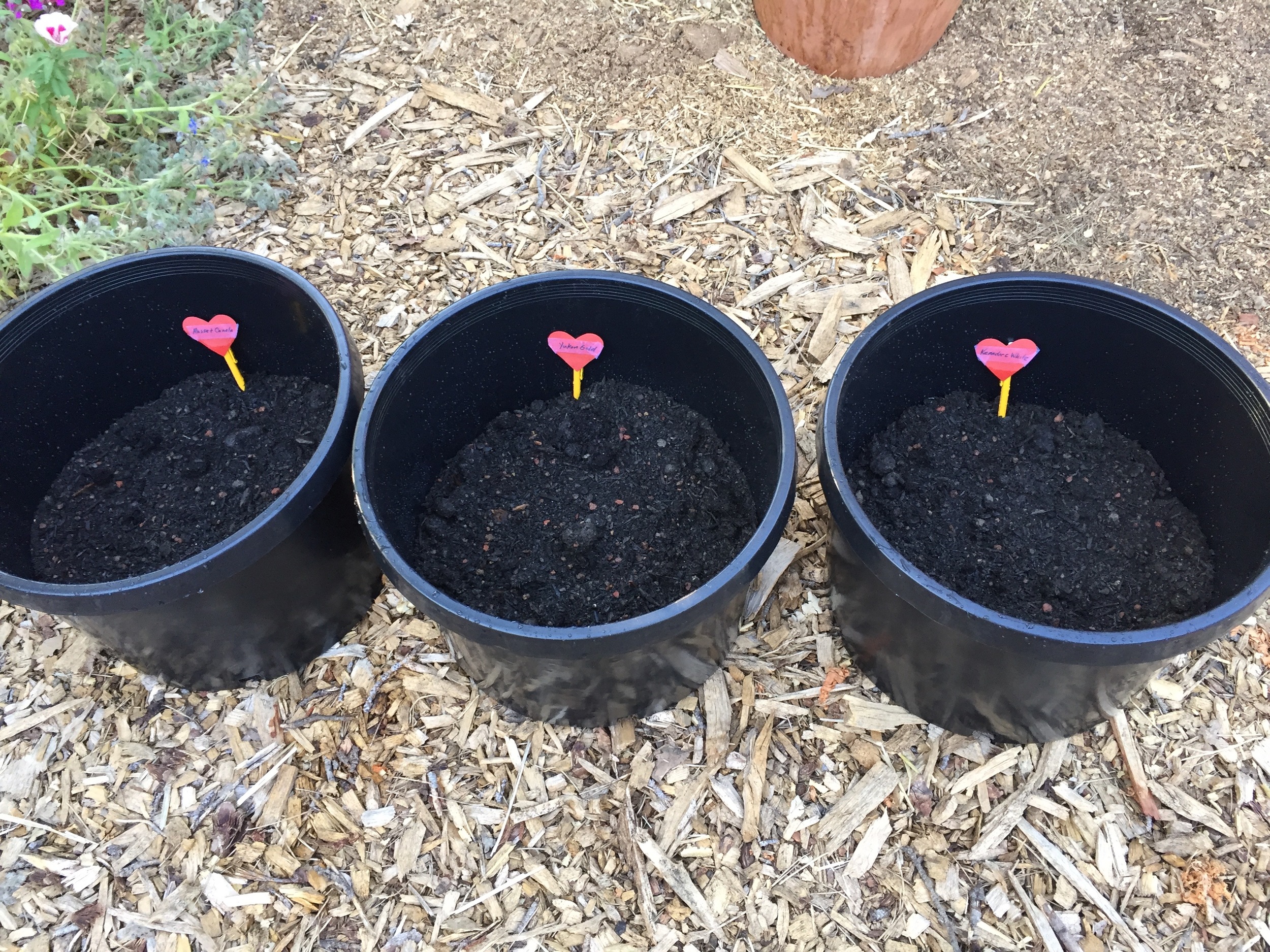
I found some 10 gallon containers on Amazon that are meant to be used for hydroponics, but they'll suit this purpose just fine. I ordered five kinds of potatoes from Peaceful Valley Organic Farm Supply in Felton (a couple of hours south of here), a pound each of:  Red Desiree, Yukon Gold, Kennebec White, Nicola, and Canela Russet. I put a layer of soil (I had leftover from our delivery a few months ago) on the bottom of each pot, then layered in the potatoes, then covered them with another layer of dirt. The pots are between the chicken coop and some tomatoes and peppers (I'm starting to figure out ways of using every available space for planting). After the potatoes sprout and begin to grow, I'll add more dirt - this time, compost directly from the bin, not entirely finished and certainly not screened. We'll see how this method works. I'm determined to figure out the best way to grow potatoes in our yard. 

Three of the five pots. I need some more markers, but meanwhile these pencil and recycled valentine markers will do just fine.

Three of the five pots. I need some more markers, but meanwhile these pencil and recycled valentine markers will do just fine.

The temperature is going up, we're in for a few warm days, so things will begin to pop. I noticed lots of activity in the garden tonight.

One of the hop bines has reached the top, and is now growing sideways (with a little instruction)

One of the hop bines has reached the top, and is now growing sideways (with a little instruction)

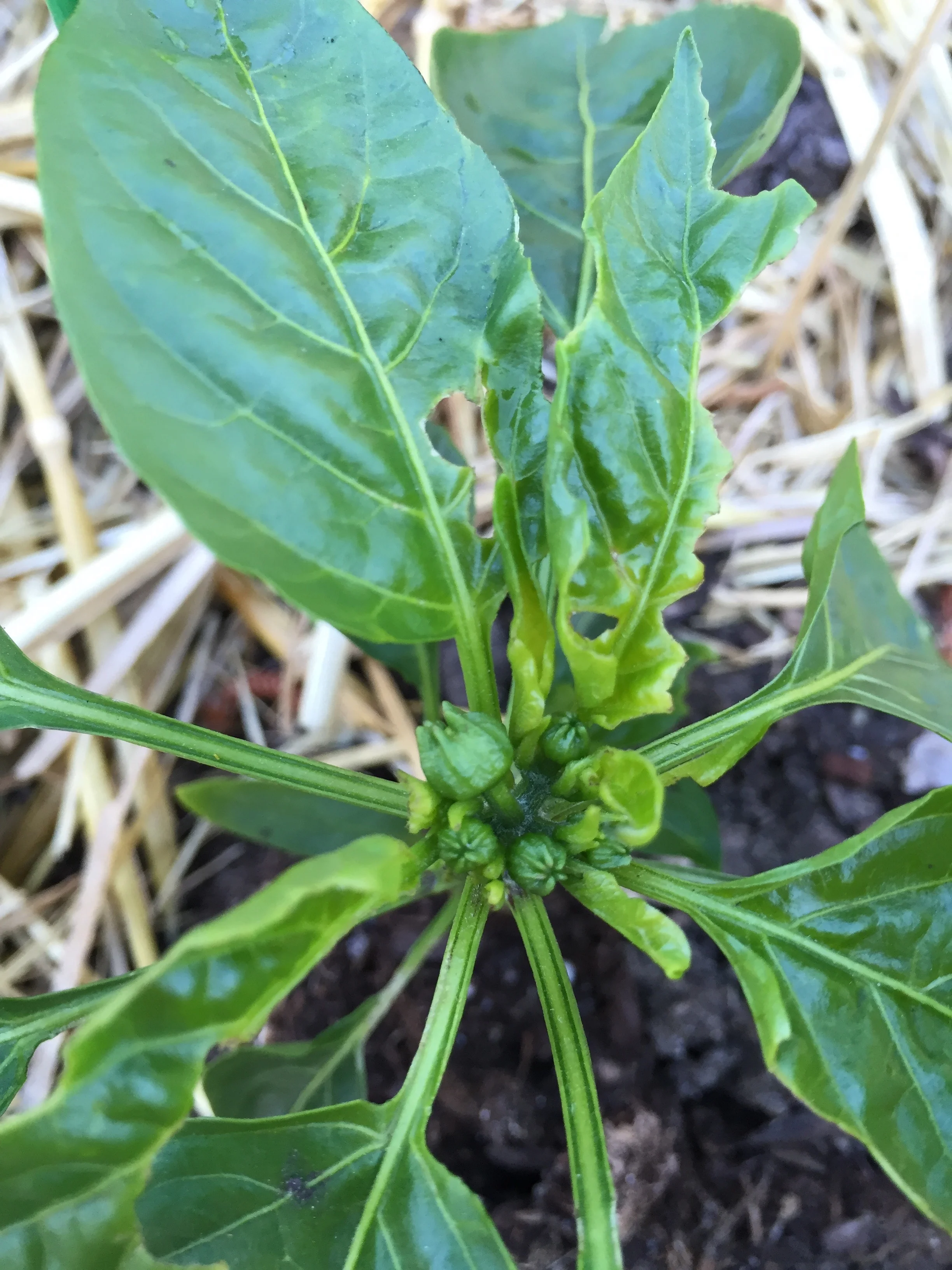
mini-peppers!

mini-peppers!

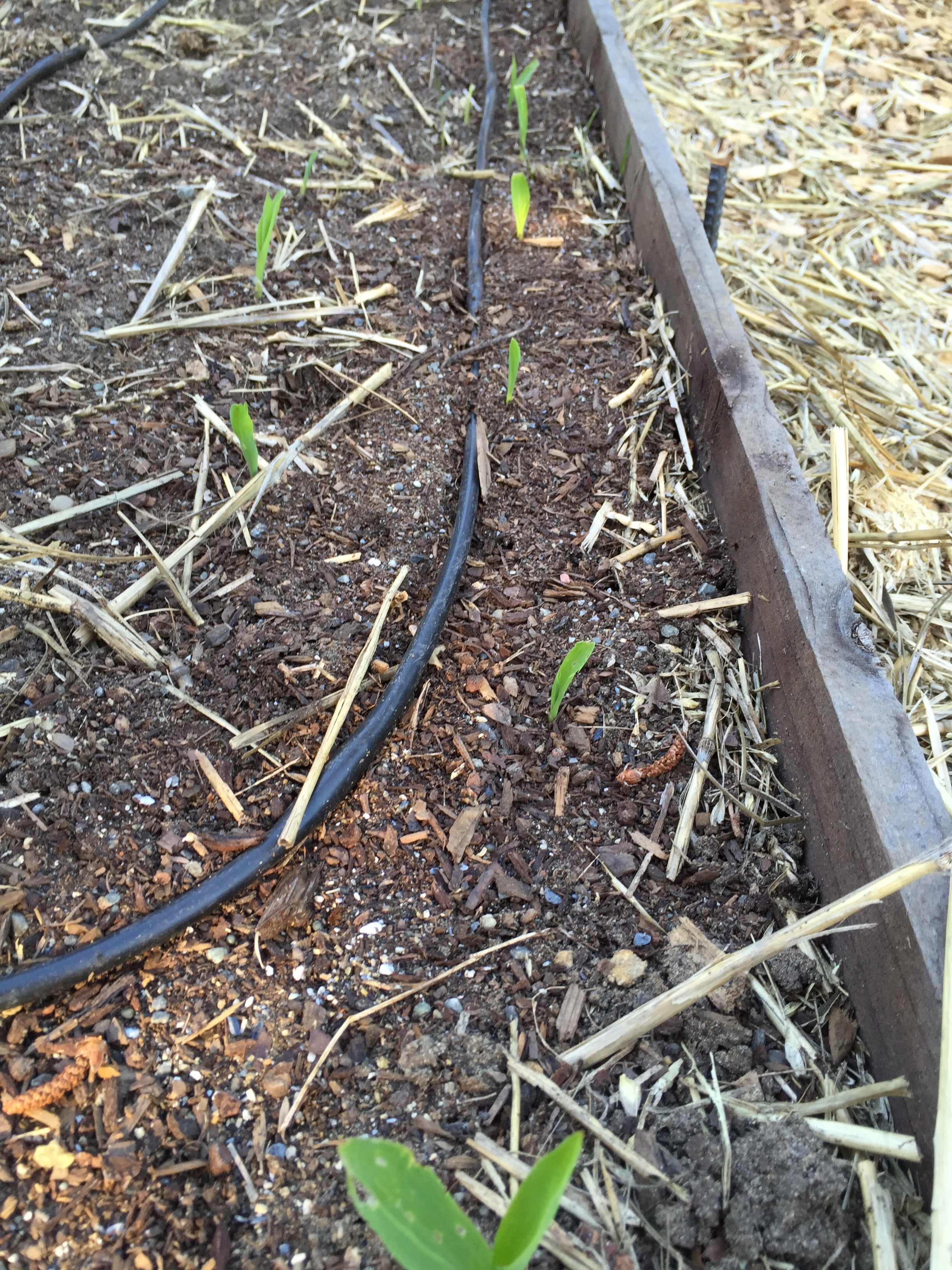
The first planting of corn is sprouting!

The first planting of corn is sprouting!

The first seeding of cilantro is ready for eating

The first seeding of cilantro is ready for eating

pole bean sprouts

pole bean sprouts

baby collards

baby collards

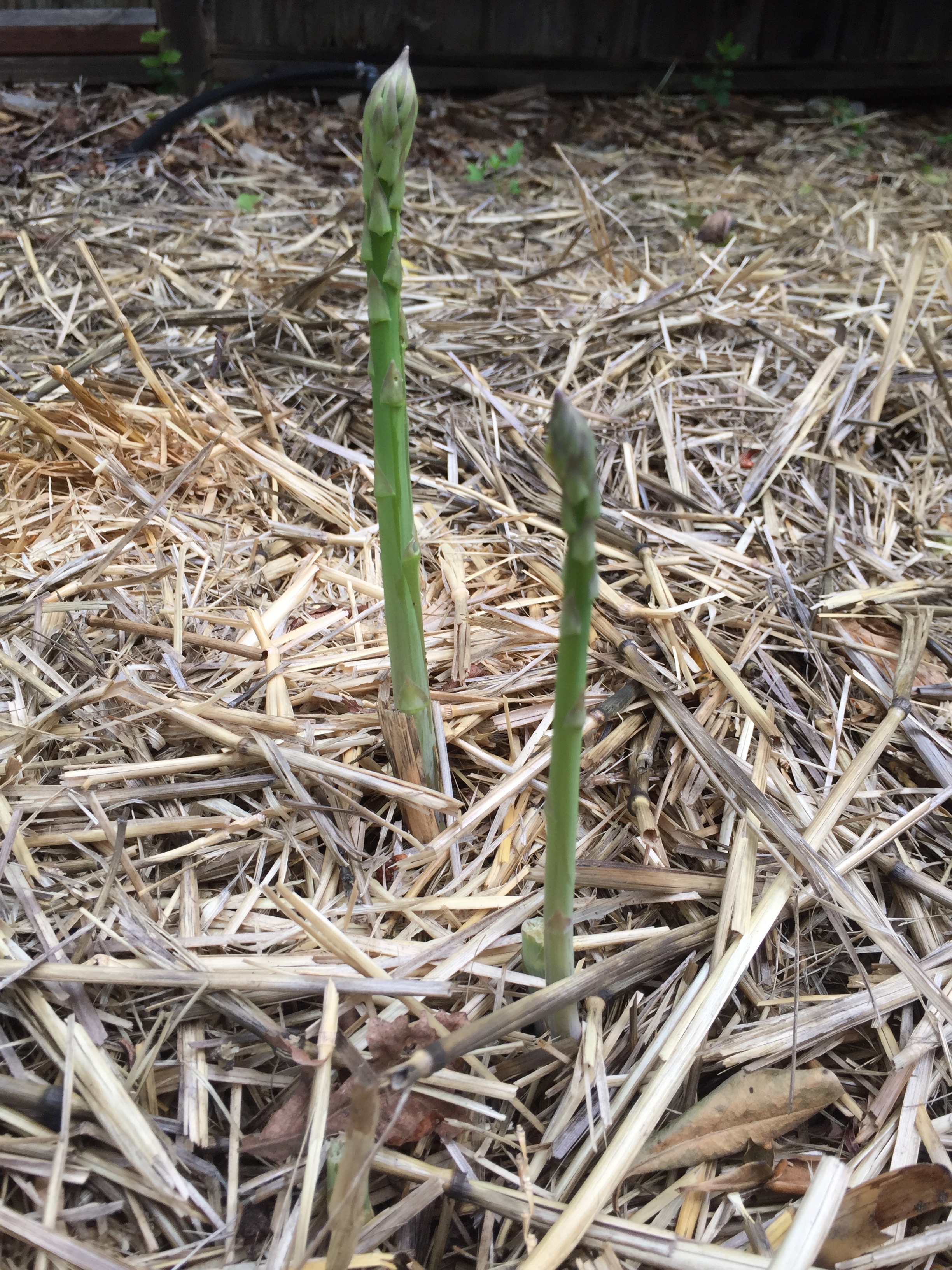
This is our weekly haul of asparagus. Sigh. We never get more than a few at a time.

This is our weekly haul of asparagus. Sigh. We never get more than a few at a time.

Looks like the garlic is making cloves, now - it won't be long till harvest. This is Ichieum Red softneck.

Looks like the garlic is making cloves, now - it won't be long till harvest. This is Ichieum Red softneck.

The tomatoes are all doing well, flowering like crazy

The tomatoes are all doing well, flowering like crazy

These apples are about golf ball size

These apples are about golf ball size

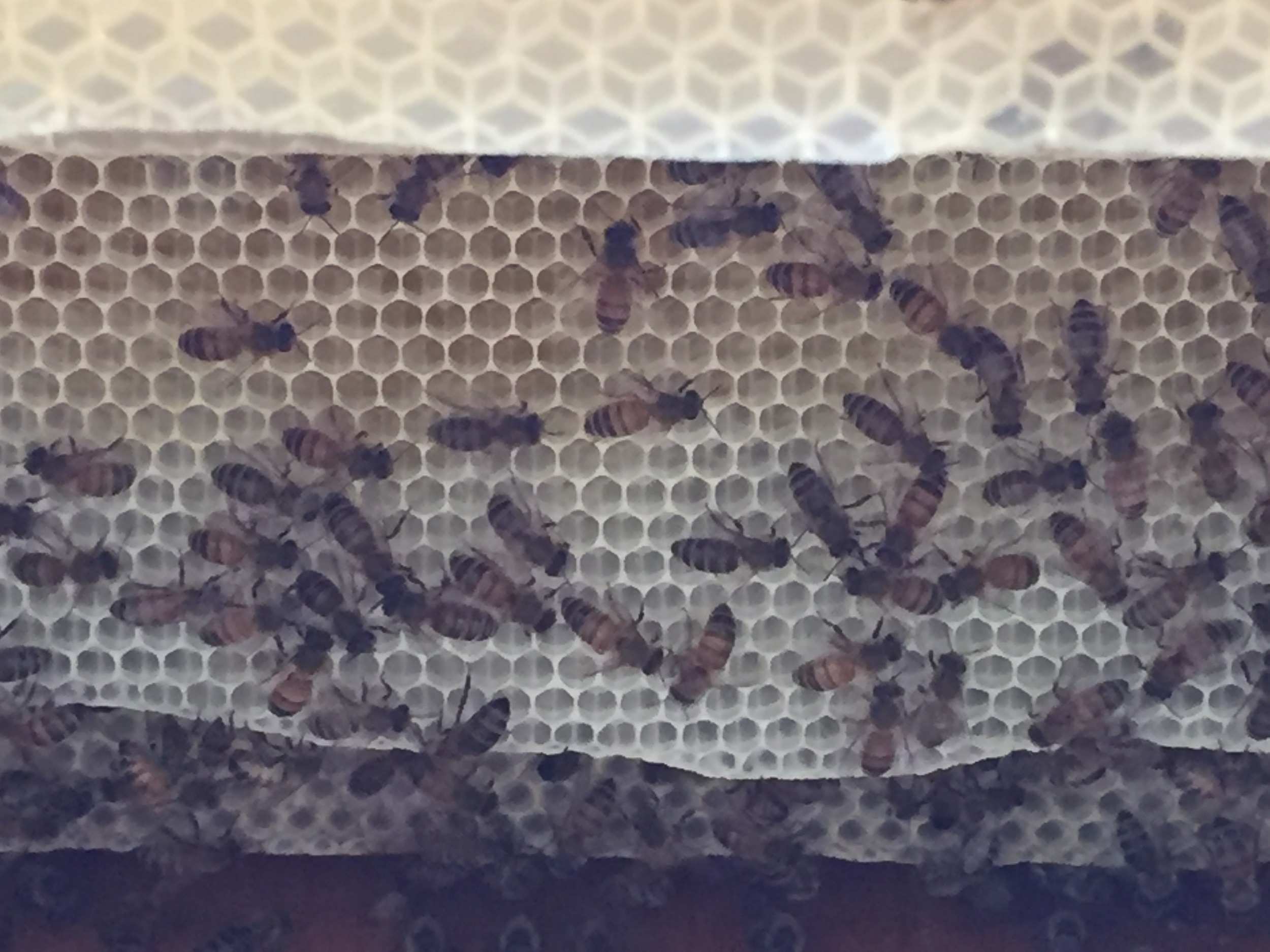
I opened the hive very briefly just to see if the bees need more bars, as activity at the entrance of the hive has increased quite a bit. This photo is from the back of the hive, and as you can see, they still have quite a bit of room left, so I did not need to add new bars. However, the amount of bees in the hive has really increased since even a month ago, so the queen is now laying a stupendous amount of eggs every day. There is lots of new comb being built, and the bees don't build unless they need it, so they are anticipating more stores of honey and pollen, and possibly more brood. The way bees build comb is quite remarkable. Just secreting wax is a miracle. Here's a nice explanation from an author called Harun Yahya:

"Beeswax is the main building material in the comb. Bees secrete wax from four pairs of glands under their abdomens. Where these glands meet, there are two small apertures. Here the wax is secreted, in small, thin scales. To collect this wax, bees use the hooks made of the small hairs on their hindlegs. They then push the wax forward to their middle legs, then to their forelegs. (Bees have six legs.) Finally, they pick the wax up in their mouths and make it malleable by chewing it. As soon as one scale of wax is removed, another immediately emerges behind it... The process of wax production necessitates substantial quantities of energy. Bees consume approximately 22 kilograms (48.5 pounds) of honey in order to make 1 kilo (2.2 pounds) of beeswax. Bees take beads of wax from their secretion glands in a size no larger than the head of a pin. This makes it clearer why beeswax is so valuable."

I just find honeybees so marvelous. 

A couple more pictures of some interesting things:

a ladybug on a buddleia bud

a ladybug on a buddleia bud

forget-me-not

forget-me-not

a native I can't remember

a native I can't remember

the throat of a nasturtium

the throat of a nasturtium

This little plant is a star in the garden - it's called 'bee plant' and is in the mugwort family. It spreads freely, and though the honeybees don't visit this flower often, native bees LOVE it. As you can see, this plant is spreading next to the com…

This little plant is a star in the garden - it's called 'bee plant' and is in the mugwort family. It spreads freely, and though the honeybees don't visit this flower often, native bees LOVE it. As you can see, this plant is spreading next to the compost bins, which will improve the look of them tremendously.

I'll let you know how the potato experiment goes! Have any of you grown potatoes in containers? If so, how did it go?