'Livestock' Update

This is a quick update on all the 'livestock' we have on the urban farm. I use that word as a joke, because all we really have are chickens and bees. And a dog. And a cat. And once in awhile, a stray coyote! (Actually, I just saw a report from a street one over from ours - the homeowners looked in their backyard and saw a cougar! And they actually got several pictures, it was magnificent. So it's possible that we have cougars visiting our yard from time to time.)

I continue to worry about the honeybees. I see very limited activity at the hive entrance, but then that can be chalked up to rainy and cold weather. Bees generally won't fly unless it's above 50 degrees, though they will fly if it's colder but sunny. Since I've seen so little activity, I opened the hive one day last week just to check (it was above 50, but barely, so I made it a very quick check). There are a lot of dead bees littering the bottom of the hive, but a cluster of live bees near the front, who were very aggressive when we opened up the bars where they were keeping warm. So we switched out some bars - moved the bars full of capped honey and nectar to the front of hive where the bees were, and took out some bars with empty comb and put those near the back. I have seen slightly more activity since then, but it's incremental. When the weather gets cold, the bees need to cluster together to keep warm, and traveling very far from that cluster to get food could result in death. So even if the bees have plenty of honey, if it's not in a place where they can access it, they can starve. Hopefully moving their food source closer to them will help them survive just another month or so until temps get warmer. 

Meanwhile, the manzanita has started blooming, so there is some forage for them, if they venture out.

Manzanita

Manzanita

The hummingbirds are all over this bush. Which makes me wonder about nectar: Do flowers renew their nectar supply each day? Many times a day? How can there be enough for everyone? These are mysteries that I must research sometime.

The chickens are doing very well. They seem to be experiencing a limited molt, or maybe I just don't know what a molt looks like. They've lost a few feathers but nothing drastic. And they are still laying well. We get 2-5 eggs every day. I've been buying greens for them (and us!) but I think the garden is finally at a place where it can provide their daily portion (and ours!). Also I've been shoveling up rotting leaves every weekend and dumping them in their coop. They seem to love them - they scratch around for hours - they must be finding little bugs or seeds.


Joe the dog is much better. You might recall he had a spinal injury that required painkillers and steroids. He's still on a very low dose of steroid, but he is MUCH better. We are still not walking him very far, but we are slowly working up to longer walks in the hills. This a great relief.


And Tasha the cat has become an indoor pet for the winter, which is surprising. She is a very independent animal (par for the course, with cats?) and usually prefers to be outside, doing whatever cats do. But this winter, in a total change of character, she has started spending every day indoors on our bed. This is how she looks, pretty much all day.


So all seems well with the livestock here at Poppy Corners.

Kitchen Projects

Winter certainly seems to be a time more for the kitchen than the garden. I spend very little time in the yard, with only a cursory weeding every few days and a check on the growing things and maybe a thought such as 'time to put out beer for the slugs.' Mostly, I find myself trying new things and perfecting processes in the kitchen. I don't mind a hot oven (we can turn down the central heat!) and the early evenings seem to call for indoor projects. I realize that we often write about projects that we begin, but never write again about how it turned out. Let me see if I can update you on a few things.

I'm getting better at bread baking. I've done copious amounts of research where whole grain bread is concerned - to knead or not to knead? Wild yeast or a bought culture for sourdough? Part whole grain versus 100%? Hydration ratios? all that stuff. And I've tried different ways of making bread. We don't really want the soft, square sandwich bread you can buy at any store. We want a nice artisan boule or batard that can be used for fresh eating, crusty sandwiches, or hearty toast. Leftovers of course will be bread crumbs or croutons. We also knew that a good loaf of bread really lasts only two days. I keep a loaf of Orowheat whole wheat bread in the freezer for Kate's lunches - she prefers it for sandwiches. But she loves home baked bread with butter, and the rest of us are content with homemade bread for any use. Here is what I've decided works best for me and my kitchen.

First off, I knew I wanted to bake only whole grain bread (why eat bread that has all the nutrition stripped out of it?) but it presents many interesting difficulties. Whole wheat flour contains all parts of the wheat berry; the endosperm (this is the part that is used to make white flour), the bran, and the germ (for more information on this, see this good definition). Having present all parts of the berry can affect yeast production and the rise of the bread. The bits of bran are somewhat sharp, cutting the strands of gluten as the bread is kneaded and risen. That's why so many whole wheat loaves are dense bricks, not the light and airy loaves we all love. I had to find a way to work around this problem. The recipe I've been using lately (from The Perfect Loaf) calls for sifting the flour so that you take out the large particles of bran. The bran is then soaked in boiling water and added in after the majority of the kneading. This really seems to solve the bran problem. I also think kneading really helps develop the flavor of the bread, and the gluten that helps it rise - so for me, no-knead methods are out (they didn't really work any time I ever tried them). By the way, I've been kneading by hand, not with the Kitchen Aid mixer, and I think it makes a difference.

The second problem is that once the wheat berry is ground, the flour (if kept whole, like I want it) can go rancid very quickly. This is because the germ of the berry contains oil, and oil spoils fast. If you have very fresh flour, you can keep it in the fridge or in the freezer. But there is often no way to know how long commercial flour has been sitting on the shelf at the market. I have solved this problem by grinding my own wheat. A grain mill is a large investment, so for me I could only justify this expense by knowing that I was going to bake bread regularly. I had to make a commitment to doing it and getting better at it. I was lucky enough to receive a mill as a birthday present, but that only increases my desire to make good use of it and not waste this gift. I have found a family-owned company in the state of Washington from whom I buy my bulk wheat berries; but locally-milled grain would be another option (I just haven't found a good source near here). I grind the flour the day before I mix up my bread dough and keep it in the fridge until I'm ready to use it. Extra flour is put in to the freezer.

The third problem is that whole grain dough requires quite a bit of hydration, which results in a heavy, wet, shaggy dough. It seems to me, after all the research that I've done, that 100% hydration is best; but incorporating an autolyse period is the way to do it. So now I give my flour a two-hour autolyse. This allows the flour to absorb quite a bit of the water. Also I add water in at different stages of the bread-making. Something else that has really made a difference to my baking is using non-chlorinated water. You can buy filtered water or use a filter at home; but for me, I just boil the water in my electric kettle, then let it sit with the lid off for an hour or so. That way the chlorine evaporates with the steam. This has really helped to keep my ferments alive. After all, chlorine is added to water precisely to kill the sort of bacteria we are hoping to grow.

The fourth problem is time. Making a decent loaf of bread literally takes days. I know that the longer I do this and the more I practice, the more streamlined the process will be. But it still takes time. I've solved this by doing it on the weekends. On Thursday night, I take the starter out of the fridge and leave it on the counter overnight. Friday morning, afternoon, and late evening, I feed the starter until it is alive and bubbling. Friday afternoon or evening I mill the flour. Saturday morning I make the levain and soak the bran. Late morning I do my autolyse. Saturday afternoon is for kneading and bulk fermentation. Then the bread gets shaped and put in to the fridge Saturday night. Sunday morning I heat up the oven, one loaf gets baked and we have it with dinner that night. The other loaf stays in the fridge and gets baked later in the week (usually Wednesday). The second loaf tastes different and needs a little less time in the oven - and it doesn't rise quite as high.

If we are gone, or busy during a particular weekend, then bread just won't get baked. Right now I generally spend Saturdays doing the house-work that gets neglected during the week (cleaning, laundry, organizing for the week ahead), so I'm home anyway and available to go through all these stages of bread-making.

Anyway, this whole process yields a beautiful, high, airy loaf, with great flavor. The crumb is moist while the crust is crunchy. The sourdough tang is just right.


One last note: collecting the 'wild' yeasts that live in the air and in our houses and on our bodies, to make sourdough, didn't really work for me. I never got to a place where I had a sweet-smelling, bubbly starter. What did work for me was buying a starter culture specifically made for whole wheat bread from Cultures for Health. It was about $12, but I figure I'll never need another one, as long as I keep my starter alive. 

Okay, on to other projects.

The olives are doing great. I've had to change the water every morning, and it's very purple as I pour it out! Another week of daily water changes and soakings, and then the toxic and bitter oleuropein will be leached out, and we can start to brine.


Tom's limoncello has been sitting on the counter for many weeks now. I think we have one more week and then he'll make a simple syrup to add to it, along with more vodka, and then it will be bottled. 

Meyer Limoncello

Meyer Limoncello

I made more vanilla extract. I don't know why we haven't been doing this for years, it's so easy. I order vanilla pods from Mountain Rose Herbs and then split them and steep them for six months in vodka. 


The hard cider is finished and bottled. Tom is also planning to brew beer tomorrow. He brews about every two months.

I have a new project in mind for the coming weekend. I've written before about our pepper tree, the one I planted when I moved in, which has grown very quickly in the last 10 years and now entirely shades our front yard and porch, which was the goal (it's the west side of our property, so it's quite hot in the summer when the sun is going down, and this has helped tremendously). We planted a woodland garden under it, completely native, and it is doing wonderfully. I once researched the seeds that come from this tree - they look like those pink peppercorns you see for sale in gourmet pepper blends. At the time, I thought our tree was a Brazilian pepper tree; the seeds are quite toxic from that tree and shouldn't be eaten. But I stumbled across a blog recently (Garden Betty) where she explains the difference between the Brazilian pepper tree and the Peruvian pepper tree. After more research, I've decided I have the Peruvian variety. So that means the peppercorns can be harvested, dried, and used in cooking and eating. It's actually not pepper; the tree is a member of the cashew family, but it does have a mild pepper taste. Our son Adam is a pepper fanatic and loves pepper of any kind, fresh or dried or pickled. So I might harvest and cure some of the corns from our tree (of which there are MILLIONS) and grind them for him. And of course, use some in my own cooking and pickling.

Our Peruvian pepper tree

Our Peruvian pepper tree

I'll let you know how that turns out. 

I'd love to know about any projects you've got going in your kitchen!


Garden Update and Thoughts about Year-Round Food

With the bursts of rain and sun, the winter garden is doing very well, and temperatures are above freezing, so we've had some good growth this week. Still, most of my seedlings are very small, and growth is slow. I think, if I were depending entirely upon my garden for year-round produce, I'd have to do the winter garden differently. 

I usually start seed in early November. Our first average frost date is December 15; this year our first frost was before Thanksgiving, quite a bit earlier than I'm used to. We barely had the seeds in and the row covers put up before that first frost hit. So the seeds had to germinate in very cold temps, indeed, and I think that has slowed their growth considerably. 

What would be ideal, then, is to begin the winter garden in the heat of the October garden, and let it get a good start before the temps begin to fall. I know this, but the problem is, there is always still so much growing in the summer garden in October, It's hard to pull things out before they are done producing. 

And then, if you add in crop rotation, which I do, it all gets very confusing. For instance, right now I'm worried about the garlic and potatoes being harvested in time (this spring) to plant tomatoes in those beds. It's all a great big juggle, and sometimes my poor little brain gets all twisted. 

I'm thinking of maybe stopping succession planting in the summer, and instead just getting one crop of something before letting the bed go fallow for a while, therefore freeing it up for winter planting. What this means is less produce in the late summer months, which might be ok because my focus could be on tomato and pepper processing in those months, which would make me happy during the winter in another way, as we'd have more produce put up for our cold-weather meals. 

This will all take further thinking about. If anyone has experienced this themselves and has some advice, I'd appreciate it.

I spent some time turning compost today. This is not something I have ever done in our smaller bin, but since the mass in the larger bins is astounding, I thought turning it might speed the final processes. What I found was disheartening. After the first top foot, the pile was completely dry. Bone dry. With all the rain we've been getting! So I forked nearly the whole pile over on to another pile, hoping to get it really aerated and exposed to the rain. There is a bunch of totally intact hay from the chicken coop, from a loooong time ago - before I started using sand in the hen house. What does it take to break down hay, I ask you? Anyway I left a small layer, maybe a foot high, in one bin so that it will hopefully decompose quickly. Then the larger pile will just have to sit for a while. A long while, I'm guessing. I suppose if I want compost made faster, I'm going to have to turn it more. Ugh. Not my favorite.

I'll leave you with some pictures of the garden, though it's not that exciting at the moment - just a lot of very small green things. In a month, if the weather continues the way it is now (rainy and mild, with temps in the 40's-50's), there should be a lot more to look at. I did add a little fertilizer to the beds (Dr. Earth Vegetable) since there was no compost to add (sigh) and I figured the rain is probably washing away some nutrients. We'll definitely need to add some store-bought compost to the beds come spring (probably from American Soil). 

Beets

Beets

Chard

Chard

Kohlrabi

Kohlrabi

Fava Beans

Fava Beans

Shallot

Shallot

Turnip

Turnip

Garlic

Garlic

Potatoes

Potatoes

Carrots

Carrots

volunteer cilantro

volunteer cilantro

New growth on the Huckleberry

New growth on the Huckleberry

Kale

Kale

Asian Greens

Asian Greens

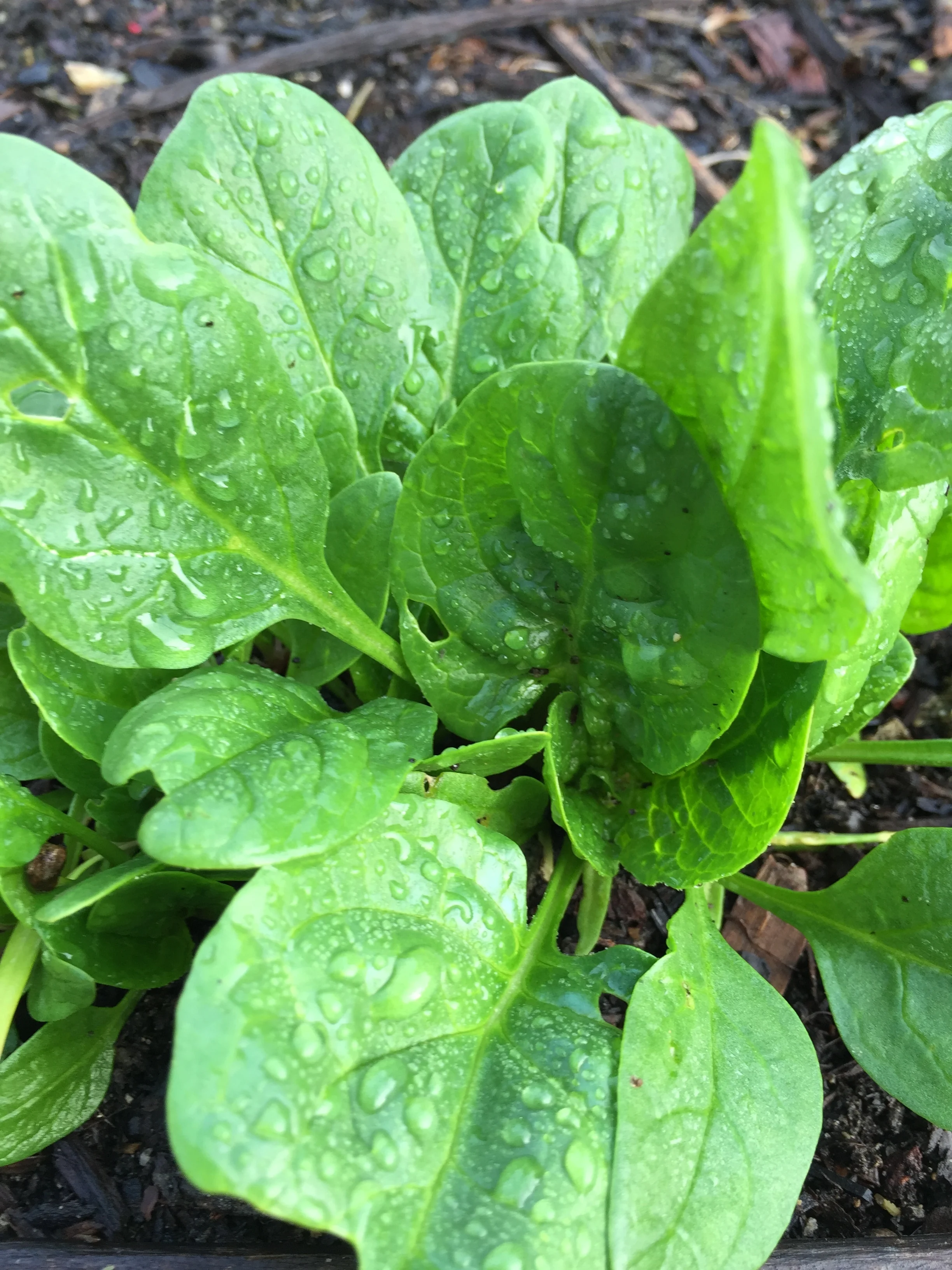
Spinach

Spinach

Shelling Peas

Shelling Peas

Broccoli

Broccoli

Annual wildflower seedlings

Annual wildflower seedlings

A very full compost bin

A very full compost bin


Planting, Harvesting, Curing Olives

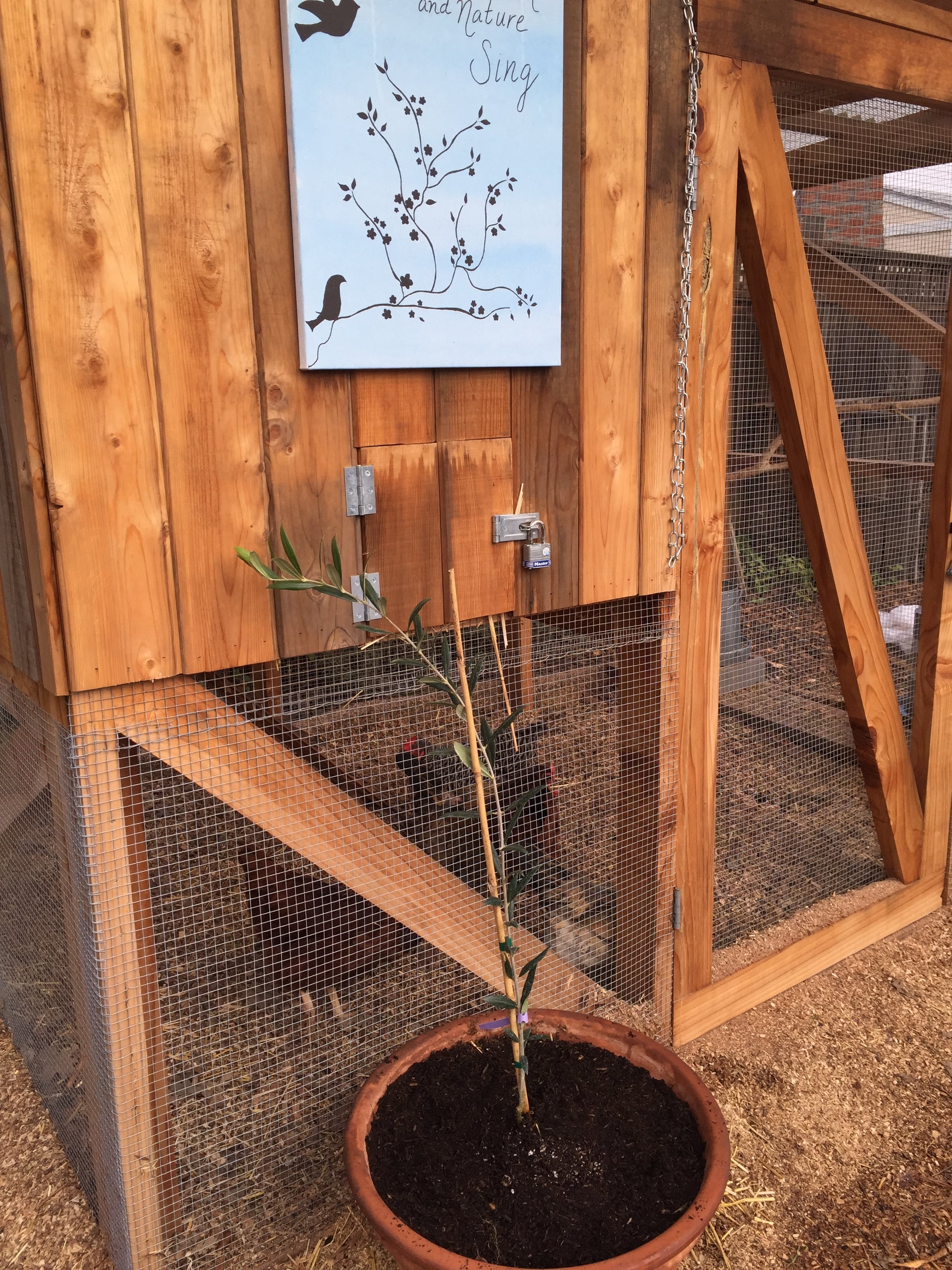
Today I planted the two Arbequina olive trees I ordered from Peaceful Valley. I planted them in very large pots, and plan to prune them to keep them on the small side. They are next to the chicken coop, so the birds can clean up any fallen fruit, and so that the small trees will provide some shade for the birds in high summer. Olives like good drainage, and dry, sunny, hot conditions. I don't have spectacular drainage in my yard, as it is flat; but I've always wanted to grow olive trees. I could have created a sort of berm, but I decided to try it this way instead - a pot should provide good drainage. We'll see how they do.

We also took a trip to the olive tree I found on one of my walks with Joe. Kate and I harvested about a half gallon of small black olives. After picking through them, Tom and I followed Sandor Katz's advice and cracked the skin on each one, then put them in a jar of water to soak. We'll change the water every day (this is a good project for a rainy California winter, otherwise I'd feel very guilty about the amount of water this process entails), and after about two weeks, we'll change the water to a 5% brine. The olives will stay in the brine, fermenting on the counter, for at least two weeks. Then we'll see how they taste!

Go ahead, google 'preserving olives' and see what kind of headache you get. This method was the first one I read that made sense and didn't require a ton of salt and several months (or a year). I hope it works! 

Milling Whole-Grain Flour

For my birthday, my folks gave me a Nutrimill grain mill! Immediately I ordered five pounds of hard winter red wheat from Bluebird Grain Farms. (A side note: this farm is in Washington State. I'm having trouble finding whole, un-milled grain from California. If anyone has a source, please let me know - I'd prefer local of course. Meanwhile, this family farm seems like a good place to spend my money.) 


I took my sourdough starter out of the fridge Friday morning and gave it three good feedings, and this morning it was extremely alive and active. So, it was time to mill some flour and get started!

You know me, often these projects get started at dawn, so forgive the light in these pictures. Here is my new mill:

This machine was pretty simple to figure out, though I had a little trouble with making sure the flour bowl fit correctly (for quite a while there was fine flour flying all over the kitchen. Say that five times fast). It took about three minutes to mill about six cups of grain. Each cup of grain makes roughly a cup and a half of flour. I needed 1000 grams for my bread recipe which was quite a lot. 

The grains are beautiful.

And the flour it produces is also beautiful. Thick, somehow wetter than flour you get at the store, and extremely soft. I'm not fond of the feeling of flour on my hands, but I didn't mind this stuff.

I ground the flour as fine as I possibly could. The recipe I'm using this weekend for my bread requires that you then sift it again, separating the finest flour from the rough bran. Then you soak the bran in boiling water and add it in after you've given your dough a bit of a rise. That way you don't 'cut' the delicate rise with the sharp shards of bran. But, of course, you still want the nutrition of the bran, so adding it in later serves both goals. It's a fussy recipe (you can find it here) but I'm hoping it will yield a superior loaf. We'll see.

I put the extra flour in a mason jar and in the freezer (along with the leftover grain) so that it doesn't spoil. As you probably know, once flour is milled, if the bran and kernel are not removed (in other words, whole grain flour), it can go rancid quickly. Plus, it can lose nutrition quickly. But, I wanted a little bit milled to feed my starter when it comes out of the fridge next Friday. I plan on baking bread every Sunday; therefore, the starter needs to come out and be fed several times before Saturday, when the grain will be milled, the dough mixed and risen, and then put in the fridge for a retarding phase. It's a long and drawn-out process; hopefully I will get it down to a streamlined routine that makes it easy. Good bread is worth it. And as Michael Pollan once said (I'm paraphrasing here), when it's time to make the bread, just make the bread. Meaning, this is one thing you can get a little 'zen' about - just be with the bread. Give it the time and attention it deserves. 

Maybe I've gotten a little too zen, but I think the layers in the flour are lovely.

Now, it's time to go 'be with the kitchen' and get it cleaned up.