Garden Update and Thoughts about Year-Round Food

With the bursts of rain and sun, the winter garden is doing very well, and temperatures are above freezing, so we've had some good growth this week. Still, most of my seedlings are very small, and growth is slow. I think, if I were depending entirely upon my garden for year-round produce, I'd have to do the winter garden differently. 

I usually start seed in early November. Our first average frost date is December 15; this year our first frost was before Thanksgiving, quite a bit earlier than I'm used to. We barely had the seeds in and the row covers put up before that first frost hit. So the seeds had to germinate in very cold temps, indeed, and I think that has slowed their growth considerably. 

What would be ideal, then, is to begin the winter garden in the heat of the October garden, and let it get a good start before the temps begin to fall. I know this, but the problem is, there is always still so much growing in the summer garden in October, It's hard to pull things out before they are done producing. 

And then, if you add in crop rotation, which I do, it all gets very confusing. For instance, right now I'm worried about the garlic and potatoes being harvested in time (this spring) to plant tomatoes in those beds. It's all a great big juggle, and sometimes my poor little brain gets all twisted. 

I'm thinking of maybe stopping succession planting in the summer, and instead just getting one crop of something before letting the bed go fallow for a while, therefore freeing it up for winter planting. What this means is less produce in the late summer months, which might be ok because my focus could be on tomato and pepper processing in those months, which would make me happy during the winter in another way, as we'd have more produce put up for our cold-weather meals. 

This will all take further thinking about. If anyone has experienced this themselves and has some advice, I'd appreciate it.

I spent some time turning compost today. This is not something I have ever done in our smaller bin, but since the mass in the larger bins is astounding, I thought turning it might speed the final processes. What I found was disheartening. After the first top foot, the pile was completely dry. Bone dry. With all the rain we've been getting! So I forked nearly the whole pile over on to another pile, hoping to get it really aerated and exposed to the rain. There is a bunch of totally intact hay from the chicken coop, from a loooong time ago - before I started using sand in the hen house. What does it take to break down hay, I ask you? Anyway I left a small layer, maybe a foot high, in one bin so that it will hopefully decompose quickly. Then the larger pile will just have to sit for a while. A long while, I'm guessing. I suppose if I want compost made faster, I'm going to have to turn it more. Ugh. Not my favorite.

I'll leave you with some pictures of the garden, though it's not that exciting at the moment - just a lot of very small green things. In a month, if the weather continues the way it is now (rainy and mild, with temps in the 40's-50's), there should be a lot more to look at. I did add a little fertilizer to the beds (Dr. Earth Vegetable) since there was no compost to add (sigh) and I figured the rain is probably washing away some nutrients. We'll definitely need to add some store-bought compost to the beds come spring (probably from American Soil). 

Beets

Beets

Chard

Chard

Kohlrabi

Kohlrabi

Fava Beans

Fava Beans

Shallot

Shallot

Turnip

Turnip

Garlic

Garlic

Potatoes

Potatoes

Carrots

Carrots

volunteer cilantro

volunteer cilantro

New growth on the Huckleberry

New growth on the Huckleberry

Kale

Kale

Asian Greens

Asian Greens

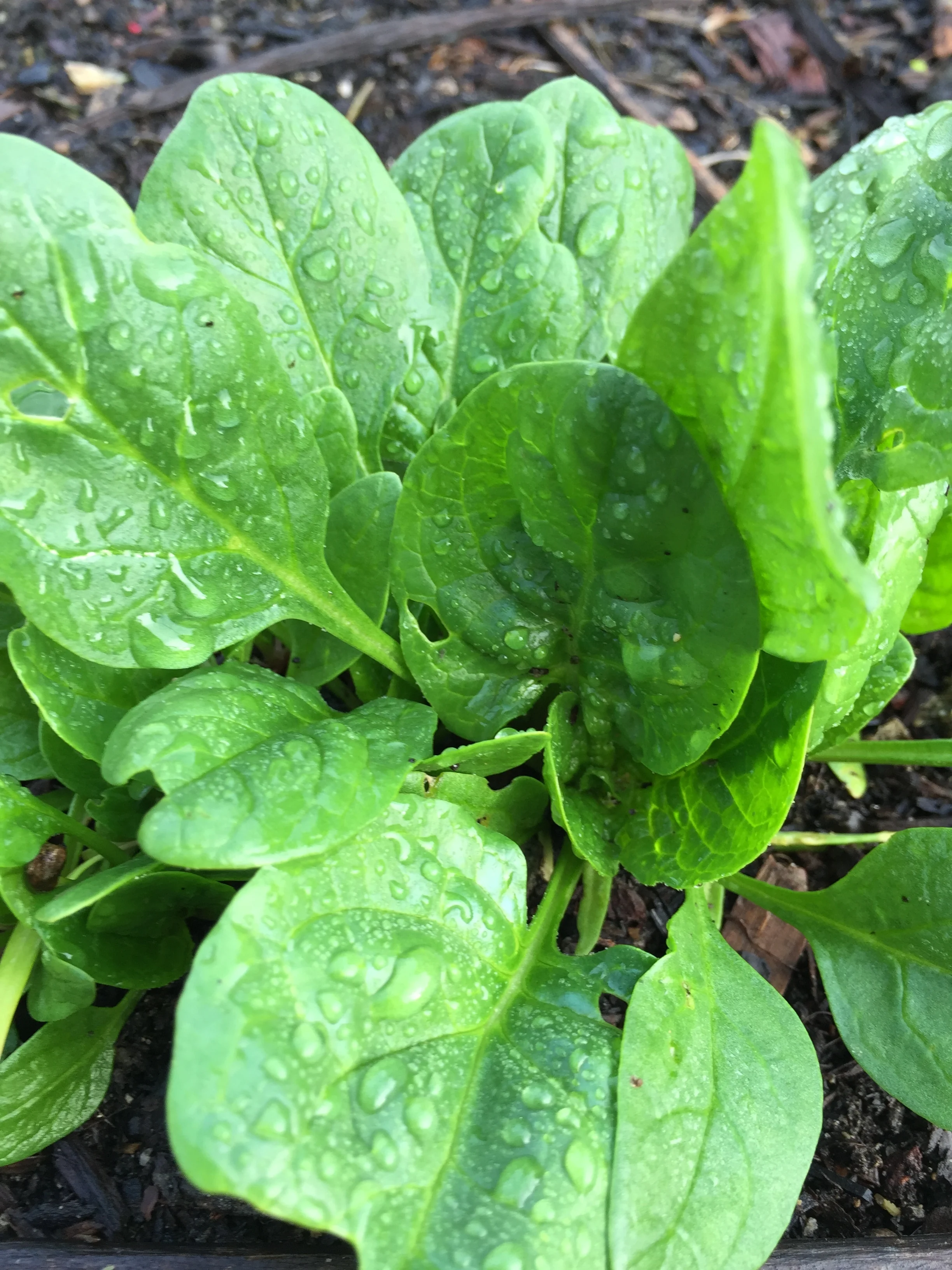
Spinach

Spinach

Shelling Peas

Shelling Peas

Broccoli

Broccoli

Annual wildflower seedlings

Annual wildflower seedlings

A very full compost bin
A very full compost bin


Planting, Harvesting, Curing Olives

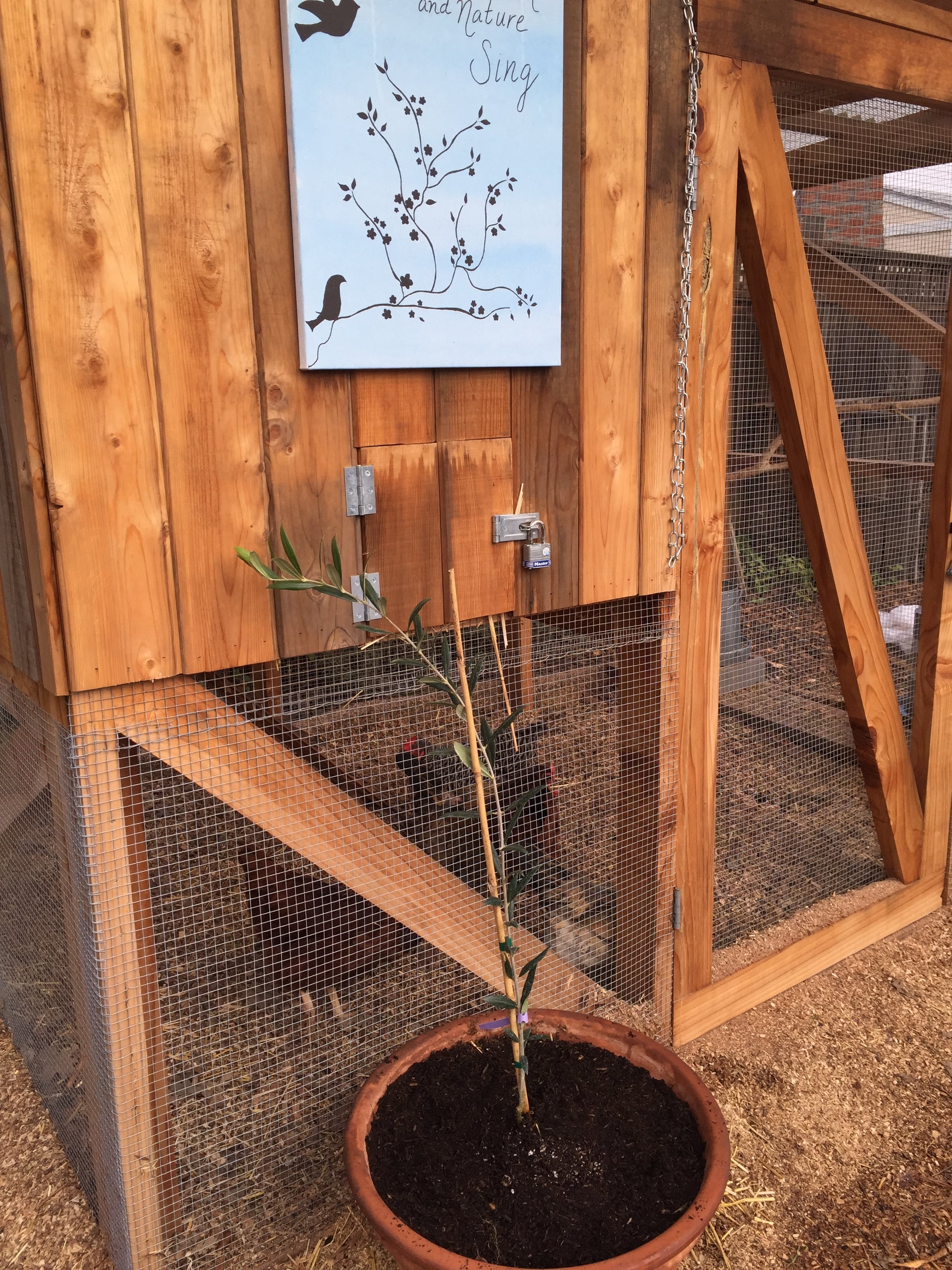
Today I planted the two Arbequina olive trees I ordered from Peaceful Valley. I planted them in very large pots, and plan to prune them to keep them on the small side. They are next to the chicken coop, so the birds can clean up any fallen fruit, and so that the small trees will provide some shade for the birds in high summer. Olives like good drainage, and dry, sunny, hot conditions. I don't have spectacular drainage in my yard, as it is flat; but I've always wanted to grow olive trees. I could have created a sort of berm, but I decided to try it this way instead - a pot should provide good drainage. We'll see how they do.

We also took a trip to the olive tree I found on one of my walks with Joe. Kate and I harvested about a half gallon of small black olives. After picking through them, Tom and I followed Sandor Katz's advice and cracked the skin on each one, then put them in a jar of water to soak. We'll change the water every day (this is a good project for a rainy California winter, otherwise I'd feel very guilty about the amount of water this process entails), and after about two weeks, we'll change the water to a 5% brine. The olives will stay in the brine, fermenting on the counter, for at least two weeks. Then we'll see how they taste!

Go ahead, google 'preserving olives' and see what kind of headache you get. This method was the first one I read that made sense and didn't require a ton of salt and several months (or a year). I hope it works! 

Milling Whole-Grain Flour

For my birthday, my folks gave me a Nutrimill grain mill! Immediately I ordered five pounds of hard winter red wheat from Bluebird Grain Farms. (A side note: this farm is in Washington State. I'm having trouble finding whole, un-milled grain from California. If anyone has a source, please let me know - I'd prefer local of course. Meanwhile, this family farm seems like a good place to spend my money.) 


I took my sourdough starter out of the fridge Friday morning and gave it three good feedings, and this morning it was extremely alive and active. So, it was time to mill some flour and get started!

You know me, often these projects get started at dawn, so forgive the light in these pictures. Here is my new mill:

This machine was pretty simple to figure out, though I had a little trouble with making sure the flour bowl fit correctly (for quite a while there was fine flour flying all over the kitchen. Say that five times fast). It took about three minutes to mill about six cups of grain. Each cup of grain makes roughly a cup and a half of flour. I needed 1000 grams for my bread recipe which was quite a lot. 

The grains are beautiful.

And the flour it produces is also beautiful. Thick, somehow wetter than flour you get at the store, and extremely soft. I'm not fond of the feeling of flour on my hands, but I didn't mind this stuff.

I ground the flour as fine as I possibly could. The recipe I'm using this weekend for my bread requires that you then sift it again, separating the finest flour from the rough bran. Then you soak the bran in boiling water and add it in after you've given your dough a bit of a rise. That way you don't 'cut' the delicate rise with the sharp shards of bran. But, of course, you still want the nutrition of the bran, so adding it in later serves both goals. It's a fussy recipe (you can find it here) but I'm hoping it will yield a superior loaf. We'll see.

I put the extra flour in a mason jar and in the freezer (along with the leftover grain) so that it doesn't spoil. As you probably know, once flour is milled, if the bran and kernel are not removed (in other words, whole grain flour), it can go rancid quickly. Plus, it can lose nutrition quickly. But, I wanted a little bit milled to feed my starter when it comes out of the fridge next Friday. I plan on baking bread every Sunday; therefore, the starter needs to come out and be fed several times before Saturday, when the grain will be milled, the dough mixed and risen, and then put in the fridge for a retarding phase. It's a long and drawn-out process; hopefully I will get it down to a streamlined routine that makes it easy. Good bread is worth it. And as Michael Pollan once said (I'm paraphrasing here), when it's time to make the bread, just make the bread. Meaning, this is one thing you can get a little 'zen' about - just be with the bread. Give it the time and attention it deserves. 

Maybe I've gotten a little too zen, but I think the layers in the flour are lovely.

Now, it's time to go 'be with the kitchen' and get it cleaned up. 

Is the week over yet?

Phew. It's Friday, thank goodness. Why is the first week back after vacation so dang difficult? I love vacation. But I might love a steady routine even more.

Anyway, I have a lot of things to talk about and show you this weekend. Meanwhile I just wanted to check in and ask, what do you think? Do you like the new website? I do, very much, and I hope it's easier now to comment on posts. I guess we'll see.

I'll leave you with a few pictures of the garden in the rain. We got a real deluge this week and the vegetables liked it very much. Now if we could just get a day of sun before the next downpour, we'd really be in business.


Asian Lettuces and Braising Greens, always ready for harvest first, and delicious.

Asian Lettuces and Braising Greens, always ready for harvest first, and delicious.

Kale, wild garden frills

Kale, wild garden frills

Fava Beans, planted for three reasons: soil improvement, forage for the bees, and edibles.

Fava Beans, planted for three reasons: soil improvement, forage for the bees, and edibles.

Shelling Peas

Shelling Peas

Spinach, with a ubiquitous cucumber beetle. Apparently they didn't die in the freeze. Drat.

Spinach, with a ubiquitous cucumber beetle. Apparently they didn't die in the freeze. Drat.

A strawberry blossom, hanging on

A strawberry blossom, hanging on

Manzanita is about to bloom

Manzanita is about to bloom

We're still getting plenty of eggs

We're still getting plenty of eggs

A piece of honeycomb that fell off a comb I was inspecting. I fear the bees aren't doing so well. More on this over the weekend.

A piece of honeycomb that fell off a comb I was inspecting. I fear the bees aren't doing so well. More on this over the weekend.

I'll continue to update you on the winter garden as it grows and provides food. Meanwhile, we're trying our hand at more preserving projects, and spending a lot of time in the kitchen. Tom's working on a batch of Meyer Lemon Limoncello, I started a new jar of vanilla extract and another jar of preserved lemons, and my sourdough starter is out of the fridge and coming alive for a weekend bake. More on that tomorrow - I have some fun things to share. 

Planning the Summer Garden

We are this close to harvesting winter greens out of the garden, and rain is in the forecast for this coming week, which means things will warm up and get extra-hydrated and that should help. Meanwhile, like gardeners everywhere, I'm longing for spring and the planting that will be done then. I don't get many seed catalogs here as I prefer not to use the paper, but I'm just as guilty as anyone at lusting over the selection offered by some of my favorite seed houses.

I'm very excited to start ordering seeds and vegetable crowns, but before I do, I had to figure out my space and what I have room for. I'm going to grow a lot of the same things I grew last year, though I'll try different varieties of many of them. Plus, we have a new garden to build and plan! But more on that later.

First, I dealt with the regular planning of the North and South Gardens. I used to make these all colorful, but now I'm all about just getting it done, sorry.

North Garden
The North Garden will again have corn, sweet potatoes, sweet and hot peppers, all kinds of tomatoes, cantaloupe, watermelon, and delicata squash.

A couple of notes on the tomatoes: I'm going to grow less cherry and more paste tomatoes, plus I'm going to give them more room; i.e. last year I grew four plants per 4x4 bed, this year I'll plant 4 plants per 4x8 bed. I'm reading Epic Tomatoes by Craig LeHoullier of Seed Saver Exchange fame, and he recommends this. Also, we have two very large pots by the chicken coop, in which I've tried many different flowers, none of which are terribly happy there. It's a very sunny and dry spot. So I've ordered two small Arbequina Olive trees to put in those pots and I'll get those started there as soon as they arrive.

South Garden
The South Garden will have potatoes, pole beans, both slicing and pickling cucumbers, shelling peas with an underplanting of summer greens such as collards and orach, acorn squash, and butternut squash.

That's all pretty standard fare, though I'm going to trench and hill the potatoes rather than grow them in a tower, and we'll probably do more pickling cucumbers than slicing. Having just read The Art of Fermentation by Sandor Katz, I'm keen to do more pickling using a fermentation method rather than vinegar. One new vegetable that I'll be growing is orach, which was recommended to me by Michael at Dissident Potato. He says it does well in summer heat, and I'd be glad to have more greens during that time. I may also try New Zealand Spinach if I have room in the Understory Garden.

But hey! I haven't mentioned that yet. The Understory Garden will be in our new sheet-mulched space, which is bordered by a large chitalpa tree and a large magnolia tree. Hence, it's dappled with regards to light, except early morning and late afternoon, in the summer, when it will get direct sun for an hour or so.

Understory Garden
This garden will be planted with mostly perennial edibles. The large square in the middle will be 6x6, and the triangles at the sides will be 4x4x4. The triangles will be planted with both annual and perennial herbs. My big 'herb spiral/hugelkulture' has become flat and overrun with mostly mint. I decided to let that go to mint (although there are still many other herbs which I'll let live as well). We use a lot of mint so that is an ok thing. Also, I think now that it's flat, it's getting peed on quite a bit by passing dogs, as it's right at the edge of our driveway. So! The less we use that area for edibles, the better. (Though - side note - it's extra nitrogen and it's sterile, so no big deal - just have to wash everything carefully.)

The center square of the Understory garden will have some stepping stone paths to prevent compaction in other areas, and the center will be planted with citrus. I'm going to plant one each of a mandarin, lime, and lemon, probably all in the same hole. I've been reading a lot about this method and I think it makes sense for this area. The trees will have to remain small, and of course I'll have to do regular pruning, but planting them this way will naturally help keep them a reasonable size.

Under the citrus and next to the paths I will plant many varieties of lavender, for both beauty, scent, and their long-lived forage for pollinators.

On the edges of the 6x6, I intend to plant perennial edibles that we use a lot, but haven't grown before. I'm going to try rhubarb, horseradish, ginger, and lemon balm. I think all will grow well, but the one wild card is the ginger, which is a tropical plant. I'm hoping the close plantings of everything in this area will provide enough humidity, but I may need to spritz over there once in a while in the hottest summer days. It also won't like frost, but I'll have to protect the citrus during frost anyway, so I'll cover the ginger as well.

We'll probably start building this new area fairly soon, as the rhubarb will need to be planted in late winter/early spring. Maybe over President's Day weekend. Meanwhile we'll let the mulch and cardboard start to settle and kill the grass and weeds.

The mulch pile is very small now, I still have one area of the garden to cover, and likely just as I get that pile moved, we'll have a pile of good composty dirt delivered to fill the new beds and top off the old beds. There's always a pile of something to be moved around here.

If any of you has grown ginger or horseradish before, or tried the permaculture method of planting many orchard trees in one hole, I'd love to hear from you.