• About
  • Blog
  • Contact
  • Favorites
  • Archive
Menu

Poppy Corners Farm

Street Address
Walnut Creek, California
Phone Number
Walnut Creek, California

Your Custom Text Here

Poppy Corners Farm

  • About
  • Blog
  • Contact
  • Favorites
  • Archive

Biodynamic Accumulators?

June 6, 2024 Elizabeth Boegel

image credit: Garden Organic

As a teacher, I’ve learned that if I state a claim during a lecture, at least one student is going to question it. I’ll get asked, “What’s your source?” or, “What’s the history behind that information?” or, “What’s the data that backs that up?” I have learned to love those questions, because it has made me a better teacher. I don’t dare write a lecture without exploring, and citing, every angle of every claim I make. This is important work and I’m glad to do it; especially because science frequently changes as more experiments are conducted. After all, it does no one any good to learn old science.

But all of us have ideas about gardening that we’ve heard so often that we take them for fact, whether they are or not. Things like:

  • Putting eggshells around your plants will protect them from snails (1)

  • Putting a layer of rock in the bottom of a container will increase drainage (2)

  • Giving plants a lot of space will quell any competition for resources (3)

  • Gathering up leaves and other plant matter from under plants will help them grow better (4)

You get the drift.

So, when a student recently said to a class, “Plant comfrey! The deep taproot will bring minerals up from the lower levels of your soil!” my inner alarm went off. I hear this all the time. Where did this idea come from? Is it true?

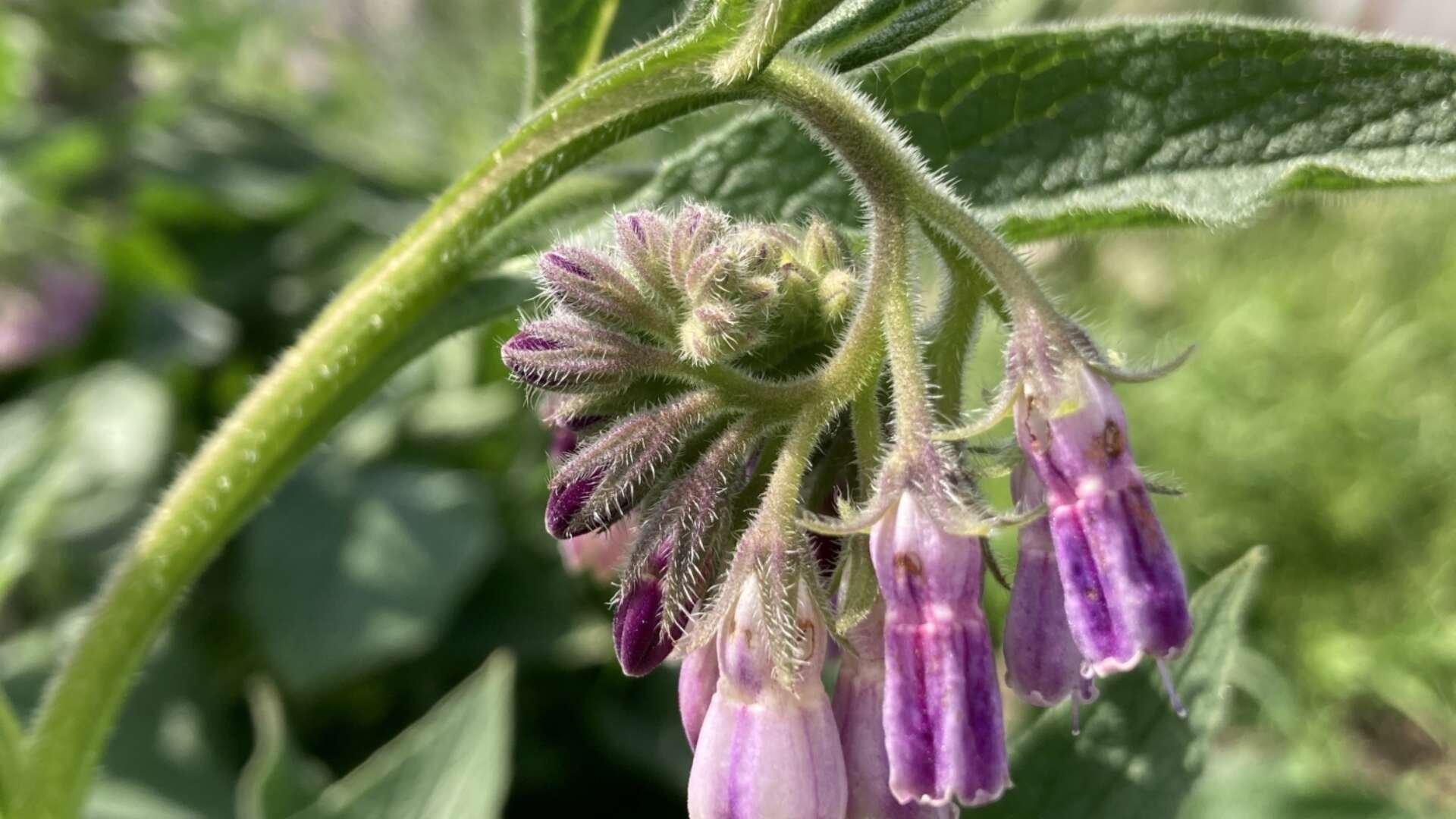
Comfrey, and other plants like nettles, are widely known as ‘biodynamic accumulators.’ There is no definition for the term because it hasn’t actually been defined yet. It came to prominence in the Permaculture world, as part of ‘plant guilds’ - that is, plants that are placed near each other to provide different benefits to the whole. For example, you might plant a fruit tree, and beneath it place a leguminous bush to provide nitrogen, chives to repel insects, and yarrow to provide biomass for mulch. Comfrey is often included in these guilds for its oft-lauded ability to ‘bring up nutrients,’ whatever that means.

Wait, what DOES that mean?

Well, all plants bring up nutrients, right? The nutrients in the soil are dissolved in the soil water and become the soil solution, which is where plants get the nutrients they need for growth.

How do roots form? When seeds germinate, they form a primary root from the radicle of the embryonic tissue. This helps the plant establish, so that it can unfurl its seed leaves (or ‘cotyledon’ leaves) and begin to photosynthesize. Once the plant is established, it usually forms one of two root systems, depending on what kind of plant it is - a tap root or fibrous root systems. Tap roots have a central root with little side roots coming off of it. The purpose is to anchor the plant in the ground and/or to act as a storage place for nutrients (think of a carrot). The fibrous root system has lots of adventitious roots that move across a wide area to find more surface pockets of nutrients, and cannot store nutrients long term. Confusingly, a very established fibrous root system can also act as an anchor for the plant (think of corn).

image credit: Zassou Garden

We could get much deeper into the weeds here (no pun intended) but I want to keep it simple so we get to the point of this post. Quite simply, plants have adapted different approaches for their needs, but all of these different kinds of systems (whether tap or fibrous) additionally have fine hairs which gather the moisture and nutrients. These fine root hairs will take up whatever is available, in whatever location they happen to grow.

So that means that the roots, wherever they are, whatever kind they are, are taking up nutrients. I suppose, then, depending on the kind of soil you have, there could be different nutrients in different levels. Perhaps you have a very shallow top soil that is depleted in nutrients; it might be good in this case to include deep-rooted plants in your garden to make those subsoil nutrients (minerals from rock, mostly) available. Most tap roots develop a greater number of associations with fungal networks, which break down the rocks at that lower level, so it makes sense that these deeper tap roots are finding different minerals and nutrients. Shallow roots, however, are getting more nutrients from the top layer of organic matter, whatever is available from rotting plant material on top of the soil, as well as from the biological ‘poop loop’ happening with the little creatures who live in the soil.

So yeah: Deeper roots bring up different nutrients. That part is true. But do you need a special plant, like comfrey, to act as this biodynamic accumulator? Is comfrey the only option for this? Most folks are using comfrey as a nutritive mulch; they grow the plant to bring up large amounts of nutrients which are then stored in the leaves (they claim - which again sounds the alarm - doesn’t a tap root store the nutrients in that large root, like a carrot?), and then they chop the leaves, lay them down as mulch, and those nutrients are then brought into the top layer of soil, for the fibrous roots to ‘mine’ for nutrients. At least, I think that’s what the gardeners who buy into the whole ‘accumulator theory’ are doing. Of course, all mulches eventually break down, whether it’s straw or wood chips or sawdust or grass clippings or comfrey leaves. And in that process, they feed the microbial life in the soil, which then poop out the nutrients in a form that is available for the plants (and is taken up by roots). The question then becomes: Do comfrey leaves provide more nutrients as a mulch than any other plant matter?

Well! Turns out there has been a recent study on exactly that question. The study used USDA’s ethnobotanical and phytochemical database to compile peer-reviewed nutrient concentration data across thousands of plant species. They set a threshold of 200% of average for a plant to be called a ‘dynamic accumulator.’ What they found is 340 plant species that showed nutrient concentrations high enough to qualify. This is impressive (plants are always so surprising, aren’t they, in so many wonderful ways?), but what’s very interesting is which, and how many different, nutrients the plants accumulate. The scientists compiled all the data into an online tool called Dynamic accumulator database and USDA Analysis. Here you can see which plants ‘brought up’ which nutrients and in what concentrations.

The next step in the study was to choose six promising species to trial for two years at a community farm. They chose dandelion, lambsquarters, red clover, redroot amaranth, Russian comfrey, and stinging nettle. They wanted to use these plants in different applications, such as liquid fertilizer and mulch production. Here are their key findings (this is a direct quote from the study):

- Plant tissue nutrient concentrations are tied to soil nutrient concentration. Dynamic accumulators are well-suited to extract specific nutrients from fertile soil, but they aren’t going to create nutrition that isn’t there. Therefore, dynamic accumulators should be regarded as one useful part of a larger nutrient management plan.

- That said, even when grown in poor, unamended soil, lambsquarters surpassed the dynamic accumulator threshold for potassium, and comfrey surpassed the threshold for both potassium and silicon.

- Previous studies have shown stinging nettle to accumulate calcium at concentrations above the thresholds. These new findings show that not only does it accumulate a lot of calcium, but it also has a high nutrient carryover rate, resulting in calcium-rich liquid fertilizer and mulches.

So there you go: Biodynamic accumulators are a real thing, and comfrey is certainly one of them. But, one must consider: Does the soil even need these particular nutrients? For instance, much of the Bay Area already has plenty of calcium in the soil. In this case, a dynamic accumulator like stinging nettle, which accumulates high levels of calcium, may not be necessary. Also, none of the six tested in these trials provided a large nitrogen benefit, but I suppose we already know what does provide that, and that is legumes.

I find the first finding the most important: This is only one part of a soil nutrient management plan. Adding plenty of organic matter to your soil, whether comfrey leaves or nettles or wood or straw or manure or chaff or whatever, will feed the microbiology in the soil which will in turn make it bioavailable for our plants. It will also form stable aggregates which will create long-term health. Living roots in the ground, a great diversity of them, will do the same. Eschewing pesticides of all kinds will also help the soil nutrient profile. Lots of soil cover will also prevent evaporation, leading to greater soil moisture and soil health.

Bottom line: Plant comfrey if you want to. It’s a beautiful plant and as long as you get the Bocking 14 variety, it will be well-behaved in your garden. Insects love it and it thrives as an understory plant for larger species. I myself have just planted 50 root cuttings under the trees in our orchard, if only to provide another living root in the ground, improving the soil profile.

Tags science, plant nutrition
1 Comment

Use the Edges & Value the Marginal

May 17, 2024 Elizabeth Boegel

I had the pleasure of teaching Permaculture this semester for the first time. While I have always known a little about the philosophy, I had never fully researched its methods and theory. I think, going in, if you had asked my (very unformed) opinion about it, I would have said that permaculture was all about individual ‘things;’ things like hugelklultur, and food forests, and fruit tree guilds, and buildings made of straw or cob, and perennial plantings. And permaculture does incorporate all of those things, but I have discovered that it’s really so much bigger than any one ‘thing.’

Permaculture is actually a way of seeing the world. It uses systems thinking to solve practical problems. It works with nature, rather than against it. It observes, and enters in to the flow rather than manipulating. It values a set of ethics and principles which can be used in gardening but also in general life. Permaculture asks that we put the ideas of Earth Care, People Care, and Fair Share front and center; everything else we do leads from those. Once we do that, it’s easy to see what the next steps are.

All permaculturists agree with those three ethics, but they tend to waver a bit when it comes to the principles. This is natural. We each have our own principles when it comes to gardening, they are very personal. But when you’re the teacher, you’ve got to teach the originals. The founders of the method (Bill Mollison and David Holmgren) had a list that looked something like this:

The one that has intrigued me all semester is #11, Use Edges & Value the Marginal. This principle reminds me of the scientific word ‘ecotone,’ which I’ve written about before. An ecotone is simply an area of transition between two biological communities. For example, in California this might mean the edge between Grassland and Oak Woodland. These ecotones are biologically rich, having aspects of both communities in one place. I’ve said before that I consider my suburbs an ecotone, straddling both the city and the open space that surrounds it. These ecotones should not go to waste. They should be used.

But it’s not just the edges, it’s also the marginal. We often ignore the marginal in our society, whether it’s people and communities, or bugs and weeds. The most ‘seen’ things are often attractive, but don’t have the depth that the marginalized do. Of course, the marginal things are integral to the whole.

When I think about urban areas, I often think about edges. Hard edges. Walls, fences, sidewalks, streets, buildings, driveways. These edges have their challenges. But they also have a lot of promise and possibility; especially the areas between the hard and soft places. It’s useful to notice what survives there. What thrives there. Some plants actually prefer living on the edge.

For some reason (maybe it’s too close to dinnertime), I’m thinking about lasagna. Sure, the center is all soft and oozy, but the edges, where the heat of the pan meets the melty cheese and the doughy pasta, and crisps them up, is where all the flavors reside. It’s a tricky place and requires balance, but the interface between things is where the most interesting things happen.

You can also think of these edges as ‘liminal space.’ A threshold. A place neither in one world or another. A place where magical things can happen. It’s uncertain. Maybe even a little bit unsettling. It makes you stop and take notice instead of just skimming on past.

Zooming out into the big picture, these edges and margins can massively increase the biological health of our planet. Aesthetically and closer to home, they can soften the urban landscape and make for a more pleasant place to live.

Comment

Relevance

May 10, 2024 Elizabeth Boegel

Hardwood forest, something we don’t see a lot of in coastal California

I took a trip this past weekend, on my own, to see some high school friends in my old hometown of Gaithersburg, Maryland. It was a whirlwind of activity - wonderful dinners, driving around the old neighborhood and trying to figure out where I was and where everything happened (this is where my dad guerrilla gardened under the power lines! this is the pool where I spent my entire summer! this is the place where I wrecked my bike and split my head open!).

One of my childhood homes

It was raining pretty much the entire weekend, and I was struck by all the water everywhere. Lakes, streams, creeks, ditches, all filled with water. Green lawns (many homeowners don’t even have irrigation systems), green pastures, leafy leafy leafy highway trees. Trees of all kinds we don’t see in California, or if we do, only as specimens in botanic gardens.

IMG_1444.jpeg
IMG_1442.jpeg

During the day, I was pretty much on my own, so naturally I went on a lot of hikes. One day, I went to a local park that I had visited many times as a child with my parents, and then as a teenager with my friends, Sugarloaf Mountain. It’s a rocky hill, not terribly high in elevation (Maryland has a lot of rolling hills - it’s not flat, but it isn’t ‘peaky,’ either), and when you’re young, big rocks are fun to scramble on. I had never hiked around the mountain, though, so I did that as well as go to the peak.

On another day, I went to Harper’s Ferry, which is just over the MD and VA borders in West Virginia, where the Potomac and Shenandoah rivers meet. You might remember that this was the place of abolitionist John Brown’s raid on the national armory in 1859, which helped catapult the nation into Civil War. It was interesting to read all about that history, see the old buildings, walk a defunct railroad track, and hike up and down the rivers. The Appalachian and American Discovery trails both go through this area, so I did see some thru-hikers which was naturally a highlight for nerdy hiker me.

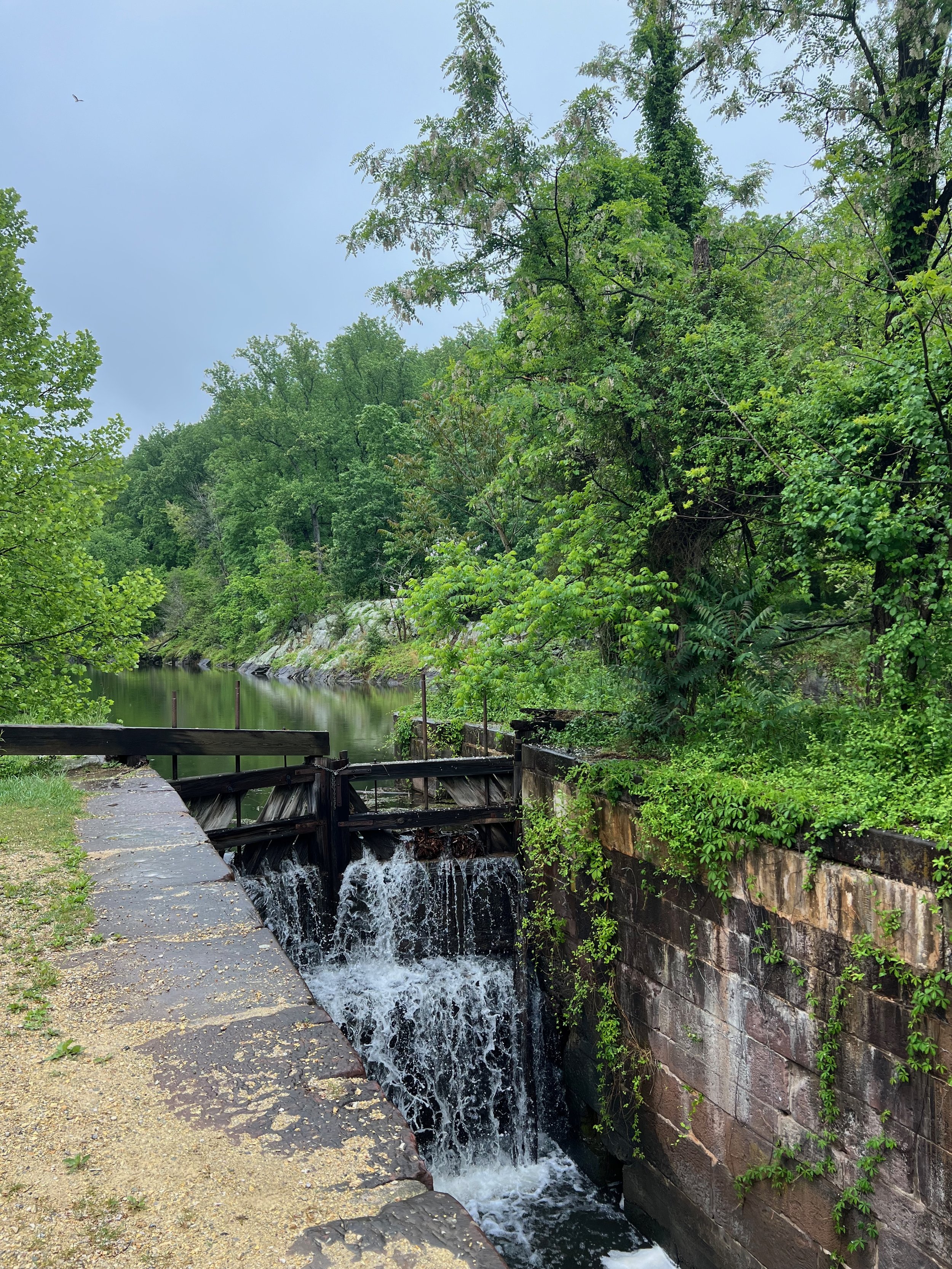
On yet another day, I went to the Maryland side of the Great Falls of the Potomac River, to walk along the Chesapeake and Ohio Canal (C&O Canal), and this is where the title of this post comes in. The falls were spectacular, the amount of water astounding, the wildlife abundant, and my hike was great. The canal locks are fascinating as is the history of the canal itself, which runs for 185 miles and was constructed in the early 1800s as a way to move goods throughout the east.

I spent a good deal of time in the Great Falls Tavern visitor’s center. There were lots of exhibits featuring the history of the canal and honoring the people who envisioned it and built it. But one thing was conspicuously missing. There was no mention of the native peoples of this land, the indigenous communities that were removed in order for this land to be used for the expansion of capitalism and profit.

So I went to the ranger manning the center (he was probably in his early 30s) and said, “Maybe I’ve missed it somehow, but is there any information about the native peoples who lived, and presumably still live, in this area, and how they were affected by the canal?” The ranger paused a minute, then responded, “You can probably find that information online. We don’t keep it here because it is not relevant to the history of the canal.”

This came on the heels of a conversation I had with my friends the evening before. I’m not sure how it came up, but I asked them, do you know the native tribes who lived on the land you live on now? My friends are smart, worldly, learned. But they did not know. Do you know?

You may be asking at this point, IS this information relevant? I encourage you to think deeply about this. While you’re at it, think about why it might be especially relevant to have this information available in our country’s national parks, which host thousands of visitors every year, many of them children.

I do not claim to speak for Indigenous peoples, as I am not one of them; I come from European settlers who arrived in the late 1800s. But this issue is relevant to me personally because I am trying to understand how I can help right the wrongs of our history.

To that end, today I have spent some time contacting the Secretary of the Interior, the Director of the National Park Service, the Assistant Secretary of the Bureau of Indian Affairs, and the C&O Operations Manager. I am doubtful if they will listen to my messages, read my emails, or even open the letter that I’ve just put in the mail. However, doing nothing is not an option.

Tags sovereignty
7 Comments

New Honeybees

April 15, 2024 Elizabeth Boegel

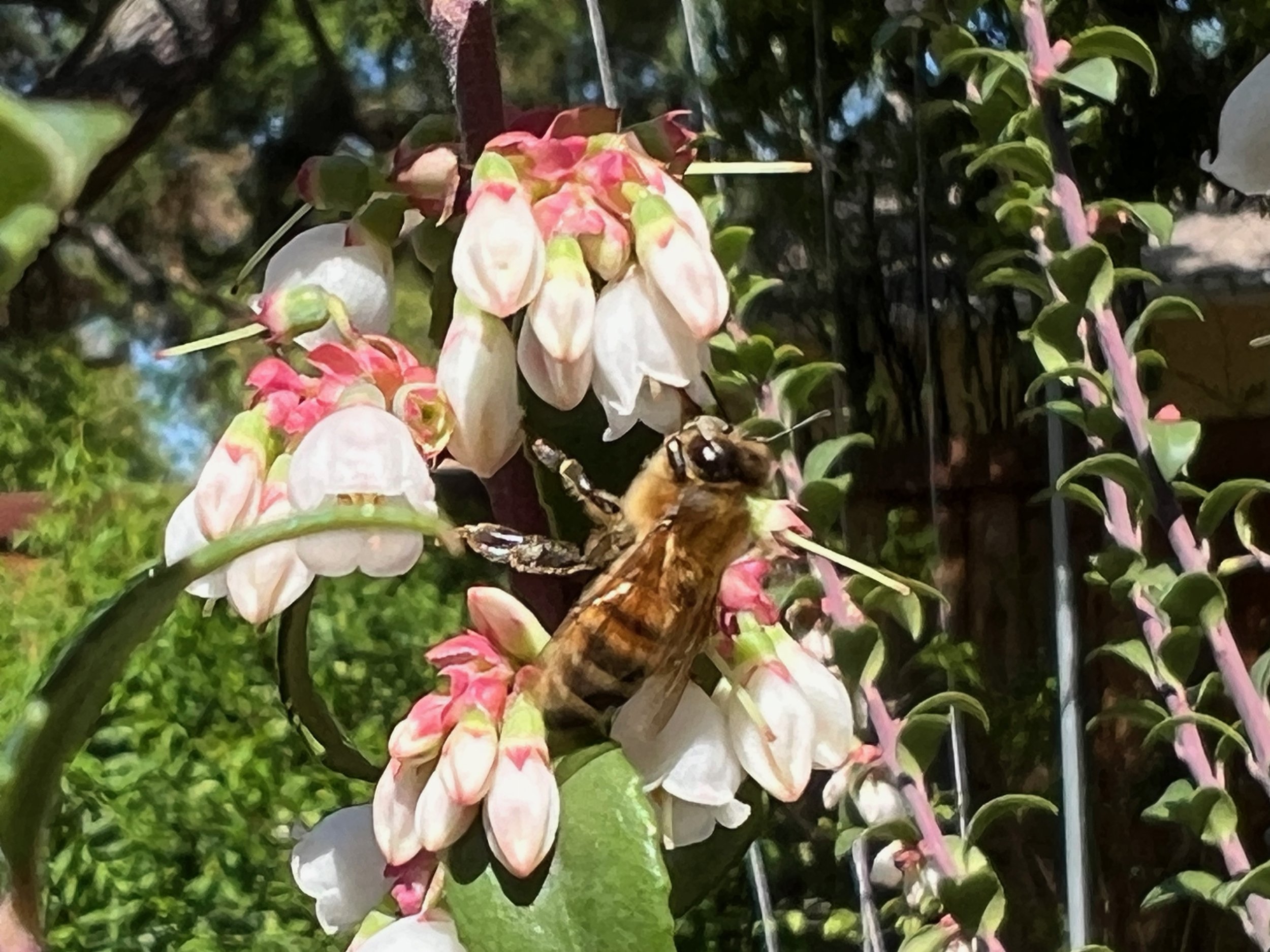
Honeybee on our native Huckleberry, Vaccinium ovatum

You might remember that we opened the hive a couple of months ago and found our large colony of bees had disappeared, except for a small cluster (and a queen) huddled near the front of the hive. We weren’t convinced they would survive, and they didn’t; I suppose it’s possible that they flew away in search of a better location, but mostly they perished. It’s been a wild spring, with a whiplash of temperatures, and neither the plants nor the insects seems to know how to behave these days.

Luckily, I had ordered a new colony from Mann Lake in Davis, and this past Saturday we took a long and rainy drive out to pick them up. Mann Lake is a huge, national operation, but we had never visited one of their stores before - it was a wonderland for beekeepers, with every possible piece of equipment on display. We picked up a few useful items like a new brush (used to brush the bees around softly when you’re elbow-deep in the hive) and some hop pellets for the smoker, but mostly we were there for the bees. We picked up a regular package of Italians, three pounds or so (which is about 3000 bees), with a queen and a can of sugar syrup to keep everyone satisfied while traveling.

It was raining when we got back home, and it’s ideal to install the bees late in the afternoon or just before dark anyway, so we put them aside while we did other chores. (It’s ideal to install a colony just before dark, so they aren’t tempted to fly away.) Earlier in the day I had spent some quality time cleaning out of the hive, scraping away a lot of the old wax and propolis, extracting some ants and washing away their tracks with mild, unscented, eco dish soap, and using some penafin on the hive legs, both to protect the wood and deter any ants who tried to climb up.

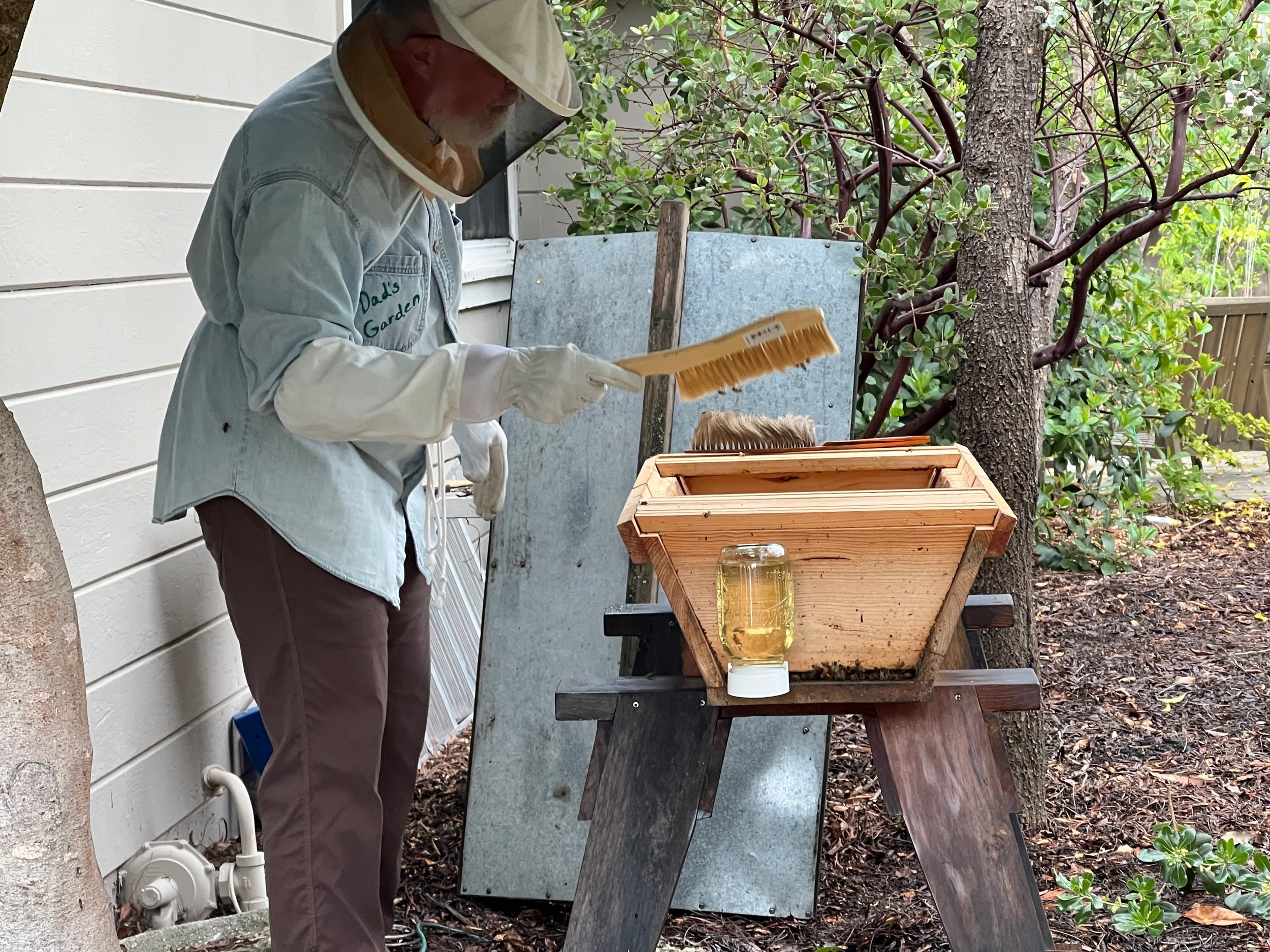
Finally, the raindrops slowed enough that Tom was able to install the colony. It always kills me that I can’t help with the bees anymore, but at least I can take pictures.

You can see that we’ve provided them with a jar of sugar syrup (1-to-1 ratio) since they don’t have any stored honey to eat and it’ll be a while before they can store anything they collect. There’s plenty of nectar and pollen available now that it’s getting warmer, but until they have some comb built, it won’t help them much.

Tom hung the queen in her cage between the bars; the opening to the cage is stuffed with a marshmallow-type candy, which the worker bees will eat. By the time they free her, they will be attuned to her pheromones and will not be tempted to slaughter her. Instead, a ‘hive mind’ will form, where all the bees are working as one. Honeybees are one of the few insects to do this; ants, wasps, and termites are the others. This is called ‘eusociality.’ It’s pretty fascinating.

I’ve been checking on the hive regularly and everyone seems to be doing exactly what they’re supposed to be doing; that is, drinking the syrup, orienting themselves to the hive entrance, and hopefully (inside where I can’t see it) building comb. This coming weekend, Tom will go in the hive again to remove the empty queen cage and check that everything is going according to plan. Meanwhile, it’s great to have a buzzing hive back at Poppy Corners. I love native bees, but it just doesn’t seem like a real garden without the honeybees.

Collecting nectar from our mock-orange tree

2 Comments

Beer Workshop

April 1, 2024 Elizabeth Boegel

Tom’s teaching this workshop! Please RSVP if you’d like to attend.

1 Comment
← Newer Posts Older Posts →

Subscribe

Sign up to get email when new blog entries are made.

We respect your privacy. We're only going to use this for blog updates.

Thank you! Please check your email for a confirmation notice to complete the subscription process.

Powered by Squarespace