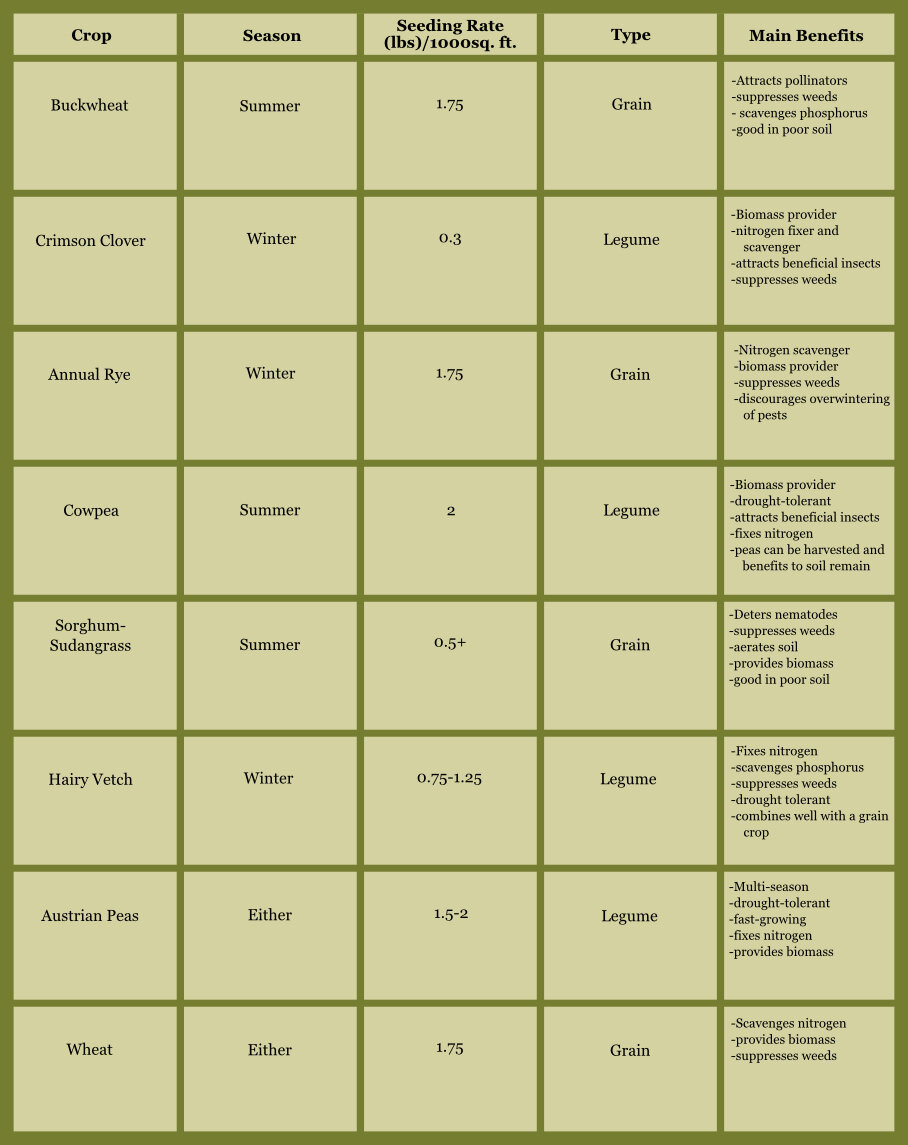
Cover crops can seem intimidating and confusing, so let’s start from the beginning. What is a cover crop? The simple answer is that a cover crop can be anything you want it to be. The Oxford Dictionary definition is “any crop grown for the protection and enrichment of the soil.” Farmers tend to use specific plants to satisfy specific requirements, which can be very important, especially if you want to grow without inputs i.e. chemical fertilizers. Some plants provide nitrogen, some phosphorus; others attract beneficial insects, and still others provide biomass for feeding animals. Some are grown during the summer, and some are grown during the winter. Some are grown after a specific cash crop, to replenish certain nutrients.
If you’re a farmer, and you’re making a living growing and selling your crops, you’re going to want to know a lot more details about cover crops and how they can be used to save you money. But if you’re a regular home gardener, your needs are different. You want something to improve the soil, attract beneficial insects, look pretty, and feed your compost pile when it’s done growing. Maybe you want to avoid buying soil amendments this year (they’re going to be hard to find, considering how many people are gardening for the first time). Maybe you don’t like the structure of your soil, and you want to improve its water-holding capacities. Maybe you like birds, and you want to feed insects that will in turn become food for the birds. These are all fine reasons to grow a cover crop.
The thing that is most important is that you have a living root in the ground at all times. Now, if you live in upstate NY, you know that eventually that root will likely die, and that’s the way it’s supposed to be, and maybe even you time a crop so that it winter-kills and you don’t have to cut it down yourself. If you live in California, however, you can grow different cover crops at different times of the year, year-round. Having a living root in the ground is what improves your soil. The plant harvests sunlight, makes sugars, and pumps those sugars down into the roots and into the soil. This attracts microbiota, tiny creatures that feed on the sugars that the plant provides. In turn, they poop, providing micro-manure to the soil, and they burrow, improving air flow to the roots, and they die, recycling nutrients, and they move a ton of soil, making it rich and crumbly and perfect. If there’s no root in the soil feeding the microbes, then they move on or die off (or become very, very sluggish, waiting for the next influx of food). It’s not the plant that is feeding the soil, it’s the animals that are feeding the soil - the bacteria, fungi, protozoa, and nematodes - the primary and secondary consumers. When you spread manure or compost on the soil, it doesn’t feed the plant - it feeds the soil life, which in turn form these associations with the plant roots and provide the nutrients the plant needs to thrive.