Some seed saving, and a turkey problem (or maybe not)

Each evening lately, after the sun goes down, I've been working on cutting down flowers and saving seed. I've done this in the past with annual flowers, but I had always been haphazard about it. This year I knew I wanted to get as much seed as possible, so I've been keeping a close watch on the flowers. 

One of the annuals I really enjoyed this year was Breadseed Poppies. I had two varieties, "Cupcake" and "Orange Chiffon," and both were gorgeous. When I saw the amount of seed they both produced, I knew I would want to save some for next year.

Orange Chiffon

Orange Chiffon

Cupcake

Cupcake

Cupcake seed pods

Cupcake seed pods

When I noticed most of the flowers were done blooming and seed pods had formed, I cut down the plants and put the seed pods in a separate bin. There, I left them to dry for a couple of days. When dry, I split the pods and shook out the seeds. This yields thousands of seeds, not counting the ones that already self-sowed in the same spot.

some chaff on top

some chaff on top

I've been doing the same with Clarkia, both "Mountain Garland" and "Farewell-to-Spring." These seed pods are much, much smaller and it takes a lot more time to collect the seeds.
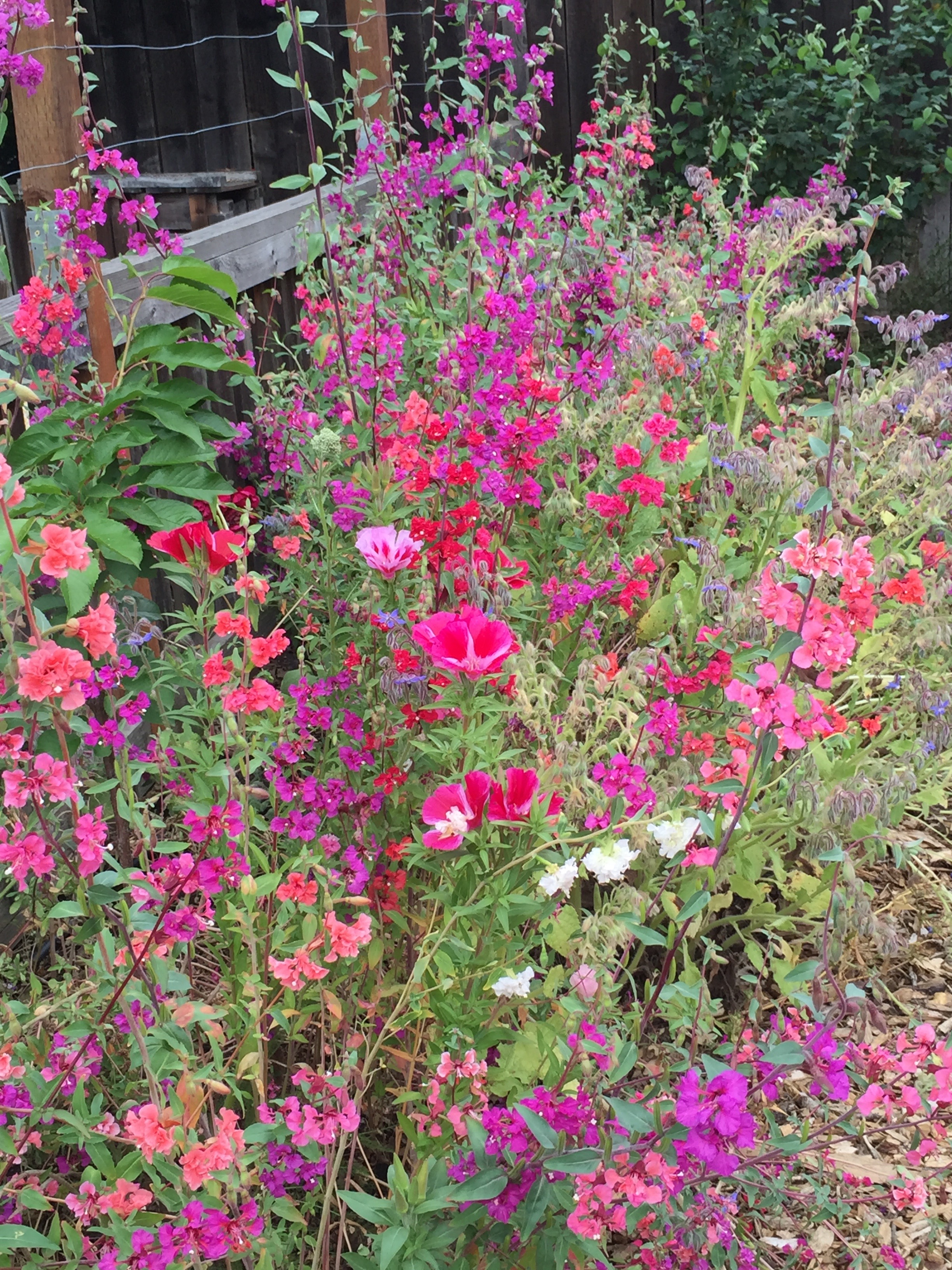
Mountain Garland are the flowers on tall stalks, Farewell-to-Spring are the shorter, cup-shaped flowers.

Mountain Garland are the flowers on tall stalks, Farewell-to-Spring are the shorter, cup-shaped flowers.

Mountain Garland seedpod

Mountain Garland seedpod

seeds and chaff

seeds and chaff

I'll store these in our garage refrigerator; the clarkias can be sown in late Fall, and the breadseed poppies in late Winter. 

My eye is carefully trained on some cilantro that is blooming right now - I'd like to collect seed for both planting and for canning. We use a lot of coriander when we make pickles.

I also have my eye on some Love-in-a-Mist and some California Poppies. It's hard to get things at just the right time!

Now, about the turkey problem. The past few days, this turkey hen has been flying in to our yard and hanging out near the chicken coop.

She's not a wild turkey; those are everywhere around here but travel in very large flocks, and they are dark grey and black. This seems to be a Bourbon Red, which is a breed of domesticated turkey. I think someone in our neighborhood is raising turkeys and has lost this one. She is always alone. She is always hanging out near the coop. And she is always noisy. And - she is always hard to chase out of our yard. I've posted her appearance on our Nextdoor site, but if no one answers, I'd rather like to figure out if there is a way to catch her and keep her. Our chickens really don't like her; they get very agitated when she is near. And I certainly don't want her free-ranging in my vegetables. So we'd have to build her her own coop. But here's the conundrum: Do we spend time building her an enclosure of some sort, and then hope she comes back again? Or do we try to catch her, keep her contained, and knock together something on the fly? And doesn't she need company? And would she be a good Thanksgiving turkey, or would we want the eggs? The questions are numerous. Please do make suggestions. 

Apple Pruning, Thinning, and Windfall Kitchen Projects

I'm a summer pruner. 

There's a good reason for this. According to my pruning guru, Ann Ralph, summer pruning is the best way to keep your fruit trees of a manageable size. There's no reason for a family of four to have huge, overwhelming fruit trees. We simply do not need that much produce, plus, if I can't reach the fruit? It's wasted.

I took a course from Ann last summer and I learned SO MUCH. Mostly not to be afraid of pruning and thinning fruit, both of which need to be done ASAP in your home garden. I already thinned the peaches and I will wait to prune that tree until after harvest, which should be within weeks. But today I tackled the plum, cherry, fig, and apple trees. (Our new Asian pear is still small and doesn't need pruning until next summer.) All but the apple tree are still on the small size, though all are bearing, so all needed a bit of a tune up. Mainly with those I pruned out branches on the inside, trying to keep the tree in a 'vase' shape, letting air and light in to the middle. 

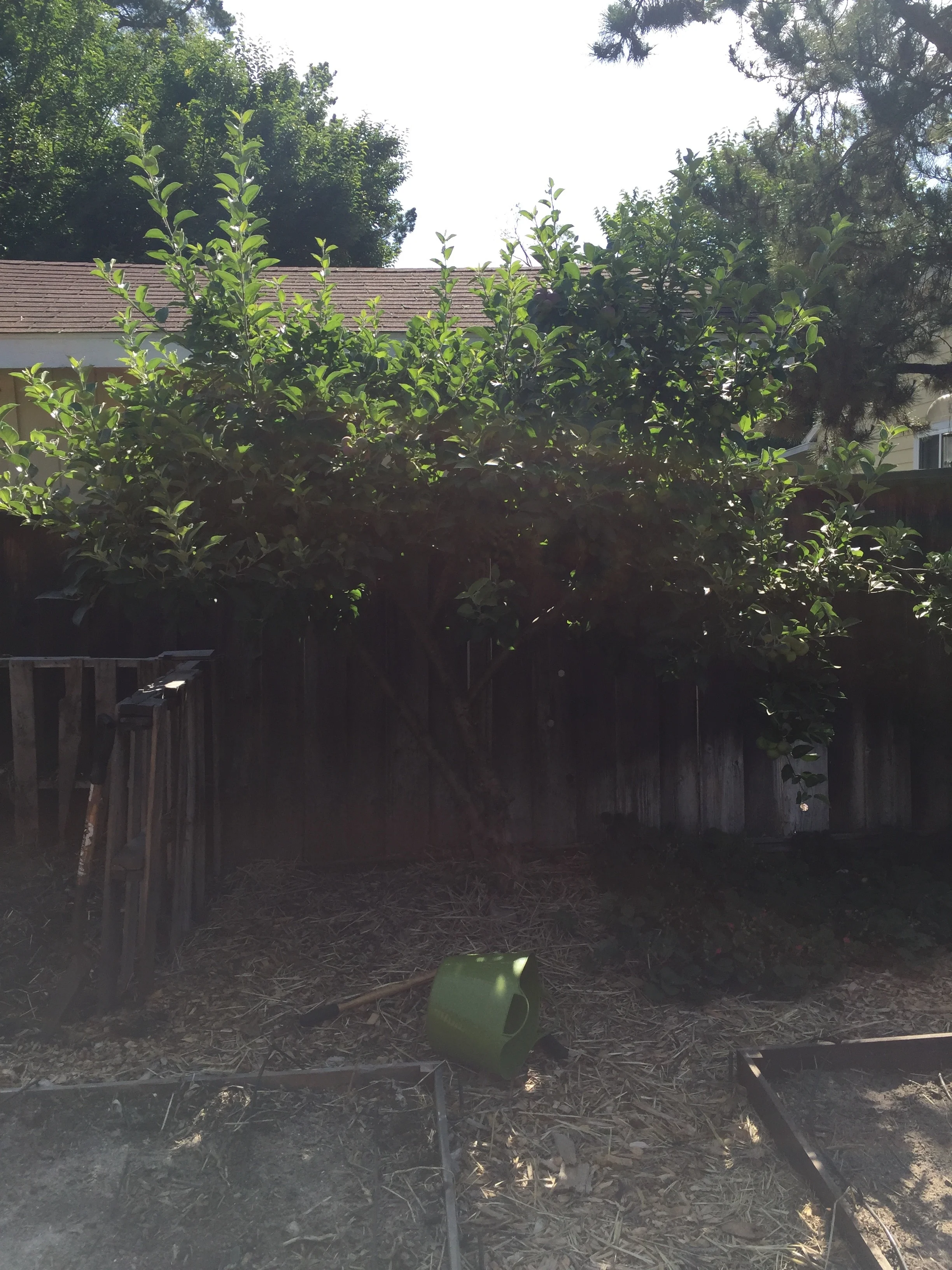
But the apple, oh the apple. It always gets away from me. Here's a before and after.

Before

Before

After

After

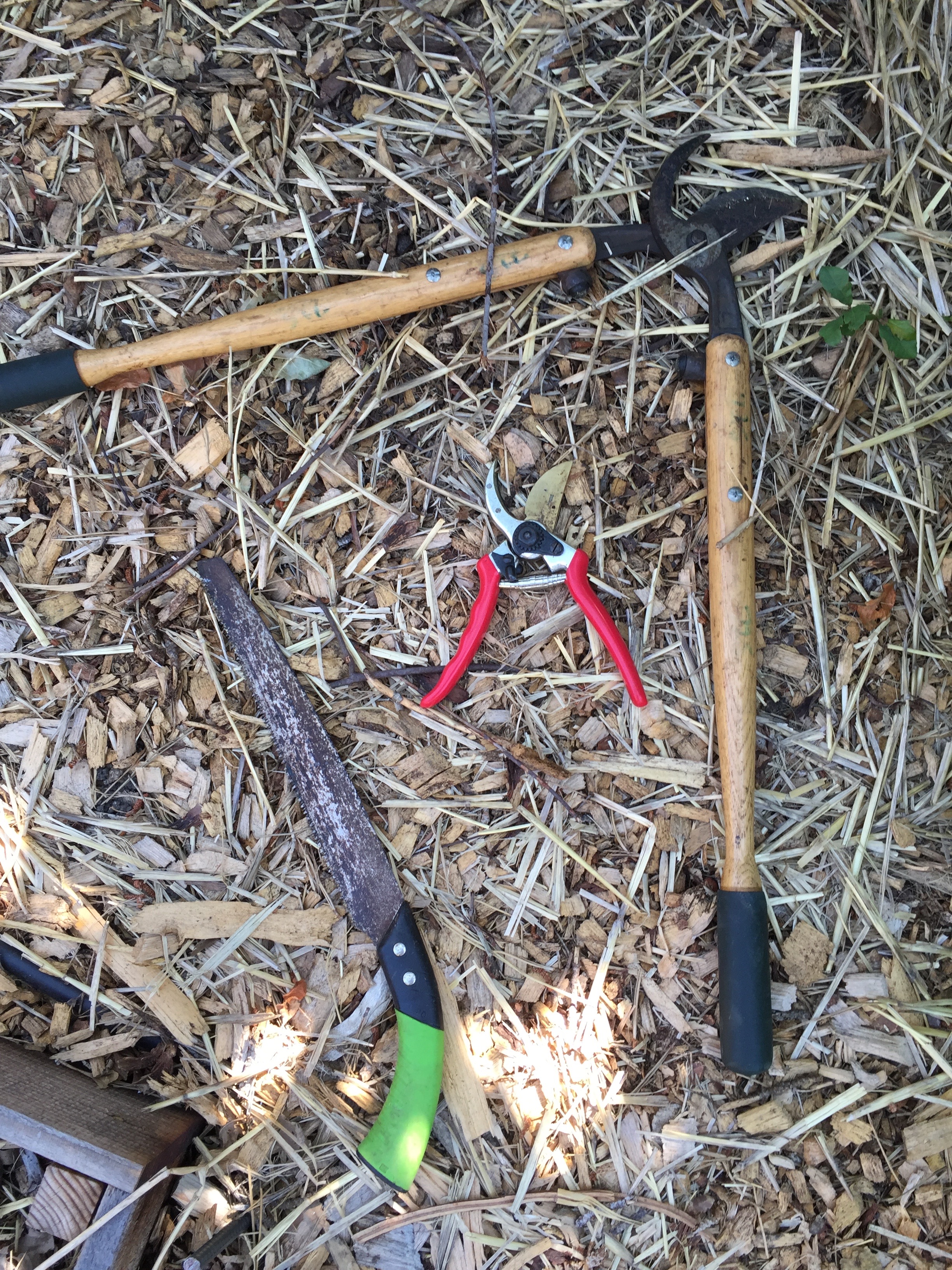
I'm mainly concerned with taking out three kinds of branches: 1) Those that are sticking straight up, 2) those that are crossing or rubbing, and 3) those that are dead or damaged. I have three tools that I use for this job (and most other trimming jobs in the garden): A bypass pruner, a lopper, and a Japanese pruning saw that I borrowed from my dad and never returned (sorry, Dad). These three tools I consider essential.


While I was pruning, I also thinned the fruit. Clusters of 5-6 apples were thinned to 2 or 3. This still left plenty of fruit on the tree for harvest in a couple of months. 

The brush was added to the official brush pile (the lizards will be thrilled).

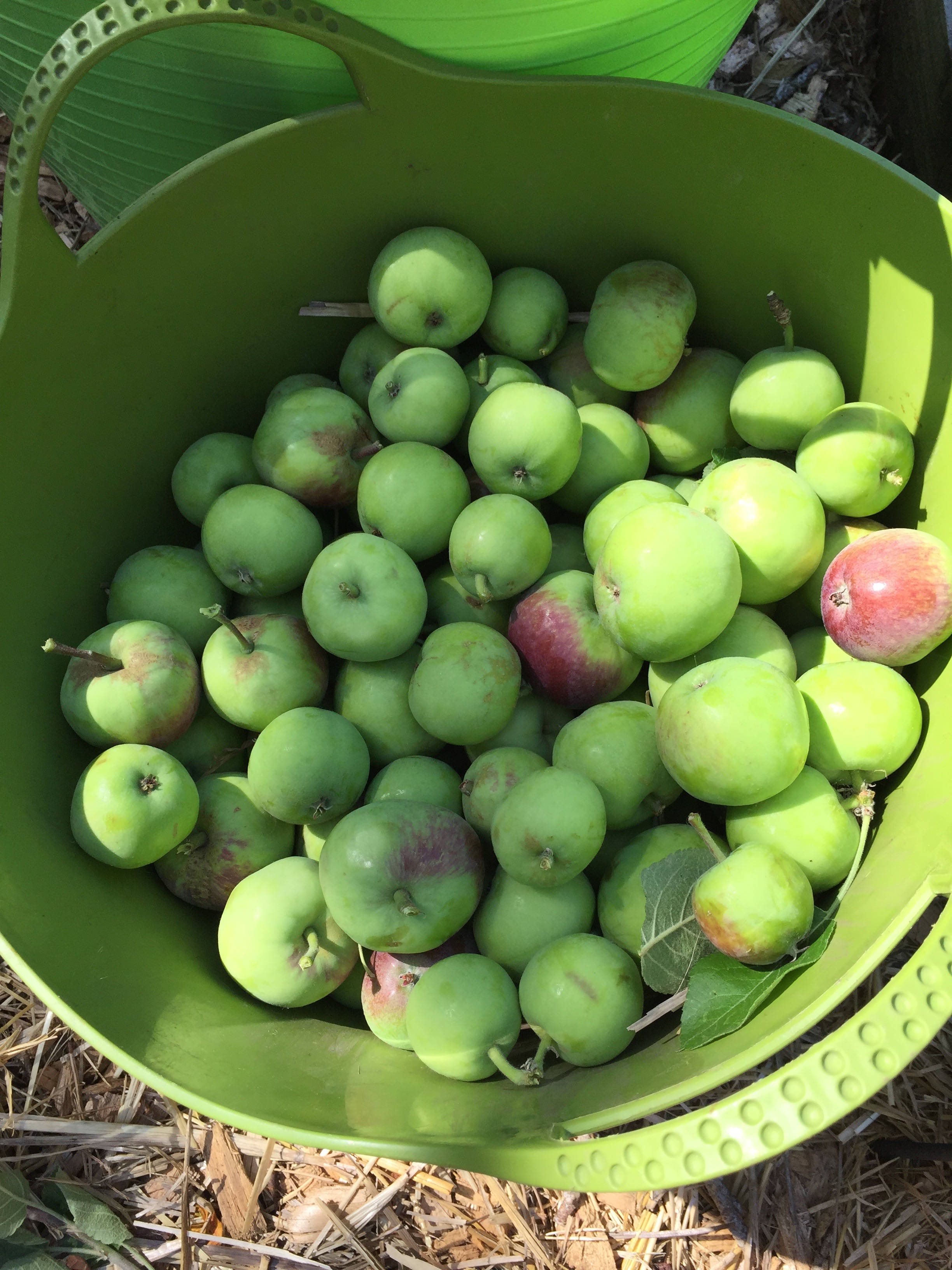
 And about 20 pounds of unripe, or windfall, apples, were destined for the kitchen rather than the compost.

The chickens got a small share, of course. But the rest I had plans for. First, I made pectin. It takes all day, but it's quite easy to do. (I use Mrs. Wheelbarrow's recipe.)

Roughly chop four pounds of unripe apples.

Put the apples in a large pot with six cups of water.

Bring to a boil, then simmer for 45 minutes. Mash them early and often with a potato masher, on the stovetop as they cook.

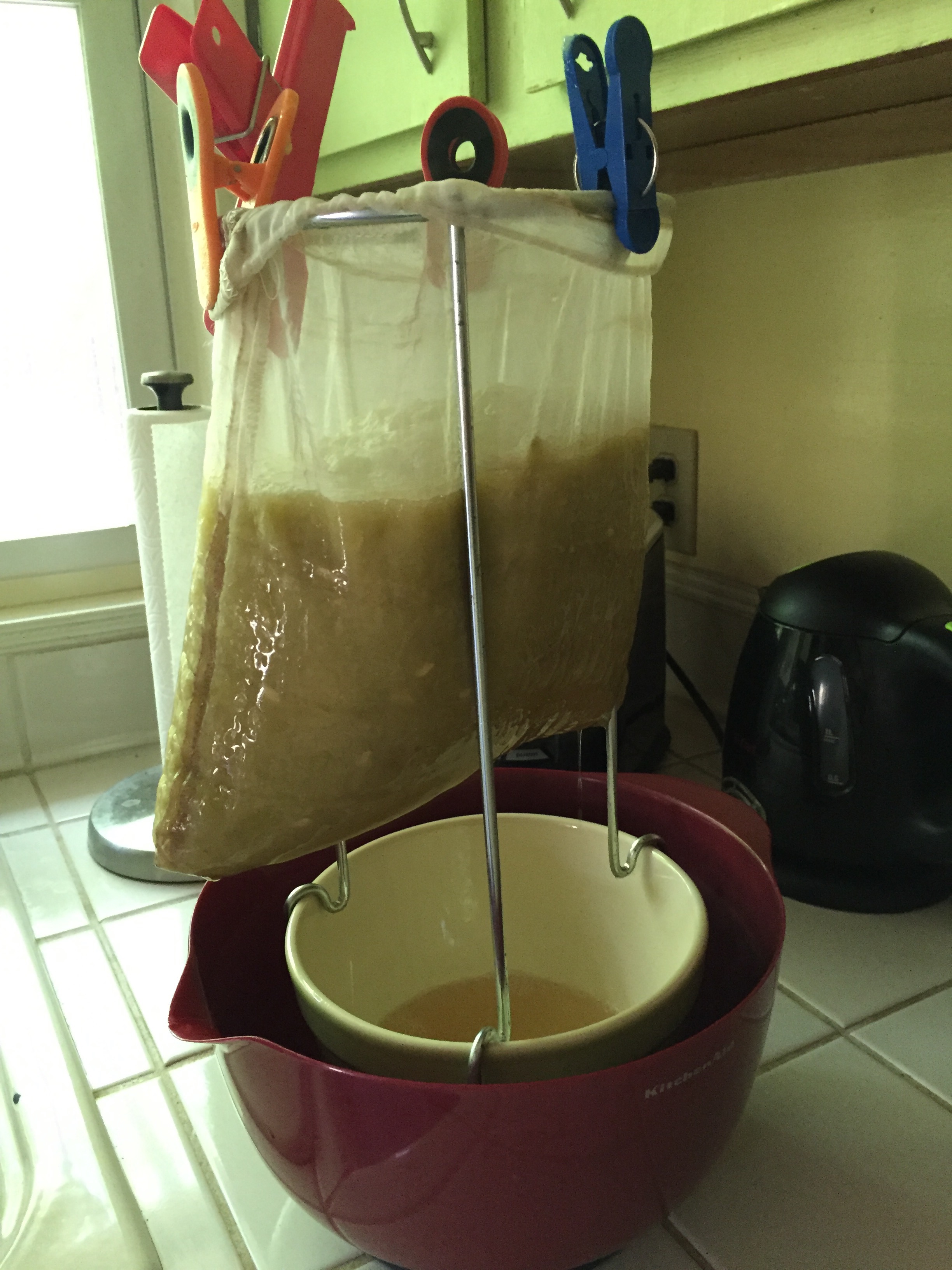
Drain into a jelly bag for 4-5 hours. I have a makeshift rig. My mom gave me the jelly stand, but this is a 'nut milk bag' I bought a while back, and I clip the bag on with whatever chip clips I have handy. If you don't have a MacGyver outfit like me, just go the colander lined with cheesecloth route.

Do not squeeze the bag, you want only the clear pectin/thick juice. Then bring the juice to a boil you cannot stir down, about 210 degrees - this might take up to 30 minutes. Let the juice cook at 220 degrees until syrupy. Then ladle into hot 4 ounce jars and water bath can for 10 minutes. No extra acid needed. Apparently the canned pectin lasts for a year, but we usually use it right away for peach preserves in June.

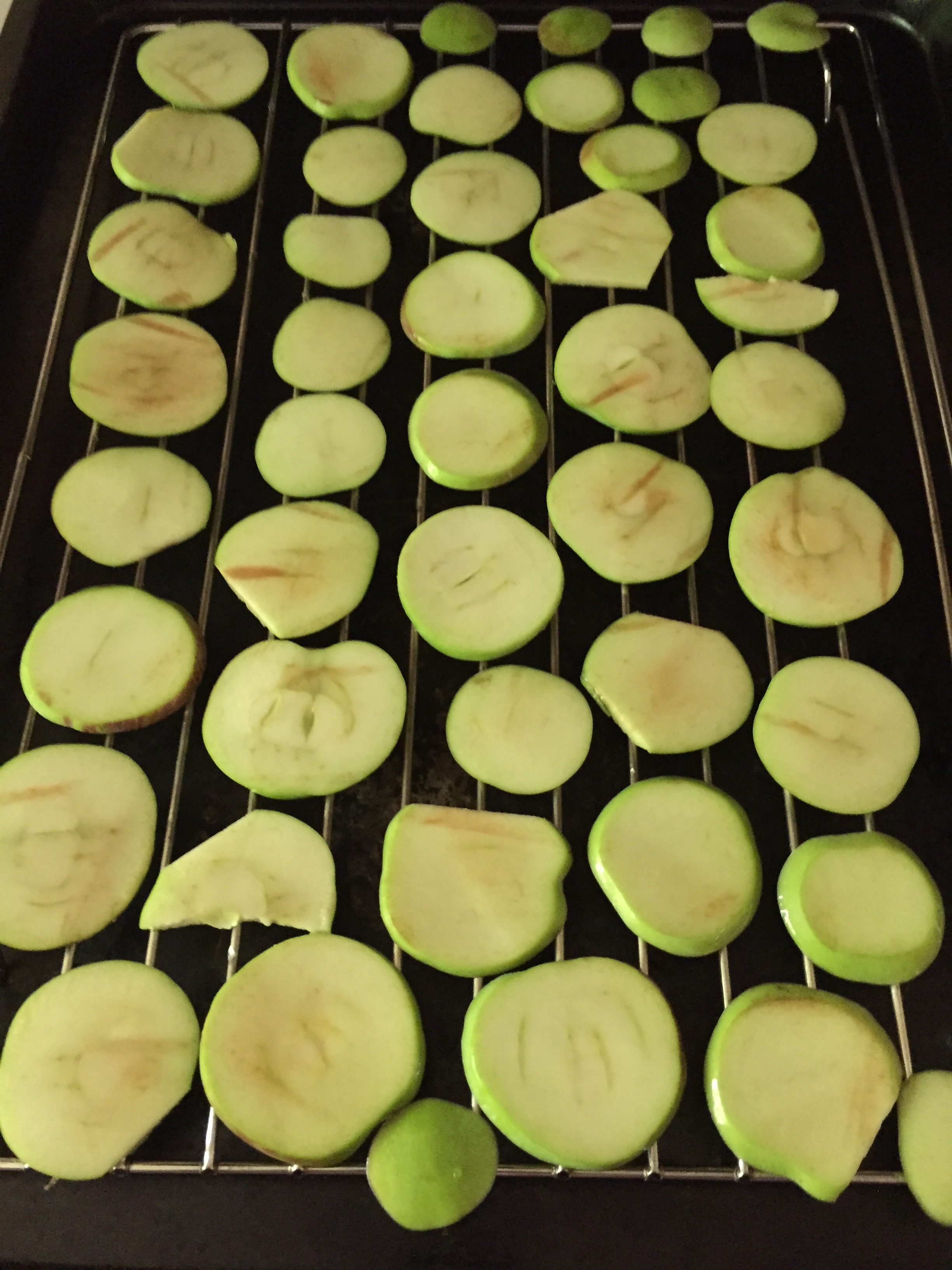
For my next apple project, I wanted to dehydrate some apple pieces to use for snacks or in oatmeal. We don't have a dehydrator, so I figured I'd use the oven on its lowest temperature. But, it's 90 degrees here today, no humidity to speak of (like, ever), so why not use solar power? First, I sliced up the apples with my mandolin, and soaked them in water spiked with lemon juice while I got the slices all trimmed and ready. I did not peel the apples.

Then I placed them on drying racks placed on cookie sheets and sprinkled them with cinnamon.

I placed them out on our sunny patio table

And then I covered them loosely with a bit of recycled row cover. They'll stay out there until the sun goes down tonight.

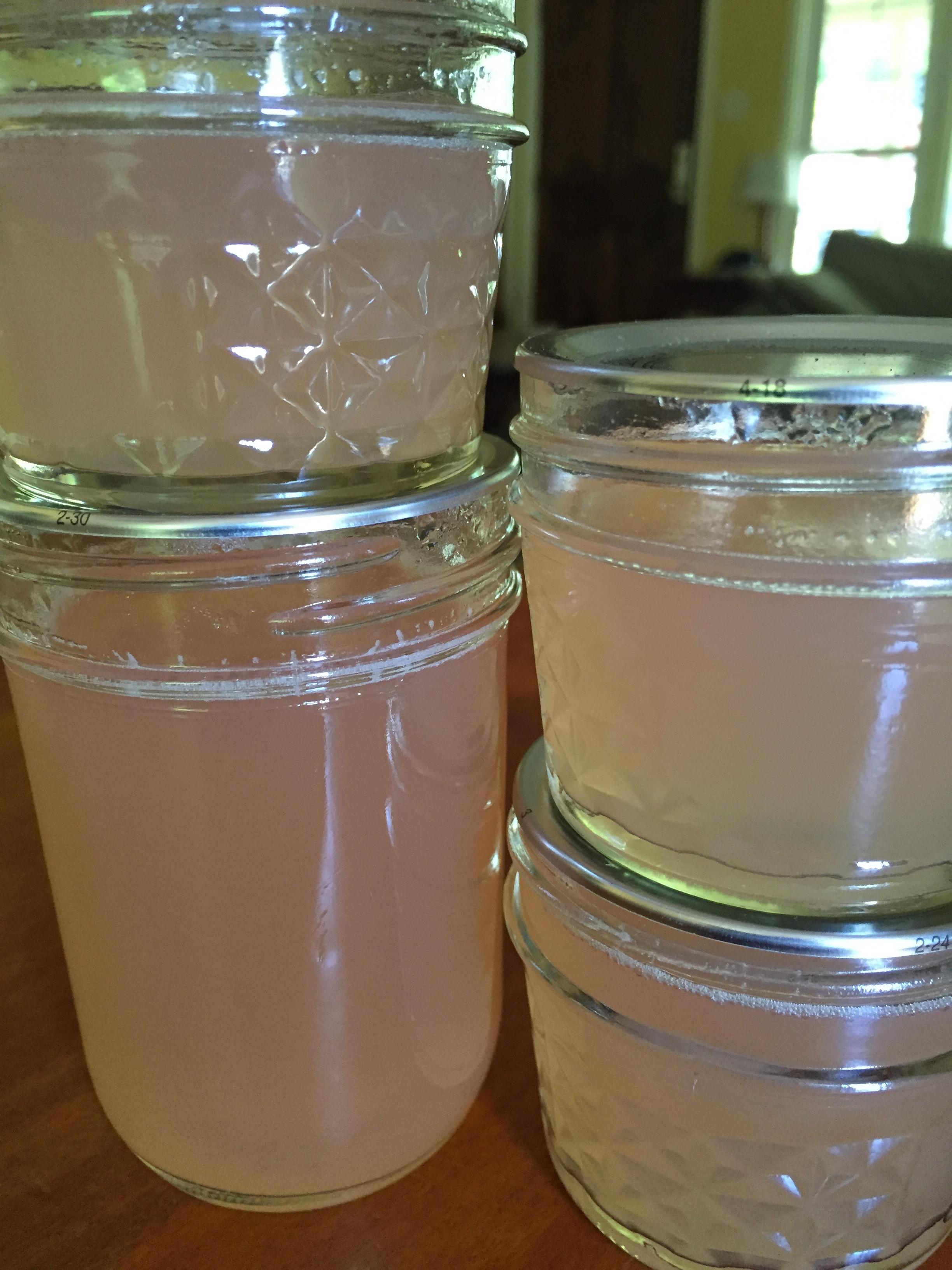
I've still got about 12 pounds of unripe apples. I'll probably make 'pink juice' tomorrow, which is nearly the same process as the pectin - I'll cook apples down with water and mash them, then drain them - but I'll squeeze the drainage bag to get as much nutrition from the apples as possible (all that cloudy juice). I won't cook it any further, I'll just maybe add some honey and then we can drink it, or I can water-bath can it for later. I might also make some very tart applesauce. I'm not sure, that's all tomorrow's project! :)

**** Update, two hours later: Apple chips are already completely dehydrated! Who needs a fancy machine???

The power of the sun!

The power of the sun!

And the pectin is such a pretty color, I had to share.


Update on our Deer Fence

While Joe the dog and I were walking this morning, we came across a full grown deer and her two babies sauntering down the middle of the street. Our neighborhood is quite close to several different designated Open Spaces, which means we have a lot of critters that more urban areas do not. Turkeys and deer are quite common, along with raccoons, skunks, opossums, and the occasional coyote. We probably also have bobcats and cougars once in a while, but I've never seen one of those.

We used to have quite a problem with deer eating a good portion of our crops - like, easily 50% of our produce. Once we began production in earnest, we knew we needed a more permanent solution. It's been about a year since we devised a way to extend our existing fence, and I thought you'd like an update on how it's working. 

The bottom four feet of fence is Redwood and was installed when we first moved in, 12 years ago. (That high fence belongs to our neighbors.) Putting up post extensions and a three-tiered wire took most of a weekend, and it's not particularly pretty. But honestly, you can barely see it.


Tom and I call this 'deer deterrent' rather than 'deer proof' because any determined animal would be able to knock it down easily, and a truly hungry deer could jump it (it's only about seven feet tall). It's unlikely that they would expend the energy, though, and a mother deer isn't going to go somewhere her babies cannot. About a week after installing this system, a deer DID break through a corner of the fence and get in to the tomatoes, but after repairing that breach, we have not had another. Not one. So I call this extended fence an unqualified success.

Very excited to see...

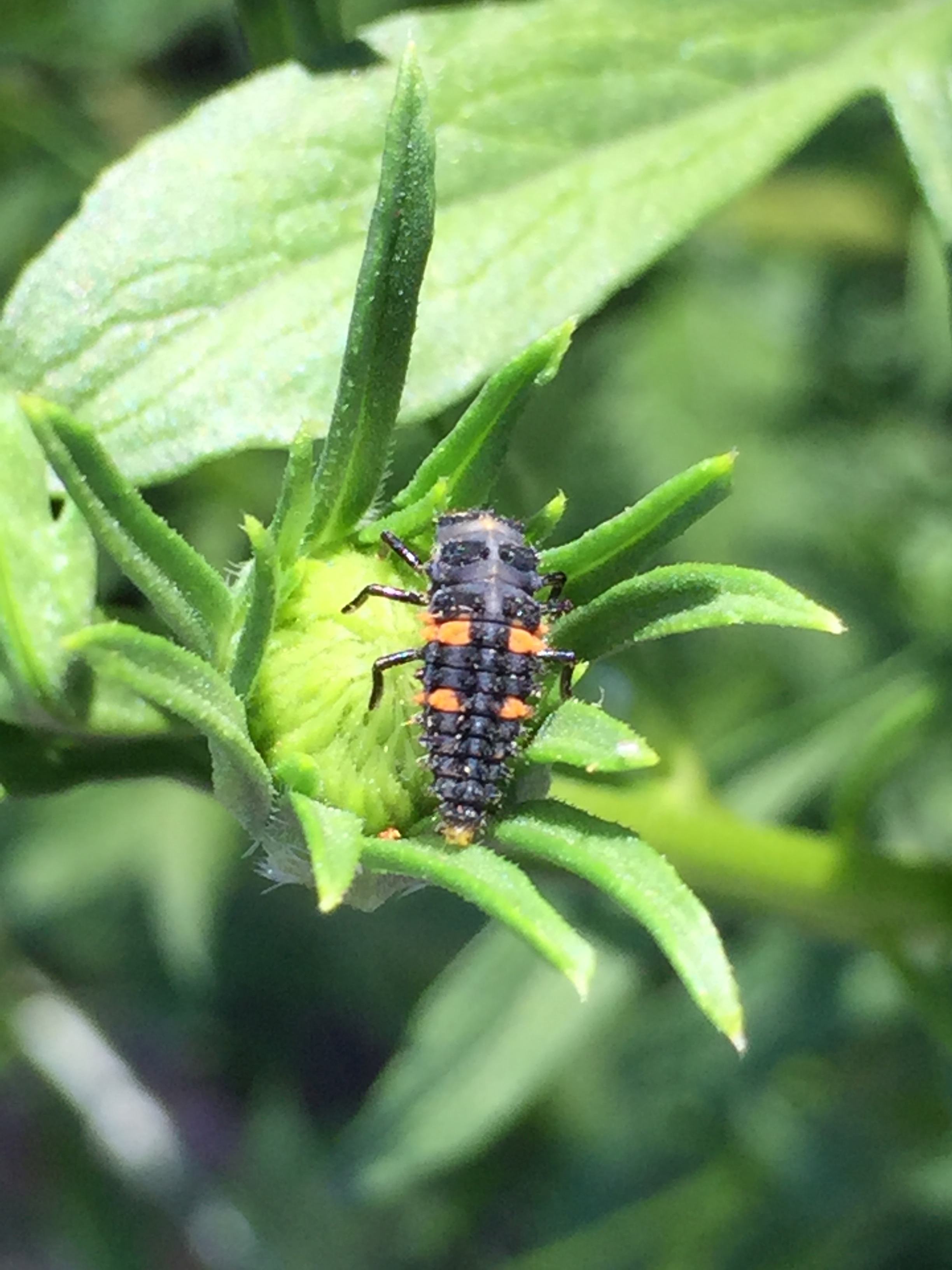
Ladybug larvae in the garden!!!!

If there's one, there must be more.

If there's one, there must be more.

This is something I have waited for years to see. Ladybug larvae is the single best hunter of aphids out there, and I have lots of aphids, always (we have a lot of ants, too, so I suspect that is somehow related, since ants farm aphids for their nectar). In order to try to control my aphid problem, I've done several things. I've bought live ladybugs, with the same result all of you have probably experienced - they just fly away. I've bought lacewing eggs; I've seen very little evidence of lacewings in the yard even so. And, I used to spray aphids pretty heavily with garlic and soap, which kills the aphids, yes - but it also makes the plant droop and of course, deters ladybugs (as well as other good insects) too. Not to mention you can't spray a soapy garlic mixture on things you eventually want to EAT. This year, I realized my error and stopped spraying.  I realized I had to let the aphids BE in order to attract ladybugs. And funnily enough, on this same plant (I think it's either a scabiosa or a galliardia, it hasn't bloomed yet so I'm not sure) I recently noticed a few aphids. Then just this morning I noticed a ladybug in that same place. And then this afternoon, larvae. I'm just tickled. 

Here's some other things I noticed as I was out working (re-seeding half the corn bed because of you-know-who, yes, Joe the dog, argh):

Sweet potato vines coming up in the winter squash bed, where we had planted them last year. Now I don't have to worry about making new slips. I forgot that these can be perennial, if you want them to be (or if you leave a couple of roots in the grou…

Sweet potato vines coming up in the winter squash bed, where we had planted them last year. Now I don't have to worry about making new slips. I forgot that these can be perennial, if you want them to be (or if you leave a couple of roots in the ground by accident, ahem). 

All five kinds of potatoes are sprouting. This is Yukon Gold. 

All five kinds of potatoes are sprouting. This is Yukon Gold. 

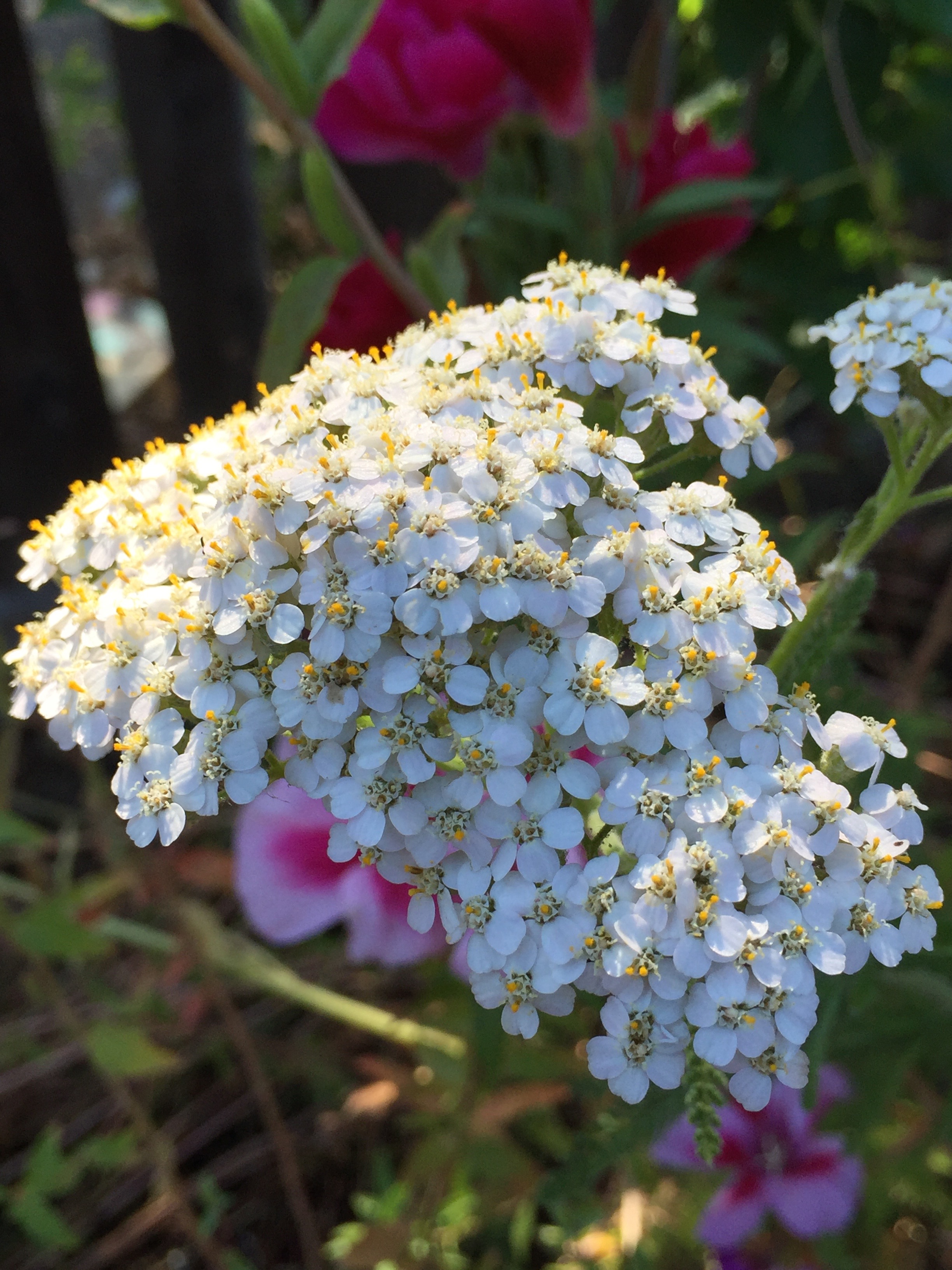
Pretty white Yarrow in the North Pollinator bed.

Pretty white Yarrow in the North Pollinator bed.

One of our honeybees stripping the last drops of nectar from a dying Galliardia.

One of our honeybees stripping the last drops of nectar from a dying Galliardia.

Santa Rosa plum.

Santa Rosa plum.

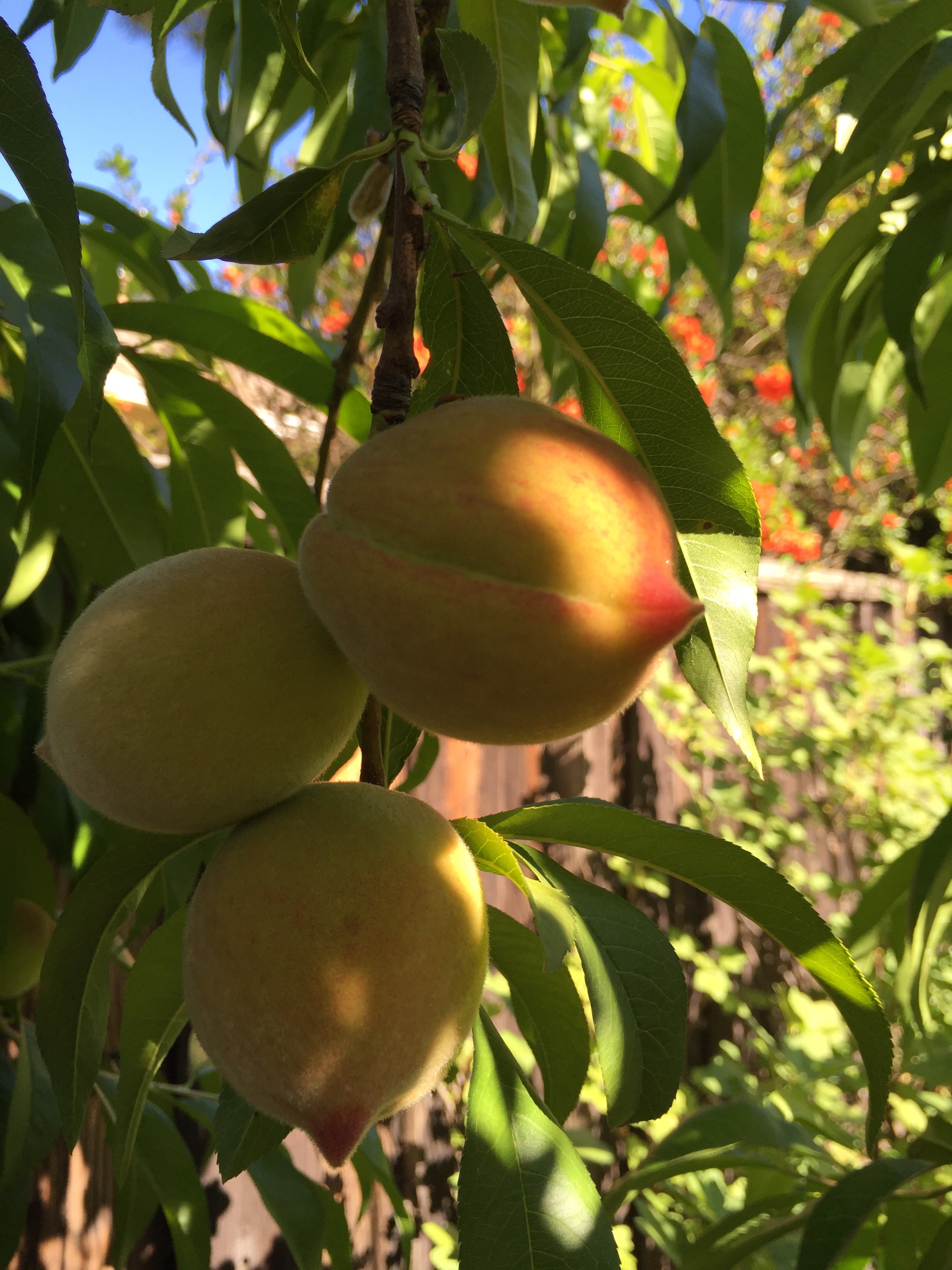
The peaches are starting to look really pretty.

The peaches are starting to look really pretty.

Pink Buddleia...

Pink Buddleia...

... and yellow.

... and yellow.

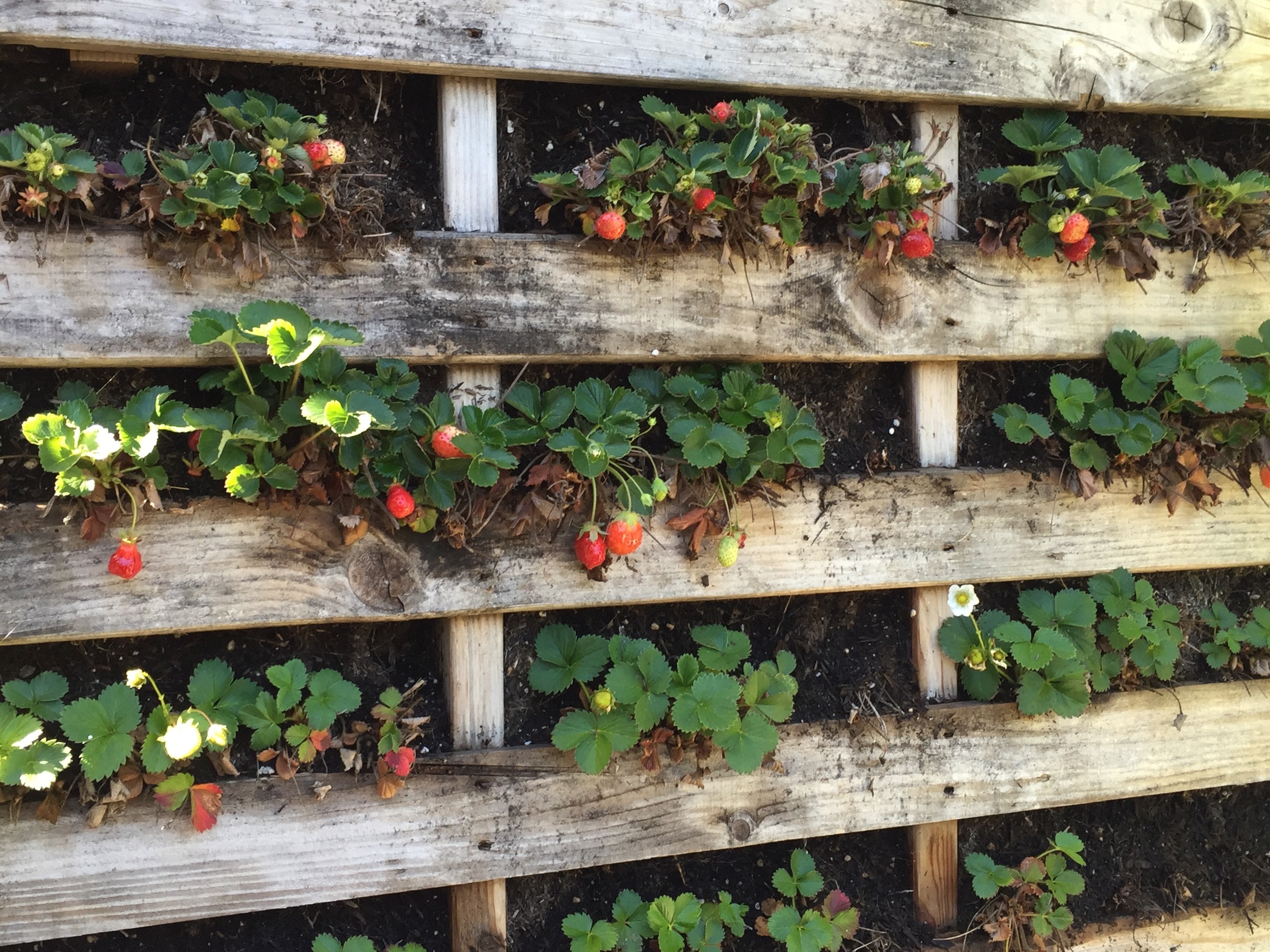
Thought you'd like to see how the strawberry wall looks after its first winter. Each row is a different kind of berry. They tend to ripen at different times. As you can see, I lost a few plants. I will again reiterate that these pallet planters dry …

Thought you'd like to see how the strawberry wall looks after its first winter. Each row is a different kind of berry. They tend to ripen at different times. As you can see, I lost a few plants. I will again reiterate that these pallet planters dry out very, very quickly. If you don't stay on top of water, you'll lose plants. (Like me.)

I finally finished braiding all the garlic. All told, we had just over 100 bulbs. We figure we use between 3-4 bulbs per month, so that leaves plenty to give away after storing our share for the year. I'm very pleased with the flavor, the size of the bulbs, the yield - everything about this crop. I will plant this again (and will save a pound or two to plant out next year, if I can). 

Some of the braids, waiting for hanging. This variety was Inchelium Red, an heirloom.

Some of the braids, waiting for hanging. This variety was Inchelium Red, an heirloom.