Garden Check-In

I spent some quality time walking through the garden this evening, after work and all the kids' activities were finished, and before dinner had to be prepared (which is on hold while I write this blog. Hey, priorities.). It's been a crazy week and this morning I woke up in exactly the same position I had fallen asleep in, eight hours before. We're all exhausted. But nothing recharges me like time in the garden, and I intend to get a lot of it this weekend. Or at least as much as the kids' busy schedules will allow me. So walking around this evening, and checking in with every bed and plant, helps me to see what needs doing and creates a list in my head. 

Spring is such a beautiful time, there is so much to show you. Let's get to it.

First on my list is cleaning up some vegetable beds. The braising greens have totally bolted. I've been cutting flowers for the chickens daily, but it's time to just clear out this bed and get it ready for summer planting.
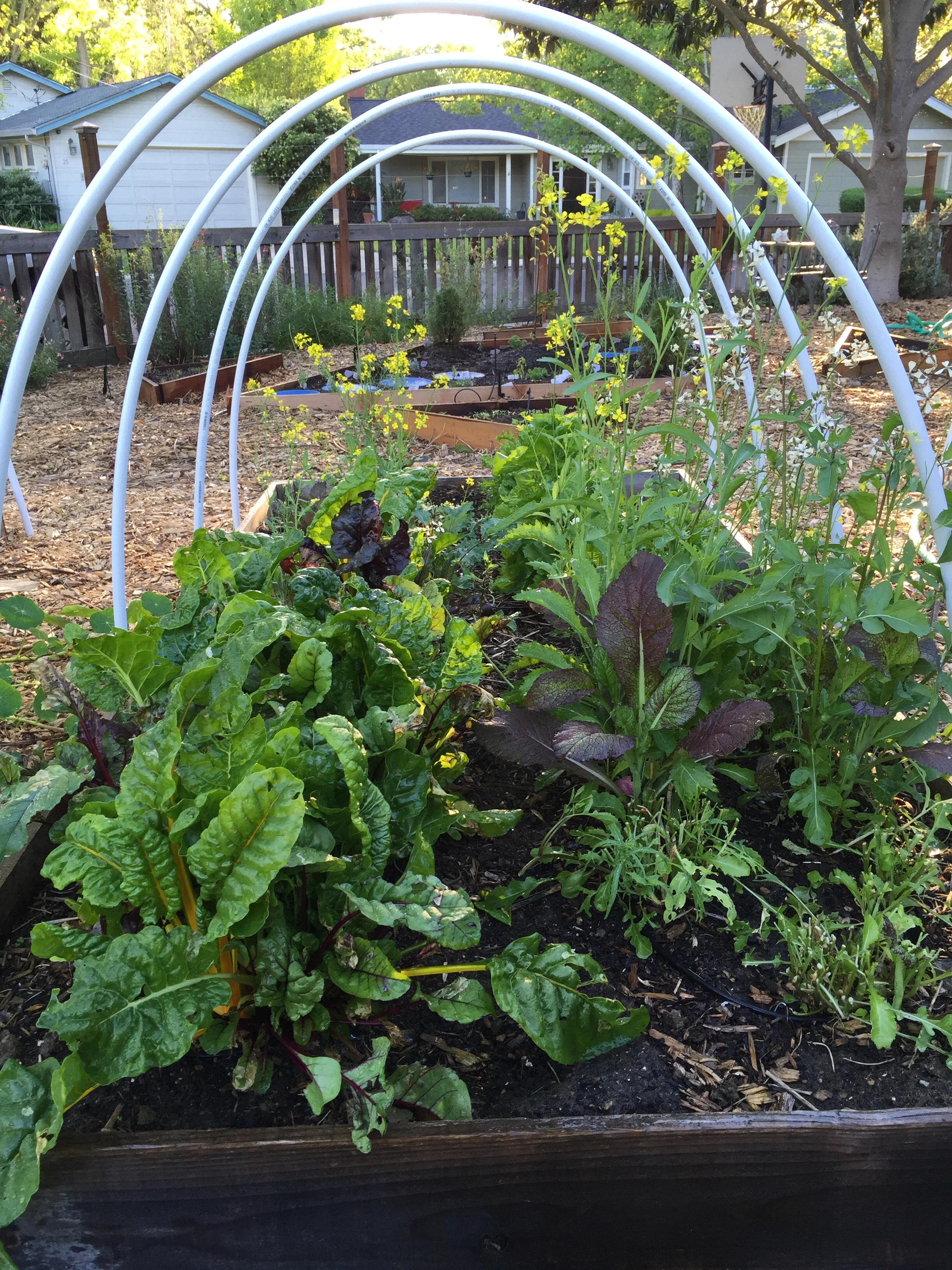
We'll eat that chard that still looks nice, but the rest of it will go to the chickens and the compost.

The broccoli has also totally bolted, but I noticed bees in it today, collecting both pollen and nectar. So I'll leave that there for the time being. It's pretty, too.

We have one nice cabbage - I believe it was the variety 'Pixie' - so we'll harvest that and either make slaw or sauerkraut, and the rest can go to C & C (chickens and/or compost). 

The pea plants are still pumping out produce, so that will stay in place for now. I'm hoping to get some kohlrabi from that bed, as well. The spinach is being taken over by nasturtiums. I'm ok with that for now - these were all volunteers, and lots of bad bugs will go to nasturtiums before they go to my veg, so I'm going to leave them there. And the bees like 'em. And, they're pretty (I like a lot of flowers and color in the garden, as you know). 

There's still plenty of kale and chard in the last bed in the South Garden, so I'll leave that for now, too.

The Understory garden is growing very slowly, so not much to show you there, but the South Pollinator garden is starting to get diverse with blooms. Here's a few.
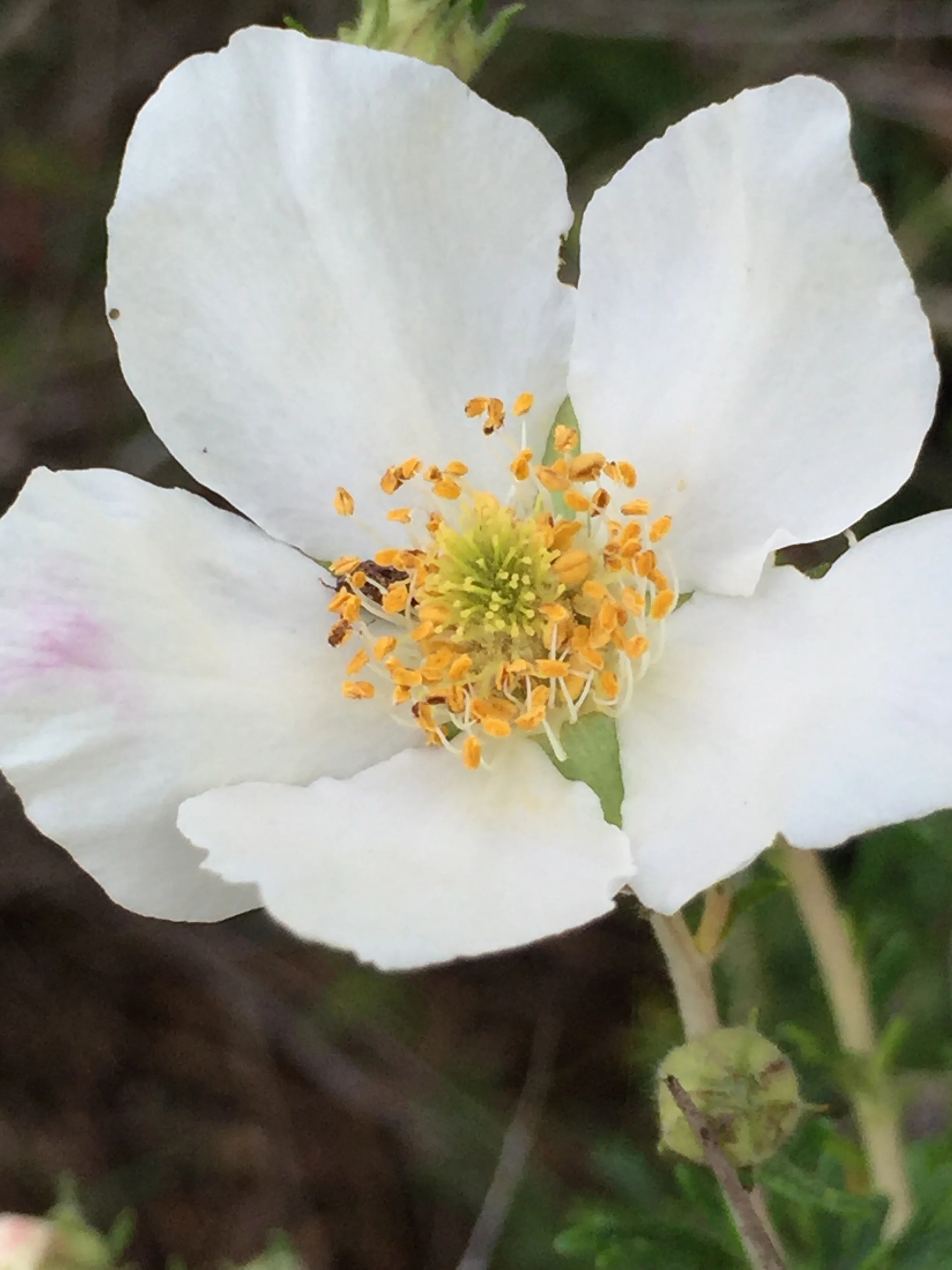
a Native I can't remember the name of

a Native I can't remember the name of

volunteer Nicotiana

volunteer Nicotiana

I've figured out that I got this in a mix from Larner Seeds. It's a California Native called Mountain Phlox. It's charming.

I've figured out that I got this in a mix from Larner Seeds. It's a California Native called Mountain Phlox. It's charming.

Erigeron

Erigeron

Japanese Mock Orange

Japanese Mock Orange

Ceanothus

Ceanothus

In the Woodland Garden, coral bells are blooming, the yarrow is starting to bud, and there are different salvias blooming along with the spirea, and we can't forget lots of Douglas Iris in purples and yellows. One plant I always see a lot of native bee activity on is scabiosa.

And there is a gorgeous thing blooming, I have no idea what it is, boys and girls, do not be like me and throw out your identifying tags. Argh.

Over in the North Garden, things are starting to look a little spare in one respect. There are three bare beds ready for planting. One bed still has garlic and I think it will for a long time yet. Another bed has potatoes, which haven't bloomed, and are now getting eaten up by some sort of bug, so I'm not sure how long I'll let them linger. Another bed has what's left of the carrots and some cilantro I seeded a while ago. It's also where I tend to find Joe when I come home from work. He doesn't look a bit guilty, does he?

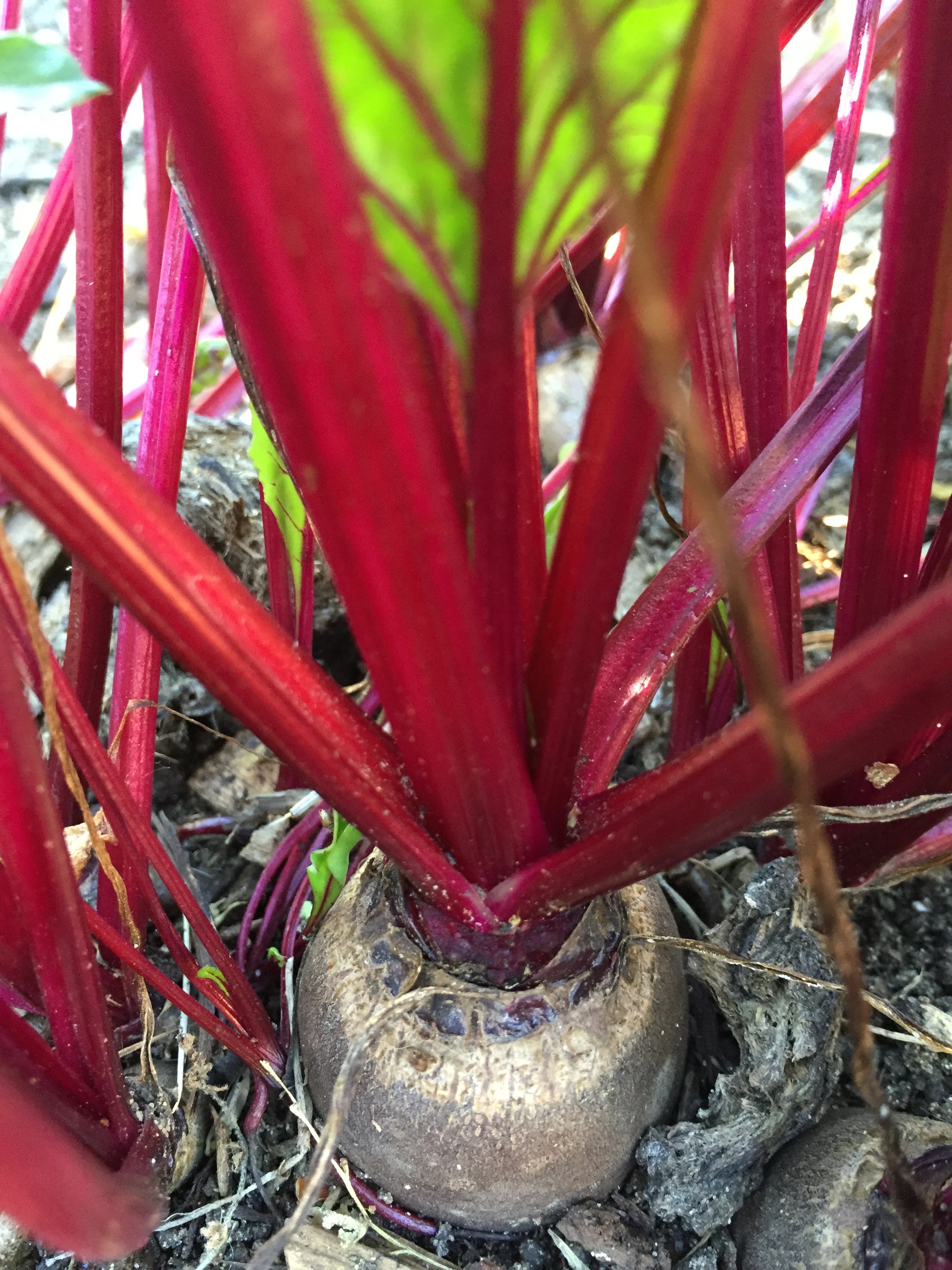
Another bed has what's left of the beets. You can only eat so many beets, and it's interesting, a lot of people don't like them (including my son, who will eat almost anything else including Brussels sprouts and kale). Sometimes I pluck a few out and throw them whole to the chickens, who love them, but what's interesting about that is that they poop red the next day. It's a little startling.
The fruit trees are all coming along really nicely.

Peaches

Peaches

We're getting a few strawberries. It's hard to get to them before the slugs do. But when I find a slug, guess who gets it? Sometimes I'll just go out in the early morning and find all the slugs I can to take to those voracious chickens. By the way, why buy vegetarian eggs? Chickens aren't vegetarians. I can promise you that. I have a friend who saw her chickens decapitate a mouse. I digress.

In the North Pollinator garden, there are loads of Chinese Houses, and the Clarkia is starting to bloom which will be spectacular in a week or so. But for sure, the Borage is the star at the moment, and my honeybees think it's the greatest flower ever.

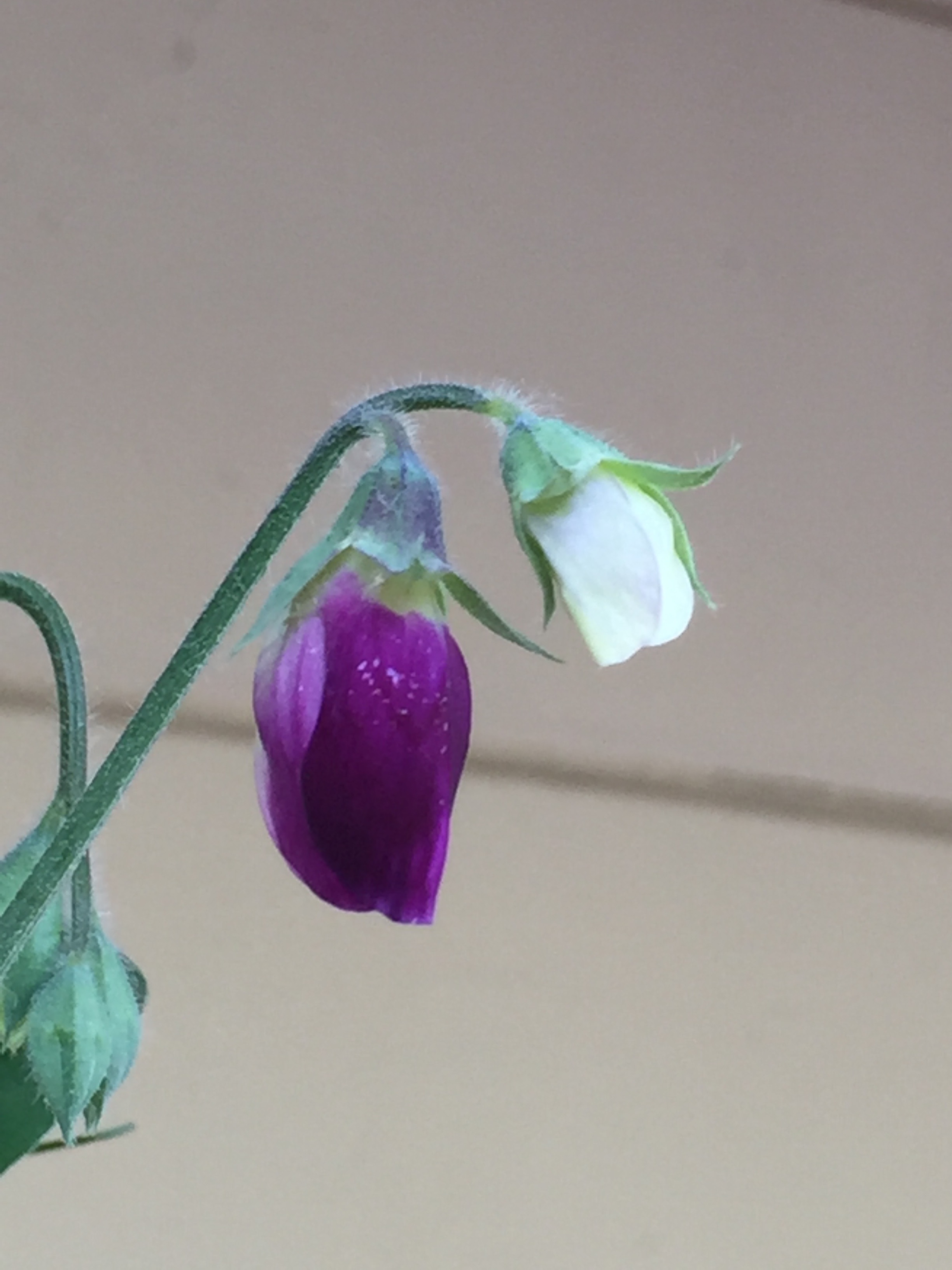
the first Sweet Pea

the first Sweet Pea

Poppy

Poppy

Now, about those tomatoes and peppers. The most wonderful thing happened. I have six paste tomatoes, five slicers, and four cherries ready to go. I really wanted six slicers, and decided to go back to the Master Gardeners to pick another one up, but they SOLD OUT. So I resigned myself to five. And then a neighbor came by with a beautiful tomato called Copper River.  I was so excited! Now I have six slicers. 

All the tomatoes are big, beautiful, and healthy - most of them grown from seed. Seeds are truly miraculous. Last night I went to our local beekeepers association bee talk, and the person giving the talk said the coolest thing. He said when he goes to pick up a swarm in someone's yard, he sits them down and says, "Let's watch a minute." He talks to them about how the swarm is a miracle of nature. An event that most folks never see. It's like the swallows coming back to San Juan Capistrano every Spring on March 19. It's like the California Grey Whales migrating 10,000 miles every year. It's simply a miracle and it must be watched respectfully and with wonder. There's no need to be afraid of a swarm, it's a beautiful thing to see. And that's how I feel about seeds. Each and every one is a crazy amazing feat of nature.

ANYWAY. Some of my potted tomatoes are already starting to bloom! A couple more weeks, and I'll get them in the ground.

Brandywine

Brandywine

So! That's the state of the garden. I neglected to take pictures of the blueberries, but if I can stay ahead of the birds, we're going to have a nice crop this year. Everything is doing quite nicely and we look forward to opening the bee hive tomorrow and spending some time working in the dirt!

Spittlebugs

It's that time of the year - everywhere I look I see telltale white foamy clusters on my plants.

This foamy sack is actually a nursery for baby spittlebugs, the nymphs, as they grow to size (eating all the way). The adult female lays her eggs in this foam, which protects the nymphs. 

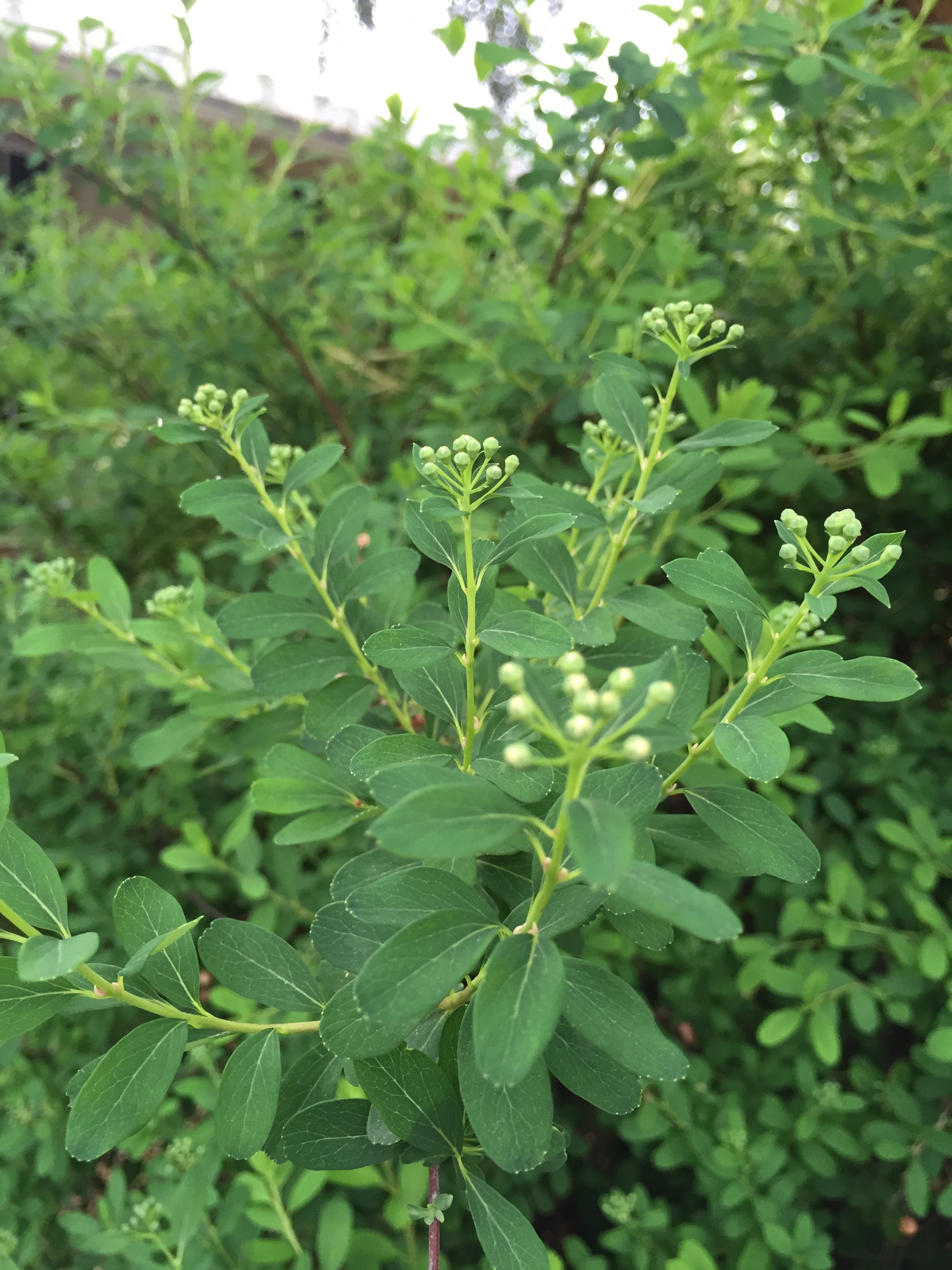
These nurseries (in my garden, anyway), seem to mostly occur on older, larger, woody plants. The nymphs do suck juices from the plant as they mature, but do little damage.  As you can see in the picture below (I'm sorry, I cannot remember the name of this particular kind of spirea - you know how I forget to label things and I've had this one for ten years), the spittlebugs are not doing any significant harm. The plant is large and bushy, needs cutting back every fall, and produces masses of tiny white umbels that little native bees seem to love.

In the background of this section of the Woodland Garden, you can see the Spirea just beginning to bloom.

In the background of this section of the Woodland Garden, you can see the Spirea just beginning to bloom.

I seem to find evidence of spittlebugs only in the shady, wet part of our garden - the Woodland Garden, under the Brazilian Pepper tree .

When it starts to look as though the nymphs are taking over, I get out the hose, and blast the foamy clusters with water. This does the trick. 

Shallots

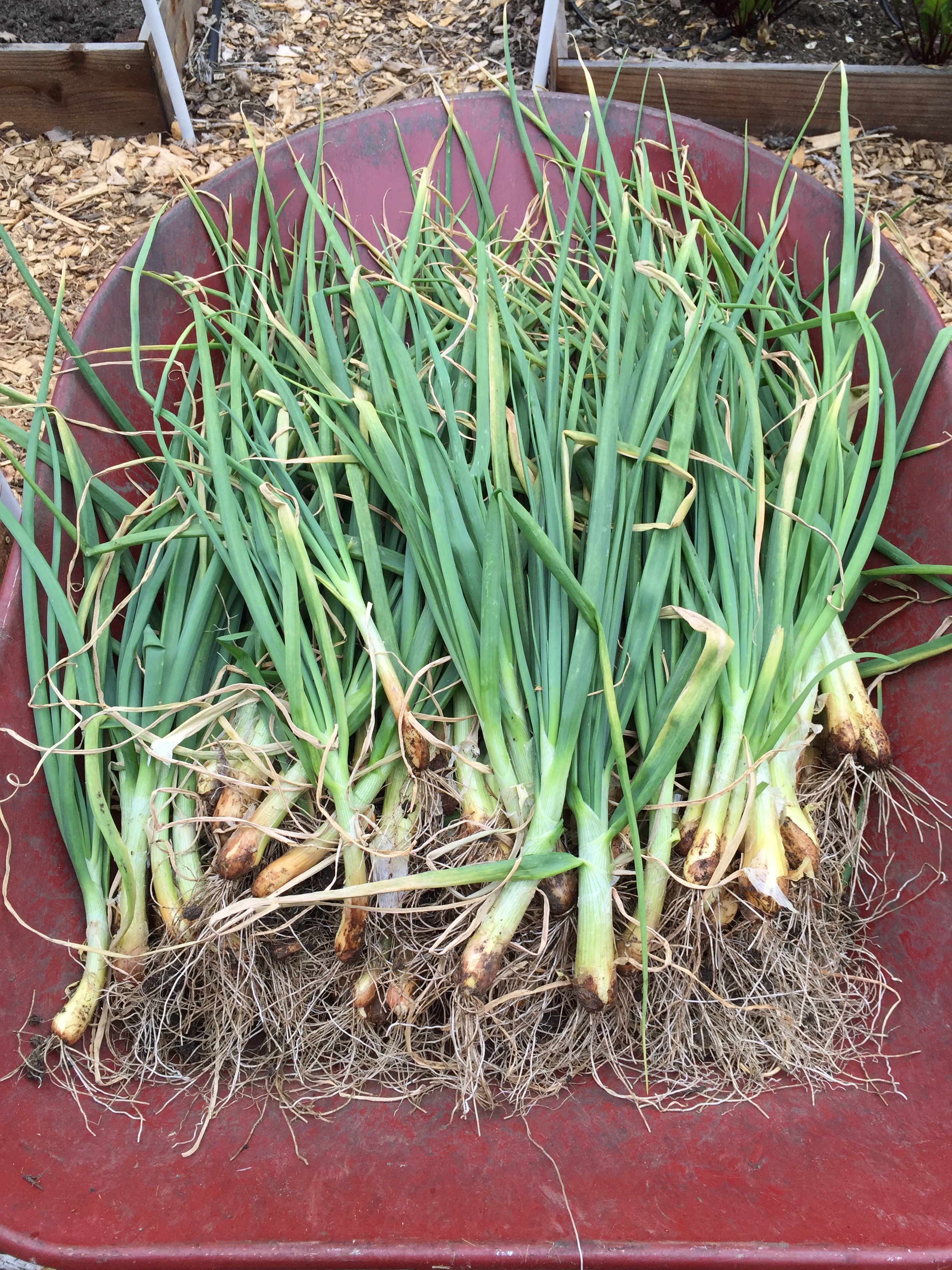
This morning, as I was making my rounds in the garden, I noticed the shallots were bolting.

Not good. This means the plant is finished fruiting, and wanting to set seed. 

So I snipped off the blooms and put them in a jar (I can at least get a pretty bouquet out of it, right?), then harvested the shallots as soon as I could get to it. They had beautiful root systems, but the soil was very, very dry. I am seriously wondering about the effectiveness of our drip system. Or maybe it's just that we're not watering nearly often nor long enough. This will take some musing about and fiddling with over the weekend. 

Meanwhile, there's a nice crop of shallots, though they did not bulb as large as I'd like. I picked a different kind of shallot this year, hoping for a larger bulb, as slicing up tiny bulbs is tedious. This crop was more uniform, but still not terribly large. Although I learned a lot when I read this article about French Grey Shallots, which is the variety I planted this year. Apparently no 'true' shallot should be very large at all. In that case, I'm a supreme grower of shallots.

I'm unsure how well these shallots will keep, as they already started setting seed. But I've put them to dry up in the usual place, the top of the chicken coop, and we have our 'tiki coop' once again.

So, I harvested shallots in June last year, and in early April this year. Interesting. We use a lot of shallots in cooking, using them in place of onion in every recipe, as we find we tolerate them better digestively. Also, according to Eating on the Wild Side, by Jo Robinson, shallots are actually much more nutritionally dense than onions. And that means they are a nutrition powerhouse!

Well, they smell good, anyway. Kate, who helped me put them on top of the coop, said "they have a very sticky smell." I thought that was a good description. Though I'm not sure she meant it favorably.

After I was done with the shallots, I checked the garlic carefully, as we usually harvest that before shallots. But the leafy tops are still fully green, they haven't started to turn brown yet, so the garlic is not ready for harvest.

I have, however, harvested the last of the turnips and prepared that bed for summer planting. Preparing a bed takes three steps:

1) After removing the drip lines, I take my pitchfork and treat it a bit like a broadfork - I slide it in to the soil at an angle, then just loosen the soil with it. I don't ever till. Tilling disturbs all the wonderful creatures on the micro level - the bugs, worms, mycelium, all those things that make your soil lovely. But roots do need space and air, so loosening it is a good idea.

2) I add a wheelbarrow-full of compost to a 4x4 bed, two barrows-full for a 4x8 bed. I use a garden rake to smooth it out and mash out any big clumps. 

3) I replace the drip lines.

That's it! So far, I've got three beds ready for summer planting. I don't like to let them sit a terribly long time - nature abhors a vacuum and will replace any bare ground with weeds if I'm not careful - but letting it sit a short time is fine. (If you look closely at the blooming shallots at the top of the page, you can see two prepared beds in the background.)

We've been harvesting beets and carrots and peas regularly.

We had a big group of teenagers over here yesterday, and they got a kick out of eating fresh carrots and peas straight from the garden. Adam had to teach one boy how to shell a pea. I found this shocking, but I don't suppose there are many kids shelling peas these days. This boy liked fresh peas so much, he had to go pick more to eat. This makes my heart very glad. And they thought it was fun to feed their carrot tops and pea pods to the chickens. 

The hops are growing well but not fast enough for me - we could use some shade on the back patio!

those little seedlings are sweet peas

those little seedlings are sweet peas


Flowers continue to burst out all over. We had several days of high heat (90 degrees this past Wednesday) which confused everything - but we're having lower temps now and a chance of rain, which should right everything. I've emptied all my rain barrels in preparation for a fresh deluge. I can but hope.

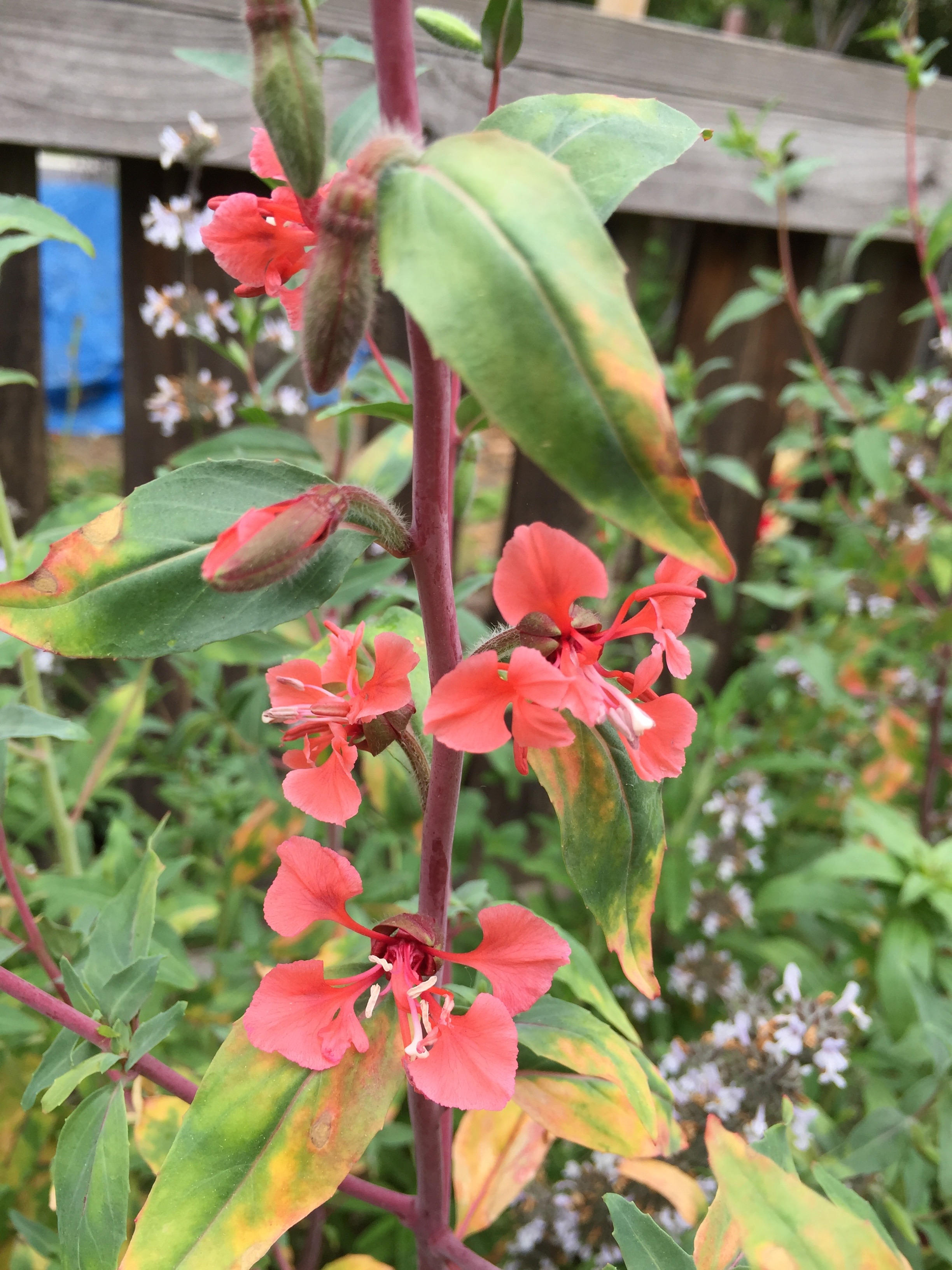
Clarkia Mountain Garland - soon my pollinator garden will be bursting with these in all pink-y colors

Clarkia Mountain Garland - soon my pollinator garden will be bursting with these in all pink-y colors

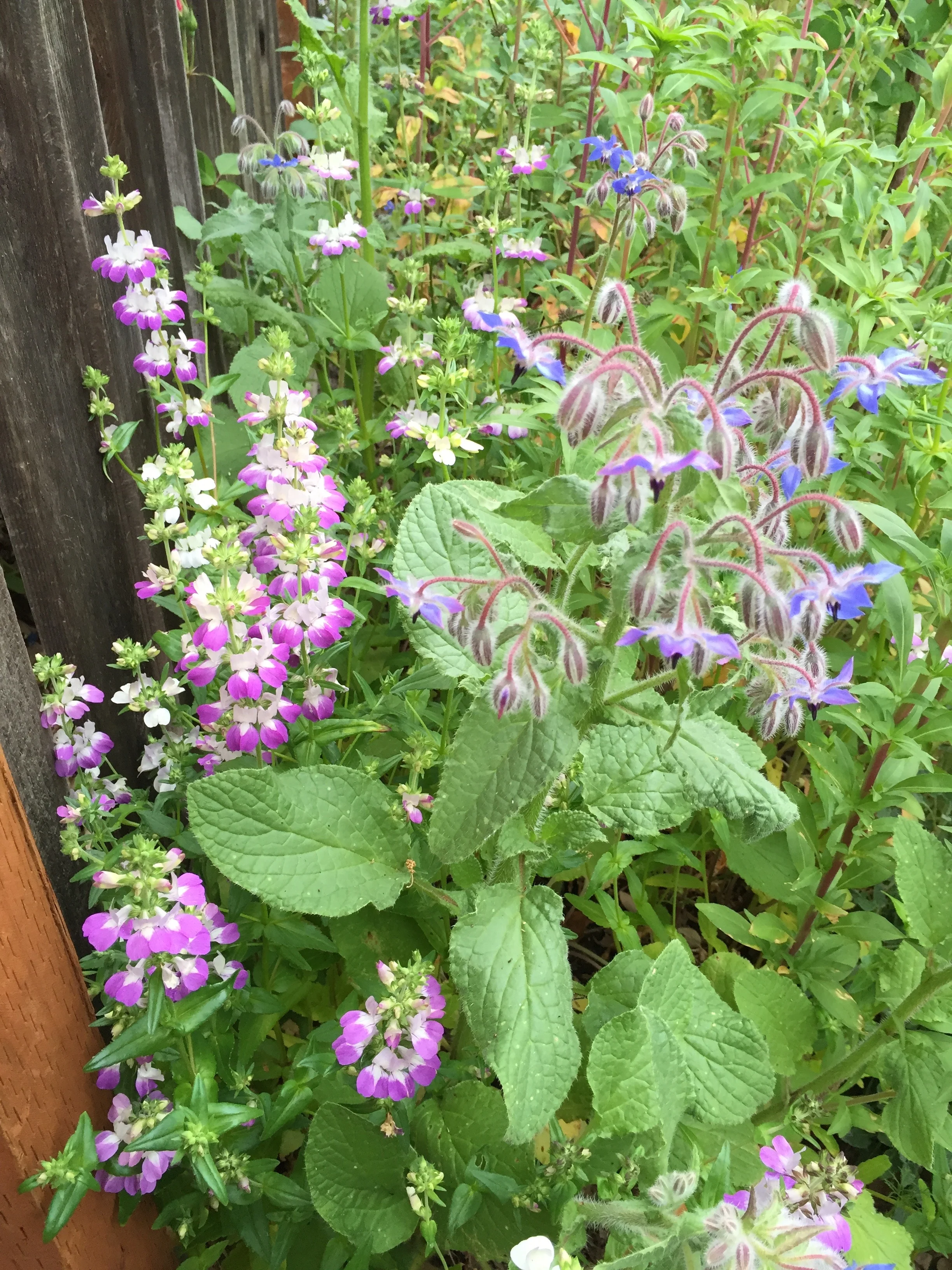
Chinese Houses and Borage

Chinese Houses and Borage

Scarlet Monkey Flower

Scarlet Monkey Flower

Culinary Sage

Culinary Sage

a Poppy seed pod

a Poppy seed pod

My plans for the weekend include opening the hive, as the bees have been very active, and I want to make sure they have enough room to grow. It's good to have a 'buzzing' garden once again. By the way, I'm currently reading "A Sting in the Tale" by Dave Goulson, and it's delightful - all about bumblebees. I'm looking forward to reading his new book, "A Buzz in the Meadow," next.

Little Free Library

Our school district has a program called ROPES, which stands for Rite of Passage Experience. This is an outside-of-school project, chosen by the student, in order to try something they wouldn't have time to learn in school. Students are allowed to participate in 5th, 7th, and 8th grades. Adam has participated twice before: In 5th grade, he designed and built Adirondack chairs for Camp Okizu, under the tutelage of my dad, who is a woodworker; and in 7th grade, he decided to tackle the school lunch program, which was an ambitious project (I blogged about it here, scroll down to the end of the post). Kate participated in 5th grade; she wanted to know where chocolate comes from and how it is made. That was a fun project for all of us!

This year, Kate is in 7th and Adam is in 8th grade, so they're both eligible, and seeing as it's the only year they can do a project together, they took advantage of that. They decided to build a Little Free Library.

Do you know about this movement? LTL's are popping up all over the country, and indeed, the world. We thought it would be excellent to have one in our neighborhood, which is full of kids and adults who love to read. 

Adam and Kate have been working on this since the beginning of March, when they designed the library (with a lot of help from my dad) using Sketch Up. Dad had some Ponderosa Pine boards that he donated to the cause, and with his help, over the past month, the kids have slowly built their library box. They had to give consideration to where it would go, how folks would access the books, how to keep the books safe and dry, etc. 

Well, the library is mostly finished. Today they painted it and wrote their report. They still have to prepare a presentation to give in front of District representatives (that will be April 19), and once that presentation is finished (they need to take the box in as the visual part of the report), we'll install it in our parking strip garden, right next to the sidewalk. It'll need posts and cement, but we'll cross that bridge when we come to it.

Open the latch, and borrow a book!

Open the latch, and borrow a book!

We had to register it with the Little Free Library association and they'll send us a sign to attach to it, so it'll look very official. Then it will go on the world map so folks can find it. We've got a whole load of books ready to go in, but it'll be fun to see what people choose to take and what books we get in return. And oh yes, you letterboxing folks, I'll be putting in a box to find, as well! We expect the library to be installed and ready for business by the middle of May.

Fruit Trees

Walking around the garden last night, Tom and I noticed a lot happening in our fruit trees - mostly good things, but some not so good. For instance, the peach tree has peach leaf curl. 

We've dealt with this before. PLC is a fungus and it can substantially affect fruit production. The cure for this is a copper spray, which we have done sporadically in years past (it is applied when the tree has lost it's leaves in fall). I haven't for at least three years, and we're paying for it now. However, so far, it hasn't affected our fruit set.

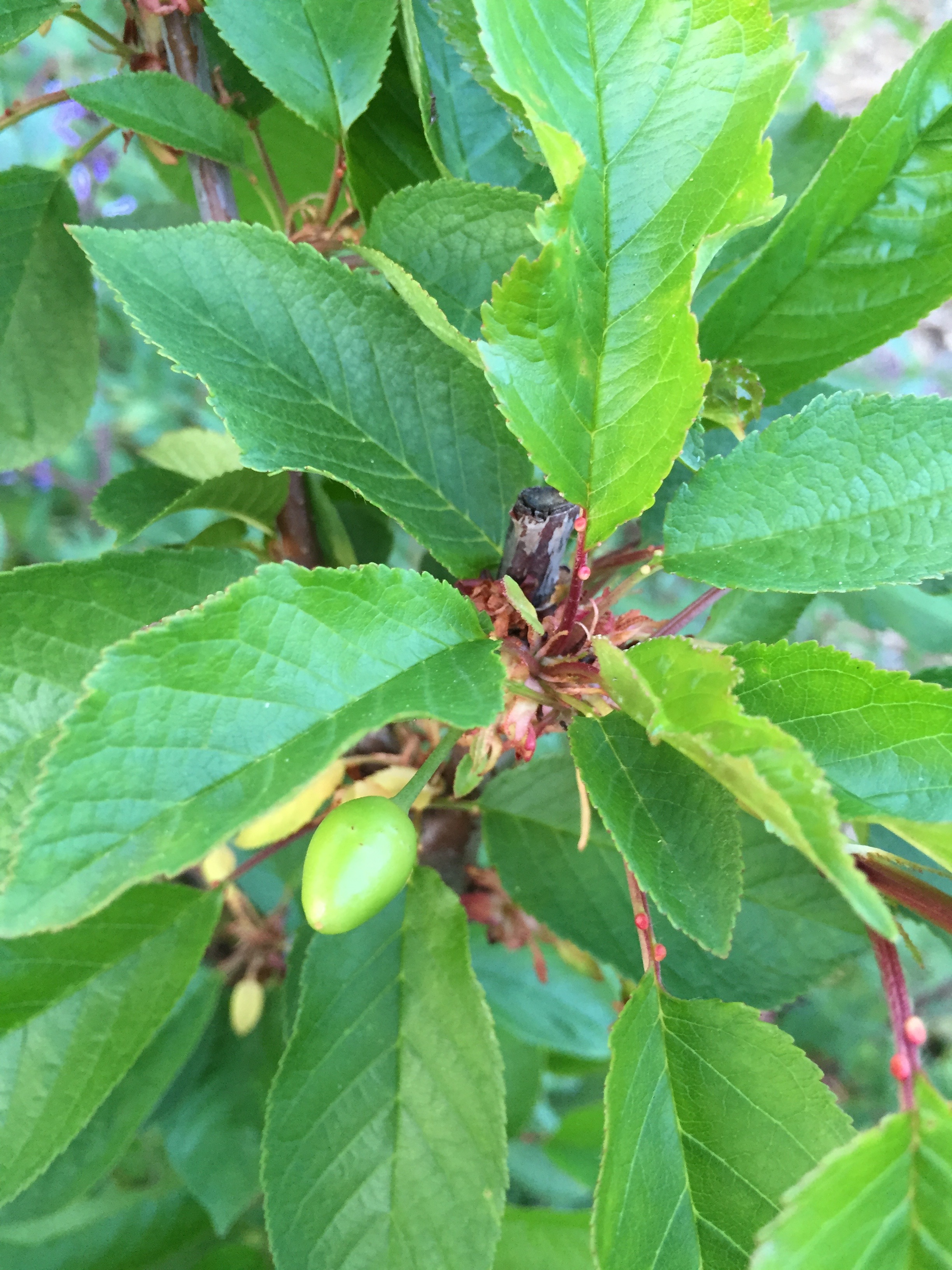
Something really good has happened in the cherry tree section. I planted two cherry trees last year, of two different varieties, because most cherry trees need a partner to pollinate them in order to set fruit. Our second cherry tree died over the summer, so we were left with only one. It blossomed normally, if lightly, and I thought that would be all we'd get out of that tree. But looky here -

Yep, cherries. I'm gobsmacked. And happy.

The olive trees that I have in front of the chicken coop, in containers, are blooming.

And there are already tiny apples on the apple tree.

The resurrected quince hasn't bloomed yet, the fig is getting very leafy but no fruit as of yet, the plum has a dozen small fruits on it, and the new Asian pear is putting out its new leaves. 

As for fruit vines, the blueberries and huckleberries have bloomed and are setting berries, the strawberries are blooming and there are many green fruits too, and the raspberry and thornless blackberry bushes are growing new leaves. It's all very encouraging.

I'm on spring break this week, which means lots of time in the garden. I bought a few more herb starts for the new herb garden, as well as five new native plants for the woodland garden (what can I say, there were holes that needed filling). One of them is a Western Spicebush which I have always wanted, so I'm pretty happy.

I noticed that we have a significant aphid population in the California Honeysuckle, but then I noticed this guy nearby, and I started to feel better. Nature often provides.


 The peas are the current star of the vegetable garden and we're having them with dinner several times a week. Sauteed very lightly in butter, there is really nothing tastier.